REVIEW · MARRAKECH
Half Day Marrakech History Tour including entrances
Book on Viator →Operated by Holiday Services · Bookable on Viator
Marrakech’s best early stops are here. This half-day history tour strings together landmark architecture and quieter heritage sites, with a morning route built for seeing a lot without burning your whole day. You’ll look up at the Koutoubia Mosque and wander through the Bahia Palace grounds, then keep going to major tombs and a museum tied to Saharan trade history.
I especially like two things. First, the value is strong because the tour includes entrances for Bahia Palace and Medersa Ben Youssef, so you’re not guessing what costs extra. Second, the tour feels guided in the useful way: you get context on what you’re seeing, not just a photo stop list.
One thing to consider: tour quality can swing depending on the guide and conditions. I’ve seen comments about English clarity, extra stops at shops, and even poor weather disrupting the flow, so go in with flexible expectations.
In This Review
- Key Highlights Worth Your Time
- A Half-Day Marrakech Morning That Doesn’t Waste Time
- Price and Value: What $41.88 Really Covers
- Where the Tour Starts: Central Marrakech and the AC Pickup
- Stop 1: Koutoubia Mosque Exterior and the 70-Meter Minaret
- Stop 2: Bahia Palace Entrance Included, Plus a Mellah Route
- Stop 3: Medersa Ben Youssef for About an Hour
- Saadian Tombs: Marble and Cedar Domes With a 1917 Turning Point
- Tiskiwin Museum: A Double Riad and Caravan Routes to Timbuktu
- How Guides Affect Your Day: English Clarity and the Shop Stops
- When Walking and Crowds Matter Most
- Who This Half-Day History Tour Suits Best
- Should You Book This Tour?
- FAQ
- What time does the tour start?
- How long is the Marrakech history tour?
- Is hotel pickup included?
- Are entrances included?
- Is Koutoubia Mosque visited inside?
- Does the tour include a museum?
- What’s included besides entrances?
- Is food and drinks included?
- How large are the groups?
- What’s the cancellation policy?
Key Highlights Worth Your Time
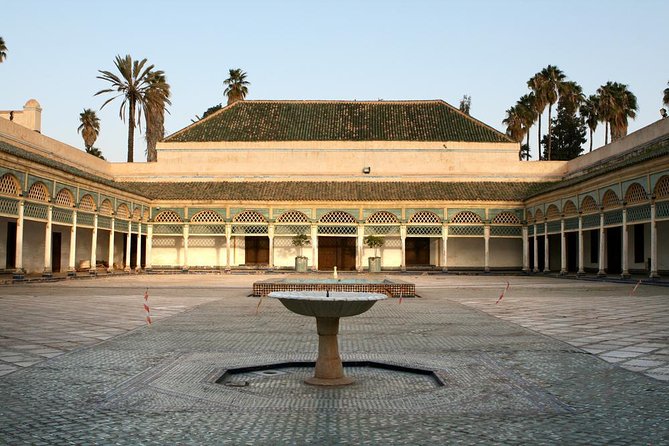
- Koutoubia Mosque minaret: a 70-meter landmark with Hispano-Moorish details, viewed from the outside
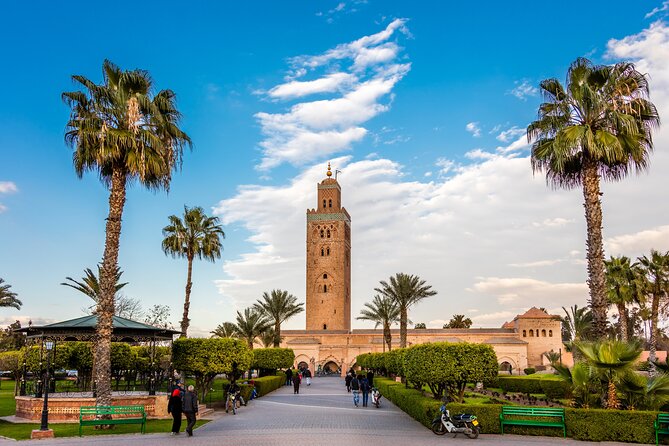
- Bahia Palace entry included: mosaic halls, perfumed courtyards, and the feel of a sultan’s residence
- Medersa Ben Youssef: Morocco’s famed Islamic school site, visited for about an hour
- Saadian Tombs’ 1917 story: 1500s royal burial chambers with marble and cedar domes
- Tiskiwin Museum: a double riad with an exhibition on caravan routes to Timbuktu
- Pickup + air-conditioned vehicle: helpful when the medina is crowded or the day gets hot
A Half-Day Marrakech Morning That Doesn’t Waste Time
If you only have one morning in Marrakech, you need a route that hits the emotional highlights fast. This tour starts at 8:30 am in central Marrakech, and it’s designed to keep you moving through the city’s most important heritage areas without turning your day into logistics.
The stated length is about 4 hours, and that matters because Marrakech can eat time. Between getting in and out of the medina lanes, finding shade, and managing small crowds, a half-day plan keeps your energy for later browsing. You’ll also get hotel pickup and drop-off, which is a practical upgrade if you’re staying off the main walking routes.
You will do some walking. The good news is the stops are purposeful: each one is close enough to connect into a story, but far enough that you’ll feel the change in sights and atmosphere between monuments.
You can also read our reviews of more historical tours in Marrakech
Price and Value: What $41.88 Really Covers
At $41.88 per person, this isn’t a luxury tour, and it also isn’t trying to be. For that price, you’re paying for three things that add real value in Marrakech: an organized route, transportation (including an air-conditioned vehicle), and entrances for Bahia Palace and Medersa Ben Youssef.
That entrance detail is big. Palace and school sites often have their own ticket costs, and when those are included, you keep the day simple. Plus, the itinerary isn’t just about big names on the map; it mixes in tombs and a museum tied to the wider history of the Sahara, so your money buys more than a quick stroll past walls.
The tour also offers mobile tickets. That’s convenient, especially when you’re juggling maps, heat, and busy entry points in the medina. Just keep an eye on what’s included versus what’s paid separately at specific sites, because Koutoubia is listed as an exterior visit with admission not included.
Where the Tour Starts: Central Marrakech and the AC Pickup
The morning begins in central Marrakech, then you head out by vehicle. Getting picked up reduces the first-stress moment of any Marrakech visit: figuring out transport while the medina is full and time is moving.
Once you’re out, the tour uses a mix of short exterior viewing and interior time. That’s a smart pacing choice for a half-day plan. You’ll spend time where details matter most (palaces and a madrasa), and you’ll see some landmarks from viewpoints that still tell you a lot about their style.
Group size is capped at 50 travelers. That doesn’t guarantee a tiny group, but it does mean there’s room for structured movement. In the best cases, the experience reads like a guided city walk with enough attention for you to ask questions. In the weaker cases, you might feel like you’re being transported from one point to the next without as much depth.
Stop 1: Koutoubia Mosque Exterior and the 70-Meter Minaret
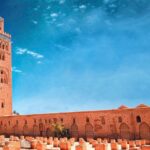
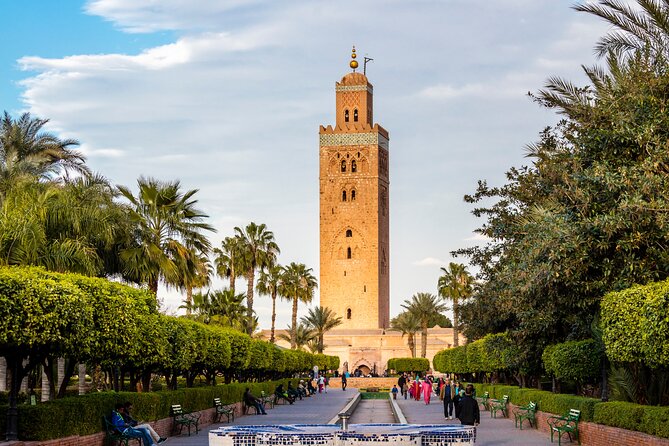
Koutoubia is the kind of monument you can’t miss, even if you try. You’ll come face-to-face with one of Marrakech’s most recognizable silhouettes: the 70-meter minaret topped with spire and orbs.
This is an exterior visit, listed at about 15 minutes, and admission is not included for the stop as described. Still, don’t treat it as filler. From the street, you get the sweep of its Hispano-Moorish style, and your guide can connect what you see to the deeper story of how Islamic architecture developed in Morocco.
Practical tip: keep your phone camera ready, but also look up. From the ground, the minaret’s proportions and decoration patterns are easier to appreciate when you’re not distracted by trying to frame the shot perfectly.
Stop 2: Bahia Palace Entrance Included, Plus a Mellah Route
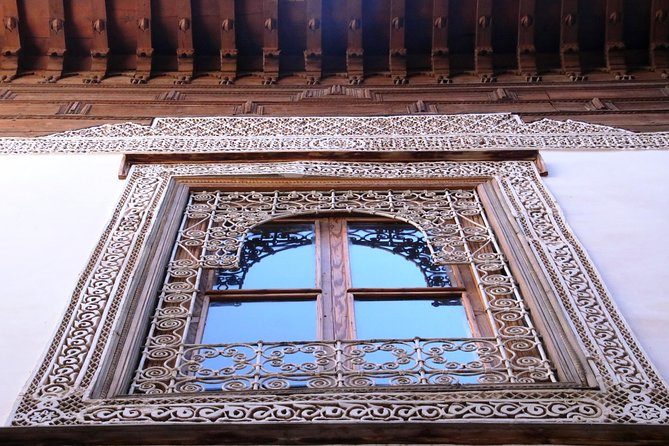
Bahia Palace is where the tour slows down in the right way. You’ll visit the palace complex for about 1 hour, with entrance fees included.
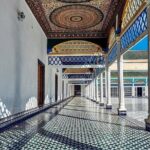
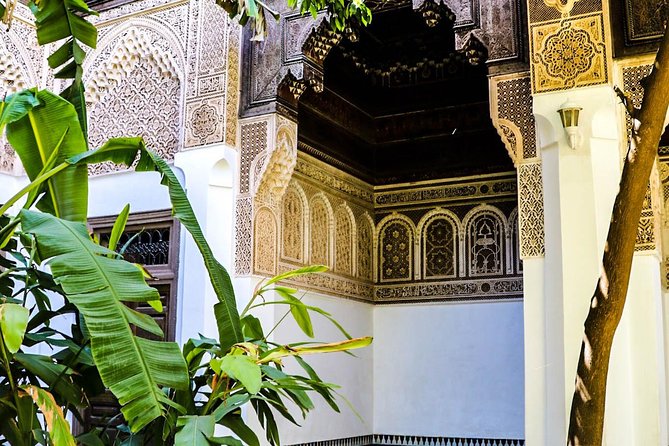
What makes Bahia Palace special on a guided route is that it’s not just walls and rooms. The palace is described as a 19th-century sultan’s residence, built to outshine others, and you’ll move through ornate pavilions, mosaic-coated halls, perfumed courtyards, and spaces associated with the harem. Even if you don’t catch every architectural term, the layout helps you understand power, privacy, and daily life inside a ruling household.
One detail worth noting: the route includes a pass through the Mellah area to discover El Badia Palace history before you reach Bahia Palace. In other words, you’re not only seeing one palace—you’re getting a quick sense of how palace prestige shifted through time and rulers, with the idea that richer elements were moved elsewhere.
What to watch for: the palace is visually dense. If your guide talks fast, you’ll still benefit, but you might want to slow your own pace for a minute and just look at the courtyards and tilework. That’s where it starts to feel like more than a checklist.





Stop 3: Medersa Ben Youssef for About an Hour
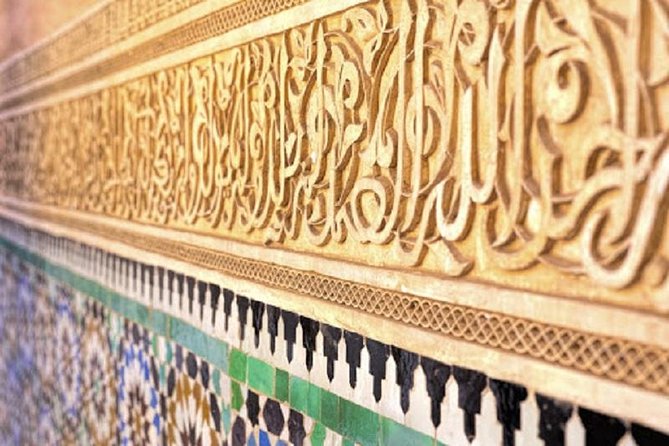
Next comes Medersa Ben Youssef, one of Marrakech’s most important teaching sites. The tour includes entrance, and the visit is listed at about 1 hour.
This place matters because it was once the largest and most important Islamic school in Morocco. You’ll be walking through spaces that were designed for study and learning, which changes how you see the architecture. It’s not only decorative; it’s functional. Columns, courtyards, and study areas were all built to support the life of a school.
A good guide makes this stop feel alive. The best ones connect the site to how knowledge was taught, how students lived, and how art and religion showed up in the built environment. Even if the explanation is simpler, the structure itself does a lot of work.
Practical note: this isn’t a long sit-down museum visit. Plan to stand, look up, and move at a museum pace while your guide keeps you on schedule.
Saadian Tombs: Marble and Cedar Domes With a 1917 Turning Point
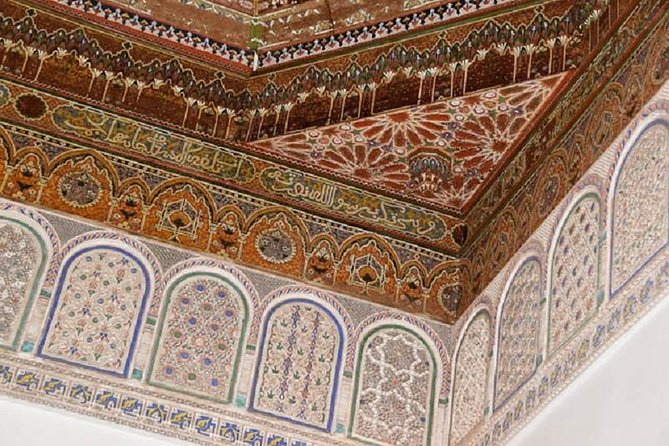
After the palace and madrasa, the tour shifts into royal burial history with a visit to the Saadian Tombs. These are described as a series of burial chambers dating from the 1500s.
What draws people here is the mix of materials and the story of rediscovery. The chambers have marble and cedar-domed interiors, and you’ll learn that the tombs were unearthed in 1917. That “found again” angle adds a sense of suspense to the visit. You’re not just looking at old graves—you’re looking at a heritage site that came back to public view in modern times.
This stop is also a nice contrast. Palaces show living power. Tombs show legacy power—what a dynasty wanted to preserve.
Downside to consider: because tombs are smaller than palaces, time can feel tight if your group moves slowly. If you want more quiet time for photos and details, keep that in mind and don’t expect a long linger session.
Tiskiwin Museum: A Double Riad and Caravan Routes to Timbuktu
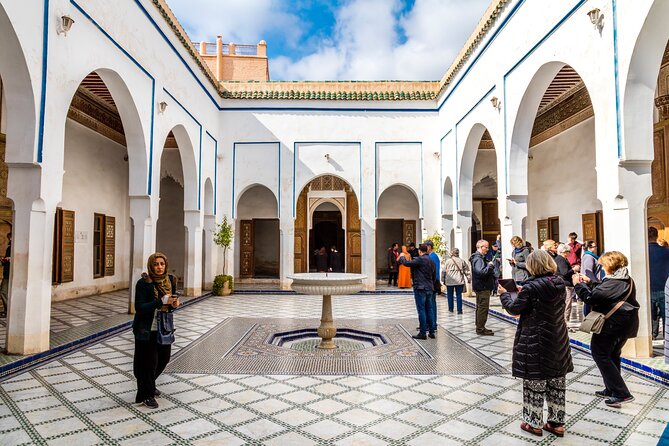
The tour also includes the Tiskiwin Museum, described as a double riad (traditional courtyard house). The big idea here is historical context for trade across the Sahara—specifically the exhibition on ancient routes between Marrakech and Timbuktu.
This stop is valuable because it broadens your Marrakech story beyond city walls. You get reminders that Morocco wasn’t isolated. People, goods, and culture moved along long-distance pathways, and art and clothing reflect those connections.
The museum also highlights arts and crafts, including Berber clothing, jewelry, and carpets. This is where a guided explanation can pay off, because you’ll start noticing patterns and styles that are easy to miss if you’re just looking for decoration.
A practical expectation: museum time can feel less dramatic than palace time, but it’s the kind of stop that makes your later conversations in Marrakech more interesting. When you understand trade routes, you get why certain crafts show up in certain places.
How Guides Affect Your Day: English Clarity and the Shop Stops
The experience you get depends heavily on the guide. The best feedback focuses on guides who are attentive, efficient, and clear, with mention of guides like Abdul and Micky for their humor and multi-language ability.
On the other hand, there are complaints about English being difficult to understand, with some guides leaning too hard on certain historical topics. That’s not unusual in city tours, but it does affect your enjoyment. If you’re sensitive to unclear explanations, look for a guide who can keep sentences short and tie details to what you’re actually seeing.
Another recurring theme is optional-feeling shopping stops, including a mention of an herbalist shop toward the end. You can’t assume you’ll skip these, but you can manage it. If you don’t want the stop, politely let your guide know you prefer to continue with the main sites. Marrakech tours often have the rhythm of timed visits, and your attitude helps keep it pleasant.
Finally, weather can change the mood fast. One negative report described a downpour with limited flexibility once you were in the taxi. I’d plan for this by bringing a small umbrella or lightweight rain layer if you’re traveling during rainy shoulder seasons.
When Walking and Crowds Matter Most
Marrakech’s medina is busy, and that’s part of why a guided plan is useful. You’ll pass through areas that are less “only-for-tourists,” including walking segments tied to neighborhoods near the medina walls.
Good guidance helps with two things: orientation and comfort. Even if you plan to return independently later, the tour gives you a mental map of where the big sights sit in relation to each other. That can turn a second day of sightseeing from confusing to confident.
Bring the basics: water, sunscreen, and shoes that don’t hate uneven stone. A half-day tour means you might be walking more than you expect once you factor in crowds and the medina lanes.
Who This Half-Day History Tour Suits Best
This tour is a strong fit if you:
- Want a first-morning introduction to Marrakech’s most important sites
- Like architecture and want real context, not just names
- Prefer a structured plan with pickup and drop-off
- Appreciate history that connects city life to wider routes and trade
It may not be ideal if you:
- Need a lot of quiet time inside each monument
- Expect deep interior access everywhere (Koutoubia is exterior as described)
- Dislike any shopping detours, even if they’re presented informally
- Are very picky about guide language clarity
If you’re traveling with family, it can work because the core stops are iconic and organized, but you still need to handle the walking portion. If you’re a solo traveler, you’ll likely appreciate the safety and direction through crowded lanes.
Should You Book This Tour?
I’d book this if you want a practical, history-led morning that hits Marrakech’s biggest visual icons and pairs them with key learning stops. The best part is the mixture: Koutoubia for skyline architecture, Bahia Palace and Medersa Ben Youssef for interiors you can actually explore, then tombs and the Tiskiwin Museum for the bigger Saharan trade story.
I’d think twice if you’re the type who gets irritated by unclear explanations, time slippage, or extra stops near the end. In that case, you’ll still see a lot, but your satisfaction will depend on how your particular guide runs the day and how weather treats your route.
FAQ
What time does the tour start?
The start time is listed as 8:30 am.
How long is the Marrakech history tour?
The duration is about 4 hours.
Is hotel pickup included?
Yes, the tour includes hotel pickup and drop-off.
Are entrances included?
The details say entrance fees for El Bahia Palace and Medrassa Ben Youssef are included. Koutoubia is listed as an exterior visit with admission not included.
Is Koutoubia Mosque visited inside?
No. It’s described as an exterior visit with about 15 minutes at the stop.
Does the tour include a museum?
Yes. The itinerary includes the Tiskiwin Museum.
What’s included besides entrances?
The tour includes an air-conditioned vehicle and guided touring through the listed sites.
Is food and drinks included?
No. Food and drinks are not included.
How large are the groups?
The tour has a maximum of 50 travelers.
What’s the cancellation policy?
You can cancel for a full refund if you cancel at least 24 hours before the experience starts. The tour also requires a minimum number of travelers, and if it doesn’t meet that minimum, you’ll be offered an alternative or a full refund.