REVIEW · FES
Fez Medina Guided Tour
Book on GetYourGuide →Operated by 3t Travel · Bookable on GetYourGuide
Fès Medina is a walking maze. What makes this tour appealing is that a real guide helps you navigate the old streets and still land at the major stops instead of wandering in circles. I also like that you get a structured route through some of the best-known corners of Fès-Meknès without losing the feeling of local life.
My favorite part is the way the tour ties crafts and architecture together. You’ll visit places like the Nejjarine Museum and the Bouaanania Medersa, and guides such as Houda and Mousthapa (both praised for history and culture) turn the sights into stories you can actually remember.
One thing to plan around: mosque access is restricted. Non-Muslims aren’t permitted to enter the Quaraouiyine Mosque or the Andalusian Mosque, and entrance fees are not included, so expect a little extra cost depending on what’s open.
In This Review
- Key highlights worth planning around
- Fès Medina Guided Tour: Why this maze works better with a guide
- Getting oriented: pickup, starting times, and how long it really takes
- The streets of Fès: shops, smells, and the everyday behind the sights
- Quaraouiyine and Andalusian mosques: what you can see and what you can’t
- Bouaanania Medersa: learning architecture you can actually feel
- Nejjarine Museum of Wooden Arts and Crafts: where material culture becomes clear
- Tanneries and leather work: the sensory stop you should plan for
- Batha Palace and the arts-and-traditions perspective
- Artisan cooperatives: watch, learn, and say no with confidence
- Price and value: what $9 buys you, and what it won’t
- Who should book this tour (and who might prefer something else)
- Practical tips so the day feels easy, not exhausting
- Should you book the Fez Medina Guided Tour?
- FAQ
- How long is the Fez Medina Guided Tour?
- What is included in the $9 price?
- Are entrance fees included?
- Will I be able to enter the Quaraouiyine and Andalusian mosques?
- Is pickup available from my riad or hotel?
- What languages are the guides available in?
- Is the tour walking-only?
- Can I cancel or pay later?
Key highlights worth planning around
- Guide-led navigation through Fès’ huge medina so you don’t waste hours backtracking
- Nejjarine Museum and wooden arts for a different side of Moroccan craftsmanship
- Bouaanania Medersa with a 13th-century focus on learning and design
- Tanneries and leather work for a bold, hands-on look at traditional production
- Artisan cooperatives you can observe (not pressured), plus respectful ways to say no
- Mosque entry rules that affect what you can go inside as a non-Muslim
Fès Medina Guided Tour: Why this maze works better with a guide
Fès el-Bali (the old Medina) is famous for a reason: it’s huge, packed with lanes, and easy to confuse. With a guided route, the streets stop feeling random. Instead, you’re walking a path that connects key neighborhoods to specific sights and trades, which is exactly what you want when your time is limited.
This is also a practical way to see more than the “postcard highlights.” The tour route balances big landmarks—like the Bouaanania Medersa and Batha Palace—with smaller, tactile moments such as craft workshops and fountains. If you’ve been worried about getting lost, this format is the pressure release valve.
There’s also a value angle. At around $9 per person for roughly 3.5 to 6 hours, you’re paying mostly for expertise plus direction through a complex place. In a city like Fès, that kind of time-saving often matters more than collecting another souvenir.
You can also read our reviews of more guided tours in Fes
Getting oriented: pickup, starting times, and how long it really takes
Tours usually begin at 09:00 AM, though start times can shift later in the morning or into the afternoon. After pickup from your hotel or riad (if you select that option), you’ll move into the medina on a guided walking route. Meeting points can vary depending on the option you book, so it helps to confirm details before you go.
The duration is listed as 210 minutes to 6 hours. In practice, that range is wide enough that your day-planning should be flexible. If you’re doing the half-day style, you’ll hit the main sights with less time for detours; if you book a longer option, you should expect extra stops and a more relaxed pace.
A bonus for logistics: some versions include a car and driver (available only for the Full-Day option). That matters because parts of Fès aren’t fun to navigate at the end of a long walk, especially if you’re tired or it’s warm.
The streets of Fès: shops, smells, and the everyday behind the sights
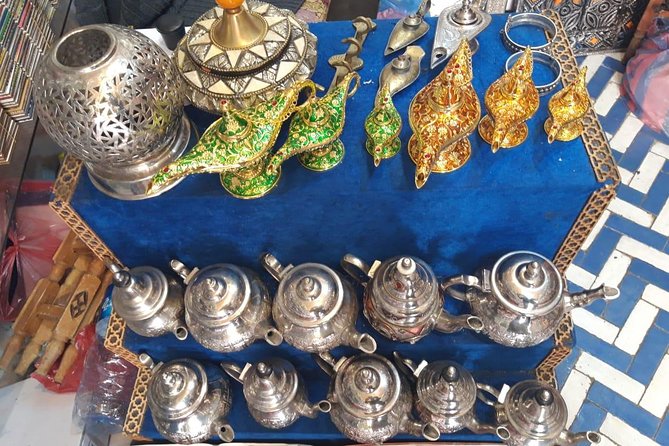
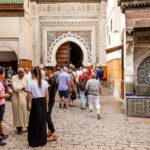
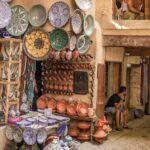
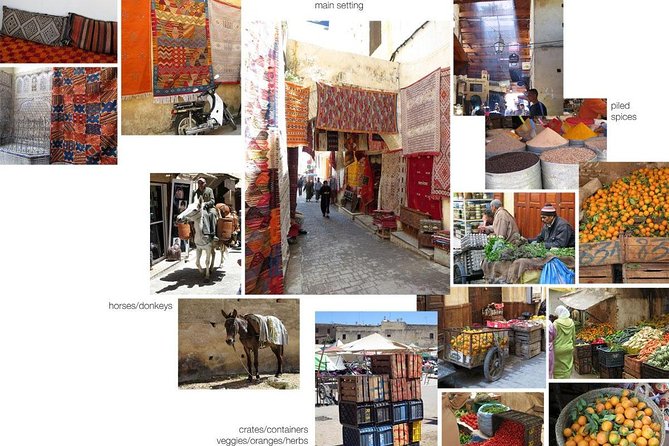
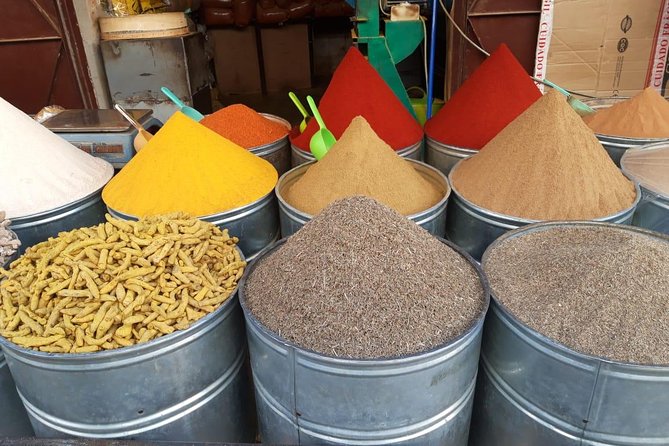
One of the best things about this tour is that you don’t just see monuments; you pass through working neighborhoods. You’ll walk narrow streets with shops selling fresh fruit, spices, intricate carpets, and lots of Moroccan art-and-craft goods. Even if you don’t buy anything, this is where the medina makes sense—you’re seeing what people do, not just what they built.
This also changes the way the medina feels. Without a plan, you tend to drift toward the loudest shop entrances. With a guide, you keep moving in the right direction and notice details you’d otherwise miss: how lanes connect, where craftsmen set up, and what kind of products dominate each area.
Do keep expectations grounded. Some stretches won’t feel polished or touristy, because this is a living city. That’s part of the charm—just dress and bring what you need for walking in tight spaces.
Quaraouiyine and Andalusian mosques: what you can see and what you can’t
The tour includes visits linked to two major mosques: the Quaraouiyine Mosque (founded in 859) and the Andalusian Mosque (dating to 860). One key point: non-Muslims are not permitted to enter. So for many visitors, the mosque portion becomes about exterior appreciation and respectful observation.
Why that still works: Fez’s religious architecture is not only about interior access. Even from outside, you’ll notice design cues, the way the complex sits within the neighborhood, and how the medina frames important institutions. Your guide can also add context on why these places matter historically and socially.
If you’re traveling with someone who strongly wants inside access, this tour may not meet that wish. But if you’re happy to view, learn, and move on with a guide’s explanation, it fits well.
Bouaanania Medersa: learning architecture you can actually feel
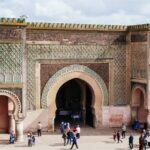
A standout stop is Bouaanania Medersa, which dates from the 13th century. Medersas in Fez aren’t just buildings—they’re part of the city’s identity as a place of scholarship and education. Walking through and around this type of site gives you a clearer sense of how Fez became a center of learning long before modern signage existed.
The value here is perspective. Without a guide, a medersa can feel like another ornate courtyard. With direction, it becomes easier to understand how design reflects function—where students would move, how space is organized, and what kinds of details matter.
If you like history that ties to real physical spaces, this stop is a keeper. It’s also a good “breather” between more intense sensory areas like the tanneries.


Nejjarine Museum of Wooden Arts and Crafts: where material culture becomes clear
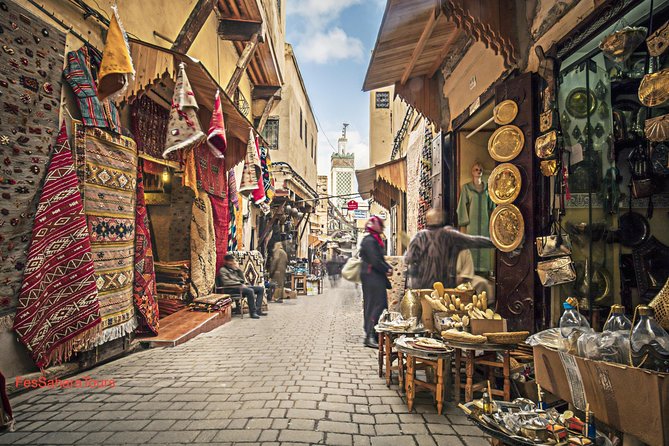
You’ll also visit the Nejjarine Museum of Wooden Arts and Crafts. This is one of those stops that helps you slow down. Instead of walking through shop after shop, you get a more focused look at craft traditions and how woodwork shapes Moroccan design language.
The tour pairs this with nearby context like the Nejjarine Fountain, which adds a sense of place. Fountains matter in old medinas, not just for photos; they’re part of the city’s daily rhythm and spatial planning. Put together, the museum stop feels less like a ticketed break and more like a “decoder ring” for what you’re seeing around you later.
If you’re the kind of traveler who likes to understand why objects are made the way they are, this museum-style stop will make the rest of the walk more meaningful.
Tanneries and leather work: the sensory stop you should plan for
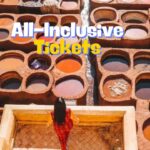
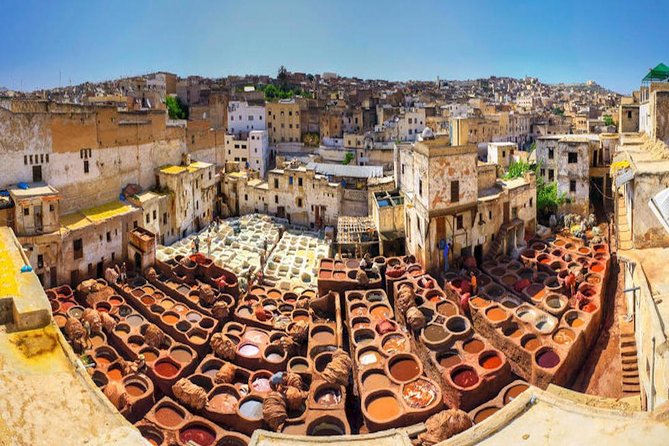
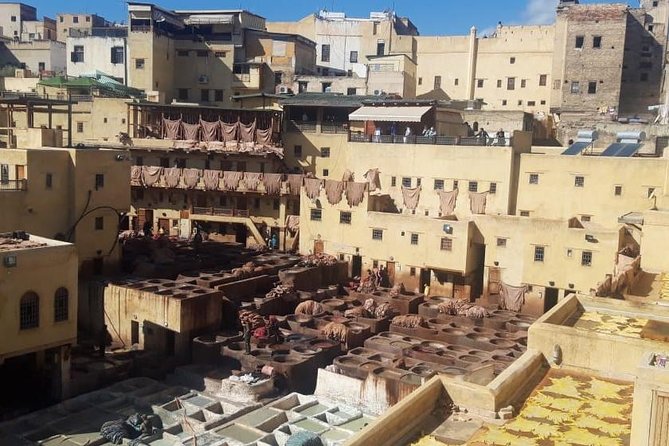
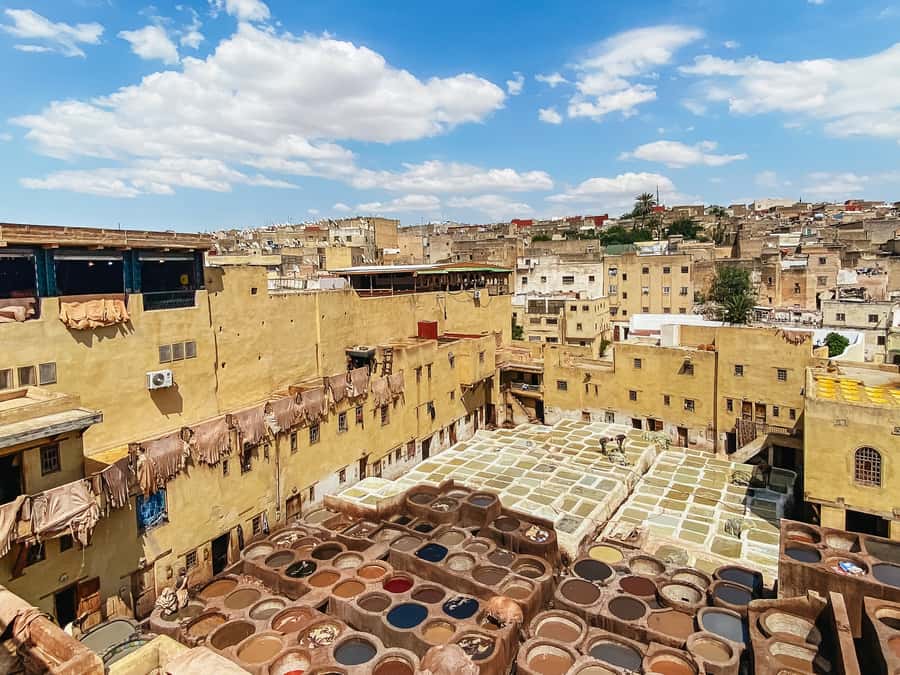
Seeing the tanneries is often the reason people book this tour. Leather work in Fez is traditional and still very much tied to the city’s economic history, and you’ll be shown the tanning process and the working side of the craft.
Here’s the practical advice: don’t treat this as a casual stroll. You should expect strong smells and a visually intense environment, and you’ll likely spend time at viewing areas where you can observe without disrupting operations. Wear shoes you’re happy to get dusty, and keep your patience for the realities of an active workplace.
Also, bring a mindset shift. The tanneries aren’t a museum diorama. They’re production. If you can stay respectful and watch rather than judge, you’ll get the most from the experience.
Batha Palace and the arts-and-traditions perspective
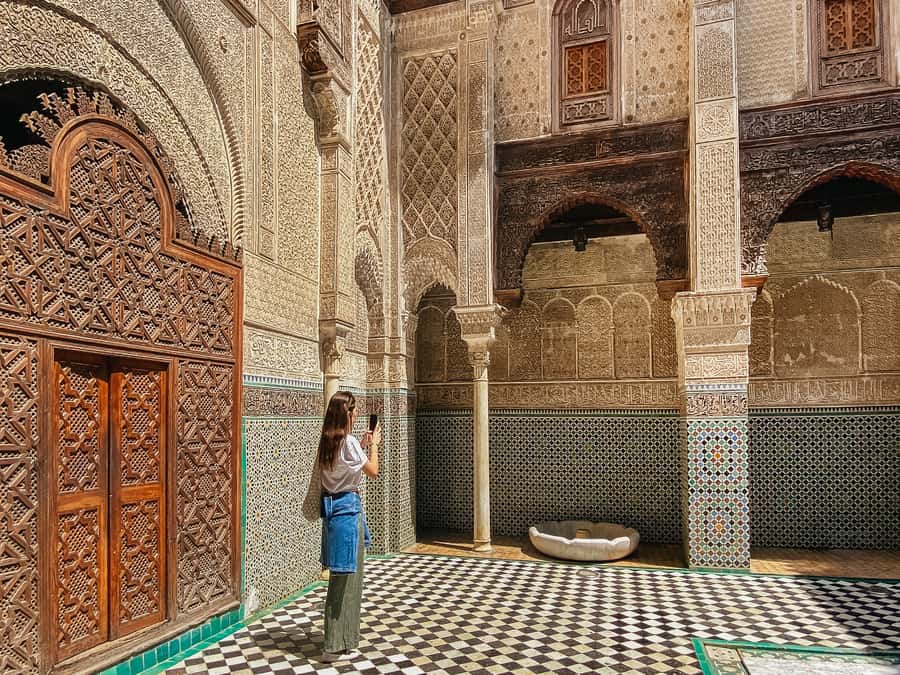
Another scheduled stop is the Batha Palace, which is now a museum of arts and traditions. This gives you a different lens after walking through streets and workshops. You see how artisanship fits into a broader cultural story—style, objects, and traditions shaped over centuries.
This is a smart counterweight to the more chaotic feel of the medina. In a palace setting, you can step back, regroup, and let the history settle in. For many visitors, it’s where the tour starts feeling like a full picture rather than a pile of stops.
If you’re short on time, you might feel tempted to skip “museum breaks.” Don’t. This one helps connect the earlier craft you saw on the street to the cultural meaning behind it.
Artisan cooperatives: watch, learn, and say no with confidence
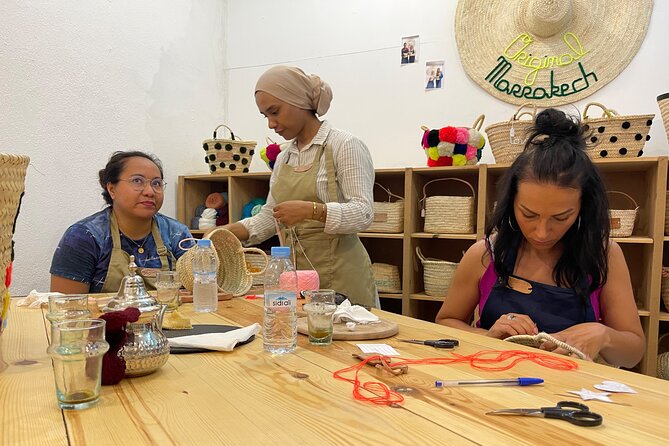
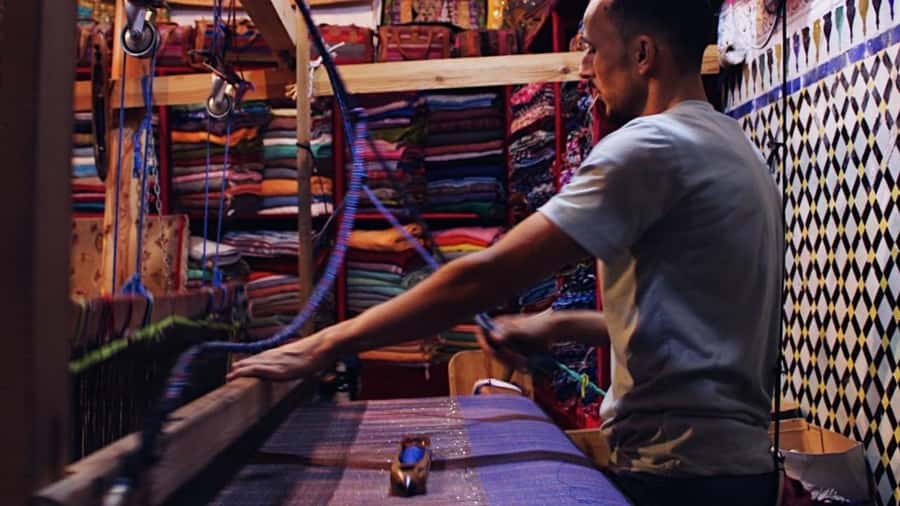
A key feature of the tour is visits to artisan cooperatives—places where crafts like carpets, leather, or pottery may be demonstrated. The important detail: these aren’t described as commercial push-shop stops. You should feel free to observe, learn, and decline politely if you’re offered something.
Bargaining is part of Moroccan market culture, but you don’t need to bargain to enjoy the visit. You’re there for context: how materials get processed, how patterns are created, and how long certain crafts take.
That said, pacing matters. Some visitors note that multiple cooperatives can start to feel tiring, especially if you’re already walking a lot. If you’re the type who loses energy quickly, focus on asking questions early in the craft stops, then relax into watching after.
Price and value: what $9 buys you, and what it won’t
At about $9 per person, this tour offers strong value for one simple reason: Fès Medina is not easy to navigate. Paying for a guide means you spend time seeing, not trying to decode streets and landmarks. Pickup/drop-off is also included if you select that option, which cuts down the hassle from the start.
What’s not included is also clear: food and drinks aren’t included, and entrance fees are not included. That can add up depending on how many paid sights you enter and what’s open that day. Carry small change (dirhams), since some attractions, public toilets, and local snacks may require it.
If you’re budgeting tightly, plan on a small extra amount for entrances and snacks. If you’re not into spending time shopping, you can keep costs under control by sticking to observation and skipping purchases entirely.
Who should book this tour (and who might prefer something else)
This tour is best for first-timers who want to see major Fez highlights without getting trapped in the medina maze. It’s also a great pick if you want to understand why the city looks the way it does—through architecture, craft traditions, and the logic behind where people set up work.
If you already know Fès well and you love total freedom, you might find the guided pacing a bit structured. But even then, many people still like having a guide for the tanneries and the medersa areas, then going off on their own afterward.
If you’re sensitive to strong smells, the tanneries may be the part that requires the most preparation. If mosque entry is non-negotiable for you, you’ll want to know in advance that non-Muslims can’t enter those two mosques.
Practical tips so the day feels easy, not exhausting
Fès rewards good prep. Bring small change for toilets and snacks, because you’ll sometimes need cash for basic services. Pack tissues or hand sanitizer, since restrooms can be limited or understocked. Add sunscreen and a reusable water bottle; medina walking can surprise you with sun and heat.
Wear shoes that can handle uneven lanes. The medina is walk-heavy, and you’ll be turning corners constantly. Also keep a phone with offline maps only as a backup—Fès can be confusing even with apps.
Finally, have a “no pressure” script ready for craft stops. A simple, polite decline works. When you treat the cooperatives as learning spaces rather than purchase counters, the whole tour feels lighter.
Should you book the Fez Medina Guided Tour?
I’d book it if you want the smart version of Fès: key sights, craft context, and a route that helps you stop getting lost. It also works well if you like meeting a guide who connects history, architecture, and everyday life, which is exactly what many guides on this tour are praised for by name.
Skip it only if you strongly need mosque interior access as a non-Muslim, or if you dislike organized shop/co-op stops enough that the walking days will feel like a chore. If your goal is learning and direction in a city where direction is hard to find, this one is a solid bet.
If you want, tell me your travel dates and whether you’re planning the half-day or full-day option, and I’ll help you map the best way to fit it into your Fez schedule.
FAQ
How long is the Fez Medina Guided Tour?
The duration is listed as 210 minutes up to 6 hours, depending on the option and starting time.
What is included in the $9 price?
The tour includes a professional guide, and hotel or riad pickup and drop-off if that option is selected. Entrance fees and food and drinks are not included.
Are entrance fees included?
No. Entrance fees are not included in the tour price.
Will I be able to enter the Quaraouiyine and Andalusian mosques?
Non-Muslims are not permitted to enter these mosques.
Is pickup available from my riad or hotel?
Pickup is optional, and it is included if you select the pickup option.
What languages are the guides available in?
The live tour guide is available in Spanish, English, French, Italian, Arabic.
Is the tour walking-only?
You’ll be walking through the medina. A car and driver are available only for the Full-Day option.
Can I cancel or pay later?
You can cancel up to 24 hours in advance for a full refund. You can also reserve now and pay later, with payment due later.