REVIEW · FES
Moroccan Crepes & Pastries Kitchen
Book on GetYourGuide →Operated by Dar Sunrise Fes · Bookable on GetYourGuide
In Fes, food is a handshake. This small, home-kitchen class teaches you Moroccan crepes and pastries with local women, plus mint tea and real kitchen time. I especially liked the hands-on dough work and the warm, guest-at-home feeling. The only real catch is getting to the house in the medina—closed doors can force detours, so you’ll want patience and time.
You’ll meet at the guest house Dar Sunrise Fes, then learn at least one pastry or crepe from a short list that can expand with group size. Chefs speak Arabic only, but an English instructor and a translator help. One more thing to consider: you’ll spend part of the experience communicating with gestures, unless the translation is fully flowing.
In This Review
- Key things that make this class worth your time
- A Cozy Kitchen Session in Dar Sunrise Fes (Fes Medina)
- What You Learn: baghrir, msemen/maloui, harsha, and more
- Local Women in the Kitchen: how the teaching actually works
- Mint Tea, Stories, and the Rhythm of a Real Food Moment
- Price and Value: is $34 for 2 hours a good deal?
- Getting There Without Stress: walking directions and timing
- Who This Class Is Best For (and who should skip it)
- Should You Book Moroccan Crepes & Pastries Kitchen in Fes?
- FAQ
- Where is the meeting point?
- How long is the Moroccan crepes and pastries experience?
- What is the price per person?
- What can I learn during the class?
- Is mint tea included?
- Do the chefs speak English?
- Is pick-up service included?
- What’s the group size?
- Is there a cancellation window for a refund?
Key things that make this class worth your time
- Small group (max 4) means more attention while you knead, mix, and shape.
- Choose from baghrir, msemen/maloui, harsha, cookies, and cakes so you can tailor the session to your cravings.
- Mint tea is built into the moment, not just a side detail.
- You’ll learn from local women in a real home setting, not a showroom.
- Communication is manageable thanks to an English instructor and a translator.
- Bring comfortable walking shoes for the medina approach.
A Cozy Kitchen Session in Dar Sunrise Fes (Fes Medina)
This is one of those Morocco experiences that feels grounded and personal. Instead of racing between stalls, you slow down. You sit in a guest house kitchen, you work with your hands, and you talk with the people teaching you—exactly the kind of food moment that turns into a real memory.
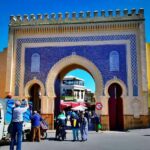
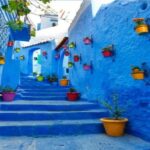
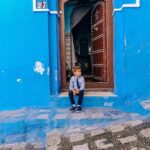
The meeting point is the house Dar Sunrise Fes. You’ll go directly there (no included pick-up). From Bab Boujloud (the blue gate), you cross through, turn into the first street on the left, and you walk down Talaa Kebira for about 3 minutes. When you see Made in M cafe with blue paint on the right, you’re in the right zone—your place is in the alley next to it with house number 10.
If you’re coming from Ain Zliten parking, you enter the medina main street Talaa Kebira, go up about 1 minute, and look for Made in M cafe with blue paint on the left. Again, the house is in the alley next to it with house number 10.
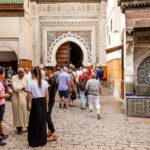
Practical tip: the medina can be a maze of lanes and occasional dead-ends. Plan to arrive a little early and expect to walk and turn more than your app predicts. One traveler noted having to take big detours because many doors were closed, so don’t try to rush.
You can also read our reviews of more tours and experiences in Fes.
What You Learn: baghrir, msemen/maloui, harsha, and more
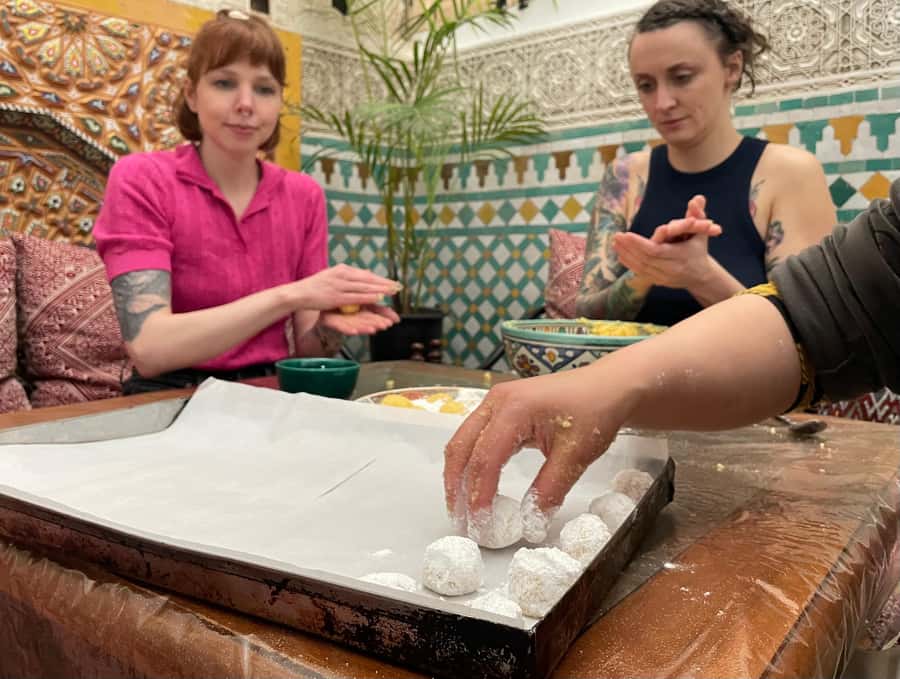
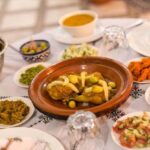
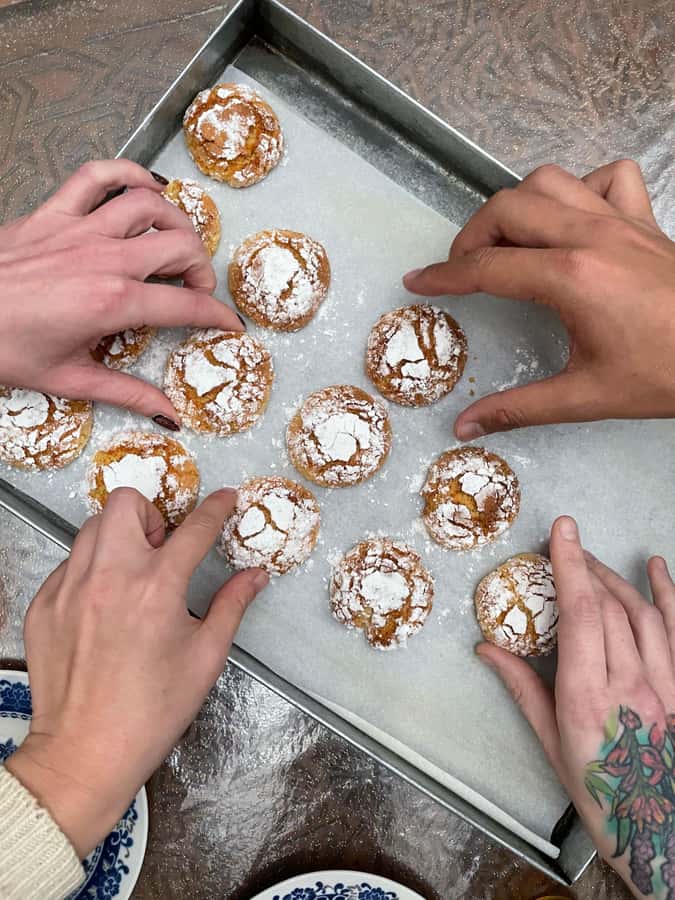
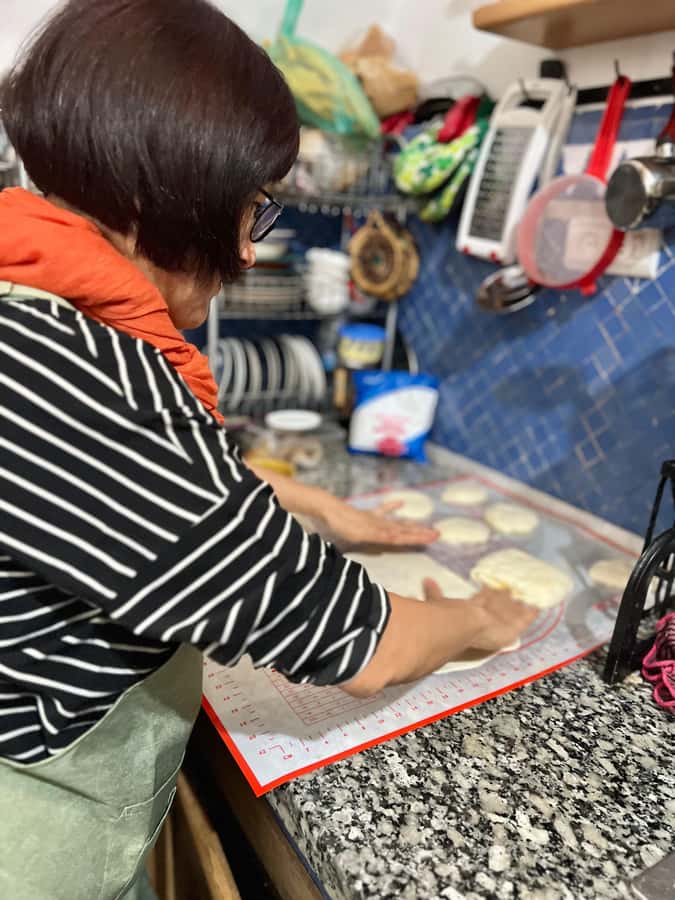
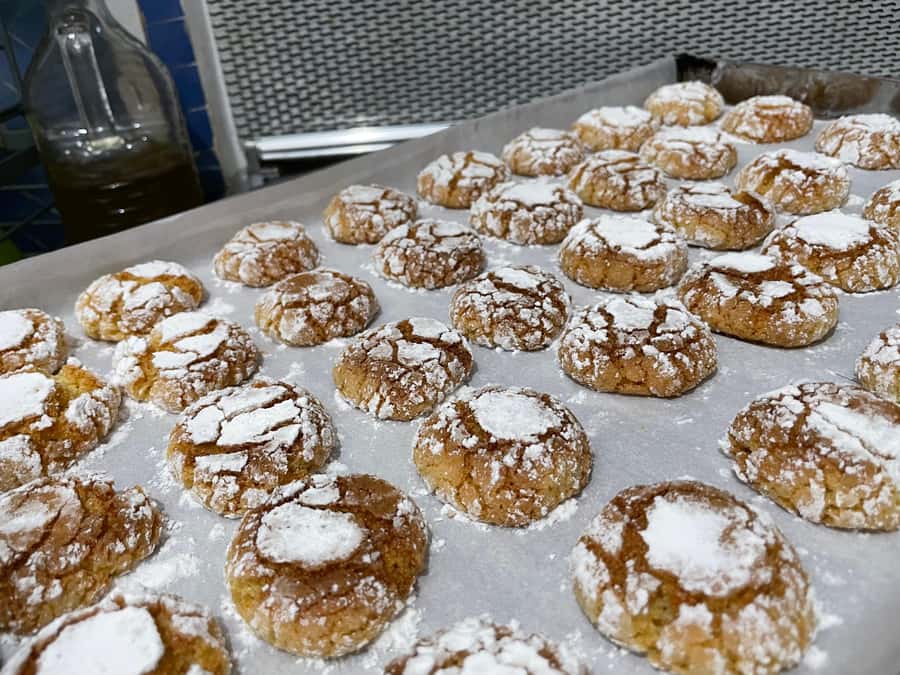
The class is simple and focused: you learn at least one Moroccan pastry or crepe, plus you eat what you make with mint tea. You can choose from a menu that includes baghrir, msemen/maloui, harsha, Moroccan cookies, and Moroccan cakes.
Here’s the useful part: the session adapts to group size. The more people in the class, the more types you can learn. In a smaller group, you might end up making fewer varieties so you can master each one. That’s not a bad thing. It often means you get cleaner technique and better results at the end.
What I like about this approach is that it respects how Moroccan baking actually works. Many pastries are not one-step projects. The dough, the handling, and the shaping take attention. Learning fewer items in a two-hour class can mean you leave with something you can reproduce later, not just a quick taste.
If you’re trying to decide what to pick, think about how you want your day to feel afterward. Baghrir and other crepe-style pastries are great if you want a softer, tea-friendly result. Msemen or maloui feels more tactile and hands-on. Cookies and cakes are the easier “take-home” option if you want something that travels well.
Local Women in the Kitchen: how the teaching actually works
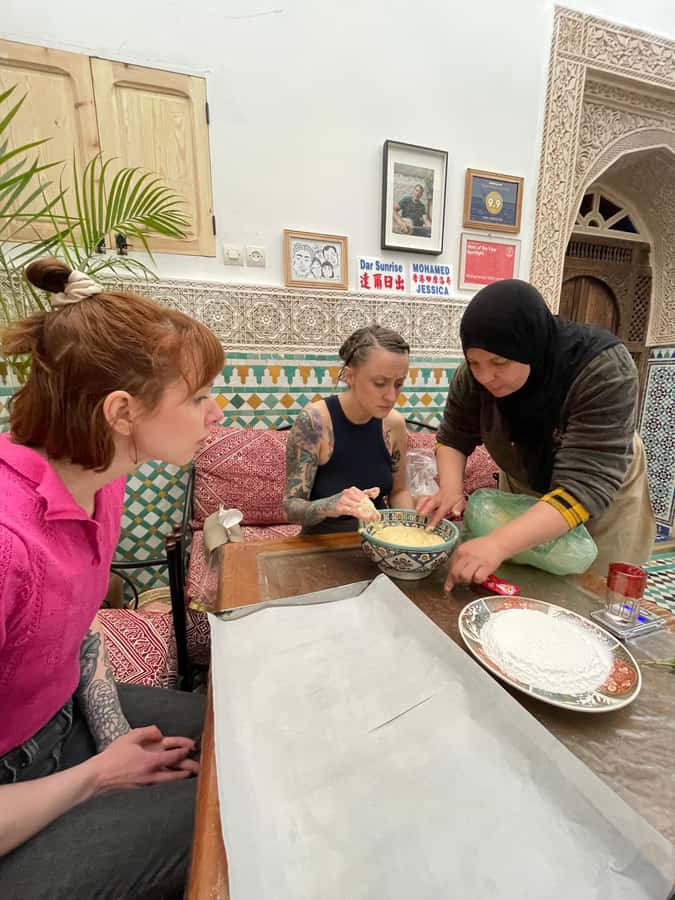
You’re learning from local women in a home-style kitchen. That matters because you’re not just copying a recipe—you’re seeing how food habits live inside daily life in Fes.
The teaching language is English, but the chefs speak Arabic only. A translator supports communication, and you may also find that gestures go a long way. One important practical detail: if you’re the kind of traveler who worries about ordering or chatting in another language, don’t. You don’t need fluency here. You need willingness and curiosity.
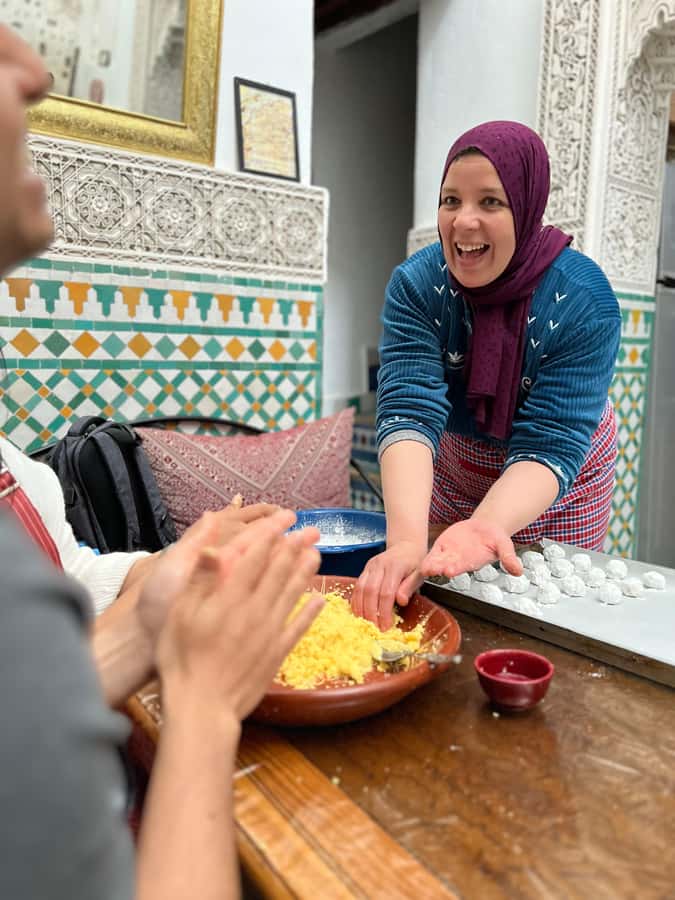
Also, it’s not a silent cooking lab. You’ll chat while you work. Expect stories, tips, and plenty of small corrections as you handle dough and shape pastries. One review singled out Amal as especially welcoming, which fits the overall vibe of this class: you’re treated like a temporary member of the household.
If you care about food technique, this is the best part. Kneading dough, learning the feel, and understanding how to adjust as the batter or dough responds—those are the details that rarely make it into a recipe card. Here, you learn by doing.
Mint Tea, Stories, and the Rhythm of a Real Food Moment
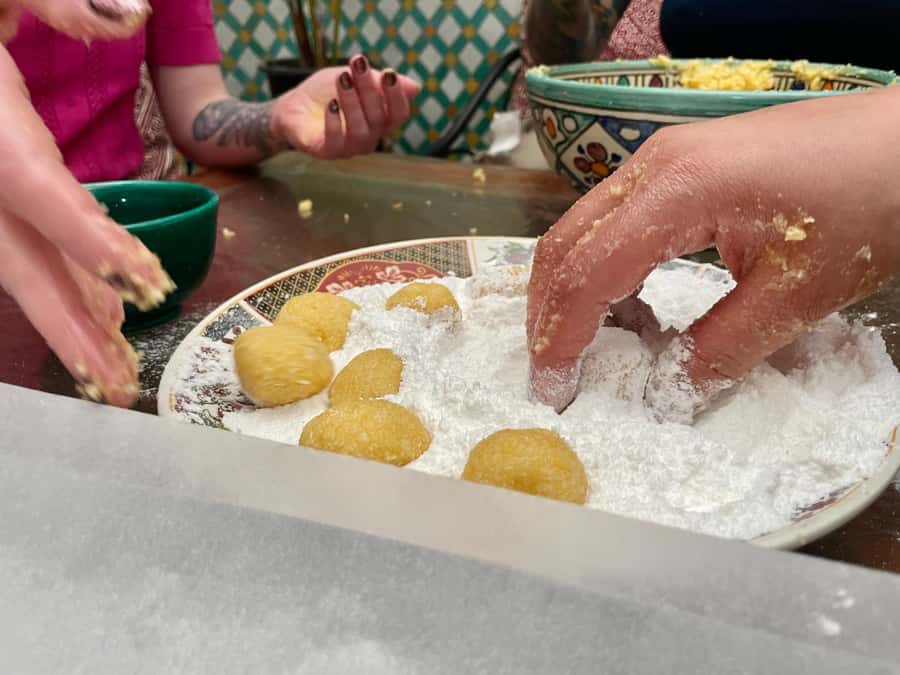
Moroccan mint tea is included, and it’s served as part of the experience—not just after you’re finished. That timing is smart. Tea during the session gives you a break while things rest or set, and it gives you a natural moment to talk.
You’re also learning in a setting that’s designed for conversation. People share traditions as they teach: what ingredients mean locally, why certain pastries are prepared a certain way, and how the kitchen fits into everyday Moroccan life. You’ll get the cultural context alongside the cooking.
I also like that the experience doesn’t pretend food is only about taste. It’s about hospitality, patience, and small gestures of kindness. It’s the kind of food lesson where you remember the atmosphere as much as the pastry.
Price and Value: is $34 for 2 hours a good deal?
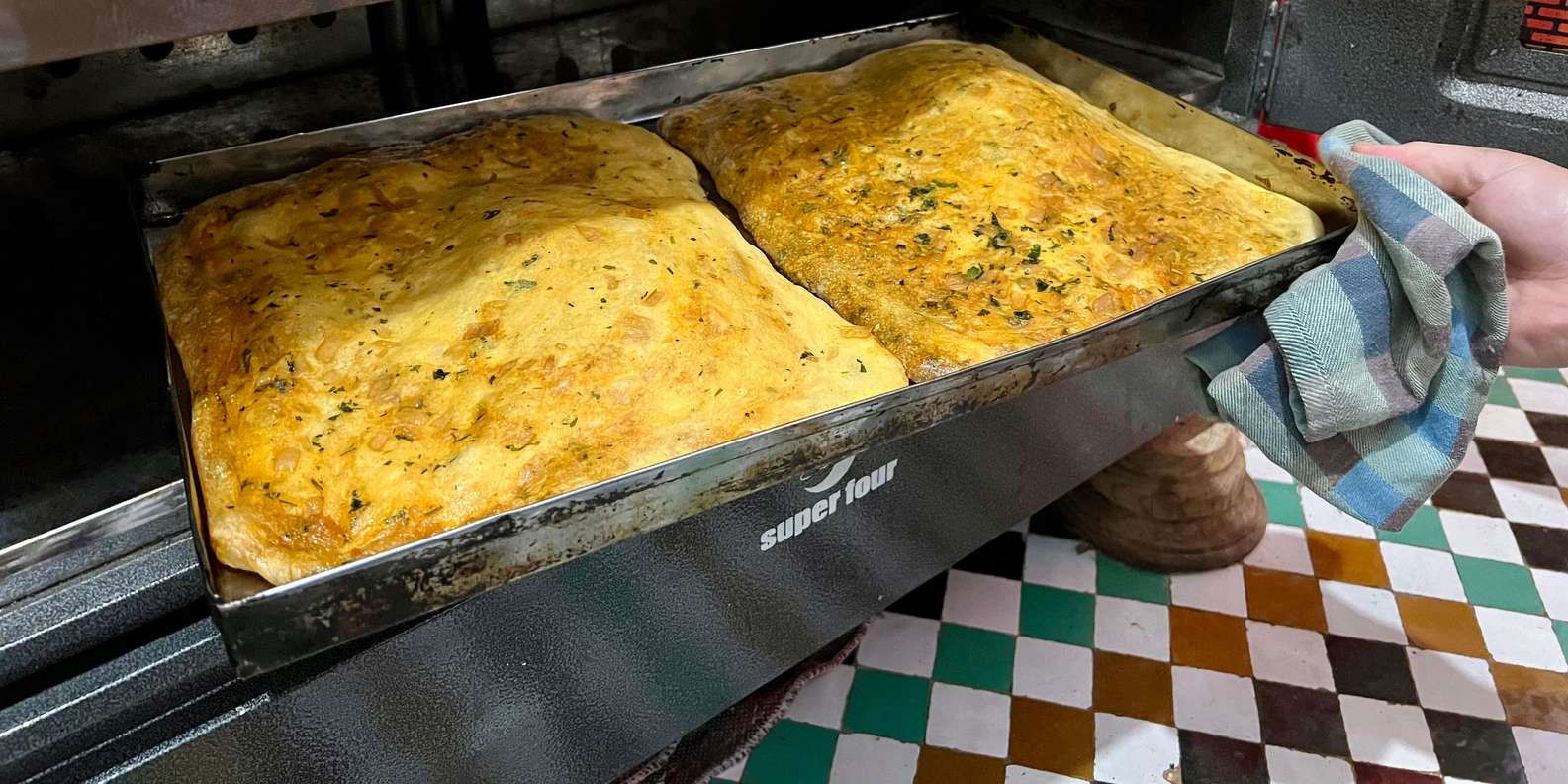
At $34 per person for about 2 hours, this class lands in the sweet spot for Fes cooking experiences. You’re paying for three things: expert instruction (with translation support), a hands-on session that produces at least one pastry or crepe, and the included mint tea.
What makes it good value is the small group size (limited to 4). In bigger classes, you often spend more time watching than working. Here, you can actually get your hands into the process and receive feedback while you cook. That’s where the money turns into learning.
It’s also good value because the experience is in a real home environment. You’re not paying mainly for a location name—you’re paying for kitchen access, local teaching, and the time to make something properly.
If you’re on a budget, I’d treat this as a “one good class” purchase. Pick the pastry you want most, plan to taste it with tea, and focus on technique rather than trying to squeeze in multiple different workshops during your stay.
Getting There Without Stress: walking directions and timing
The hardest part is not the cooking. It’s the medina logistics.
Your starting point options are clear: Bab Boujloud (blue gate) or Ain Zliten parking. But in the medina, shortcuts are often blocked. Plan for detours, especially if you arrive a bit late or you’re carrying bags. A traveler noted needing to take many detours because many doors were closed, and the best advice was to use the larger streets to keep your bearings.
So here’s my practical plan:
- Give yourself a cushion of extra time.
- Use the main route (Talaa Kebira) as your anchor.
- When you see Made in M cafe with blue paint, slow down and look for the alley beside it with house number 10.
Also, wear shoes you can walk in for a while. Even if the directions sound short on paper, the medina makes every minute feel different.
Who This Class Is Best For (and who should skip it)
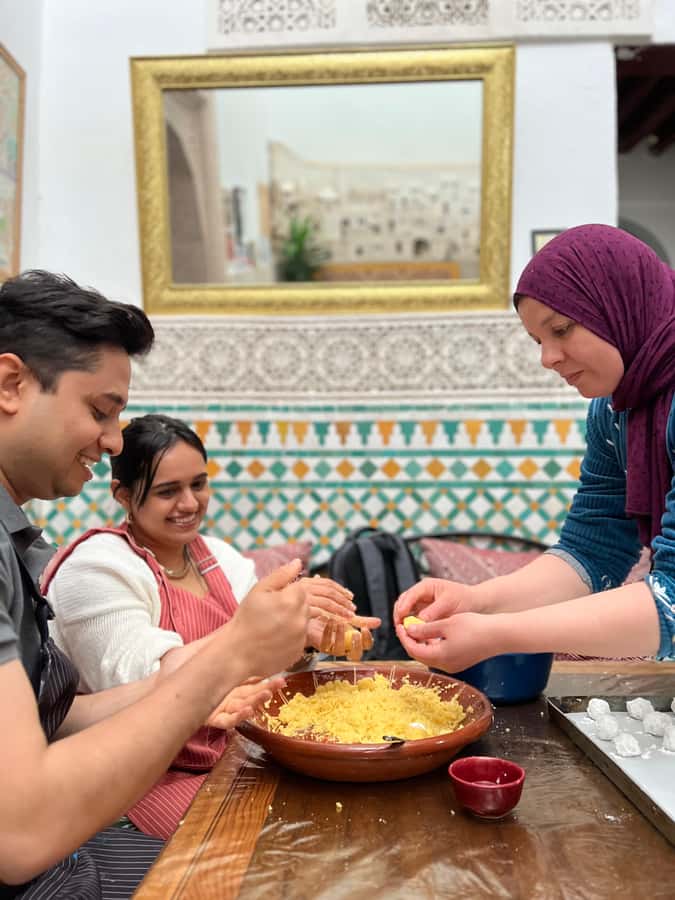
This experience fits travelers who want more than a tasting. If you enjoy practical learning—mixing, kneading, shaping—and you like meeting local people in a lived-in setting, you’ll likely have a great time.
It’s also ideal if you’re flexible about communication. English is supported, and translation is included, but this is still a home kitchen. You’ll be taught through demonstration and hands-on guidance.
You should consider a different style of tour if you hate walking in the medina, or if you’re expecting a big, high-energy group party. This class is small and focused. The payoff is calmer and more skill-based, not spectacle-based.
If you’re traveling as a couple or a small group of friends, you’re in a good spot. Just remember that group size affects the number of pastry types you can choose.
Should You Book Moroccan Crepes & Pastries Kitchen in Fes?
Yes—if your goal is to learn real Moroccan pastry basics in a small group and take away a technique you can use later. The combination of hands-on instruction, mint tea, and a homey atmosphere makes it a strong pick for a first cooking class in Fes.
Book it especially if you want:
- a calm, personal setting in the medina
- guided dough work (not just eating)
- a choice among baghrir, msemen/maloui, harsha, cookies, or cakes
- small-group attention with translation support
Skip it if your schedule is ultra tight and you don’t want to deal with medina wandering. The cooking part is easy to enjoy; the arrival part is where you need patience.
If you do book, pick one pastry you genuinely want, and show up with a relaxed mindset. You’ll leave with more than food—you’ll leave with the kitchen confidence that makes Moroccan baking feel approachable.
FAQ
Where is the meeting point?
You meet directly at the guest house Dar Sunrise Fes. You can find it using Google location Dar Sunrise Fes, or follow the directions from Bab Boujloud (blue gate) or from Ain Zliten parking toward Talaa Kebira and the alley next to Made in M cafe with blue paint, house number 10.
How long is the Moroccan crepes and pastries experience?
The experience lasts 2 hours.
What is the price per person?
The price is $34 per person.
What can I learn during the class?
You can learn at least one type of Moroccan crepe or pastry. The options you can choose from include Moroccan cookies, Moroccan cakes, Maloui/Msemen, Baghrir, and Harsha. The more participants in the group, the more types you can choose.
Is mint tea included?
Yes. Mint tea is included and served during the experience.
Do the chefs speak English?
The chefs speak Arabic only, but an English instructor and a translator are provided to help with communication.
Is pick-up service included?
Pick-up service is not included. If you want pick-up, it has a surcharge and you should contact the provider for details.
What’s the group size?
It’s a small group, limited to 4 participants.
Is there a cancellation window for a refund?
Yes. You can cancel up to 24 hours in advance for a full refund.