A trip like this feels like switching planets. You get a tight loop of Ouzoud waterfalls, High Atlas valleys, and then the big “wow” of the Merzouga desert camp with camel time and starry nights. I especially like how the pacing mixes short walks with long-view stops, so you feel the region instead of just passing through.
I also like the High Atlas hiking moments—the kind that are easy enough to enjoy but dramatic enough to remember. Highlights include the Todra Gorge walk with those near-vertical walls, plus the Dades Valley hike with the famous Monkey Fingers rock formation.
One drawback to plan for: the days involve lots of road time, and some parts are physically active (stairs at Ouzoud, the Todra walk, desert weather). Also, lunch is not included, so you’ll want to budget for it along the way.
In This Review
- Key things I’d circle before booking
- How this southern Morocco route really plays out
- Day 1 in Marrakech medina: set your bearings fast
- Ouzoud waterfalls and Ait Bougmez: from red rocks to Berber life
- Skoura, roses at El Kelaa M’Gouna, and Dades Valley’s Monkey Fingers
- Todra Gorge to Merzouga: the road cuts down into rock, then opens into dunes
- Half-day Sahara time plus Rissani, fossils, and Tamegroute’s library and pottery
- Ouarzazate, Ait Benhaddou, Telouet, and crossing the High Atlas again
- Marrakech city tour on Day 7: gardens, tombs, minaret, and Majorelle option
- Day 8: transfer out, plus a couple of easy add-on ideas
- Price and value: what you’re paying for at $1,485.49
- The guide factor: why Ibrahim’s style matters on this route
- Should you book this southern Morocco tour?
- FAQ
- How do pickups work in Marrakech?
- What time does the tour start?
- Is this tour private or shared?
- What language is the guide?
- What meals are included?
- Is lunch included during the day?
- What is the Merzouga desert camp like?
- How much camel riding do you do?
Key things I’d circle before booking
- Merzouga comfort tents with electricity and a sink, plus the option to switch to an auberge
- Todra Gorge up close with a walk into the narrow passage and a river crossing by ford
- Berber-focused valley stops like Ait Bougmez, with the option of a local village guide
- Rose City detour at El Kelaa M’Gouna, where a rose-water cooperative visit may be possible
- Tamegroute pottery + library visit, including a guide for the library collection
- German-led service from day 1 to day 8, often praised for being attentive and flexible
How this southern Morocco route really plays out
This is an 8-day round trip built around contrasts. Marrakech starts you in the medina rhythm, then the drive climbs into the High Atlas with terraces and stone villages, drops into oasis zones, and finally swings you into Sahara dunes near Merzouga. On the return leg, you pass through the Draa Valley date-palm corridor and hit the headline fortress of Ait Benhaddou before crossing back over the mountains toward Marrakech.
The practical win here is that transportation and guiding are taken care of end to end. You’ll be in an air-conditioned vehicle with German leadership from day 1 through day 8, and the tour is run as a private experience for your group. That matters in southern Morocco, where road conditions, timing, and local access can be a headache if you try to DIY.
Still, it’s not a “sit on a bus and breeze through” kind of trip. You’ll do real walking at Ouzoud, Todra, and Dades, and you’ll feel desert logistics on camelback, at least for a short stretch.
You can also read our reviews of more tours and experiences in Marrakech.
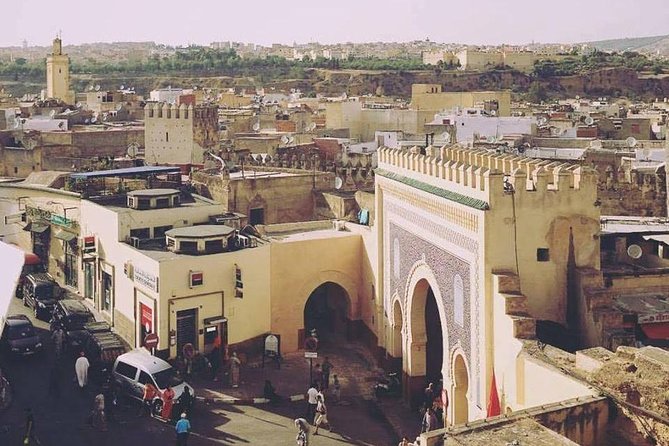
Day 1 in Marrakech medina: set your bearings fast
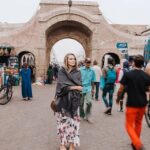
You’ll get collected right at the Marrakech airport exit with a sign showing your name, then transferred to your hotel/riad in the old town area on the outskirts of the main square.
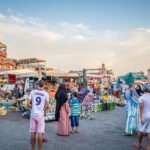
In the evening, you can choose to go straight to Djemaa el Fna, the big evening square where snake charmers, water sellers, fire eaters, storytellers, and performers create their nightly theater. If you want to eat there, the arrangement is simple: you pay for your own food while you soak up the atmosphere.
Sleeping here is part of the experience. You’ll stay in an authentic riad setup, which usually means you get a calmer, quieter base after the daytime bustle. This is one of those smart first-day moves: Marrakech at night is intense. Having a proper old-town location helps you ease in instead of just being dropped off and overwhelmed.
Ouzoud waterfalls and Ait Bougmez: from red rocks to Berber life
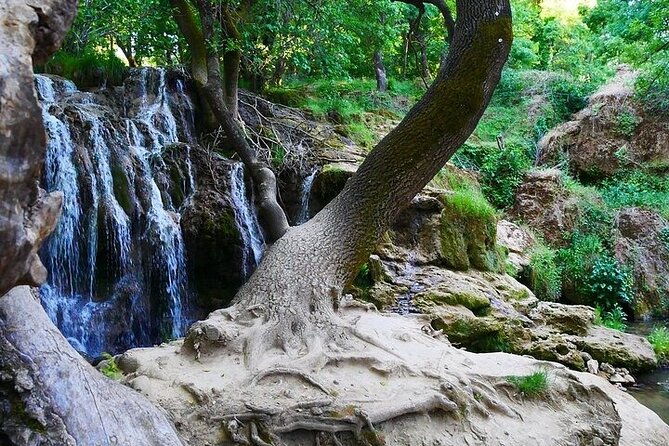
Day 2 is built around two very different views of the Atlas. First comes Cascades d’Ouzoud. The falls drop in multiple levels—tall enough to hear before you see—and the area is framed by red rock and a river system that feeds into a small pool.
What I like about this stop is that it’s not just a photo point. You get access to paths that take you up near the top of the falls and a steeper route on the right side for a closer look down the water. At the bottom, there’s a small ferry to cross the river, and then you can climb back up via stairs the normal way. There’s also a lunch break at the edge of the area.
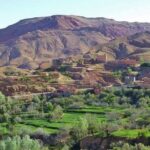
After Ouzoud, the trip heads into the Ait Bougmez Valley, often called the Valley of the Happy. Expect terraced fields, mountain air, and a slower tempo. This is where you see how people have shaped land over time—fields that are still valued and improved through traditional work.
There’s also an optional edge to make this more than sightseeing: you may be able to arrange a local guide who helps you connect with village residents and understand the layered side of Berber culture. If you prefer independent time, you can explore around on your own too.
You’ll sleep in a southern-style kasbah hotel for dinner and breakfast.
Skoura, roses at El Kelaa M’Gouna, and Dades Valley’s Monkey Fingers
Day 3 starts with a drive out through scenery that feels almost lunar in places. Boutaghrar is known for color and rock formations that look like they belong in a different landscape—but it’s still Morocco, still lived-in by people nearby. It’s a short stop, but it helps set the tone for the day: geology first, then villages.
Next you reach Skoura, a Berber town built around the river and the entrance to the palmeraie. The kasbah here traces back to the 17th century, and it’s described as originally a fortified village, a ksar, in a strategic position. Even if you don’t go deep into historical details, the setting tells a story: this is oasis geography doing what it has always done—supporting communities along water.
Then comes El Kelaa M’Gouna, known as the Rose City of Morocco. The timing can be a factor for what’s active, but you may be able to visit a rose-water cooperative, which is a good way to see how plant life becomes products and livelihoods.
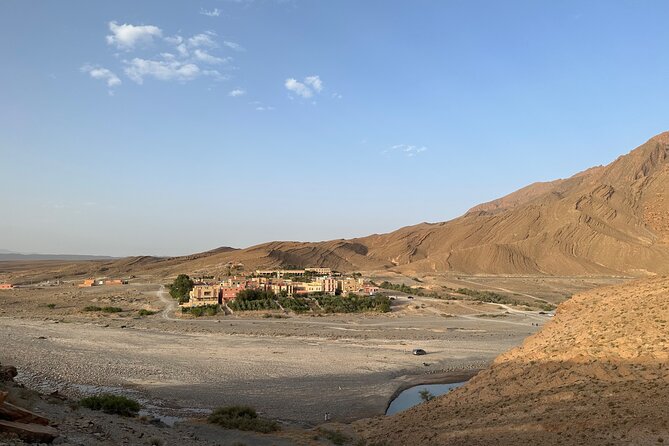
After that, you head to Boumalne Dades in the Dades Valley area. Here the plan is a hike of about an hour and a half on a route that’s peaceful but satisfying, built on the idea that Berber cultivation over centuries has created this green ribbon of orchards and grain fields along the valley. The highlight is the Monkey Fingers rock formation and views over river valleys with kasbahs and mud-built villages on the slopes. You’ll likely stop at a restaurant with a terrace view afterward, which is a nice recovery rhythm.
This day feels like the backbone of the trip: you get walking, you get culture, and you get those strong color contrasts—green against red-brown rock.
Todra Gorge to Merzouga: the road cuts down into rock, then opens into dunes
Day 4 turns dramatic fast. You follow the Todra River until you reach the narrowest and most spectacular passage of the Todra Gorge. After about 15 kilometers beyond Tinerhir, the gorge tightens and the cliffs rise almost straight up—described as up to around 300 meters high.
You walk into the narrow area and then cross the river using a concrete ford. It’s not a long hike, but it’s immersive. You’re not just looking at walls. You’re in them.
After Todra, the route continues via Erfoud, described as a rust-red oasis town with around 300,000 date palms. Then you finally arrive at Merzouga and the dunes.
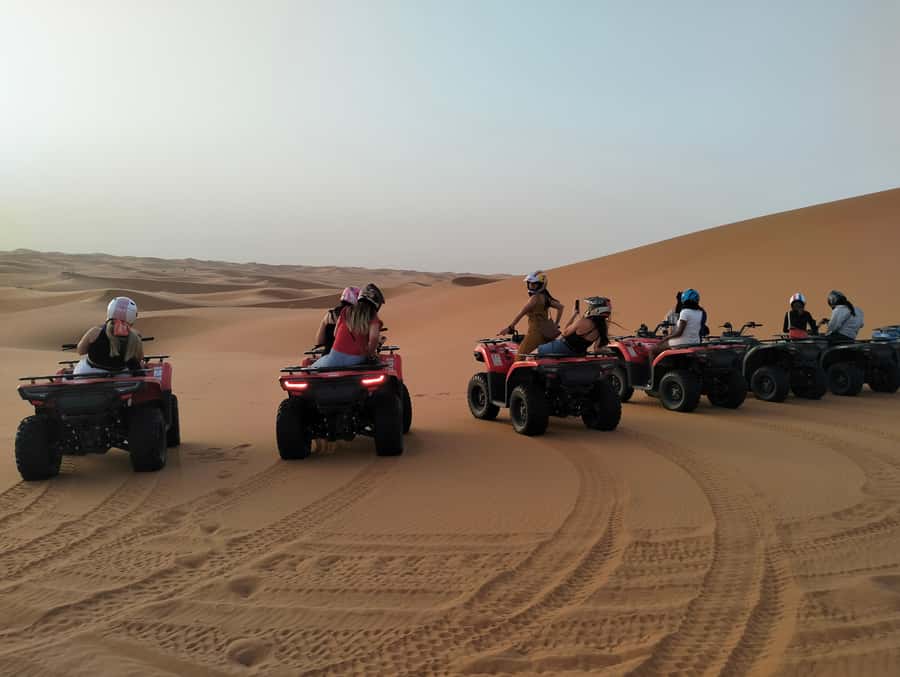
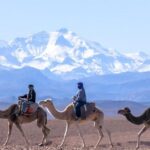
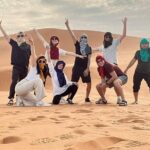
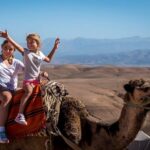
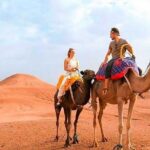
At Merzouga, you switch to dromedaries. The ride to camp is about 30 minutes, and there’s an option to take luggage to camp in a jeep if you prefer not to carry things. The camp is described as comfort tents for two people with electricity and a sink, which is a big comfort upgrade versus the rougher desert setups many people picture.
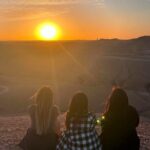
Evenings are built around food near the campfire and the chance to enjoy the sky—full 360-degree stars. There’s also an optional alternative: if you’d rather, you can stay at an auberge instead, but the camp is positioned as a highlight even for first-time campers.
Half-day Sahara time plus Rissani, fossils, and Tamegroute’s library and pottery
Day 5 is a second dose of desert-area variety, not just a one-time camp experience. After breakfast, you get a half day in the Sahara, with options for a camel ride or a jeep tour, or just relaxing in the dunes. This is your chance to choose how active you want to be: sand is impressive, but your comfort matters too.
Then you head to Rissani, with a visit to Moulay Ali Sherif’s mausoleum and the local ksar area. It’s a cultural stop that also helps break up the day so you’re not only moving from sand to sand.
In Alnif, there’s a lunch break and a fossil and trilobite exhibition. That’s a fun detour because it adds a scientific thread to a landscape people often treat as purely dramatic. Afterward, you continue toward Tazarine and reach rock carvings around Nkob/Tazzarine.
Next comes Tamegroute, famous for pottery and for its library. The tour describes a German-speaking employee leading you through the library and its older collections connected to the Koran in North Africa. After the library, you visit a traditional pottery workshop where green-glazed pottery is made by hand—an excellent way to see craftsmanship that still runs on family knowledge and technique.
From there, you continue toward Zagora, where you may have time around a weekly market. The market is described as a place where locals pick up groceries and everyday goods, and you can also browse traditional crafts and eat local-style food while listening to the everyday rhythm of people trading news over mint tea.
Day 5 ends with you moving onward toward the next region, through the Draa Valley corridor known for its date palms.
Ouarzazate, Ait Benhaddou, Telouet, and crossing the High Atlas again
Day 6 is your return-leg “big sights day.” First you pass Agdz, then climb via Ait Saoun Pass around 1,600 meters with dramatic rock formations overlooking the Draa Valley date-palm line.
You reach Ouarzazate, often described as a film hub. You visit the Kasbah of Taourirte. There’s also mention of a short film studio tour on request, which is a nice bonus if you like seeing how the region’s look gets used on screen.
Then you go to Ait Benhaddou, the Berber fortress/ksar with UNESCO World Heritage status. You’ll have a lunch break here, and you’ll get time to see the fortress itself. This is one of the stops where the “what you see is what you get” rule applies. It looks like a fortified stone story because it is one.
Afterward, you drive to Telouet. The route includes stops in the Ounila valley, where rugged, barren mountain sections contrast with green oasis pockets—vegetable gardens and cultivated areas along the river. The day is all about those shifts: rock red to green ribbon, wide canyon to sheltered valley.
The drive back to Marrakech goes over Tizi-n-Tichka Pass at about 2,260 meters. In winter and spring, snow is possible here, so if you’re traveling in those seasons, plan for weather changes. You arrive back in Marrakech at the end of the day, and depending on your lodging timing, you can revisit Jemaa el Fna in the evening.
You’ll sleep again in an authentic riad setup, with breakfast only.
Marrakech city tour on Day 7: gardens, tombs, minaret, and Majorelle option
Day 7 is a proper Marrakech day without trying to cram in everything. After breakfast you’ll take a city tour including Menara Gardens, the Grand Bazaar, Saadian Tombs, and Koutoubia Mosque with its famous minaret.
There’s an optional show element too: equestrian games or fantasy shows outside Marrakech are described as a mass tourist spectacle, but they’re possible on request. If you’d rather avoid that kind of stage production, you’ll go to Jardin Majorelle, connected to Yves Saint Laurent, with the option to visit the house and an exhibition area called Anima Garden by Austrian artist André Heller (if arranged in consultation).
This day is a good balance to the desert-heavy schedule. You’re back in the city’s calmer rhythms: gardens, monuments, and shopping streets.
Overnight is again in an authentic riad in the old town area with breakfast.
Day 8: transfer out, plus a couple of easy add-on ideas
On Day 8, breakfast happens first. Then the trip ends with a transfer to the airport for your return flight, based on your chosen timing and airport needs.
If your schedule allows, there’s also the option to add extra time after the tour, including a stay in Marrakech or Essaouira or Agadir for relaxation.
Price and value: what you’re paying for at $1,485.49
At $1,485.49 per person for an 8-day private, German-led southern Morocco circuit, you’re mainly paying for three things:
First, transportation across very long distances, in an air-conditioned vehicle. Second, the guiding and built-in routing—so you hit waterfalls, gorges, desert dunes, and UNESCO fortress time without worrying about connections. Third, key included experiences like dinners and breakfasts, and the Merzouga camp setup with comfort tents, electricity, and a sink.
What’s not included is lunch, and that’s the main cost you’ll need to manage day to day. If you’re the type who wants control over meals, that’s not a deal-breaker. If you prefer everything prepaid, you’ll just need to remember lunch is separate.
In terms of value, the sweet spot for this tour is when you want structure plus authentic stops. The route leans into Berber culture, valley walking, and craft-related visits like Tamegroute’s pottery and library, not just monuments.
The guide factor: why Ibrahim’s style matters on this route
A repeated strength in the tour’s overall experience is the guide. The German leadership is often highlighted by name, with many people praising Ibrahim for being empathetic, caring, and easy to reach when questions pop up. On a route like this, that’s more than charm—it can mean practical help deciding what to do in free time, smoothing timing between stops, and making sure you feel comfortable in places where you’d otherwise be guessing.
It’s also worth noting that feedback credits the guide not only for information, but for being a good driver and for practical support around food and extra needs. That matters when you’re doing lots of road hours plus physical breaks like gorge walks and waterfall paths.
Should you book this southern Morocco tour?
I’d book this if you want a guided southern Morocco loop from Marrakech that hits the classic highlights, but still makes time for valley culture, crafts, and hands-on moments. It works especially well if you care about having a driver-guide who can keep things moving without making you feel rushed.
Skip it or think twice if you’re sensitive to long drives, you hate stairs, or you’re expecting a full luxury desert setup every night. The Merzouga camp is comfortable by desert standards, but it’s still a camp experience.
If you like the idea of moving from Ouzoud waterfalls to Berber valleys, then into dunes at Merzouga, with Marrakech city time on the back end, this tour is a strong match.
FAQ
How do pickups work in Marrakech?
Your driver meets you at the Marrakech airport exit with a sign showing your name, then transfers you to your hotel/riad in Marrakech.
What time does the tour start?
The start time is listed as 9:00 am.
Is this tour private or shared?
This is described as a private tour/activity, so only your group participates.
What language is the guide?
The tour includes German leadership from day 1 to day 8.
What meals are included?
Breakfast is included (7) and dinner is included (4). Lunch is not included.
Is lunch included during the day?
No. Lunch is listed as not included.
What is the Merzouga desert camp like?
You’ll ride to the camp and sleep in comfort tents for two people with electricity and a sink. Food is served around the campfire, and an auberge option is also mentioned.
How much camel riding do you do?
The camel/dromedary ride to the tent camp is described as about 30 minutes, with an option to have luggage carried by jeep if you prefer.