REVIEW · CASABLANCA
Private 10 days Tour From Casablanca Via Desert
Book on Viator →Operated by Morocco Custom Tour · Bookable on Viator
Casablanca to the Sahara in one tidy plan. This private 10 days route is built for first-time Morocco travelers who want the big-name sights without the chaos, and you’ll also get hands-on moments like the Merzouga desert camel ride and a night in an equipped camp. I like that you’re not stuck figuring out riads, hotel check-ins, and driving logistics on your own, and I like the mix of cities plus real desert-country stops. One thing to consider: some monuments charge extra, and even on a private tour day like the Hassan II Mosque visit, you may be with other visitors at the same time slot.
What makes this itinerary feel efficient is the way it clusters geography. You move from Casablanca to Rabat and blue Chefchaouen, then push into Roman and imperial country, then swing through the Middle Atlas into Merzouga, and finally cut across toward Marrakech via the High Atlas pass.
My main takeaway for your planning: budget for a few optional entrance fees and remember lunches and some dinners aren’t included, even though breakfasts and several dinners are covered.
In This Review
- Key points worth your attention
- Price and Logistics: what $1,858.33 really covers
- Entering Morocco via Casablanca’s Hassan II Mosque and Rabat’s Kasbah
- Chefchaouen medina time: blue alleys and a well-chosen square
- Volubilis and Meknes: Roman ruins meet imperial gates
- Fes the practical way: Kairaouine, madrasa interiors, and tanneries
- Middle Atlas to Merzouga: Ifrane, cedar forest monkeys, and Ziz Canyon views
- Khamlia, Rissani, and the Merzouga dunes night you’ll plan around
- Todra gorges to Tinghir: caravan trail scenery before Marrakech
- Ait Ben Haddou and the Tizi n’Tichka Pass: Atlas views on the way to Marrakech
- Marrakech morning outside Koutoubia, plus Bahia Palace and Majorelle Gardens
- What meals are included (and what you’ll need to budget)
- Who this private desert tour is for (and who should think twice)
- Should you book this Casablanca via Desert tour?
- FAQ
- Is this tour private or shared?
- How long is the tour?
- Where does the tour start and end?
- What’s included in the price?
- What is not included?
- Do I need to pay entrance fees for specific sights?
- Is pickup available?
- Does the tour include a desert camp and camel ride?
- When does this tour operate?
Key points worth your attention
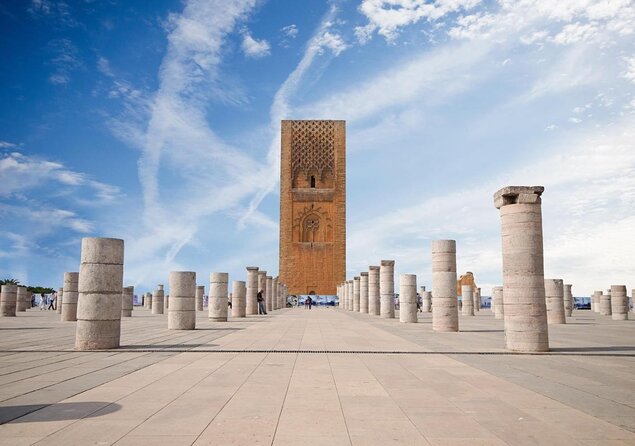
- Private transportation across Morocco with professional drivers, so you’re not negotiating routes day after day
- Superior desert camp night in Merzouga plus a camel ride (camel for each) on your dunes-to-camp segment
- Local historical and art guides in Fes and Marrakech, which really matters in medinas where context is everything
- Chefchaouen’s medina time and Rabat’s kasbah sites are included with free-entry windows
- A route that connects major stops without losing an entire day to backtracking
Price and Logistics: what $1,858.33 really covers
At $1,858.33 per person, this isn’t a “cheap and cheerful” trip. It’s priced like a proper private circuit with transportation, lodging, and guiding where it counts. You’re paying for comfort and time: private rides between regions, 8 nights in comfortable hotels, and 1 night in a superior camp in Merzouga.
You also get a built-in pacing: breakfasts are included for all 10 days, and dinners are included for 3 nights. That said, lunches aren’t included, and dinner isn’t included in Rabat, Chefchaouen, Fes, and Marrakech—so you’ll still want to carry some day-to-day spending money.
Entrance fees are partly on you. The tour flags these extras clearly: Hassan II Mosque ($13), Majorelle Gardens ($15), Bahia Palace ($7), plus an optional site conservation fee for Volubilis ($7). If you’re the type who hates paying surprises, keep a small buffer for monuments and you’ll stay calm.
You can also read our reviews of more private tours in Casablanca
Entering Morocco via Casablanca’s Hassan II Mosque and Rabat’s Kasbah
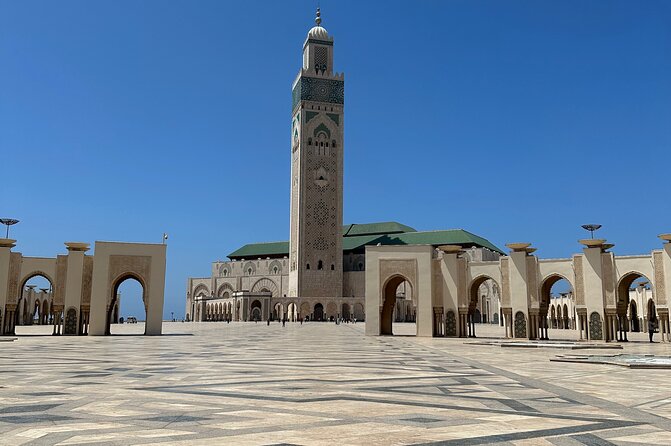
Your trip kicks off in Casablanca with the Hassan II Mosque visit. This is one of Morocco’s most famous religious landmarks, and you’ll have guidance at the sight as part of the ticket package. The catch: the visit runs with other visitors who come in the same time window, so it’s not a quiet private worship-only moment.
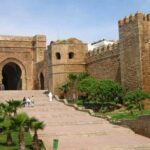
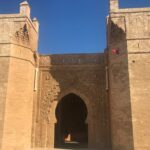
Later that day, you’ll head to the Kasbah des Oudaias in Rabat. This is the kind of stop that rewards you for slowing down: small alleys, thick walls, and a sense of history you can feel in the layout. It’s also a low-stress addition because the site time is listed as free.
For me, the best value here is how the tour balances “one big wow” (Hassan II Mosque) with a “wander well” neighborhood (Kasbah des Oudaias). The first helps you orient to Morocco. The second helps you enjoy it.
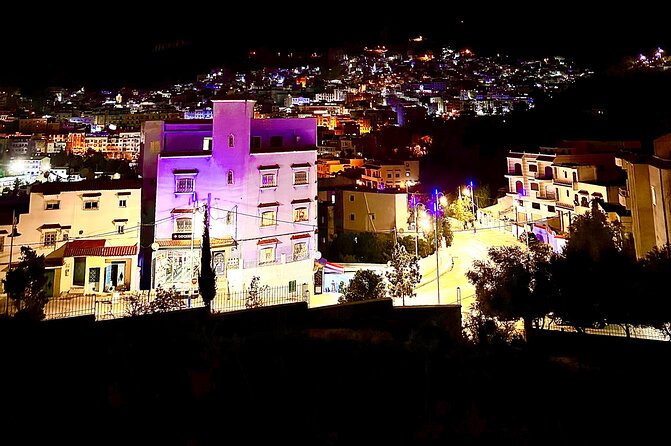
Chefchaouen medina time: blue alleys and a well-chosen square
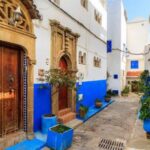
From Rabat, you roll into Chefchaouen’s medina, where time gets spent where it matters: colorful lanes and the famous Uttah Hamam square area. This is the stop where a lot of people go for photos—and yes, it’s photo-friendly—but it’s also where you learn how Moroccan old towns work at street level.
Chefchaouen is easiest when you don’t treat it like a checklist. Give yourself time to get slightly lost, then use your guide to reset and point you toward the lanes that are most interesting. The tour’s timing supports that, with about 2 hours for the medina exploration.
If you’re hoping for a long, unhurried afternoon, you’ll probably want more time here than the day allows—but for a 10-day circuit that also includes the Sahara and Marrakech, this is a smart amount.
Volubilis and Meknes: Roman ruins meet imperial gates
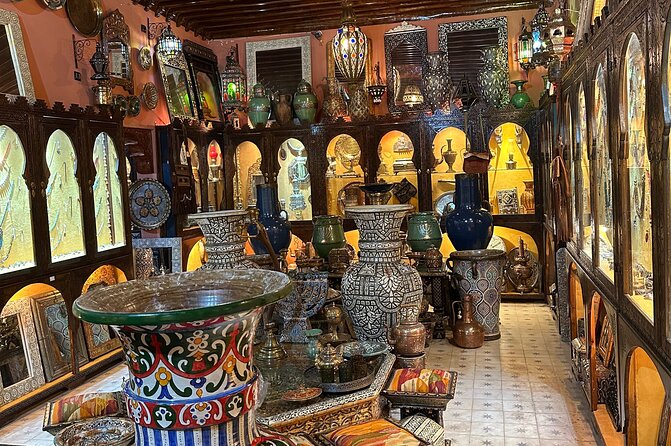
Day 3 mixes two eras in a satisfying way: Volubilis and Meknes. Volubilis is a Roman archaeological site, and the tour includes a guided walkthrough with history explained on-site. Admission isn’t included, but the ticketed part is optional and you can decide your budget once you’re there.
Then it’s onward to Meknes, where you’ll drive through the imperial city and make photo stops at Bab Mansour and Lahdim Square. This works well if you’re trying to get a feel for architecture and city planning without doing a full museum-style day.
A small planning note: with sites like Volubilis, wear comfortable shoes. Uneven ground and walking add up faster than you expect at archaeology stops.
Fes the practical way: Kairaouine, madrasa interiors, and tanneries
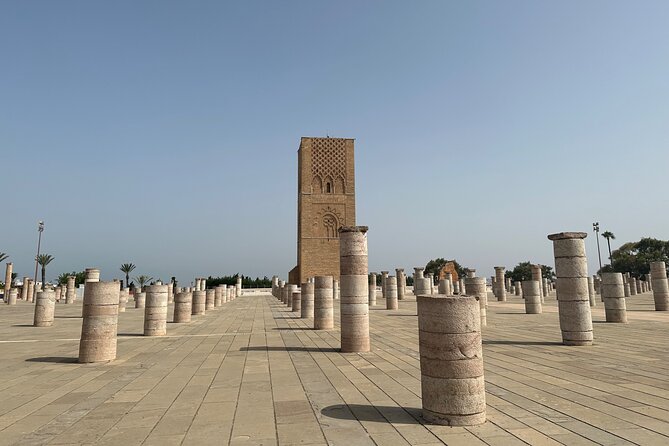
Fes is where the tour leans into guided depth. You start with time around the University of al-Qarawiyyin (Kairaouine) and a guided look at the Fes Medina alleys. In places like this, having context makes the narrow streets feel less random and more intentional.
You also get inside access to a key 14th-century school: Al-Attarine Madrasa (included). That interior visit is a big deal. Madrasa design tells you how education, art, and daily life were linked in Moroccan cities.
Then comes two “watch carefully” experiences:
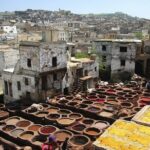
- Tanneries de Fes: you’ll go inside with your guide to see workers from a terrace level, plus learn how leather goods are made.
- Fez Medina Pottery workshops: you’ll visit workshops to see how artisans produce objects like tables and fountains.
If you’re sensitive to the sensory side of tanning areas, plan ahead. You’ll likely be outdoors and on terraces, but it’s still worth knowing this is a working craft environment, not a staged display.
Middle Atlas to Merzouga: Ifrane, cedar forest monkeys, and Ziz Canyon views
The route changes mood fast on Day 5. After breakfast, you head toward Merzouga desert through the Middle Atlas Mountains, with short stops that keep you from feeling like you’re just staring at a window for hours.
First is Ifrane, often described as the Switzerland of Morocco, with a quick chance to touch the city vibe and take photos. Next is Azrou Cedar Forest, where you may spot monkey apes in their natural habitat. No guarantee is stated, so treat this as a chance, not a promise.
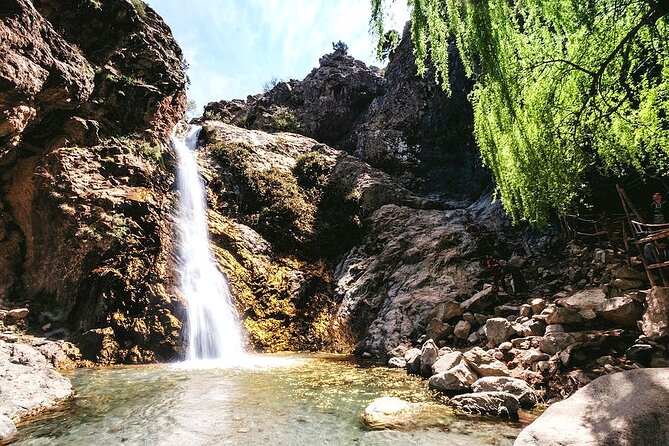
Then you stop at Ziz Canyon, where the goal is the panoramic feel: palm groves and oasis country stretching out below.
This day is valuable because it turns the drive into storytelling. You’re not just getting to the desert—you’re learning what Morocco looks like on the way.
Khamlia, Rissani, and the Merzouga dunes night you’ll plan around
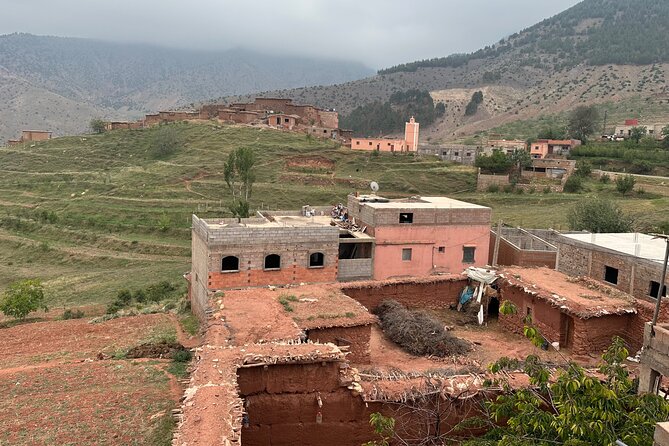
Day 6 is the heart of the Sahara segment. You start at Khamlia, described as a village of Black people, with time to hear spiritual music and share tea. It’s one of those cultural stops where your biggest win is listening, not rushing.
Next you move to Rissani, known for its souk and crafts, and also linked to the Alaouite dynasty origins. The listed time gives you room to explore its Saharan atmosphere without turning it into a sprint.
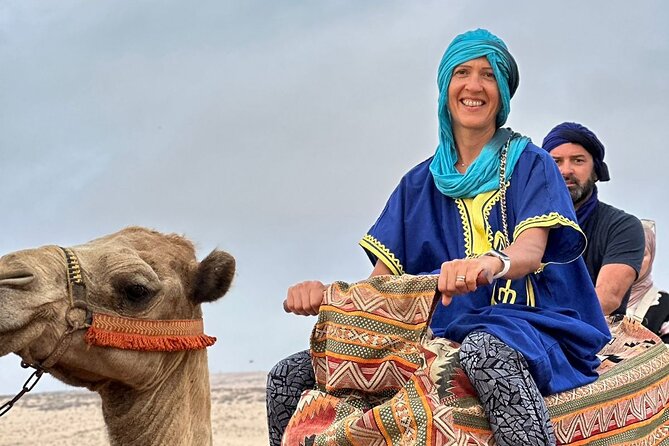
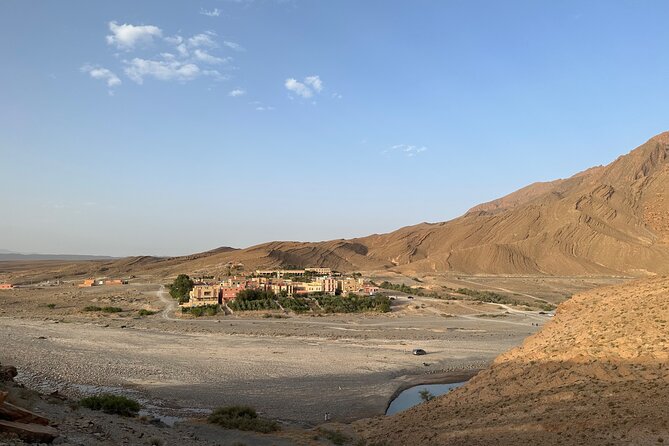
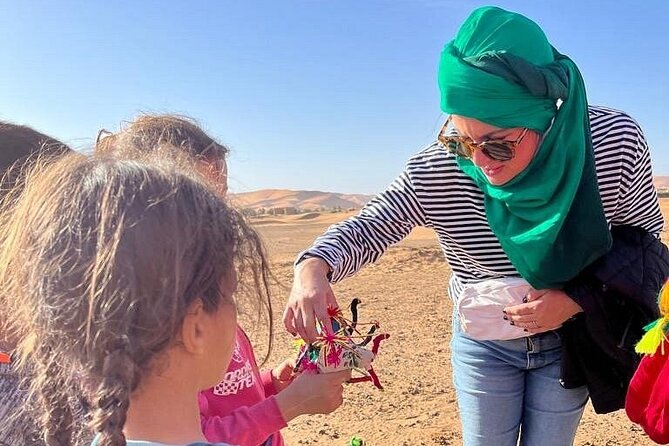
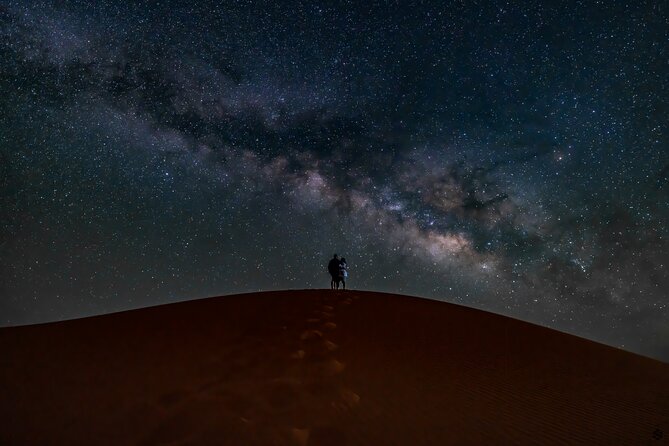
Then the day pivots to the desert itself. You try traditional Berber Pizza in a local restaurant. After that, you return to where your camels are waiting and head out on your camel ride to the Berber Camp. The ride time listed is about 2 hours, and you’ll have photo opportunities on the way.
Practical reality check: desert nights mean temperature swings. You’ll want layers, even if the day feels warm.
Todra gorges to Tinghir: caravan trail scenery before Marrakech
After the Sahara experience, Day 7 follows old caravan-style rhythms toward greener valleys and dramatic rock cuts. You’ll visit Todra River area and Todra gorges, where the goal is wide views and panoramic photo angles of the canyon walls.
Then you stop in Tinghir for valley views and old kasbah-style houses—house-with-castle features that help you see how people built for defense and climate.
This day works because it balances “big canyon moments” with a human scale stop in Tinghir. You get the scale of nature, then you get the scale of settlement.
Ait Ben Haddou and the Tizi n’Tichka Pass: Atlas views on the way to Marrakech
Day 8 connects desert-to-Marrakech by using two major Moroccan “wow corridors”: Ait Ben Haddou and the Tizi n’Tichka Pass. You’ll pass kasbah Taouirt and then reach Ait Ben Haddou, described as one of the most spectacular forts in south Morocco. The tour notes its film legacy, but the real value is architectural: the fort shows you how south Morocco’s building style adapts to harsh conditions.
Then you climb via the Tizi n’Tichka Pass (2260m), where the emphasis is panoramic mountain views. This is exactly the kind of road day that makes the whole trip feel like one continuous journey rather than a sequence of separate tickets.
You end the day in Marrakech, ready for guided city sights.
Marrakech morning outside Koutoubia, plus Bahia Palace and Majorelle Gardens
Marrakech gets a focused but varied Day 9. You start with Koutoubia Mosque, where your guided walk focuses on history and significance. You can’t enter the mosque, but you’ll get close to view it.
Then it’s Bahia Palace, where you’ll go inside. The tour includes the guided visit, but the admission is listed as not included, so plan for that cost if you want to enter.
Next is Jardin Majorelle, with time to see the gardens and villa complex. Admission is also not included ($15). Your tour time is about 2 hours, and the tour notes that the villa houses the Berber Museum, while a separate Yves Saint Laurent Museum opened nearby in 2017.
If you’re rushing through Marrakech shopping streets, Majorelle is a good counterbalance. It’s calmer, more structured, and easier to enjoy even if your feet are tired.
What meals are included (and what you’ll need to budget)
This is one of the spots where you should plan your spending, because food decisions affect your daily rhythm.
Included:
- Breakfasts: 10 (one each morning)
- Dinners: 3 (the tour specifies dinner is included for only part of the trip)
Not included:
- Lunches (day-to-day)
- Dinner in Rabat, Chafchaouen, Fes, and Marrakech (so you’ll be choosing where to eat on those nights)
- Drinks (so even if you buy dinner, you may pay extra for beverages)
Because you’ll sometimes be moving between regions quickly, I recommend you treat lunch as your flexible meal. It’s the one you’ll most likely buy near stops. Dinner you can time with your schedule: after longer sightseeing days, a simple nearby restaurant can be a relief.
Who this private desert tour is for (and who should think twice)
This tour fits you if:
- you want private transportation and professional drivers instead of buses
- you’re okay with a packed route that covers big regions in 10 days
- you like getting both city history and desert-country experiences (not just one or the other)
Consider thinking twice if:
- you hate paying entrance fees on top of the tour price (Hassan II Mosque, Majorelle, Bahia Palace, and Volubilis conservation fee may apply)
- you’re sensitive to working-environment visits like the Fes tanneries
- you prefer totally self-paced travel. This route is structured, which is great for many people, but it leaves less room for sudden detours
One more note: the tour is private (only your group participates), but the Hassan II Mosque visit can involve other visitors in the same time slot. It’s not a contradiction; it just means you’ll still be in a shared public-ticket moment.
Should you book this Casablanca via Desert tour?
I’d book it if you want a Morocco first-timer’s route that’s organized, guided where it matters, and built to protect your time—especially once you reach the desert. The Sahara camp night, camel ride (camel for each), and the smooth push from cities to dunes to Marrakech make this feel like a real journey, not a collection of random stops.
I’d hesitate only if your budget is tight or you strongly prefer eating every meal within a package plan. With lunches and several dinners not included, you’ll need a little cash flow control.
If you want, tell me your travel month and whether you’re more interested in architecture, markets, or pure desert time. I can suggest how to plan your daily spending and which optional entrance fees are most worth prioritizing for your style.
FAQ
Is this tour private or shared?
It’s listed as a private tour/activity, meaning only your group will participate. That said, some specific sites (like the Hassan II Mosque visit) involve other visitors in the same time slot.
How long is the tour?
The duration is 10 days (approx.).
Where does the tour start and end?
It starts in Casablanca, Morocco and ends back at the meeting point. On the final day, you’ll be driven to the airport depending on your flight time.
What’s included in the price?
Included items are private transportation, 8 nights in comfortable hotels, 1 night in a superior camp in Merzouga, desert explorative day, and a camel ride (camel for each), plus historical and art local guides in Fes and Marrakech and breakfast for 10 days. Dinner is included for 3 days.
What is not included?
Not included are drinks and lunches, plus some monument/entrance fees. Dinner is also not included in Rabat, Chafchaouen, Fes, and Marrakech.
Do I need to pay entrance fees for specific sights?
Yes. The tour lists optional entrance fees such as Hassan II Mosque ($13), Majorelle Gardens ($15), and Bahia Palace ($7), plus an optional Volubilis conservation site fee ($7).
Is pickup available?
Pickup is offered.
Does the tour include a desert camp and camel ride?
Yes. You get 1 night in an equipped Merzouga desert camp and a camel ride (camel for each) connected to the ride toward the camp.
When does this tour operate?
The posted operating window is 07/30/2023 – 06/17/2026, and it runs Monday–Sunday with service hours listed as 1:00 AM to 11:30 PM.