REVIEW · MARRAKECH
3-Day Tour from Marrakech to Merzouga Desert
Book on Viator →Operated by Dunas Tour · Bookable on Viator
Morning-to-Sahara is the pace most people dream of. This tight 3-day circuit strings together UNESCO Ait Ben Haddou and Erg Chebbi dunes with enough comfort and guidance to make it feel doable. You get a real cross-section of southern Morocco, from kasbahs and rose valleys to palm groves and fossil country, all in a small group (max 17).
I especially like that the plan mixes big sights with practical stops like workshops for carpets and pottery and time to see how Berber life works day to day. The desert part is built around more than photos: you ride in by camel, sleep in a fully equipped nomad camp tent, and end the night with music.
One consideration: it’s a fast-moving trip with lots of driving and several early starts, so if you want a slow, laid-back schedule, this may feel like a lot.
In This Review
- Key highlights to expect
- Why This Marrakech to Merzouga Desert Route Feels Efficient
- High Atlas Crossing and Ait Ben Haddou’s Kasbah Streets
- Ouarzazate, Taourirt Kasbah, and the Film-Set Feel You Can Actually Walk
- The Rose Valley to Dades Valley: Kasbahs, Curves, and Canyon Air
- Todra Gorges Walk: Free Time in a Canyon That’s Actually Big
- Erfoud Fossils and the Erg Chebbi Dune Moment
- Camel Ride to Nomad Camp: What Makes the Night Feel Complete
- Rissani, Tinejdad, and the Scenic Return Back to Marrakech
- Price, Group Size, and What $209.38 Really Buys
- Who This Tour Suits (and Who Should Rethink It)
- Practical Tips That Make This Route Easier
- Should You Book This Marrakech to Merzouga 3-Day Desert Tour?
Key highlights to expect
- UNESCO Ait Ben Haddou: time to walk the kasbah lanes and spot famous film backdrops
- Todra Gorges walk: free time in dramatic canyon walls (about 300 meters high)
- Erfoud fossils stop: learn how fossil finds get extracted and shaped
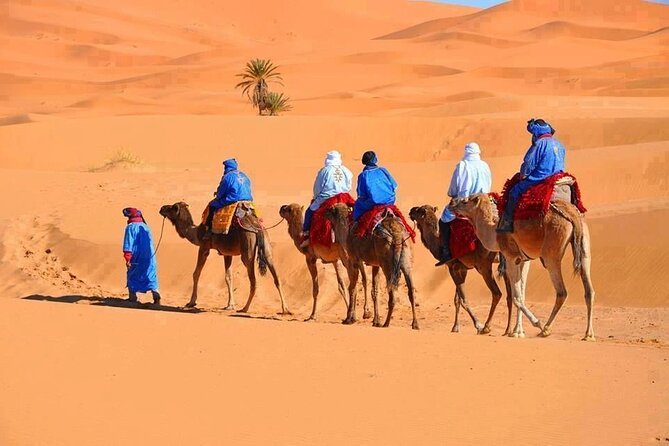
- Erg Chebbi camel ride into camp: a classic Sahara arrival at dune level
- Nomad camp night with drums: dinner, music, and a proper tent setup
- Small-group feel: up to 17 people, so the guide can keep watch and adjust the day
Why This Marrakech to Merzouga Desert Route Feels Efficient
This is the kind of tour that works because it targets Morocco’s “southern trilogy” in a short window: Atlas villages and UNESCO kasbahs, the valley stops in the middle, then the Sahara finale. Instead of treating the desert as an add-on, the schedule builds up to it—first through architecture, then through valleys and gorges, and finally through Erg Chebbi’s dune sea.
At $209.38 per person for about 3 days, the value comes from how much gets compressed into one package: multiple regions, multiple iconic photo stops, and an overnight desert experience that includes a camel ride and camp stay. You’re not just getting transport. You’re getting the route logic that ties everything together.
The small-group size also matters. With a cap of 17 travelers, you typically get a more human pace than the huge bus crowds—more time to ask questions and less time playing luggage shuffle.
A few more Marrakech tours and experiences worth a look
High Atlas Crossing and Ait Ben Haddou’s Kasbah Streets
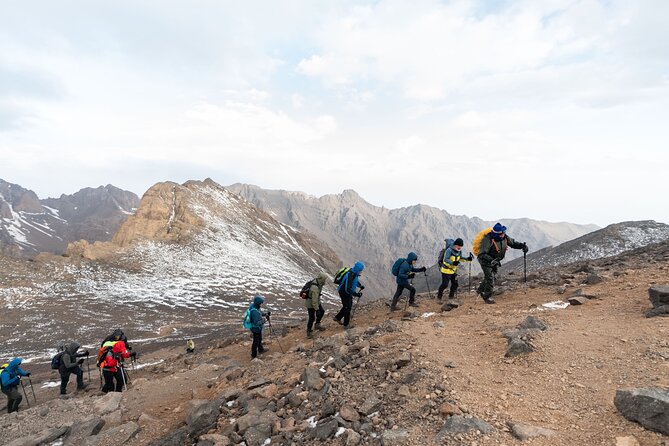
Day 1 starts with a morning push up into the High Atlas Mountains, crossing the Tizi n’Tichka Pass (2,260 meters). If you’re driving Morocco for the first time, this pass does more than move you uphill—it gives you that instant contrast between busy cities and mountain quiet.
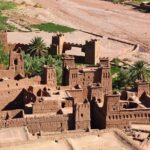
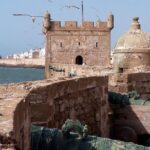
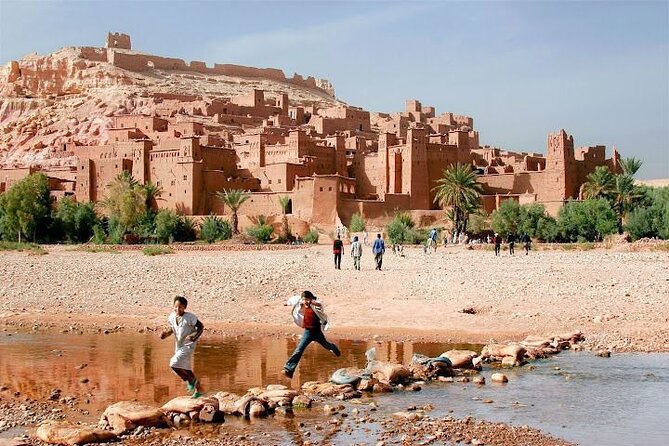
Later, you’ll head to Ait Ben Haddou, a UNESCO World Heritage site, and the timing is great: you get afternoon time to wander and pause without feeling rushed by the next connection. This kasbah is famous for a reason. The mud-brick fortress look has been used for major films, so when you see the courtyards and alley turns, it’s easy to imagine cameras rolling there years ago.
Practical tip: bring a light layer. Kasbah walls can trap wind, and you’ll probably end up stopping for photos more than you planned. Comfortable shoes matter here too—Ait Ben Haddou has uneven stone and dusty paths.
Ouarzazate, Taourirt Kasbah, and the Film-Set Feel You Can Actually Walk
After Ait Ben Haddou, the route points toward Ouarzazate, with time to see key sights like the Taourirt kasbah. Ouarzazate is often called a film hub, but the tour’s real value is how it turns that reputation into something you can observe at street level.
You’ll also see film studios mentioned as part of the experience. Even if you don’t go deep into studio details, the city’s whole vibe is about history you can touch—rolling hills, studio-adjacent sets, and kasbah architecture that looks like it was built for storytelling.
Then you continue to Skoura oasis, a calmer interlude that breaks the long driving day. Oasis stops are worth it because they reset your eyes. After mountain and fortress visuals, the green-and-date-tree contrast feels like a breath before more valley scenery.
The Rose Valley to Dades Valley: Kasbahs, Curves, and Canyon Air
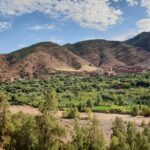
The middle of the day is where southern Morocco starts to “read” like a place with rhythms. You’ll pass through the Valley of the Roses, then continue into Dades Valley, where kasbahs show up in clusters along the route.
Here’s what I think makes this section work: it isn’t just about collecting stops. It’s about changing scenery types. You go from fortress towns to agricultural valley stretches, then into a region known for those scattered kasbah views that look like they’re part of the cliff-line.
You’ll also have time to enjoy a riverside pause in the Dades area. A stop like this sounds small on paper, but it matters on a road-heavy tour. You’re not locked in only “move-move-move.” You’re allowed to step out, breathe, and let the day catch up with you.
One thing to keep in mind: valley days can feel long because you’re traveling through winding roads. If you’re prone to motion sickness, pack what you need. That one small prep can turn the entire experience from tense to easy.
Todra Gorges Walk: Free Time in a Canyon That’s Actually Big
Day 2 leans into hiking-scale scenery with a visit to the Todra Gorges. You’ll travel through the palm grove of Tinghir, which is visually rewarding even before you reach the canyon. Dates, palms, and the agriculture around Tinghir make it feel like more than a backdrop—like people live here year-round.
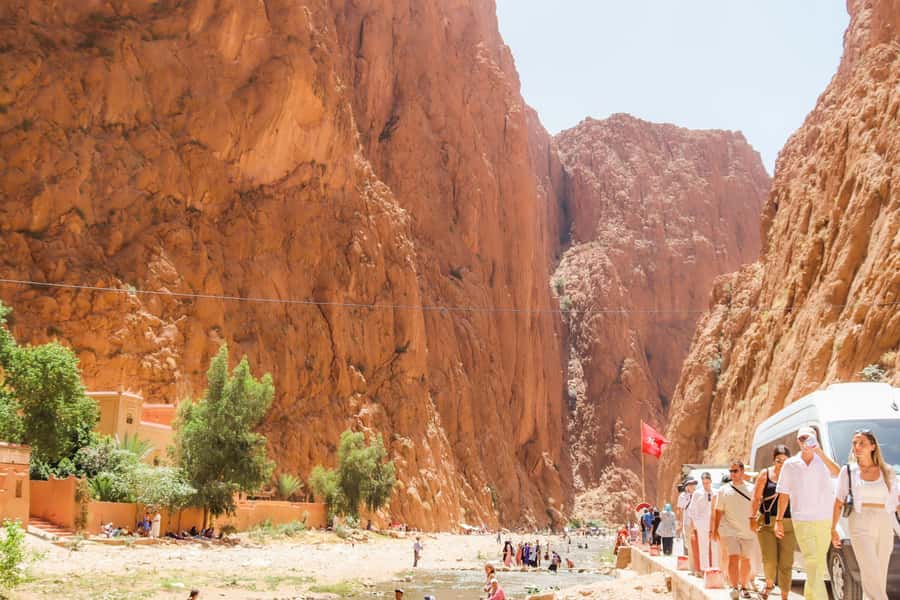
Then comes Todra: you get free time to walk through the canyons, described as around 300 meters high, and it’s a favorite for mountaineers. You don’t need climbing skills to enjoy it. The canyon walls create a sense of scale that photographs can’t fully explain. Even a short walk gives you that “how is the air this cool?” feeling at the bottom.
Practical tip: go early in your free-time window if you can. The canyon can get crowded near peak times, and earlier often feels quieter and cooler. Also bring water. Nothing ruins a gorge moment like forgetting the basics.
Erfoud Fossils and the Erg Chebbi Dune Moment
From Todra, you move toward Erfoud, often called the city of fossils. The stop is designed around seeing how fossils are extracted from quarries and then worked into different shapes. It’s a neat switch from natural scenery to human craft—same southern Morocco theme, different angle.
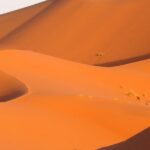
After lunch, you head toward the Erg Chebbi sand dunes, where the tour gives you an open afternoon to enjoy the Berber town feel and the dunes on your own terms. This is a smart choice. Some people want to wander with a camera. Others just want to sit and let the colors change.
Then the desert experience turns into its own story. At the end of the day, you can take in dinner and the idea of drum sound in the desert night—paired with sleeping in a fully equipped nomad camp tent.
Camel Ride to Nomad Camp: What Makes the Night Feel Complete
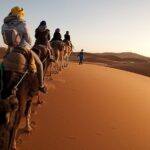
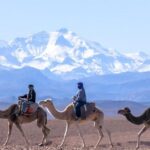
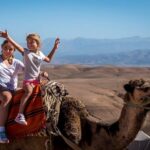
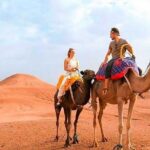
The classic part is the camel ride through Erg Chebbi dunes to reach the camp. This isn’t just a transport gimmick. You’re on the dunes long enough for the environment to become the main character—the silence, the wind, the sand texture under your feet when you dismount.
The tour describes the camp as a fully equipped nomad camp tent, and the overall tone from the experience is that comfort is taken seriously for a short trip. You’ll be able to shower, then settle in for the evening.
The desert night is also tied to music, with drum sound mentioned as part of the atmosphere. That matters because it gives the evening structure. You’re not sitting in the dark hoping something happens. The camp experience is built to make the night feel like an event.
One more practical thought: keep expectations realistic about desert weather. Even when days are warm, nights can cool quickly. Bring something for warmth, not just for style.
Rissani, Tinejdad, and the Scenic Return Back to Marrakech
Day 3 is the return leg, and it’s planned to keep the drive from feeling like punishment. You leave Merzouga after a good shower and breakfast, then head through Rissani, described as an important city for food, animals, and crafts. This stop helps break the long-distance vibe with local texture.
Next is Tinejdad, where you’ll have a delicious meal. Stops like this are more valuable than they look. On a desert-centered tour, you’ll spend money and energy on the big sights—so it helps when the food moments are included and timed well.
You also get a panoramic view stop along the way, described as stunning, with a river viewpoint. That’s a nice emotional reset before the tour reaches Ouarzazate again, then continues until arrival back in Marrakech.
By the time you roll into the city, you won’t feel like you just rushed from point A to point B. You’ll have layered the journey with valley air, canyon scale, and the Sahara’s open horizon.
Price, Group Size, and What $209.38 Really Buys
Let’s talk value without pretending everything is perfect.
At $209.38 per person for roughly 3 days, you’re paying for four main things:
- Transport across multiple regions from Marrakech to the desert and back
- Time with major icons that would be hard to string together on your own without serious planning
- The included desert component: camel ride + fully equipped nomad camp tent + dinner/night atmosphere
- A staffed experience with professional guidance and in-route care
The reviews and descriptions also point to strong organization: guides who explain details clearly, and staff who stay on top of comfort and timing. Names that show up often in guide references include Mohamed and Jamal. You may also see coordination-style support associated with Jousset and lodging names like Riad Saadia along the route. (You can’t guarantee a specific person, but it’s a good sign the team’s guide culture is consistent.)
Group size is capped at 17 travelers, which is part of the value equation. Too many day trips pack in huge numbers and call it a group tour. Here, the smaller maximum helps keep the experience human.
If you’re the type who wants “total freedom,” you might prefer independent travel. But if you want a clean, guided route with the desert overnight handled, this price starts to look like a practical shortcut.
Who This Tour Suits (and Who Should Rethink It)
This tour fits best if you:
- Want Marrakech to Merzouga in a short time with big highlights included
- Like the idea of a structured route with time built in for walking and free moments
- Prefer group support for logistics, especially for the desert night and camel ride
- Are comfortable with early mornings and long road days for the payoff
You might rethink it if you:
- Want a slow travel pace with minimal driving
- Dislike group schedules
- Are very sensitive to cramped movement during transfers (desert tours tend to mean long seats)
One nice detail: the tour notes that most travelers can participate, which usually means they’re used to handling different comfort levels within the group.
Practical Tips That Make This Route Easier
A few prep moves can make a Marrakech-to-Erg Chebbi trip feel smooth:
- Wear grippy shoes for Todra Gorges and kasbah walking. The ground can be uneven, dusty, or both.
- Bring a light layer for desert nights. Warm day, cool evening is common in these desert-edge seasons.
- Pack water for free-walk time in the gorge. Lunch stops exist, but free time is still on you.
- Charge your phone/camera early the night before. You’ll want photos during dune light and at canyon scale.
- Set expectations for the driving day. Valleys and passes are part of the story, but they take time. Bring something to focus on during the rides.
If you can, choose the kind of mindset that matches the route: you’re moving through Morocco’s “chapters,” not staying in one place for deep stillness.
Should You Book This Marrakech to Merzouga 3-Day Desert Tour?
If your main goal is to reach Erg Chebbi and experience it the standard way—camel ride, desert camp, and a complete night—this tour makes a strong case. The route also avoids dead time by stacking Ait Ben Haddou, Todra Gorges, Erfoud fossils, and valley scenery into a compact plan.
Book it if you want guided convenience with real moments to walk, look, and breathe. Hold off if you want a low-structure holiday or you hate long driving stretches.
For most people chasing the Sahara in a short window, this one is a solid, well-organized way to get there—without turning Morocco into a solo logistics project.