REVIEW · AGADIR
cooking with rabab Tagahzout
Book on Viator →Operated by Rabab · Bookable on Viator
Tagines taste better when you learn them by hand. Cooking with Rabab turns a simple meal into a real Berber afternoon, with Moroccan mint tea and hands-on recipe work in a cozy kitchen setting. You’ll cut, mix, cook, and assemble, while Rabab keeps things friendly and practical.
What I like most is how you leave with both skills and a full plate of what you made. You get that mix of food craft and culture talk, plus the setting often includes Atlantic or bay views from the kitchen/balcony. One thing to consider: this is an active class, so if you want a mostly sightseeing experience, you may find the time in the kitchen a bit more hands-on than you expected.
In This Review
- Key things to know before you go
- Rabab’s Berber village kitchen: what the experience is really like
- From mint tea welcome to ingredient prep: the flow of the class
- Tagines on the menu: preserved lemons, kofta, veggie, and fish
- Stone-oven bread and sweets: what you actually taste and take away
- The Atlantic-bay setting: why the view makes the food taste better
- Price and timing: is $47.12 a good deal for 3 hours?
- Pickup, mobile tickets, and how to plan your afternoon in Taghazout/Agadir
- Who should book this cooking class (and who might not)
- FAQ
- Where does Cooking with Rabab happen?
- How long is the cooking class?
- What does it cost?
- Is pickup offered?
- Do I get a mobile ticket?
- Is this a private experience?
- How does the class work?
- Do you learn Moroccan mint tea?
- Is there bread or a stone oven involved?
- What if I need to cancel?
- Should you book Cooking with Rabab in Taghazout?
Key things to know before you go
- Hands-on cooking time where you follow instructions and do the prep, mixing, cooking, and assembling
- Mint tea + sweet welcome at the start, so you ease into Moroccan flavors right away
- Stone-oven bread in the mix, not just a dish or two on a plate
- Tagines you can name and recreate like chicken with preserved lemons, kofta, veggie, and fish (depending on the session)
- Seated with sea views while you eat, often over the Atlantic or bay
- A small, friendly vibe that can feel like cooking with a friend, not a rigid class
Rabab’s Berber village kitchen: what the experience is really like
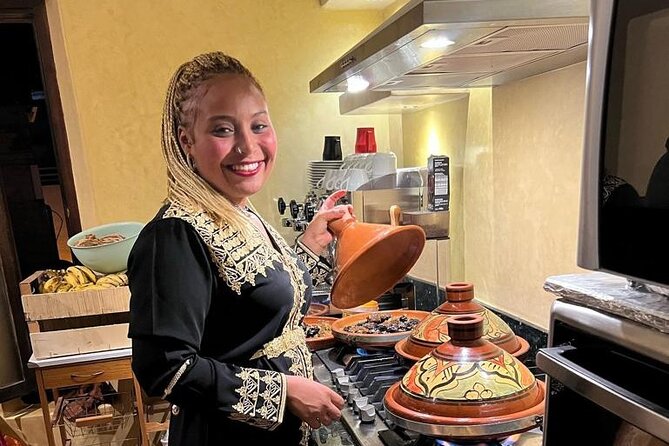
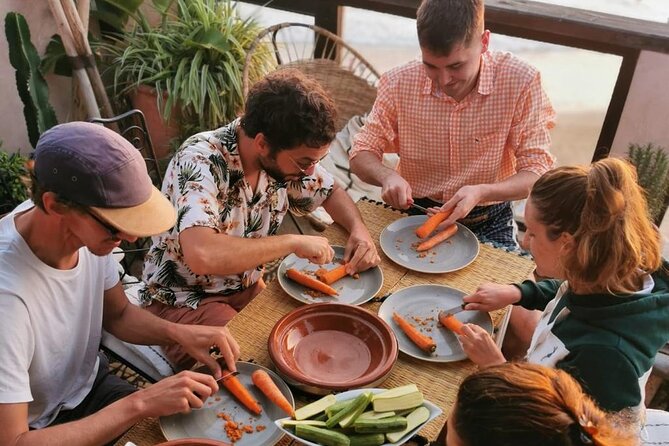
This cooking class is built around doing, not watching. Rabab teaches you as you work—so you’re not stuck in the role of observer. You’ll prepare ingredients, cut and mix, cook, and assemble your dishes, then taste your results. The pace feels relaxed enough for questions, but structured enough that you actually finish a meal you can be proud of.
The vibe also feels distinctly social. People talk, share cooking tips, and generally connect over tea. One of the most repeated highlights is that it feels personal—more like spending time in someone’s home kitchen than sitting through a lecture. If you enjoy conversation while you cook, this is a big part of the value.
Also, you’re not doing this in a generic “touristic kitchen.” Several accounts describe a Berber village setting, sometimes with a balcony or kitchen viewpoint aimed toward the sea. That matters because Moroccan cooking is tied to everyday life—textures, spices, timing, and how food fits into a view, not just into a recipe card.
You can also read our reviews of more cooking classes in Agadir
From mint tea welcome to ingredient prep: the flow of the class
Most sessions start with a warm welcome and quick Moroccan basics. You’re likely to begin with homemade sweets and a Moroccan mint tea lesson. Even if you already know mint tea from cafes, you’ll learn how it’s approached in a home-style rhythm, and it sets the mood for the rest of the afternoon.
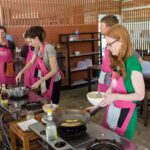
Then you move into the real work: ingredient prep. Rabab’s style is hands-on instruction—so you’ll be cutting, mixing, and assembling as you go. The good news is you’re not dropped into the deep end. You get clear steps, and you can ask questions while you work. That question time is where you often pick up the little practical bits: how to balance flavors, what to watch for as things cook, and how to build a tagine so it comes out right.
Timing-wise, this is around 3 hours, which is perfect for a concentrated cooking window. You’ll be busy enough to feel like you truly participated, but it won’t eat up your whole day.
Tagines on the menu: preserved lemons, kofta, veggie, and fish
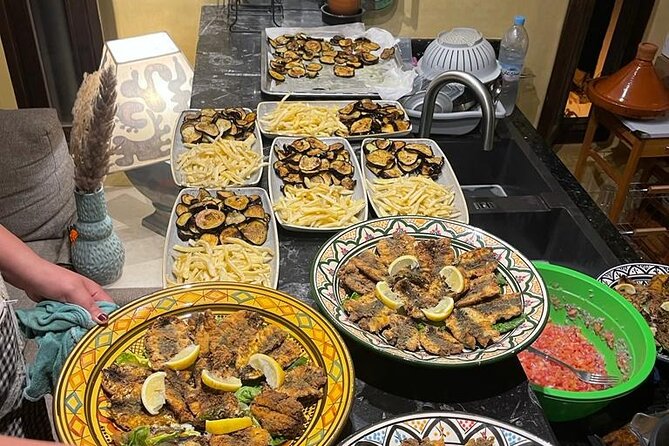
The biggest payoff is that you don’t just learn one “token” dish. You’ll typically make a full meal, often centered on tagine cooking. The exact menu can vary by session, but the examples you can expect to see include:
- Chicken tagine with preserved lemons
- Vegetable tagine plus Moroccan salad
- Kofta tagine (ground meat slow-cooked in tagine style)
- Fish tagine, where slow cooking helps the flavors blend
Why this matters: tagines aren’t just about the pot. They’re about method—how ingredients layer together, how spice behaves with heat, and how long the dish needs to become tender. When you make the dish yourself, you start understanding what you were tasting in restaurants, not only the final result.
You’ll also likely get a chance to taste along the way. Being able to sample your own cooking is one of the reasons this class sticks with people. You get immediate feedback from the process, not just a final plated meal at the end.
And yes, the class can include different tagine combinations depending on what Rabab plans for the group. One account mentions learning two tajines in the same day, so don’t be surprised if your menu is more than one pot.
Stone-oven bread and sweets: what you actually taste and take away
A lot of Moroccan cooking classes stop at lunch and call it a day. This one adds more comfort-food moments—especially around bread. Some sessions include making bread in a stone oven, which is memorable because you’re seeing how bread changes once the heat hits. You’re not just eating bread; you’re participating in the process.
Beyond bread, you’ll almost certainly get sweets as part of the welcome. People describe homemade treats right when you arrive. That sweet start is not just a nice touch—it helps your palate shift into Moroccan flavors before you start cooking with spices.
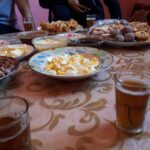
There’s also mention of cake in the mix, and a recurring theme is that the meal feels complete, not like a few bites of training food. If you care about tasting what you make, this class does that well: you cook, then you sit down and eat what you prepared.
Practical tip: pace yourself with the tea and sweets. Mint tea can be strong and very drinkable, and once you start cooking, you’ll want enough appetite left for the meal.
The Atlantic-bay setting: why the view makes the food taste better
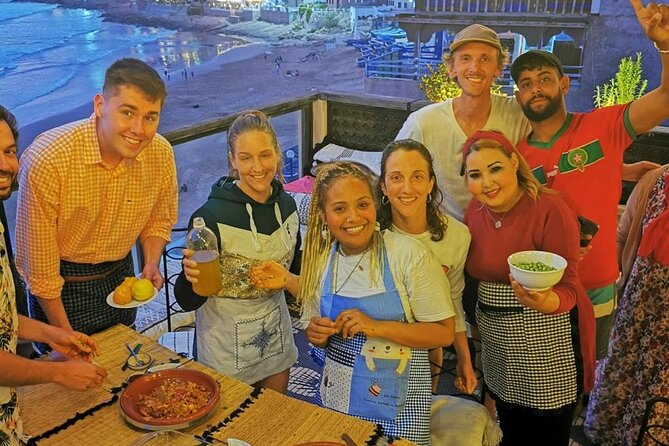
One of the reasons people recommend this so often is the location feel. Multiple descriptions point to cooking with sea views—sometimes with direct Atlantic sightlines—from a kitchen space or balcony. That turns the class from a standard “activity” into an experience with atmosphere.
Why the view is more than decoration: Moroccan cooking is slow and sensory. You’re building flavors while the day stays calm, and you’re eating with a horizon in front of you. That changes how the whole meal lands. Food becomes part of the moment, not just the destination.
If you’re spending time in Taghazout and want one experience that feels local rather than staged, this setting helps. Even if you’ve eaten tagine before, you’re likely to remember this meal because you cooked it with your own hands and ate it while looking at the water.



Price and timing: is $47.12 a good deal for 3 hours?
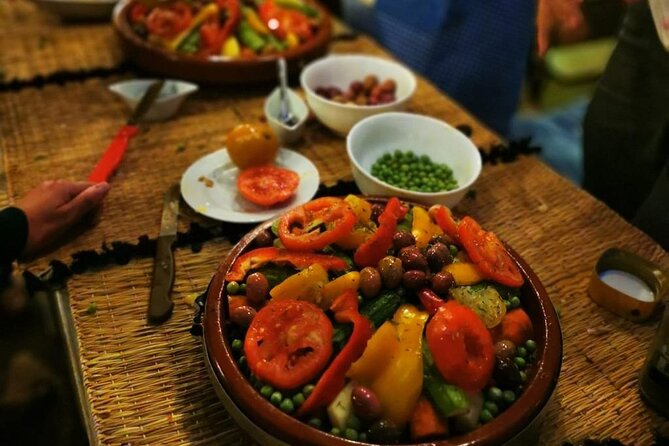
For $47.12 per person and about 3 hours, you’re paying for more than a meal. You’re paying for instruction, hands-on cooking time, and the fact that you typically eat a multi-part Moroccan spread that can include tagine(s), salad, tea, and sometimes bread and sweets.
You also get convenience items that make the class easier to fit into your day:
- Pickup offered, so you aren’t scrambling for a ride
- Mobile ticket, so you don’t need to print anything
- Near public transportation, if you do prefer to handle your own route
- A private tour/activity setup, meaning only your group participates
That private aspect is a real value point. It usually means you can ask questions without feeling like you’re competing for attention. And based on descriptions, the group size can feel small enough to get personal coaching—sometimes even very close to a family-style feel.
Booked about 19 days in advance on average, which is a decent sign that it’s popular. If you’re aiming for a specific date, it’s smart to book early.
Pickup, mobile tickets, and how to plan your afternoon in Taghazout/Agadir
Because pickup is offered and the activity runs about 3 hours, you can plan this as your anchor slot for an afternoon. I’d treat it like a meal plus a workshop. If you’re bouncing between Agadir and Taghazout, choose a time that doesn’t force you into rushing. The cooking itself takes focus, and you’ll enjoy it more if you arrive calm.
Since the class is near public transportation, you have options if pickup timing doesn’t match your plans. Still, if you can use pickup, do it. Less logistics means more time to settle in, smell spices in the air, and start tasting tea right away.
Bring a curious mindset, not fancy expectations. This isn’t a show where you sit quietly for 90 minutes. It’s a working kitchen, and that’s exactly why it’s worth it.
Who should book this cooking class (and who might not)
This experience is a great fit if:
- you want hands-on instruction, not just food tasting
- you like Moroccan flavor classics like tagine, preserved lemons, mint tea, and salad
- you enjoy learning culture through conversation while you cook
- you’re traveling in a small group and want something that feels personal
It might be less ideal if:
- you’re not interested in cooking tasks at all
- you need a very fast-paced, mostly sightseeing itinerary
- you prefer strict schedules with minimal interaction
If you like the idea of learning how tagine cooking works and then eating it with a view, book it.
FAQ
Where does Cooking with Rabab happen?
The experience is listed in Morocco, with location shown as Agadir.
How long is the cooking class?
It runs for about 3 hours.
What does it cost?
The price is $47.12 per person.
Is pickup offered?
Yes, pickup is offered.
Do I get a mobile ticket?
Yes, the experience includes a mobile ticket.
Is this a private experience?
Yes. Only your group participates.
How does the class work?
You’ll follow Rabab’s instructions to prepare ingredients, cut, mix, cook, and assemble dishes. You can also ask questions, taste the preparations, and share culinary advice with other participants.
Do you learn Moroccan mint tea?
Yes. Reviews mention learning how to make Moroccan mint tea.
Is there bread or a stone oven involved?
Yes. Reviews mention making bread in a stone oven.
What if I need to cancel?
Cancellation is free. You can cancel up to 24 hours in advance for a full refund.
Should you book Cooking with Rabab in Taghazout?
If you want one activity that combines real cooking, Moroccan tea culture, and a food experience you can talk about later because you actually made it, I’d book this. The value is strong for the time: hands-on coaching, a full meal you taste, and the kind of sea-view setting that makes the afternoon feel special without being overly complicated.
Just make sure you’re okay with the fact that you’ll be doing real kitchen work. If that sounds fun, you’ll likely have a memorable Berber village cooking day with Rabab.