REVIEW · MARRAKESH
2 days Mount Toubkal hike
Book on GetYourGuide →Operated by Toubkal Ascent · Bookable on GetYourGuide
Toubkal is the kind of hike you remember. This 2-day trek in Morocco’s High Atlas trades long sightseeing detours for real mountain time, including the walk up from the Imlil Valley to the refuge and then the climb to the summit at 4167m. I love how the trip blends big mountain goals with people and places, from Moroccan tea stops to Berber villages and traditional meals. You’ll also get panoramic views without needing a week off. One thing to consider: it’s an intense ascent with limited built-in acclimatization, and pacing can feel fast on some departures.
What makes this trek especially interesting is how “simple” it feels once you’re on the trail: a local guide, a cooked lunch at the Chamharouch shrine area, and a mule helping carry luggage and food. You’re walking a lot on both days, with a long Day 2 that can hit 10–11 hours total, so you’ll want to be honest about your fitness before you sign up.
In This Review
- Key things to know before you go
- Entering the High Atlas: Imlil pickup and first views from Marrakech
- Day 1: Imlil Valley to basecamp and Chamharouch lunch
- Night at the refuge: food, mule help, and altitude comfort
- Day 2 summit to 4167m: the key hours that make or break it
- The long descent back to Imlil: 4–5 hours of focus
- Price and value: what $176 buys you in the mountains
- Guide quality and group management: how to read the safety signals
- What to pack for Toubkal in just two days
- Who this 2-day Toubkal hike is best for (and who should skip it)
- Should you book this 2-day Mount Toubkal trek?
- FAQ
- Where is the meeting point in Marrakech?
- What are the main walking times on each day?
- What’s included in the price, and what’s not?
- What should I bring for the hike?
- Is accommodation provided during the trek?
- Is this trek suitable for everyone?
Key things to know before you go
- High Atlas summit goal in just 2 days with a Day 2 push to 4167m
- Imlil as the jump-off point (about 1740m) with ~1h30 drive from Marrakech
- Tea, lunch stops, and cook-supported meals during the hike
- Mule carry for luggage and food, so you’re not hauling everything
- Refuge or tent overnight depending on conditions and your group
- Guide quality affects the experience (some departures highlight guides like Hassan, or guide pairs such as Mohammed and Mohammed)
Entering the High Atlas: Imlil pickup and first views from Marrakech
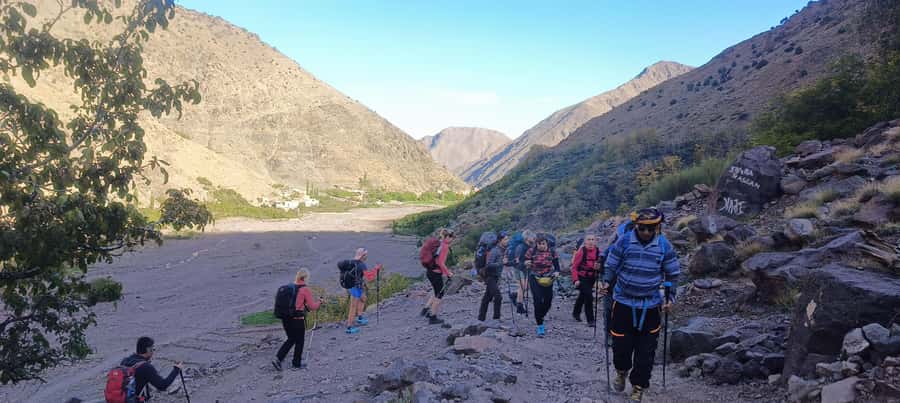
Most days start like this: you’re picked up in Marrakech and driven toward Imlil, which sits around 1740m in the High Atlas. The ride takes about 1 hour 30 minutes, long enough to settle in, get your questions ready, and adjust to mountain time. Your driver meets you at Café de France in Marrakech and holds your name, which helps if you’re juggling backpacks, maps, and morning confusion.
The best part of getting to Imlil is what it signals. This isn’t a “drive to a viewpoint” outing. Once you’re in the valley, the trek becomes a series of purposeful steps: tea first, then walking. You’ll pass through the kind of terrain that makes the Atlas feel immediate, not distant, and you’ll start seeing why Toubkal is a magnet for hikers from all over.
A quick practical note: since the itinerary moves from the valley up toward basecamp and then higher on Day 1, you’ll feel the altitude. You don’t need drama, but you do need respect for the air and the effort level—especially on a tight 2-day schedule.
You can also read our reviews of more hiking tours in Marrakesh
Day 1: Imlil Valley to basecamp and Chamharouch lunch
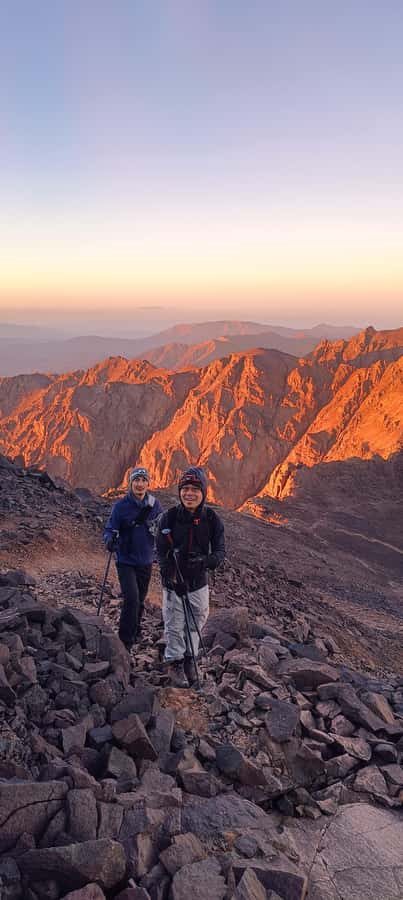
Day 1 starts with that classic mountain rhythm. After pickup, you reach the Imlil Valley and meet your local guide. There’s a short break for Moroccan tea, which is both comforting and useful. It helps you refocus before the first serious climb starts.
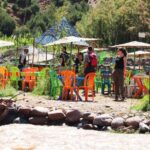
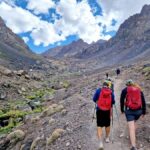
Then you set off walking toward basecamp at 3207m. The walk continues uphill, and along the way you stop at Chamharouch shrine for lunch, with the meal prepared for you. This lunch stop matters more than it sounds. It’s not just food; it’s structure. After hours of steady climbing, having a fixed point to regroup, eat, and check how your body is handling the altitude can make the rest of the day easier.
From there, you keep gaining elevation up to the refuge for the night. The Day 1 hiking time is typically about 5 to 6 hours. So even though it’s not “summit distance,” it’s still a full day of uphill effort. If you’re the type who likes a slower start, plan to lean into steady pacing rather than sprinting early. On a 2-day trek, small decisions early on can save you later.
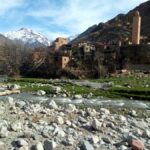
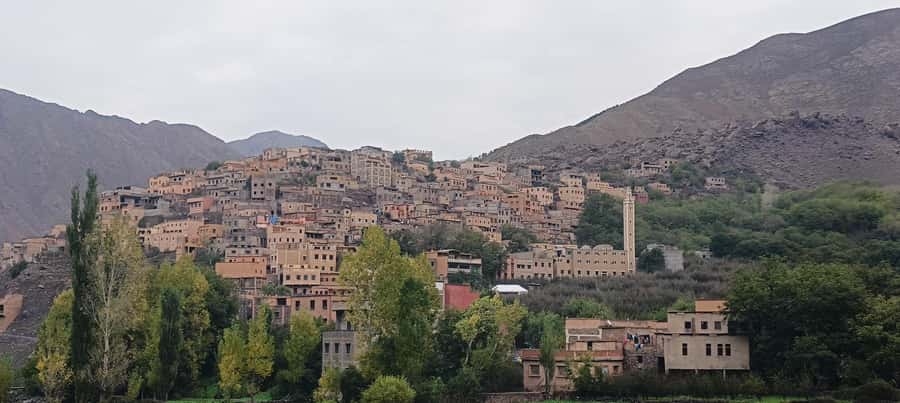
You’ll also be moving through areas known for Berber villages, and that’s part of the appeal here: the mountains aren’t just scenery; they’re home to communities with traditions you can see in daily life. Even without a museum vibe, the setting feels real.
Night at the refuge: food, mule help, and altitude comfort
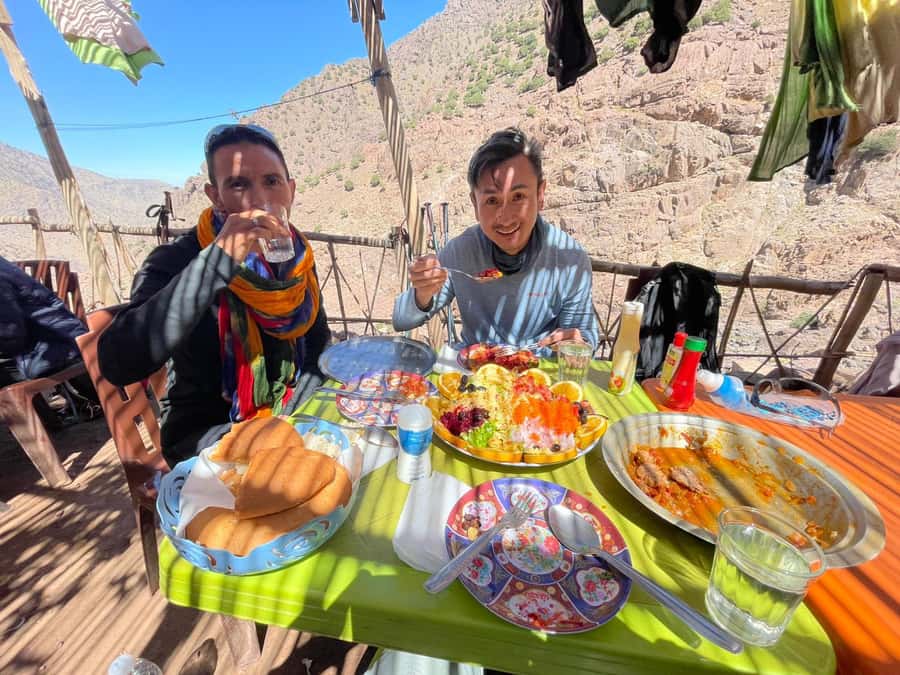
Overnight is a key part of why this trek works for many people. You don’t just suffer your way up and hope for the best. You settle at a refuge or tent setup for the night, and that matters when you’re hiking hard the next morning.
Two practical supports are baked in:
- A cook prepares your meals during the trek, and you get all meals for the journey.
- A mule carries your luggage and food, so your pack weight stays more manageable.
That doesn’t mean your bag is light as a feather. You still need to carry personal items, and you’ll want to keep essentials easy to reach. But compared with treks where you’re responsible for everything, mule support turns the hike into something you can sustain.
You’ll also likely get another tea break along the way, which sounds small until you’re tired. Warm drinks help on mountain days, especially when the air gets thinner and your body starts asking more questions.
From an “altitude reality” perspective, the schedule is intense. The walk starts at valley elevation and climbs toward high points quickly, and Day 2 summit happens the next morning. This can be totally doable, but it’s not the kind of plan where you can ignore how you feel. If you’re prone to altitude discomfort, keep your pace conservative and tell your guide early if something feels off.
Day 2 summit to 4167m: the key hours that make or break it
Day 2 is the reason you booked. You start with breakfast at the refuge, then climb toward the summit at 4167m. The uphill hike is around 3 hours, and then you’ll descend back down to the refuge in about 2 to 3 hours, depending on conditions and your group pace.
This is where pacing becomes a big deal. The summit experience isn’t just about reaching the top; it’s also about how long you get to take it in. Some departures seem to manage pacing well, with guides who keep people together and build in time for the moment. Other situations can move faster, which may mean less time up top for photos and settling your breath.
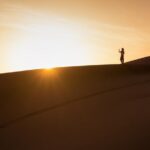
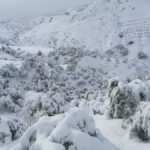
You’ll want to plan for the fact that you may reach the summit, then quickly turn your attention to descent. A short summit stop is common on a trek designed around a return to Marrakech the same day. The upside: your effort gets rewarded with huge panoramic views over the High Atlas, and you’ll feel the satisfaction of standing on the highest peak in North Africa.
After returning to the refuge, you get lunch, then start the long descent. This full Day 2 is typically about 10 to 11 hours of walking total.
The long descent back to Imlil: 4–5 hours of focus
Once you’re back from the refuge, your body shifts gears. The hike down toward Imlil takes about 4 to 5 hours via the same route. That’s a long stretch when your legs are already tired, and it’s easy to lose focus when the goal feels achieved.
Here’s the practical mindset that helps: treat the descent like part of the climb, not the “easy part.” Your knees and ankles will thank you if you move carefully, keep steps controlled, and don’t rush the ground just to finish quickly. With a route that’s the same way you came up, footing matters.
When you reach Imlil, the trek ends with pickup and the drive back to Marrakech. That final transfer is often a relief because you finally stop walking, even if you still feel the day in your muscles.
The big takeaway from this trek’s timing is simple: it’s a two-day trip that asks for full-day stamina. If you can handle the uphill on Day 1 and the sustained push on Day 2, the schedule feels like a challenge with a clear arc.
A few more Marrakesh tours and experiences worth a look
Price and value: what $176 buys you in the mountains
At $176 per person for a 2-day trek, the value depends on what you’re comparing it to. In this price range, you’re paying for a lot of the invisible mountain work: transport, guiding, meals, and logistics.
What’s included:
- Transport from and back to Marrakech
- Professional mountain guide
- All meals (traditional Moroccan meals during the tour)
- Mule for carrying luggage and food
- Cook to prepare your meals
- Accommodation at the refuge or in tent
- Tea on the way
What’s not included:
- Drink water
- Equipment
That mix is common for mountain treks, but it’s still worth planning around. If water isn’t provided, bring a realistic plan for hydration. And because equipment isn’t included, you’ll want to arrive prepared with proper hiking footwear and basic sun protection.
One reason this trek can feel like good value is that it’s not just “walk and hope.” The meals are prepared for you, and you have lodging at the refuge. Those two things reduce the headache load, and on a summit trek, reduced hassle usually means more energy for the climb.
Guide quality and group management: how to read the safety signals
A Toubkal trek lives or dies by guidance. A strong guide helps with pace, navigation, and decision-making when the mountains get changeable. One thing I like in how this trek is set up is that you do get a live tour guide and the language options are clear: English, French, and Arabic.
At the same time, group handling can vary. Some departures may have a single guide managing a larger group, while others run with two guides. You’ll often feel the difference most during the summit window, where moving as a group can affect how much time you get at the top.
To protect yourself, look for these practical signs before you assume it’ll all be smooth:
- You receive a clear plan for Day 2 timing and expectations.
- The group stays together, or the guide explains how they manage slower hikers.
- You know what to do if you fall behind.
From the information shared around past departures, guides like Hassan show up in people’s positive memories, and some groups have been led by guide pairs such as Mohammed & Mohammed, praised for keeping pace steady and sharing information during the trek. That’s the kind of leadership that helps you feel safe and less like you’re just trying to keep up.
If you’re booking and you’re particularly sensitive to pacing or want a more “together” vibe, ask your operator what the typical group size and guide ratio look like for your departure date.
What to pack for Toubkal in just two days
This trek has a short duration, but it doesn’t mean you can pack lightly in the wrong way. The essentials listed for you are simple and practical:
- Comfortable shoes
- Sunglasses
- Hat
- Sunscreen
- Sleeping bag
Since drink water isn’t included, you should also plan around hydration—at minimum, make sure you have a way to carry water and drink regularly. You can also expect the mountain sun to be strong, which is why the shade of a hat and the protection of sunglasses matter.
For the sleeping part: you’ll have accommodation at a refuge or tent, and you’ll be sleeping in mountain conditions where a sleeping bag is the difference between fine and miserable. If you don’t own one, this is the item to handle before you go.
Who this 2-day Toubkal hike is best for (and who should skip it)
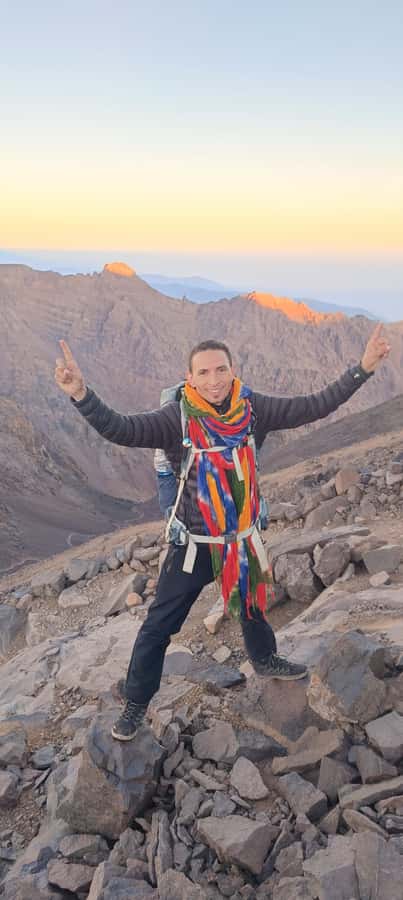
This is a serious hike. Even on paper, it involves steep effort and long walking days, especially Day 2 when you may log 10 to 11 hours total.
It’s not suitable for:
- People with mobility impairments
- People over 95 years
Fitness-wise, you’ll want to be comfortable with sustained uphill hiking and a long descent. If you’ve hiked before and you can handle altitude changes, this trek feels like a focused win: you get a true summit experience without needing a multi-week expedition.
If you’re unsure, be cautious about two things:
- The trek can feel demanding with limited acclimatization time.
- Group pacing can affect how much summit time you get.
This is best for travelers who want mountains over museums, who like structured itineraries, and who are happy to sweat for a clear reward.
Should you book this 2-day Mount Toubkal trek?
Book it if you want a clear, challenging goal in a short window. The itinerary is built around getting to the highest peak in North Africa, with meals, tea breaks, and lodging handled for you. If you enjoy cultural moments along the way—like Moroccan tea and Berber village encounters—and you’re fit enough for long walking days, this is a great way to experience the High Atlas fast.
Skip it (or look for a different plan) if you’re not comfortable with intense elevation gain and long hours on your feet. Also consider booking only if you’re confident you can handle the summit day push on a tight schedule.
If you do book, go into it with the right mindset: pace matters, hydration matters, and you’ll get more out of the summit if you’re not fighting your body the whole day.
FAQ
Where is the meeting point in Marrakech?
Your driver holds your name at Café de France in Marrakech.
What are the main walking times on each day?
Day 1 is about 5 to 6 hours walking, going from the Imlil area up toward basecamp and then to the refuge for the night. Day 2 is typically around 10 to 11 hours total, including the summit climb (about 3 hours up and 2 to 3 hours down to the refuge), lunch, and then the long hike back down to Imlil (4 to 5 hours).
What’s included in the price, and what’s not?
Included: transport to and from Marrakech, a professional mountain guide, all meals, tea, mule support for luggage/food, a cook, and accommodation at the refuge or in a tent. Not included: drink water and equipment.
What should I bring for the hike?
Bring comfortable shoes, sunglasses, a hat, sunscreen, and a sleeping bag.
Is accommodation provided during the trek?
Yes. You’ll stay at the refuge or in tent for the night, as part of the included package.
Is this trek suitable for everyone?
It’s not suitable for people with mobility impairments or people over 95 years.