REVIEW · MARRAKECH
2-Day Private toubkal trek from marrakech
Book on Viator →Operated by Morocco Tours Toubkal Trek · Bookable on Viator
Two days. One big mountain. This private hike from Marrakech to the Toubkal area is a real-world step into the High Atlas, with an English-speaking guide, Berber villages like Aroumd, and the goal of reaching Mt. Toubkal’s summit at 4,167 meters. I like how the trip is paced for a rewarding first attempt: you get pickup, planned meals, and a night at Toubkal Refuge so you’re not improvising anything at altitude.
My other favorite part is the human support once the climb gets serious. Guides such as Mohammed, Hassan, Abde Zin, Lahcen, and Abdou are listed as leading treks, and the tone you’ll feel is practical and watchful, including help with gear when conditions call for it. The main drawback to plan for is that this is a physically demanding, early-start adventure—fitness matters, and the mountain time commitment (and cold, thin-air feeling) can be a lot if you’re not ready.
In This Review
- Key highlights worth planning around
- Why this 2-day private trek to Toubkal is a smart way to see more than Marrakech
- Marrakech pickup, the Imlil start, and your guide setup
- Day 1: trekking through Aroumd and arriving at Toubkal Refuge
- Stop in Imlil, then hike into the Berber village of Aroumd
- Push on toward Mount Toubkal and your night at the refuge
- Day 2: sunrise ascent to Mount Toubkal’s 4,167m summit and panoramic time
- The summit push
- Time at Toubkal for views and photos
- Descend, lunch, and return to Marrakech
- Toubkal Refuge: the overnight that makes a fast summit attempt possible
- Transport, timing, and the one thing you can control: expectations
- Price and value: what $162.60 per person covers (and why it’s not just the summit)
- Who should book this Toubkal trek, and who should think twice
- It’s a great match if you want
- Consider thinking twice if
- Final call: should you book the 2-day private Toubkal trek from Marrakech?
Key highlights worth planning around
- Hotel pickup to Imlil so you start hiking with less stress
- Berber village time in Aroumd plus lunch with views
- Toubkal Refuge overnight with dinner and breakfast included
- Sunrise-style summit timing aimed at clear views from 4,167m
- Private guide support from names like Mohammed, Hassan, and Lahcen
- Mules for luggage so you hike lighter (when it’s set up that way)
Why this 2-day private trek to Toubkal is a smart way to see more than Marrakech
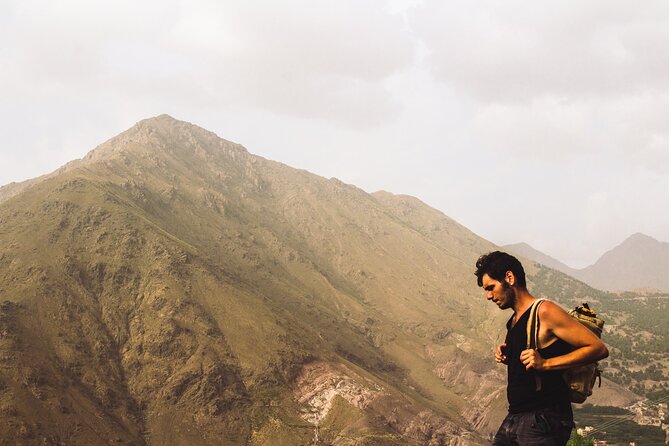
Marrakech is loud, beautiful, and full of color. But if you want your Morocco to go beyond city walls, the two-day private Toubkal trek is one of the cleanest ways to do it. You’re not just sightseeing—you’re walking through the High Atlas with a local guide who knows the route, the timing, and how to keep a group moving safely.
For me, the sweet spot is that it’s long enough to feel real (you trek both days), but short enough that you don’t need to take a week off work or cram your whole vacation into one exhausting marathon. You’ll also spend the night at Toubkal Refuge, which turns the hike into a complete plan instead of a “maybe we can do it” day trip.
Price-wise, it’s $162.60 per person, and it’s usually booked about 50 days in advance. That’s a common sign that people want the summit timing and guide coordination—and it’s also a hint that you shouldn’t leave things to the last minute. The cost is easier to justify when you look at what’s bundled: private transport round-trip from your hotel, an English-speaking guide, all meals, and the refuge stay (plus mules for luggage).
One more practical note: it’s private, meaning only your group participates. If you’re traveling as a couple or small group, that can make the whole experience feel less rushed and more tailored to how you’re moving.
You can also read our reviews of more private tours in Marrakech


Marrakech pickup, the Imlil start, and your guide setup
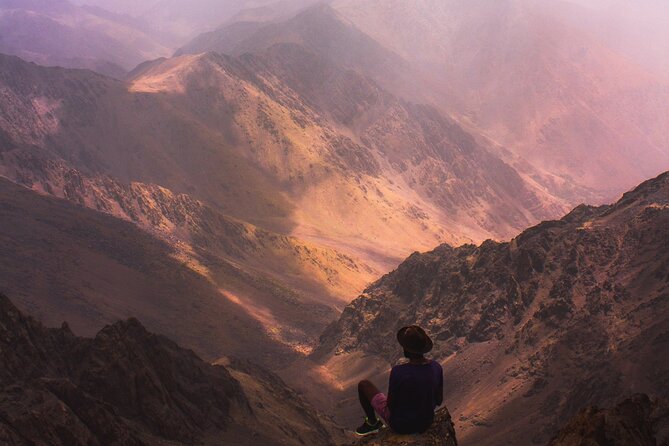
The day begins with pickup from your hotel in Marrakech. The drive to Imlil is about two hours. That matters more than it sounds, because it gets you out of the city early without you having to figure out transportation on your own.
In Imlil, you meet your local English-speaking guide and begin the hike. This is where the trip becomes personal. You’ll get your bearings fast, and you’ll learn what the plan feels like hour by hour—how long the sections take, what to watch for, and how to keep going when the climb starts doing its job.
From the guide names shared for past treks—Mohammed, Hassan, Abde Zin, Lahcen, and Abdou—you can expect a team that’s used to taking people from “we can hike” to “we actually reached the summit.” In at least one case, the guide helped set up crampons, which is a useful detail to keep in mind if you’re hiking in colder conditions or on uneven, icy patches. It’s a reminder that you shouldn’t panic if you arrive without the perfect gear; a good guide can help you get what you need and set it up correctly.
You’ll also want to think about what to pack for a two-day climb. Since mules handle luggage, you can usually keep your carry light. Still, keep essentials in a small day pack: water, layers, and anything you’ll need during the ascent and the time at the top for photos.
And yes, you’ll have a mobile ticket, which is handy if your phone is your travel “command center.”
Day 1: trekking through Aroumd and arriving at Toubkal Refuge
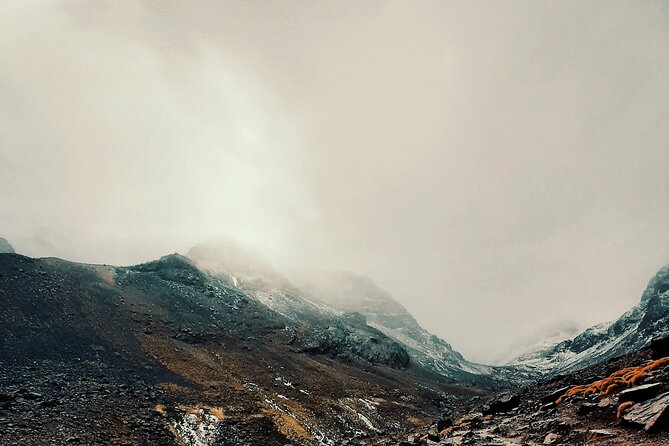
Day one is built like a runway. You drive from Marrakech to Imlil, then you hike into the Berber mountain zone with a first chunk of trekking time designed to get your body working without going straight to the hardest slope.
Stop in Imlil, then hike into the Berber village of Aroumd
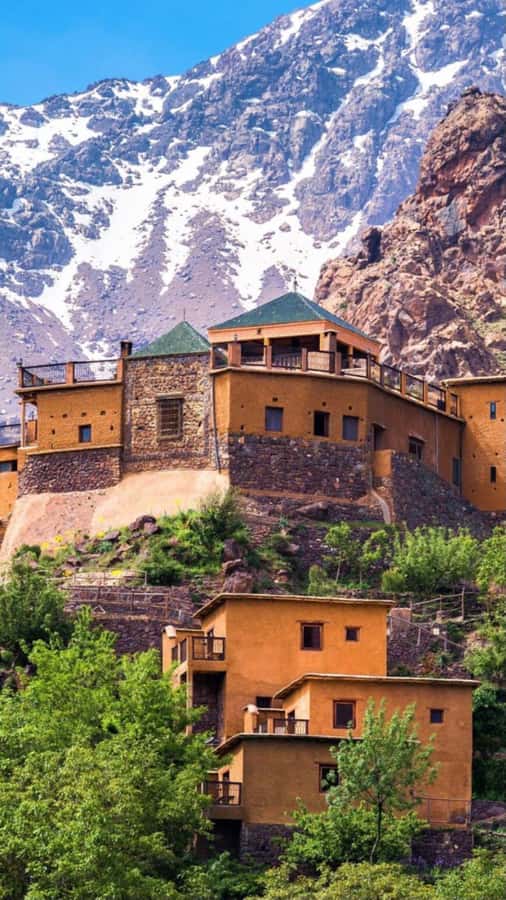
After meeting your guide in Imlil, the trek leads you through the Berber village of Aroumd. This is the “why people come” part of the day: you’re not only walking on a trail—you’re passing through a living community and seeing how mountain life fits into the scenery.
Expect around two hours for this early section. The pace is meant to be steady enough to enjoy the views without feeling like you’re sprinting before lunch.
Lunch is included, and it’s not a sad roadside snack. It’s a planned break during the walk, with the surrounding mountains around you. For photos, this is a smart time to catch the wide angles while you’re still feeling fresh.
Push on toward Mount Toubkal and your night at the refuge
After lunch, you continue trekking toward the Toubkal Refuge. This is the part of day one where you start thinking more about stamina than sightseeing. The plan lists about three hours for this section.
The payoff is that you end day one at Toubkal Refuge. Accommodation is included, and you’ll have dinner and breakfast as part of the package. In plain terms: you get to recover in the mountains instead of spending your evening back down in town trying to figure out dinner and rest logistics.
One detail that keeps showing up in how people describe this kind of night is the food and the simple comfort of being cared for after a long day. The refuge stay is the anchor that makes a summit attempt feasible over just two days.
You can also read our reviews of more hiking tours in Marrakech

Day 2: sunrise ascent to Mount Toubkal’s 4,167m summit and panoramic time
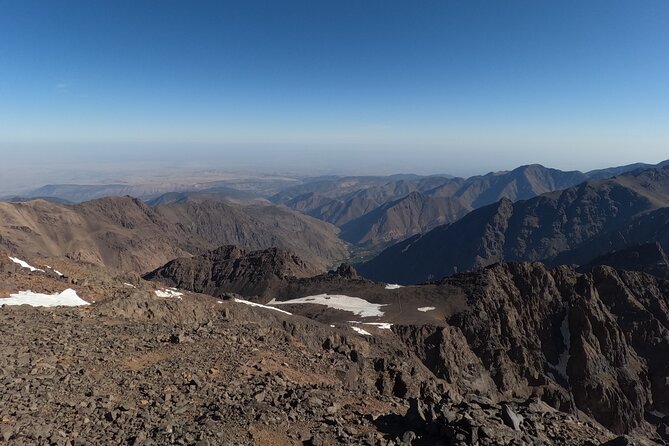
Day two starts early. That’s not just “a nice slogan.” On a mountain climb, early timing helps with overall conditions and gives you daylight for the ascent and descent.
The summit push
You wake up and begin the ascent to the top of Toubkal. The plan lists about two hours for this climb segment. Even if you’re fit, that’s a reminder that your “workout level” needs to match mountain hiking reality: steep effort, steady pacing, and attention to footing.
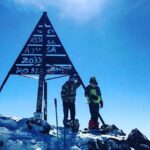
Reaching the summit is the big headline: Mount Toubkal is the highest peak in North Africa at 4,167 meters. Once you’re up there, the reward is the view—panoramic and dramatic, the kind you remember long after you’ve stopped counting steps.
Time at Toubkal for views and photos
After the summit, the schedule includes time at Toubkal for panoramic viewing and pictures, around three hours. This is one of those underrated parts of the trip. People sometimes assume the summit is the finish line, but being up high is also about letting the moment land: looking across the range, taking photos without rushing, and catching your breath (literally).
Guides who have led groups on this trek—like Mohammed and Lahcen—are often described as attentive to your needs. That tends to matter most on day two, because that’s when everyone’s legs start bargaining.
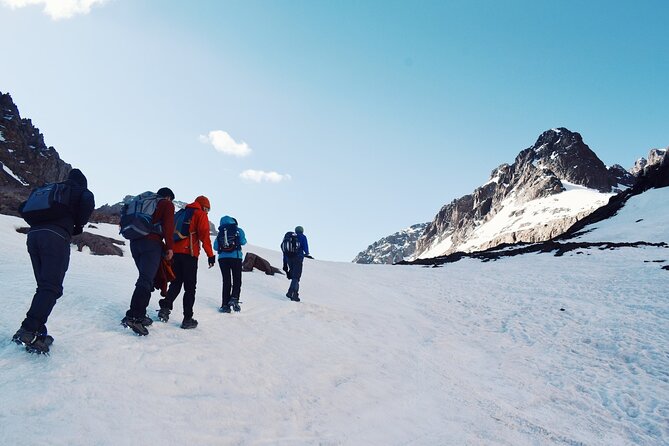
If conditions require traction, the guide may help you with equipment such as crampons. The key thing is that you’re not left to guess what to do mid-climb. You follow the guide’s lead and keep the focus on moving safely.
Descend, lunch, and return to Marrakech
Then you head back down. The plan includes returning to the refuge, having lunch, and continuing onward to Marrakech. Total time for the descent-and-drive section is about six hours.
This is the point where your mind shifts from summit achievement to comfortable survival mode: walking downhill without over-striding, staying aware, and conserving energy so the final transfer feels manageable.
At the end, you’re back in Marrakech—mission accomplished, with sore legs and a real sense of you did something that felt bigger than your trip brochure.
Toubkal Refuge: the overnight that makes a fast summit attempt possible
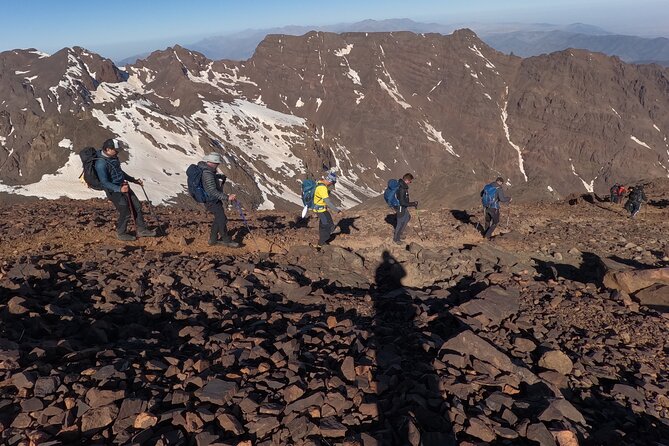
Staying at Toubkal Refuge is more than a place to sleep. It’s the reason a two-day trek can work.
You’ll have accommodation included, plus dinner and breakfast. That removes a bunch of uncertainty for you. Instead of hunting for food with limited time or figuring out a place to rest, you’re on a planned schedule with a team that’s already handling the mountain logistics.
And yes, the refuge matters for comfort. In past experiences, people have described the hut and the food as perfect, and one trek mention included a night described as clean and nice. So while you should expect mountain simplicity, you’re not walking into an abandoned stop.
Mules for luggage also help. When you’re hiking steep terrain, reducing what’s on your back can mean the difference between finishing strong and just barely making it to bedtime. It doesn’t turn the trek into an easy walk, but it helps you keep your energy for the summit effort.
Transport, timing, and the one thing you can control: expectations
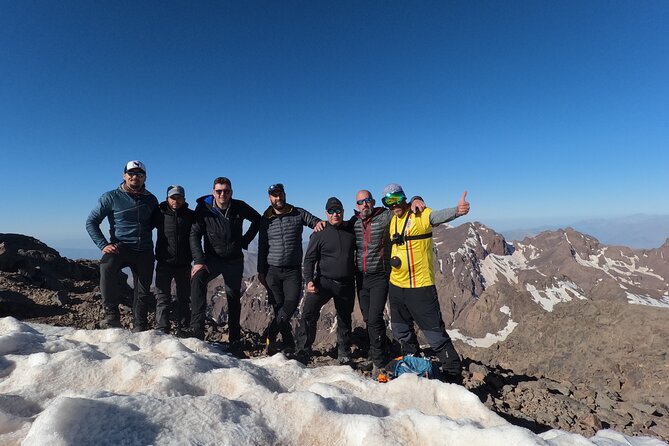
One of the best parts of this experience is the structure around it. Private round-trip transportation from your hotel to Imlil is included. You’re also given pickup, so you’re not hunting taxis in a morning rush.
Mobile ticket also helps with peace of mind. Less chasing details. More time to focus on layers and shoes.
The one caution I’d keep in your pocket is that road comfort can vary. There’s at least one note about a driver feeling fast on a rough road on the return trip from Imlil to Marrakech. You can’t rewrite the road, but you can manage your expectations—and if you’re sensitive to driving style, it’s reasonable to ask your driver to drive calmly.
As for timing, the whole plan is built around early starts and a two-day summit window. That means you’ll want to be ready on time and packed the night before. If you tend to run late at home, this trek will punish that habit.
Price and value: what $162.60 per person covers (and why it’s not just the summit)
At $162.60 per person, it’s not a “cheap add-on.” But it’s also not paying only for the view. You’re paying for a bundle of real costs that would be annoying to assemble yourself.
Here’s what’s included:
- Private round-trip transportation between your hotel in Marrakech and Imlil
- Local, English-speaking guides throughout the trek
- All meals (dinner, breakfast, and lunch twice)
- Accommodation at Toubkal Refuge
- Mules for luggage
When you add those pieces up, the price starts to look practical, especially if you value not managing arrangements while you’re tired and altitude is calling.
Group discounts are mentioned too, which can matter if you’re booking with friends or planning a small hiking crew.
The only clear extra on the list is tips for the guide and any additional staff. That’s common for this type of service, and it’s worth budgeting for so it doesn’t turn into a surprise at the end.
Who should book this Toubkal trek, and who should think twice
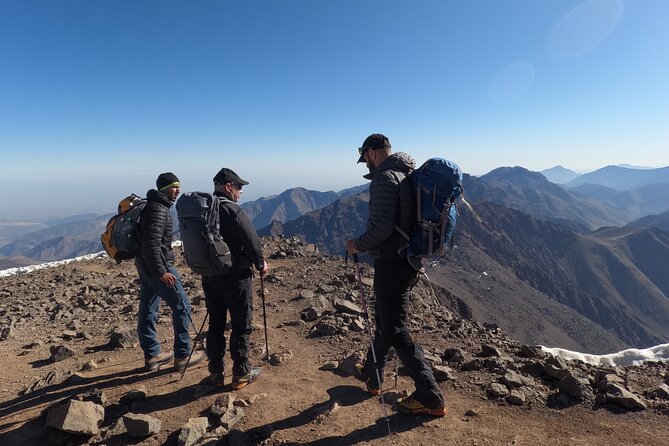
This isn’t sold as a stroll. The trek is aimed at people with strong physical fitness and a moderate trekking background. The summit climb is challenging, and the schedule is compressed into two days—so your legs and lungs should be ready for that work.
That said, you don’t have to be a mountaineer. Some past summit attempts are described as successful even for people who did not see themselves as hardcore climbers, because the guides stayed careful and supportive. The tone you’ll want to bring is: steady effort, follow instructions, and don’t race ahead.
It’s a great match if you want
- A clear two-day plan with lodging and meals handled
- A guide who can help with equipment decisions when needed
- A real shot at Toubkal’s summit and not just a walk to a viewpoint
- Berber village culture time around Aroumd, not only trekking gates and photos
Consider thinking twice if
- You get winded easily on steep climbs
- You’re not comfortable with early starts and cold conditions
- You expect luxury comfort or minimal physical effort (this is a trekking experience)
Final call: should you book the 2-day private Toubkal trek from Marrakech?
Book it if you want a high-impact Morocco trip that goes past Marrakech—one that’s logistically organized, includes meals and a refuge stay, and gives you a genuine summit goal at 4,167 meters. If you like the idea of hiking with a local English-speaking guide and spending the night at Toubkal Refuge, this is a strong fit.
Skip it or choose a different difficulty level if you know you’re not ready for steep climbing over two long days. Also, if road comfort is a big deal for you, plan to keep expectations flexible on the transfers.
If you do book, a practical move is to prepare early for the hike part: good footwear, bring layers, and be honest about your fitness level. The people who succeed on Toubkal are rarely the fastest—they’re the ones who keep moving steadily, listen to the guide, and take the time you need at the summit.
This trek is the kind of trip that leaves you with a “we actually did it” feeling, not just a pile of photos.