REVIEW · MARRAKECH
2 Day Desert Tour From Marrakech To Zagora
Book on Viator →Operated by Deep South Travel Marrakech · Bookable on Viator
Desert dawn beats the alarm clock. This private Marrakech to Zagora trip blends guided stops like the UNESCO Kasbah of Aït Benhaddou with an overnight desert bivouac where you can catch both sunset and sunrise.
I love the way the day is structured around real highlights, not just bus rides: an Aït Benhaddou visit with a guide, plus Ouarzazate stops like the Cinema Studio area. One possible drawback is that the schedule is tight and lunch isn’t included, so food options can feel limited if you’re picky.
What I liked most is the core desert moment: you ride a camel through the rock desert and spend the night in nomad-style tents. The camping side feels well-run, with dinner and breakfast included, and the staff setup can be especially comforting after a long day. One more consideration: standard tents don’t include a shower, so if hot water matters to you, upgrade to a Luxury or Superior package.
In This Review
- Key things I’d plan around
- Marrakech to Zagora via Aït Benhaddou: the route makes the trip
- Price and what $569.11 buys you (and what it doesn’t)
- Day 1 over the High Atlas: Tizi-n-Tichka, Aït Benhaddou, and Ouarzazate
- Crossing the High Atlas via Tizi-n-Tichka pass
- Aït Benhaddou Kasbah (UNESCO) with a guide
- Ouarzazate and Kasbah Taourirt, plus Africa’s Hollywood vibe
- Down through the Draa Valley oases toward Zagora
- Day 1 night in the nomad bivouac: dinner, stars, and real desert calm
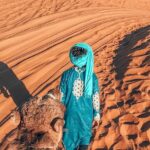
- Camel ride through the rock desert
- Your evening: firelight and stargazing
- Comfort reality check: showers depend on your package
- Day 2: pre-sunrise moments, camel trek back, and arrival by 5 pm
- Camel trek back to the vehicles
- Return through Ouarzazate for lunch, then across the High Atlas to Marrakech
- The comfort checklist: what to expect and how to prepare
- The long-drive factor is real
- Food expectations: dinner and breakfast are covered, lunch is not
- Night temperatures and the shower decision
- Staff and driving safety
- Who should book this Marrakech to Zagora desert tour (and who should pause)
- Should you book this 2-day Marrakech to Zagora desert tour?
- FAQ
- What time does the tour start?
- How long is the Marrakech to Zagora desert tour?
- Is pickup and drop-off included in Marrakech?
- Is this tour private?
- What’s included in the price?
- Is lunch included?
- How long is the camel trekking?
- Do the tents have showers?
- What’s the return time to Marrakech on Day 2?
- How does cancellation work?
Key things I’d plan around
- Guided Aït Benhaddou: entrance included, with a guide and time to explore on your own
- Ouarzazate stop for movie filming sites: Cinema Studio plus Kasbah Taourirt
- Camel trekking both ways: around 1 hour each direction (plan for a steady pace)
- Desert bivouac with dinner and breakfast: a full evening setup, not just a quick stop
- Shower depends on your package: standard tents have no shower and shared restrooms
- Long driving day: you’ll spend significant time in an air-conditioned 4WD/minibus
Marrakech to Zagora via Aït Benhaddou: the route makes the trip
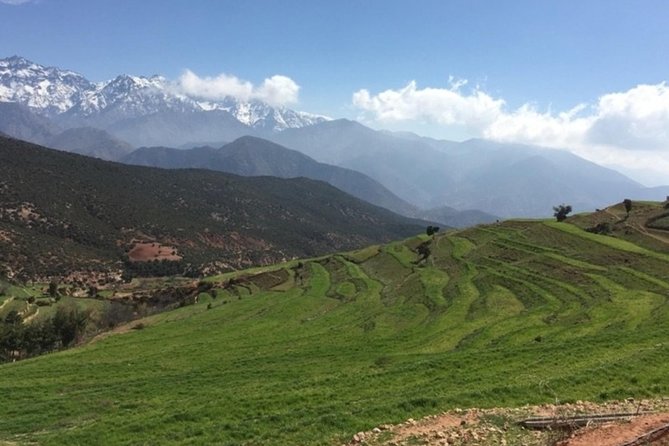
This is one of those tours where the destination is the main event, but the getting-there part also pays off. You start with pickup in Marrakech in an air-conditioned 4WD or minibus, then head over the High Atlas. That road through the Tizi-n-Tichka pass is part of the experience—big views, big distances, and plenty of chances for quick photo stops.
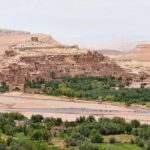
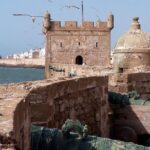
Then you hit Aït Benhaddou, Morocco’s most famous kasbah setting. It’s not just a pretty pile of buildings. The UNESCO designation matters because the site is preserved and read-able as a living Berber fortress environment. A guided visit helps you understand what you’re looking at (and why it’s been used in film productions).
After that, the trip shifts into cinematic mode in Ouarzazate—often called Africa’s Hollywood—before you continue toward Zagora through the Draa Valley oases. That mix is what makes this tour feel like more than one activity. You’re not just “going to the desert.” You’re seeing the cultural and cinematic belt that feeds into it.
A few more Marrakech tours and experiences worth a look
Price and what $569.11 buys you (and what it doesn’t)
At about $569.11 per person for a roughly two-day experience, this isn’t a budget-style desert trip. But the price isn’t only paying for the tent. You’re also covering a lot of structured value:
- Private transfers in an air-conditioned vehicle
- English-speaking driver/guide support
- Entrance fees and guided coverage at Aït Benhaddou
- Visits in Ouarzazate, including the Cinema Studio area
- Camel trekking (about 1 hour each way)
- Overnight in nomad-style bivouac tents with dinner and breakfast included
- Pickup and drop-off at your Marrakech accommodation
- A shower option only if you choose the right package
What’s not included is lunch and drinks. That gap matters on a route with long driving hours, because you’ll be relying on stops along the way. One of the most honest planning moves here is to bring a small buffer: snacks, water you’re comfortable with, and a flexible attitude about lunch timing and options.
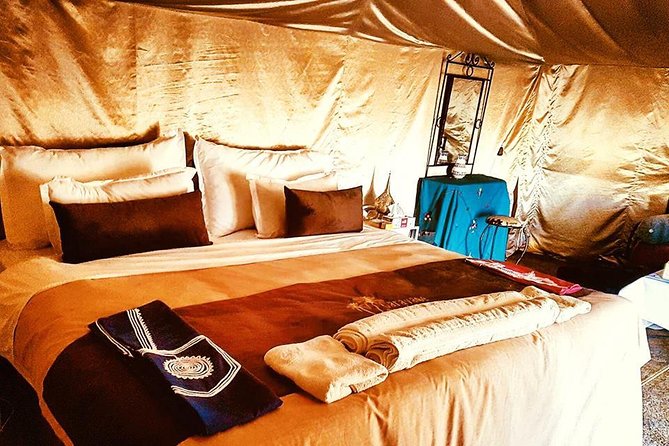
If you care about comfort, the package choice is the big price lever. The standard setup is described as no shower and shared restrooms. Upgrading to Superior or Luxury adds an en-suite bathroom and hot shower, which can make a huge difference after a cold desert night.
Day 1 over the High Atlas: Tizi-n-Tichka, Aït Benhaddou, and Ouarzazate
Your morning starts early (start time listed as 7:30 am). You’ll likely feel the rhythm right away: a pickup, then a steady drive with planned stops.
Crossing the High Atlas via Tizi-n-Tichka pass
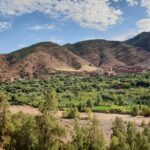
The High Atlas crossing is long, but it’s not a dead stretch. The point is to get you over to Aït Benhaddou while you still have daylight for views and site photos. This is the kind of road where you can step out briefly at safe stops, then get back in for the next leg.
Why it’s valuable: you’re not just saving time. You’re getting a sense of Morocco’s altitude and terrain, and that helps the desert feel even more dramatic later.
Aït Benhaddou Kasbah (UNESCO) with a guide
Aït Benhaddou is the emotional anchor of Day 1. You get a guided visit, entrance fees included, and time to explore around the kasbah. The best part of a guided stop here is simple: it helps you recognize the elements—fortified walls, courtyards, and the logic of how the settlement works.
The higher hill viewpoint is also called out as marvelous. Even if you’re not a “views person,” this is where the whole place clicks. You see why film crews choose it. You also see why it’s protected.
Ouarzazate and Kasbah Taourirt, plus Africa’s Hollywood vibe
After Aït Benhaddou, you head to Ouarzazate for lunch and then visit Kasbah Taourirt. This area is a major filming hub, so your visit fits the theme of the day: fortress town to film sets to desert gateway.
The tour also includes a Cinema Studio visit. That’s a smart addition because it gives context for the imagery you may recognize from movies and documentaries. Even if you don’t binge film trivia, it’s fun to see how Morocco becomes a location “world” for productions.
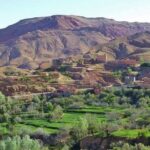
Down through the Draa Valley oases toward Zagora
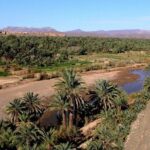
From there, you continue through the Draa Valley oases, described as stretching over 180 km. This is where the tour starts to feel slower in a good way. The scenery changes, and it’s less about a single site and more about the gradual shift into desert edges.
By the time you reach the Zagora area, you’re primed for the main event: the camel ride and the bivouac night.
Day 1 night in the nomad bivouac: dinner, stars, and real desert calm
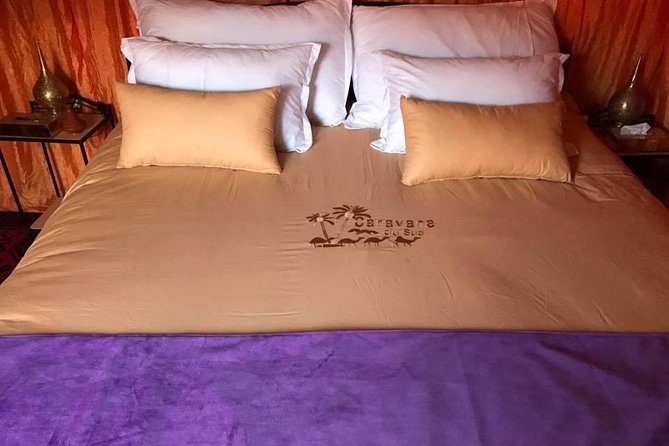
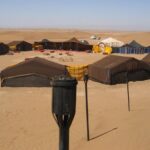
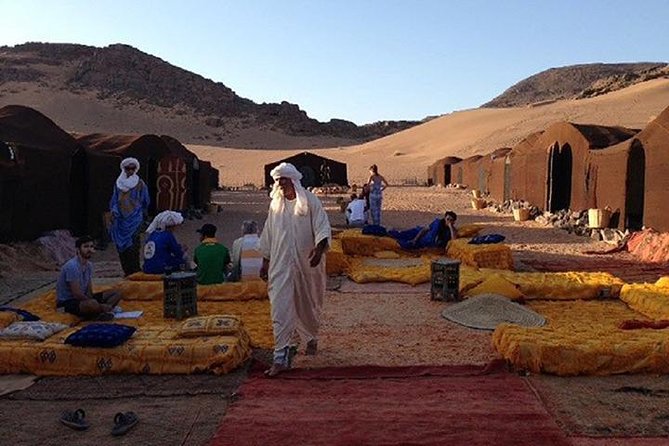
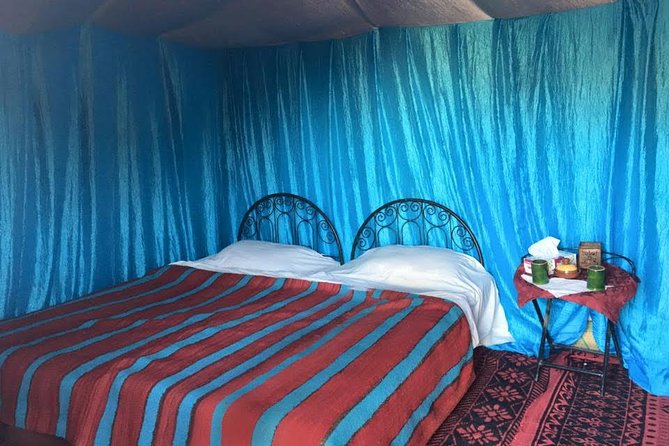
Overnight is in a nomad desert bivouac with private tents. Dinner and breakfast are included, which is important because it means you’re not negotiating logistics after dark. You’re also not stuck wondering where your next meal comes from.
Camel ride through the rock desert
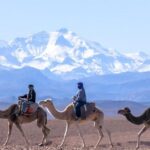
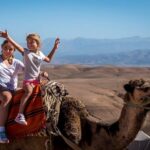
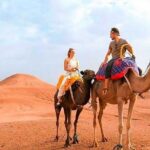
Camel trekking is built into the experience. Expect about an hour each way. It’s not described as a long multi-hour trek, so you can treat it as a highlight rather than a fitness challenge.
A practical tip: wear closed-toe shoes you trust, and keep your hands free if you can. The camel ride is a moving slow-motion adventure. You’ll enjoy it more if you’re not constantly fussing with bags.
Your evening: firelight and stargazing
One of the most praised parts is the atmosphere at camp: clean tents, kind staff, and a night where the stars look unbelievably clear. A review specifically calls out being able to see every single star in the sky and enjoying a nice fire.
That night-sky moment is why I think this tour works better than a quick day trip. You need the overnight to get the right lighting and the right quiet. Desert nights feel different—sharp air, big sky, and a slower pace.
Comfort reality check: showers depend on your package
Here’s the honest decision point. The desert bivouac experience includes shower access only for Superior and Luxury packages. Standard tents have no shower and shared restrooms.
If you’re sensitive to basic facilities, this is worth treating as a deal-breaker question. If you’re mainly after the experience and can handle rustic basics, standard camping can still be very enjoyable—especially if you’re the type who cares more about the night sky than the bathroom setup.
Also, plan for cold. At least one review directly warns about fresh nights. Even if days are warm, desert evenings can cool off fast.
Day 2: pre-sunrise moments, camel trek back, and arrival by 5 pm
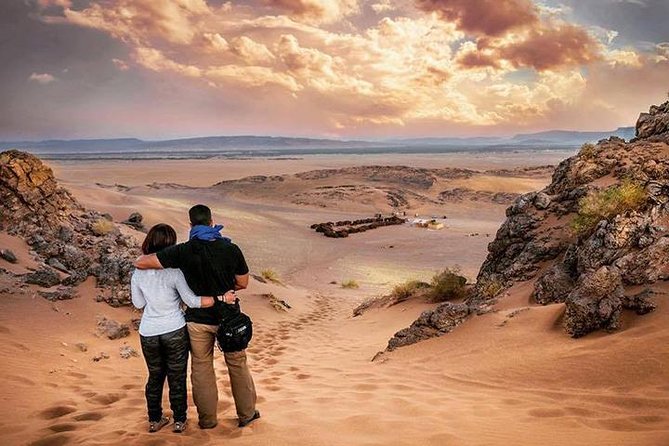
Day 2 starts early again. You’re woken before sunrise to catch the first light rays. Then you have a traditional Berber breakfast in the bivouacs.
That pre-sunrise timing is one of those small logistical details that makes the whole trip feel special. It’s not just “wake up early.” It’s that magical shift when the desert goes from dark to waking. You’ll likely be dealing with cooler air again, so layers matter.
Camel trek back to the vehicles
After breakfast, you trek by camel to the vehicles. This is described as roughly the return side of the camel ride, around an hour. Then you’re back on the road.
If you felt stiff after Day 1, don’t worry too much: the camel pace is steady, and the break points along the drive help.
Return through Ouarzazate for lunch, then across the High Atlas to Marrakech
On the way back, you pass by Ouarzazate for lunch and then cross the High Atlas Mountains again. The tour is set to end in Marrakech by 5 pm.
That end time is useful for planning your evening. You’ll likely be tired, but it’s not an all-night trip. It’s a full, active two days with a finish that still gives you time to breathe when you get home.
The comfort checklist: what to expect and how to prepare
This tour is built around moving distances, site stops, and a desert overnight. That means a few comfort considerations deserve your attention.
The long-drive factor is real
Even though the desert is described as about a 6-hour drive from Marrakech, your total experience is longer because of stops: Aït Benhaddou, Ouarzazate, Taourirt, plus time for meals and breaks. Reviews call out that the route can feel tiring because of the hours in the car.
My advice: plan your Day 1 like a marathon, not a stroll. Bring snacks, a water plan, and something to pass time between stops (downloaded music/podcasts helps).
Food expectations: dinner and breakfast are covered, lunch is not
Dinner and breakfast are included. That’s a big plus because it removes one of the most stressful parts of desert travel.
Lunch, though, isn’t included. That’s where you might see mixed experiences—some stops can be convenient but also can limit your options. One review also points out that lunch stops may be at restaurants chosen by the stops along the way, and prices can feel higher. You can’t control that, but you can protect yourself by carrying a snack stash and staying flexible.
Night temperatures and the shower decision
Fresh nights are explicitly mentioned. Pack for cool air after dark, even if you expect warm sun during the day. If hot showers are part of your personal comfort standard, choose Superior or Luxury. Standard tents don’t include shower access.
Staff and driving safety
Positive feedback is strong on service and helpful guides. Drivers like Reda (called punctual and professional) and Hakim (called excellent and super helpful) are mentioned by name in reviews. The key takeaway for you: the human factor matters here, and people do notice when the driving is careful and stops are well-timed.
Who should book this Marrakech to Zagora desert tour (and who should pause)
This tour suits people who want a complete desert story: UNESCO site day, cinematic Morocco day, then camel trekking and a full night under the stars.
It’s especially appealing if you’re traveling with mixed ages. One review mentions a group that included parents, teens, and a grandmother—and that the experience worked for them. The camel ride and overnight are the big shared activities, and the driving is handled for you with private transfers.
You should think twice if:
- You hate early mornings (Day 2 starts before sunrise)
- You need a hot shower every night (standard tents won’t have one)
- You’re very rigid about food and lunch options (lunch is not included)
- You’re easily annoyed by a tight schedule and longer time on the road
If you’re the type who packs layers, accepts long driving days, and values a clean, well-organized camp setup, this is a solid choice.
Should you book this 2-day Marrakech to Zagora desert tour?
I’d book it if you want a well-structured desert overnight without doing the planning yourself. The combination of Aït Benhaddou with a guide, a Cinema Studio/Ouarzazate stop, and the camel trek plus bivouac dinner/breakfast is exactly the kind of value that turns two days into memories.
Choose the package based on your comfort needs. If you can handle rustic facilities and you mainly care about stargazing and desert calm, standard can work. If hot showers and en-suite comfort matter, upgrading is the smarter call.
One last practical note: start treating the trip like a two-day ride plus one unforgettable night. That mindset makes the schedule feel reasonable instead of rushed.
FAQ
What time does the tour start?
The tour start time is listed as 7:30 am.
How long is the Marrakech to Zagora desert tour?
It’s listed as approximately 2 days.
Is pickup and drop-off included in Marrakech?
Yes. Pickup and drop-off at your Marrakech accommodation are included.
Is this tour private?
Yes. It’s described as a private tour/activity, meaning only your group participates.
What’s included in the price?
Dinner, breakfast, entrance fees, overnight accommodation in a nomad desert bivouac, camel trekking, and guided visits including Aït Benhaddou Kasbah and Cinema Studio in Ouarzazate are included.
Is lunch included?
No. Lunch is not included, and drinks are not included.
How long is the camel trekking?
Camel trekking is around 1 hour each way.
Do the tents have showers?
Shower access is available only in Superior and Luxury packages. Standard tents have no shower and shared restrooms.
What’s the return time to Marrakech on Day 2?
The tour is scheduled to reach Marrakech by 5 pm.
How does cancellation work?
You can cancel up to 24 hours in advance for a full refund. If you cancel less than 24 hours before the experience’s start time, the amount paid isn’t refunded.