REVIEW · MARRAKECH
Shared Sightseeing Tour Visit to Marrakech with Licensed Guide
Book on Viator →Operated by Morocco Friendly Tours · Bookable on Viator
Marrakech grabs you fast. This shared guided circuit helps you get oriented fast in the Medina, with time at Jemaa el-Fnaa and real craft watching in the souks. I like that it’s not just photo stops; the guide’s job is to explain what you’re looking at and why it matters, from local traditions to working trades.
One thing to keep in mind: it’s a shared group, so the pace is set for everyone. Also, some monument entry fees are not included, even though several stops are free to enter.
At about $29.08 per person for 3 to 4 hours, it’s a solid first-day tool. You’ll get bottled water, a mobile ticket, and a licensed guide who focuses on clear timing and safety while you move through the old city.
In This Review
- Key things you’ll notice on this Marrakech tour
- A first-day Medina plan that doesn’t waste your energy
- Jemaa el-Fnaa: the big square where Marrakech shows off
- Madrasa Ben Youssef: a former university you can still read
- Souk Haddadine: blacksmithing you can watch, not just buy
- Souk des Teinturiers (Souk Sebaghine): dyeing threads for carpets
- Almoravid Qubba: one small monument with real architecture credibility
- Foundouk el Amri el al Mizane: the caravan center idea
- El Mouassine Mosque and the nearby old quarter feel
- Hay Zitoun Jdid and the community oven reality
- Mellah: the Jewish quarter, synagogues, museum, and cemetery
- What’s included, what’s not, and how to budget smart
- The guide factor: why having a real pro changes everything
- How this tour fits your Marrakech day plan
- Should you book this shared Marrakech Medina tour?
- FAQ
- How long is the Marrakech sightseeing tour?
- How much does the tour cost?
- What’s included in the price?
- Are monument entrance fees included?
- How big is the group?
- Is there a mobile ticket?
- What is the cancellation policy?
Key things you’ll notice on this Marrakech tour
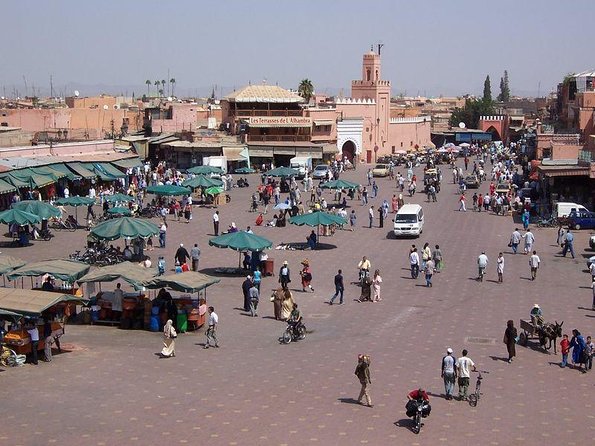
- Jemaa el-Fnaa in full color with Gnawa musicians, storytellers, snake charmers, and henna tattoos nearby
- Madrasa Ben Youssef’s architecture plus the scale of a former university (including 132 dormitory rooms)
- Souk Haddadine craftwork where you can see blacksmithing linked to items like lanterns, knockers, and locksmith pieces
- Souk des Teinturiers (Souk Sebaghine) explained through dyeing woolen threads used for carpets
- Almoravid Qubba’s standout decoration and why it’s one of the few Almoravid remnants in Marrakech
- Mellah context in the Jewish quarter including a synagogue option, Jewish museum area, and a Jewish cemetery
A first-day Medina plan that doesn’t waste your energy
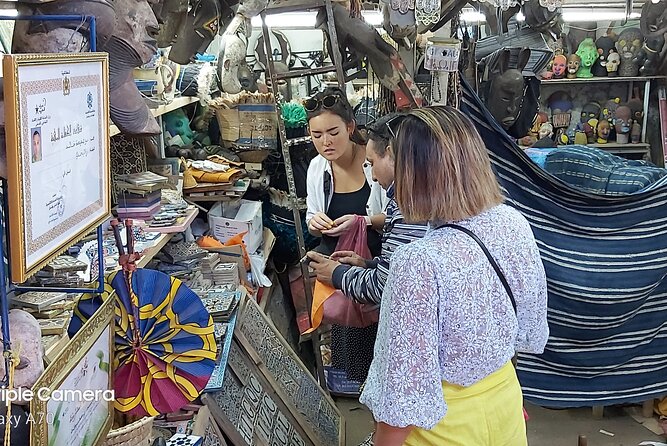
If Marrakech is new to you, the Medina can feel like a maze with excellent snacks and loud opinions. This kind of shared sightseeing tour is useful because it trades uncertainty for direction. You show up, follow a licensed guide, and you start understanding what you’re seeing instead of just walking past it.
I like the structure for practical reasons. With a 3 to 4 hour window and a maximum group size of 20, you get enough variety without burning the whole day. It also means you can still plan dinner, a second walk, or a slower afternoon afterward.
You’ll also appreciate the “worked-it-out” approach from the guide. The tour description emphasizes schedules, safety, and clear direction, which matters in busy, multi-directional areas like central Marrakech. And if your guide is someone like Abdulha or Hassan (names that show up in the guide feedback), you can expect a confident explanation style and a focus on what you should notice.
You can also read our reviews of more guided tours in Marrakech

Jemaa el-Fnaa: the big square where Marrakech shows off
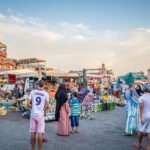
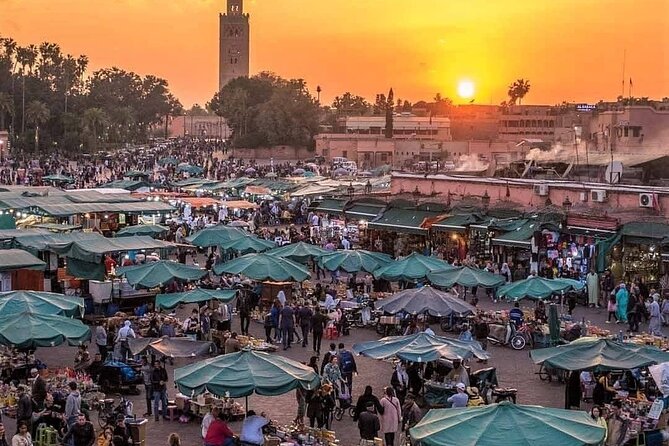
Jemaa el-Fnaa is the main stage. This stop is short, but it’s long enough to understand why people build their trip around it. You’ll see the Moroccan popular heritage in action right around you, including Gnawa musicians, storytellers, snake charmers, and henna tattoo activity.
What I’d watch for here is not just the entertainment. Look at the mix of people and the way the square works as a gathering point: performances, vendors, and constant movement. Your guide can help you make sense of what’s going on so it doesn’t become random noise.
A small consideration: because it’s a major square, it can be crowded. You’ll get more from the stop if you keep your head up, listen to the guide’s explanations, and decide quickly what you want to linger on later.
Tip: bring a little patience for people-watching. This is the place where Marrakech feels like a living city, not a museum.
Madrasa Ben Youssef: a former university you can still read
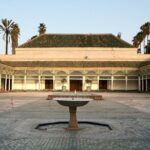
Next up is Madrasa Ben Youssef, a 16th century former university. Even if you’re not a “quiet building” person, this stop is worth it because it’s a good example of Moroccan design thinking at human scale.
One detail that really helps your visit: it once had 132 dormitory rooms. Your guide can point out architectural features so you understand the place as a student environment, not just a pretty façade. This is also where you’ll likely slow down, because the beauty here rewards looking.
Drawback: admission is not included for this stop. That means you should be ready to pay an entrance fee if you want to spend time inside. The good news is that the tour still gives context so you don’t just pay to enter a building—you know what you’re looking for when you arrive.
Souk Haddadine: blacksmithing you can watch, not just buy
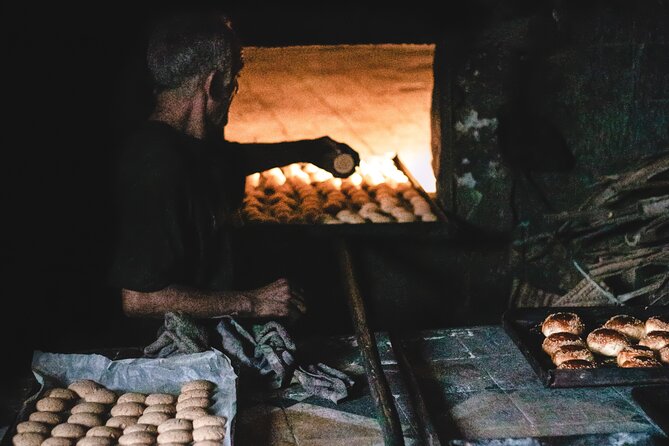
Souk Haddadine (also called Souk El Haddadine locally) is where Marrakech feels practical. You’re not just browsing souvenirs; you’re seeing the work of blacksmiths making items by hand.
This is one of the better “learn something while you walk” stops. The tour focuses on what these artisans produce: locksmith pieces, Marrakech door knockers, lanterns, plough parts, and other metalwork. Watching the process can change how you shop. Suddenly, you can tell the difference between something mass-produced and something made with real care.
The time here is brief, so your mindset matters. If you want maximum value, ask your guide what to look for—finishing, design details, and the overall craftsmanship style. That turns a quick stop into an education.
Consideration: the market environment can be active and busy. If you’re sensitive to crowds, it helps to keep moving with the group and focus on a few items rather than trying to see everything at once.
Souk des Teinturiers (Souk Sebaghine): dyeing threads for carpets
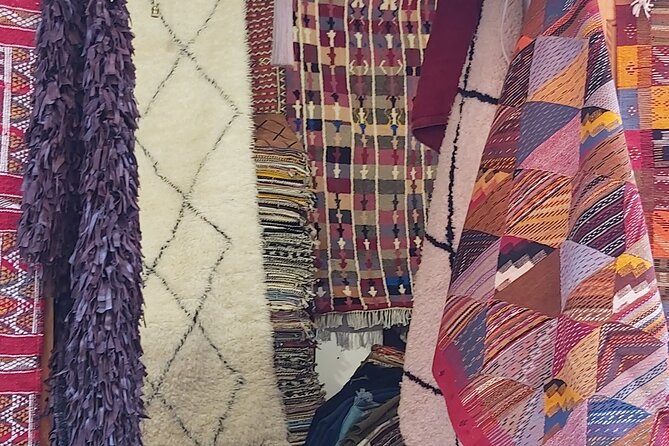
Then you shift from metal to color. In Marrakech, the dyers’ market is called Souk Sebaghine. This part of town is tied to woolen threads that are dyed for carpet manufacturing, which is a nice example of how old trades still shape what you see as a visitor.
What makes this stop useful is the explanation behind it. You don’t just see jars, racks, or dyed materials. You learn how dyeing supports a larger craft chain—carpets don’t appear out of nowhere. They come from work that starts with thread.
The stop is short, and admission is free for this part. You get a quick “how it works” snapshot, which you can carry with you as you walk through carpet shops later.
Small reality check: dye-related places can have strong smells. The tour doesn’t promise you’ll love that part, but it’s part of the authentic trade setting. Wear shoes you can handle for a while, and be ready for sensory intensity.




Almoravid Qubba: one small monument with real architecture credibility
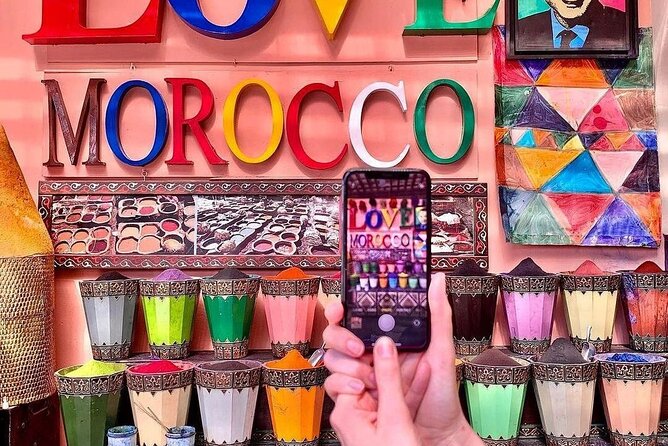
Almoravid Koubba (also written as Almoravid Qubba) is a compact monument erected in the early 12th century. The standout is the decoration, and the reason many people care: it’s one of the only remnants of Almoravid architecture in Marrakech.
Even with a short stop, it works because your guide gives you a framework. You know this is not just a wall to photograph. It’s evidence of a time period that shaped the city, still visible in a small footprint.
Admission is not included for this stop, so again, you may pay a small entry fee if you want full access. If you’re budgeting tightly, ask your guide what’s most important to see inside so you don’t feel like you’re spending on an empty experience.
Foundouk el Amri el al Mizane: the caravan center idea
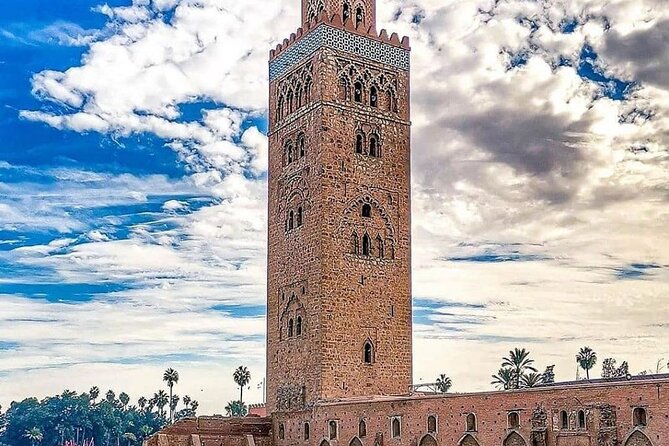
After that, you’ll pause at Foundouk el Amri el al Mizane. The name points to a practical history: Marrakech was once an important caravan trade center.
This foundouk is where caravan traders would sleep, conduct commerce, and then continue their route toward the next direction. That one concept helps you read Marrakech better. The city wasn’t only a place to shop; it was a stop in a longer travel web.
This is a quick stop with no admission fee included, so don’t expect long explanations. Instead, let it function like a mental bookmark: when you later see goods moving through markets, you’ll understand how the city used to work as a hub.
El Mouassine Mosque and the nearby old quarter feel
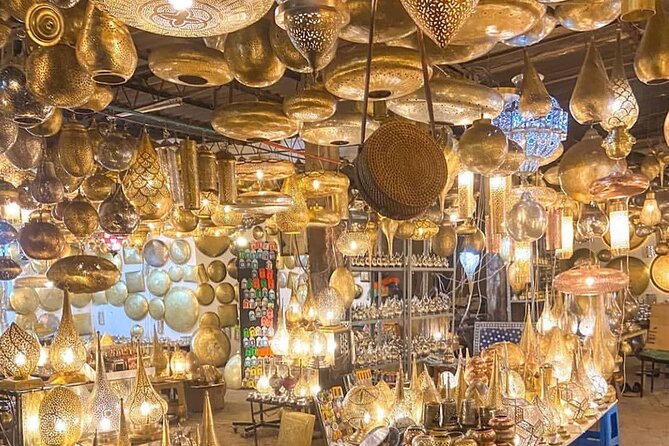
El Mouassine Mosque sits in the Mouassine area, an old quarter built in the 16th century. This stop is brief, and admission is free, so it works best as a “texture and contrast” break between larger sights.
The value here is atmosphere. Mosques and old quarters change the rhythm of your walk. You get a sense of how the Medina is lived in, not just visited.
Practical tip: keep your expectations realistic for short stops. The goal is context, not a long deep visit. If you want more, you can return on your own later with a slower pace.
Hay Zitoun Jdid and the community oven reality
Hay Zitoun Jdid is an Andalousian neighborhood. Here’s where this tour starts to feel more personal and less postcard. You’ll visit a community oven to see how families bring their own dough to be baked.
That detail hits a simple truth: food in Marrakech isn’t only about restaurants. It’s tied to everyday systems, where community baking matters.
Sometimes families also bring pastries to be baked. The key word for you is “community,” not production for tourists. This is the kind of stop that helps your brain stop treating the Medina like a set and start treating it like a place people rely on.
Time is short and admission is free, so keep it light: look, ask questions, and move on with the group.
Mellah: the Jewish quarter, synagogues, museum, and cemetery
Finally, you reach Mellah, the Jewish quarter of Marrakech. Even though there are currently no Jewish residents there, the area still has important religious and cultural landmarks. The tour context includes a synagogue presence, a Jewish museum, and even a Jewish cemetery.
If you’re interested, there’s an option to visit Laasma Synagogue. Admission is not included for this part, so you may pay depending on what you choose to see during your time here.
What I like about ending on Mellah is the broadened perspective. Marrakech is often discussed through souks and squares, but Mellah adds a different layer. It helps you see how the city held multiple communities and how their landmarks remain part of the urban story.
Consideration: this is another stop with no guarantee of total quiet. You’re in a working neighborhood area, not a controlled attraction zone. Go in with patience, and let the guide set the tone with context.
What’s included, what’s not, and how to budget smart
You pay $29.08 per person for a licensed guide, a shared group experience, bottled water, and a mobile ticket. The tour also mentions group discounts, which is usually a sign the operator expects this to be a value-friendly option rather than a high-end private show.
What’s not included matters for your final budget:
- Lunch is not included.
- Private transportation is not included.
- Entrance fees to monuments are not included, even though several stops are free.
The good way to handle this: think of the price as covering the guided flow and the context at each stop, not every entry fee. If you want the full indoor experience at places like Madrasa Ben Youssef or Almoravid Qubba, set aside some extra cash for admissions.
Duration is about 3 to 4 hours, which is the sweet spot for a first run. You’re not stuck on a half-day tour that forces you to skip dinner plans, and you’re not stuck on a quick drive-by that leaves you confused.
Also, confirmation is received at time of booking, and the tour is near public transportation. That helps if you’re using buses or walking in between stops.
The guide factor: why having a real pro changes everything
The tour is led by a licensed guide, and that’s not a small detail. In the Medina, the difference between a random walk and a guided walk is clarity.
The guide’s background in scheduling, direction, and safety measures is useful because you’ll be moving through areas where it’s easy to get side-tracked. A good guide also helps you avoid the “I saw everything but I understand nothing” trap.
From the named guides in the guide feedback, you can also expect a helpful, informative approach. If Abdulha is leading, the style described is supportive and goes above basic info. If Hassan is your guide, the tone is praised as excellent and recommending the visit as a strong choice for early days.
One more thing: the guide promises cultural and tradition explanations, including how local life works around the sights. That turns the souks and monuments into a story you can follow.
How this tour fits your Marrakech day plan
This works best when you book it early, so you return later with sharper eyes. After a first guided pass, you’ll know which streets feel worth revisiting and which crafts you actually want to buy.
It’s also ideal if you want to see major highlights without doing hours of independent route planning. The tour’s structure does the routing for you, and you can spend your remaining time exploring at your own speed.
Who will enjoy this most:
- First-timers who want a reliable overview
- People who like craft details and practical explanations
- Travelers who want to see both monuments and working markets in one half day
Who might want a different option:
- If you dislike group pacing, you may find the short stops slightly rushed
- If you want only indoor attractions with no extra entry fees, you might prefer an itinerary where entrances are included
Should you book this shared Marrakech Medina tour?
If you want a smart day-one orientation, I’d book it. The combination of Jemaa el-Fnaa, craft souks like blacksmithing and dyeing, and the historical layers of Madrasa Ben Youssef and Mellah gives you a well-rounded snapshot in just 3 to 4 hours.
You’re paying for direction, context, and a licensed guide, not for every monument ticket. If you’re okay with that trade-off and you want a guided way to understand Marrakech’s street-level culture fast, this is a strong value choice at $29.08 per person.
One last check before you go: keep a little budget aside for monument entry fees at the stops where admissions are not included, and plan to grab lunch elsewhere.
FAQ
How long is the Marrakech sightseeing tour?
It runs about 3 to 4 hours.
How much does the tour cost?
The price is $29.08 per person.
What’s included in the price?
Bottled water is included.
Are monument entrance fees included?
No. Entrance fees for monuments are not included. Some stops are free, while others may require admission (like Madrasa Ben Youssef, Almoravid Koubba, and Laasma Synagogue if you choose to visit).
How big is the group?
The maximum group size is 20 travelers.
Is there a mobile ticket?
Yes, the tour uses a mobile ticket.
What is the cancellation policy?
You can cancel for a full refund up to 24 hours before the experience starts.