REVIEW · MARRAKECH
Private Walking Tour in Marrakech
Book on Viator →Operated by Marrakech Private Tour Guide · Bookable on Viator
Marrakech is a city you feel on your feet. This private half-day walk gives you the big sights of the imperial city without the headache of rigid groups, and you can steer the route toward what you actually care about. I especially like how it starts with major landmarks and then turns into real Medina wandering, so your day feels both organized and alive.
Two things I like a lot: first, the way the guide can adjust the plan to your interests, not just run a script. Second, the pacing works, with about three to four hours of walking and then the rest of the day is free to explore at your own rhythm. The one drawback to consider is simple: it is a walking tour, so you’ll want comfortable shoes and a heat-tough attitude.
In This Review
- Key highlights I’d plan around
- Why a private half-day walk works so well in Marrakech
- Price, tickets, and what you should budget
- Starting at Koutoubia: white dome landmark and the first story
- Bab Agnaou and the Kasbah Quarter: gates, power, and old streets
- Mellah passing-by time: how the Jewish quarter fit into Marrakech
- Bahia Palace: the one stop that deserves your ticket budget
- Souks after Bahia: how to get lost without getting stressed
- Ending at Jemaa el-Fnaa: the performance square at night-or-day
- Who this tour suits best (and who should skip it)
- How to get the most from your guide
- Should you book this Marrakech walking tour?
- FAQ
- How long is the private walking tour in Marrakech?
- Is this tour private or shared with strangers?
- Where do we meet and where does the tour end?
- What’s included in the tour price?
- Are the site admission tickets included?
- Can I cancel for a full refund?
Key highlights I’d plan around
- Meet easily at Koutoubia Mosque near the white dome, with a clear starting point you can find without stress.
- Bab Agnaou to Kasbah Quarter in context so those gates and old streets make sense, not just look pretty.
- Mellah stop for a clear story of community—why the Jewish quarter mattered in the city’s past.
- Bahia Palace as the main paid-ticket moment (admission is not included, so budget for it).
- Souks time built in, not rushed—you get to wander the maze of alleys before ending in Jemaa el-Fnaa.
- Guides like Mohammad, Amine, and Ahmed bring strong English and flexibility when you ask questions or want small tweaks.
Why a private half-day walk works so well in Marrakech
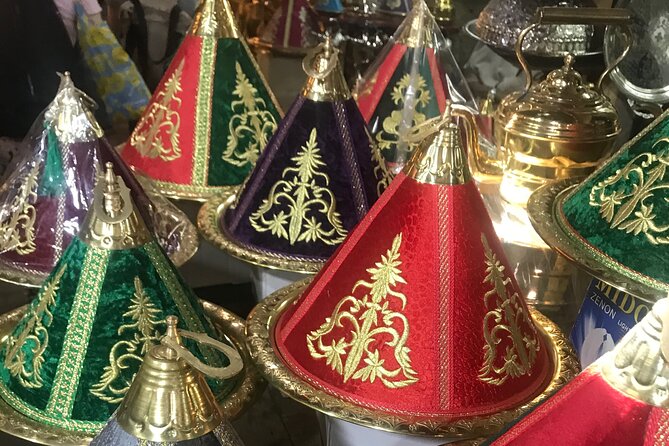
Marrakech can overwhelm you fast. Big courtyards, loud streets, sketchy shortcuts, and sudden turns—one wrong move and your whole plan gets fuzzy. A private walking tour fixes that, because you get a person who knows how the city pieces fit together and can keep you moving at a comfortable speed.
This format is also great for timing. You only need about three to four hours for the core highlights, and then you’re released back into the medina’s energy. That means you’re not stuck with a full-day schedule when you might want to nap, eat, shop, or see something else later.
And because it’s private, it’s built for your group’s pace. No waiting for slow walkers, no hurrying to catch a photo moment someone else wants. The best value here is that you’re paying for a guide and direction, not for a long parade of checkboxes.
You can also read our reviews of more walking tours in Marrakech
Price, tickets, and what you should budget
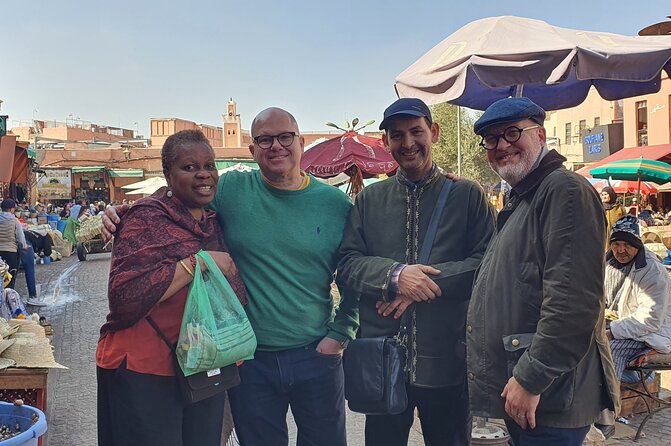
The tour price is $52.27 per person for a private guide, and it’s often booked about a month ahead. For Marrakech, that can be a fair deal if you look at what’s included: you’re getting help through multiple key areas—mosque exterior time, historic gates, the Mellah quarter, Bahia Palace, and then the Souks up to Jemaa el-Fnaa.
Here’s the practical budget reality: Bahia Palace admission is not included. Everything else listed is marked as free (Koutoubia Mosque area, Bab Agnaou, the Kasbah Quarter stop, Mellah passing time, Old Souks, and Jemaa el-Fnaa). So you’ll want to plan for that one paid-site cost so you’re not surprised mid-walk.
Pickup is offered, and there’s also a mobile ticket. That matters because Marrakech days can be chaos at the edges—being able to start cleanly and follow a straightforward meeting plan saves time and energy.
Starting at Koutoubia: white dome landmark and the first story
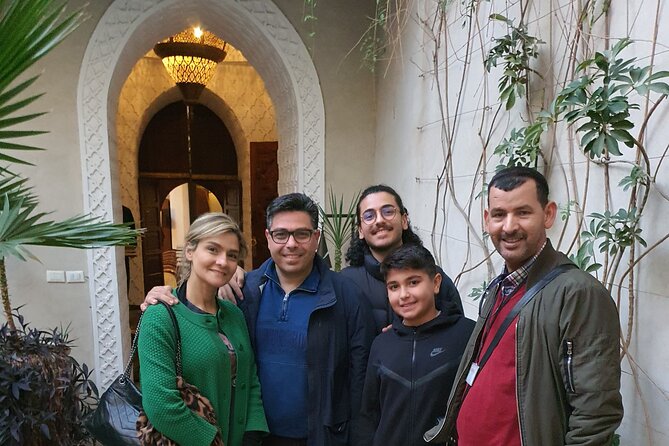
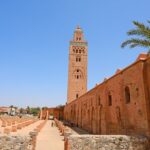
You meet at Kubba Fatima Zohra (not hard to locate with maps), and the tour’s first real landmark moment is at Koutoubia Mosque, near the famous white-dome landmark area. The vibe here is a gentle start: you meet the guide, introduce yourselves, and then you get context right away.
What I like about starting here is that it gives you a mental anchor. Even if you don’t go inside, you learn how the city’s religious and cultural identity shows up in architecture and public space. The tour’s focus at this point includes talking about the monument itself and the different religions in Morocco. That early framing pays off later when you walk through older quarters and see how the city organized itself.
The stop is brief—about 15 minutes—so don’t show up with the expectation of a long museum-style visit. Think of it as your warm-up and orientation before the older streets begin.
Bab Agnaou and the Kasbah Quarter: gates, power, and old streets
Next up is Bab Agnaou, described as the oldest principal entrance to the Kasbah Quarter. This is one of those stops where the architecture matters more than the length. In a short time, you get a sense of how entrances and boundaries worked in the city’s older power layout.
Then you move into the Kasbah area, one of Marrakech’s oldest districts, with more monuments along the way. The point of this part is not to sprint through sights. It’s to understand why these places sit where they do, and why the streets feel the way they do.
A nice touch is that the guide uses time here for discussion, not just pointing. You get to ask questions and make the walk feel like a conversation. This is especially helpful if it’s your first day in Marrakech, because you’re building a framework for everything you’ll see next—especially the medina’s maze of lanes.
Practical note: this section is still short at about 15 minutes, so if you want deeper exploration, tell your guide early. With this private format, you can adjust the time.
Mellah passing-by time: how the Jewish quarter fit into Marrakech
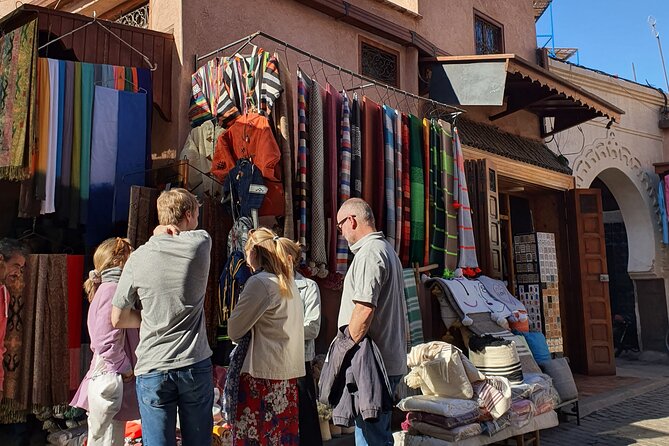
You’ll pass by Mellah, the older Jewish quarter. Even though this is not a long stop (about 10 minutes), it’s a meaningful one if your guide explains the purpose and the lived history behind the area.
The tour frames Mellah as an opportunity to talk about Jewish people and co-existence between different cultures in Morocco. That theme matters because Marrakech isn’t only about one era or one story. Different communities shaped different districts, and the medina reflects that in subtle ways—street structure, building patterns, and the overall feel of the neighborhood.
If you’re someone who likes your history straight and grounded in real places, this short Mellah moment is worth it. If you prefer purely visual stops, it may feel a bit more conversational than you expected, but it still helps connect the dots before Bahia Palace.
You can also read our reviews of more private tours in Marrakech



Bahia Palace: the one stop that deserves your ticket budget
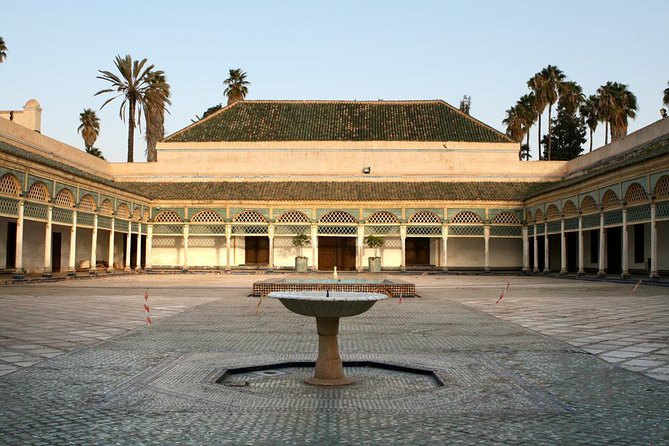
The real highlight break is Bahia Palace. This is the “plan around it” stop, because it’s about 45 minutes and also the only admission site not included.
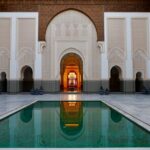
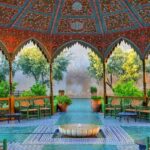
Bahia Palace is described as a royal palace-like space with beautiful decoration, tied to Moorish architecture and interior design. It also has a direct connection to Moroccan history. In other words, it’s not only pretty tiles and doorways—it’s a place where you can see how power, art, and daily life overlapped.
Here’s how to get the most out of your time: slow down. This isn’t a quick photo sprint. Give yourself moments to look at the details, because that’s where the architecture speaks. If your guide has a strong English flow—many of the guides in this program do—you’ll probably get explanations that make the layout and design feel logical instead of random.
If you’re watching your spending, remember the admission isn’t included. But I think the value is still good because you’re paying for a focused visit inside one of Marrakech’s most meaningful palace-style sites.
Souks after Bahia: how to get lost without getting stressed
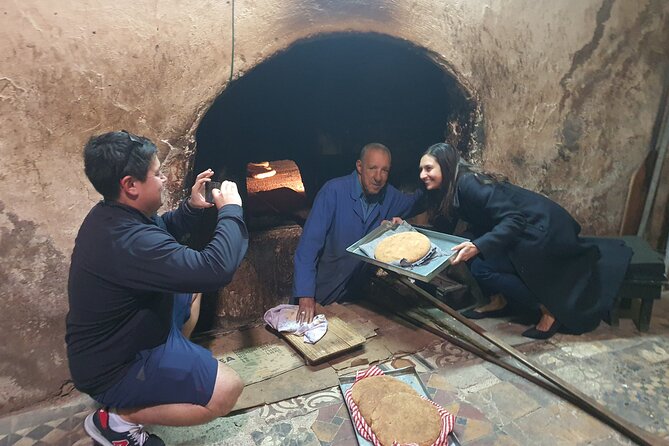
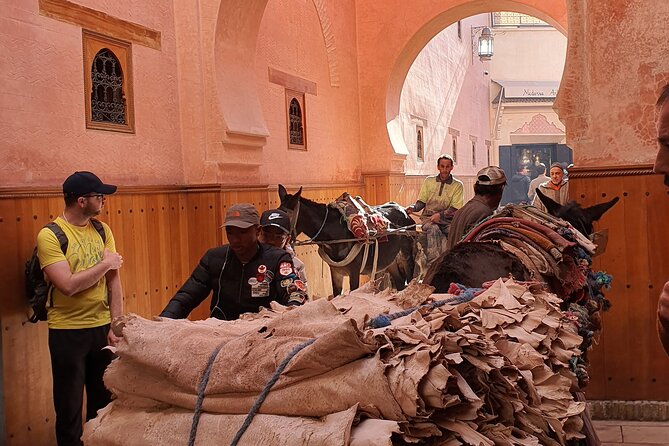
After Bahia Palace, the route crosses Riad Zitoun Jdid street to move into the Souks. This is where the tour changes gears from “guided sightseeing” to “guided wandering,” and it’s a big part of why this walking format works.
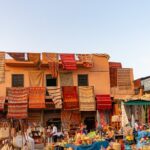
Then comes Old Souks time—about 30 minutes—with guidance through the maze-like streets and alleys. The tour’s description focuses on stunning colors, arts, and getting that sense of how the medina works day-to-day.
In plain terms: a good guide helps you enjoy the chaos. You can ask about what you’re seeing and you’re less likely to get shoved around by random sales pressure. One of the guide styles mentioned in real experiences includes helping guests with purchases like spices and olive oil and explaining what they’re buying. If shopping is on your agenda, tell the guide early. That way you’re not guessing later.
Also, the walk is realistic. It isn’t a long market slog. You get a taste of the Souks, then you move on before fatigue sets in.
Ending at Jemaa el-Fnaa: the performance square at night-or-day
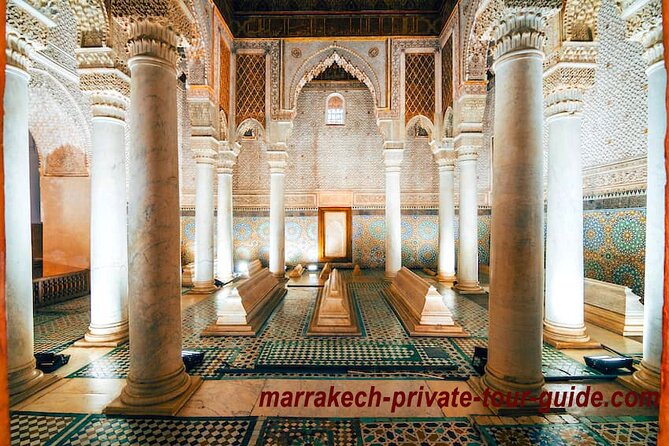
Your tour finishes at Jemaa el-Fnaa. This is the city’s main public square where hundreds of locals meet daily, and the energy is part theatre, part everyday life.
The tour description includes storytellers, musicians, snake charmers, acrobats, and jugglers. Even if your tastes are more museum than street performance, this stop matters because it shows Marrakech as a living city, not a set of monuments.
The final timing is short—about 10 minutes—which is smart. You see enough to know what the square is like, and then you can return later on your own schedule if you want to linger, eat, or just watch.
If you want to keep things smooth, decide in advance what you want from this ending:
- a quick feel and photo
- or a slow wander and snack later
Either way, the short finish keeps the tour from swallowing your whole day.
Who this tour suits best (and who should skip it)
This private walking tour is a strong fit if:
- it’s your first day in Marrakech and you want orientation fast
- you like your sights with explanations, not just photos
- your group wants control over pace and can handle a half-day walk
- you care about how different quarters connect—mosque area, Kasbah, Mellah, palace, Souks
You might want a different type of tour if:
- you hate walking or have mobility limits
- you want a long palace or museum-style experience (only Bahia Palace gets meaningful time)
- you want a full day with multiple major ticketed sites
How to get the most from your guide
Even within the same itinerary structure, the best results depend on how you use the guide. Here’s what tends to work well:
- Bring curiosity. Ask why Bab Agnaou matters, or what Mellah co-existence looked like.
- If you have a special interest, speak up early. Some guides have been flexible enough to add extra stops when a request comes up.
- If you want shopping, tell them what you want to buy. Guides can help you focus on quality items like spices and olive oil instead of random impulse buys.
Also, expect real walking time. One practical tip you should take seriously: wear shoes you can stand in. Marrakech stones and alley floors don’t feel like sidewalk pavement, and you’ll be happier if your feet aren’t begging for mercy.
Should you book this Marrakech walking tour?
Yes, if you want a private, flexible way to hit the core imperial-city highlights in about half a day, with a clear end point that drops you into the medina’s main square. It’s also good value because most listed stops are free, and the only meaningful ticket cost is Bahia Palace.
Book it especially if you’re arriving with limited time and you want to make your first day count without burning the entire day. The walking format keeps you close to the city’s real rhythm, and the private guide angle makes the experience feel tailored rather than mass-tour stiff.
Think twice only if you dislike walking or you want a deep dive into one single site. This tour spreads attention across several neighborhoods on purpose, so it’s designed to connect the city, not dominate one museum-level stop.
FAQ
How long is the private walking tour in Marrakech?
It runs about 3 to 4 hours.
Is this tour private or shared with strangers?
This is a private tour/activity, and only your group participates.
Where do we meet and where does the tour end?
You start at Kubba Fatima ZohraJ2F4+WQ8, Marrakesh 40000, Morocco, and the tour ends at Riad Flamme d’Orient & Spa, Rue des Banques, Marrakech 40000, Morocco.
What’s included in the tour price?
A private guide is included. Pickup is offered, and you receive a mobile ticket. Lunch, dinner, and private transportation are not included.
Are the site admission tickets included?
Admission is listed as free for stops like Koutoubia Mosque area, Bab Agnaou, Kasbah, Mellah passing time, Old Souks, and Jemaa el-Fnaa. Bahia Palace admission is not included.
Can I cancel for a full refund?
Yes. You can cancel for a full refund up to 24 hours in advance of the experience start time.