REVIEW · MARRAKECH
Private Tour 8-Day Morocco Imperial Cities and Riad Accommodation
Book on Viator →Operated by RJ Travel Agency - Tour Operator & DMC · Bookable on Viator
Riads and imperial cities in one smooth loop. This private Morocco trip strings together Marrakech, Rabat, Fez, and Casablanca with an English-speaking driver/guide, airport transfers, and a rhythm that lets you see the big sights without feeling rushed.
I like the traditional riad stay for the quiet reset between medina walks, and I like the mix of guided visits plus free time so you can shop, snack, and wander at your own pace. One thing to plan for: some major sites require tickets you pay on your own, including Hassan II Mosque and several Rabat/Fez attractions.
In This Review
- Key highlights you’ll feel fast
- Why this tour hits the sweet spot for Morocco
- Price and value: what you’re really paying for
- Day-by-day: what you’ll actually do (and why each stop works)
- Day 1: Arrive in Marrakech, then ease into the medina
- Day 2: Casablanca’s Hassan II Mosque, then Rabat’s cliff-top Kasbah
- Day 3: Rabat’s royal mausoleum, Chellah ruins, and the guided Medina
- Day 4: Rabat gates and monuments—Bab Mansour, Kara prison, and Bou Inania
- Day 5: Fez medina with an official guide, then free time to wander
- Day 6: Hilltop Ain Asserdoun views, then back to Marrakech for riad time
- Day 7: Marrakech medina walking tour with official guidance, then more free wandering
- Day 8: Depart Marrakech with an airport transfer
- Where the tour feels most worth it (and where you’ll need to think ahead)
- The best part: guidance that saves time and adds meaning
- The riads aren’t just for romance—they’re for recovery
- The main drawback: you’ll pay some key entrances
- Who this tour suits best
- What to expect from the team (based on past experiences)
- Quick packing and comfort tips (so the medina doesn’t bully you)
- Should you book this private Imperial Cities tour?
- FAQ
- What meals are included on this 8-day tour?
- Are tickets to monuments and museums included?
- Do I get airport transfers?
- Is this tour private?
- Will I have an English-speaking guide?
- Can I book a single room?
- What is the cancellation timeline for a full refund?
- Is the tour suitable for most travelers?
Key highlights you’ll feel fast
- Riad living in Marrakech with airport pickup so you start stress-free
- Official city guides in Rabat, Fez, and Marrakech so you get context, not just photos
- A/C private minivan for long stretches between cities
- Guided medinas plus free wandering time (because you’ll want to poke into side streets)
- Tickets not included for several top stops, so budget for entrances
Why this tour hits the sweet spot for Morocco
This is the kind of Morocco itinerary that makes sense if you want the Imperial Cities feel—big history, big architecture, big medina energy—without trying to coordinate taxis, guides, and ticket lines yourself. You move by private, air-conditioned transportation and you get an English-speaking driver/guide to keep things flowing.
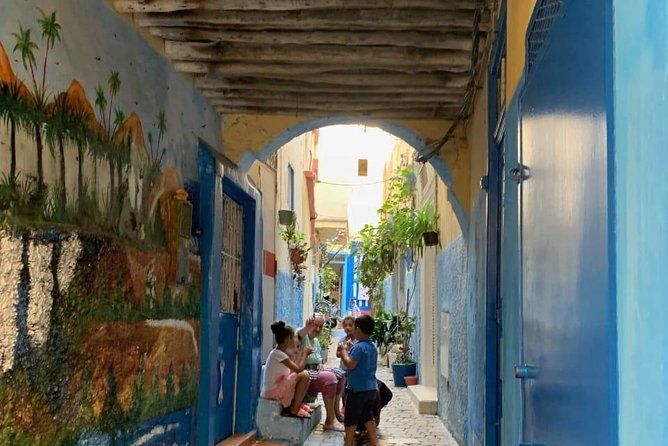
The biggest value here is how the days are paced. You get guided time at key monuments—places where a little background turns the visit from looking at walls into understanding Morocco. Then you get downtime to explore on your own, which is when Morocco gets real: the alley turns, the doorways, the smells from a bakery, the sudden view from a terrace.
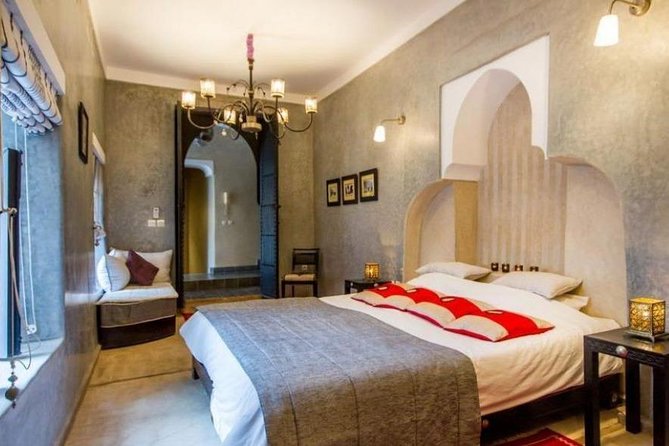
The riad accommodation matters more than people expect. Marrakech medinas are loud in the daytime and tricky to navigate if you’re not used to them. A good riad gives you a calm base—often with courtyards and that slow, domestic rhythm—so your evenings don’t feel like you’re constantly traveling.
You can also read our reviews of more private tours in Marrakech


Price and value: what you’re really paying for
At about $1,126.61 per person for an 8-day private tour, the question isn’t just cost. It’s what you’re buying.
You’re paying for:
- Private transportation (not shared shuttles)
- Airport transfers in and out of Marrakech
- English-speaking guidance across multiple cities
- Riad accommodation plus included breakfasts and selected dinners
A lot of Morocco trips under-price themselves by cutting out guides or by leaving you to handle too many details. Here, the tour covers the “hard coordination” part: getting you from Marrakech to Rabat/Fez sites and back, with guided blocks built in.
What’s not included is also important. You’ll handle monument and museum tickets in several places, and lunches aren’t included. So, think of this as a guided-and-supported framework where you add entrance fees and day-to-day personal spending.
Day-by-day: what you’ll actually do (and why each stop works)
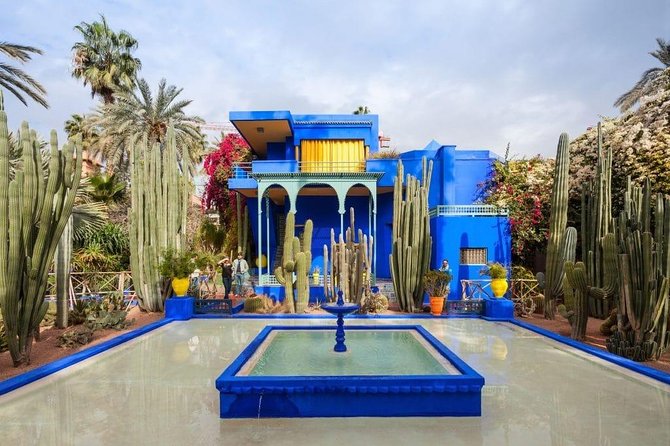
Day 1: Arrive in Marrakech, then ease into the medina
Your first day is practical: airport transfer from Marrakesh Menara Airport to your riad, then free time to explore the medina on your own. This matters because Marrakech is overwhelming if you force a big schedule right away.
Use the evening wisely. Walk slowly near your riad first, get your bearings, and don’t be surprised if you hear call to prayer, shop music, and bargaining all in the same block. You don’t need a plan yet. Day 1 is about finding your rhythm.
Tip: wear comfortable shoes. The medina is a workout, and Day 1 is when you’ll learn which streets are easiest for you.
Day 2: Casablanca’s Hassan II Mosque, then Rabat’s cliff-top Kasbah
This day is two strong contrasts.
Hassan II Mosque (Casablanca)
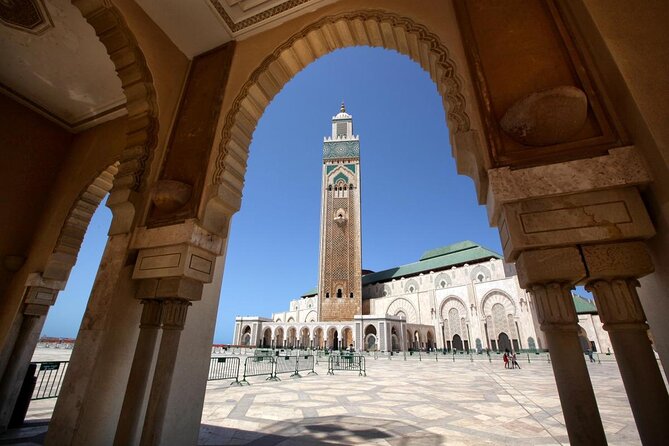
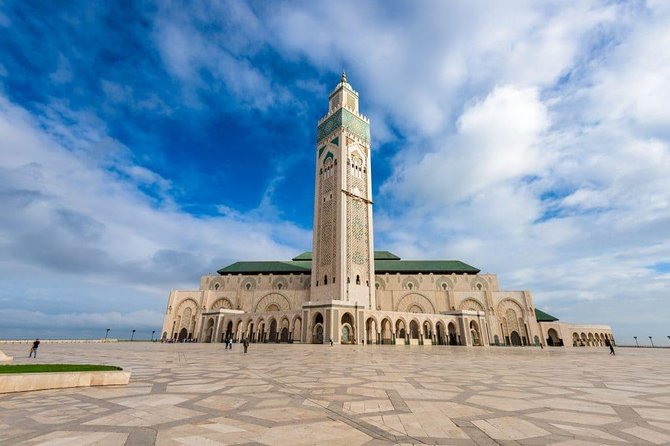
You get a guided visit to what’s described as the largest mosque in Africa and the third largest in the world. The minaret is noted as the world’s second-highest at 210 meters. That’s the kind of scale that changes how you experience the place—especially for first-time Morocco visitors.
Important: the admission ticket isn’t included, so plan to pay this yourself. It’s one of those “worth it if you budget ahead” stops.
Kasbah des Oudaias (Rabat)
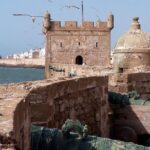
After Casablanca, you move to Rabat for the Kasbah des Oudaias, an Almohads-era cliff-top spot built on earlier fortification ground. The visit is short (about an hour), but it’s the kind of place where you can slow down and enjoy the views and architecture without needing a long attention span.
This pairing is smart: Day 2 gives you a world-class monument and then a more relaxed, scenic historical area.




Day 3: Rabat’s royal mausoleum, Chellah ruins, and the guided Medina
Day 3 leans into Rabat’s layered identity.
Mausoleum of Mohammad V
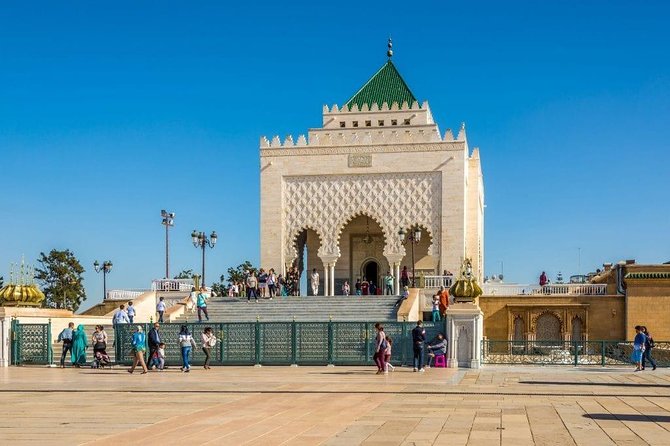
You visit the marble mausoleum of Mohammed V, including the fact that it’s across the yard from the Hassan tower. The tour information is clear that it’s free and you can go inside the royal tomb. That’s a big deal for meaning: you’re not just looking from the outside.
Chellah
Then it’s on to Chellah, described as a medieval fortified necropolis with Phoenician trading beginnings and later Roman settlement roots. This stop has admission not included, so again, keep a small budget for entrance fees.
Medina of Rabat (official guide)
Finally, you get a 3-hour guided Medina of Rabat visit. This is where Rabat stops being a quick transfer city and becomes a place you understand—how the medina layout, old trade areas, and religious sites connect.
If you like history you can read in the streets, this day will feel satisfying.
Day 4: Rabat gates and monuments—Bab Mansour, Kara prison, and Bou Inania
This day is shorter hits, and that can be good. You don’t have to power through; you get a few targeted stops.
Bab Mansour Gate
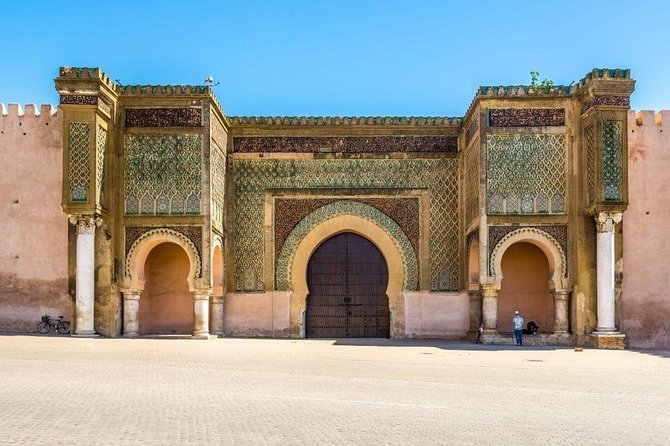
You visit Bab Mansour Gate, noted as a beautiful example of Almohad architecture and described with a unique story behind it. Admission is free and the stop is about 25 minutes. It’s ideal as a photo stop plus a quick story moment.
Prison de Kara
Then comes Prison de Kara, built in the 18th century, described as an underground jail that once held over 40,000 prisoners. Admission isn’t included.
This stop isn’t about pretty walls. It’s about understanding Morocco’s past through places with heavy weight. If you prefer purely cheerful sights, you might find this one intense—but it adds real depth to the Rabat portion.
Bou Inania Medersa
You finish with Bou Inania Medersa, built in 1358 and noted for Merinid interior design. The visit is about 30 minutes and admissions aren’t included.
This combo—gate, prison, madrasa—keeps Rabat from becoming too “samey” after Day 3.
Day 5: Fez medina with an official guide, then free time to wander
Fez is the big one on this route, and the tour structure respects that.
Guided Medina of Fez (official guide)
You get about 4 hours with an official guide. Fez is described as dating back to the 9th century, including reference to the oldest university in the world and a high point under the Marinid dynasty. The medina is also described as the most extensive medina in the world.
The visit says admission is free, but also notes that many specific monuments inside Fez have entrance fees that aren’t included. So you’ll likely see the medina as a living system, and if you want to step into certain sites, you’ll pay those separately.
Afternoon free exploration
You then get another 4 hours on your own. This is exactly what you want after a guided morning: you’ll be able to connect what your guide explained to what you’re seeing now.
Practical approach: pick 2–3 things you want to find (a craft shop, a viewpoint, a bakery) and ignore the rest. Fez can swallow time fast.
Day 6: Hilltop Ain Asserdoun views, then back to Marrakech for riad time
This day includes a scenic stop and then a return to Marrakech.
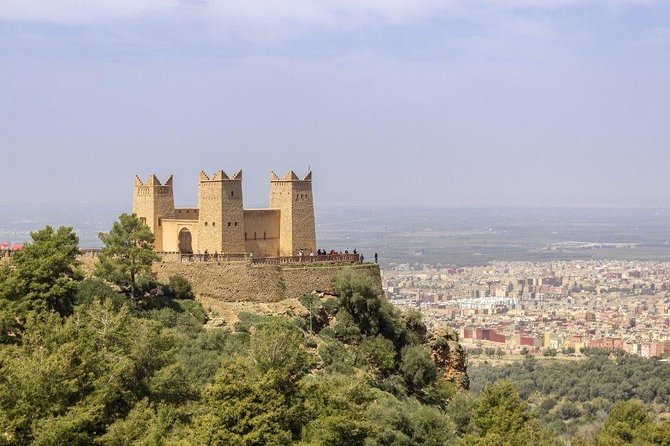
Ain Asserdoun Kasbah (hilltop panoramic views)
You visit Ain Asserdoun Kasbah on top of a hill with panoramic views over Beni Mellal. It’s about an hour and tickets aren’t included.
Even if you’re not a “views person,” these stops matter because they give your eyes a break from medina density. You’re also reminded that Morocco’s cities sit inside big physical landscapes.
Medina of Marrakech, plus getting settled
Later you’re brought to your riad, then you get about 2 hours of free time to explore the medina on your own.
Use this as your second Marrakech orientation. Day 1 was arrival and nerves. Day 6 is your chance to move with more confidence.
Day 7: Marrakech medina walking tour with official guidance, then more free wandering
This is your main Marrakech guided day.
Medina of Marrakech walking tour (official guide)
You get about 4 hours with an official guide focused on the history and cultural peculiarities of Marrakech. This is where you stop seeing Marrakech as just a maze and start understanding the logic behind it—neighborhoods, activity, and why certain areas are the way they are.
Afternoon free time
Then you get around 3 hours to explore independently again.
This repeated pattern—guided morning, free afternoon—works. It means you’re never stuck in a long lecture. Also, it gives you time to revisit any street you liked earlier.
Day 8: Depart Marrakech with an airport transfer
On your last day, you get a transfer from your hotel/riad area to the airport. The tour information keeps the focus on smooth logistics—ending where you started, at Marrakesh Menara Airport.
This final day is intentionally lighter. You’ll be glad for it if you did a lot of walking in the medinas.
Where the tour feels most worth it (and where you’ll need to think ahead)
The best part: guidance that saves time and adds meaning
A private tour is only “worth it” if it does something beyond transportation. Here, you’re guided in:
- Rabat (Medina with an official guide)
- Fez (Medina of Fez with an official guide)
- Marrakech (Medina walking tour with an official guide)
That’s the core value. It helps you see monuments and city layouts with context, and it reduces the usual solo-tour problem: getting lost without knowing what you just passed.
If you want Morocco to make sense fast, this structure helps.
The riads aren’t just for romance—they’re for recovery
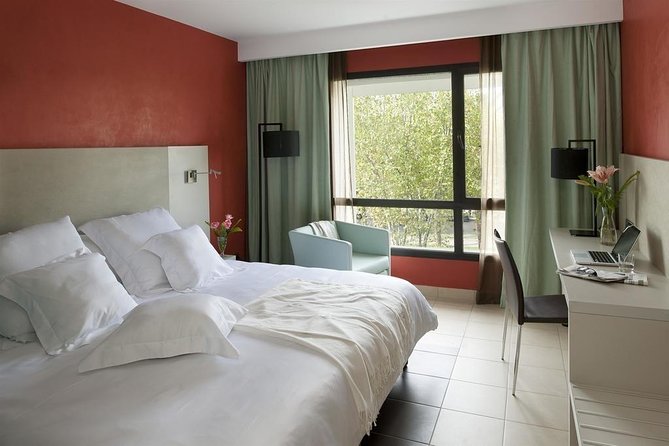
Riads are typically where you reset during the trip: shower, recharge, and get ready for the next day’s walking. The tour is built around that base, and it’s especially helpful because your medina exploration time is repeated on multiple days.
If you care about sleep quality and not being constantly on the move, you’ll appreciate the riad nights.
The main drawback: you’ll pay some key entrances
Several specific sites have admission not included:
- Hassan II Mosque (Casablanca)
- Chellah (Rabat)
- Prison de Kara (Rabat)
- Bou Inania Medersa (Rabat)
- Ain Asserdoun Kasbah (near Beni Mellal)
- Also, in Fez, many monument entrances can carry fees
This isn’t a dealbreaker. It’s just real. If you don’t like surprise costs, set aside a budget for entrance tickets before you go.
Who this tour suits best
This works well for:
- First-time visitors who want Imperial Cities Morocco highlights with less hassle
- People who want a private experience (only your group), not a big bus schedule
- Travelers who like guided history but still want free time to wander and shop
- Anyone who values comfortable logistics: air-conditioned private transportation and airport transfers
It may be less ideal if:
- You hate paying entrance fees during the day
- You want a very slow pace. You’ll walk in medinas, and the days include multiple stops.
What to expect from the team (based on past experiences)
While your exact guide isn’t guaranteed in the tour details, the overall setup is consistent: you travel with an English-speaking driver/guide, and official city guides appear for Fez, Rabat, and Marrakech.
In past experiences connected to this operator’s Morocco trips, names like Aziz, Joao/João Leitão, Mustapha, and Hicham/Juanito show up as part of the guidance team, alongside people credited for coordinating and hospitality (including Rita and Said). That pattern suggests you’re likely to get someone who can explain the culture clearly and keep the day organized.
Quick packing and comfort tips (so the medina doesn’t bully you)
You’ll be doing walking on uneven surfaces. Bring:
- Comfortable, grippy shoes
- A light layer (even warm days can cool down, especially in evenings)
- Water and a small snack strategy for medina gaps (lunches aren’t included)
And yes, dressing modestly helps you feel more at ease at religious sites.
Should you book this private Imperial Cities tour?
Yes, if you want a guided, private Imperial Cities Morocco trip that includes riad stays, airport transfers, and English guidance in the cities that matter most (Rabat, Fez, Marrakech). It’s a good value structure because it handles the hard logistics and gives you real time in the medinas.
Before you book, check your budget for monument tickets. If you’re the type who wants most entrances included, this may feel slightly nickel-and-dime. But if you’re okay paying a few site admissions to get into the places you came to see, the tradeoff is strong: you get organization, comfort, and meaningful guided stops.
In short: if you want Morocco to feel smooth, not chaotic, this is a smart way to do it.
FAQ
What meals are included on this 8-day tour?
The tour includes breakfast for 7 days and dinner for 4 days. Lunches and any other dinners (like dinners in Marrakech that aren’t listed as included) aren’t included.
Are tickets to monuments and museums included?
No. Tickets are listed as not included for some specific sites such as Hassan II Mosque, Chellah, Prison de Kara, Bou Inania Medersa, and Ain Asserdoun Kasbah. In Fez, some monuments have entrance fees that are also not included.
Do I get airport transfers?
Yes. You’re met at Marrakesh Menara Airport for arrival transfer to your riad, and on the last day you get a transfer from the hotel/riad area to the airport.
Is this tour private?
Yes. It’s described as a private tour/activity, meaning only your group participates.
Will I have an English-speaking guide?
You’ll have an English-speaking driver/guide, and there are official guided visits for Rabat, Fez, and Marrakech.
Can I book a single room?
Yes. There’s an option to stay in your own single room. You’re instructed to book the tour, then select the single room option during booking.
What is the cancellation timeline for a full refund?
You can cancel up to 6 days in advance of the experience start time for a full refund.
Is the tour suitable for most travelers?
The tour notes that most travelers can participate and that it’s near public transportation, with an air-conditioned vehicle for transport between cities.