REVIEW · MARRAKECH
Private Marrakech Guided Half Day City Tour
Book on Viator →Operated by Lovely Morocco Tours · Bookable on Viator
Four hours, and Marrakech feels mapped out. This private half-day tour connects the big sights with local context, from Koutoubia Mosque to Ben Youssef Madrasa. I especially like the official local guide who keeps the walking efficient, and I like the way Bahia Palace and Ben Youssef Madrasa turn complicated details into something you can actually see and understand. The only catch: Bahia Palace and Ben Youssef have separate entry fees, so plan a little extra.
You’ll follow a clear loop through the medina, with set stop times that keep the pace from feeling random. Expect a mix of landmark stops (mosque, palace, madrasa) plus market time for spices and crafts, ending where you started. If you’re visiting Marrakech for the first time and want your bearings fast, this format is a practical win.
You can also start with a simple perk: pickup/drop-off is offered if your riad or hotel is in the medina, and the tour includes mint tea (plus coffee/tea). Even with the extra entry tickets, the value is strong for a private guide-led route that hits several top sights in one afternoon.
In This Review
- Key highlights worth planning around
- How this 4-hour private walk actually works
- Start at Café de France and get back to the same place
- Jemaa el-Fnaa: UNESCO square with two different personalities
- Koutoubia Mosque: 77 meters of minaret and Almohad design
- Mellah (Jewish Quarter): narrow lanes and surviving stories
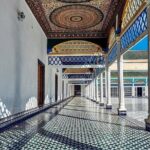
- Bahia Palace: Si Moussa’s courtyards and the meaning of brilliance
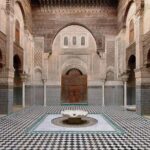
- Madrasa Ben Youssef: cedar wood, zellige, and a school that lasted centuries
- Place des Epices and Souk Semmarine: shopping with your eyes open
- What’s included: guide time, mint tea, and the smart shortcuts
- Price and what extra entries cost in real terms
- The guide factor: how Saleh and Mohamed shape the experience
- Who should book this Marrakech half-day tour
- Quick practical tips before you go
- Final call: should you book it?
- FAQ
- How long is the Marrakech private guided half-day city tour?
- Is this tour private or shared?
- Where does the tour start, and where does it end?
- Is pickup available?
- What entry fees are not included?
- Are there any stops with free admission?
- What’s included besides the guide?
- What fitness level is needed?
Key highlights worth planning around
- A private, 4-hour medina route that keeps you from wasting time figuring things out on your own
- Jemaa el-Fnaa as a UNESCO stop with day-market energy and evening entertainment (depending on timing)
- Koutoubia Mosque minaret (77 meters) and Almohad-style details in a calm setting
- Bahia Palace courtyards for “Si Moussa brilliance” and 19th-century craftsmanship
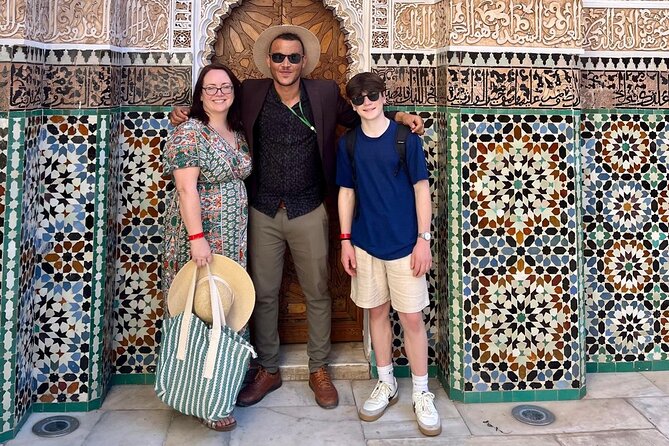
- Ben Youssef Madrasa tiles, cedar wood, and stucco in a former learning center
- Spice souks + Souk Semmarine where haggling is part of the fun
How this 4-hour private walk actually works
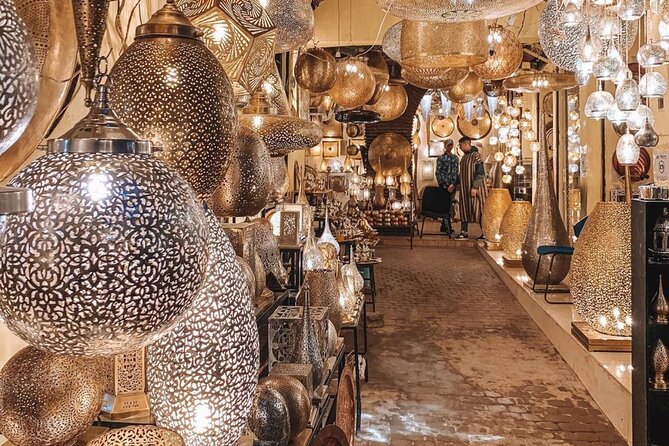
This tour is built for people who want big Marrakech hits without burning the whole day. You’re looking at about 4 hours total, with multiple timed stops (from 20 minutes to about 1 hour each). That matters because Marrakech’s medina streets can feel like a puzzle—one wrong turn can cost time and energy. A fixed route helps you enjoy the sites instead of fighting the maze.
It’s also private, so the guide can adjust the pace. If you’re the type who likes to linger over tilework or ask questions about history, this format gives you space to do that. If you’re short on energy, the shorter stops at places like Jemaa el-Fnaa and the Mellah help keep things manageable.
One note: the experience lists moderate physical fitness as the baseline. That usually means walking on uneven old-street surfaces and moving through crowded areas. I’d treat this as a comfort-walking plan, not a sit-everywhere-and-see-everything by bus plan.
You can also read our reviews of more guided tours in Marrakech
Start at Café de France and get back to the same place
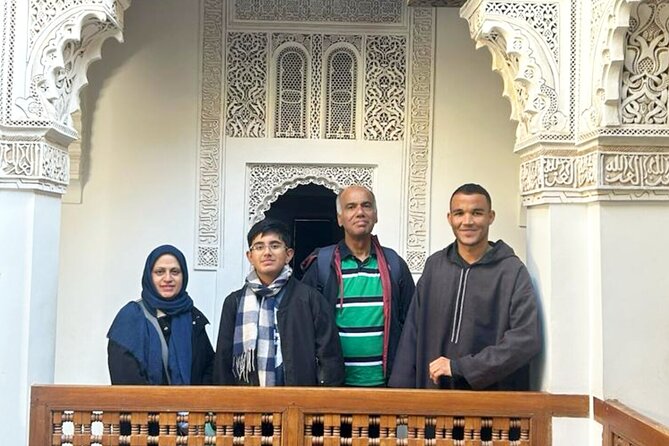
The meeting point is Café de France, 72 Rue des Banques, Marrakech 40000. The tour ends back at the meeting point, which is a huge help when you’re trying to avoid medina “lost in translation” moments.
Pickup/drop-off is offered if you’re staying inside the medina. If you’re not, you’ll still have a straightforward meeting point near public transportation. You’ll also receive a mobile ticket, which keeps things simple on the day.
If you like clear instructions and predictable endpoints, you’ll appreciate this setup. You won’t have to guess how to get back across town after you’re done.
Jemaa el-Fnaa: UNESCO square with two different personalities
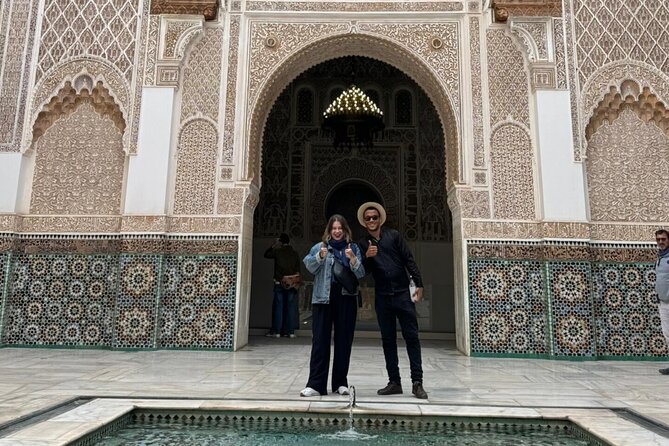
You’ll spend about 20 minutes at Jemaa el-Fnaa, and this is one of the few places in Marrakech that can feel like two different destinations depending on the time of day.
By day, the square functions like a market hub—vendors sell fresh juices, spices, traditional crafts, and souvenirs. You’ll smell the goods before you fully see them, and the guide context helps you understand what you’re looking at (spice piles, dried herbs, and everyday products people buy here).
When the light shifts, Jemaa el-Fnaa turns into a performance center, with musicians, dancers, storytellers, and snake charmers, plus food stalls serving Moroccan dishes. This tour doesn’t guarantee you’ll catch evening entertainment, but it’s built to meet the moment you arrive.
Practical consideration: Jemaa el-Fnaa gets intense. You’ll want a guide to help you move through the crowd calmly and understand what’s worth your attention versus what’s just noise.
Koutoubia Mosque: 77 meters of minaret and Almohad design
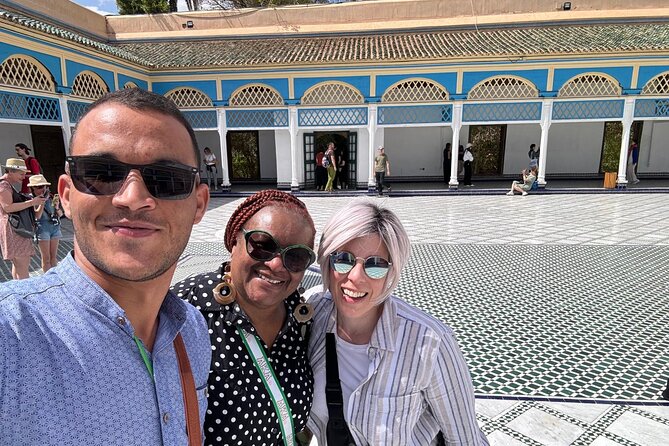
Next is the Koutoubia Mosque, with about 40 minutes here and free entry. This is the kind of sight that helps you understand Marrakech’s scale quickly. The minaret is 77 meters tall, so you can spot it from across parts of the city.
The guide will typically point out the Almohad architecture look—think careful tile work, arches, and ornate details that make the mosque feel designed rather than simply built. You’ll also have time to enjoy the surrounding gardens, which makes the stop feel less like a quick photo stop and more like a breather in between busier streets.
If you care about architecture, this is a strong anchor on the route. It sets a visual standard before you head into palace and school interiors.
Mellah (Jewish Quarter): narrow lanes and surviving stories
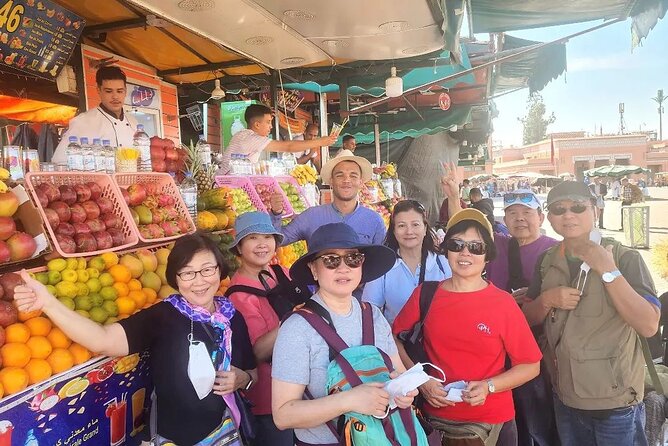
You’ll visit the Mellah for about 20 minutes. The Mellah is a historic district tied to Marrakech’s Jewish community, established in the 16th century. The streets here are the point: narrower lanes, distinctive architecture, and references you can see in the built environment.
The stop is also a reminder that history in Marrakech is layered. You may notice synagogues and the Jewish cemetery area, along with craft activity connected to local markets—people selling things like jewelry and spices.
One practical detail: admission here is not included, though no fee amount is listed for this stop. Keep that in mind so you don’t get surprised. Also, since this is a shorter stop, come with curiosity and let your guide steer what you look at first.
You can also read our reviews of more city tours in Marrakech
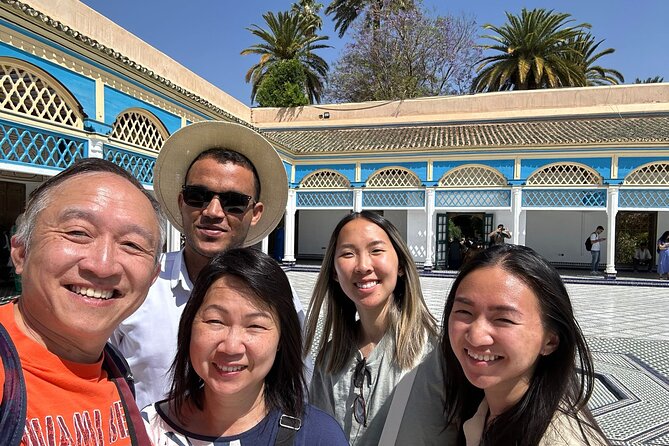
Bahia Palace: Si Moussa’s courtyards and the meaning of brilliance
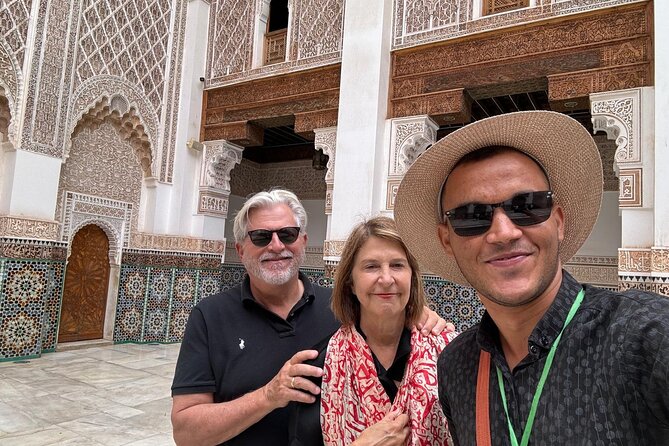
The Bahia Palace is scheduled for 1 hour, and its entry fee is not included (listed as $10). This is one of the places where a guided stop really pays off. Left on your own, it’s easy to walk through rooms without realizing what you’re supposed to notice.
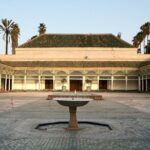
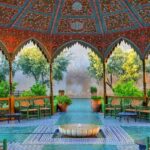
Bahia Palace was built for Si Moussa, the grand vizier of the sultan. The palace is known for its courtyards, intricate tile work, carved wooden arches, colorful mosaics, and lush gardens. Even if you don’t know Moroccan architectural terms, you can still see the pattern: craftsmanship designed to impress from every angle.
What to watch for during your visit:
- Transitions between courtyards and interior spaces
- Decorative ceilings and woodwork
- Tile patterns around arches and passageways
Possible drawback: since the entry ticket is extra, you’ll want to factor the cost into your budget. Also, palace interiors can be busy during peak times, so having a guide helps you keep your visit moving without rushing.
Madrasa Ben Youssef: cedar wood, zellige, and a school that lasted centuries
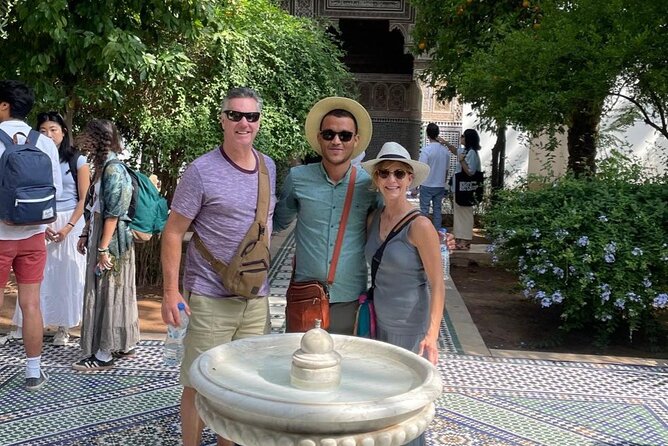
After Bahia, you’ll head to Madrasa Ben Youssef, with about 40 minutes. Admission is not included and is listed at $5.
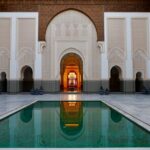
This is the kind of place where the details do the talking. Ben Youssef is a historic Islamic school, originally built in the 14th century and expanded in the 16th century under the Saadian dynasty. It served as one of the largest madrasas in North Africa and functioned as a center for learning for over 400 years.
What makes it stand out in real life:
- zellige tilework (the geometric mosaic look)
- carved cedar wood
- ornate stucco and architectural ornamentation
This stop pairs well with the palace visit. Bahia shows power and wealth through royal court architecture; Ben Youssef shows how faith and education were expressed through design. If you like understanding why places look the way they do, this is the highlight for many people on the route.
Place des Epices and Souk Semmarine: shopping with your eyes open
You’ll spend time in two market areas. First is Place des Epices for about 40 minutes, followed by Souk Semmarine for about 20 minutes.
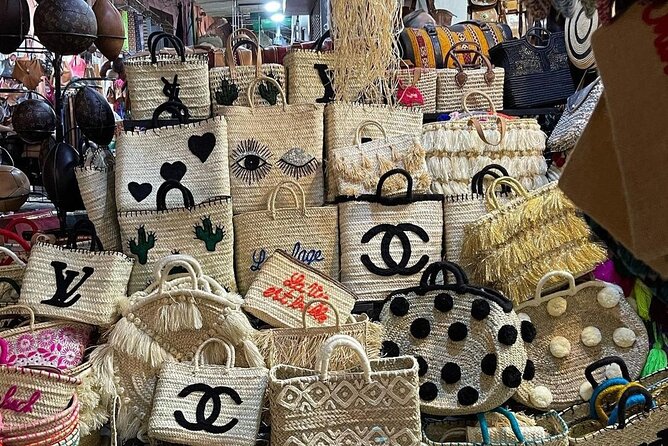
Place des Epices is a spice-focused zone around the medina core, especially near Jemaa el-Fnaa. The point isn’t just shopping—it’s learning how merchants sell by smell, color, and texture. You’ll see spices and dried herbs stacked in piles, with aromas like cumin, cinnamon, and saffron in the air. It’s also a place where you can shop for Moroccan products like argan oil, dried fruits, nuts, and local crafts.
Haggling is expected, and part of the fun is getting the rhythm right. Don’t treat it like a test you have to win—treat it like a conversation. If you’re buying small items, ask what’s typical and what’s a reasonable price, then decide quickly so you don’t get trapped in a back-and-forth loop.
Souk Semmarine is more of a market artery. Expect colorful displays, trade in herbs and traditional goods, and lively merchant interactions. It’s a good final shopping stretch before you head out of the most central area.
What’s included: guide time, mint tea, and the smart shortcuts
This tour includes:
- An official local guide
- Time to explore the monuments at each stop
- Hotel/riad pickup and drop-off if you’re in the medina
- Coffee and/or tea
- Moroccan mint tea at a Berber pharmacy (spices cooperative)
That mint tea stop is more than a break. In many medina routes, you end up spending energy just trying to find a calm moment. Here, you get a planned pause plus context about local spices. You’re not left drifting through storefronts wondering what you’re looking at.
And the private format matters. When you have one guide for your group, you’re less likely to lose time at entrances, less likely to miss key visual details, and more likely to ask the questions you actually care about.
Price and what extra entries cost in real terms
The tour price is $40.65 per person, booked on average about 17 days in advance. That’s a base rate for a private, guided half-day that covers multiple top areas of Marrakech.
But two major sites have entry fees not included:
- Bahia Palace: $10
- Madrasa Ben Youssef: $5
So you should expect at least $15 in added monument fees, plus any optional purchases in the souks and any food you choose to eat on your own. Tips aren’t included, either.
Is it good value? For me, it is when you want a guide-led route that compresses several high-value stops into one afternoon. If you planned to go solo, you’d still pay for the palace and madrasa entries, and you’d likely spend more time figuring out the order, the entrances, and what’s worth your focus.
Also worth noting: the listing mentions group discounts as a feature. If you’re traveling with people, ask about how pricing changes when the group size increases.
The guide factor: how Saleh and Mohamed shape the experience
The route depends heavily on your guide’s storytelling and pacing. In the past, guides like Saleh and Mohamed have been highlighted for knowing history well and keeping things engaging during walking sections.
You should also expect practical help—like guidance on what to photograph and where to stand for the best views—because the medina isn’t always obvious, especially around doorways, courtyards, and market turns. With a good guide, you’ll spend more time looking at the important parts and less time guessing.
If you want your visit to feel personal, the private setup gives you that. You can ask questions and keep moving without feeling like you’re in a hurry-please photo line.
Who should book this Marrakech half-day tour
This tour is a strong fit if:
- you have about half a day and want a structured plan
- you’re seeing Marrakech for the first time and want an efficient intro
- you care about architecture (mosque, palace, school) as much as markets
- you’d rather have a local guide than try to navigate the medina solo
It may feel less ideal if:
- you hate walking and crowd areas (the medina involves both)
- you have a tight budget and don’t want to add entry fees for Bahia and Ben Youssef
Quick practical tips before you go
- Wear comfortable shoes with grip; medina streets can be uneven.
- Bring some cash for extra entry tickets that are not included and for souk purchases.
- If you’re shopping for spices or oil, decide what you want before you start negotiating. That keeps you from getting pulled into the most expensive direction.
- If you have dietary plans, plan your food time separately. Food isn’t included.
Final call: should you book it?
If your goal is a focused introduction to Marrakech’s top sights in one afternoon, I’d say yes—especially because you get a private guide-led route plus a planned tea stop and time allocations that prevent you from rushing through the most important places.
I’d think twice only if you strongly dislike added entry fees or you want a totally free-form day with no structure. For most first-timers, the combination of Koutoubia, Bahia Palace, Ben Youssef Madrasa, and the market stops makes this a smart use of limited time.
FAQ
How long is the Marrakech private guided half-day city tour?
It’s listed at about 4 hours.
Is this tour private or shared?
It’s private. Only your group participates.
Where does the tour start, and where does it end?
It starts at Café de France, 72 Rue des Banques, Marrakech and ends back at the same meeting point.
Is pickup available?
Yes, hotel/riad pickup and drop-off is offered if it’s in the medina.
What entry fees are not included?
Bahia Palace (listed as $10) and Madrasa Ben Youssef (listed as $5) are not included. The Mellah stop also notes that admission is not included.
Are there any stops with free admission?
Yes. Jemaa el-Fnaa, Koutoubia Mosque, Place des Epices, and Souk Semmarine are listed with free admission.
What’s included besides the guide?
The tour includes time to explore, and coffee and/or tea, including Moroccan mint tea at a Berber pharmacy (spices cooperative). It also uses a mobile ticket.
What fitness level is needed?
The tour recommends a moderate physical fitness level due to walking through the medina.