REVIEW · MARRAKECH
Mt Toubkal Ascent Express Trek 2 Days 1 Night
Book on Viator →Operated by Trek Atlas Morocco · Bookable on Viator
Two days to Africa’s highest peak. On the Mt Toubkal Ascent Express Trek, you leave Marrakech behind, climb up through the Mizane Valley, and chase the summit of Mount Toubkal with an English-fluent local guide. It’s a fast, focused way to see the High Atlas up close without turning your whole trip into one long expedition.
I especially like that this trek is built as a hiking experience, not technical climbing, with mules to help carry gear. You also overnight at Toubkal Refuge (3206m), which sets you up for a brighter, less rushed summit morning.
One consideration: it still involves scree fields, some simple scrambling, and possible snow slopes, so your “moderate fitness” needs to be real—not wishful.
In This Review
- Key things that make this trek work well
- Marrakech to Imlil: leaving the city behind fast
- Mizane Valley hike: Aremd, terraced farms, and a riverside shrine
- The steady ascent to Toubkal Refuge (3206m)
- Summit morning over scree: south cirque and altitude work
- Reaching the top of Jebel Toukbal: the views go 360°
- The long descent back to Imlil and Marrakech
- Guides, cook, and mules: what support looks like on this trek
- Price and value: what you’re really paying for
- Who should book Mt Toubkal Ascent Express, and who might want more time
- Should you book this 2-day Mt Toubkal trek?
- FAQ
- How long is the Mt Toubkal ascent trek?
- What’s included in the price for this Mt Toubkal trek?
- How do I get from Marrakech to the start of the hike?
- Is Mount Toubkal a technical climb?
- Where do you stay overnight?
- What fitness level do I need?
- Is free cancellation available?
Key things that make this trek work well
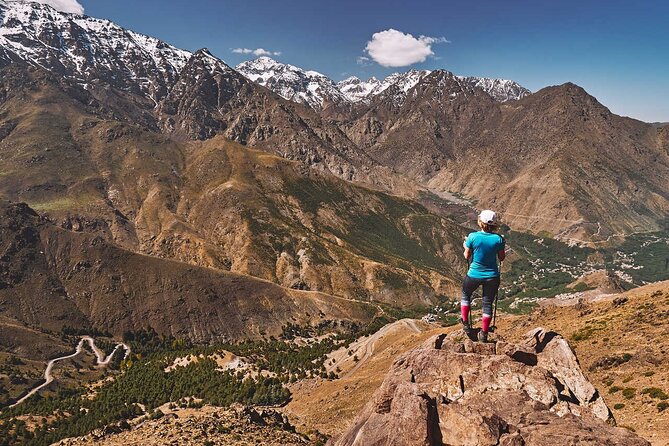
- Summit Mt Toubkal in 2 days: A tight schedule that’s doable for hikers who move steadily.
- Private door-to-trail transfers: Pickup/transport from Marrakech to Imlil and back to Marrakech keeps logistics simple.
- Mizane Valley approach + Aremd + Sidi Chamarouch: Rural valley life, terraced farming, and a pilgrim shrine in one day.
- Overnight at Toubkal Refuge (3206m): You’re not “camping in nowhere land,” and your timing for summit morning is better.
- South cirque and scree on the way up: Expect sections that feel slow and rocky, even when the walking is otherwise straightforward.
- English guide, native cook, and mule support: The comfort isn’t about luxury—it’s about staying cared for.
Marrakech to Imlil: leaving the city behind fast
Most of the payoff on a Mt Toubkal hike comes from what you do before your boots even hit the trail. This itinerary starts with a drive south from Marrakech into the Toubkal massif area, crossing the Haouz Plain and heading toward the foothills. You’ll pass through small settlements along the way, and you can feel the scenery shift from city energy to valley quiet.
The first practical win is timing. You don’t waste a day figuring out routes or negotiating transport with multiple stops. Private transfers are included, and pickup is offered, so you get shuttled to the Imlil area where the hiking begins.
On the way up, you also get a preview of the kind of terrain you’re about to walk: high, jagged peaks and deep valleys. It’s the same region that makes Toubkal such a magnet for hikers and photographers—seriously good mountain drama, starting well before you reach the snowline.
You can also read our reviews of more evening experiences in Marrakech
Mizane Valley hike: Aremd, terraced farms, and a riverside shrine
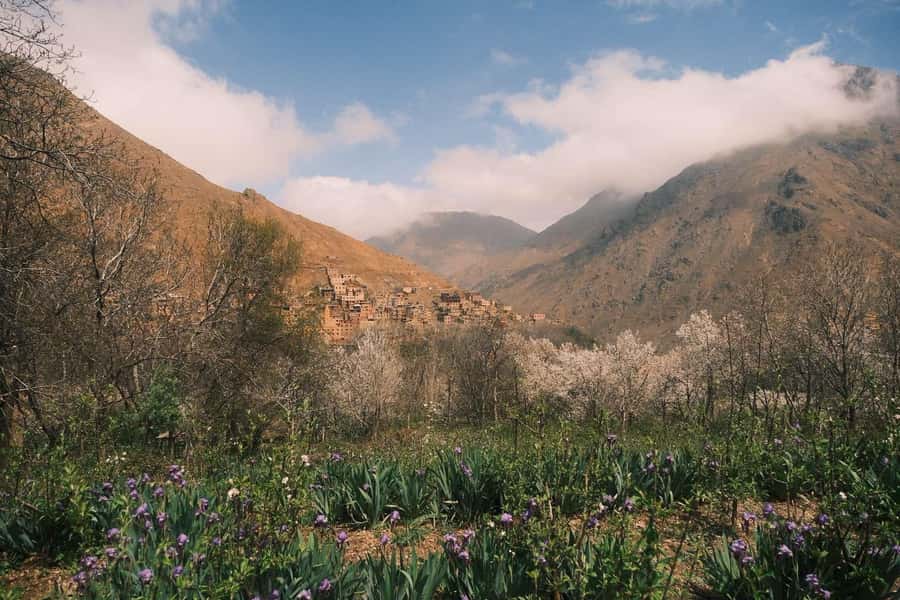
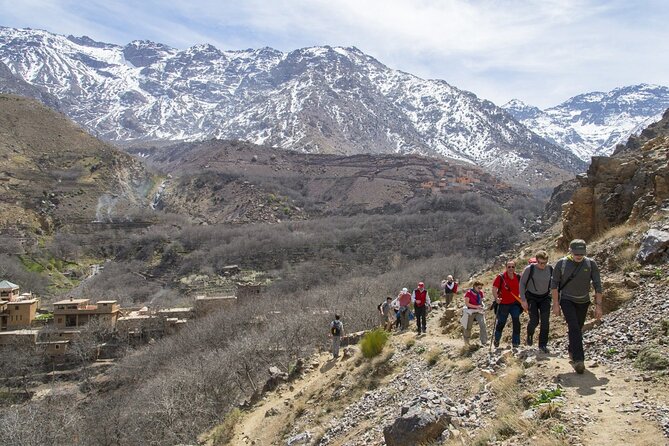
Day 1 is about getting your legs working and soaking in valley culture. You start from Imlil and head into the Mizane Valley. The route climbs toward the town of Aremd, then continues on to the shrine of Sidi Chamarouch.
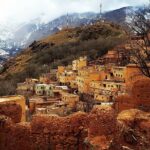
Aremd is the largest settlement in the valley, and it’s built on a moraine spur overlooking the valley bottom. The farming here is terraced, with gites and small roadways—so you’re not walking through empty mountain scenery. You’re moving through a working landscape where goats and cattle are part of daily life.
The shrine portion is what makes this day more than just a warm-up hike. Sidi Chamarouch is a pastoral shrine frequented by pilgrims as well as tourists. One detail that’s worth knowing: only Muslims are allowed to cross the stone bridge to visit the marabout shrine itself, so you’ll want to respect that boundary while still enjoying the waterfall-adjacent setting and the maze of small dwellings around it.
What you’ll like most here is the sense of scale. Toubkal isn’t just a dot on a map. You see how communities live against steep slopes, how farms fit into the contours, and how water and paths shape everyday movement.
The steady ascent to Toubkal Refuge (3206m)
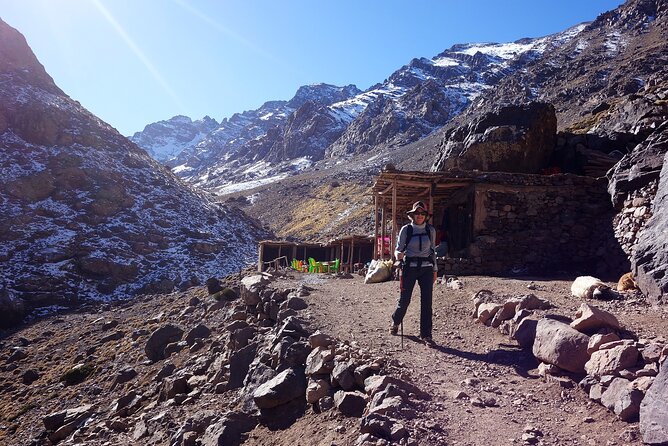
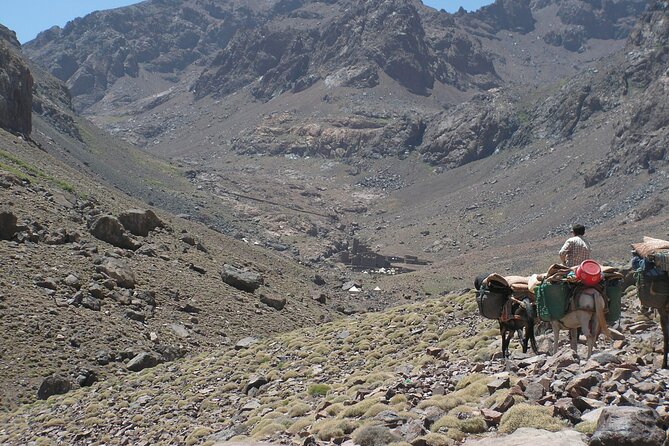
After the shrine, the hike turns more purely “mountain.” From there, you keep climbing in a steady rhythm, zigzagging up until you reach the snowline and the Toubkal Refuge at 3206m. This stretch is listed as about 5 hours of walking.
This is where the trek earns its name: Ascent Express. The pace is built for hikers who don’t need hand-holding to move uphill. There’s no technical climbing step described, but there is some simple scrambling and conditions that can turn icy as you approach the snowline.
You’re also traveling with practical support. Mules are included to carry gear, which can make a noticeable difference on a two-day schedule. Your guide is also part of the safety net—especially when the route transitions from warmer valley trails to colder, rockier zones.
Then there’s the overnight. Staying at the refuge means you’re not guessing where to eat, sleep, or how the morning routine will work. Dinner and breakfast are included, and having meals handled helps you focus on the big next day instead of planning everything from scratch.
Summit morning over scree: south cirque and altitude work
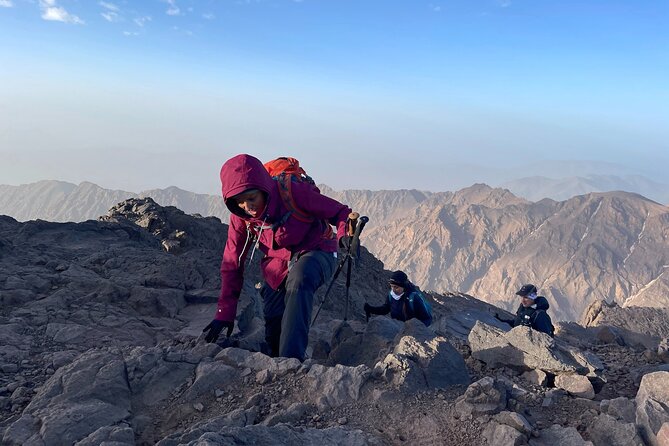
Day 2 starts early for a reason: you want the best chance to feel in control before fatigue stacks up. The ascent begins as you head toward the top, taking you through the south cirque. The route includes crossing a creek just above the refuge and then moving into scree fields.
Here’s the part you need to mentally prep for. Scree is basically an “unending carpet of pebbles and rocks,” and that kind of footing can feel like it fights back. Even when the overall route is straightforward, your legs still do extra work to keep stable.
This is also where altitude starts to matter. The trek describes the altitude as making the walking fairly challenging in sections. You’ll feel it even if you’re a strong hiker, so don’t treat the first summit stretch like a casual stroll. A steady pace and short, consistent steps beat heroic speed here.
The benefit is the payoff timing. Because you sleep close to the climbing zone, you’re not burning daylight just reaching the mountain. Your summit attempt is planned around the terrain itself.
Reaching the top of Jebel Toukbal: the views go 360°
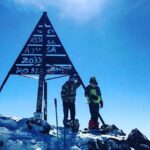
The summit portion is laid out in a classic rhythm: first effort, then a change in terrain, then the final push. After you climb up to the top of the ridge, you reach a plateau. From there, it’s described as a short walk to the peak of Jebel Toukbal.
Once you’re on the ridge and the final walk is within reach, the trek notes that the walking becomes pretty easy compared to the scree sections. That contrast matters. It gives your body a break right when you’re most likely to be thinking only about the finish.
Now the views. From the peak, you get unobstructed scenery in every direction—from the Marrakesh Plain and the High Atlas to the north, and all the way down to the Anti-Atlas and the desert in the south. There’s even a nod to Pliny, who referred to the High Atlas Mountains as the most wonderful mountains in all of Africa. Looking outward from that altitude is the kind of perspective that makes historical praise feel less like a quote and more like common sense.
Bring your camera. This trek doesn’t just promise scenery—it practically assumes you’ll want to capture it from above.
You can also read our reviews of more hiking tours in Marrakech

The long descent back to Imlil and Marrakech
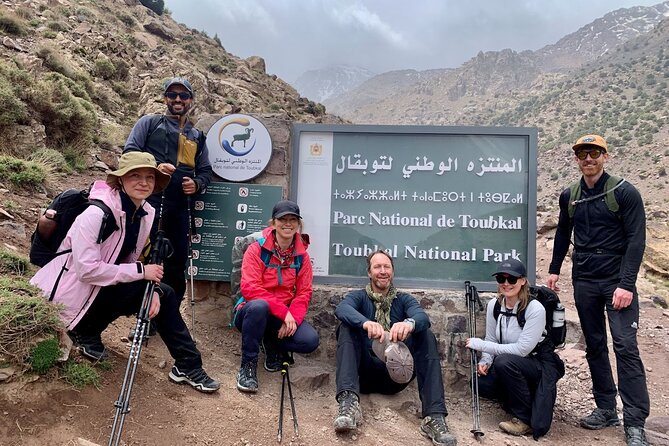
After the summit, you start descending back down the mountain by retracing your route toward Imlil. The itinerary lists about 7 hours for the return to Marrakech by car.
Descent day always deserves respect. Your legs may feel fine uphill, but downhill is different. Rocky steps, scree leftovers, and fatigue can make footing slower than you expect. This is also why timing matters on a two-day itinerary: you want enough daylight buffer to keep the descent safe and controlled.
The good news is that the route is planned as a return trip using the same corridor. You’re not doing a complicated “through trek.” Once you start moving downhill, your guide already knows the flow, and your goal becomes steady progress and an easier transition back to valley life.
When the drive finally comes, it closes the loop: you end in Marrakech after being transported back from Imlil. That’s part of the value here—someone else handles the mountain-to-city handoff.
Guides, cook, and mules: what support looks like on this trek
A high summit hike can go one of two ways: it’s either stressful because you’re managing everything, or it’s challenging but well-run. The strongest praise tied to this trek centers on caring, professional guides who look after you from start to finish.
Even without luxury details, the structure here is what matters:
- Your local mountain guide is English-fluent, so you’re not guessing about route choices or timing.
- A native cook is part of the experience, with all meals included (dinner, breakfast, and lunch twice).
- Mules support gear carriage, which helps keep the hike realistic for a short multi-day schedule.
If you like your travel grounded—clear responsibilities, people who know the terrain, and food that’s ready when you need it—this setup fits. It’s “comfort” in the sense of removing friction, not in the sense of plush hotels.
Price and value: what you’re really paying for
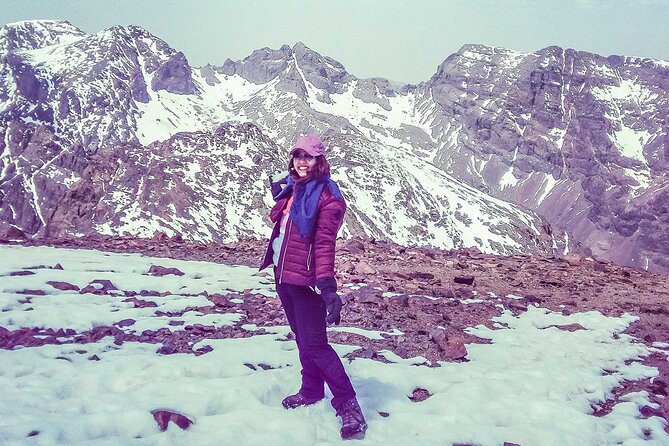
At $235.23 per person for about 2 days, this can look like a modest price—until you notice what’s included. You’re not just buying a viewpoint. You’re paying for:
- Private transfers from Marrakech to Imlil and back
- English-fluent Atlas guides
- All meals (dinner, breakfast, and lunch twice)
- Accommodation at Toubkal Refuge
- Mule support for gear
- The whole guided plan built for a 2-day summit push
That combination is the value. Summiting Toubkal isn’t only about physical effort. It’s about having someone manage route timing, altitude pacing, overnight logistics, and meal rhythm. In a tight 2-day window, that coordination is exactly what prevents the trip from turning into a scramble (the rocky kind).
One more practical note: this trek is commonly booked about 63 days in advance. If you have specific dates, it’s smart to lock it in earlier rather than later.
Who should book Mt Toubkal Ascent Express, and who might want more time
This trek is a great match if:
- You want the highest peak in North Africa without a week-long plan
- You’re a confident hiker with moderate fitness
- You can handle scree and some simple scrambling
- You’d rather have a guided, supported schedule than DIY logistics
It may not be ideal if:
- You get intimidated by rocky footing and altitude effects
- You want a totally gentle hike with no snowline transitions
- You’re looking for a “no effort required” experience (this is still a real mountain push)
It’s also a good choice for couples or small groups who like private logistics. The experience is described as private, meaning it’s set up for your group rather than a free-for-all with strangers. If you’re traveling with friends, ask about group discounts if they apply to your party size.
Should you book this 2-day Mt Toubkal trek?
I think you should book it if you want a serious summit goal with clear structure and practical support. The combination of guided hiking, mule help, meals, and a Toubkal Refuge overnight makes the plan feel manageable even though the mountain is the mountain.
Skip it—or consider a longer itinerary—if you’re still building your confidence for scree, scrambling, and altitude. Two days is fast. Fast plans can be brilliant, but they don’t leave much room for delays.
If you’re ready to work for big views, this is one of the most direct ways to do it from Marrakech.
FAQ
How long is the Mt Toubkal ascent trek?
It runs for about 2 days (approximately). You hike through the Imlil area and reach the summit on day 2, with a return to Marrakech by car afterward.
What’s included in the price for this Mt Toubkal trek?
Included are dinner and breakfast, two lunches, private transfers between Marrakech and Imlil with a local driver, Atlas guides, accommodation at the Toubkal Refuge, and mule support. A mobile ticket is also mentioned.
How do I get from Marrakech to the start of the hike?
Private transfers are included from Marrakech to Imlil, and pickup is offered. After the trek, you’ll also be transported back to Marrakech by car.
Is Mount Toubkal a technical climb?
This is described as a hiking peak with no climbing involved. Still, the plan includes some simple scrambling and it may involve snow slopes as you approach the snowline.
Where do you stay overnight?
You stay overnight at the Toubkal Refuge at 3206m. Accommodation at the refuge is included.
What fitness level do I need?
The trek is described as suitable for travelers with a moderate physical fitness level.
Is free cancellation available?
Yes. You can cancel up to 24 hours in advance for a full refund. If you cancel less than 24 hours before the experience start time, the amount paid is not refunded.