REVIEW · MARRAKECH
Medina Souks Shopping Tour
Book on Viator →Operated by Marrakech WITH Locals · Bookable on Viator
A maze is exactly what Marrakech medina feels like at first. This Medina Souks Shopping Tour turns that confusion into a guided plan, taking you through the souks’ lanes and workshop areas with local stories, not just store stops. I love the hands-on focus on crafts you can actually see being made, and I love that guides like Ismael and Hassan explain what you’re looking at in plain language (with humor when things get chaotic). One thing to consider: this is a souks-first walk, so if you came only for major sights, you’ll spend most of your time in markets and alleys, with the usual medina heat and tight lanes.
In 2–3 hours, you’ll get a clear sense of where things are and how the medina is organized. The route is built around major market zones, from the start near Jemaa el-Fna to the dyers and the blacksmiths market, with short stops that keep it moving. The tour runs with a small group (maximum 10), which is a big deal here, because you want time to ask questions instead of getting swept along.
In This Review
- Key highlights
- Marrakech Medina Souks: Why This Walk Beats Wandering Alone
- Meeting at Jemaa el-Fna: Finding the Tour Without Stress
- Souks Start Near the Olive Lanes: A Fast Orientation Win
- Souk Semmarine: Where Colorful Craft Shopping Gets Real
- Rahba Kedima Square: A Breather With Local Street-Vendor Life
- Souk des Teinturiers: Watching Wool and Cloth Become Color
- Souk Haddadine: The Blacksmiths’ Market for Metalwork Culture
- Pace, Heat, and Group Size: How to Make the Most of 2–3 Hours
- Price and Value: Is $34.84 Worth It?
- What You’ll Learn From Local Guides Like Ismael and Hassan
- Shopping Smart: Enjoy the Souks Without Losing Your Day
- Who Should Book This Souks Shopping Tour
- Should You Book This Medina Souks Shopping Tour?
- FAQ
- How long is the Medina Souks Shopping Tour?
- Where do I meet the guide?
- Do I need to pay for entry at the stops?
- How large is the group?
- Will I receive a ticket on my phone?
- Can I get a full refund if I cancel?
Key highlights
- Jemaa el-Fna start point near the olive souks, right by the main square
- Souk Semmarine for colorful crafts and specialty shopping streets
- Rahba Kedima Square for a more local feel and street-vendor energy
- Souk des Teinturiers to see how wool and cloth get dyed
- Souk Haddadine the blacksmiths’ market for metalwork culture
- Small group format (max 10) that makes questions and pacing easier
Marrakech Medina Souks: Why This Walk Beats Wandering Alone
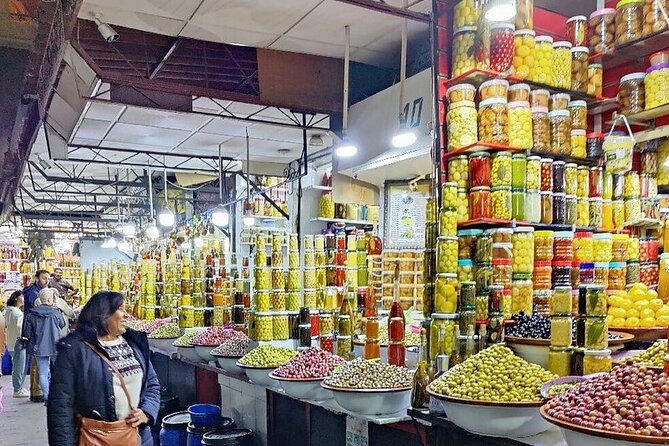
If your first morning (or first full half-day) in Marrakech is when you want confidence, a guided souks walk makes sense. The medina souks are huge, organized in overlapping lanes, and the first entry can feel like a maze. A guide helps you understand the logic behind the layout, so you’re not just walking randomly between doors and stalls.
What I like most is that the tour is built around areas tied to what people actually do in the market. Instead of focusing on souvenirs only, you get craft themes: olive market lanes at the start, specialized shopping streets like Souk Semmarine, craft life at Rahba Kedima Square, then production-focused stops like the dyers and blacksmiths. That structure is what makes the tour feel practical, not just scenic.
You’ll also feel the benefit of a small group. In a place like this, tight lanes can turn into bottlenecks fast. A max group size of 10 means you can keep up, take photos without getting separated, and ask your guide how to interpret what you’re seeing.
You can also read our reviews of more shopping tours in Marrakech

Meeting at Jemaa el-Fna: Finding the Tour Without Stress
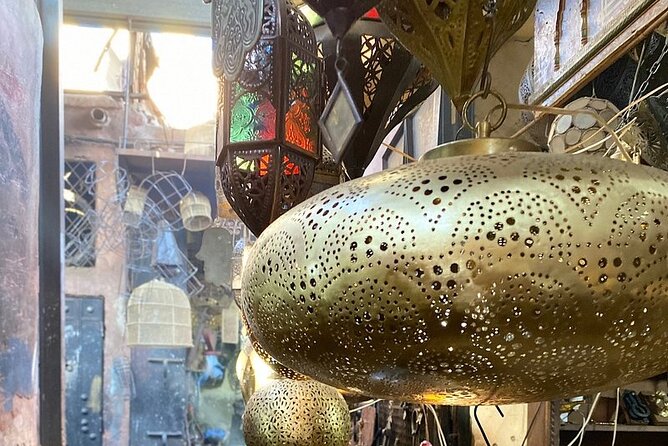
The tour meets back at the center of it all: Jemaa el-Fna. The listed meeting point is Jemaa Al Fna – Groupe L’Adresse – Cafe & Restaurants Marrakech, 5 rue de la Koutoubia, place Jemaa El Fna, Marrakech 40000, Morocco. Since the tour ends back at the meeting point, you don’t need to worry about figuring out a second return route through the medina maze.
This is also a good placement if you’re mixing your day with other plans. You can match the tour with your breakfast area or with later sightseeing outside the souks. If you’re staying somewhere central, chances are you can reach the pickup area by foot or with nearby public transport, since the tour is noted as close to transit.
One practical note: arrive a few minutes early. Jemaa el-Fna is lively and busy, and you’ll want a calm moment to spot the group.
Souks Start Near the Olive Lanes: A Fast Orientation Win
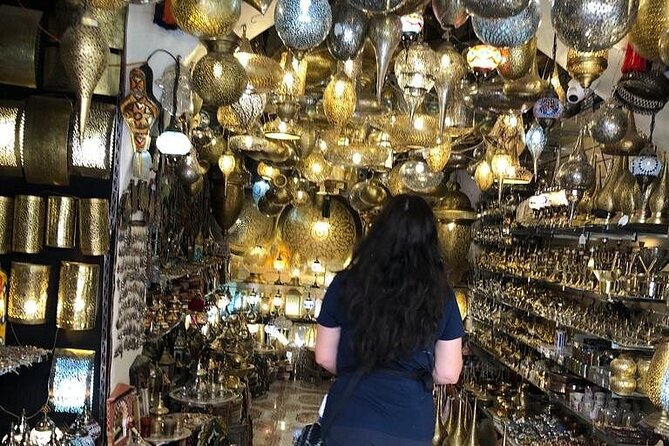
The tour begins by walking from the souks of olives next to the square of Jemaa el-Fnaa, then you spend about 10 minutes in that first zone. Even with such a short stop, it matters. The entry point near the square is where you’ll feel the medina’s scale the most, and the guide’s job is to help you read the space quickly.
If you’ve ever walked into a medina and thought, I’m going to get lost in five minutes, this is the fix. The early push helps you learn how the lanes link, where crowds concentrate, and how the market changes as you move toward more specialized areas.
It’s also a good moment to get your bearings before you commit to deeper shopping. Think of it as your mental warm-up.
Souk Semmarine: Where Colorful Craft Shopping Gets Real
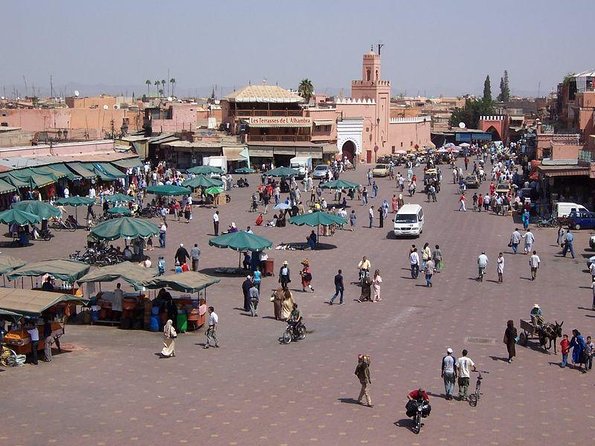
Next up is Souk Semmarine, with about 20 minutes to explore. This is where the tour shifts from orientation into browsing. You’ll see a variety of handicrafts and specialty goods, and the guide helps you understand what each section tends to sell.
This stop is valuable because it gives you a practical sense of what you want to buy later. You don’t have to decide on the spot. Instead, you can learn what’s sold where—rugs, jewelry, pottery, and more—then keep your expectations aligned with reality.
The tour also supports group discounts, which can help if you’re planning to shop in multiple areas. Just remember: the tour is short, so if you spot something perfect, you may still need to compare and check details before you commit.
Rahba Kedima Square: A Breather With Local Street-Vendor Life
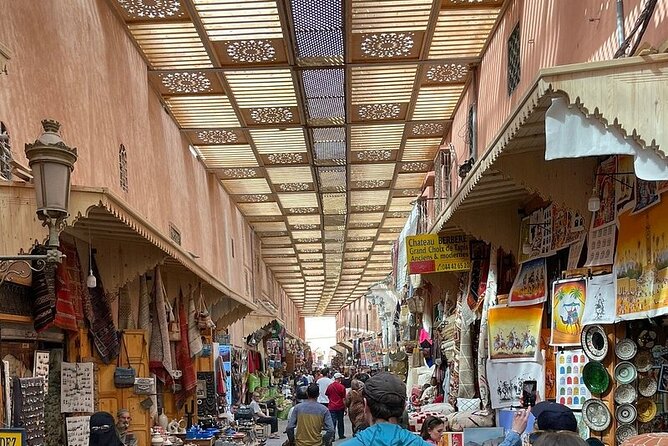
Then comes Rahba Kedima Square for about 15 minutes. This stop is a nice change of pace because it’s not only “shop, shop, shop.” It’s a local square area with street vendors, which helps you feel the daily rhythm of the medina beyond the most obvious retail lanes.
This is the part that often makes the tour feel human. You’re not just seeing products; you’re seeing how people move, set up, and talk through their workday. It’s a quick window into the way the medina functions as a living market system.
If you want photos, this is also one of the better moments to capture variety without constantly weaving between storefronts.





Souk des Teinturiers: Watching Wool and Cloth Become Color
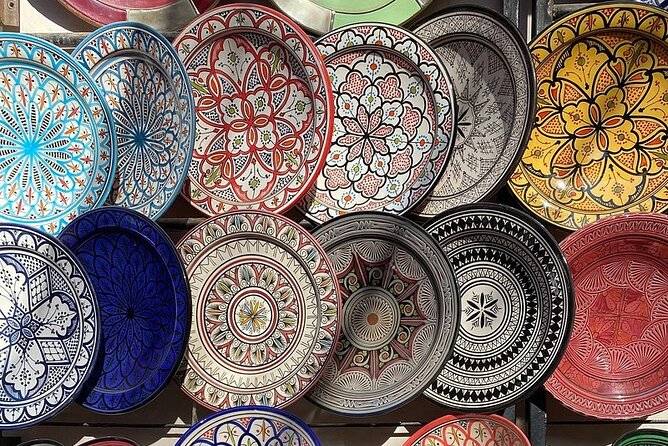
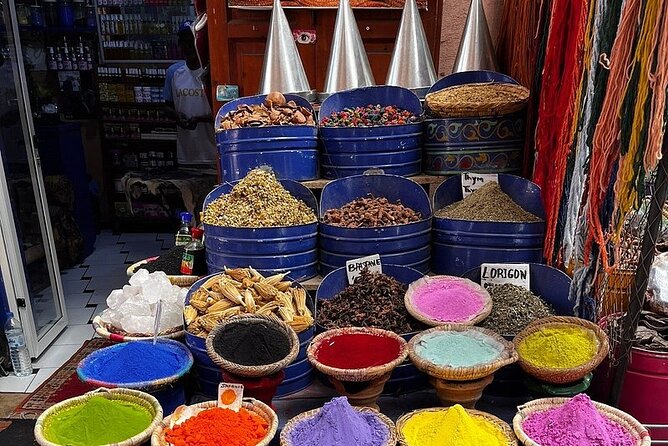
The tour includes Souk des Teinturiers for about 15 minutes. This is the dyers’ area, and it’s one of the most meaningful stops because it focuses on process, not just items.
You’ll get an idea of the dyeing process of wool and cloth—exactly the kind of detail that makes a place feel less like a shopping maze and more like a working craft zone. Even if you’re not buying textiles, understanding how color gets applied (and why different-looking pieces may come from different steps) makes your shopping smarter.
This stop also helps you ask better questions. When you know what the dyeing theme is, you can evaluate textiles more confidently instead of guessing.
Souk Haddadine: The Blacksmiths’ Market for Metalwork Culture
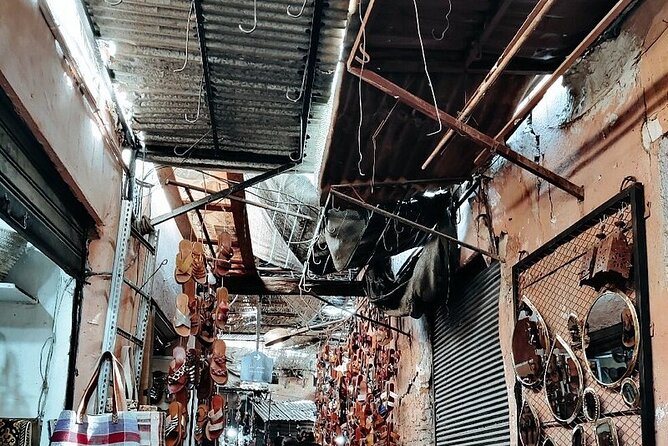
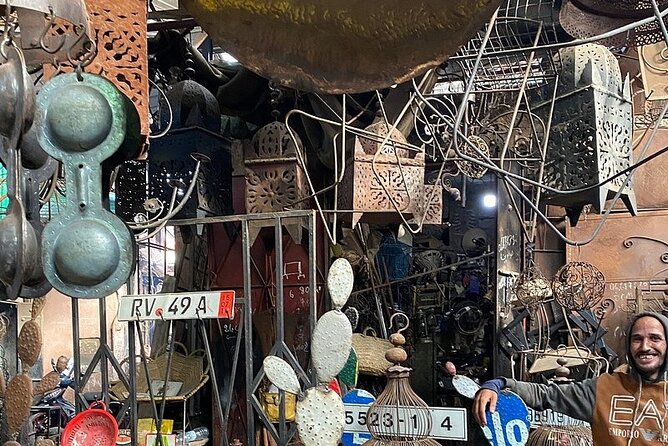
The final highlighted shopping zone is Souk Haddadine for about 20 minutes. This is the blacksmiths market—metalwork territory. It’s a great endpoint because it contrasts with the softer goods elsewhere in the medina. Instead of textile and color-focused craft, you’re looking at metalwork culture and the kind of production that attracts attention even from people not planning to buy.
This stop is especially useful if you’re trying to understand Moroccan craft traditions more broadly. You see that the medina isn’t one uniform market—it’s a network of specialties.
If you want a souvenir that feels connected to a craft tradition, metalwork areas tend to inspire questions about materials and design, even on a quick tour.
Pace, Heat, and Group Size: How to Make the Most of 2–3 Hours
The whole tour runs 2 to 3 hours. That duration is perfect for a first souk session because it’s long enough to feel the different zones, but short enough that you’re not trapped in the medina for half a day.
Group size matters here. With a maximum of 10, you’ll get a more manageable pace. In narrow lanes, that can mean the difference between a pleasant walk and constant bumping.
Plan for heat. One simple tip you’ll hear from people who’ve done this walk before is to bring water. Even if your guide keeps a route comfortable when possible, you’re still outside and walking through a dense area.
Dress for walking: closed shoes, breathable layers, and something that works with changing shade. The medina has shade pockets, but you won’t count on them. I’d also recommend keeping your phone charged, because once you start spotting craft details, you’ll want photos.
Price and Value: Is $34.84 Worth It?
At $34.84 per person for a 2–3 hour guided walk, the value comes from what you don’t have to do yourself. The medina is disorienting. A guide helps you:
- understand the market logic fast
- focus your attention on craft areas you might miss
- ask questions without feeling awkward
- avoid getting stuck wandering in circles
This tour also uses a mobile ticket, which reduces friction on the day you arrive. And there are group discounts, which can make it more attractive if you’re coming with friends or family.
The pricing is also easier to justify because it includes guided access through multiple zones: olives near the main square, then semmarine, Rahba Kedima, dyers, and blacksmiths. You’re not paying to sit still—you’re paying for direction and interpretation in a place where direction usually costs time.
Also, this is typically booked about 6 days in advance. That’s a clue: if you’re traveling soon, waiting can reduce your options for the time window you want.
What You’ll Learn From Local Guides Like Ismael and Hassan
The reviews around this tour highlight guide quality, and that’s the heart of the experience. Guides such as Ismael and Hassan are described as friendly, funny, and focused on local perspective—talking about life in the medina, how the souks work, and what you’re actually looking at.
That matters because souks are not museums. If you just walk through, you’ll see lots of goods and miss the meaning. When your guide connects the craft to the people and the process, your shopping time turns into education.
You might also get extra side-street context while staying on the market route. One strong theme from the feedback is that guides help you feel like you could navigate the medina better afterward, not just “see shops” for an hour.
Shopping Smart: Enjoy the Souks Without Losing Your Day
This tour is designed around souks and workshops, not a list of famous monuments. So treat it like a focused market session. You’ll likely see plenty of items you can buy, but your main goal should be to build clarity.
Here’s how to get the best shopping experience from a short tour:
- Use the guide early to understand what each area is known for, then you can shop with confidence later.
- If something catches your eye, take notes or photos and circle back after you’ve seen the full range on the route.
- Keep expectations grounded. The whole medina sells, and you’ll be offered lots of things. The guide helps you sort what’s meaningful vs. what’s just noise.
If you go into it expecting a “sights tour,” you may feel mismatched. But if you want a true market intro—smells, lanes, workshop themes, and local explanations—this is the right style.
Who Should Book This Souks Shopping Tour
I’d steer you toward this tour if:
- it’s your first time in Marrakech and you want a fast orientation
- you like crafts and want context, not just a shopping route
- you want a guide who can talk to kids as well as adults (good rapport shows up in the feedback)
- you’re short on time but still want the medina to make sense
I’d skip it (or swap plans) if you mainly want major landmarks. This tour is intentionally market-forward. You’ll spend your time in narrow lanes, near craft areas, and in the shopping rhythm—so plan other time blocks for big-picture sightseeing.
Should You Book This Medina Souks Shopping Tour?
If you want the medina to feel navigable and meaningful, this one is easy to recommend. The combination of a tight 2–3 hour schedule, a small group cap, and craft-focused stops like Souk des Teinturiers and Souk Haddadine makes it a strong first pass.
Book it if you enjoy markets and you want local interpretation—especially if you like the idea of learning from guides such as Ismael or Hassan who bring stories, humor, and practical explanations. Skip it if you’re chasing “sights above shops.”
If you’re trying to decide between getting lost on your own and getting oriented with a local, I’d choose the guide.
FAQ
How long is the Medina Souks Shopping Tour?
It runs about 2 to 3 hours.
Where do I meet the guide?
Meet at Jemaa Al Fna – Groupe L’Adresse – Cafe & Restaurants Marrakech, 5 rue de la Koutoubia, place Jemaa El Fna, Marrakech 40000, Morocco. The tour ends back at the meeting point.
Do I need to pay for entry at the stops?
The listed stops show admission ticket free, so you should not expect paid entry fees at those areas.
How large is the group?
The tour has a maximum of 10 travelers, so it stays small.
Will I receive a ticket on my phone?
Yes. The tour uses a mobile ticket.
Can I get a full refund if I cancel?
Yes. You can cancel for a full refund if you cancel at least 24 hours before the start time.