REVIEW · MARRAKECH
Evening Marrakech: Gastronomic and Market Tour Inside the Medina
Book on Viator →Operated by Intrepid Urban Adventures - Morocco · Bookable on Viator
Marrakech hits hardest after sunset. This 3.5-hour walking food tour strings together the medina’s sensory chaos at Djemaa el-Fna with real tastings, plus an evening meal when the square turns into a nightly show. You meet in the heart of the action, then you follow a local guide through side streets most visitors miss, so you don’t just watch the city—you learn how to eat it.
I especially like the mix of market education and actual food: you’ll learn why saffron, anise, cumin, paprika, cardamom, and turmeric matter, then taste your way through what those flavors feel like. I also like the small-group size (max 12), which keeps the walk from turning into a long shuffle and helps your guide slow down when you ask questions—especially around spice and bargaining culture.
One consideration: this is a street-food and market-style experience, so the exact friendliness of the crowd, the heat of dishes, and your comfort with more challenging bites (like ghoulal/snail soup or organ-meat options) can vary. If you’re extra sensitive about hygiene or food texture, go in with realistic expectations and tell your guide what you can’t handle.
In This Review
- Key highlights worth your attention
- Jemaa el-Fna at 6pm: the square that teaches you how to eat
- Where spices become flavor: saffron, anise, cumin, and friends
- Riad Zitoun Jdid: a quick lesson in medina neighborhoods
- Mellah and meat-market bargaining: watching culture happen
- Chez Lamine Hadj Mustapha: mechoui and tangia in a coals-and-smoke alley
- Souk Semmarine: the medina artery that connects the dots
- Finishing in Djemaa el-Fna: dinner with the square at full volume
- Price and value: what $46.08 buys you (and what it doesn’t)
- Guides and vibe: what to watch for on the day
- Who this tour suits best
- Should you book this Marrakech food tour?
- FAQ
- How long is the evening Marrakech food and market tour?
- What time does the tour start and where do we meet?
- What’s included in the price?
- Can vegetarians or vegans join?
- How big is the group?
- Can I cancel for a full refund?
Key highlights worth your attention
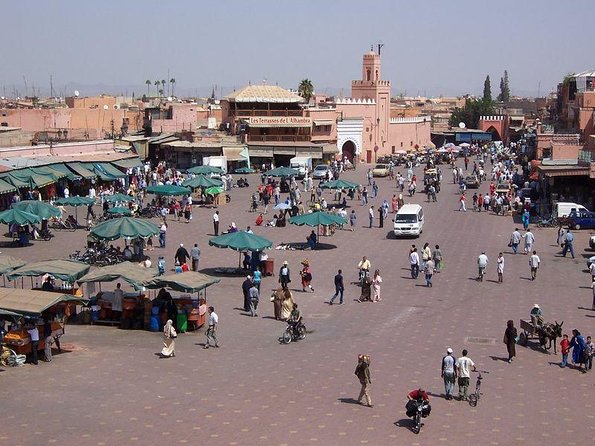
- Djemaa el-Fna dinner at the peak hour: you finish right where the square’s colors and sound levels spike, so your meal feels tied to the place.
- Three market tastings plus an authentic dinner: you’re not just sampling a few sweets; it’s structured for a full food evening.
- A real look at haggling: the tour includes stops where locals bargain for meat, which makes the medina feel less like a theme park.
- Spice-market context you can use: you’ll see saffron and other spices in bulk and connect them to everyday Moroccan cooking.
- Ghoulal (snail soup) is on the menu: it’s a classic test of adventurous eating, not a token taste.
- Eco-minded operation: it’s described as a carbon neutral tour led by an eco-certified operator.
Jemaa el-Fna at 6pm: the square that teaches you how to eat
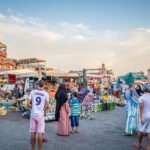
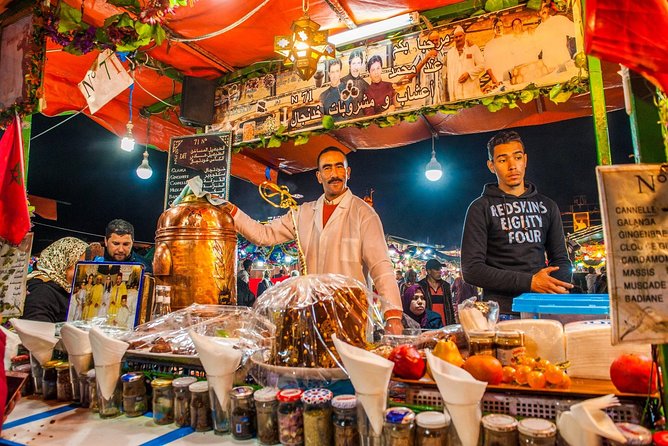
Meet at Hôtel Restaurant Café de France on Rue des Banques, right by the action in the medina. The start time—around 6:00pm—matters because Djemaa el-Fna is transitioning from daytime bustle into night spectacle, with food stands lighting up and crowds thickening fast.
Once you’re there, your guide helps you read what you’re seeing. Dancers, storytellers, snake charmers, and water sellers can be overwhelming, but the tour structure gives your brain something to do besides just stare. You’ll also get a quick sense of how the evening works: people drift in for snacks, then settle into meals as the square reaches its height.
Practical tip: wear shoes that handle uneven medina streets. You’ll walk enough that comfort matters more than style.
You can also read our reviews of more shopping tours in Marrakech
Where spices become flavor: saffron, anise, cumin, and friends
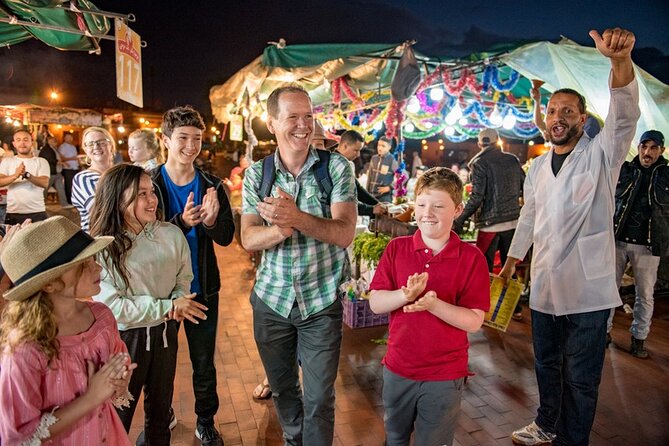
One of the best parts of this tour is that spices aren’t just souvenirs. You’ll spend time in the spice-market world, where you can see the colors and textures sellers work with—saffron, paprika, cardamom, anise, turmeric, and cumin are all specifically mentioned in the tour description.
Your guide’s job is to connect those ingredients to the food you’ll actually eat later. In Morocco, spices do heavy lifting: they build aroma first, then deepen flavor as dishes simmer. Knowing the spice names before you taste makes the meal feel more intentional, not random.
Also, you’ll learn the historical angle—Morocco’s long role in spice trading. That context helps explain why you see these spices handled so confidently, like everyday essentials rather than luxury imports.
If you’re thinking about buying spices: ask your guide what to look for in terms of scent and color. Even if you don’t buy much, you’ll leave with better instincts.
Riad Zitoun Jdid: a quick lesson in medina neighborhoods
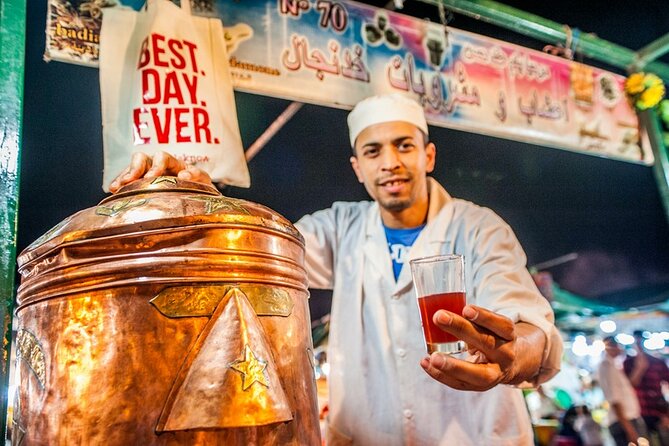
The walk includes a stop at Riad Zitoun Jdid, which gives you a taste of how riads sit next to the practical parts of life in the medina. You’ll hear about the riad tradition, with inner courtyards and guest spaces, and you’ll see that the area includes hammams and shops selling items like pottery, kaftans, and leather goods.
This is brief (about 15 minutes), but it’s useful. It helps you understand that Marrakech isn’t only about the big square. The medina is a patchwork of neighborhoods with their own rhythms, and this stop is your way in.
What to expect here: more orientation than tasting. The value is learning where you are as you move between the busier food points.
Mellah and meat-market bargaining: watching culture happen
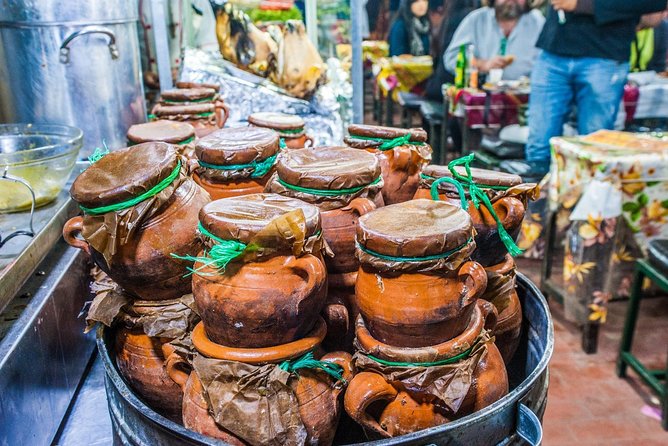
The Mellah stop is where the tour adds depth, not just food. Mellah was once home to Marrakech’s Jewish population, and the stop description points to landmarks like Lazama Synagogue and the Miaara Jewish cemetery, along with the Mellah Market and Bab Mellah Spice Souk.
Even if you’re not focused on history, this portion matters because it changes your mood. You’re still in the medina, but you’re also seeing layers—how people lived, traded, and shaped the city.
Then the tour shifts into meat-market territory, including a poultry and beef market where locals barter for meat. Haggling is part of Moroccan life, and watching it (with your guide explaining what’s going on) is a fast way to grasp how transactions work here. It also makes you feel less like a spectator and more like someone who understands the rules of the game.
Practical note: if bargaining makes you uncomfortable, tell your guide early. You can observe without joining in.
Chez Lamine Hadj Mustapha: mechoui and tangia in a coals-and-smoke alley
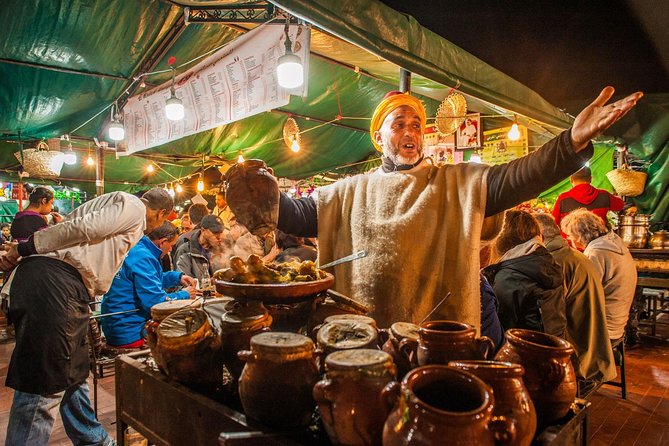
One of the most specific stops is at Chez Lamine Hadj Mustapha in the area of Mechoui Alley behind the Alhambra restaurant near Djemaa el-Fna. The description is vivid for a reason: you’ll see sheep’s heads and tangia crock pots tied to the local style of cooking.
Tangia is the star for context here. These meat-pot meals are cooked in the ashes from coals from the local bathhouse, which explains why the flavor style is so tied to place. Many people go earlier for mechoui, but the beef pots are described as available all day, so you get a chance to try something deeply local even on an evening tour.
What you’ll eat is part tasting, part dinner-style buildup. Your guide keeps the pacing so you don’t feel stuffed too early, and you get that slow-medina hunger where everything smells better because you’ve already walked through the market.
Hygiene reality check: food is prepared in busy, traditional settings. If you’re cautious, pay attention to how food is served hot, how stations are cleaned, and whether dishes are fresh. If anything looks off, speak up politely—your guide can often help you choose what’s safer for you.
A few more Marrakech tours and experiences worth a look

Souk Semmarine: the medina artery that connects the dots
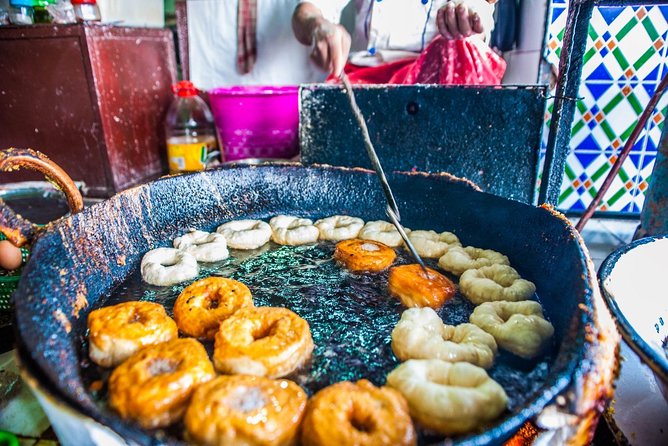
Souk Semmarine is described as the main artery of the medina souks. You’ll walk a derb (alley) connected to Place Jemaa el-Fna through the same-named stretch, and you’ll hear how the name links to farriers who once worked there—shoeing caravans’ animals at a strategic crossroads.
That story might sound small, but it explains why the souk feels like a flow of people and goods. It’s not only shops; it’s an old transport-and-trade path that still shapes the way you move.
Expect this stop to be more about atmosphere and orientation than about a big formal meal. You’ll also use your guide’s navigation skills here, because the medina can feel like a maze even when you think you know the route.
Finishing in Djemaa el-Fna: dinner with the square at full volume
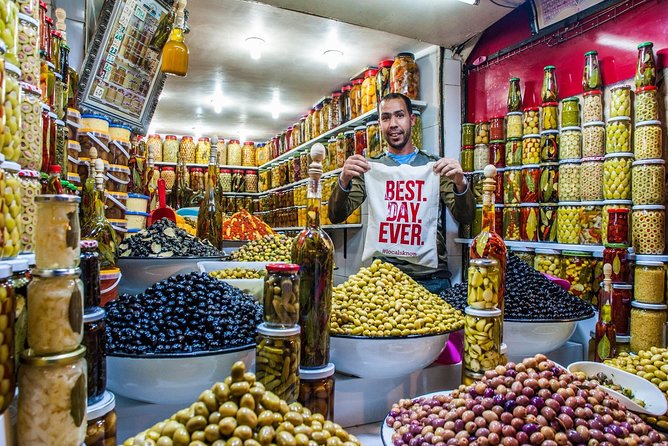
The tour ends with your traditional Moroccan dinner in a restaurant around Djemaa el-Fna as the evening reaches its peak. This matters because the square’s energy at night is part of the experience. You’re not eating a meal somewhere else and then visiting the square after. The meal is staged into the soundtrack and light show that defines Marrakech after dark.
The food portion is set up as a group dinner after a walk that includes tastings in the market. The tour description says you’ll enjoy three typical tastings in the market plus the dinner, and it specifically includes ghoulal (Moroccan snail soup) as one of the things you try.
Ghoulal is worth highlighting because it’s not just an exotic checkbox. It’s described as a soup made with snails, and the tour also notes other more challenging delicacies such as sheep’s head, cow’s hoof, or snail soup. You decide how far you want to go, but the tour gives you access.
When the meal ends, the tour returns you to the meeting point. From there, you’re free to keep wandering on your own if you still have energy—or call it a great first evening if your feet are done.
Price and value: what $46.08 buys you (and what it doesn’t)
At $46.08 per person for about 3 hours 30 minutes, the value is strongest if you want structure. You’re getting a local English-speaking guide, three market tastings, a traditional dinner, and a walk that covers multiple medina zones in a way that’s hard to replicate alone without getting lost.
It also includes a “small-group” approach with a maximum of 12 people. In a place like Marrakech, fewer people usually means you lose less time waiting and you can ask more questions. That matters when your tour includes specific spice explanations and meat-market context.
What’s not included: additional food beyond the tastings and dinner. So if you like to snack constantly (very normal in Djemaa el-Fna), budget extra. Also, the tour description notes it can cater vegetarians and vegans, but it does not say it accommodates gluten intolerance—so if that’s you, check before booking and communicate needs at least 24 hours ahead.
Guides and vibe: what to watch for on the day
This tour is run by Intrepid Urban Adventures – Morocco, and it’s described as locally led and eco-certified, with a carbon neutral approach. People also highlight their guides by name—Jihad, Ibrahim, Atika, Tatika, Yousif, Mustafa, Brahmin/Brahim, and Youseff—so the guidance style can vary depending on who leads your group.
In practical terms, the tour works best when you treat it like a conversation. Ask questions about spices while you’re looking at them. Ask how bargaining works when you’re watching the meat market. If you do that, even the loud parts of Djemaa el-Fna feel less random.
Now, a fair caution: there are also mentions of tours that felt rushed or had poor pacing, plus a negative experience connected to food comfort. You can’t control everything, but you can control how you respond. If the guide is late or the tour seems to speed up too fast, address it early and decide if you want to continue.
Who this tour suits best
This is a great fit for food-focused travelers who want more than a photo stop. If you’re a first-timer to Marrakech, it’s also a confidence builder, because you learn how to move through the medina at night without panicking.
It suits:
- People who like markets, spices, and local eating culture
- Couples or small groups who want a structured evening
- Vegetarians and vegans (with advance notice for specific needs)
It might feel less ideal for:
- Anyone with gluten intolerance (since this is not offered)
- People who strongly dislike adventurous dishes like snail soup or organ-meat options
- Those who expect a quiet, sit-down lecture style experience
Should you book this Marrakech food tour?
Yes—if you want a guided eating plan for Marrakech’s most chaotic night square, this is a solid way to do it. The combination of market tastings, spice-market education, meat-market bargaining context, and a dinner in Djemaa el-Fna gives you value that’s hard to recreate by yourself in one evening.
Book it especially if it’s your first day in the medina and you want your bearings fast. Skip it if you need a fully predictable Western meal routine or you have strict dietary limits like gluten intolerance.
If you do book, go with a curious mindset and a realistic one. Marrakech food is part taste, part culture, and part street-life theatre—and that’s exactly why this tour works.
FAQ
How long is the evening Marrakech food and market tour?
It runs for about 3 hours 30 minutes.
What time does the tour start and where do we meet?
The start time is 6:00pm. You meet at Hôtel Restaurant Café de France on Rue des Banques in the Jemaa el-fnna area.
What’s included in the price?
The tour includes three typical market tastings, an authentic local dinner, ghoulal (snail soup), and guided time with a local English-speaking guide, plus spice-market and souk stops.
Can vegetarians or vegans join?
Yes. The tour can cater to vegetarians and vegans, but it does not cater to gluten intolerance customers. For specific dietary requests, you’re asked to provide details at least 24 hours before the tour.
How big is the group?
The tour has a maximum of 12 travelers.
Can I cancel for a full refund?
Yes. You can cancel up to 24 hours in advance for a full refund. If you cancel less than 24 hours before the start time, the amount paid is not refunded.