REVIEW · MARRAKESH
Marrakech to Fes: 3-Day Sahara Desert Tour & Camel Ride
Book on GetYourGuide →Operated by MARRAKECH EXPRESS TOUR · Bookable on GetYourGuide
One ride over the High Atlas changes everything. This 3-day Marrakech to Fes desert tour strings together Ait Benhaddou and the Tizi n’Tichka Pass, then drops you into Todra Gorge and Morocco’s biggest sand show at Erg Chebbi.
I love the mix of real sightseeing and real time off-grid. The camel ride at sunset across the dunes and your night in a private tent under an all-sky starscape make the Sahara feel personal, not staged, especially when your guide is the type like Omar, Zaid, Youssef, or Yassin who actually explains what you’re seeing and helps with whatever pops up. One possible drawback: you’ll do a lot of driving, and the last morning is early.
Key moments you’ll remember
- Tizi n’Tichka Pass views from 2,260 m high, with Berber villages along the switchbacks
- Ait Benhaddou (UNESCO) and its mudbrick kasbah look that still hits hard
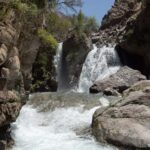
- Todra Gorge with dramatic cliffs rising above a crystal-clear river
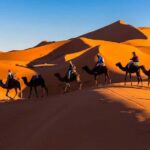
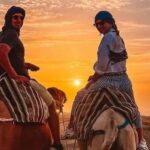
- Erg Chebbi dunes at sunset plus a camel ride that’s beginner-friendly (about 1–2 hours)
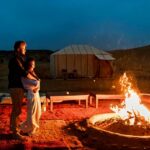
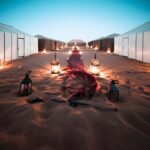
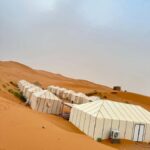
- A night in a traditional desert camp in your own tent with dinner and Berber music
- Ziz Valley and fossil charm in Erfoud before you drop into Fes
In This Review
- The 3-Day Rhythm: Why This Route Works
- Day 1: High Atlas Switchbacks and Ait Benhaddou’s Mudbrick Magic
- Tinghir Overnight: A Calm Break Before the Sahara
- Todra Gorge and the Road to Merzouga: When the Scenery Changes Colors
- Camel Ride at Sunset: The Part You Can Feel in Your Body
- The Desert Camp Night: Private Tent, Stars, and Berber Music
- Day 3 Sunrise and the Long (Yes, Sometimes Wi-Fi) Return to Fes
- Price and Value: What $173 Covers (and What It Doesn’t)
- Who Should Book This, and Who Might Want Another Option
- Practical Tips: Packing for Mountains, Dunes, and Early Mornings
- Should You Book This Marrakech to Fes Sahara Tour?
- FAQ
- How do pickup and drop-off work for this tour?
- What’s included in the price?
- Are lunches included?
- How long is the camel ride?
- What should I bring for the trip?
- What’s the desert camp like?
- Do I need to pay entrance fees?
- Will there be a guide at Ait Benhaddou?
- Is the tour suitable for families?
- Are there any age or mobility limits?
- What languages are offered?
The 3-Day Rhythm: Why This Route Works
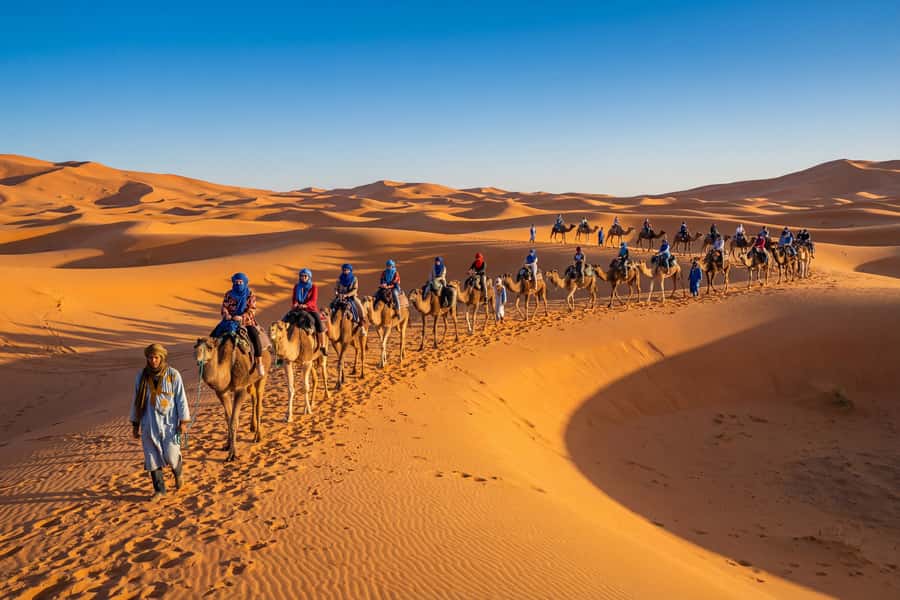
This is the kind of trip where you feel Morocco’s variety in fast-forward: mountains, oases, river cliffs, palm valleys, then sand dunes. The logic is simple. You move daily, but the days each have a clear “main act,” so you’re not bouncing around with no payoff.
You also get a useful travel skill out of it: you learn how to read a journey. The High Atlas drive sets expectations for big elevation and long roads. Todra adds that dramatic, almost canyon-like feeling. Then Merzouga flips the mood completely, shifting you from green and stone to gold and silence.
If you’re the type who likes “one good thing after another,” this works well. If you hate early alarms and long rides, you’ll still have fun, but you’ll want to brace for the pace.
Day 1: High Atlas Switchbacks and Ait Benhaddou’s Mudbrick Magic
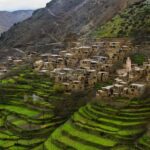
The day starts with pickup in Marrakech and a drive that climbs into the High Atlas. You’ll pass through traditional Berber villages and wind up toward the dramatic Tizi n’Tichka Pass (2,260 m). This is one of those roads that makes you keep rolling the windows up and down just to catch different angles of the valley.
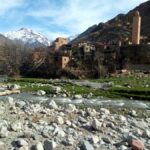
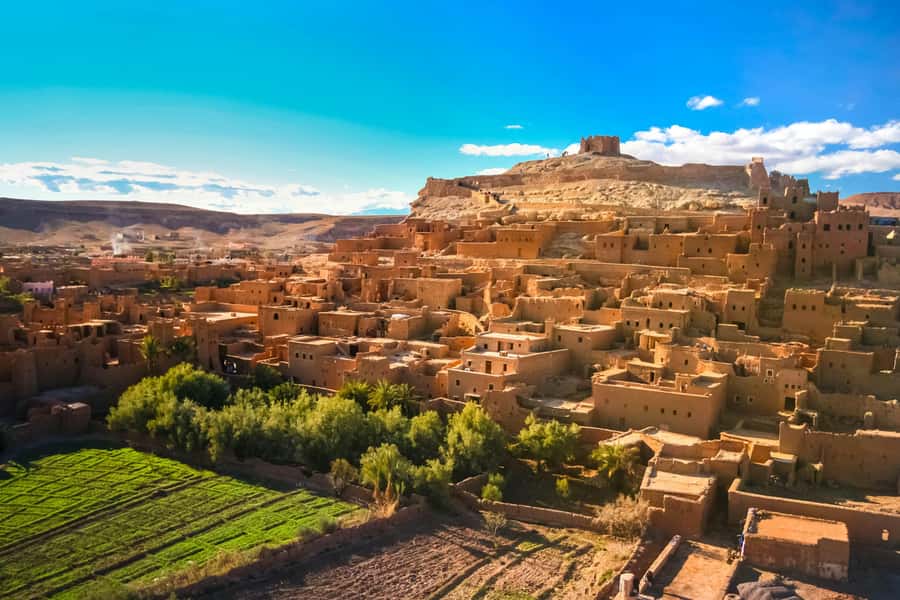
Then comes Ait Benhaddou, the UNESCO-listed mudbrick ksar (fortified village). What makes it special is not just the photos you’ve seen. Up close, you notice the texture—thick earthen walls, tight street lines, and the way the buildings cling to the hillside. It’s also famous for appearing in films like Gladiator and Game of Thrones, but the real draw is that it looks like it was built for centuries, not for tourists.
Practical note: the tour data says a local guide inside Ait Benhaddou isn’t included. So if you want deeper commentary about specific buildings and history, you may need to ask your tour guide what you should prioritize as you walk.
By evening you’ll keep heading through scenic country, including the Valley of the Roses and the palm groves around Skoura. Those stops matter because they soften the jump from mountain rock into lived-in oasis life. They’re also a nice reset before you reach Tinghir for your night.
A few more Marrakesh tours and experiences worth a look
Tinghir Overnight: A Calm Break Before the Sahara
Tinghir is the kind of stop that works because it’s not trying to be the main event. You’re arriving after a long day of driving and a big sight like Ait Benhaddou. So having a comfortable hotel or riad for the night gives you a real chance to recharge.
What I like about this overnight is the timing. You’re not forcing yourself into another “major” excursion the same day. You’re in position to start fresh for Todra Gorge in the morning, then move toward Merzouga at a steady pace.
And if you’re wondering about logistics: the tour includes pickup and drop-off in Marrakech and Fes, and the vehicle is air-conditioned. That matters on travel days when you’re bouncing between elevation changes.
Todra Gorge and the Road to Merzouga: When the Scenery Changes Colors
Day 2 begins with breakfast, then you hit Todra Gorge. The standout detail here is the scale: huge cliffs—up to around 300 meters—rise above a clear river running through the area. Even if you don’t do a long hike, standing there gives you that “whoa, nature built this” feeling.
After Todra, the route shifts into desert-adjacent terrain. You pass through desert landscapes and Berber villages, then continue toward Merzouga, the gateway to the Erg Chebbi dunes.
This is a smart transition. It doesn’t throw you into sand immediately. You get time to notice the gradual change—less green, more dryness, then that wide-open horizon mood that makes the Sahara feel close enough to touch.
Late afternoon is when the adventure really turns. Your camel caravan is waiting, and you’re close enough that the dune colors start doing their thing as the sun lowers.
Camel Ride at Sunset: The Part You Can Feel in Your Body
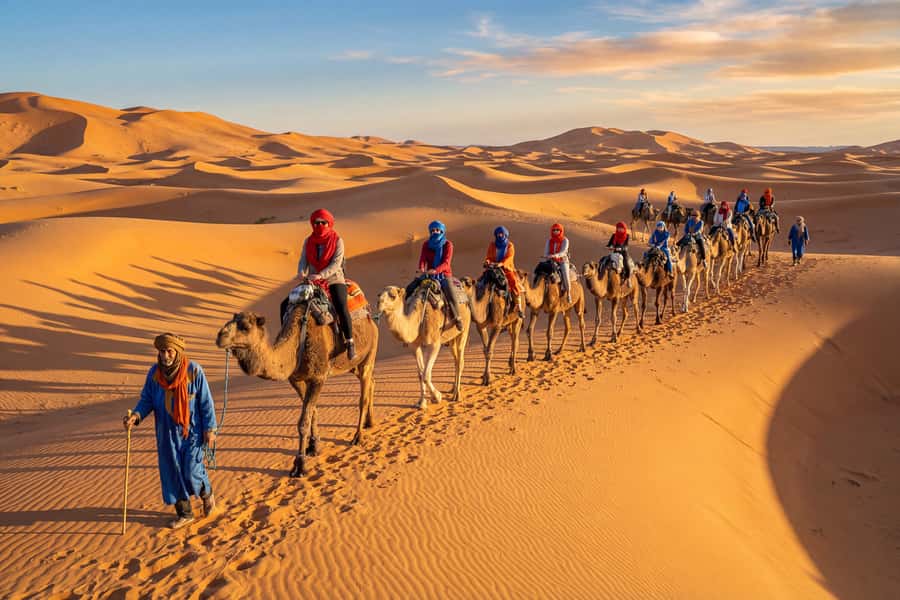
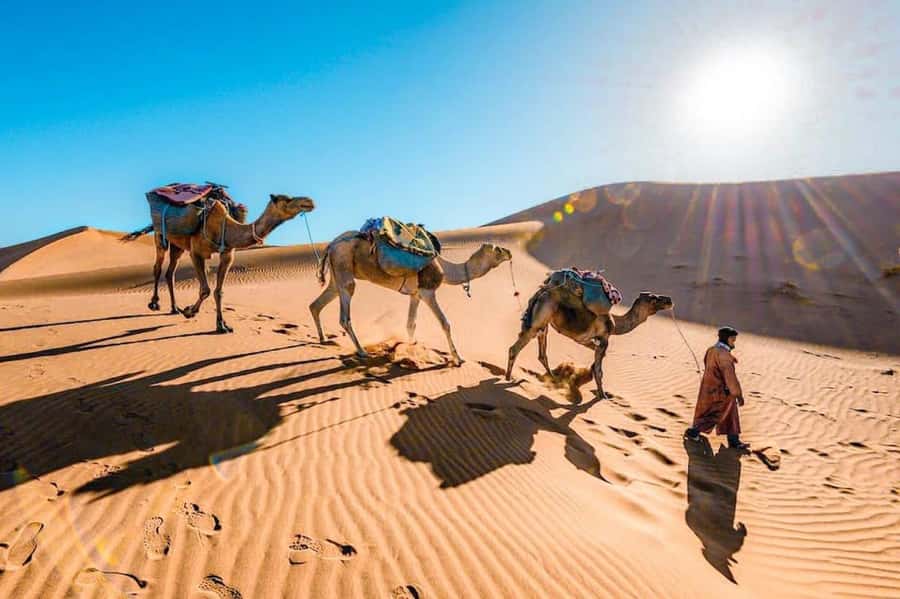
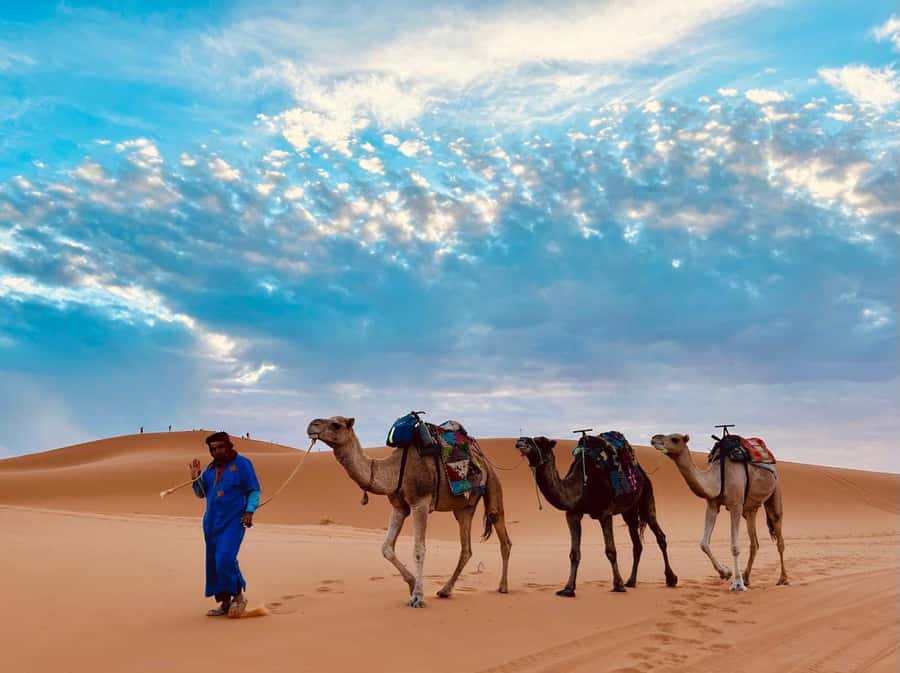
The camel ride across the Erg Chebbi dunes is listed as about 1–2 hours, and it’s described as suitable for beginners. That’s important. You don’t need to be athletic or experienced—just ready for a slower pace and the natural learning curve of sitting on a moving animal.
Sunset is the right time to do it. The dunes aren’t just “pretty.” They’re changing. Sand shifts from bright gold to deeper tones, then into softer shadows as daylight fades. Your photos will look better than you expect because the light is doing half the work.
Also, the camel ride isn’t the only reason sunset matters. It’s when you slow down your brain. After hours of roads and viewpoints, the dunes force you into a different rhythm—one where you’re not looking for the next stop, just taking in the present.
The Desert Camp Night: Private Tent, Stars, and Berber Music
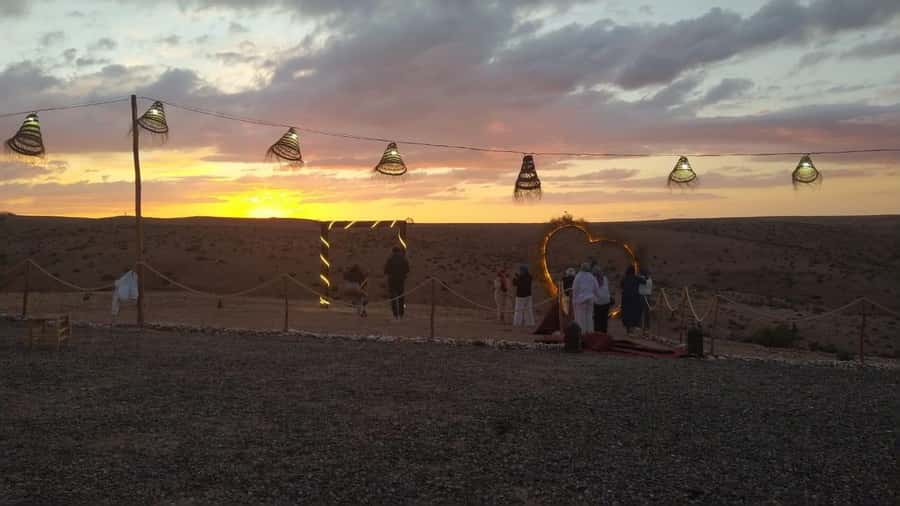
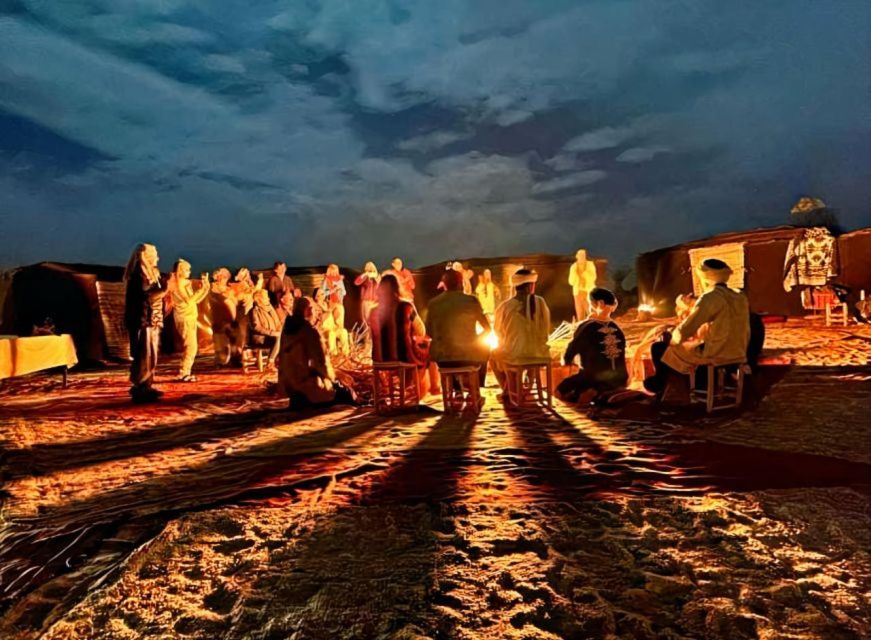
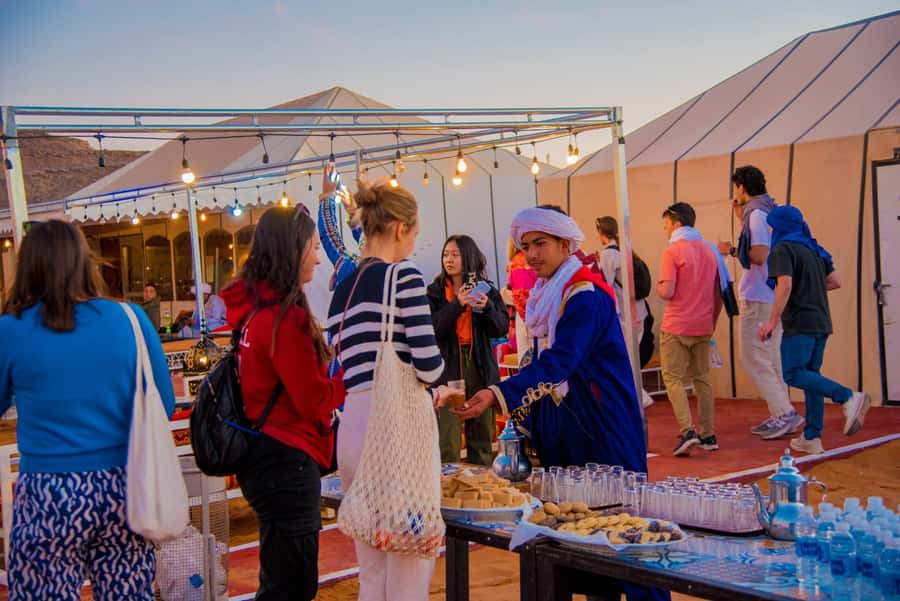
Once you arrive at camp, you get the full Sahara reset: warm welcome, dinner, and traditional Berber music. Then you go to sleep in your private tent.
The tour notes facilities as basic but comfortable. Translation: you’re not signing up for a hotel. You’re signing up for a night that feels like a different world. The payoff is the quiet. When you step outside later, the sky is what you came for—star-filled and big, because there’s little around to steal the view.
I also want to mention a small heads-up from real-world experience patterns: some groups aren’t thrilled with extra shopping stops (like a carpet shop) on the way through. If that’s not your thing, keep your expectations realistic. You’re on a desert tour, but you’re also in a region where crafts are part of the economy—so plan to treat any shop stop as optional time, not a core part of your memories.

Day 3 Sunrise and the Long (Yes, Sometimes Wi-Fi) Return to Fes
The day starts early: you’ll rise before dawn to catch sunrise over the Sahara. One review mentioned an alarm around 4:30 a.m. and arrival in Fes by about 5:30. That’s the real shape of the final day—less sleeping in, more “get moving, then enjoy the view.”
Sunrise is worth it if you can handle the early wake-up. The desert shifts again in that first light, and it’s one of the few times this journey feels truly quiet. After sunrise, you’ll have breakfast, then continue onward.
Next up is Erfoud, known for fossil workshops. Even if you’re not buying anything, it’s a reminder that the desert has its own deep timeline, not just a dramatic present.
Then you’ll pass through the Ziz Valley, dotted with palm groves and fortified villages. That valley push is a nice contrast before the road drops you into the Middle Atlas.
As you travel through cedar forests, you might even spot Barbary macaque monkeys. It’s not guaranteed in the provided info, but the possibility is there, and it’s the kind of “wait, look!” moment that makes the drive feel less like transport and more like discovery.
Finally, you head down toward Fes, with a drop-off at your hotel or riad.
If you’re a practical person, you’ll appreciate that the van is described as comfortable and equipped with Wi-Fi (at least on the final leg, in one highlighted review). That’s handy for resetting after the early start.
Price and Value: What $173 Covers (and What It Doesn’t)
At $173 per person, you’re paying for a lot of “moving parts” to line up: transport with a professional driver, air-conditioned comfort, two nights of lodging (one in Tinghir, one in the desert camp), camel ride, and the big-ticket experience moments (Ait Benhaddou, Todra Gorge, and the Sahara night).
You also get meals: 2 breakfasts and 2 dinners. Lunch and drinks are not included, so budget for that in advance. The best value move is to snack smart during the day and not treat lunch as an extra adventure you have to fix on the fly.
Two other practical notes:
- Optional entrance fees may apply, depending on the sites you visit.
- Local guide fees at Ait Benhaddou aren’t included, so if you want a deeper interpretive layer there, plan to pay or request extra explanation.
So is it a bargain? If you’re trying to DIY Marrakech to Fes with the Sahara night and camel time, you’d quickly spend money and time organizing separately. The value here is in the handoff: you get the route connected and the timing managed.
Who Should Book This, and Who Might Want Another Option
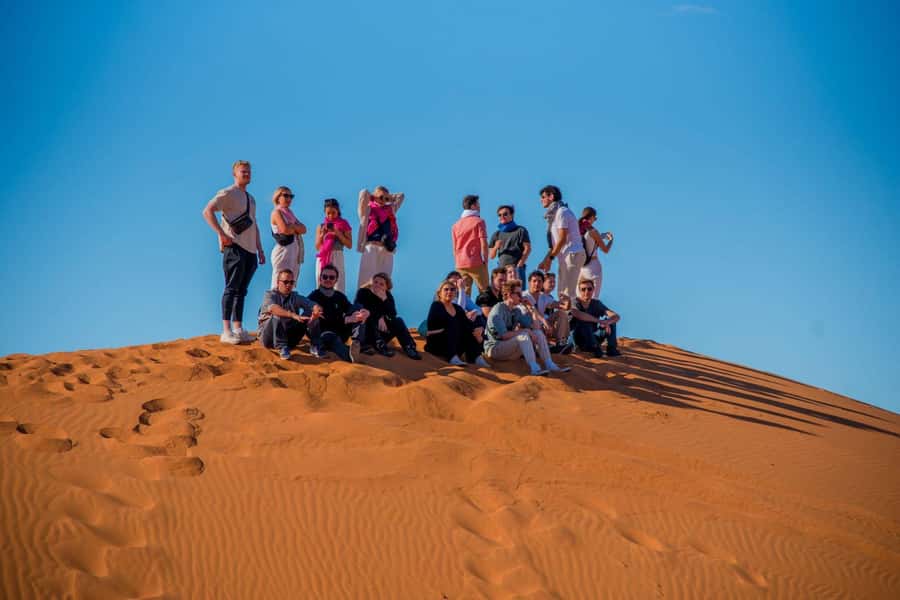
This tour is described as suitable for all travelers, including families, and it runs daily. That broad fit makes sense because it’s not an extreme hiking itinerary.
But the “fine print” matters:
- It’s not suitable for wheelchair users.
- It’s not suitable for people over 70.
If you fall outside those, you’re still dealing with real-world reality: long drives through mountains and desert. The tour data also advises motion sickness precautions if needed. If you’re sensitive to winding roads, bring what works for you.
Who will love it?
- You want a classic Marrakech to Fes desert experience with the major stops included.
- You want the comfort of organized transport and lodging.
- You like a guided story that helps you connect sites, not just hit them for a quick photo.
If you’d rather spend more time in fewer places or do the Sahara in a slower, less driven style, then this might feel like a fast sprint. Still memorable, but not relaxed.
Practical Tips: Packing for Mountains, Dunes, and Early Mornings
The tour data is pretty clear on what you’ll need. I’d follow it closely because the temperature swing can surprise you.
Bring:
- Comfortable shoes (you’ll walk in Ait Benhaddou and around Todra)
- Sunglasses and a hat (sun in the desert is no joke)
- Sunscreen
- Cash (for small extras, snacks, or optional fees)
- A camera and/or phone gear for low light at camp and sunrise
Also:
- Pack clothing that works for both mountain and desert temperatures.
- Consider a reusable water bottle.
- If you know you get car sick, prepare before the High Atlas turns start.
One more tip: if you’re the kind of person who hates being rushed, treat the first and last days as “travel with bonuses.” The main sightseeing is spread out, but the focus on early mornings and road time is part of the deal.
Should You Book This Marrakech to Fes Sahara Tour?
Yes, if you want the full Morocco south-to-north storyline in three days: Ait Benhaddou, Todra Gorge, and an actual Erg Chebbi camel sunset plus a night in the Sahara. The value is strongest if you don’t want to coordinate transport, lodging, and desert timing yourself.
I’d think twice if you’re very sensitive to long drives or you hate waking up before dawn. The last day is mostly movement back to Fes, and sunrise comes with an early alarm.
If you do book it, pick your mindset: this trip is built for momentum. When you accept that, you’ll enjoy it for what it is—an efficient, high-impact route where the Sahara night is the payoff.
FAQ
How do pickup and drop-off work for this tour?
Pickup is available from your hotel or riad in Marrakech. Your drop-off is in Fes.
What’s included in the price?
The tour includes transport in an air-conditioned vehicle with a professional driver, 1 night in Tinghir (hotel/riad), 1 night in a traditional Sahara camp near Merzouga, camel trek at sunset, and meals (2 breakfasts and 2 dinners).
Are lunches included?
No. Lunches and drinks are not included.
How long is the camel ride?
The camel rides last approximately 1–2 hours.
What should I bring for the trip?
Bring comfortable shoes, sunglasses, a hat, a camera, sunscreen, and cash. You’ll also want to be ready for changing temperatures.
What’s the desert camp like?
You’ll sleep in a traditional Berber tent with basic but comfortable facilities, and you’ll have dinner and traditional Berber music.
Do I need to pay entrance fees?
Optional entrance fees to monuments may apply, since they are not included by default.
Will there be a guide at Ait Benhaddou?
A local guide in the Ait Benhaddou kasbah is not included. You can rely on the tour guide, but the specific local guide cost isn’t covered.
Is the tour suitable for families?
It’s described as suitable for all travelers, including families.
Are there any age or mobility limits?
The tour is not suitable for wheelchair users, and it’s not suitable for people over 70.
What languages are offered?
The tour is available in Arabic, English, French, Spanish, and Portuguese.