REVIEW · MARRAKECH
Marrakech through the eyes of a Local
Book on Viator →Operated by Marrakech Guided City Tours · Bookable on Viator
Marrakech is loud, close, and unforgettable. This tour is a smart way to make sense of it fast, mixing major stops with real street scenes in the medina, including the Koutoubia Mosque area and a walk through the Mellah. I like the pacing because 3 to 4 hours is enough time to see the big picture without burning your whole day.
You also get practical comfort: mint tea is included, and the guide keeps you moving in the right direction while explaining what you’re actually looking at. One consideration: you’re walking through narrow lanes and busy areas, so if long stretches on foot are tough for you, plan accordingly.
In This Review
- Key Things That Make This Tour Worth It
- Marrakech in 3–4 Hours: What This Route Really Teaches You
- Koutoubia Mosque: Starting With a Marrakech Landmark That Grounds You
- Bahia Palace: A 45-Minute Lesson in Power, Design, and Scale
- Jemaa el-Fnaa Square: Your Medina Compass, Not Just a Photo Stop
- Olive Markets and Bab Mellah Spice Souk: The Smell-First Side of Marrakech
- Mellah Jewish Quarter: Lazama Synagogue and Miaara Cemetery
- Rahba Kdima and Ben Youssef: When Restoration Changes What You See
- Logistics That Actually Matter: Meeting Point, Timing, and Admission Costs
- Should You Book This Marrakech Through a Local Tour?
- FAQ
- How long is the Marrakech guided city tour?
- What time does the tour start?
- What is included in the price?
- Are entrance fees included for places like Bahia Palace?
- Which major sights does the tour cover?
- Is the Ben Youssef Quranic School open?
- What’s the group size and fitness level requirement?
Key Things That Make This Tour Worth It
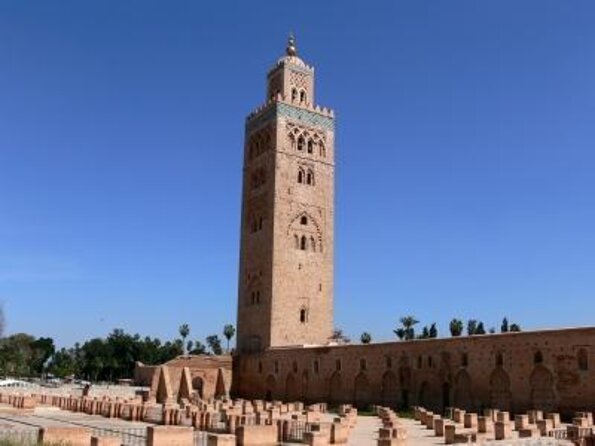
- Koutoubia’s 77m minaret and garden views: a standout architectural stop with free access.
- Bahia Palace timing that respects your energy: a focused 45-minute visit (entrance not included).
- Jemaa el-Fnaa as a live map: a main square where you quickly learn how the medina connects.
- Olive markets and Bab Mellah spice souk: you’ll see the food economy, not just the monuments.
- Mellah Jewish quarter highlights: Lazama Synagogue and Miaara cemetery on the route.
- Ben Youssef note: the Quranic School area is closed for restoration, so access may be limited there.
Marrakech in 3–4 Hours: What This Route Really Teaches You
This is the kind of half-day tour that helps you stop guessing. Marrakech’s medina can feel like a tangle of lanes, but the route is built around how people actually move—toward landmarks, markets, and neighborhood centers. By the end, you’ll have a clearer sense of where key places sit relative to each other.
At $45 per person for about 3 to 4 hours, the value comes less from ticking off sights and more from having a human guide who can point out what matters. You’re also not paying entrance fees across the board; some major stops are free, and your budget impact is mostly tied to places where admission is separate.
And yes, the tour is small. Maximum group size is 17 travelers, so you’re not lost in a stampede. That matters in Marrakech, where staying together helps you avoid detours and wasted time.
You can also read our reviews of more tours and experiences in Marrakech.


Koutoubia Mosque: Starting With a Marrakech Landmark That Grounds You
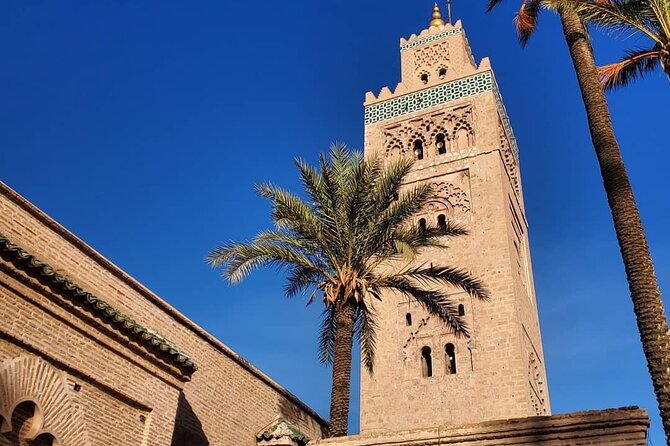
You kick off at the Koutoubia Mosque, the city’s largest mosque, known for its dramatic minaret. The minaret is 77 meters (253 feet) high, and it’s decorated with an arrow and orbs, which makes it easier to recognize even from a distance. The mosque’s design details—curved windows, a ceramic band, pointed merlons, and decorative arches—are the kind of visuals you might miss if you’re passing by on your own.
What I like about starting here is the “orientation effect.” Koutoubia gives you a fixed point, so later when you’re winding through lanes toward souks and squares, you’ll feel less like you’re wandering blind.
This stop also has practical perks. It’s about 30 minutes, and admission is free for the viewing you’ll likely do around the gardens and plaza areas. If you’re the type who loves architecture, you’ll appreciate how much texture is in the façade without needing to spend a long time inside.
Bahia Palace: A 45-Minute Lesson in Power, Design, and Scale
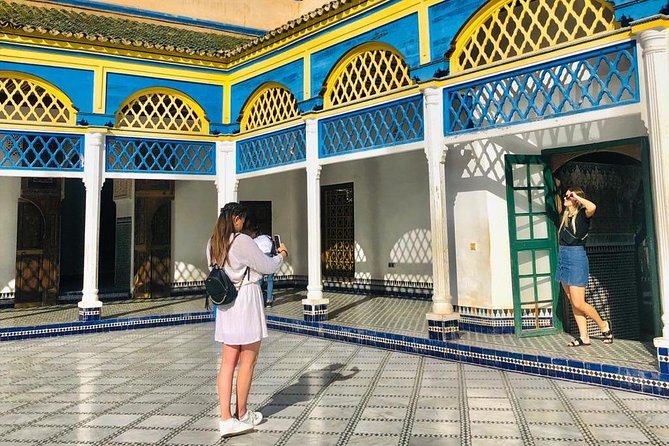
Next comes Bahia Palace, built at the end of the 19th century. It was intended to be the largest palace of its time, and that ambition shows in how it was planned as a palace-and-garden complex. A lot of Marrakech palace visits fail when you rush them. Here, the stop is 45 minutes, which is a better length for actually noticing the layout rather than just snapping a few quick photos and moving on.
One important budget note: entrance fees for Bahia Palace are not included. That’s not a dealbreaker, but you should expect to pay if you want to go in. I’d rather you walk in prepared than surprised, because this is one of the few places on the route where admission is explicitly separate.
If you’re curious about what “Marrakech wealth” looked like during the palace era, Bahia Palace is a strong stop. Even if your main goal is the medina streets, this gives you a change of pace—more still, more decorative, and easier to think through.
Jemaa el-Fnaa Square: Your Medina Compass, Not Just a Photo Stop
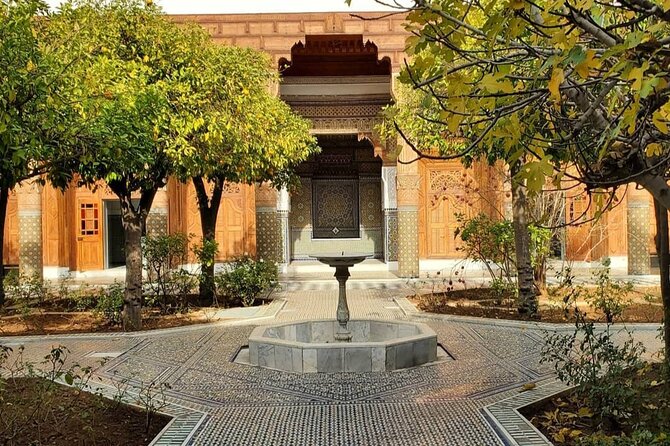
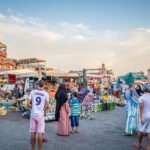
Then you hit Jemaa el-Fnaa, Marrakech’s main square in the medina. It’s described as both a place and a market, and it stays active as a gathering point for locals and tourists. Think of it as your mid-tour “reset button.” When you step into Jemaa el-Fnaa, you start to understand how the medina functions as a system, not random streets.
You’ll spend about 30 minutes here. That’s just enough time to take in the energy of a central hub without getting stuck trying to decode every stall at once. If you’re walking later through markets and neighborhood areas, this stop helps you make sense of what’s nearby and why people congregate here.
This is also one of the best places to look around and decide what kind of shopping you want to do next. If you’re not into shopping, it’s still useful—Jemaa el-Fnaa is where you quickly learn the scale of the medina.
Olive Markets and Bab Mellah Spice Souk: The Smell-First Side of Marrakech
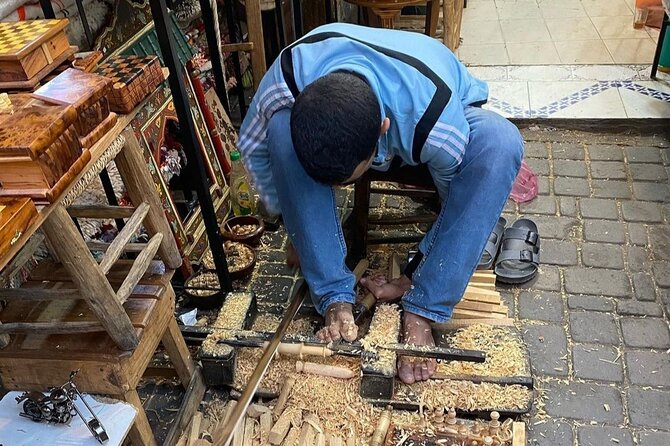
As you move through the market areas, you get into what makes Marrakech feel like Marrakech: the daily economy of food and spices. The tour includes the Olive markets, and you’ll also pass through Bab Mellah spice souk in the Jewish quarter area.
This is where the guide really earns their tea. Instead of treating markets like a museum display, you’ll see how different stalls serve real life needs—ingredients, produce, and the products people buy repeatedly. You start to notice patterns: what’s sold in bulk, what looks fresh, and what’s traded more often.
If you’re worried about getting overwhelmed, markets are exactly why having a route helps. You can focus on a few senses at a time—smell, color, motion—rather than trying to process everything at once.
Practical tip from experience with busy medinas: wear shoes you can stand in for longer than you think. Even when the tour durations for individual stops are reasonable, the time adds up as you move.


Mellah Jewish Quarter: Lazama Synagogue and Miaara Cemetery
The Mellah is one of the most meaningful parts of the route. Historically, this area housed the Jewish population of the city, and you’ll see reminders of that history as you walk. The tour connects past and present through both monuments and neighborhood life.
Two specific stops stand out:
- Lazama Synagogue, noted for a tiled courtyard and displays related to Jewish life.
- Miaara, the peaceful Jewish cemetery nearby.
It’s a contrast you feel immediately: lively market streets paired with calmer, reflective spaces. That balance is what makes the Mellah more than just another “old quarter.” It adds depth to your Marrakech story—especially if your other stops lean heavily toward mosques and palaces.
Also included is the Mellah market, which you’ll experience as a busy place for meat and produce. And around the area you’ll find food and dining mixed into the neighborhood texture—think European-style cafés, higher-end Moroccan restaurants, and plenty of everyday food stalls.
If you want a memorable photo or two, this area gives you both street scenes and architectural details. Just don’t treat it like a set. Keep moving with the group and let the guide set the context.
Rahba Kdima and Ben Youssef: When Restoration Changes What You See
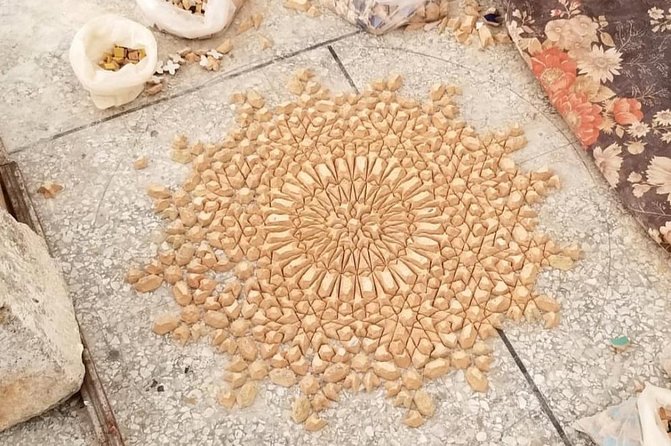
The tour also passes through the broader medina spaces connected with Rahba Kdima and the Ben Youssef area. These names matter because they link you to Marrakech’s older educational and neighborhood traditions.
There’s one clear note you should know ahead of time: the Quranic School at Ben Youssef is closed for restoration. That means you may not get full access to the space you’re expecting. The good news is you’re still guided through the Ben Youssef area as part of the larger historical route, so you won’t end up with a gap in the day—you’ll just need to accept that one part won’t be in full working order.
I think this is one of those real-travel moments: you’re in a living city, not a theme park. Restoration is normal here, and your guide can help you understand what you can still see and why it matters even when access is limited.
Logistics That Actually Matter: Meeting Point, Timing, and Admission Costs
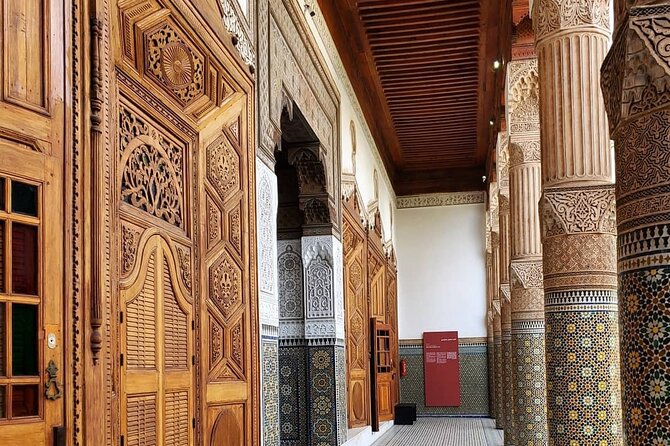
The tour starts at 10:00 am at Musée du Patrimoine Immatériel Jaama El Fna, in the area of Jemaa el-Fnaa. You’ll finish back at the meeting point, which is a relief if you don’t want to think about getting across the medina afterward.
Because this is a walking tour with moderate physical fitness required, plan your day with buffer time. Marrakech lanes don’t care about your schedule. Even if the big stops are capped at 30 to 45 minutes, moving between them can be active.
Here’s the money math that helps you decide. The tour price includes guiding services and mint tea (plus coffee and/or tea). Some key sights on the route are free, including Koutoubia Mosque and the Jemaa el-Fnaa square. Others, like Bahia Palace, have entrance fees that are not included. So when you budget for this tour, think of the base price as the guide experience—and then add a little for the one or two monuments where admission is separate.
The experience also requires good weather. If conditions are poor, you may be offered a different date or a refund. Since walking is part of the deal, this matters.
Should You Book This Marrakech Through a Local Tour?
Book it if you want a quick but structured introduction to Marrakech that mixes major landmarks with the market-and-street side of daily life. This works especially well for first-time visitors who feel nervous about getting lost, or for anyone who wants to learn what to look for instead of just following a checklist.
I’d also recommend it if you’re the type who likes meeting a guide who can explain the “why” behind places like Koutoubia and Bahia, then switch gears to show you Mellah streets and market rhythms.
Skip it if you need a slow, low-walking pace, or if you’re specifically chasing entry to the Ben Youssef Quranic School in particular. Restoration may limit what you can access there, and since entry fees for monuments like Bahia aren’t included, you’ll still need a bit of cash planning.
If you’re choosing just one half-day to get your bearings in Marrakech, this is a strong candidate.
FAQ
How long is the Marrakech guided city tour?
The tour lasts about 3 to 4 hours.
What time does the tour start?
The start time is 10:00 am.
What is included in the price?
It includes guiding services and coffee and/or tea, with mint tea mentioned specifically.
Are entrance fees included for places like Bahia Palace?
No. Entrance fees to historic monuments are not included.
Which major sights does the tour cover?
The tour includes stops such as Koutoubia Mosque, Bahia Palace, Jemaa el-Fnaa, the Mellah (Jewish quarter) including Lazama Synagogue and the area around Miaara, plus Ben Youssef (with a noted closure).
Is the Ben Youssef Quranic School open?
No. The Quranic School is closed for restoration.
What’s the group size and fitness level requirement?
The tour has a maximum of 17 travelers, and it requires moderate physical fitness. Service animals are allowed.