Souks are easy when someone knows the alleys. This half-day, private Marrakech souk tour focuses on getting you oriented fast in the UNESCO-listed old medina, then sending you through the stalls most visitors never find. What I like most is the private guide pace and attention, so you’re not just wandering—you’re understanding what you’re looking at.
I also love how the stops are built around real crafts, not random souvenir traps. You’ll hit the spice area at Rahba Kedima Square, then move through leather, herbal markets, a carpet women cooperative, a blacksmith section, and finally the dyer’s stalls with their big scarf and towel choices. One consideration: you’ll do a lot of walking in tight lanes, and entrance fees are excluded except for the spice stop, so you may spend a bit extra depending on what you want to access.
In This Review
- Key Highlights at a Glance
- First: What This Tour Gets Right in Marrakech’s Medina
- Price and Value for a Short, Private Souk Walk
- The Starting Point Inside the Old Medina (and Why It Matters)
- Stop 1: Rahba Kedima Square and the Spice Market
- Stop 2: Leather, Shoes, Bags, Belts, and the Artisan Makers
- Stop 3: The Herbalist Market With Spices, Herbs, and Seeds
- Stop 4: Carpet Women Cooperative and the Pattern Variety
- Stop 5: Black Smith Market for Recycled-Metal Lamp and Lantern Items
- Stop 6: The Dyers Market With Scarves and Towels
- Shopping and Haggle Tips That Feel Fair (Not Random)
- Walking Comfort: Plan for the Lanes
- What Makes the Guide Experience the Real Star
- Who This Tour Fits Best
- Should You Book This Marrakech Souks and Hidden Sites Half-Day Tour?
- FAQ
- How long is the Marrakech Souks and Hidden Sites half-day tour?
- Where does the tour start, and does it end nearby?
- Is this tour private or shared?
- What’s included in the price?
- Are entrance fees included for all stops?
- What time does the tour begin?
- Is bottled water provided for the walk?
Key Highlights at a Glance
- Rahba Kedima Square spice stop with an included admission ticket and quick cultural context
- Craft-focused route: leather goods, herbs and seeds, carpets, recycled-metal blacksmith items, and dyed textiles
- Haggle with a guide beside you, which makes shopping feel less stressful
- Carpet women cooperative visit, where patterns and design variety are the point
- Central meeting point inside the Medina, so you start right in the action
- Bottled water included, a small detail that matters when you’re moving through the lanes
First: What This Tour Gets Right in Marrakech’s Medina
Marrakech’s medina can feel like a maze until you have a real plan. This tour is designed for that exact moment—when you want to see the souks but you don’t want to spend half your time guessing which alley leads where.
The route is structured around distinct market specialties, which keeps the experience from turning into generic shopping. Instead of “Souks, basically,” you get a sequence: spices, leather and accessories, herbs and seeds, carpets, hand-made metal goods, and then dyeing. That’s what makes the walk feel purposeful.
I also appreciate the private setup. Even though it’s short (about 1–3 hours), you aren’t pushed along in a crowd. Your guide can answer questions, point out what matters, and help you shop with more confidence—especially if you’re planning to haggle.
You can also read our reviews of more tours and experiences in Marrakech.


Price and Value for a Short, Private Souk Walk
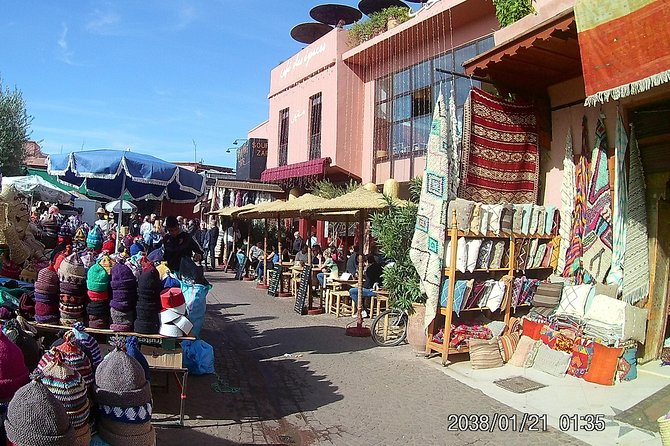
At $41.56 per person, this is a smart value for people who want structure without committing to a full-day excursion. You’re paying for three things: orientation in the medina, access to market specialists via your guide, and time savings. In the souks, time is money because wandering without context usually leads to frustration.
The tour also includes bottled water, which is genuinely useful. And you get a mobile ticket, plus group discounts (handy if you’re traveling with friends or family). Duration is short enough for a half-day slot, but long enough to cover several market types you’d miss if you just picked one area and stayed there.
The main way this cost can change your budget: attraction entrance fees aren’t included, so you’ll want to be ready for any add-ons at stops you’re most interested in. That said, the Rahba Kedima Square spice stop includes its admission ticket, so at least one key moment is already covered.
The Starting Point Inside the Old Medina (and Why It Matters)
You meet at ArganaJ2H6+CPV, Number 18, Znikat Rahba, Marrakech 40000, near Jemaa el-Fna. That’s a big deal. Starting at a central, easy-to-find spot means less stress at the beginning, when you’re still figuring out the medina’s rhythm.
The tour is scheduled to start at 10:00 am, which is often a comfortable time to walk. You get daylight for photos, and you avoid the late-day crunch that can make narrow streets feel extra tight.
One more practical note: the tour ends back at the meeting point. That reduces uncertainty. You’re not thinking about how to get out of the maze at the end—you already have the exit plan.
Stop 1: Rahba Kedima Square and the Spice Market
Your first stop is Rahba Kedima Square. Your accredited guide meets you at the starting point, then gives a short briefing and walks you along surrounding streets toward the spice market—an older name tied to this area.
This stop lasts about 15 minutes, and the admission ticket here is included. You’re not only looking at spices for the photo moment; you’re getting a sense of how this market works and why people come here for herbs, powders, and everyday ingredients.
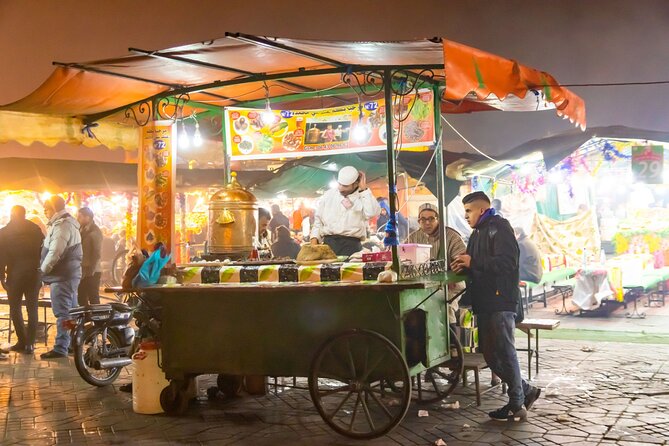
What to expect: sensory shopping. Think smells, textures, and rows of goods arranged for everyday buyers and cooks. If you’re the type who likes to understand what’s behind the labels—rather than just grabbing the first jar you see—this is a strong opener.
Possible drawback: because it’s included with a set time window, you may need to move quickly if you want to examine everything carefully. The guide’s job is to keep you flowing to the next market specialties.
Stop 2: Leather, Shoes, Bags, Belts, and the Artisan Makers
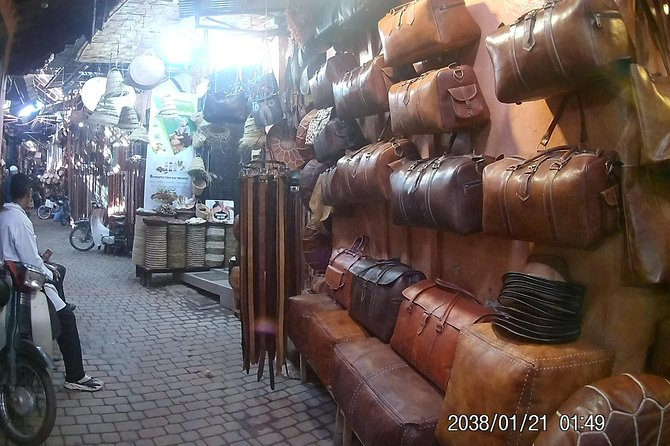
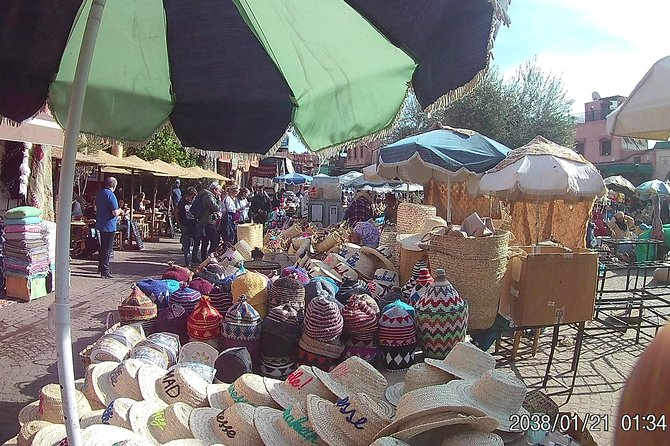
Next up is the market section focused on leather goods and related handy crafts. This is about 30 minutes, with time to observe makers and the variety of products—shoe maker items, bags, pouffs, belts, and hats.
This stop is a good reminder that souks aren’t just sales counters. They’re workshop culture. The main value here is seeing how craftsmanship shapes the product—so when you shop, you’re not comparing brands, you’re comparing workmanship and materials.
If you like hands-on understanding, you’ll enjoy this more than a quick browse. And since the tour encourages you to haggle, you’ll be more prepared to negotiate like you mean it, not like you’re guessing.
One consideration: leather shopping can eat time because there’s a lot to look at. Since your time is shared across multiple stops, I’d treat leather as a “choose carefully” section rather than a “buy everything” section.


Stop 3: The Herbalist Market With Spices, Herbs, and Seeds
After leather, you’ll visit the herbalist market area, also around 30 minutes. Here the focus is on spices, herbs, and seeds—used in diet and cosmetic routines.
This is one of those stops that changes how you see the souks. The products are still for sale, of course, but the conversation is different. You’re learning what the ingredients are used for, which makes your questions more relevant than simply asking for the price.
What I like about this stop is how it links food and beauty, since Marrakech-style marketplaces often treat those categories as connected. Even if you don’t plan to buy, just watching people discuss ingredients can give you useful context for what you’re seeing elsewhere.
Small drawback: herbal products can be personal choices, and you’ll likely need to decide what you’re comfortable bringing home. If you’re unsure about buying anything, you can still get a lot out of the explanation and visual learning.
Stop 4: Carpet Women Cooperative and the Pattern Variety
Then comes the Carpet Women Cooperative stop, about 30 minutes. This is where you spend time on patterns and designs, rather than just scanning for the lowest price.
The cooperative angle matters because it’s one more layer of understanding. You’re not only shopping a souvenir; you’re seeing how a textile tradition is organized and sold. The patterns are the main attraction here, and the variety is the point.
If you’re a textile person, you’ll enjoy this stop a lot. If you’re not, it can still be a useful education because carpets in Marrakech aren’t random decorations—they’re part of a craft identity, and the designs often carry meaning through style and repetition.
One practical consideration: carpets and rugs are large and heavy. If you’re thinking of buying, plan for transport and storage in advance—don’t leave that decision until the final minutes of the stop.
Stop 5: Black Smith Market for Recycled-Metal Lamp and Lantern Items
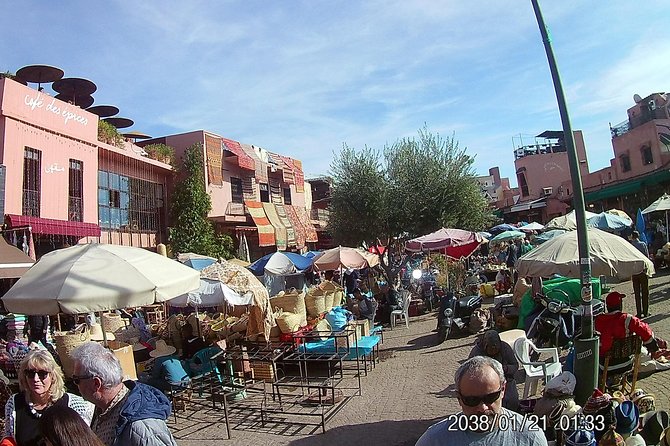
Your next stop is the blacksmith market section, about 10 minutes. This is a shorter stop, but it’s distinctive: you’ll see manually made items from recycled metal, including lamps and lanterns.
This is a good counterbalance after the textile and leather stops. Instead of soft goods, you’re looking at metalwork and how recycled materials get turned into useful decorative pieces.
Because it’s only 10 minutes, I’d treat this as a “look closely, ask one or two smart questions” stop. If you want deeper details, your guide can usually clarify what you’re seeing, but time is still limited.
Stop 6: The Dyers Market With Scarves and Towels
The final market stop is the dyers area, around 15 minutes. This is where wool gets tinted, and you’ll see options like large scarves and towels in many choices.
Even in a short stop, this is one of the most visually satisfying segments. The colors are the headline, but the real value is understanding how dyeing transforms raw materials into finished goods you can recognize by tone and texture.
If you like taking a color memory home—so you can match it to something you wore in Marrakech later—this is the place to do it. Since the tour ends shortly after, it’s also the moment to pick smaller items if you don’t want to commit to bulky purchases.
Shopping and Haggle Tips That Feel Fair (Not Random)
Haggling is part of the souk experience on this tour, and having your guide present changes everything. You’re not guessing how to bargain. You’re getting context for why one item costs more than another, and you can ask questions without feeling like you’re holding up a negotiation alone.
Here’s the approach I’d use while you’re on the walk:
- Decide what matters to you first: material, pattern, or craftsmanship.
- Ask about differences, not just the price.
- If you’re unsure about buying, treat it as learning time. Watching how the guide talks to artisans can teach you what to look for.
One more thing: entrance fees aren’t included at every stop, but that doesn’t mean you’re locked out. It means you stay flexible—choose what you care about most. That flexibility is often worth it, because you’ll know quickly which market speaks to you.
Walking Comfort: Plan for the Lanes
The tour is short in total time, but it’s still a walking experience. You’ll move through the Medina’s lanes, and some lanes can feel narrow and busy.
I’d wear comfortable shoes with good grip. Also, use the fact that bottled water is included. It’s not a big luxury, but it helps you stay steady while you’re standing, looking, and walking between shops.
If you get tired easily, you should pace yourself in the shop moments. Instead of trying to evaluate everything in one look, pick one or two items per stop to focus on. Your guide’s job is to manage the flow, so you don’t have to sprint.
What Makes the Guide Experience the Real Star
The top reason people rate this tour so highly is the guide factor. One review specifically highlighted Azziz as understanding and helpful, and that matches what you want from a private souk guide: patience, clear explanations, and the ability to adjust to your pace.
When a guide is good, you stop feeling like you’re getting pulled by sales pressure. You start feeling like you’re learning. You notice things. You ask better questions. You leave with fewer regrets and more confidence about what you bought—or why you didn’t buy.
Private guidance also helps if you’re easily overwhelmed. The medina is complex, and your guide acts like a translator for place and craft.
Who This Tour Fits Best
This experience is ideal if:
- you have limited time in Marrakech and want a structured walk through multiple souk types
- you like shopping, but you want context and a calmer process
- you enjoy craft details—leather, textiles, herbal goods, metalwork, dyeing
- you prefer a private experience over joining a big group
It’s not a perfect match if:
- you hate walking through dense areas
- you want long museum-style time at a single attraction
- you’re looking for a strictly non-shopping route (this tour includes time in artisan markets where buying is part of the culture)
Should You Book This Marrakech Souks and Hidden Sites Half-Day Tour?
I’d book it if you want the Medina experience with guardrails. The price is reasonable for a private, guided route that covers the key craft zones—spices at Rahba Kedima Square, leather makers, herbalist stalls, the carpet women cooperative, blacksmith recycled-metal items, and the dyers’ market for wool colors.
You’ll get the most value if you see it as a “learn and choose” tour. That means asking questions, comparing what you see across stops, and not treating every shop like an all-or-nothing purchase.
If you’re sensitive to walking, plan your pace and use the bottled water. And if you want every admission fee covered, note that entrance fees are excluded except for the spice-market admission ticket.
If that sounds like your style of Marrakech, you’ll likely enjoy how quickly you get your bearings—and how much more sense the souks start to make once you understand the crafts behind what you’re seeing.
FAQ
How long is the Marrakech Souks and Hidden Sites half-day tour?
It runs for about 1 to 3 hours (approx.), covering several market stops in the Medina.
Where does the tour start, and does it end nearby?
The meeting point is at ArganaJ2H6+CPV, Number 18, Znikat Rahba, near Jemaa el-fnna. The tour ends back at the same meeting point.
Is this tour private or shared?
This is a private tour/activity. Only your group participates.
What’s included in the price?
The tour includes bottled water, and it also includes an admission ticket for the Rahba Kedima Square spice stop.
Are entrance fees included for all stops?
No. Entrance fees into attractions are excluded, so you can choose what you want to access.
What time does the tour begin?
The listed start time is 10:00 am.
Is bottled water provided for the walk?
Yes. Bottled water is included, which helps since you’ll be walking a lot in the Medina.