REVIEW · MARRAKECH
Marrakech: Palace, Museum, Madrasa & Medina Highlights Tour
Book on Viator →Operated by Moments in Morocco · Bookable on Viator
Marrakech rewards slow steps and good stories. This 4-hour highlight walk strings together Koutoubia Mosque, Bahia Palace, Ben Youssef Medersa, and Dar El Bacha, then sends you into the old medina for shopping and people-watching. I love how the tour mixes big, iconic architecture with hands-on craft stops, and I love the pacing that gives you free time to look, not just move.
One thing to plan for: monument entry fees are not included for Bahia Palace (100 DH) and Medersa Ben Youssef (50 DH), and Dar El Bacha is also listed as not included. It’s a walking tour, so wear comfortable shoes, and expect that the medina streets will decide your pace more than a schedule does.
In This Review
- Key highlights at a glance
- Meeting at Café de France and getting your bearings fast
- Koutoubia Mosque: copper globes and Almohad symmetry
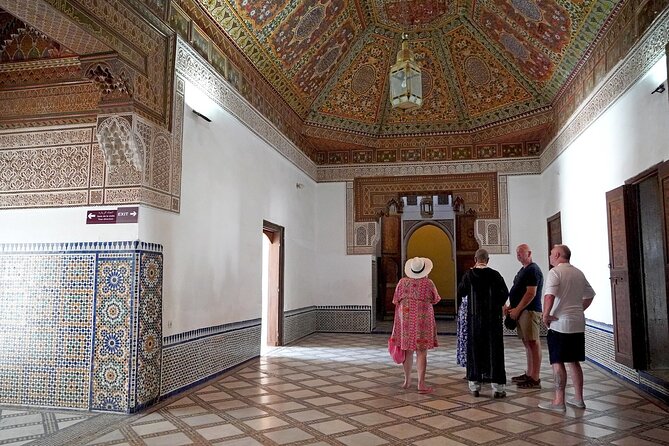
- Bahia Palace (100 DH): 160 rooms, 8 hectares, and tilework you can’t ignore
- Souk Semmarine and Souk El Attarine: shop with your eyes first
- Medersa Ben Youssef (50 DH): cedar, zellij, and a school built for focus
- Dar El Bacha Museum: Pasha Thami El Glaoui’s home, now a Moroccan art showcase
- The medina beyond the monuments: craft workshops and free roaming
- Jemaa el-Fnaa: finish with the square, not a sprint
- Price and logistics: what $34.84 buys you (and what doesn’t)
- Who should book this Marrakech highlights walk?
- Should you book this Marrakech Palace, Museum, Madrasa & Medina Highlights Tour?
- FAQ
- How long is the Marrakech highlights tour?
- Where does the tour start and end?
- What’s included in the price?
- Are entrance fees included?
- Is there transportation provided?
- How large is the group?
- Which areas are visited during the walk?
- What is the cancellation policy?
Key highlights at a glance
- Koutoubia Mosque’s Almohad design with copper globes at the top
- Bahia Palace’s scale and detail, from zellij tilework to painted ceilings
- Souk Semmarine + Souk El Attarine for clothing, leather, spices, perfumes, and beauty products
- Medersa Ben Youssef’s student courtyard and cedar work, tied to its past as a Quranic school
- Dar El Bacha’s Pasha past, now shown through Moroccan art, textiles, woodwork, and ceramics
- Jemaa el-Fnaa as a visual finale, plus free time to roam the surrounding areas
Meeting at Café de France and getting your bearings fast
The tour starts at Café de France, on Rue des Banques. It’s a handy meeting spot because you’re near public transportation, and you’ll be in the right part of town from the start. The walk ends back at the same place, which is nice if you’re trying to keep the rest of your day simple.
This runs about 4 hours and stays small, with a maximum of 15 people. For me, that size matters in the medina: you can actually hear your guide and still have time to stop and look.
Also, you get a mobile ticket and confirmation at booking time, which makes it easier to show up and go.
You can also read our reviews of more museum experiences in Marrakech
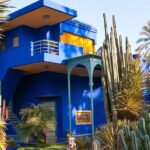

Koutoubia Mosque: copper globes and Almohad symmetry
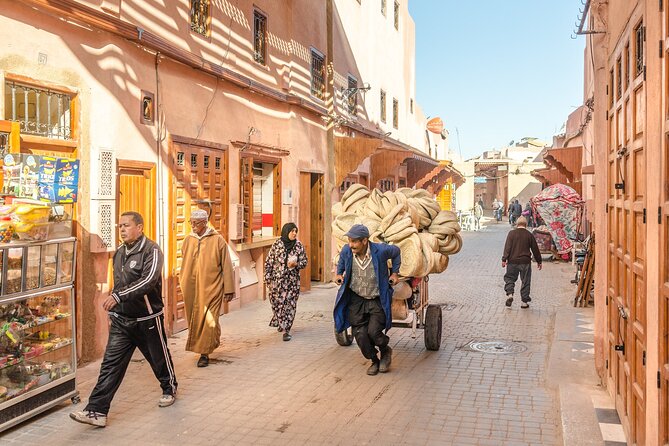
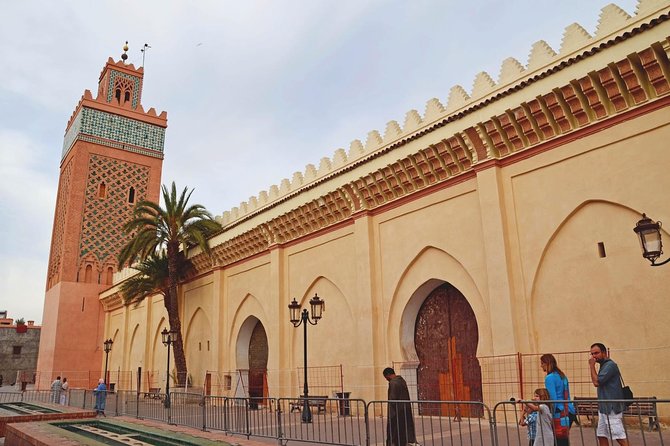
Koutoubia Mosque is where the tour begins, and it’s a smart first stop. The site is well known for its Almohad architecture, and there’s a very specific feature to look for: the tall tower is topped with four copper globes. Even if you only glance up for a moment, those globes are the kind of detail you’ll remember later when you’re comparing buildings across Marrakech.
The connection to the book trade is also part of the story you’ll hear on-site. That matters because it changes the way you look at a mosque from purely “wow” to something more grounded: a landmark with a role in daily life and learning over time.
Good news: this stop is listed with free admission. You’ll spend about 15 minutes there, so it’s quick, but it’s not rushed. If you’re the kind of person who likes to photograph architectural details, this is a good warm-up.
Bahia Palace (100 DH): 160 rooms, 8 hectares, and tilework you can’t ignore
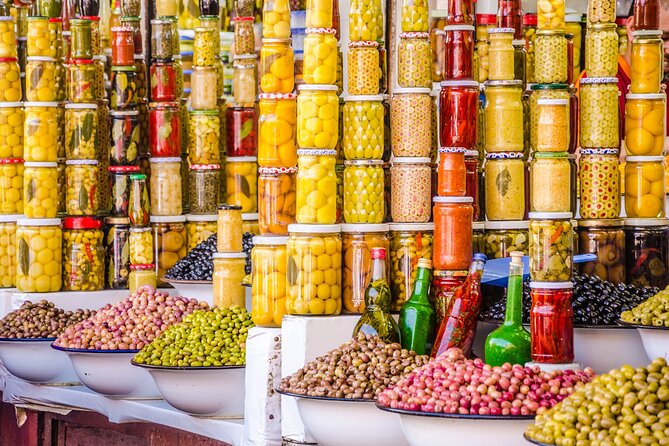
Next comes Bahia Palace, built between 1894 and 1900. The headline number is impressive—160 rooms arranged around courtyards, plus an 8-hectare garden—but what makes it worth your time is the layered craftsmanship. This is where the tour’s guide payoff shows up: it’s easier to notice the pattern when someone points out what you’re actually looking at.
Inside, expect to see:
- zellij tilework (those geometric mosaic designs)
- stucco panels
- marble finishes
- painted ceilings
There’s also the way courtyards shape movement and light. You’ll feel the palace as a sequence, not just a single room. That’s why I like this stop on a highlights tour: it gives you multiple “micro-moments,” from hallway decoration to open courtyard space.
A quick practical note: Bahia Palace entry isn’t included and is listed at 100 DH per person. The tour gives you about 45 minutes for the palace itself, including free time to wander. That’s usually enough to see the main areas without turning your brain into museum mode.
Souk Semmarine and Souk El Attarine: shop with your eyes first
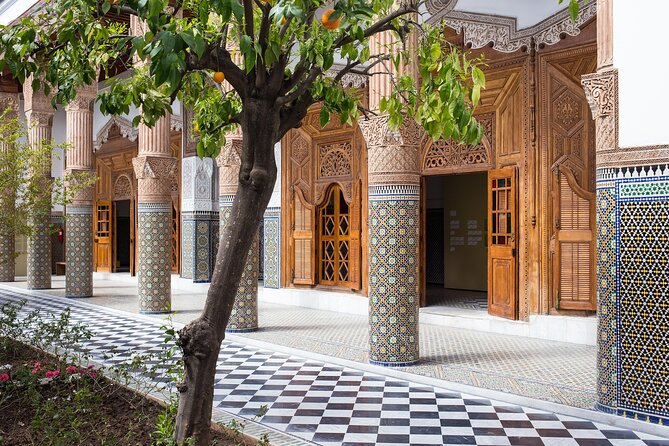
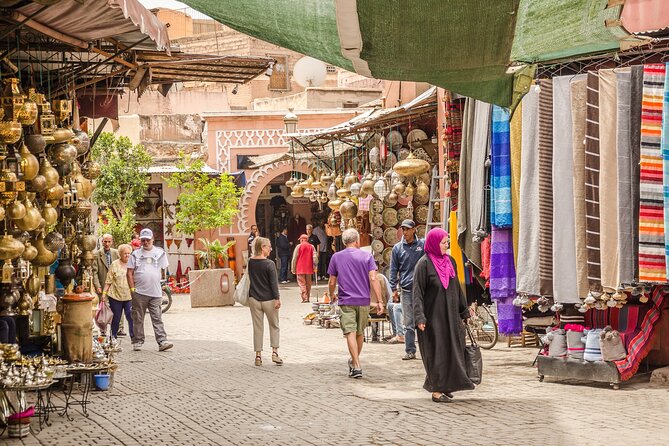
After the palace, you switch gears to the markets—Souk Semmarine and Souk El Attarine. This isn’t just “shopping time.” You’ll get context for what you’re seeing, from the types of goods sold to why certain stalls focus on certain materials.
Souk Semmarine is known for:
- traditional clothing
- finely crafted leather goods
Then Souk El Attarine leans into scent and color with:
- spices
- perfumes
- beauty products
If you’ve ever walked into a souk and felt like every direction is loud, this kind of guided approach is useful. You’re not guessing where to start. You can also use the time to watch artisans work—especially if leather craft is your thing, since the tour specifically highlights meeting artisans and seeing meticulous craftsmanship.
This market segment is listed as free and takes about 30 minutes. My advice: go in with one or two realistic souvenir ideas. It keeps you from getting stuck in decision overload.
Medersa Ben Youssef (50 DH): cedar, zellij, and a school built for focus
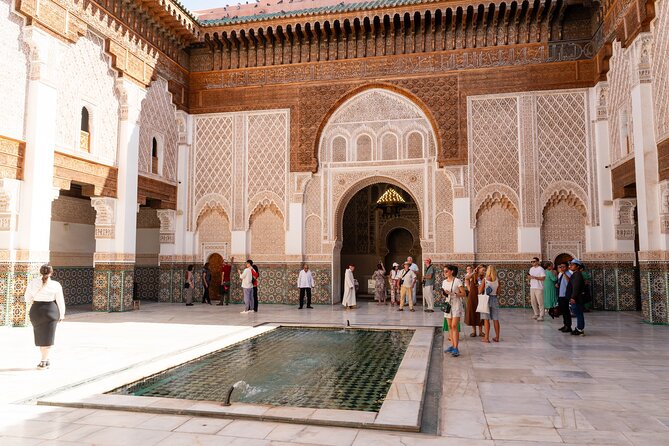
Medersa Ben Youssef is the kind of stop where the building itself feels like it’s teaching. It’s a Quranic school dating back to Sultan Abou el Hassan’s reign, then reconstructed in the 1560s. The tour also gives you scale: it once accommodated around 800 students, all dedicated to Quranic studies.
In other words, you’re not just looking at pretty tile. You’re walking through a place designed for learning and daily routine. That context makes the decoration hit harder.
When you’re inside, pay attention to the materials the tour calls out:
- fine zellij tiling
- intricate stucco plasterwork
- finely carved cedar wood
You’ll spend about 45 minutes here, with time for your own looking. Entry isn’t included, listed at 50 DH per person, so mentally budget for that ahead of time.
If you like architecture that mixes function with ornament, this is one of the most satisfying stops on the walk.




Dar El Bacha Museum: Pasha Thami El Glaoui’s home, now a Moroccan art showcase
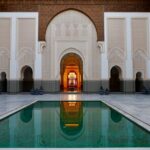
Next is Dar El Bacha – Musee des Confluences. This palace started life as the residence of Pasha Thami El Glaoui, and that background matters because you can feel the difference between a building made for power and one made for ceremony or trade.
Inside the museum, you’re looking at a collection that’s closely tied to Moroccan craftsmanship and elite lifestyle. The tour specifically points you toward:
- intricate woodwork
- vibrant textiles
- ornate ceramics
(Yes, those adjectives are doing real work here. You’ll likely notice textiles and ceramics more when someone connects them to the kind of person who lived there.)
This stop runs about 30 minutes. Entrance is listed as not included, but the exact price for Dar El Bacha isn’t stated in the info I received—so plan to buy this one separately when you get there.
For many people, this museum stop is the “rest your feet” moment without losing the story. If you’ve been staring at rooftops and courtyards all morning, it’s a welcome change of pace.
The medina beyond the monuments: craft workshops and free roaming
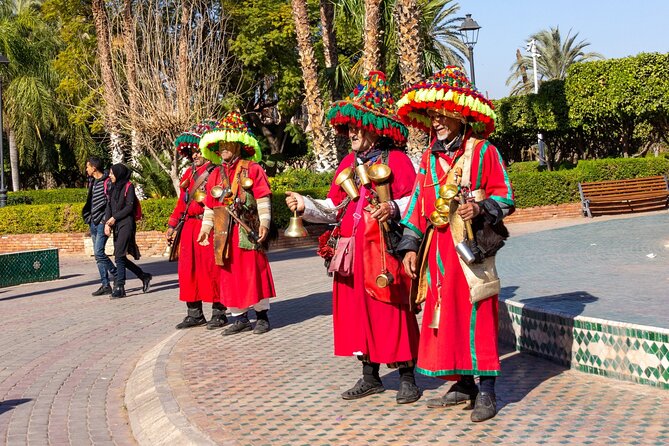
After the museum, the tour moves into the surrounding area with visits to nearby workshops where craftspeople preserve traditions through pottery, metalwork, and wooden artefacts. This is one of my favorite segments because it keeps the day from becoming only a parade of buildings.
It also gives you a better “read” on the souks you saw earlier. When you understand the craft behind the object, bargaining and browsing become less confusing. You’re shopping with more knowledge, even if you still end up walking away with only a small purchase.
This part is about 30 minutes, listed as free. Take it slowly here. This is where you can ask questions if your guide invites it, and where you can actually slow down to notice technique.
Jemaa el-Fnaa: finish with the square, not a sprint
The finale is Jemaa el-Fnaa, the classic Marrakech square. You’ll get about 20 minutes here, listed as free.
This stop works well as a capstone because by now you’ve seen:
- the architectural “rules” of the city
- the decorative language of zellij and carved wood
- the daily economy of souks
So when you reach Jemaa el-Fnaa, you’re not arriving as a blank slate. You’re arriving with patterns in your brain, which makes the square more interesting than just a place to stand and stare.
Price and logistics: what $34.84 buys you (and what doesn’t)
The price is $34.84 per person, for a 4-hour small-group walking experience with a licensed guide. That price is usually fair when you consider that:
- you’re getting multiple major landmarks and a museum
- the tour includes free time at each stop
- group size is capped at 15
- you get mobile ticket convenience
What’s not included is where you’ll want to do the simple math:
- Bahia Palace: 100 DH (not included)
- Medersa Ben Youssef: 50 DH (not included)
- Dar El Bacha Museum: entrance not included (amount not specified here)
- Transportation (not included)
So, the tour can still be good value even with entry fees, especially if you’d otherwise pay for guides separately or try to connect these sites on your own in a short stay. If you want the cleanest budget, assume you’ll pay at least for Bahia and Ben Youssef.
One more practical point: this tour is often booked in advance (an average of 34 days ahead). If you’re traveling during a busy season, I’d try not to wait until the last minute.
Who should book this Marrakech highlights walk?
I’d point you to this tour if you want:
- a first-time-friendly route that hits Koutoubia, Bahia Palace, Ben Youssef, and Dar El Bacha in one go
- architecture plus market time, without trying to plan every connection yourself
- a small group setting where your guide can keep things moving while still letting you linger
You might skip it if:
- you want long, slow museum time and extra indoor hours (this is about 4 hours, with set stop lengths)
- you’re allergic to paying separate monument fees during the day
Also, the tour says most travelers can participate—so it’s generally built for a wide range of visitors, as long as you’re comfortable with a walking format.
Should you book this Marrakech Palace, Museum, Madrasa & Medina Highlights Tour?
Yes, book it if you want an efficient, guide-led route that turns big landmarks into something you actually understand. The best part is the mix: palace interiors and school courtyards paired with markets and craft stops. You’ll leave with photos, but you’ll also have context for why the details matter.
Just go in with two expectations: you’ll pay monument entrances for Bahia Palace and Medersa Ben Youssef, and you’ll walk through active medina streets. If that fits your style, this is a solid way to see a lot of Marrakech without feeling lost.
FAQ
How long is the Marrakech highlights tour?
The tour lasts about 4 hours.
Where does the tour start and end?
It starts at Café de France, 72 Rue des Banques, Marrakech 40000, Morocco, and it ends back at the same meeting point.
What’s included in the price?
You get a licensed guide, a private or shared small-group walking tour, free time to explore each monument, and mobile ticket access. If you book the private option, there can also be hotel pickup on foot within the Medina.
Are entrance fees included?
No. Bahia Palace and Medersa Ben Youssef have separate entrance fees listed as 100 DH and 50 DH per person respectively, and Dar El Bacha is also not included.
Is there transportation provided?
No transportation is included.
How large is the group?
The maximum group size is 15 travelers.
Which areas are visited during the walk?
You’ll see Koutoubia Mosque, Bahia Palace, Souk Semmarine, Souk El Attarine, Medersa Ben Youssef, Dar El Bacha Museum, nearby craft workshops in the Medina area, and finish at Jemaa el-Fnaa.
What is the cancellation policy?
You can cancel for free up to 24 hours before the experience starts for a full refund.