REVIEW · MARRAKECH
Marrakech Erg Chigaga Desert Tour
Book on Viator →Operated by Morocco Tour Marrakech · Bookable on Viator
Erg Chigaga is the kind of sand you remember. This 3-day route from Marrakech pushes you past the main roads, over the High Atlas, and deep into the dunes where the world gets quiet in a hurry.
I like two things a lot: the off-road run into Erg Chigaga (60 km of desert tracks) and the way the itinerary treats your comfort without turning the trip into a slow, boring cruise. You get desert time, but you also get a real sleep: a camp night with private bathroom and king-size beds.
One drawback to plan for: you’ll spend a lot of hours in the vehicle across varied terrain, so if you hate long days on the road, this tour will feel like a workout.
In This Review
- Key Highlights You’ll Care About
- The Value: What You’re Paying For (And What You’re Not)
- Day 1: Marrakech to Aït Ben Haddou, Then Ouarzazate
- High Atlas crossing and the Telouet kasbah break
- Aït Ben Haddou: UNESCO kasbah stop and a lunch break
- Ouarzazate hotel night
- Day 2: Tamnougalte to M’hamid, Then 60 km Off-Road to Erg Chigaga
- Kasbah Tamnougalte and the Draa Valley
- Dinosaur footprints stop near Tansikht
- Zagora lunch and Tamgroute pottery + library
- M’hamid: the gate of the desert
- The big moment: Erg Chigaga dunes, off-road driving, camel ride, and camp night
- What you’ll feel at Erg Chigaga
- Day 3: Lake Iriqui Mirage, Fossils, Foum Zguid Lunch, Taznakht Rugs, Back to Marrakech
- West through 90 km of desert: Lake Iriqui and mirage vibes
- Lunch in Foum Zguid
- North toward Taznakht: cobbled roads and rock formations
- Back over the High Atlas into Marrakech
- Comfort and Practical Reality: How This Tour Feels Day to Day
- Who This Tour Fits Best (And Who Might Skip It)
- Should You Book the Marrakech to Erg Chigaga 3-Day Tour?
- FAQ
- FAQ
- How long is the Marrakech to Erg Chigaga desert tour?
- What time does the tour start in Marrakech?
- Is pickup from my hotel or riad included?
- Is the tour private?
- What meals are included?
- Are lunch stops included?
- What happens at Erg Chigaga?
- What kind of lodging is included on the trip?
- Do I get a place to store tickets?
Key Highlights You’ll Care About
- 60 km off-road to Erg Chigaga after reaching the gate of the desert at the end of the asphalt road
- Kasbah stops that are more than photos, including UNESCO-listed Aït Ben Haddou
- A real desert night setup, with dinner and overnight in a camp that has private bathroom + king-size beds
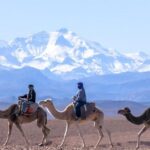
- Camel ride option of about 1.5 hours in the dunes once you reach Erg Chigaga
- A mix of desert types, including dunes, stony desert (hammada), and oasis areas
- Return through different scenery on Day 3, including Lake Iriqui for mirage potential and fossil areas
The Value: What You’re Paying For (And What You’re Not)
At $522.86 per person for about 3 days, this tour sits in the “worth it if you want the real desert” category. The price is supported by a few clear inclusions:
- Private transportation
- Two breakfasts and two dinners
- All fees and taxes
- Lodging included for the first night in Ouarzazate, plus the desert camp night at Erg Chigaga
What’s not included is just as important: lunches and tips. You should budget for lunch each day (and build in small spending money for personal stops or extras like optional camel riding).
The big value play here is that you’re not just “driven to the desert.” The schedule is built around getting far from civilization—especially on Day 2, when the route shifts from roads into dunes and off-road tracks. If you want maximum desert effect in limited time, this is the kind of trip that fits.
You can also read our reviews of more tours and experiences in Marrakech.
Day 1: Marrakech to Aït Ben Haddou, Then Ouarzazate
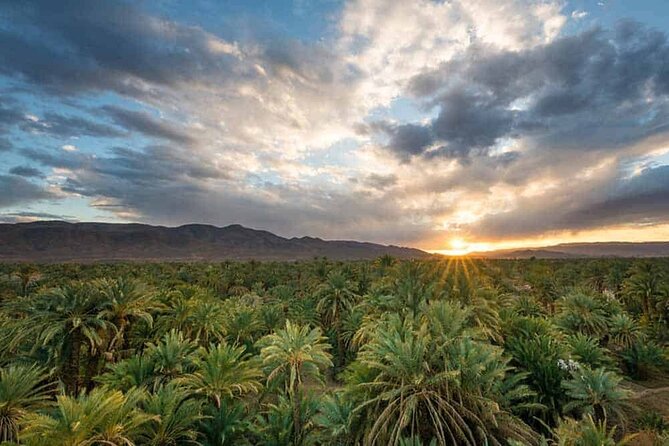
Day 1 is the long cross-country setup day. Start is 8:00 am, with pickup offered from your hotel or riad in Marrakech. The early departure matters because you’re not rushing at the end—you’re earning daylight for stops.
High Atlas crossing and the Telouet kasbah break
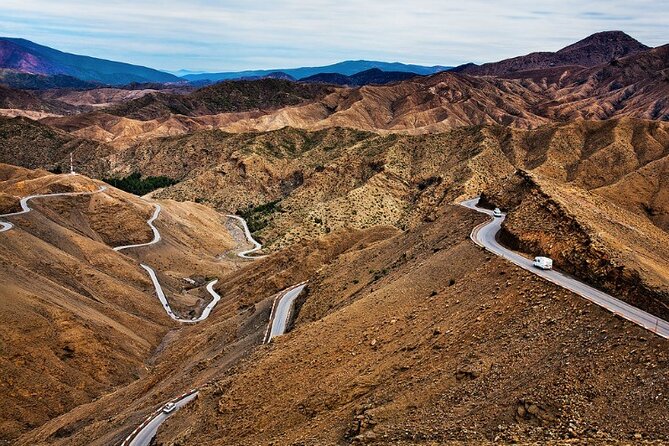
You’ll cross the High Atlas Mountains via the Tichka pass area. After that, the route leaves the main road and heads toward the Kasbah of Telouet, tied to the powerful Atlas lords of the Glaoui family. The kasbah is in ruins, exposed to weather and neglect over time, but that’s part of what makes it interesting: you see how these buildings weathered abandonment and looting.
When you reach the far end of the site, you get to see the traditional interior decoration, which is the contrast piece—outside is wind-and-time damage, inside is craft and detail.
Why this matters for you: it keeps the first day from being only driving scenery. You’re learning context while the trip is still moving.
Possible drawback: the day starts early and builds momentum. If you’re sensitive to long rides, take that first morning as a “settle in” phase.
Aït Ben Haddou: UNESCO kasbah stop and a lunch break
Next comes Aït Ben Haddou, one of Morocco’s best-known kasbahs and a UNESCO World Heritage site. You stop for lunch here (and admission is listed as free). It’s famous for good reason: the earthen constructions are preserved in a way that matches the local climate, and the place has been used as a film backdrop since the 1600s-era style is so distinctive.
You get about an hour at this stop, which is enough to wander the main areas and snap photos without turning it into a rushed stampede.
Good to know: one hour is not a full guidebook tour. Plan on moving at your own pace, and focus on walls, arches, and how the kasbah sits with the terrain.
Ouarzazate hotel night
After Aït Ben Haddou, the plan is straightforward: drive to Ouarzazate and spend your first night at the hotel there. This is your recovery stop before the desert day.
Day 2: Tamnougalte to M’hamid, Then 60 km Off-Road to Erg Chigaga
Day 2 is the day you actually feel the desert. It’s also the most “different” from what most people picture when they imagine Morocco.
Kasbah Tamnougalte and the Draa Valley
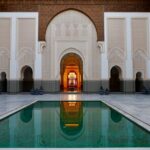
Breakfast first, then a visit to Kasbah Tamnougalte, described as the oldest kasbah in the Draa Valley. It’s still inhabited, but the Jewish quarter has collapsed since inhabitants left for Israel; the information given notes that the last woman left in 1963.
From there, you take a section of an older caravan route between the river and the mountains. This was used to move goods between sub-Saharan Africa and Morocco. The stop is short, but it gives you something more useful than scenery: you get a sense of how people lived near oases and how villages sit along routes that once mattered for trade.
Dinosaur footprints stop near Tansikht
Just before Tansikht Police Station, the driver can stop to show you dinosaur footprints. This isn’t a “major museum moment,” but it’s one of those details that makes the day feel human and surprising—like the guide is pulling you into local knowledge, not running a slideshow.
Tip: if you like odd details, keep your camera ready. Footprint stops are the kind of thing you want to see up close.
Zagora lunch and Tamgroute pottery + library
You stop in Zagora for lunch. Later you pass through Tamgroute, known for pottery with a green glaze—the kind of tile and pottery influence you may already have seen around Marrakech. There’s also an option to visit an ancient Koranic library with exquisite handwritten Arabic texts.
Why this is worth it: it’s a break from the “kasbah and dunes only” rhythm. It also reminds you that desert travel isn’t only about sand. It’s about the human crafts that moved through trade routes.
M’hamid: the gate of the desert
Then you drive to M’hamid, called the gate of the desert and the end of asphalt road. In practice, this is a mental switch: after this point, you’re in a different rhythm.
Lunch is either in Erg Lihoudi dunes or at Ksar Bounou (the route gives both as options). Either way, you’re already in desert country.
The big moment: Erg Chigaga dunes, off-road driving, camel ride, and camp night
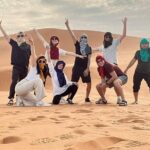
Now comes the heart of the trip. You continue into Erg Chigaga, including 300 m dunes and about 60 km of off-road driving. The route changes as you go: dunes (erg), stony desert (hammada), and oasis areas. That mix matters. If you only see one type of desert surface, the place starts to feel repetitive. This schedule avoids that.
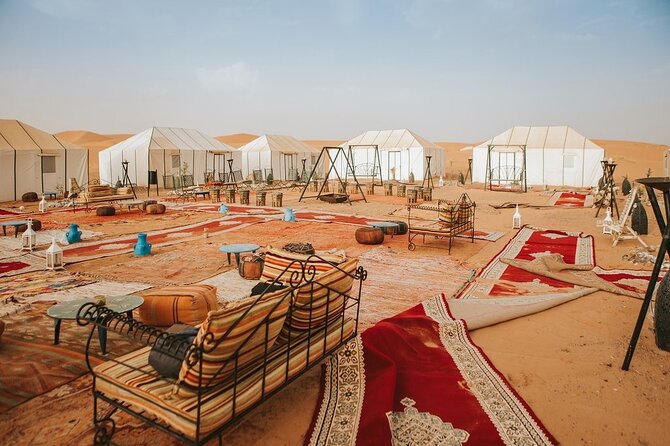
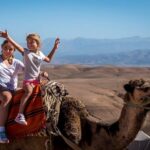
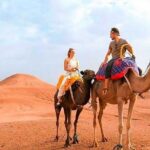
Once you reach the dunes, you can take a camel ride of about 1.5 hours. Then you dine and spend the night in a camp with:
- private bathroom
- king-size beds
- Moroccan furniture
- lamps arranged to match the vibe
What you’ll feel at Erg Chigaga
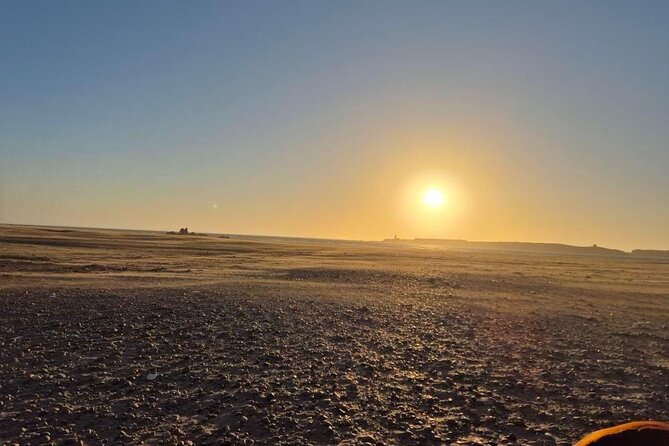
The best part of Erg Chigaga is not another viewpoint. It’s the scale of quiet. Even with other people around, the dunes create a sense of distance. You get huge open sand, and the light changes fast once the sun starts dropping.
Possible drawback: night in the camp is great, but it’s still the desert. Temperatures can swing. If you’re the cold type, bring layers even in warmer months.
Day 3: Lake Iriqui Mirage, Fossils, Foum Zguid Lunch, Taznakht Rugs, Back to Marrakech
Day 3 starts with breakfast, then a full return loop that changes the scenery again.
West through 90 km of desert: Lake Iriqui and mirage vibes
The plan takes you west across about 90 km of desert with varied scenery like Lake Iriqui, mountains, and fossils. Lake Iriqui is noted as a place where you may spot a large mirage in the heat.
This is one of those experiences that’s hard to “perform.” It depends on conditions. But even when the mirage is subtle, the way the ground shifts and the horizon blurs can be strangely calming.
Lunch in Foum Zguid
Lunch is in Foum Zguid, described as the first village after the desert. The name is explained as meaning “mouth/source” of the Zguid river. That detail is a clue to what you’re crossing: desert edges where water sources shape the first signs of settled life.
North toward Taznakht: cobbled roads and rock formations
From there, the road heads north along cobbled roads, passing rock formations, to Taznakht. Taznakht is known for Berber rugs and carpets.
This is a smart stop for most people. On a desert tour, you often feel like you’ve only been seeing sand and stone. Here you get something that reflects daily life and trade: textiles made for use and for warmth.
Back over the High Atlas into Marrakech
Finally, you cross the High Atlas again to return to Marrakech in the late afternoon. This late-day arrival is a blessing. You’re not getting home at dinner-time chaos. You’ve got enough time to shower, eat, and be human again.
Comfort and Practical Reality: How This Tour Feels Day to Day
This tour does a good job mixing “remote desert” with “don’t ruin your trip with misery.” The camp night setup is a big deal: private bathroom and king-size beds are not what you’d expect from the cheapest desert options.
At the same time, don’t ignore the travel time. Day 1 and Day 2 are both long driving days, including the High Atlas crossing and then the off-road portion of the desert route. If you get carsick easily, you should plan for it with the usual tools (and ask your provider if there’s a way to seat you toward the front).
Also, remember lunch isn’t included. That’s normal for many North Africa tours, but it still affects the daily budget.
Who This Tour Fits Best (And Who Might Skip It)
This Marrakech to Erg Chigaga tour is a strong match if:
- you want a real Saharan feel in only 3 days
- you like a route with multiple stops (kasbahs, crafts, oasis areas) instead of just dunes and back
- you want to keep comfort decent, especially for the desert night (private bathroom, comfortable beds)
It might be less ideal if:
- you hate long vehicle days
- you’re only interested in one thing (for example, strictly dunes and nothing else)
- you want lunch fully included
Should You Book the Marrakech to Erg Chigaga 3-Day Tour?
If you’re choosing between a quick desert day trip and a deeper 3-day experience, this is the better bet for the “get far away” feeling. The combination of UNESCO Aït Ben Haddou, desert-edge stops (Tamnougalte, Tamgroute, M’hamid), and the 60 km off-road push into Erg Chigaga makes it feel like a complete journey, not a detour.
I’d book it if your priority is distance and atmosphere, and you’re okay with a few long ride days. I’d hesitate if you’re very sensitive to road time or if you want zero extra planning for lunches.
FAQ
FAQ
How long is the Marrakech to Erg Chigaga desert tour?
The tour runs for about 3 days.
What time does the tour start in Marrakech?
The start time is 8:00 am.
Is pickup from my hotel or riad included?
Pickup is offered, with the tour departing about 8 hours from your hotel or riad in Marrakech.
Is the tour private?
Yes. It’s listed as a private tour/activity, meaning only your group participates.
What meals are included?
Breakfast is included for 2 days, and dinner is included for 2 nights.
Are lunch stops included?
Lunches are not included in the price.
What happens at Erg Chigaga?
You reach Erg Chigaga after about 60 km of off-road driving. There’s an option for a camel ride of about 1.5 hours, and you dine and sleep in a camp for the night.
What kind of lodging is included on the trip?
You spend the first night in Ouarzazate and the second night in a desert camp at Erg Chigaga. The camp is described as having a private bathroom and king-size beds.
Do I get a place to store tickets?
The tour includes mobile ticket access.