REVIEW · MARRAKESH
Marrakech: Day-Trip to UNESCO Kasbahs and Ouarzazate Tour
Book on GetYourGuide →Operated by private excursions · Bookable on GetYourGuide
One long road trip, a string of kasbahs, and movie-set scenery all in a single day. I like how this route climbs through the High Atlas before dropping you into places like Aït Ben Haddou that feel frozen in time. You get real culture stops, plus the fun film-industry side in Ouarzazate.
I also really value that the visit to the UNESCO site comes with a local guide, not just a quick look from the bus. A practical plus: you’re in an air-conditioned vehicle for the long stretches, and you get mineral water along the way. One drawback to plan for: it’s a full 12-hour day with a walking tour at Aït Ben Haddou, so bring shoes that can handle uneven steps.
In This Review
- Key Highlights You’ll Actually Feel
- Marrakech to Ouarzazate: The High Atlas Drive That Sets the Tone
- Tizi N’Tichka Pass: Where the Views Earn Their Stops
- Aït Ben Haddou UNESCO Kasbah: Walk the Stone City With Context
- Taourirt’s Kasbah and the Cinema Museum: Heritage Meets Film Power
- Ouarzazate Film Studios: Seeing the Real Set Logic
- Lunch, Mint Tea, and the High Atlas Views You’ll Want on Your Phone
- Guides and Drivers: The Kind of Care That Changes the Day
- Price and Value: Is $141 Worth It?
- What to Bring and How to Prepare for a Smooth Day
- Who This Tour Fits Best
- Should You Book This Marrakech to Ouarzazate Day Trip?
- FAQ
- How long is the tour from Marrakech to Ouarzazate?
- What does the price include?
- Are entrance fees and lunch included?
- What language is the tour guide?
- Is this a private group?
- Where does pickup happen in Marrakech?
- What is the highest point on the route?
- What should I bring for Aït Ben Haddou?
- Is the tour suitable for people with mobility impairments?
- Are there pets allowed?
Key Highlights You’ll Actually Feel
- Tizi N’Tichka Pass at 2,260 meters gives you big mountain views as you cross the High Atlas
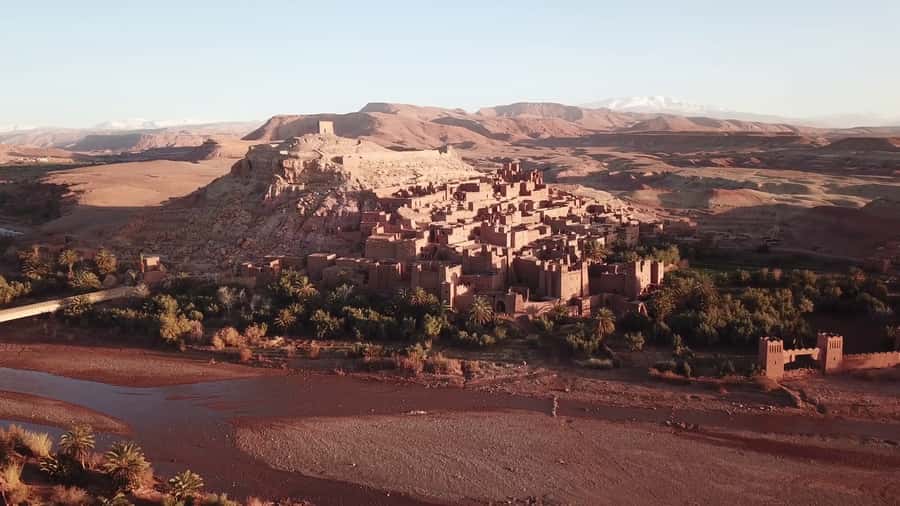
- Aït Ben Haddou UNESCO kasbah visit with a local guide helps you understand the architecture and why it mattered
- Taourirt’s Kasbah and the cinema museum mix Berber heritage with the region’s film story
- Ouarzazate cinema studios show how real landscapes become famous movie locations
- Mint tea and High Atlas viewpoints break up the day after a lot of driving
Marrakech to Ouarzazate: The High Atlas Drive That Sets the Tone
The day starts early in Marrakech with hotel pickup, including spots in the old town where the vehicle can park closest to the medina. Then you’re off into the scenic drive toward Ouarzazate, with the High Atlas road doing most of the work for the “wow” factor.
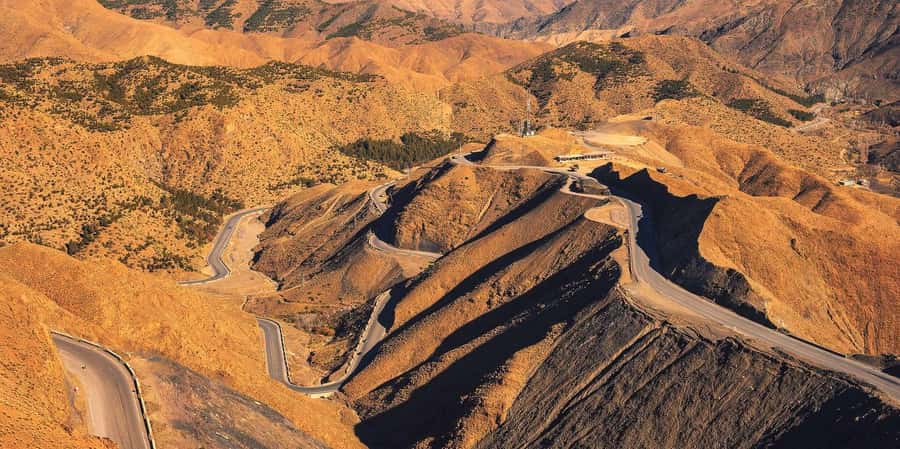
The star of the drive is Tizi N’Tichka pass, sitting at 2,260 meters, and described as the highest road crossing in Morocco. The pass connects the Marrakech Saharan regions, so the route makes sense geographically, not just for scenery. As the elevation shifts, you get that gradual change in light and terrain that makes the kasbah stops feel even more grounded.
If you’re someone who loves road trips but still wants structure, this works well. You’ll be in a minivan or 4-wheel drive with a professional driver/guide, which means fewer logistics headaches and more time watching the road.
One practical thing I’d watch for: it’s a long day of seat time. Even with comfort features, it helps to travel with layers. Mountain weather can change quickly, and you’ll feel it once the day moves from the city to high elevation.
You can also read our reviews of more tours and experiences in Marrakesh.

Tizi N’Tichka Pass: Where the Views Earn Their Stops
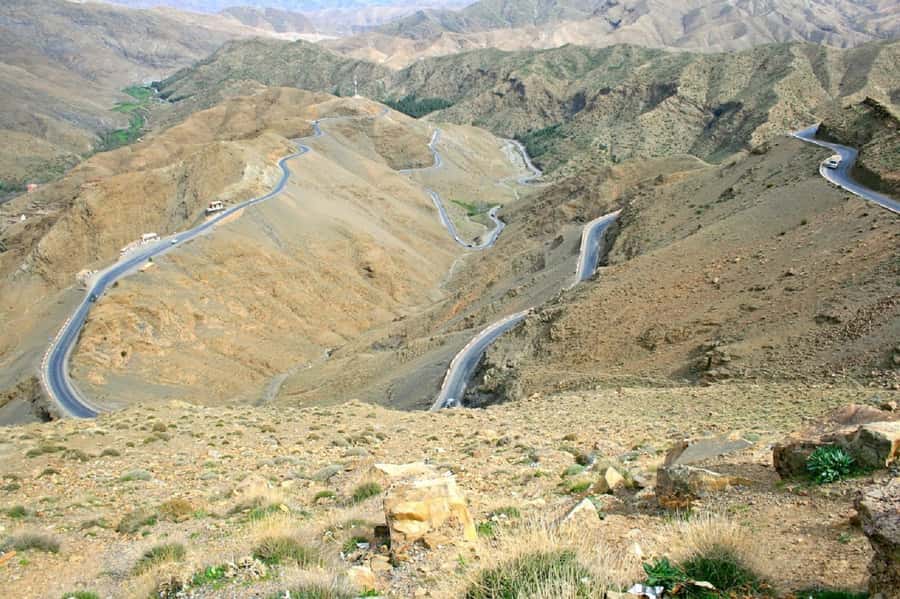
You cross the High Atlas through Tizi N’Tichka, and the point isn’t just to say you did it. It’s to understand how Ouarzazate became a meeting place between mountain routes and desert paths.
From the higher sections, the road gives you sweeping angles—mountain ridges, turns that feel endless, and that high-altitude clarity. This is the kind of view you’ll remember later, because it changes the way you picture the geography of Morocco.
This stop is especially worth it if you’re the type who learns by looking. You can’t get the same understanding from photos alone. The driving perspective—up, over, and down—makes the later kasbah visits feel tied to real terrain and real travel history.
Aït Ben Haddou UNESCO Kasbah: Walk the Stone City With Context
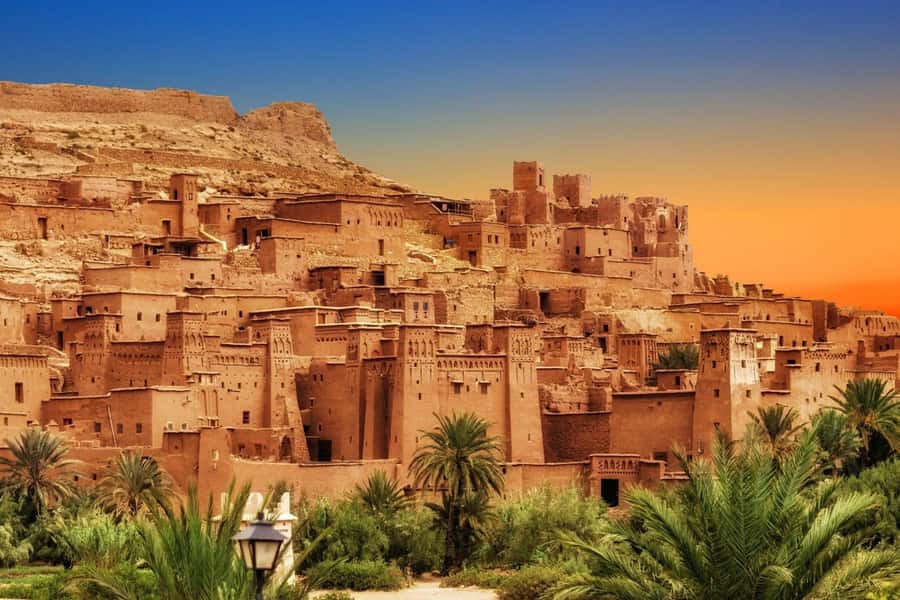
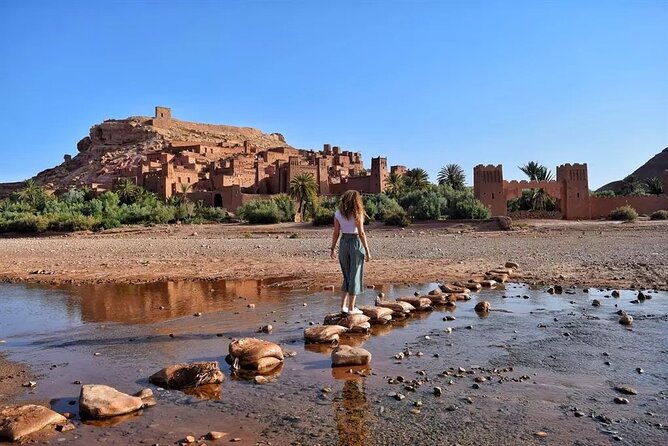
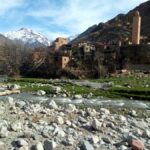
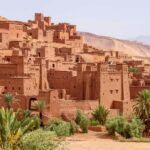
Next you reach Aït Ben Haddou, the fortified village/ksar recognized as a UNESCO World Heritage Site. This is the stop that tends to define the trip because it’s built to be experienced close up, not from a distance.
You’ll go with a local guide, and that matters. Aït Ben Haddou isn’t just “old buildings in a desert.” The guide helps connect what you’re seeing—fortification style, layout, materials—with why this place survived and became a landmark. It’s also a filming backdrop for major productions, so you’ll often see references to how directors used its architecture and setting.
The tour highlights the way Aït Ben Haddou appeared in film such as Lawrence of Arabia, Gladiator, The Mummy, and Babel (among others). Even if you’re not a film buff, it gives you a handy way to imagine why the site became so visually recognizable.
Plan for the walking part. The tour notes a walking tour at Aït Ben Haddou and specifically suggests bringing sports shoes. The ground can be uneven and the stairs/paths aren’t designed for flip-flops or soft-soled sneakers. Comfortable shoes aren’t a “nice to have” here—they’re part of enjoying the visit.
Taourirt’s Kasbah and the Cinema Museum: Heritage Meets Film Power
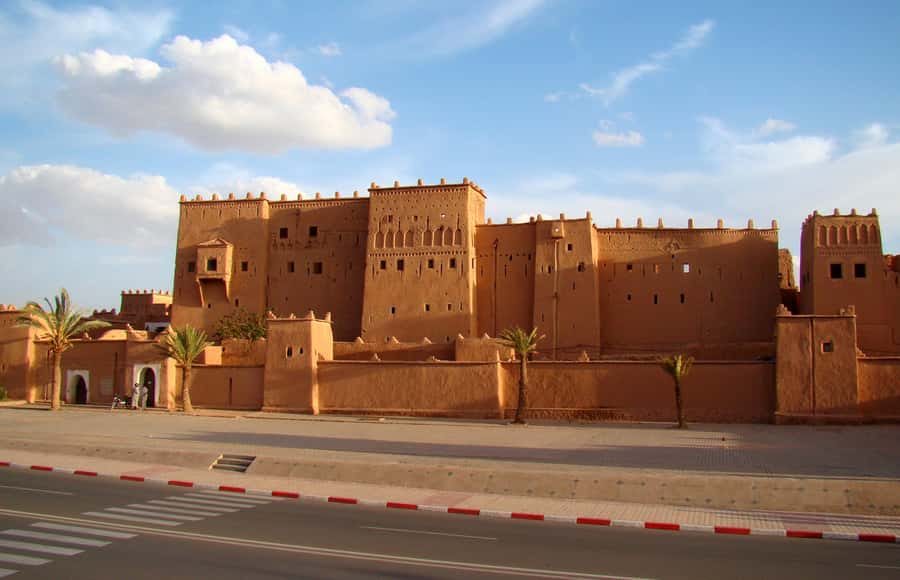
After Aït Ben Haddou, you continue toward Ouarzazate. Here the tour shifts from UNESCO-world heritage into local storytelling with Taourirt’s Kasbah and the cinema museum.
Taourirt’s Kasbah brings the Berber kasbah feel back into focus. It gives you another angle on how these fortified spaces worked—how architecture functioned in a region where protection, trade, and community life were all connected. If Aït Ben Haddou is the headline, Taourirt gives you supporting context in the same day.
Then the cinema museum changes the mood. It’s a chance to connect the region’s cinematic reputation to real local history and working practices. Ouarzazate is known as a shooting location for many international productions, and this stop helps explain why filmmakers keep coming back.
This is also where you’ll start to see the region’s identity as something more than a set. The tour keeps the experience grounded by pairing “what you see” with “why it works.”
Ouarzazate Film Studios: Seeing the Real Set Logic
The itinerary includes a visit to the cinema studios of Ouarzazate. This is where the day becomes fun in a different way.
You’re not just hearing that movies were shot here—you’re walking through the idea of how locations get turned into sets. The whole region has that “movie geography” quality, where roads, sand-toned walls, and mountain backdrops naturally read on camera.
If you liked the UNESCO stop because of craft and layout, the studio part connects to craft too—different kind, but still a kind of design. You’ll often leave realizing that what looks spontaneous in film is usually planned to work with light, distance, and the camera’s angle.
And it’s a nice contrast with the driving-heavy part of the day. The studios give you a concentrated block of “look closely” time before you shift back into viewpoints and a slower pace.

Lunch, Mint Tea, and the High Atlas Views You’ll Want on Your Phone
Lunch is taken at a local restaurant, and entrance fees and lunch aren’t included, so plan for that extra cost. After lunch, the tour gives you free time to enjoy mint tea and take in the green valley and High Atlas peak views.
This part matters because it breaks up the timeline. You’ve had big heritage moments and studio time; now you get an easier rhythm where you can pause, look around, and take photos without feeling like you’re rushing.
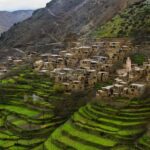
The tour also describes the area between the Atlas Mountains and the Sahara Desert as a place where kasbahs and small Berber villages take advantage of water from the Atlas for crops and animals. Even without going deep into farming details, this framing helps you understand why these settlements exist where they do.
If you’re trying to travel like a local, this is the moment to do it: slow down, sip mint tea, and let the landscape register. You’ll get more from the rest of the day if you take a breather here.
Guides and Drivers: The Kind of Care That Changes the Day
This trip runs with a professional driver/guide and a private group, which tends to make a big difference for a long day. In the feedback, caring and responsiveness from drivers comes up again and again.
For example, I’ve seen comments about drivers like Ghasan, noted for being attentive and accessible, and Charaf, described as available, respectful, and easy to work with. That kind of practical care matters on road trips. It affects timing, comfort, and how smooth the day feels when you’re switching between long drives and walking stops.
This is also a reason the private format can feel more comfortable than joining a larger group. With a private tour, you’re not stuck behind someone who moves slowly on the stairs—or waiting on someone who’s determined to get one more photo—unless it’s your own pace.
Price and Value: Is $141 Worth It?
At $141 per person for a 12-hour day, the value depends on what you count as “included.” Here you get hotel pickup and drop-off, transportation in an air-conditioned minivan or 4-wheel drive, fuel, and mineral water during the trip. You also get a professional driver/guide, and a local guide for the UNESCO heritage visit.
Not included are entrance fees and lunch, so you’ll want to budget a bit extra once you’re there. Still, the structure is solid: most of your time is spent on the major highlights that are hard to piece together independently in a single day.
If you were to DIY, you’d likely spend time arranging transport, negotiating timing, and figuring out guides at Aït Ben Haddou. Paying for a driver and guide isn’t just convenience—it’s how you get a coherent experience in one shot without burning your vacation on logistics.
I’d say this price is fair if you:
- want UNESCO Aït Ben Haddou with a local guide
- care about the High Atlas crossing (Tizi N’Tichka)
- want the film-industry side in Ouarzazate without extra planning
If you’re only interested in seeing one kasbah and skipping the rest, then you might feel the day is packed. But if you like variety—mountains, architecture, and studios—this tour hits a strong mix.
What to Bring and How to Prepare for a Smooth Day
The tour is clear on what helps:
- comfortable shoes (and sports shoes for the Kasbah walking tour)
- sunglasses
- a sun hat
I’d add one practical mindset: bring a layer. Even if Marrakech feels warm, higher elevations can feel noticeably cooler, and you’ll sit in the vehicle for a long time.
Also note a key limitation: the tour is not suitable for people with mobility impairments. The combination of long driving and walking at Aït Ben Haddou makes it hard to adapt.
Who This Tour Fits Best
This is a great match if you want:
- one full day that combines big scenery with meaningful cultural stops
- a structured route (so you’re not figuring out timing on the fly)
- the extra fun factor of cinema studios in Ouarzazate
It’s also ideal for people who like learning by connecting dots. The tour links geography (High Atlas crossing), architecture (kasbahs and fortified sites), and modern pop culture (film locations and studios). That blend is exactly why the day feels complete.
If you dislike long days or walking on uneven surfaces, you may find it tiring. The “many kilometres but very interesting visits” vibe is real here.
Should You Book This Marrakech to Ouarzazate Day Trip?
Book it if you want a single, efficient day that pairs UNESCO kasbah time with High Atlas mountain drama and the Ouarzazate film world. The included local guidance at Aït Ben Haddou, plus the professional driver/guide and private-group setup, makes it easier to enjoy instead of manage.
Skip—or at least think twice—if you’re sensitive to long seated travel, or if the Aït Ben Haddou walking portion sounds like a hassle. This route rewards people who can handle a full-day pace and who actually want to see multiple highlights, not just one.
FAQ
How long is the tour from Marrakech to Ouarzazate?
The duration is 12 hours.
What does the price include?
It includes a professional driver/guide, hotel pickup and drop-off, air-conditioned minivan or 4-wheel drive, fuel, mineral water during the trip, and a local guide for the UNESCO Kasbah.
Are entrance fees and lunch included?
No. Entrance fees and lunch are not included.
What language is the tour guide?
The tour is offered with a live guide in English and French.
Is this a private group?
Yes, it’s listed as a private group.
Where does pickup happen in Marrakech?
Pickup is included from hotels in the old town, and the vehicle will park at the closest parking point in the medina.
What is the highest point on the route?
You cross the High Atlas via the Tizi N’Tichka pass, which is 2,260 meters high.
What should I bring for Aït Ben Haddou?
Bring comfortable shoes, and the tour notes sports shoes for the walking tour at Kasbah Aït Ben Haddou. Sunglasses and a sun hat are also recommended.
Is the tour suitable for people with mobility impairments?
No, it is listed as not suitable for people with mobility impairments.
Are there pets allowed?
Pets are not allowed.