REVIEW · MARRAKECH
Marrakech City Tour By Jamal
Book on Viator →Operated by Ask Your Guide Morocco · Bookable on Viator
Marrakesh clicks when you walk with a guide. This half-day Marrakech City Tour by Jamal is built for getting your bearings fast, with key landmarks in sight and a local storyteller keeping the maze of the medina from eating up your time.
I love the way the tour uses the Koutoubia Mosque area as a navigation anchor, so the city starts to make sense instead of feeling random. I also like the mix of big, public places and small, lived-in lanes, from Jemaa el-Fnaa to the souks, where you can ask questions and shop without feeling lost.
My only caution is simple: it’s a group walk in tight streets, so don’t drift—show up on time at the meeting spot near Kubba Fatima Zohra, or you could miss the start.
In This Review
- Key things I’d watch for on this Marrakech walking tour
- Entering Marrakesh with Jamal: a half-day plan that keeps you moving
- The meeting point and start: Kubba Fatima Zohra is your time check
- Koutoubia Mosque and its minaret: the orientation trick you’ll actually use
- Bab Agnaou and the medina gates: seeing Marrakech as a city of boundaries
- The Mellah: one neighborhood story that changes how you read the streets
- Jemaa el-Fnaa at the right volume: culture, color, and a safe sense of direction
- Rahba Kedima souks: shopping with context (and an exit plan)
- Marrakech Herboristerie: spices and natural products, explained on the ground
- Medersa Ben Youssef: the ticket stop to plan for
- Duration, walking pace, and what to wear
- Price value check: what $25.55 buys you in Marrakech
- Who this tour suits best
- Should you book Marrakech City Tour By Jamal?
- FAQ
- How long is the Marrakech City Tour by Jamal?
- What does the tour cost?
- Is it a morning or afternoon tour?
- What’s included in the price?
- What’s not included?
- Where does the tour start and end?
- How big is the group?
- Do I need good weather for this experience?
- Is there free cancellation?
Key things I’d watch for on this Marrakech walking tour
- Orientation that actually works: you learn to use the Koutoubia minaret as a mental map for the medina
- A real sampler of Marrakesh: mosque views, old-city gates, the Mellah, and the main square in one half day
- Shopping with context: you don’t just browse; you get a cultural lens for what you’re seeing and why it exists
- A stop with a ticket you may need to pay: the Ben Youssef Madrasa entry is not included
- Group size stays manageable: up to 20 people, which helps you keep track of the group in narrow alleys
Entering Marrakesh with Jamal: a half-day plan that keeps you moving
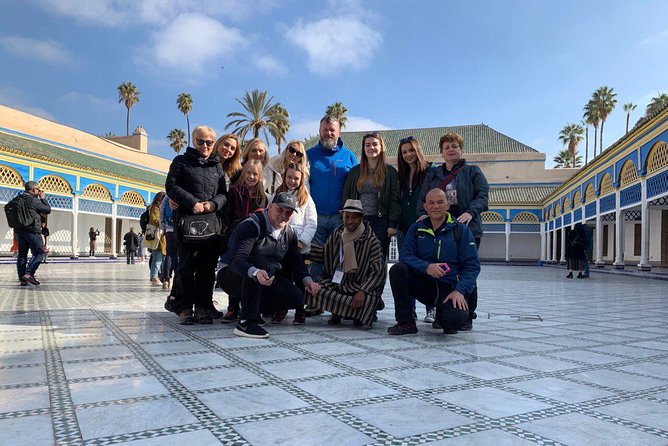
This is a practical “get oriented” kind of tour. You choose either a morning or afternoon slot, you meet your guide and group, and then you spend a focused stretch walking through Marrakesh’s old heart. The tour is designed for one job: help you understand what you’re looking at, while also giving you the confidence to explore on your own later.
A big plus here is Jamal himself. The vibe from the experience is that he’s not doing a speed-run of facts. He’s responsive and interested in your questions, and he helps turn sights into stories you can remember. That matters in a place like Marrakech, where every corner has history and every alley has a new visual rhythm.
Also, because this is a half-day format, you can use it like a warm-up. If you’re only in town briefly, it gives you a solid first pass. If you have a few days, it becomes the map you can come back to—so your second walk through the medina isn’t you guessing.
You can also read our reviews of more city tours in Marrakech
The meeting point and start: Kubba Fatima Zohra is your time check

The tour starts and ends back at the meeting point near Kubba Fatima Zohra (the listing location is Kubba Fatima Zohra J2F4+WQ8, Marrakesh 40000, Morocco). That round-trip setup is convenient because you’re not trying to figure out transport at the end while your feet are already protesting.
One practical tip: treat the start time like a hard appointment. With a group size up to 20, everyone has to sync up, and the first minutes count. If you’re even a little late, it can become a scramble in the medina streets, which is exactly what this tour is trying to prevent for you.
If you’re coming in by public transport, you’ll likely be fine since the meeting area is described as being near public transportation. Still, arrive early enough that you’re not hunting for the group while people are already moving out.
Koutoubia Mosque and its minaret: the orientation trick you’ll actually use
The first major stop is Koutoubia Mosque (Kutubiyya Mosque), with free admission noted for this stop and around 20 minutes on site. Even if you’ve seen mosques before, Koutoubia has a specific effect on the city: it gives you a fixed point in a place where the streets can otherwise feel like a tangle.
Here’s what I like about how the tour handles it. Jamal uses the mosque and especially the minaret area as your reference point. Later, when you’re walking into the medina’s narrow corridors, you can mentally anchor yourself. That means you’re less likely to spiral into the classic “which way did we come from?” problem.
Keep your expectations realistic: this is not a long sit-down visit with extended museum time. It’s enough time to notice the architecture, understand why it matters, and use it as a navigation tool for the rest of the walk.
Bab Agnaou and the medina gates: seeing Marrakech as a city of boundaries
Next comes Bab Agnaou, one of the city gates of Marrakesh. It’s tied to the Almohad dynasty era (built in the 12th century), and it’s handled as a quick but meaningful stop—around 10 minutes, with free entry noted.
Why a gate stop is worth your time: gates are where you understand the idea of Marrakech as a walled city. Even if you don’t memorize dates, you start recognizing patterns—how people moved in and out, where control and protection mattered, and how neighborhoods gained identity over time.
This is also a good moment for photos and mental wayfinding. A gate is a visual landmark. In a walking tour, those small reference points are what keep your day smooth.
The Mellah: one neighborhood story that changes how you read the streets
Then you’ll move through the idea of the Mellah in Marrakech. This is the area where Jews historically resided, and the tour frames it as a protected quarter within the Kasbah walls—more watched, taxed by the government, and kept distinct from other parts of the city.
This kind of stop is powerful because it doesn’t ask you to do a lot. You just learn that the medina isn’t only about beauty and commerce. It’s also about social structure—who lived where, why that mattered, and how policy shaped daily life.
When you connect that context, your later moments in markets and alleys feel more grounded. You’re not just collecting scenes. You’re understanding how the city organized people.




Jemaa el-Fnaa at the right volume: culture, color, and a safe sense of direction
The tour’s energy ramps up at Jemaa el-Fnaa, the main square in the medina, with about 25 minutes at this stop and free admission noted.
This is one of those places where you need time to let it register: the scale of the square, the mix of locals and visitors, and the way the city’s personality shows up all at once. The tour doesn’t try to turn the square into a long lecture. Instead, it helps you read what you’re seeing and gives you an easy starting point for later wandering.
If you’ve ever been overwhelmed by a famous square, you’ll appreciate how this tour keeps it practical. You’re not left alone to figure it out immediately. You get a guide-led interpretation, then you’re free to carry that knowledge forward.
Rahba Kedima souks: shopping with context (and an exit plan)
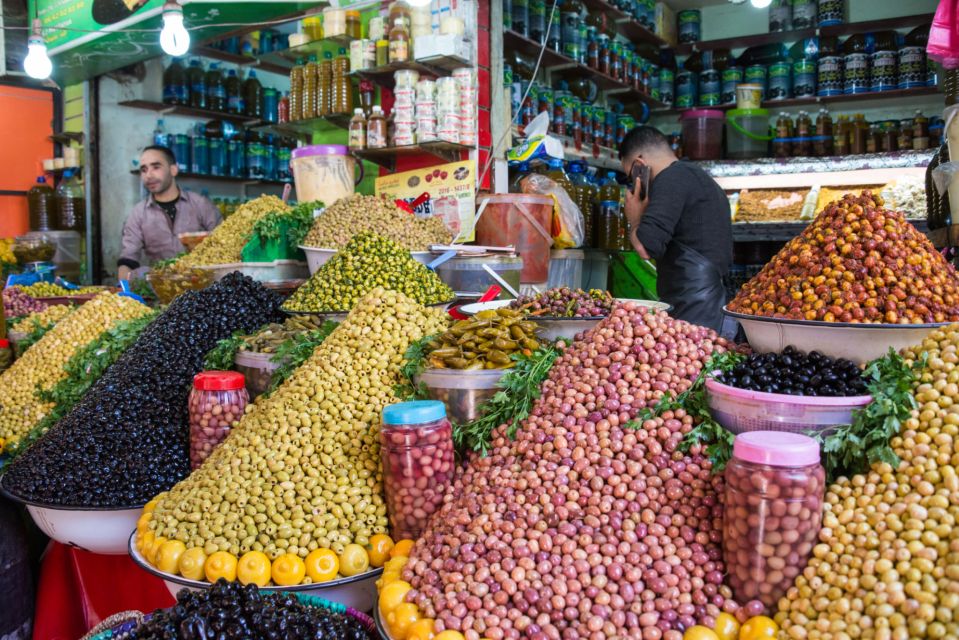
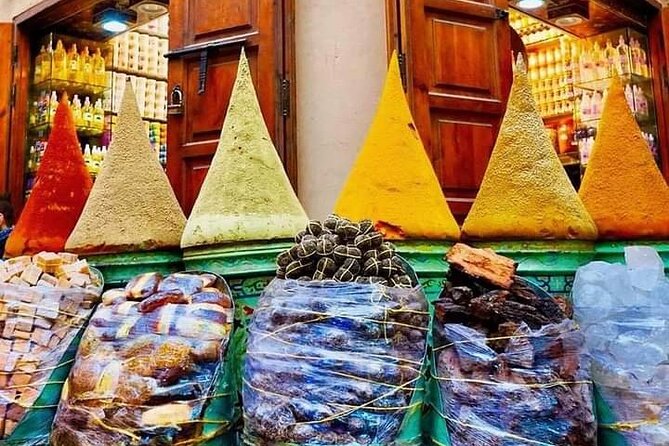
After the big square, you shift into the smaller, more maze-like souks area near Rue Semmarine, often centered around Rahba Kedima. The tour describes it as a warren of alleys packed with small shops, where you can find things like leather slippers, ceramics, and jewelry.
Here’s the value: a souk can be fun, but it can also become expensive and tiring if you’re not sure what you’re looking for. Having a guide in the mix helps you understand what certain items represent, how the area is organized, and what’s reasonable to browse without turning your afternoon into a bargaining marathon.
Also, it’s a photo-friendly stretch. The tour highlights the idea of photographing riad doors—those carved, often beautifully detailed doorways that look like entrances to entirely different worlds. Even if you don’t end up buying anything, these streets give you visuals that are genuinely Marrakesh.
Marrakech Herboristerie: spices and natural products, explained on the ground
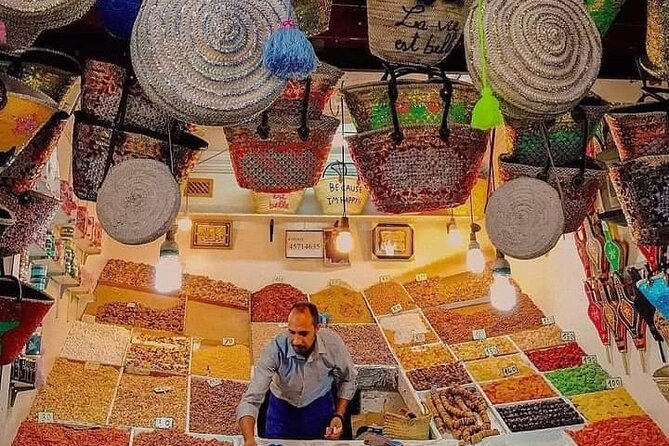
One stop that feels both cultural and useful is the Marrakech Herboristerie herbalist shop, with about 30 minutes. Entry is listed as free for this stop.
This isn’t just a random shopping stop. You’ll see how the shop frames its offerings—dried plants, spices, medicinal herbs, essential oils, and natural cosmetics. The shop also explains selection criteria such as high concentration of active particles, good assimilability by the body, and an emphasis on avoiding chemicals, synthetic additives, and preservatives, plus a preference for organic products where possible.
A quick reality check: herbal products are still products, and marketing language is marketing language. But if you’re curious, this stop is a good way to ask questions in plain terms and see what’s actually sold and how it’s presented.
If you want souvenirs that aren’t just magnets, this is a practical option. Think of it as a chance to buy things that match the story of the city—spices you’ll actually cook with, or oils/cosmetics you’ll use at home.
Medersa Ben Youssef: the ticket stop to plan for
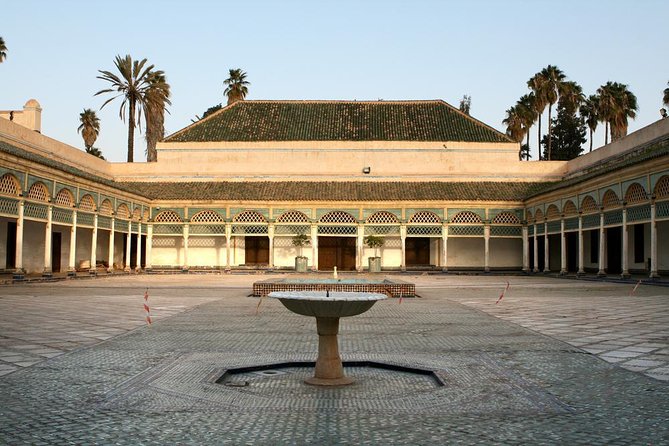
The final major cultural anchor on the walk is the Medersa Ben Youssef. It’s listed as about 20 minutes, and importantly, admission is marked as not included.
This is worth planning for because it changes the real cost of the tour. You pay $25.55 for the guided experience, but you may need to budget extra at this stop. If you’re trying to keep spending tight, this is the one item to remember.
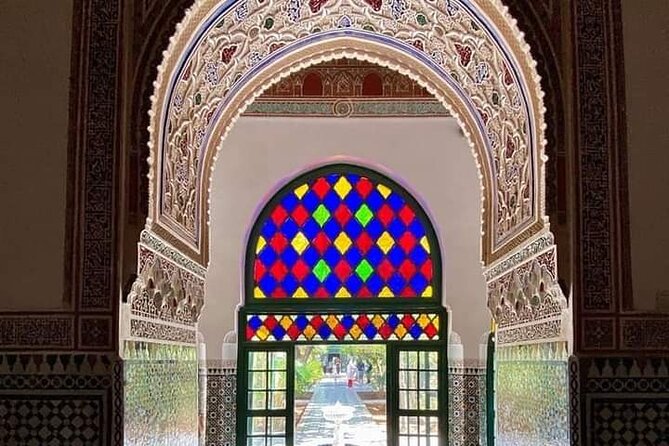
That said, it’s a strong note to end on. Islamic madrasas are architecture-plus-instruction spaces, and even a short visit gives you a sense of how learning was built into public life in past centuries. If you’re the type who likes stepping into buildings and letting them teach you through design, don’t rush it.
Duration, walking pace, and what to wear
The tour duration is listed as roughly 1 to 4 hours, so expect some variation depending on your chosen time slot, group pace, and how long you stop for photos or questions.
It’s described for travelers with moderate physical fitness. Translation: you’ll walk, you’ll be on uneven or busy pedestrian routes, and you’ll want shoes that don’t punish you by hour two. If you’re prone to blisters, bring blister care.
Also remember: the experience includes WiFi on board, which suggests there may be short transit segments during the half day, not just pure walking the whole time. Still, most of the value is in the strolling and orientation, especially inside the medina lanes.
Price value check: what $25.55 buys you in Marrakech
At $25.55 per person, this tour sits in the “smart first-day spending” category. You’re getting a local guide, a structured route that covers major landmarks, and a plan that helps you avoid wasting hours walking in circles.
Included:
- Local guide
- WiFi on board
Not included:
- Alcoholic beverages
- All fees and taxes
- Breakfast and dinner
- Private transportation
Plus, you should plan for possible extra spending at the Ben Youssef Madrasa since that admission is not included. The good news is several major stops are listed with free entry (Koutoubia Mosque, Bab Agnaou, Jemaa el-Fnaa, the herbalist shop).
So the real value equation is: you’re paying for the steering wheel. In Marrakech, a good half-day guide can save you the cost of frustration, time lost, and wrong turns.
Who this tour suits best
This works especially well if:
- You want a medina overview without getting lost
- You like asking questions and getting straight answers
- You’re planning to explore on your own afterward and want a map in your head
- You prefer group tours that stay under control (max 20 people)
It’s less ideal if you hate walking, want a slow museum-style pace, or you’re mainly looking for a fully ticketed, all-in-one paid entry day. This tour is built around orientation and culture, not a long series of indoor attractions.
Should you book Marrakech City Tour By Jamal?
If you’re in Marrakesh for a short time, I’d book this. It’s not trying to do everything. It does the smart things—Koutoubia for orientation, Jemaa el-Fnaa for city pulse, and the medina streets in between—while giving you enough context to enjoy what you see after the tour.
Book it if you’ll benefit from a guided path and you want your second day to feel easier. Just make sure you arrive on time at the start, wear comfortable shoes, and budget extra for Ben Youssef Madrasa entry since it isn’t included.
FAQ
How long is the Marrakech City Tour by Jamal?
The tour is listed as about 1 to 4 hours, depending on the group and pacing.
What does the tour cost?
The price is $25.55 per person.
Is it a morning or afternoon tour?
You can choose either the morning or the afternoon for this half-day tour.
What’s included in the price?
The tour includes a local guide and WiFi on board.
What’s not included?
Not included are alcoholic beverages, all fees and taxes, breakfast, dinner, and private transportation. Also, admission to Medersa Ben Youssef is not included.
Where does the tour start and end?
It starts at Kubba Fatima Zohra (J2F4+WQ8, Marrakesh 40000) and ends back at the same meeting point.
How big is the group?
The maximum group size is 20 travelers.
Do I need good weather for this experience?
Yes. It requires good weather, and if it’s canceled due to poor weather, you’ll be offered a different date or a full refund.
Is there free cancellation?
Yes, you can cancel for free up to 24 hours in advance for a full refund. If you cancel less than 24 hours before the start time, the amount paid is not refunded.