REVIEW · MARRAKECH
Marrakech: 4 hrs City Tour with licensed tour guide
Book on Viator →Operated by Tour Guide Sallam · Bookable on Viator
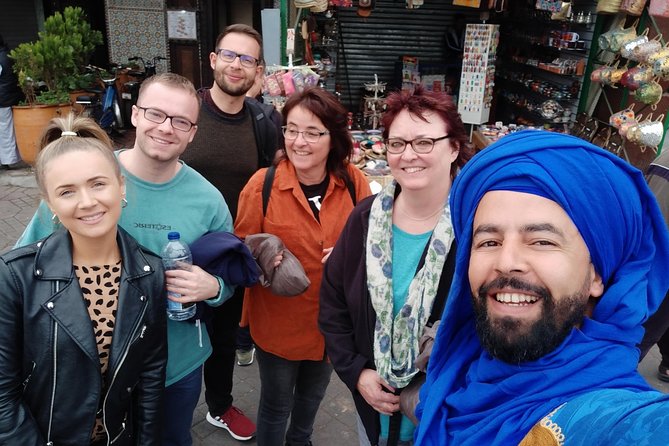
Marrakech’s medina is a maze worth mastering. This licensed guide walk keeps you moving through the old city’s narrow lanes with context, not just photos. I love that the route hits major landmarks like Koutoubia Mosque and Ben Youssef, and I love that Sallam talks history through real questions about faith and daily life. The one drawback: it’s a walking tour, and the medina streets can feel slow-going if you’re not used to uneven ground.
This is a small-group experience, with a max of 20 people, so the pace stays human. Mobile ticket convenience is built in, and you also get an included herb pharmacy stop—handy if you’re curious about traditional remedies. Just know the Ben Youssef Madrasa has an extra admission fee you’ll pay on the way.
In This Review
- Key things I’d plan around
- Why Marrakech’s Medina Works Better With a Guide
- Start at Koutoubia Mosque: Almohad roots and a skyline you can spot
- Ben Youssef Madrasa: where education shaped power
- Souk Semmarine: a market stop that stays focused
- Jemaa el-Fnaa: food, sellers, and the energy of the square
- The herb pharmacy visit: what’s included and how to make sense of it
- Walking comfort, timing, and group size that actually matter
- Price and value: what $30.06 buys in Marrakech
- Cultural context you can feel, not just facts you recite
- Should you book this Marrakech medina walk?
- FAQ
- How long is the Marrakech city tour?
- What does the tour cost?
- Who is the guide for this experience?
- What are the main stops on the walk?
- Is the Ben Youssef Madrasa admission included?
- What’s included besides the guided sightseeing?
- Is this tour mostly walking?
- How big are the groups?
- Is admission mentioned as free for any stops?
Key things I’d plan around
- A licensed guide who actually explains the why, not just the what, including religion and the city’s political context
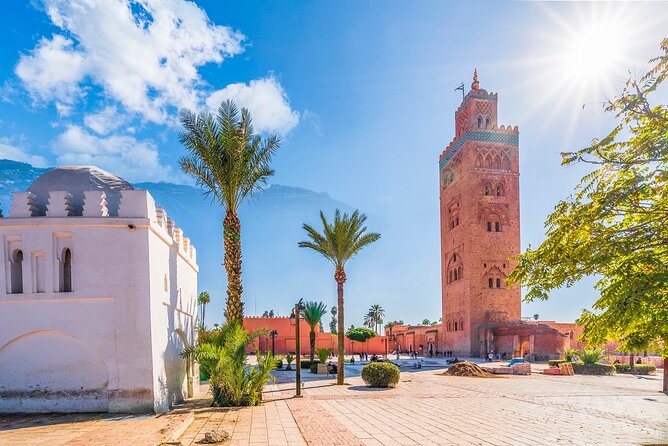
- Koutoubia Mosque’s 77-meter minaret and Almohad architecture details that make the skyline make sense
- Ben Youssef Madrasa as Morocco’s study-life peak point, with a clear story of how it was commissioned and named
- Souk Semmarine for a focused market taste—leather goods, herbs and spices, textiles, and jewelry
- Jemaa el-Fnaa as the people-and-food square where you can slow down, look around, and take it all in
- Herb pharmacy visit included, so you’re not stuck figuring it out on your own
Why Marrakech’s Medina Works Better With a Guide
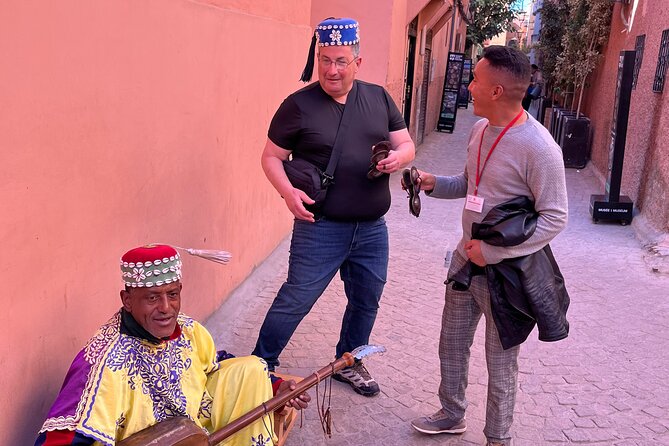
Marrakech can overwhelm you fast. The medina is full of twists, blind corners, and sudden changes of scene—one street is stone and silence, and the next is a wall of smells and voices. Having Sallam with you helps you get your bearings fast, which means you spend less time retracing steps and more time seeing what matters.
I also like that this isn’t presented as a museum tour. You’re walking through the working parts of the old city, so the experience is about how people live around these historic buildings. And Sallam’s style comes through in the way he handles questions. People pick up that he’s patient, respectful, and good at steering conversations toward what you actually want to know—history, culture, religion, geography, and even politics.
One practical note: the tour runs about 1 to 4 hours depending on the group and pace. If you’re tight on time, you’ll still get the core highlights without feeling rushed. If you have a bit of flexibility, you’ll enjoy the longer end of the walk because there’s more time to slow down at arches, doors, fountains, and the little architectural details that are easy to miss on your own.
You can also read our reviews of more guided tours in Marrakech
Start at Koutoubia Mosque: Almohad roots and a skyline you can spot
You begin at Koutoubia Mosque, one of those landmarks you can often see from different parts of Marrakech. It matters because it anchors your whole understanding of the medina. The mosque’s story starts with the Almohads: the first version was founded in 1147 right after the Almohad caliph Abd al-Mu’min took Marrakech from the Almoravids. A second mosque was rebuilt around 1158, and the current minaret is associated with possible final construction around 1195.
Now look up. The minaret is 77 meters tall and decorated with geometric arch motifs, capped with a spire and metal orbs. The tour frames these designs as a clue to broader Moroccan mosque architecture—and notes that the minaret’s influence may have spread to famous buildings like Seville’s Giralda and Rabat’s Hassan Tower.
What I like here is the timing: you’re not yet tired from hours of walking, so you can actually take in the scale. If you’re someone who usually skips mosque exteriors because you think you’ve “seen it all,” this stop is worth sticking with. The architecture details are the payoff, and Sallam’s explanations help you look at the building like a puzzle with answers.
Ben Youssef Madrasa: where education shaped power
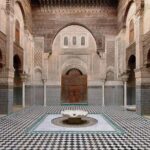
Next is Medersa Ben Youssef, and this is where the tour shifts from city landmark to big intellectual history. This madrasa is described as the largest Islamic college in the Maghreb at its peak, and that claim changes how you interpret the building. It’s not a small chapel. It’s a major study center—meant to train people, shape scholarship, and build influence.
The name connects it to the nearby Ben Youssef Mosque, built by the Almoravid Sultan Ali ibn Yusuf in the early 12th century. Then the madrasa itself came later: it was commissioned by the Saadian Sultan Abdallah al-Ghalib in the 16th century. So you get a layered timeline—Almoravid origins nearby, Saadian revival and expansion, and an eventual life as a historical site you can still visit today.
One important value point: the Ben Youssef Madrasa admission is not included in the main price. The data says it costs 5€ per person, while other stops in the walk are marked as free. If you’re budgeting, factor that in up front. If you’re fascinated by how cities organize knowledge, this is one of the stops you’ll feel glad you paid extra for.
The main catch is timing. The tour assigns about 30 minutes here. If you’re a slow reader or you like to sit with details, you might want to arrive with the mindset that you’ll catch the big story and key visuals rather than every inscription and corner.
Souk Semmarine: a market stop that stays focused
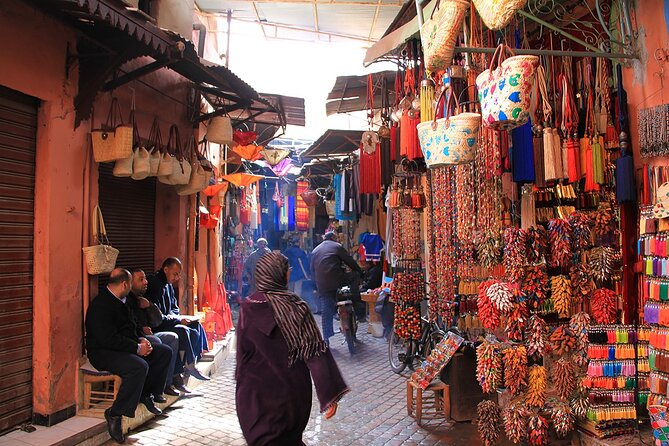
Souk Semmarine is your change of pace. Marrakech’s souks can be an overwhelming blur if you’re wandering without a plan, but this stop keeps it practical: it’s about seeing the market as a living system.
This is where the tour steers you toward typical categories you can quickly recognize—leather goods, herbs and spices, textiles, and jewelry. Even if you’re not buying anything, you’ll learn how these trades cluster and how people move through the space. The guide helps you read the market instead of just getting pulled along by it.
I also like that this stop is positioned between two major landmarks. It’s not just a break; it’s a bridge from architecture to everyday life. After you’ve stared at geometry and study halls, the souk shows you how craft and commerce keep the city functioning.
Expect about an hour here. That’s enough time to walk, look closely at materials, and ask questions without turning the whole day into shopping-only mode.
Jemaa el-Fnaa: food, sellers, and the energy of the square
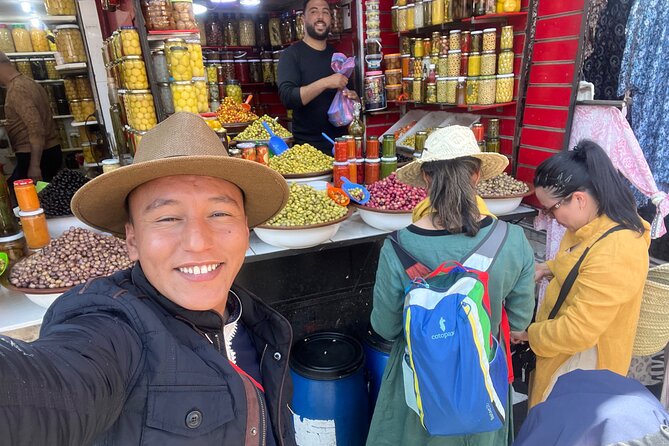
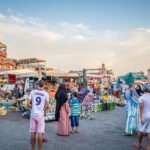
Then you head to Jamaa El-Fnaa, Marrakech’s main square. It’s famous for street vendors and the way it pulls together food and everyday street life. In practical terms, it’s a great place to pause and let the city happen around you.
You get about 30 minutes here. That may sound short, but it’s often the right length because this square can get loud and crowded. If you want a balanced experience, use the time to watch how vendors work, notice the flow of people, and find a spot where you can actually see what’s going on without standing in the middle of traffic.
This stop also works well for photos and for understanding Marrakech’s rhythm. The square is one of those places where history is not behind glass—it’s in the habits of the city. And with a guide, you can translate what you’re seeing into something you understand, rather than just letting it be noise.
You can also read our reviews of more city tours in Marrakech
The herb pharmacy visit: what’s included and how to make sense of it
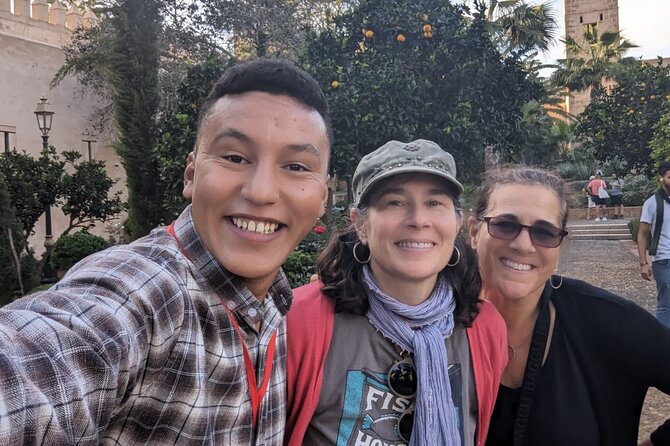
An included herb pharmacy visit is part of this experience, and it’s a smart add-on for two reasons. First, it gives you a tangible connection to traditional medicine and local knowledge systems. Second, it breaks up the walk with a change of sensory input from alleys and stone to a place where herbs are the main story.
The details you can expect aren’t spelled out beyond the fact that the pharmacy visit is included. So treat it like a short cultural stop where you can ask questions, learn what’s used, and decide for yourself what sounds credible versus what feels like marketing.
If you do plan to buy anything, the usual medina rule applies: take your time, ask what it is, and make sure you understand how it’s used. If you just want the learning moment, you can keep it simple and use the stop to ask the guide what you should know before spending money.
This is also one of the places where having Sallam with you matters. Guides who know how to handle interactions can help you avoid feeling pushed around. The tour’s emphasis on safety advice and respectful navigating comes through in the way he interacts with people around the route.
Walking comfort, timing, and group size that actually matter
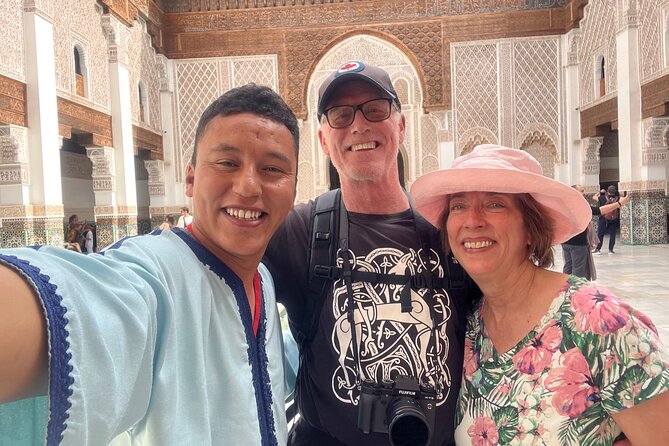
This tour is designed around walking inside and through the medina’s narrow alleyways. That means your comfort depends on three things: your shoes, your patience for uneven ground, and how long you can stand without losing the plot.
The fitness level requirement is described as moderate. So if you’re comfortable walking several blocks on uneven streets, you’ll probably be fine. If not, plan to take small breaks when you can, and don’t treat every stop as something you have to rush through.
Group size is capped at 20 travelers, which is a good ceiling for a medina experience. In a smaller group, the guide can keep track of everyone at crossings, when lanes get tight, or when someone needs a moment to regroup. Based on what’s shared about Sallam’s approach, he’s also good at managing the flow with calm confidence, which helps a lot in crowded, sensory-heavy spaces.
Timing-wise, the tour is listed as 1 to 4 hours. For a city like Marrakech, that flexibility is useful. If you want the compact highlights, aim closer to the shorter end. If you want to linger at arches, riad doors, and fountain details mentioned in the tour description, give yourself the longer window.
Price and value: what $30.06 buys in Marrakech
$30.06 per person is the baseline price, and I think it’s fair if you care about two things: context and route efficiency. In Marrakech, a licensed guide who can interpret what you’re seeing can save you time and confusion—especially in the medina where landmarks pop up in unexpected ways.
Here’s where the value becomes clear in the math:
- Koutoubia Mosque is marked as free for admission.
- Souk Semmarine is also marked free.
- Jamaa el-Fnaa is marked free.
- Ben Youssef Madrasa is the one paid admission stop, listed as 5€ per person.
So your main extra cost is the madrasa entry, which you’d likely pay anyway if you want to see the standout education site. The included herb pharmacy stop also adds value, because it’s not something everyone plans to do on a first day.
For me, the best value part is Sallam’s communication. Multiple comments highlight that his English is strong and that he’s patient—answering questions about history, culture, religions, geography, and politics. That’s the difference between a “look-and-go” experience and one where you understand what you’re looking at when the tour ends.
Cultural context you can feel, not just facts you recite
What makes this tour feel different is the way the guide connects buildings to people and to belief systems. You’ll hear about architecture styles, sure—like Almohad influences at Koutoubia—but you’ll also get broader context on Morocco’s mix of cultures and traditions.
This matters because Marrakech isn’t just one thing. It’s a working city with religious practice, craft traditions, and political history all layered together. In the best moments, you’ll hear explanations that make you look twice at small details—horseshoe arches, riad doors, fountains—because they’re not random decoration. They’re part of a shared visual language.
Also, Sallam’s approach seems to reduce friction. Comments describe him as respectful, with good safety advice and suggestions, and someone who helps navigate interactions with ease. That’s not a small point in a medina. If you’ve ever felt overcharged or unsure who to trust, you know why a calm guide helps.
And yes, there’s a human touch too. One comment notes he has a dessert blues playlist. It’s the kind of detail that turns a walk into something you actually remember later, not just something you got through.
Should you book this Marrakech medina walk?
Book it if you want a structured, high-impact introduction to old Marrakech without spending hours figuring out where to go next. This works especially well for first-timers, people who like understanding context (not just sightseeing), and anyone who appreciates a guide who speaks clear English and handles questions with patience.
Skip it if your idea of a great tour is long, quiet exploration with zero schedule. This is time-bound—about 30 minutes in Ben Youssef, 1 hour in the souk area, and short stops at the big square—so it’s not built for slow wandering all day.
If you’re on the fence, here’s my practical rule: if you’ll be using Marrakech for more than one sightseeing day, this medina walk is an efficient way to get your bearings. Once you understand the city’s major landmarks and the logic of the medina, the rest of your time feels easier.
FAQ
How long is the Marrakech city tour?
It runs about 1 to 4 hours.
What does the tour cost?
The price is listed as $30.06 per person.
Who is the guide for this experience?
The tour guide is Sallam.
What are the main stops on the walk?
You’ll visit Koutoubia Mosque, Medersa Ben Youssef, Souk Semmarine, and Jamaa El-Fnaa.
Is the Ben Youssef Madrasa admission included?
No. The Medrassa Ben Youssef admission is listed as 5€ per person.
What’s included besides the guided sightseeing?
An herb pharmacy visit is included.
Is this tour mostly walking?
Yes. It involves walking through the medina’s narrow alleyways, and it’s recommended for a moderate physical fitness level.
How big are the groups?
The tour has a maximum of 20 travelers.
Is admission mentioned as free for any stops?
Koutoubia Mosque is listed as free admission, and Souk Semmarine and Jamaa El-Fnaa are also listed as free.
Would you like me to tailor this review to your travel style—first time in Marrakech, photography focus, or religion/history interest?