REVIEW · FEZ
Half-Day Private Guided Walking Tour in Fez Medina
Book on Viator →Operated by Cultural Medina Tours · Bookable on Viator
Fez clicks faster with a guide. This half-day private walking tour helps you connect the dots across the UNESCO medina in Fez, from major religious landmarks to the hands-on craft streets. You get a route built for walking, plus the freedom to slow down where you want.
What I like most is the guide’s style: in this tour, guides such as Hicham (and other guide names you might be paired with, like Abdil/Abdul) are praised for clear English, patience, and a sense of humor that keeps the whole walk fun. I also love that the plan mixes headline sights with working-city details, so you’re not just staring at monuments—you’re seeing how people make and sell things.
One thing to plan for: several stops have small entrance fees (20 DH) that are not included, and some religious sites have access limits for non-Muslims. Also, Fez medina walking involves lots of steps and tight streets.
In This Review
- Key things to know before you go
- A Private Walking Tour That Helps You Read Fez
- Price and What You’ll Actually Spend in Fez
- Bab Boujloud and the Mellah: Starting with a Key Landmark
- Al-Attarine Madrasa: Islamic Architecture You Can Feel
- Moulay Idriss II Shrine: Respect, Rules, and Context
- Kairaouine Mosque From the Outside: Seeing Without Entering
- Cherratin Medersa: Another Courtyard Worth the Fee
- Medina of Fez and Artisan Workshops: More Than Souvenirs
- Fontaine Nejjarine: Woodwork and Craft Culture Indoors
- Chouara Tannery: Traditional Leather, Dye, and Strong Atmosphere
- Place Seffarine and Place R’cif: Artisan Squares and Daily Trading
- Coffee and Tea: A Small Included Break That Helps You Keep Going
- Pace, Planning, and Who This Tour Fits Best
- A Note on Private Guides and Real-World Flexibility
- Should You Book This Fez Medina Walking Tour?
- FAQ
- How long is the private guided walking tour in the Fez medina?
- What is included in the price?
- Are entrance fees included for all stops?
- Does the tour include lunch?
- Is this tour private?
- Are pickup and drop-off included?
- Can non-Muslims enter the mosque or shrine stops?
- What is the cancellation policy?
Key things to know before you go
- Private guide pace: you can ask questions and adjust the route during the walk
- Craft focus: workshops for tiles, textiles, pottery, and metalwork (not just photo stops)
- UNESCO medina coverage: major waypoints plus the everyday routes between them
- Tannery viewing: a look at traditional leather dyeing and tanning practices
- Some sites cost extra: a few are 20 DH each and religion rules affect entry
A Private Walking Tour That Helps You Read Fez
Fez medina can feel like a maze until someone shows you the logic. Streets braid together, signs repeat, and landmarks pop up only after you’ve already turned three times. This tour’s real value is that you walk with a guide who understands the neighborhood rhythm and can explain what you’re seeing while you’re still in the scene.
Because it’s private, you’re not stuck matching the pace of a group that moves as one unit. You can spend longer at the places that grab you—craftwork corners, quiet courtyard architecture, or the working streets around the artisan squares. And you can use the walk to get oriented fast, so later self-guided wandering makes more sense.
Guides in the reviews are repeatedly described as patient and funny, with strong English skills and a local perspective. That matters here, because Fez is not a quick “see it, done” city. It rewards questions and context.
You can also read our reviews of more walking tours in Fez

Price and What You’ll Actually Spend in Fez
The tour is $25 per person for about 4 hours, and it includes pickup and drop-off (hotel/riad), plus coffee and/or tea. That’s a solid deal in a city where a good local guide can easily make the difference between wandering aimlessly and understanding what matters.
But here’s the practical part: not everything is included. Several sites require separate payments of 20 DH per person, and those add up if you end up going into every fee-based stop your guide includes:
- Al-Attarine Madrasa (20 DH)
- Cherratin Medersa (20 DH)
- Fontaine Nejjarine / Funduq al-Najjarin (20 DH)
Other major religious stops are listed as free, but entry rules still apply (more on that below).
If you’re budgeting, I’d treat the base tour cost as the guide + walking plan + tea, and then keep a little cash ready for the paid entrances. Also note: this experience mentions a mobile ticket, which usually makes day-of check-in easier.
Bab Boujloud and the Mellah: Starting with a Key Landmark
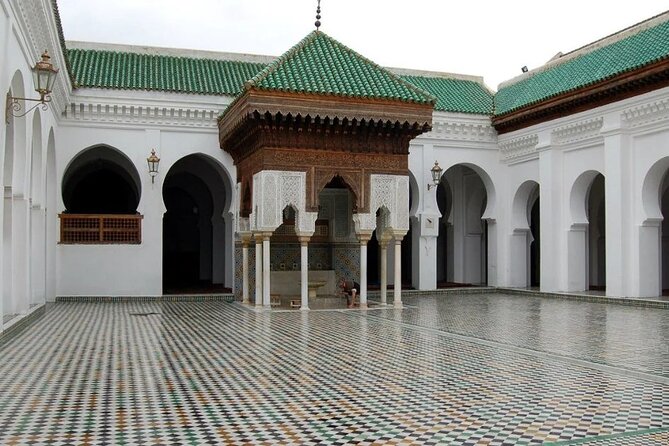
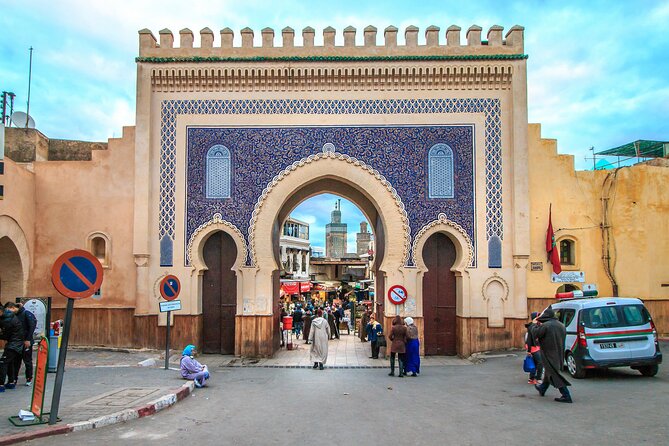
The tour typically kicks off at Bab Boujloud, also called the Blue Gate. This is the kind of threshold you remember even after you leave it. The ceramic work and color scheme give you a visual anchor right at the start, and it’s a helpful way to orient your eyes before the medina turns into a maze.
From there, you move toward the Mellah, Fez’s historic Jewish quarter. Even if you don’t go inside every storefront, the area’s market energy and cultural layers help you understand that the medina isn’t only about one era or one community. Your guide’s job here is to explain the connections—where people lived, how trade routes worked, and why the quarters developed the way they did.
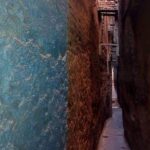
A small practical note: the walk between sights inside the medina can be quick in distance, but slow in pace. Expect narrow lanes and turns that take you through dense local life.
Al-Attarine Madrasa: Islamic Architecture You Can Feel
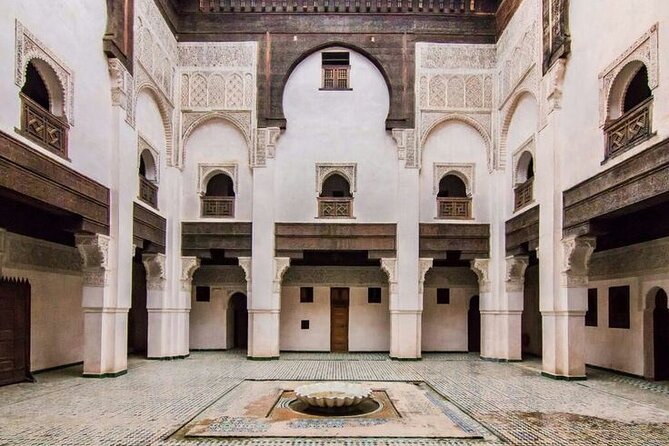
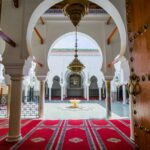
Next up is the Al-Attarine Madrasa, built in 1325. Even the way it’s described tells you what to look for: intricate tile work and a courtyard that acts like a calm pause inside the busy streets outside.
This is one of the stops that requires an entrance fee (20 DH per person). If you’re the type who enjoys architecture details—tiling patterns, layout, and how space is used for learning—this stop is likely to land well.
One practical drawback to keep in mind: madrasas and religious education buildings are not always set up for leisurely tourism wandering. If you’re wearing clothes that are too revealing, you might feel rushed while adjusting. Plan simple, modest layers, and you’ll move more smoothly.
Moulay Idriss II Shrine: Respect, Rules, and Context
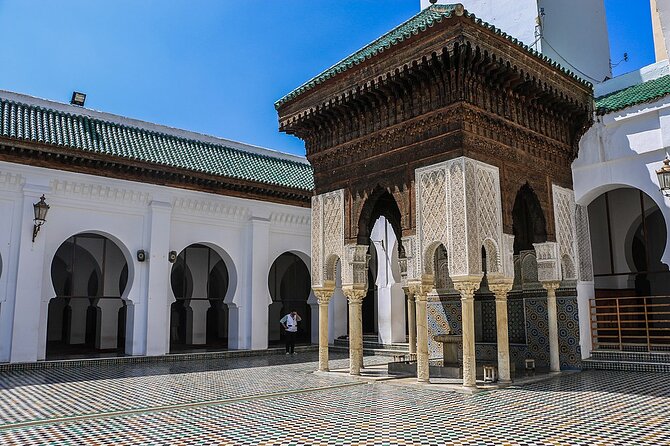
The tour then heads to the Zaouia of Moulay Idriss II, a sacred shrine in Fes el-Bali. This is the tomb site of Moulay Idriss II, credited as a founder figure for Fez. Even if you’re only able to view what your access rules allow, the guide’s context makes the site click into place.
The information provided is clear: entrance is restricted to Muslims. That doesn’t make it a wasted stop. With a guide, you can still understand why the shrine is central to Moroccan spiritual life, and you’ll likely get a better sense of how faith and city structure overlap here.
When access is limited, I’d treat it like a viewpoint stop rather than a “must go in” stop. You’ll still learn what you came for.
You can also read our reviews of more guided tours in Fez

Kairaouine Mosque From the Outside: Seeing Without Entering
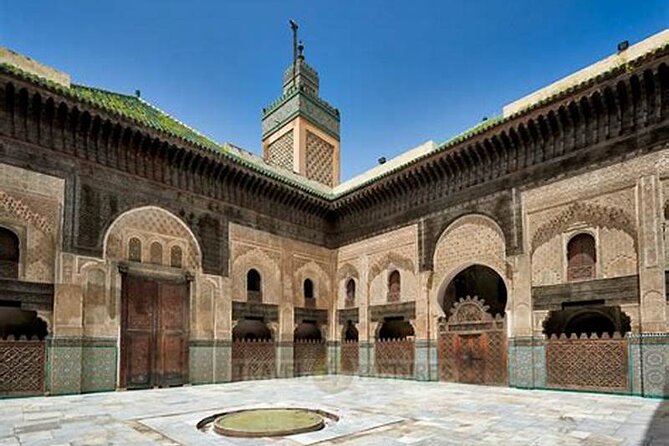
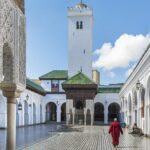
Another religious landmark on the route is the Kairaouine Mosque, one of the oldest universities in the world and a major learning center. The catch is that non-Muslims are not permitted entry.
So what do you do? You focus on what you can actually observe: the architectural lines, the presence, and how the building’s status shapes the area around it. Your guide can connect it back to how Islamic learning traditions formed in Fez over centuries—without you needing to step inside.
This is also a good spot to remember practical etiquette. Even if you’re not entering, keep your voice low, dress modestly, and avoid blocking walkways for people who live and work nearby.
Cherratin Medersa: Another Courtyard Worth the Fee
You’ll also visit the Cherratin Medersa, constructed in 1670 under Sultan Al-Rashid Ben Ali Al-Charif. Like Al-Attarine Madrasa, this is a stop that leans into traditional Moroccan architecture and educational heritage.
It carries a 20 DH per person entrance fee. If you’re thinking, “Do I need two madrasas?”—for many people, yes, because they show how style and function overlap across different periods. It’s not a carbon-copy experience. The courtyard feel and tile/woodwork approach can differ enough to feel like a second lesson.
If you’re short on time or entrance fees, you can ask your guide about priorities. Since it’s private, you’re not locked into a one-size schedule.
Medina of Fez and Artisan Workshops: More Than Souvenirs
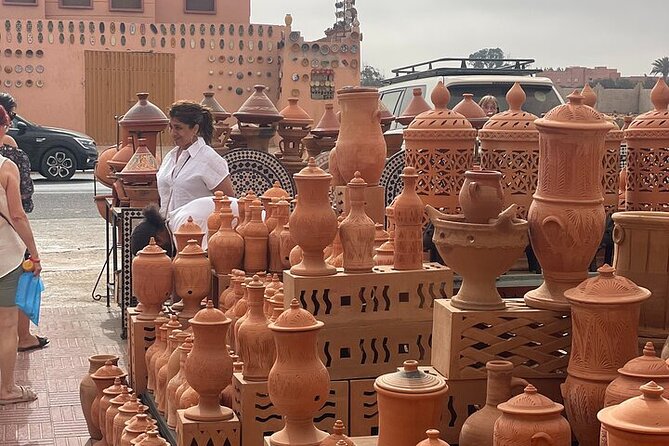
The heart of the experience is time in the Medina of Fez, including visits to artisan workshops. Here’s what matters: you’re not only shopping. You’re learning how techniques are passed down, and you’re seeing the materials and tools that shape the final product.
On this route, you may encounter workshops connected to:
- mosaic tiles
- textiles
- pottery
- brass and copper items
It helps to understand what you’re seeing as part of a work system. In Fez, crafts aren’t just products. They’re jobs, pride, and daily routines. A guide’s commentary turns a shopfront into a story you can follow.
I also like that this portion is long enough to feel like you’ve stopped and watched, not just passed through. For many first-time visitors, this is the best chance to ask practical questions about quality, materials, and what makes one item different from another.
Fontaine Nejjarine: Woodwork and Craft Culture Indoors
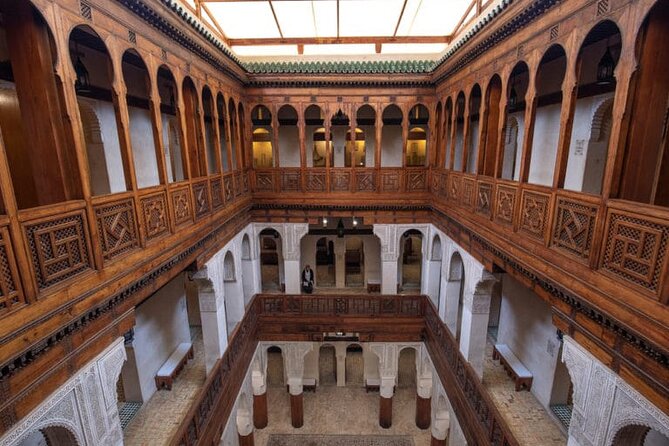
Next comes Fontaine Nejjarine, connected to Funduq al-Najjarin, a restored riad. The tour description frames it as both a traditional woodworking showcase and a museum with exhibits on Moroccan arts and culture.
This is another paid stop (20 DH per person). I see it as a smart middle ground. You get an indoor look at craftsmanship and cultural context after time outside in the lanes. If you want a break from sun and crowds, this is a good pause.
A practical tip: treat this like a museum stop. Take your time with details. If you rush, you miss why the woodworking and restoration work are worth your entrance fee.
Chouara Tannery: Traditional Leather, Dye, and Strong Atmosphere
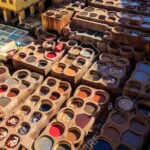
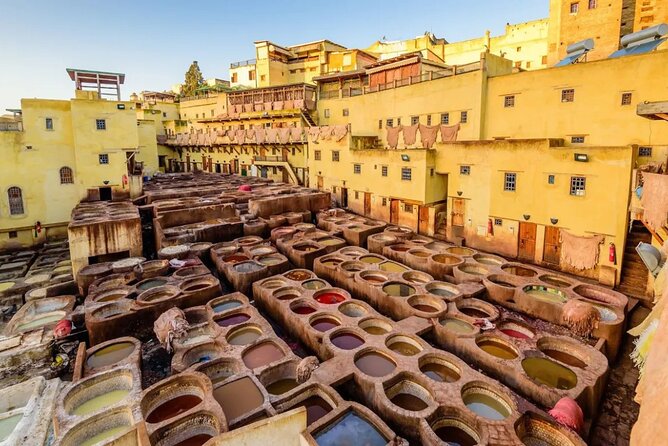
The tour then goes to Chouara Tannery, described as one of the oldest and largest tanneries in Fez. You’ll see the traditional leather-tanning process and the dyed hides with bright colors.
The information here doesn’t sugarcoat it: tanning is a real industrial craft, and it involves a strong visual process. Plan for the realities of watching work that’s centuries-old. Even if you don’t enter any specific shop areas, you’ll experience the tannery as a living production space.
If you’re sensitive to smells, wear shoes you can tolerate for longer indoor/outdoor transitions, and expect the scent to be part of the environment. If you don’t mind that tradeoff, this stop is often a highlight because it’s one of the most iconic Fez experiences that still happens the traditional way.
Place Seffarine and Place R’cif: Artisan Squares and Daily Trading
After the tannery, you reach Place Seffarine and then Place R’cif, two squares that function as community hubs.
- Place Seffarine is linked to brass and copper craftsmanship. You can watch artisans at work shaping and etching designs.
- Place R’cif is a gathering place with market stalls and traditional architecture around it.
What I like about these stops is that they show Fez as a working city, not a theme park. Even if you don’t buy anything, you can see how artisans carve out a daily presence in public spaces.
If you’re in shopping mode, your guide can help you navigate without feeling pressured. If you’re not shopping, you can still use the squares as a place to rest your feet, people-watch, and absorb how the medina functions at street level.
Coffee and Tea: A Small Included Break That Helps You Keep Going
This tour includes coffee and/or tea. It sounds minor, but it’s a smart travel detail in a walking tour.
After hours of turning corners, sitting down with tea gives you a rhythm reset. You can also use that moment to ask the guide follow-up questions you might’ve missed earlier. And if you’ve paid separate entrances (20 DH stops), the tea break is a nice time to slow down and recalibrate.
Pace, Planning, and Who This Tour Fits Best
This experience is described as most travelers can participate, and it’s near public transportation. The big requirement is simply that you can handle walking through uneven, narrow medina streets for a few hours.
Who it fits best:
- First-time visitors who want the fastest route to key Fez sights without losing their way
- People who like crafts and want to see the real process, not just finished items
- Anyone who wants a guided explanation of religious and historical context, with access limits clearly handled
If you’re someone who hates walking, you might find the medina route tiring. Since the tour is walking-based and private, the benefit is you can ask for slower pacing—but you still have the medina terrain.
A Note on Private Guides and Real-World Flexibility
You’ll be on a private tour, meaning only your group participates. That matters in Fez because your interests can shift mid-walk. The guides associated with this experience are praised for tailoring the pace and content, and in at least one case the tour went longer than the listed duration once conversation and extra stops kicked in.
So if you’re the kind of traveler who likes to stop for questions, this format works well. The flip side: don’t pack a hard second appointment right after the tour. Build in a buffer.
Should You Book This Fez Medina Walking Tour?
Book it if you want a guided route that connects major Fez landmarks with craft culture, and you value a guide who can explain what you’re seeing in plain language. The private format, pickup/drop-off, and included coffee/tea make the basic package feel well set up for a first Fez afternoon.
Skip or reconsider if you:
- have limited interest in madrasas, religious context, and artisan work
- strongly prefer no extra site fees and no access limitations at religious sites
- can’t handle walking in tight medina streets
In most cases, this tour is a smart way to get oriented and then build on it the rest of your time in Fez with more confidence.
FAQ
How long is the private guided walking tour in the Fez medina?
It runs for about 4 hours.
What is included in the price?
The tour includes a professional local guide, coffee and/or tea, and hotel/riad pickup and drop-off.
Are entrance fees included for all stops?
No. Some stops list an admission fee of 20 DH per person, such as Al-Attarine Madrasa, Cherratin Medersa, and Fontaine Nejjarine.
Does the tour include lunch?
Lunch is not included.
Is this tour private?
Yes. It’s a private tour/activity, so only your group participates.
Are pickup and drop-off included?
Yes, pickup and drop-off (hotel/riad) are offered.
Can non-Muslims enter the mosque or shrine stops?
Kairaouine Mosque is not open to non-Muslims, and the Zaouia of Moulay Idriss II has restricted entrance to Muslims. Your guide can explain the sites even if you can’t enter.
What is the cancellation policy?
Free cancellation is offered. You can cancel up to 24 hours in advance for a full refund; within 24 hours there is no refund.