REVIEW · FEZ
Fez Full Day City Tour with Local Guide
Book on Viator →Operated by Salim Khettabi Filali · Bookable on Viator
Fez feels timeless in a single walk. This full-day guided loop through the old city of Fez el Bali takes you to the places that shaped Morocco’s Islamic learning and craft traditions, all within UNESCO’s historic medina zone. You start at the famous blue gate, then move through schools, fountains, mosques, and working workshops.
I especially like the mix of monuments plus everyday life. In just a few hours you see carved courtyards, a long medina street, and the kind of sensory craft you can’t fake—like the Chouara Tannery area. I also like the small group size (up to 15), which keeps the pace manageable and makes it easier to ask questions.
One heads-up: it’s a walking tour in tight medina lanes, and a few sights have paid entry (listed at 2 euros each), plus food and drinks are not included.
In This Review
- Key highlights you’ll actually feel on the ground
- From Bab Bou Jeloud to a medina rhythm you can follow
- Bou Inania Medersa and the art you can spot with your eyes
- Zaouia of Moulay Idriss II: where Fez’s origin story lands
- Al-Attarine Madrasa near Al-Qarawiyyin: education through design
- Place Seffarine, then Chouara Tannery: where the senses do the teaching
- Andalusian Mosque and the Royal Palace zone: faith and power nearby
- Mellah and Fes el-Jdid: the newer royal citadel and Jewish quarter
- Price and value: what $35.34 really buys you
- What the pacing feels like (and how to prepare)
- Who this Fez tour fits best
- Should you book this Fez full-day city tour?
- FAQ
- What time does the Fez tour start, and how long is it?
- Is pickup included?
- How much does the tour cost?
- What’s included in the tour price?
- Do I have to pay entrance fees during the tour?
- Does the tour include food or drinks?
- How big is the group?
- Where do I meet the guide?
- What if the weather is bad?
- FAQ
- Can I cancel for free?
- Can I reschedule if I change my mind?
- Do I need a printed ticket?
- Is the tour suitable for most people?
- When does the tour end?
Key highlights you’ll actually feel on the ground
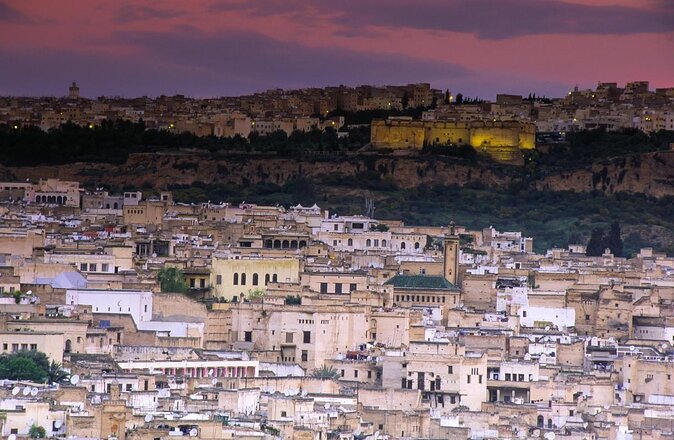
- Start at Bab Bou Jeloud and get quick orientation before the alleys swallow your sense of direction
- Bou Inania Medersa for the courtyard decoration—mosaics, marble, carved plaster, and woodwork
- Fontaine Nejjarine + Funduq al-Najjarin for the historic public fountain setting
- Zaouia of Moulay Idriss II to connect the city’s origin story to a major shrine visit
- Chouara Tannery with included entry, right in the older working quarter near Saffarin
From Bab Bou Jeloud to a medina rhythm you can follow
The tour starts at the post office meeting point in central Fez, with a 10:00 am start and a typical 5–6 hour day. That timing matters because you’ll want daylight for the medina lanes, plus enough hours to move from one “cluster” of sights to the next without rushing.
Bab Bou Jeloud is where everything gets real. This ornate gate is the grand entrance into Fes el Bali, and the current version was built by the French colonial administration in 1913. Even if you’ve seen photos before, standing under it helps you understand the medina’s layout—then your guide can set the story straight: where you’re headed, and why each stop connects to the next.
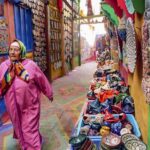
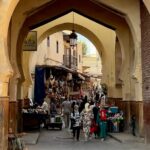
After that, you’ll walk into the older heartbeat of Fez with a key orientation street break at Rue Talaa Kebira. It’s one of the longest and most important streets in Fes el-Bali, running roughly east to west. It’s a nice change of pace because it gives your brain a straight line to work with before you slip back into narrower lanes.
You can also read our reviews of more guided tours in Fez
Bou Inania Medersa and the art you can spot with your eyes
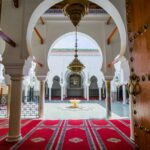
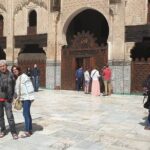
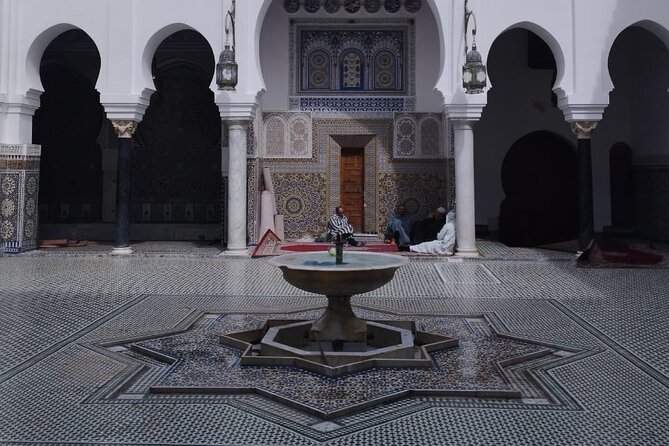
One of the best early stops is Bou Inania Medersa. The courtyard alone is worth the time: mosaics, marble, carved plaster, and woodwork create a visual “map” of what Islamic decorative art can look like up close. It’s listed as a 30-minute stop, and the entry fee is 2 euros per person (not included), so plan on that small add-on.
The value here isn’t just pretty details. It’s how Fez teaches through space. Courtyards, inscriptions, and ornament aren’t random decoration; they’re part of a design language that signals learning, status, and devotion. Even if you’re not the type to read inscriptions for an hour, you can still follow the logic by watching how people use the buildings and how the guide explains what you’re seeing.
From there you’ll move toward the Fontaine Nejjarine area. This is tied to Funduq al-Najjarin, a historic funduq—think of it as a caravan-supporting mercantile building used historically by tradespeople. The Nejjarine Fountain (a traditional public fountain) adds a grounded, local touch: you’re looking at a place meant for daily water needs, right in the middle of commerce. This stop is listed as 1 hour, with a 2 euro entry fee per person (not included).
Zaouia of Moulay Idriss II: where Fez’s origin story lands
Next comes the Zaouia of Moulay Idriss II, a 45-minute stop with admission included. Idris II ruled from 807 to 828 and is considered the main founder of Fez—so this visit is more than a photo stop. It’s where the city’s origin story becomes physical: shrine architecture, reverence, and the sense of continuity that keeps drawing people back.
If you’ve ever wondered why some cities feel like they’re built around ideas, this is one of the clearest answers in Fez. The city isn’t only about buildings; it’s about who is remembered, and how that remembrance guides daily life.
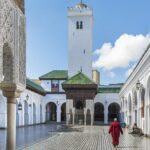
After that you continue into the learning-and-faith axis of the medina with a stop at Kairaouine Mosque / Al-Qarawiyyin. The university of al-Qarawiyyin is described as one of the leading spiritual and educational centers of the Islamic Golden Age, and it was founded as a mosque by Fatima al-Fihri in 857–859. This is a short visit (about 15 minutes) and listed as free, so don’t expect a long inside experience—do expect a strong orientation moment from your guide.
Al-Attarine Madrasa near Al-Qarawiyyin: education through design
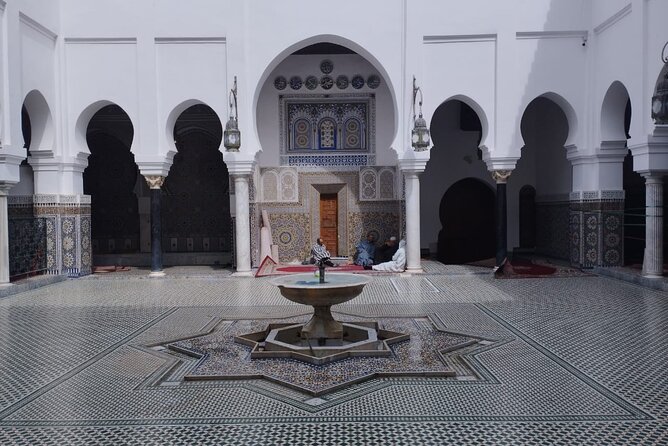
Right near Al-Qarawiyyin you’ll visit Al-Attarine Madrasa. It’s listed as a 1-hour stop, and entry is 2 euros per person (not included). The madrasa takes its name from Souk al-Attarine, the spice and perfume market, which is exactly the kind of connection that makes Fez feel “threaded” together.
The Marinid sultan Uthman II Abu Said built it in 1323–5, and that time period shows in the craftsmanship. Even if you only catch a few rooms and details, your guide can help you see the layout and explain the role these schools played—how education wasn’t separated from the city’s economy and neighborhoods.
If you want a practical tip: keep your camera ready but also look with your eyes first. Madrasas reward slow looking, and the details—carving, plasterwork, woodwork—often show up after you relax and stop hunting for the perfect shot.
Place Seffarine, then Chouara Tannery: where the senses do the teaching
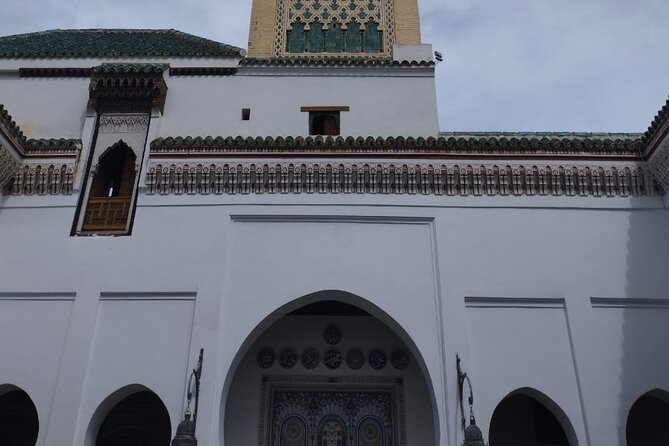
Place Seffarine is a small square near the Qarawiyyin Mosque, close to the Bou Khrareb River that runs through the heart of the medina. This is a useful pause in the itinerary because it’s a place to re-center before you head toward one of Fez’s most famous (and most distinctive) craft areas.
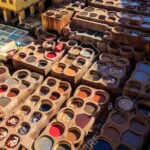
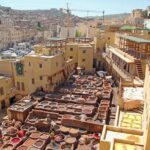
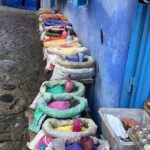
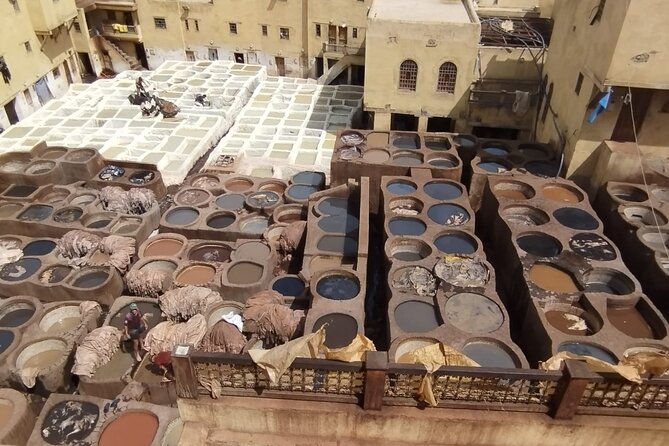
Then you reach Chouara Tannery, one of Fez’s three tanneries and the largest. It’s listed as a 30-minute stop, with admission included. This isn’t a museum presentation; it’s a working tannery area, which is why the experience can be intense. You’ll likely see processing steps, dye-related colors, and the way the tannery sits embedded within the city’s fabric.
A helpful mindset: treat it as a cultural and occupational snapshot. Your guide can help you understand what you’re looking at without turning it into a “shock-and-awe” stop. If you’re sensitive to strong smells, this may not be your favorite part of the day, but the stop is also one of the clearest ways to understand how craft survives in Fez.
You can also read our reviews of more city tours in Fez


Andalusian Mosque and the Royal Palace zone: faith and power nearby
After the tannery, the itinerary moves to the Andalusian Mosque (also called Al-Andalusiyyin Mosque). This is another included-entry stop, listed at 30 minutes. It’s one more architectural anchor point that helps connect Fez’s religious life to its historic networks of influence across the wider Islamic world.
Then you shift toward the Dar al-Makhzen, the Royal Palace of Fez. This segment is 1 hour and listed as free entry. Even if you can’t walk everywhere inside a royal residence, it’s still valuable to understand how the city’s governance and power were centered here—especially in relation to nearby districts like Fes el-Jdid.
It’s also a good time to regroup. The day has layered you through learning spaces, artisan life, and shrine areas. The palace stop adds a different angle: not only how Fez believes, but how Fez rules.
Mellah and Fes el-Jdid: the newer royal citadel and Jewish quarter
The Mellah of Fez is the historic Jewish quarter, located in Fes el-Jdid near the Royal Palace area, and it’s believed to date from the mid-15th century. The itinerary doesn’t list a separate time block for the Mellah itself, but it places it within this later part of the tour so you don’t miss it entirely.
Then you have a dedicated stop at Fes el-Jdid. This is one of the three parts of Fez and was founded by the Marinids in 1276 as an extension of Fes el Bali—originally a royal citadel and capital. You’ll have about 30 minutes here with free admission.
This portion helps you see Fez as more than one “old medina.” It’s a layered city: older and newer quarters, built for different purposes, evolving as dynasties and communities changed. In a short day, that context can turn the medina from a maze into a map of human decisions.
Price and value: what $35.34 really buys you
At $35.34 per person, this tour isn’t just “a guide with a route.” The price includes a tour guide and a mobile ticket, and the group stays small (up to 15). That combination matters because Fez is complicated; having someone who can keep you moving without wasting time is a big part of what you’re paying for.
You also get several admissions included. The Zaouia of Moulay Idriss II is included, Chouara Tannery is included, and the Andalusian Mosque is included. Meanwhile, three notable stops have listed entry fees of 2 euros per person: Bou Inania Medersa, Fontaine Nejjarine, and Al-Attarine Madrasa.
So your real “all-in” budget depends on how much you choose to pay as listed during the route. But even with the extra 2-euro entries, you’re still likely paying far less than hiring separate guides and buying many individual tickets across the city.
One more practical point: food and drinks are not included, and transportation is listed as not included. Pickup is mentioned as offered, so it’s worth confirming what that means for your exact booking. Either way, plan to carry water and a small snack so the day stays pleasant.
What the pacing feels like (and how to prepare)
This is a walking tour in the old city, with stops ranging from 15 minutes to 1 hour. That range is important. Short visits keep you from getting trapped in one place too long, and longer stops (like the Nejjarine fountain and the madrasas) give you time for understanding, not just sightseeing.
Still, there’s no sugar-coating it: medina walking can wear you out. Expect uneven stone, tight passageways, and moments where you pause because the guide is pointing something out in detail. If you wear good walking shoes, it makes a big difference.
Good weather is required. That doesn’t just mean comfort; it affects how the day flows in outdoor medina areas. If you’re traveling in cooler seasons, bring a layer. If you’re traveling in heat, start early with water and take your guide’s shade breaks seriously.
Who this Fez tour fits best
This tour is a strong fit if you want a guided structure through Fez el Bali without trying to plan a complex route yourself. It also works well for people who like a balance of sacred sites and craft/market life—mosques, madrasas, fountains, and the tannery all show up.
It’s also ideal if you enjoy learning from conversation. The tour includes time at major institutions like Al-Qarawiyyin’s university complex and the shrine connected to Idris II, so you get context, not only landmarks. And the small group size keeps things friendly enough to ask questions when you get curious.
If you hate walking or strongly prefer long sit-down time in one location, you might find the day heavy. The tour is meant to cover a lot in a single loop.
Should you book this Fez full-day city tour?
Yes, I think you should book it if you want the best “starter understanding” of Fez in one day. The itinerary covers the city’s key identity points—learning centers, major shrines, the working tannery area, and the transition into Fes el-Jdid—without turning the day into a rushed checklist.
Book with an open schedule for a few extra euros in monument fees, wear shoes you trust on old stones, and plan your own snack-and-water strategy since food and drinks are not included. If you do those simple things, this is the kind of tour that makes Fez feel legible, not random.
FAQ
What time does the Fez tour start, and how long is it?
The tour starts at 10:00 am and lasts about 5 to 6 hours.
Is pickup included?
Pickup is offered, but transportation is listed as not included. When you book, confirm whether your pickup is arranged with your ticket.
How much does the tour cost?
The price is $35.34 per person.
What’s included in the tour price?
The tour includes a guide and a mobile ticket. Some monument entries are also included on the itinerary.
Do I have to pay entrance fees during the tour?
Yes for some stops: Bou Inania Medersa, Fontaine Nejjarine, and Al-Attarine Madrasa list a 2 euro per person entrance fee each (not included). Other stops list admission as included or free.
Does the tour include food or drinks?
No. Food and drinks are not included.
How big is the group?
This tour has a maximum of 15 travelers.
Where do I meet the guide?
The meeting point is Office De Poste (Fez, Morocco).
What if the weather is bad?
This experience requires good weather. If it’s canceled due to poor weather, you’ll be offered a different date or a full refund.
FAQ
Can I cancel for free?
Yes. You can cancel up to 24 hours in advance for a full refund.
Can I reschedule if I change my mind?
Changes made less than 24 hours before the experience start time are not accepted.
Do I need a printed ticket?
No. A mobile ticket is included.
Is the tour suitable for most people?
Most travelers can participate.
When does the tour end?
It ends back at the meeting point.