REVIEW · FEZ
Half Day Guided Walking Tour in the Medina of Fez
Book on Viator →Operated by Dounia Bounif · Bookable on Viator
Fez’s maze becomes friendly fast. This Half Day Guided Walking Tour turns the Medina of Fez into a route you can actually follow, with local guidance from names you may meet like Hisham and Dounia, plus a smart hit list of craft and landmark stops. I especially like how you get to see working-trade places (hello Seffarine Square and Chouara Tannery) and finish at the photo-famous Bab Bou Jeloud Blue Gate. One drawback to plan for: entry can be limited at some religious shrines, depending on access rules for non-Muslim visitors.
You’ll walk for about 4 hours through Fez el-Bali’s UNESCO World Heritage zone, with pickup and drop-off included and coffee or tea offered. The price is $24 per person, and it feels most worthwhile if you want context while you’re moving—because the medina is gorgeous, but it can also be confusing if you’re on your own.
In This Review
- Key highlights and what to watch for
- Fez Medina on a clock: how a 4-hour walk really feels
- Place R’cif and Seffarine Square: starting where Fez connects old and new
- Kairaouine Mosque and University: why scholars made Fez matter
- Al-Attarine Madrasa: the quiet beauty (and why it’s worth paying for)
- Sidi Ahmed Al-Tijani Zawiya: spiritual Fez, with possible entry limits
- Chouara Tannery and the color story of Fez’s crafts
- Medina of Fez: turning iconic sights into a connected story
- Zaouia of Moulay Idriss II: a shrine stop with access rules
- Fontaine Nejjarine and the Nejjarine Museum: craftsmanship you can sit with
- Bab Bou Jeloud: the Blue Gate finale you’ll remember later
- Price and included perks: what you’re actually paying for
- Who should book this Fez medina walk (and who might want to skip it)
- Tips that make the tour smoother (useful, not fussy)
- Should you book this half-day guided walking tour in Fez?
- FAQ
- How much does the Half Day Guided Walking Tour in the Medina of Fez cost?
- How long is the tour?
- Is pickup and drop-off included?
- What’s included in the tour price besides the guide?
- Is lunch included?
- Do I need to be Muslim to enter the sites?
- Is this tour private or shared?
- Are there any admission tickets included?
- Can I cancel for a full refund?
Key highlights and what to watch for
- A guided route that keeps you from getting lost in Fez el-Bali’s tight lanes
- Hands-on craft stops like Seffarine Square metalwork and Chouara Tannery dyes
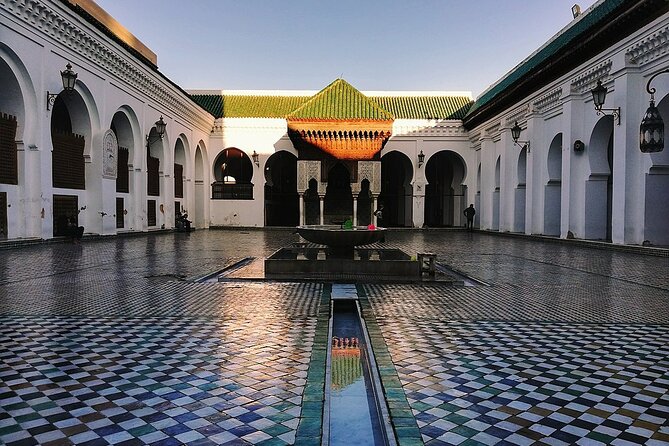
- Monuments with real purpose, including the Kairaouine Mosque and University complex
- Two paid sights included: Al-Attarine Madrasa and the Nejjarine Museum area
- Blue Gate finale with classic blue-and-green tilework at Bab Bou Jeloud
Fez Medina on a clock: how a 4-hour walk really feels
A half-day walking tour in the Medina of Fez is a good idea, because Fez rewards patience—but you rarely have unlimited vacation time. This one is paced around major landmarks and craft areas so you’re not spending hours just figuring out which alley connects to the next one.
You’re looking at roughly 4 hours on foot, and most stops are quick (often 15 minutes), with a couple longer breaks where it makes sense to slow down—like the tanning area and the Nejjarine Museum stop. That structure matters. In Fez, the best memories usually come from tiny details: carved doors, tile patterns, and the way daily life runs right alongside historic architecture.
Value check: at $24 per person, you’re paying for a professional local guide, coffee or tea, and pickup/drop-off, plus admission is included for Al-Attarine Madrasa and the Nejjarine Museum area. If you’d otherwise hire a guide for even part of the medina, this can land as a fair deal—especially since you’re not buying multiple separate tickets.
Practical note: wear shoes you trust. You’ll be walking on uneven surfaces, and the medina streets don’t do soft-landings. If you dress modestly, you’ll also feel more comfortable around mosques and religious schools.
You can also read our reviews of more walking tours in Fez

Place R’cif and Seffarine Square: starting where Fez connects old and new
Your tour begins at Place R’cif, a key junction that links the older parts of Fez to the more modern city. I like this start because it’s a natural orientation point. You get your bearings early, and you’re immediately in the flow of everyday life—shops, vendors, and the kind of street energy that makes Fez feel like a living city rather than a museum.
From there you head to Place Seffarine Square, known for artisans who work with metal—especially copper and brass. Listen for the rhythm of hammering. Even if you’re not studying craftsmanship techniques, the sound and sight of metalwork in motion helps you understand why Fez’s artisan quarters matter. This isn’t just sightseeing. It’s the city’s trade history you’re standing in.
What to expect here:
- Lots of close-up viewing opportunities around workshops and tools
- A strong chance to ask your guide why certain crafts developed in specific areas
Tip: if you want photos, aim for moments when the scene isn’t packed tight. Fez lanes can narrow quickly, and you’ll have a better shot if you pause without blocking foot traffic.
Kairaouine Mosque and University: why scholars made Fez matter
Next is the Kairaouine Mosque and University complex. It’s one of the oldest and most prestigious centers of learning connected with the Islamic world, founded in 859 AD. Even if you can’t enter every area you’ll see, you’re still learning how Fez built its reputation—not only through trade, but through scholarship.
This stop is valuable because it shifts your understanding of the city. When you connect mosques and learning institutions to the crafts and architecture you see later, everything starts to feel linked: design, materials, and the long-term care of buildings.
A realistic consideration: mosque areas can have rules about where visitors can stand and what you can photograph. Follow your guide’s instructions closely. It makes the experience smoother for everyone.
Al-Attarine Madrasa: the quiet beauty (and why it’s worth paying for)
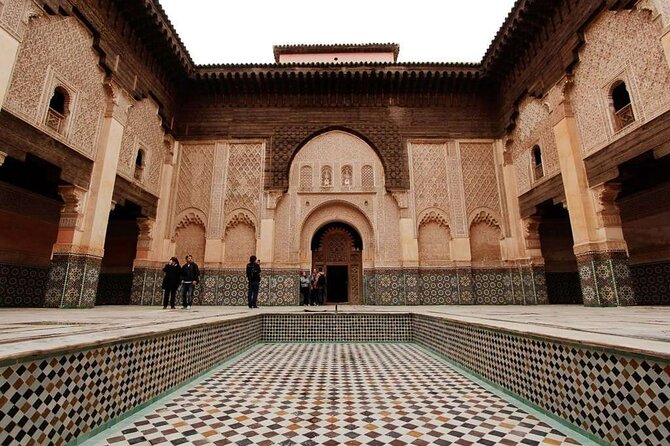
Then comes Al-Attarine Madrasa, a religious high school dating back to 1325. This is one of the tour moments where the included admission is truly justified. The focus isn’t on a big “main hall” spectacle; it’s on craftsmanship—mosaics, carvings, and peaceful courtyards that let you slow down.
I like madrasa stops because they reward attentive looking. When you’re guided, you don’t just see decorations. You understand what you’re looking at: the role of geometry and ornament, and how religious architecture signals both learning and daily discipline.
You should know: this stop is quieter than the street markets, so it can feel like a reset button before the next busier areas.
Sidi Ahmed Al-Tijani Zawiya: spiritual Fez, with possible entry limits
Sidi Ahmed Al-Tijani Zawiya is your gateway into Fez’s Sufi tradition. This is a shrine area where the meaning is bigger than the buildings. Your guide explains the spiritual heritage tied to the site, and you may encounter restrictions.
The tour description notes that entry may be restricted. Translation: you might not be able to go everywhere. In that case, you’ll still get context from your guide about what the space represents and why it matters in Fez’s cultural life.
My advice: treat this stop as a listening experience. If the entry doors close, you haven’t “lost” the moment—you’ve just shifted from viewing to understanding.
You can also read our reviews of more guided tours in Fez



Chouara Tannery and the color story of Fez’s crafts
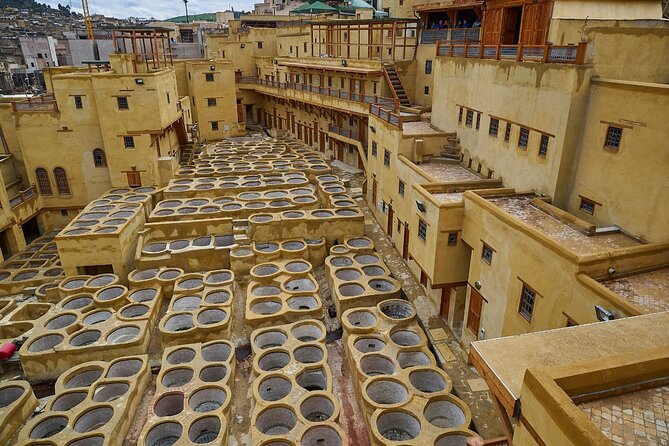
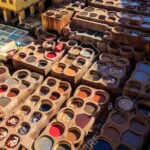
Chouara Tannery is one of those places where words are almost inadequate because color does the talking. You’re witnessing an ancient tanning industry, described as one of the city’s oldest and largest tanneries. The view of leather dyed in traditional pits is unforgettable for a reason: you see the production logic, not just the final product.
This stop is included as a longer viewing moment (around 25 minutes), which is important. Even if you’re not into the chemistry, you need time to absorb:
- the scale of the work
- the way labor is organized
- and the strong visual contrast of the dyed materials
A balanced heads-up: tanneries can come with smells. If you’re sensitive, keep that in mind and rely on your guide’s direction on where to stand. Also, you’re in a working area, so behave like you’re visiting someone’s workplace, not a theme park.
Medina of Fez: turning iconic sights into a connected story
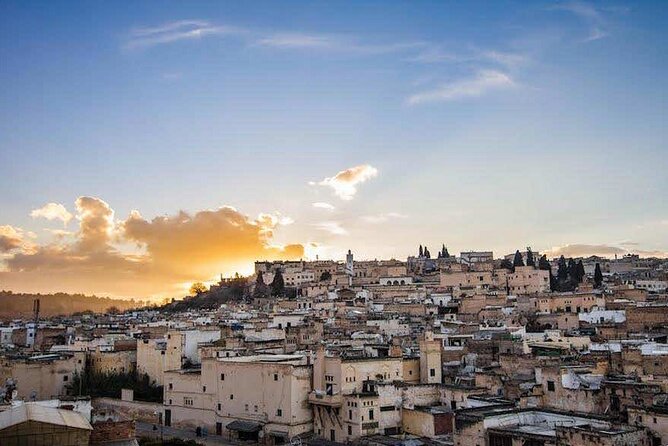
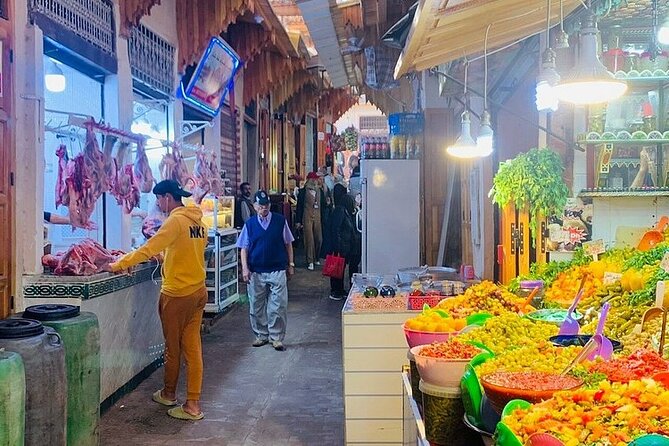
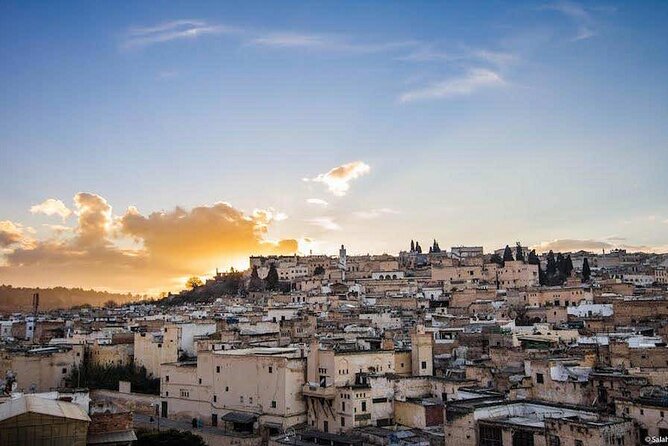
After Chouara, the tour continues into the Medina of Fez itself, where you move through labyrinth-like streets and see decorative elements like mosaic work and elaborately carved wooden doors. This is where the guide earns their fee again. In the medina, it’s easy to walk past “interesting” without knowing why it matters.
You’ll also pass through souks with textiles and ceramics, and you’ll get a sense of how shops operate around historic architecture. The goal here isn’t to pressure you into buying. It’s to help you connect what you’re seeing to the craft tradition behind it.
If you want one takeaway from this stretch, it’s this: Fez isn’t a single monument. It’s a web of trades, learning, and neighborhoods that grew over centuries—and you’re walking through that web.
Zaouia of Moulay Idriss II: a shrine stop with access rules
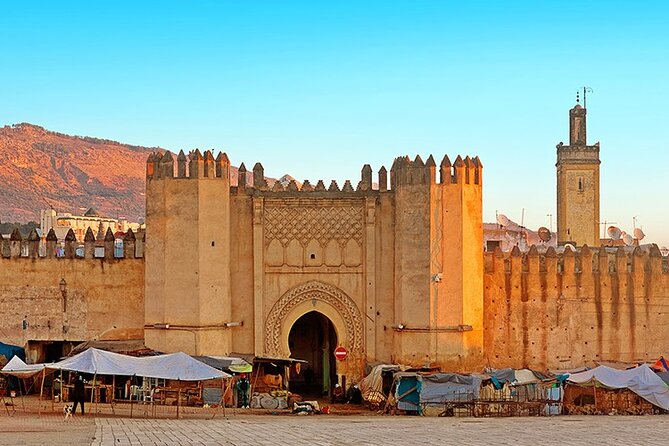
Next is the Zaouia of Moulay Idriss II, a sacred shrine in Fes el-Bali. The key detail for planning: entrance is restricted to non-Muslims. Your guide will explain the significance, so even if you can’t enter fully, you’ll still leave with understanding.
This is an important stop to include, because it shows the spiritual layer of the city. Without it, the medina can start to feel like an all-craft, all-market experience. With it, you get the fuller picture: religion, heritage, and daily life moving side by side.
Fontaine Nejjarine and the Nejjarine Museum: craftsmanship you can sit with
Your penultimate stop is Fontaine Nejjarine, linked to the Nejjarine Museum housed within the Funduq al-Najjarin. This is one of the most “rest in your feet and focus” moments of the walk, because it’s built around woodworking and the story of Moroccan artisanship.
The tour includes admission here (around 25 minutes), which again makes sense. If you’re the type who likes to see how design works in real objects, this is where the tour pays off. You get a structured look at intricate, hand-carved artifacts and the architecture around them—so the craftsmanship you noticed outside becomes something you can study indoors.
Also: the museum stop helps balance the day. You’ve seen production and street life. Now you see preserved work.
Bab Bou Jeloud: the Blue Gate finale you’ll remember later
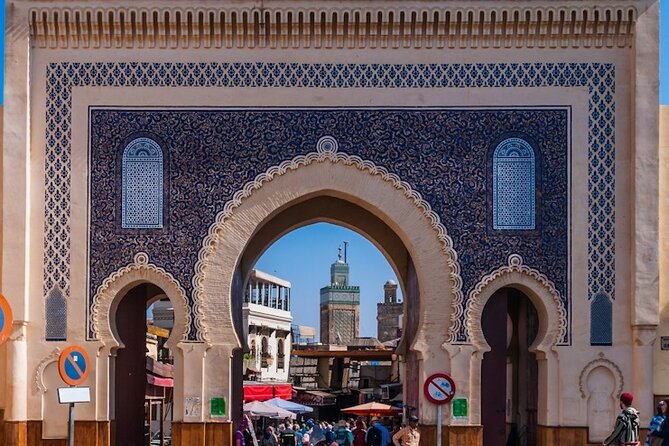
The tour ends at Bab Bou Jeloud, the Blue Gate. It’s the kind of landmark that reads clearly even if you’re tired: blue and green tilework, dramatic entry shape, and a sense of city rhythm where the medina meets the rest of Fez.
I like the finale because it gives you a mental marker. After hours of narrow lanes, it’s helpful to end at something visually “big.” It’s also a good photo stop—when you catch the light right, the tiles look almost unreal.
What it means symbolically: your guide explains how it ties together Fez’s past and present, and why this gateway is such a powerful visual in the city’s identity.
Price and included perks: what you’re actually paying for
Here’s the simple breakdown.
- $24 per person for about 4 hours
- Includes pickup and drop-off
- Includes coffee and/or tea
- Includes a professional local guide
- Includes admission for Al-Attarine Madrasa and the Nejjarine Museum area
- Mobile ticket is included
- Most stops other than the two paid sights are free to view
Not included: lunch.
For value, I’d look at it this way: this tour reduces decision fatigue. In Fez, you don’t just need to see places—you need help threading them together. The guide also saves you from wasting time at spots that look interesting but don’t tell you much. For many visitors, that alone makes the price feel fair.
Who should book this Fez medina walk (and who might want to skip it)
This tour is best for you if:
- you want a guided route through UNESCO-listed Fez el-Bali
- you care about craft traditions—metalwork, tanning, and woodworking
- you’d rather spend your time learning than getting turned around
You might want to skip it or adjust expectations if:
- you want long, free time for shopping (this walk is structured)
- you’re hoping for guaranteed entry into every religious space (some access is restricted)
One more fit note: the tour is private, meaning it’s only your group. Even though there can be group discounts, the main comfort is that you’re not competing for attention with strangers.
Tips that make the tour smoother (useful, not fussy)
- Bring modest clothing: arms and legs covered helps around mosques and madrasa areas.
- Plan for uneven ground: solid shoes beat sandals here.
- If you’re sensitive to smells, note that the tannery stop can be intense.
- Save your souvenir money for later if you want. The tour is designed to show the places first, not to turn into a shopping marathon.
Should you book this half-day guided walking tour in Fez?
If you want the Medina of Fez to feel like a story instead of a walk in circles, I think this is a strong booking. The combination of artisan stops, major learning architecture, and a guided route with pickup/drop-off makes it a good value at $24—especially because key admissions are included and you get coffee or tea along the way.
Book it if you’re curious and want context while you move. Consider skipping or mixing it with independent time if you prefer long unscripted wandering or you’re only interested in a couple of monuments.
FAQ
How much does the Half Day Guided Walking Tour in the Medina of Fez cost?
It costs $24.00 per person.
How long is the tour?
The tour lasts about 4 hours.
Is pickup and drop-off included?
Yes. Pickup and drop-off are included.
What’s included in the tour price besides the guide?
Coffee and/or tea are included, along with a professional local guide. A mobile ticket is also provided.
Is lunch included?
No, lunch is not included.
Do I need to be Muslim to enter the sites?
Some religious entrances may be restricted. The Zaouia of Moulay Idriss II has entrance restricted to non-Muslims, and entry to the Sidi Ahmed Al-Tijani Zawiya may also be restricted.
Is this tour private or shared?
It is private. Only your group will participate.
Are there any admission tickets included?
Yes. Admission is included for Al-Attarine Madrasa and the Nejjarine Museum (Fontaine Nejjarine area). Most other stops are free.
Can I cancel for a full refund?
Yes. You can cancel up to 24 hours in advance for a full refund. Less than 24 hours before the start time is not refunded.