REVIEW · MARRAKECH
Guided Excursion in the Souks of Marrakech
Book on Viator →Operated by Amid · Bookable on Viator
Marrakech souks can swallow you fast. This guided walk keeps you oriented in the medina and helps you shop with confidence, with a local like Amid guiding you through the lanes, showrooms, and bargaining spots. I especially like the mix of three shopping areas in one smooth stretch, and the way the guide nudges you toward what’s worth your money, not just what’s loudest.
You’ll spend the bulk of the time in the artisan areas and showrooms, then only short visits at the two specialized souks. That can feel a bit fast if you want to linger and compare every stall, and it’s a group format (max 20), so expect some crowd flow.
In This Review
- Key points before you go
- Why a guided souk walk in Marrakech beats wandering
- Jemaa el-Fnaa meeting point: start organized, shop smarter
- Medina of Marrakech artisan showrooms: where quality gets explained
- Souk des Teinturiers: small dye workshops and a changing tradition
- Souk Semmarine: fabrics, crafts, and where the medina’s shopping flows
- How the guide helps with bargaining and better buys
- What to expect from the pacing and group size
- Price and value: is $23.23 worth it?
- Should you book this Marrakech souk tour?
- FAQ
- How long is the guided souk excursion?
- Where do we meet for the tour?
- What shopping areas are included?
- Is there an admission fee for the stops?
- How large is the group?
- Is the tour ticket digital?
- Can I bring a service animal?
- What is the cancellation policy?
Key points before you go
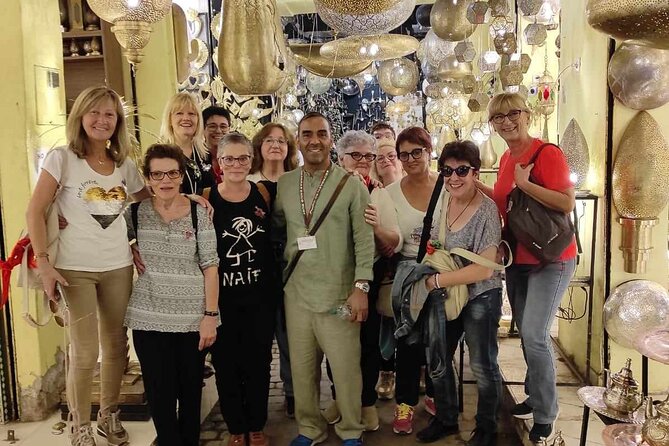
- Meet at Jemaa el-Fnaa so you start with less stress and fewer wrong turns
- Three shopping stops in about 3 hours: Medina showrooms, Souk des Teinturiers, Souk Semmarine
- A guide who helps you haggle and steer toward quality, not impulse buys
- Traditional dyeing still exists in small workshops at Souk des Teinturiers
- Souk Semmarine connects you to the medina’s main shopping flow—fabrics, crafts, and even antiques
Why a guided souk walk in Marrakech beats wandering
If you’ve ever tried to shop in a Moroccan medina without help, you know the feeling: one wrong turn and suddenly you’re somewhere else entirely, surrounded by sellers who can spot confusion like a sport. A good guide changes the whole experience. Here, you get a structured route that shows you what the medina is known for, but you also get real-time support for finding things you care about and staying calm while you negotiate.
The practical value is clear: you’re not just “seeing shops.” You’re learning how to move through the souks, how to ask questions, and how to compare what different workshops are actually offering. For me, that’s the difference between a souvenir grab and a thoughtful purchase.
Another big plus is the human side. Group tours can feel like a hassle in some places, but in the medina it can work because you’re walking together, sharing small moments of discovery, and learning from each other’s interests. You’ll often make a couple of new friends just by being in the same lane at the same time.
One thing to keep in mind: you’re walking through a maze. Even with a guide, it’s still your job to manage your energy. Comfortable shoes matter more than you think, and it helps to decide ahead of time what you’re actually shopping for.
You can also read our reviews of more guided tours in Marrakech



Jemaa el-Fnaa meeting point: start organized, shop smarter
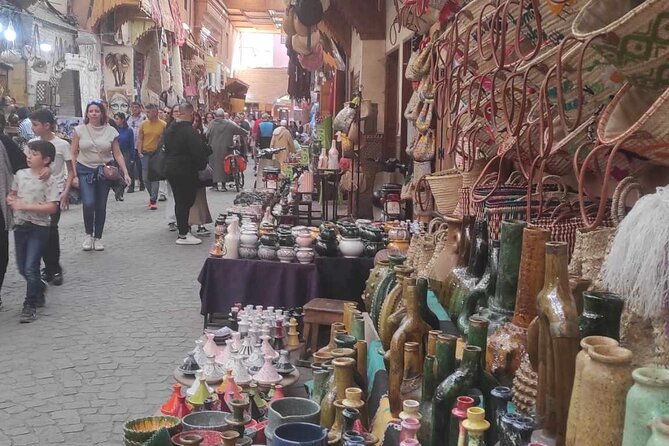
You’ll meet your guide at Jemaa el-Fnaa, the famous square in Marrakech’s medina. This matters more than it sounds. Meeting at the square means you’re anchoring the day at the one place most visitors can orient to, and it reduces the risk of losing time before you even start shopping.
I like that communication is part of the experience. People have described fast messages after booking and a reliable meet-up at the agreed time and point—exactly what you want when the city streets can be chaotic. Your guide, Amid Moulay Abdel Jebbar, is known for taking care of the group and keeping things safe and comfortable while you move through busy areas.
You’ll also have the benefit of a group cap (up to 20 travelers). That’s big enough to feel social, but not so huge that the guide can’t manage where everyone is. In these kinds of markets, having a guide who can actually see the whole group helps you not get left behind.
Practical tip: arrive a little early so you can settle in. When you’re on time and relaxed, you haggle better, and you ask better questions.
Medina of Marrakech artisan showrooms: where quality gets explained
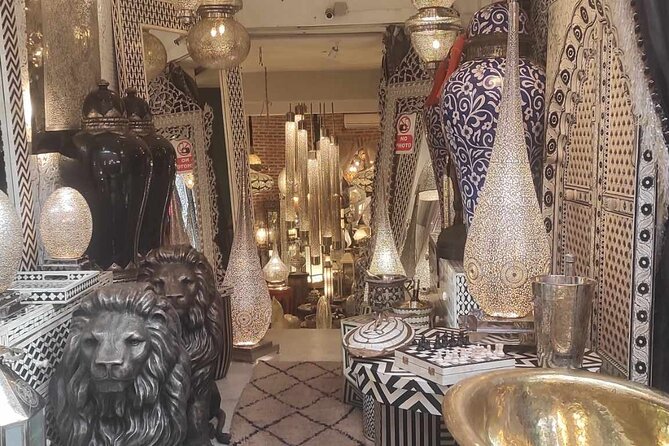
The main chunk of your time is in the Medina of Marrakech, focused on artisan workshops and showrooms. This is where you’ll see the broad spread of Moroccan craft—things like leather goods, blacksmith work, carpentry, dyeing, and more. The idea isn’t just to look. It’s to learn what to look for once you’re inside a stall or showroom.
Expect to spend about 2 hours 30 minutes in this first part, and that’s the heart of the value. You get time for comparison, and that’s where a guide earns their fee. A shop can look similar from the outside, but once you’re inside, details show up: materials, finishing, how the piece is made, and how a seller explains their product.
You’ll likely encounter showrooms and shops featuring items such as furniture, jewelry, lamps, accessories, rugs, and caftans. The key benefit here is guidance on which places are worth your attention. A guide can help you spot the difference between a mass-produced item and something made with real craft behind it—especially when you’re short on time.
Also, the medina is full of quick-talk sales pitches. Having someone next to you who can explain what you’re seeing helps you slow down and make better decisions. People have specifically praised how Amid helps shoppers buy only products of quality, plus how he supports bargaining rather than letting you guess.
Possible drawback: this is where a “shop tour” can feel like a lot if you’re not in buying mode. If you’re only curious and not planning to purchase, tell your guide early. You can still enjoy the walk, but you’ll want to set expectations so the day doesn’t feel like pressure.
Souk des Teinturiers: small dye workshops and a changing tradition
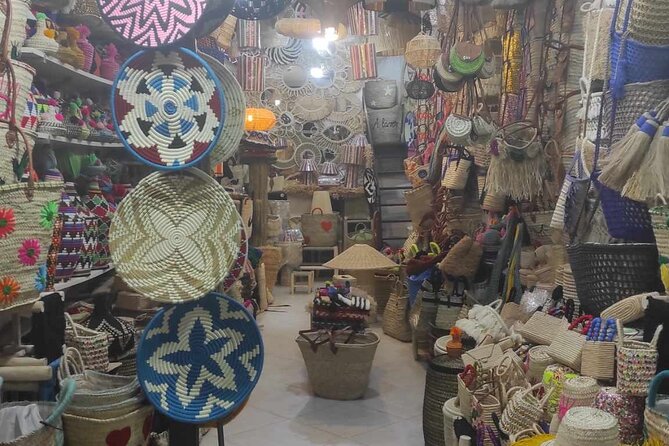
Next is Souk des Teinturiers, the dyers’ souk. It’s located in the medina near the Mouassine spring and the Mosque of Mouassine, in the western half of the street tangle. You’ll get about 15 minutes here, so think of it as a quick, focused glimpse rather than a long stop.
Here’s the interesting context: this souk lost much of its dyeing activity several years ago because industrial dyes became common. That means you won’t necessarily see the full-scale traditional process the way people imagine it. But the good news is that small workshops can still practice traditional dyeing.
In practical terms, this stop helps you connect craft to place. Even if you don’t see every step, you’ll understand what the souk once was—and what survives today. It’s a reminder that the medina keeps changing, and tradition adapts rather than freezing in time.
Drawback to plan for: because the stop is short, it can feel more like a photo opportunity and a bit of context. If you want hands-on dyeing demonstrations, you might need another kind of experience beyond this tour’s format.
Best use of your time here: ask your guide what still looks traditional, and whether the colors you’re seeing are from real dye processes. A quick question can turn a brief stop into something genuinely informative.
Souk Semmarine: fabrics, crafts, and where the medina’s shopping flows
Your final stop is Souk Semmarine, one of the main arteries in the medina. It’s accessible from Place Jemaa El Fna, through a derb (medina alley) with the same name. The history is fun and specific: the area takes its name from the farriers who once worked there to shoe the animals of caravans, while the caravans did their trading and shopping.
Today, it’s a colorful shopping avenue where you’ll mostly find merchants dealing in fabrics, souvenirs, and crafts. This is also where you might find more specialized shopping, including what people describe as unique entries for things like Moroccan antiques. In other words, it’s not just one type of store—it’s an approach to specialized souks, including categories tied to spices, carpets, fabrics, and slippers.
You’ll get about 15 minutes here, which means the goal is orientation and direction: helping you understand how to continue your shopping after the tour ends. This is the part where you can ask your guide: If I want rugs, what lanes should I follow? If I want something smaller like slippers or accessories, where do I look first? In a place like this, those directions save hours.
Also, Souk Semmarine is ideal for picking up smaller items after you’ve already seen the larger craft range earlier in the day. You’ll have a better sense of what’s reasonable and what looks like a repeat of the same product lines.
Possible drawback: because it’s an artery and a busy corridor, it can feel crowded. Keep your pace steady, keep your phone secured, and remember that aggressive attention is part of the street energy. Your guide’s presence helps, but you’ll still want to be comfortable navigating attention.





How the guide helps with bargaining and better buys
The most praised aspect of this kind of tour isn’t just the route. It’s how you’re supported while you’re shopping.
With Amid, the idea is to help you:
- find what you want among similar-looking stalls
- haggle with more control instead of getting swept up
- shop for value and quality, not just the first offer
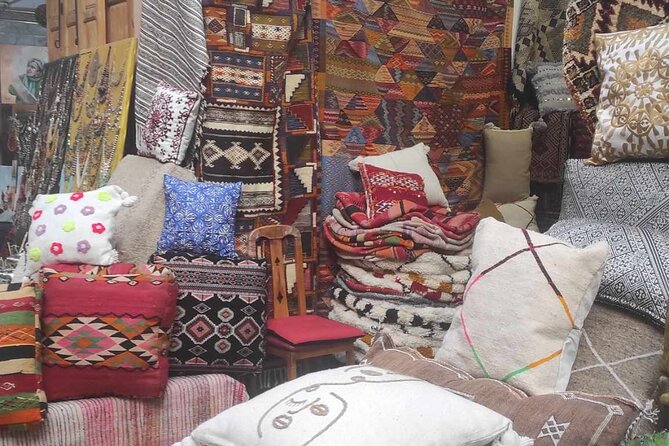
That means you’re not only learning tactics for bargaining. You’re also learning product awareness. When you’re comparing rugs, jewelry, lamps, leather goods, or caftans, small differences matter—materials, finishing, stitching, and how a shop stands behind what it sells.
A helpful pattern to follow on this tour:
- Start with questions, not price.
- Compare in the same general product category.
- Only then negotiate.
If you take that approach, the time in the medina showrooms pays off, because you have enough minutes to make comparisons instead of rushing.
One more bonus worth noting: people have mentioned Amid taking them to good shopping stops, including places described as a certified herbalist. That fits the overall value of the day: not only showing you what to buy, but where it’s sensible to buy it.
What to expect from the pacing and group size
This experience runs for about 3 hours total. The schedule is front-loaded—most of your time is in the Medina of Marrakech, then two shorter specialized stops. That pacing is smart for first-timers. You see a lot early when you still need orientation, then you use the later stops to aim your shopping.
Group size stays reasonable at up to 20 travelers. That helps with flow through narrow streets. It’s still a group walk, though, so if you’re the type who wants to vanish into a shop for long stretches, you’ll want to share that preference with your guide early.
Also, the tour uses a mobile ticket, so you don’t have to worry about printed documents. That’s a small thing, but in travel days where everything is moving, it’s the kind of detail that reduces stress.
Price and value: is $23.23 worth it?
At $23.23 per person for an approximately 3-hour guided experience, you’re paying mainly for three things:
- local navigation through the medina maze
- help with bargaining and shopping decisions
- time savings versus trying to build the route yourself
If you’re planning to buy anything beyond tiny souvenirs, that guidance can quickly pay for itself. A single good purchase—like a rug, leather item, or jewelry piece—can be heavily affected by what you choose and how you negotiate. The guide helps you avoid the most expensive mistake in markets: buying too fast, without enough comparison.
Another value angle: this tour is typically booked about 19 days in advance on average. That’s a sign of demand, and it means planning ahead is smart, especially during busier travel seasons.
So is it worth it? For first-timers in Marrakech’s medina, yes. You’re not just walking. You’re being coached through the shopping logic that locals live inside.
Should you book this Marrakech souk tour?
Book this tour if:
- you want a clear route through Marrakech’s medina without spending your first day lost
- you’re shopping for things like rugs, jewelry, leather goods, lamps, accessories, or caftans
- you’d rather haggle with guidance than guess your way through prices
Skip it or add another option if:
- you hate shopping and want mostly sightseeing with long, quiet breaks
- you want deep, hands-on demonstrations of traditional dyeing beyond what a short stop can offer
- you plan to spend hours in one shop and don’t want group pacing
If you fit the first group, you’ll likely leave with a stronger sense of where to shop, what’s worth asking about, and how to keep your day enjoyable even when the streets get busy.
FAQ
How long is the guided souk excursion?
It runs for about 3 hours.
Where do we meet for the tour?
The meeting point is Jemaa el-Fnaa in Marrakech.
What shopping areas are included?
You visit the Medina of Marrakech artisan showrooms, Souk des Teinturiers, and Souk Semmarine.
Is there an admission fee for the stops?
The included stops list admission tickets as free.
How large is the group?
The maximum group size is 20 travelers.
Is the tour ticket digital?
Yes, it uses a mobile ticket.
Can I bring a service animal?
Yes, service animals are allowed.
What is the cancellation policy?
You can cancel up to 24 hours in advance for a full refund. If you cancel within 24 hours of the start time, the amount paid is not refunded.