REVIEW · MARRAKECH
Full-Day Excursion to 3 Valleys from Marrakech
Book on Viator →Operated by Come To Morocco · Bookable on Viator
Morning views beat Marrakesh traffic. This full-day excursion takes you out into the Atlas Mountains to meet Berber villages spread across the Ourika and Asni valleys, with big viewpoints and the famous Setti Fatma 7 waterfalls area on the route.
I like how this trip is built for real sightseeing time, not just drive-by photos. Two standout perks for me are the comfortable air-conditioned transport and the freedom to stop for photos whenever the scenery (or the craft moments) catch your eye.
One consideration: you’re looking at a 7 to 8 hour day spent mostly in the car plus outdoor breaks, so plan for a long day if you get restless easily. Pack sun protection, because the itinerary runs through exposed viewpoints at altitude.
In This Review
- Key things to know before you go
- Marrakech to the Atlas: how the day is paced
- Ourika Valley: Lala Takerkousst Dam to the Kik Plateau at 1350m
- Moulay Brahim village: a spiritual stop that slows the pace
- Asni Valley at 1150m and Sidi Fares around 1800m
- Setti Fatma and the 7 waterfalls: why it’s worth building in
- Camel riding and lunch: the included moments that make the day feel complete
- Guides make it: English-speaking drivers like Rachid and Omar
- Price and value: is $98.88 per person fair?
- Who should book this 3 Valleys day trip (and who should think twice)
- Should you book it?
- FAQ
- How long is the full-day trip?
- What time does it start from Marrakech?
- Which areas are included in the 3 Valleys route?
- Is camel riding included?
- What’s included in the price?
- Is it a private tour?
- Can I cancel for free?
Key things to know before you go
- Ourika Valley start with Lala Takerkousst Dam and panoramic overlooks for easy first photos
- Kik Plateau (about 1350 m) gives you wide Atlas views early in the day
- Moulay Brahim village visit, including the grave of the saint
- Asni Valley and Sidi Fares (about 1800 m) around pen tree plains and small Berber villages
- Setti Fatma stop for the 7 waterfalls area
- 20 minutes of camel riding plus lunch included, so you won’t burn extra time buying essentials
Marrakech to the Atlas: how the day is paced
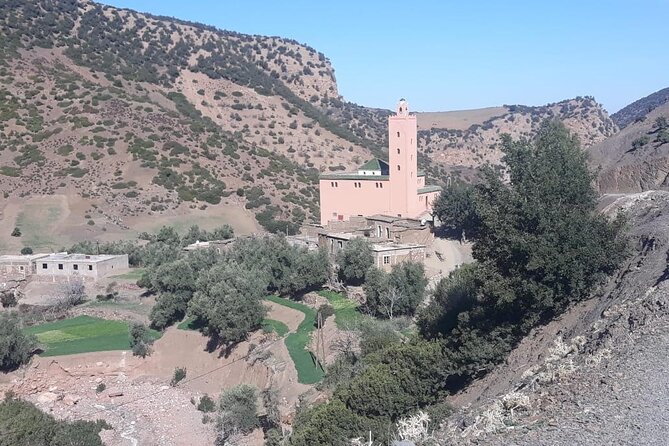
You’ll head out of Marrakech in the morning, with the start described around 08:30 to 09:00. The day runs about 7 to 8 hours, so it’s a full commitment, but the structure is straightforward: drive, stop, walk a bit, take photos, then move on.
The ride matters here. You get transport by a comfortable, air-conditioned vehicle, which helps when you’re crossing different valleys and elevations. Also, the driver is English or French-speaking, so you’re not stuck guessing what you’re seeing.
This is set up as a private experience for your group, meaning you won’t be squeezed into a big crowd dynamic. You’ll also get practical flexibility: the plan allows stops everywhere to take photos, which is exactly what you want when the scenery keeps changing every few turns.
A few more Marrakech tours and experiences worth a look
Ourika Valley: Lala Takerkousst Dam to the Kik Plateau at 1350m
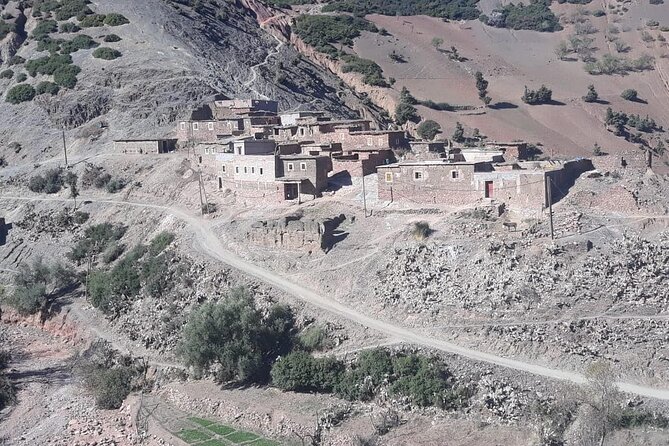
The day kicks off in the Ourika Valley region, starting with a stop at the Lala Takerkousst Dam. You’re given time to pause and enjoy panoramic views from the dam area, which is a great way to wake up your senses before you head deeper into the mountains.
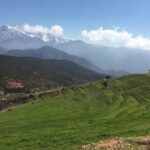
Next comes the Kik Plateau, listed around 1350 meters altitude. This is one of those stops that feels simple on paper but hits hard in real life: you get an overview of the Atlas Mountains early, which helps you understand the geography for the rest of the day.
If you like stories you can see, this is a smart sequence. A viewpoint first gives you context, then village stops feel more connected, not random. It also makes it easier for kids and first-time visitors to follow what’s happening.
One practical note: plateau and dam areas can mean strong light and glare. Do yourself a favor and actually use the items you’re told to bring—sunscreen, sunglasses, and a hat—because you’ll be outside for long enough that it matters.
Moulay Brahim village: a spiritual stop that slows the pace
After the big views, the itinerary shifts to the Moulay Brahim village. The key moment here is the chance to visit the grave of Moulay Brahim, a saint connected to local religious traditions.
Even if you’re not a religious travel person, these stops add texture. They show you that this isn’t only about dramatic scenery—it’s also about daily life and local faith, tied to specific places you can stand in.
This part also tends to be calmer. You’re not chasing a moving schedule every five minutes. Instead, it feels like a pause where your guide can explain what you’re looking at and why people care about it.
Keep your expectations grounded: this isn’t a museum-style stop. It’s a respectful visit in a community setting, so dress appropriately and keep your voice low.
Asni Valley at 1150m and Sidi Fares around 1800m
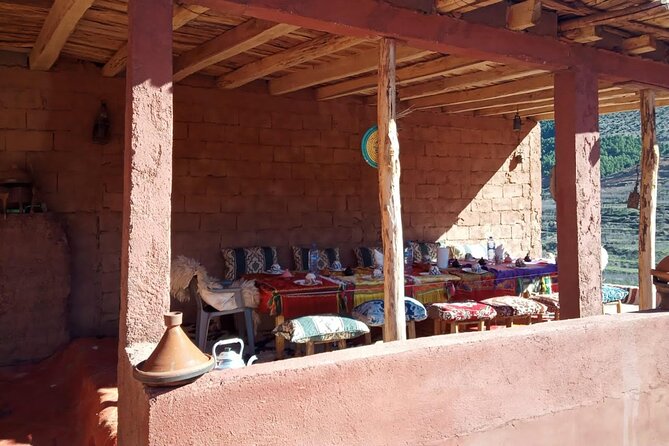
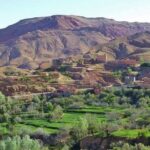
From there, you head toward the Asni Valley, described around 1150 meters altitude. You’ll visit the village of Asni, which helps break up the day with something closer to everyday life than just viewpoints.
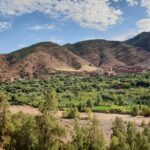
After Asni, the route moves higher to Sidi Fares (around 1800 m). This stop is noted for vast plains of pen trees and small Berber villages, which can make the area feel both wide and intimate at the same time—open views with village clusters.
I like this altitude progression because it makes the day feel logical. You start with an overlook, you meet community landmarks, and then you climb toward the higher terrain where the view becomes even more dramatic.
What to do with it: use these points for orientation. If you’re trying to photograph well, take a few early shots to find your best angles, then spend the later minutes just watching and letting your guide point out what matters.
Also, since the itinerary includes viewpoints at multiple elevations, you might notice temperature shifts across the day. Light layers can help, even if you’re mainly focused on sun protection.
Setti Fatma and the 7 waterfalls: why it’s worth building in
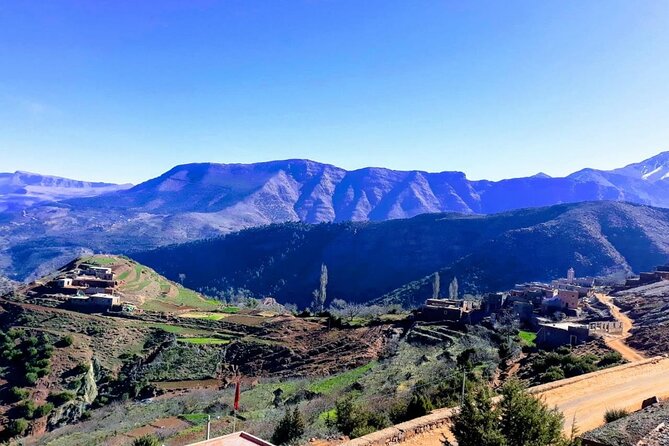
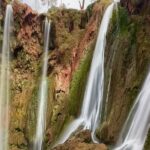
The trip includes a stop toward Setti Fatma to see the 7 waterfalls area. This is one of those Morocco highlights that people remember because it changes the atmosphere. You go from wide views and valley villages to a spot where water becomes the main character.
You’ll want to plan for basic comfort. Even if you don’t do a long trek, waterfall areas often involve uneven ground and more movement than a straight viewpoint stop. Wear shoes you trust and keep an eye on where you step.
This is also a good moment for photos that aren’t only about distance. Waterfalls let you capture motion and texture, and the setting can feel cooler than the surrounding heat.
The key here is pacing. With a full day already built around stops, you shouldn’t feel rushed. You’re not just dropping in and leaving immediately—you’re given time to actually experience the area.
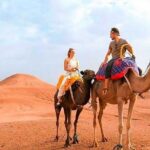
Camel riding and lunch: the included moments that make the day feel complete
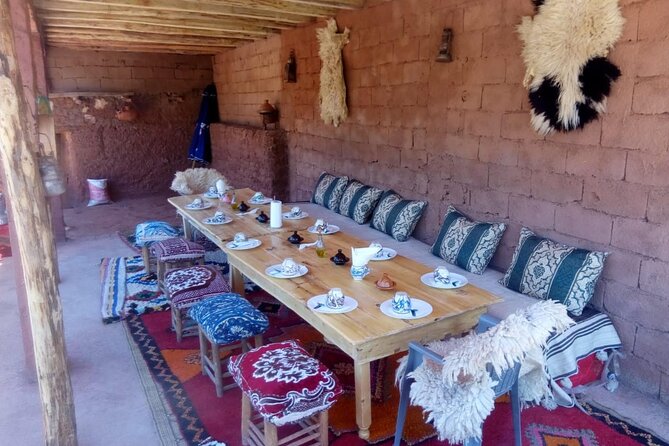
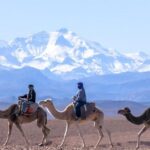
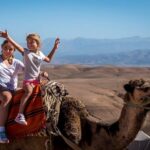
Two things are explicitly included, and they make a real difference in value: 20 minutes of camel riding and lunch.
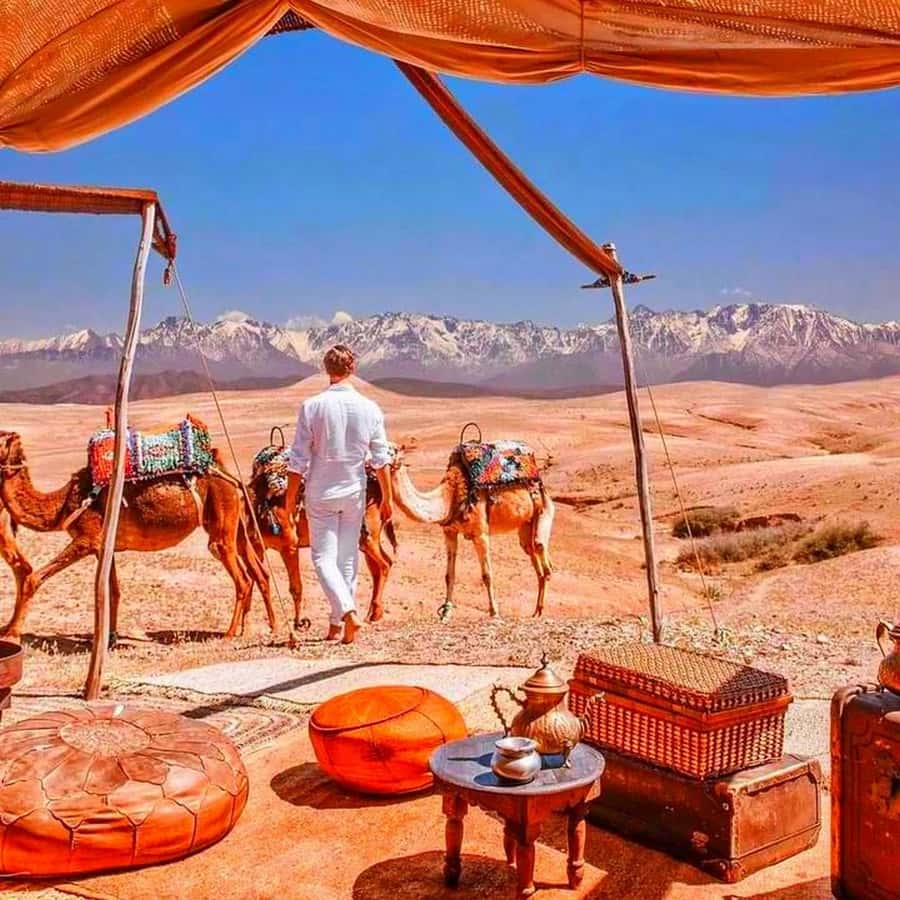
The camel ride is short—about 20 minutes—so it’s not a whole day activity. Think of it as a classic “try it once” experience that breaks up the driving and gives you something physical and memorable, not just photos.
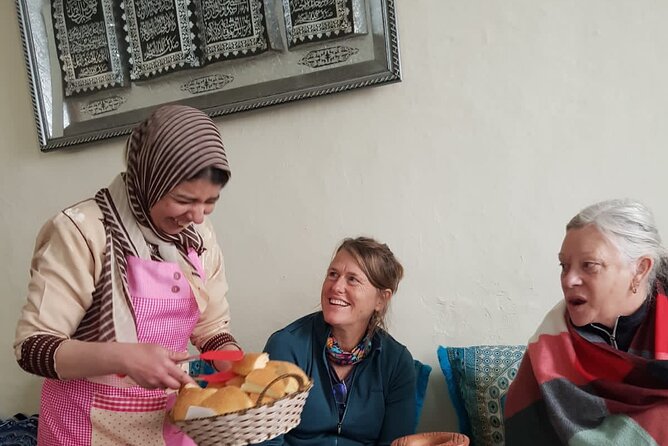
Then there’s lunch. It’s included, and some trips are described as having lunch at a mountainside Berber house setting. That kind of meal arrangement matters because it shifts your day from observation to a more human moment: you sit, eat, and get a glimpse of how hospitality works in the mountains.
One useful way to prepare: keep your hands free. You’ll likely want one spot for your camera/phone between photo stops and your sun items. And if you’re sensitive to sun, consider waiting to apply sunscreen until you’re packed and ready—doing it early can help you avoid missing it later.
Guides make it: English-speaking drivers like Rachid and Omar
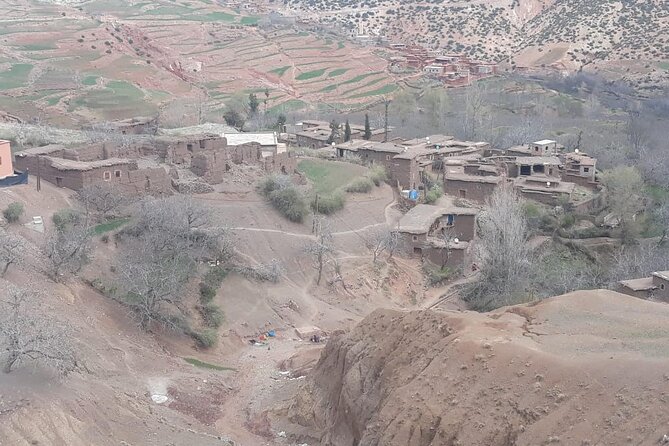
What really makes this itinerary shine is how it’s handled by the person driving and guiding you. The trip runs with an English or French-speaking driver, and the reviews tied to this experience consistently highlight the quality of guides—especially Rachid, praised for excellent English and being very informative.
You’ll feel it in small ways: the guide explains as you go, they stop where it matters, and they make it easy to understand what you’re seeing. There’s also mention of Omar in the mountains as an amazing guide, which is a good sign that the experience isn’t dependent on one single person—you’re likely in capable hands.
If you’re traveling with kids, that “make the day work” skill becomes even more important. A long day can go sideways fast without a sense of humor and good pacing. The best guides handle that automatically by keeping breaks logical and stopping often enough for photos without turning the day into chaos.
Price and value: is $98.88 per person fair?
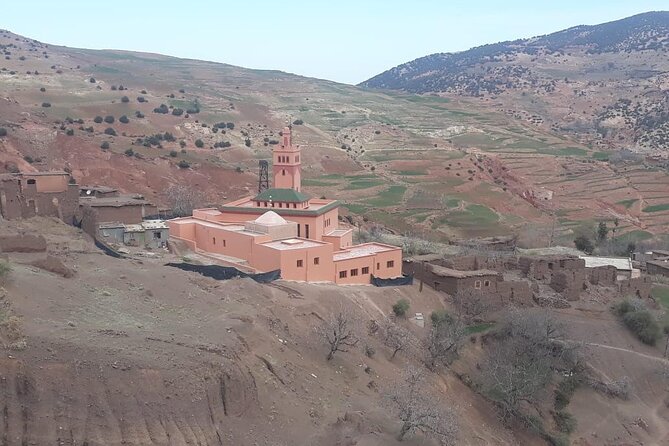
At $98.88 per person, you’re paying for more than transportation. The price includes air-conditioned transport, an English/French-speaking driver, lunch, and 20 minutes of camel riding, plus the practical benefit of frequent photo stops.
Here’s why that matters for value: many day trips charge you for the “extras” separately—meals, animal rides, and guided time. This one bundles several of those essentials into the cost, and that saves you decision fatigue while you’re already dealing with a long day schedule.
Also, the experience notes group discounts, and you’re told it’s for only your group. That combination can be a good fit if you’re traveling as a family or with friends, because you get the benefits of private flexibility without the headache of planning each stop yourself.
So is it worth it? For me, yes—if your goal is a guided full day that mixes Berber villages, key valley scenery, and at least one hands-on activity without you needing to coordinate rides, tickets, and timing.
Who should book this 3 Valleys day trip (and who should think twice)
This works best for people who want a lot of variety in one day:
- You enjoy Atlas Mountains viewpoints and want them explained, not just photographed.
- You want a guided look at Berber village life around the valleys.
- You’re okay with a full-day schedule and the reality that time is split between driving and stops.
It also tends to be family-friendly, including trips where young kids were part of the group. The mix of photo stops, village visits, and the camel ride can keep the day from feeling one-note.
Who might think twice? If you hate long vehicle days or you’re only interested in one specific sight, this may feel like too much switching between places. The itinerary is designed as a sampler of the region, not a slow, deep single-area experience.
Should you book it?
Book this trip if you want an easy, guided way to see the Ourika and Asni valley areas, visit a meaningful local site like the grave of Moulay Brahim, and still have time for the Setti Fatma 7 waterfalls area. The inclusion of lunch and 20 minutes of camel riding makes it feel like a complete day, not just a scenic drive.
Don’t book it if you’re looking for a short half-day or you want a super relaxed pace with minimal time in the car. At 7 to 8 hours, this is meant to be active and scheduled.
If you do book, pack the basics you’re asked for—sunscreen, hat, sunglasses, and a camera—and be ready to enjoy a day where the best moments often come from the stops, not only the destination.
FAQ
How long is the full-day trip?
It runs about 7 to 8 hours.
What time does it start from Marrakech?
The experience starts around 09:00 am, and the plan also notes a departure around 08:30 am.
Which areas are included in the 3 Valleys route?
You’ll visit the Ourika Valley and Asni Valley, plus stops that include Lala Takerkousst Dam, the Kik Plateau, Moulay Brahim village (grave visit), and Sidi Fares. The 7 waterfalls of Setti Fatma are also on the schedule.
Is camel riding included?
Yes. Camel riding for about 20 minutes is included.
What’s included in the price?
Included are air-conditioned transport, an English or French-speaking driver, photo stops, 20 minutes of camel riding, and lunch.
Is it a private tour?
Yes. It’s listed as a private activity, meaning only your group participates.
Can I cancel for free?
Yes. You can cancel for a full refund up to 24 hours before the start time.