REVIEW · MARRAKESH
From Marrakesh: Private 4-Day Sahara Desert Discovery Tour
Book on GetYourGuide →Operated by CAMEL SAFARIES · Bookable on GetYourGuide
Four days in the Sahara feels like time travel. I like the classic Erg Chebbi dunes and camel trek at sunrise, and I really enjoyed how the Aït Benhaddou stop makes the Atlas kasbah world feel real. One thing to consider: the desert camp area can be busy, so you may not get the total silence-and-solitude fantasy.
This tour is built for comfort and clarity. You get a private English-speaking guide, air-conditioned driving, and stays that go beyond basic roadside stops, with guides like Hassan, Mohamed, Khalid, and Said known for keeping the day moving and explaining what you’re seeing. It is still a long road trip, so plan to stay patient and enjoy the journey, not just the destination.
In This Review
- Key things I’d plan around
- Marrakech to the Sahara: how the route actually flows
- Day 1: High Atlas pass, Aït Benhaddou, and Kasbah lunch in Tourirt
- Day 2: Dadès and Todra Gorges, mint tea stops, then Erg Chebbi at night
- Day 3: sunrise breakfast in the dunes, Rissani markets, and a Drâa Valley return night
- Day 4: back over Tizi n’Tichka and one last look at Morocco’s mountain scale
- Guides make the difference: what the private format really gives you
- Comfort and food: what is included, what you should budget
- Desert reality check: sunrise is magic, but the Sahara is not a movie set
- Who this tour is best for
- What to bring so nothing slows you down
- Before you go: your details and pickup essentials
- Should you book this private 4-day Sahara discovery tour?
- FAQ
- Is camel safari included on this tour?
- What meals are included, and what should I pay for myself?
- Do I need to pay monument entrance fees?
- What languages can the guide speak?
- Is pickup included from Marrakech?
- What should I bring for the desert?
Key things I’d plan around
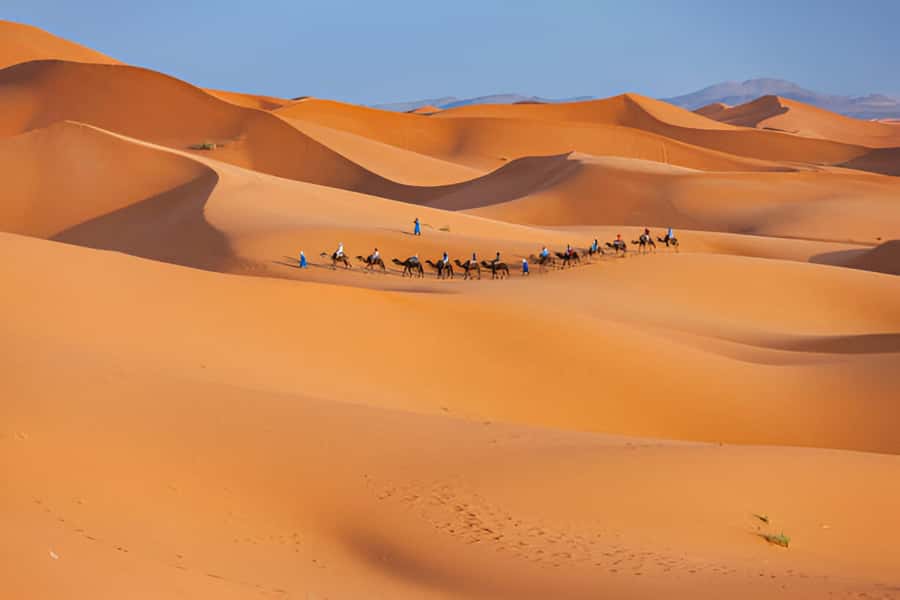
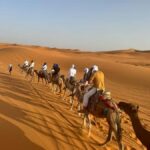
- Camel trek into Erg Chebbi with a sunrise moment and a night in a nomad-style camel-hair tent
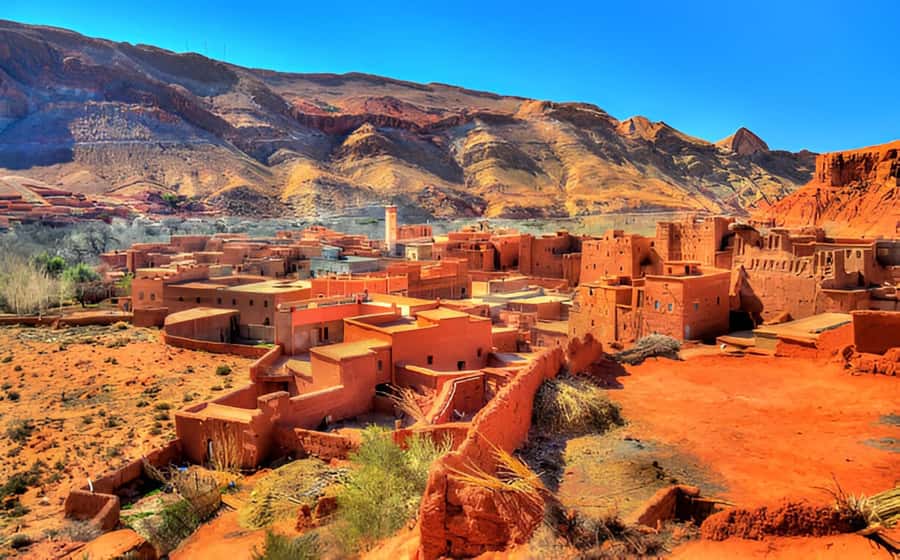
- Kasbah-heavy route: Aït Benhaddou, Tourirt, Amerhidil, Tamnougalt, plus Tafilalt ksours in Rissani
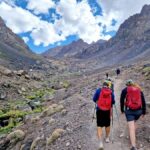
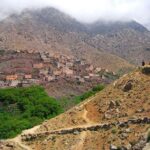
- High Atlas driving via the twisting Tizi n’Tichka Pass and planned photo stops
- Dadès and Todra Gorges with mint tea breaks, palm scenery around Tinghir, and viewpoints for photographers
- Private, guided pacing that lets you ask questions and get routed through towns in a sensible order
Marrakech to the Sahara: how the route actually flows
This is a true road-to-desert plan. You start in Marrakech, then spend two days working your way through mountain valleys and kasbah towns before reaching Merzouga and the dunes around Erg Chebbi.
The best part of the schedule is that it doesn’t treat the Sahara like a single stop. You build context first: High Atlas passes, movie-town Ouarzazate energy, kasbah architecture, and valley scenery. Then the dunes hit, and they feel earned.
You should also expect a lot of driving. One review mentioned covering roughly 1,200 km across four days, which makes sense given the long loops through Ouarzazate, the Drâa Valley, and back over Tizi n’Tichka.
You can also read our reviews of more private tours in Marrakesh
Day 1: High Atlas pass, Aït Benhaddou, and Kasbah lunch in Tourirt
Day 1 has a clean, classic shape: depart Marrakech, rise into the High Atlas, then land in kasbah country.
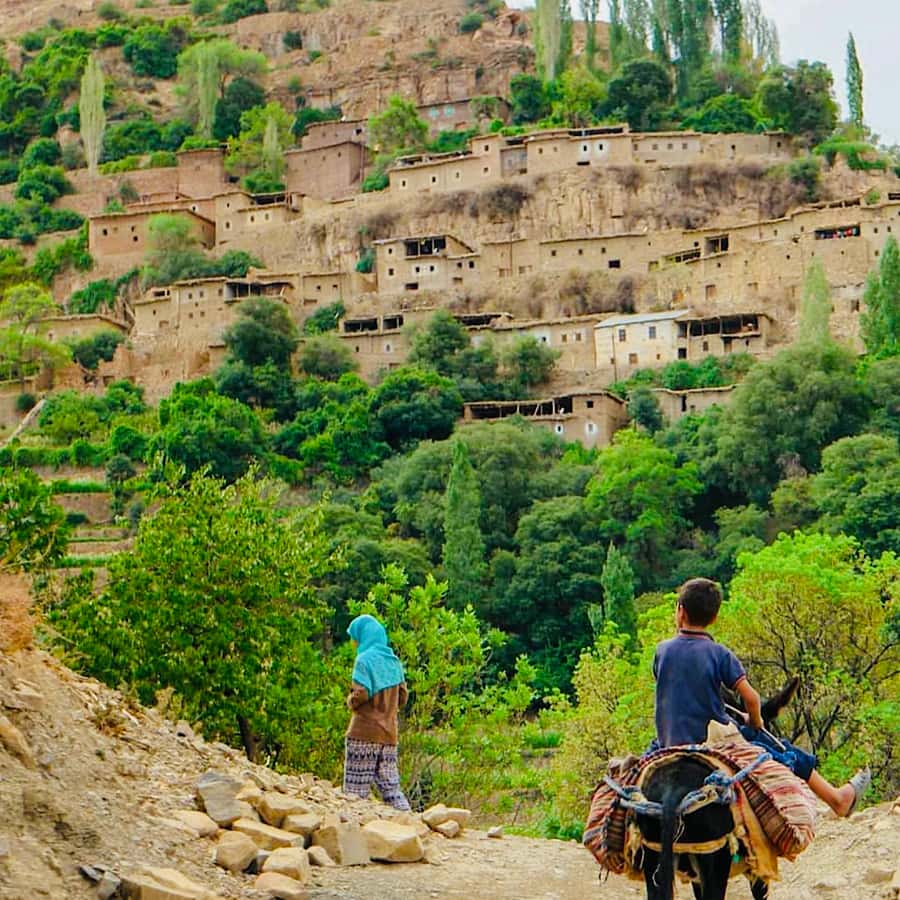
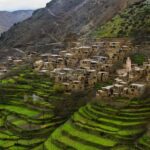
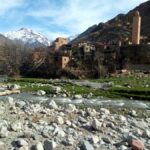
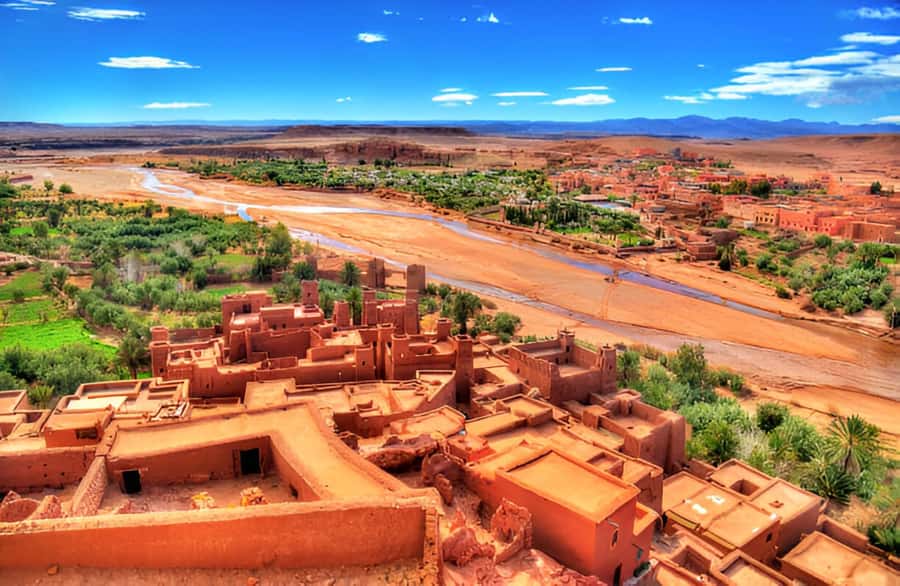
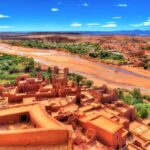
You’ll travel through the twisting Tizi n’ Tichka mountain pass, with the kind of road that keeps you awake in the best way—turn after turn, views changing fast. From there, you reach Ouarzazate and visit the famous Aït Benhaddou Kasbah. If you care about how Morocco’s forts were built for defense and survival, this is the anchor stop. The kasbah sits on a dramatic setting, and it helps you see why these places mattered long before tourism existed.
After Aït Benhaddou, you continue into Ouarzazate center and have a chance to tour Atlas Studios, described as the largest movie studio in Africa. Even if you are not a film nerd, it gives you a quick look at how Morocco’s scenery has become a production tool—and how the region turns its looks into work.
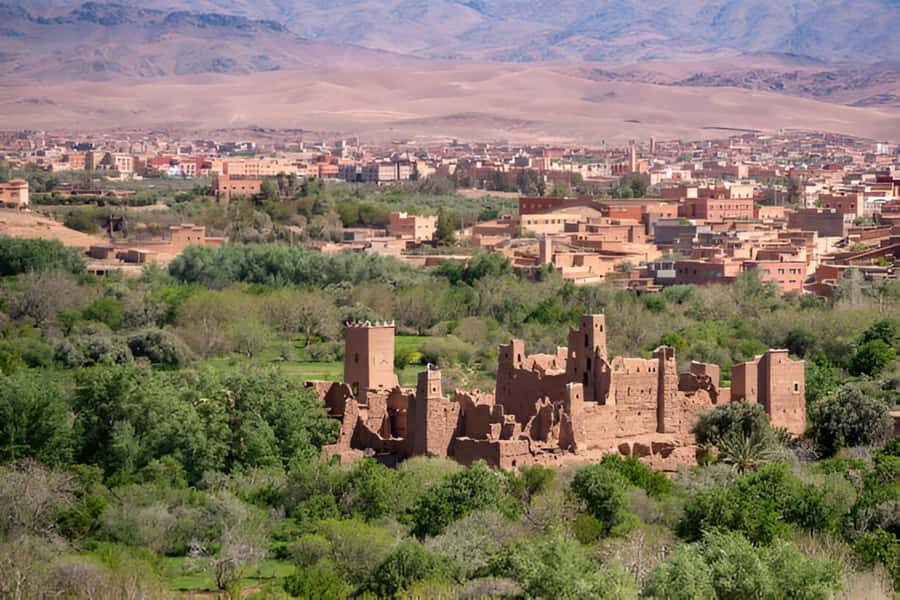
Then comes lunch at the Kasbah of Tourirt, tied to the former Glaoui Dynasty. That adds weight to what you just saw, because you go from architecture on a hill to a story of power and residence.
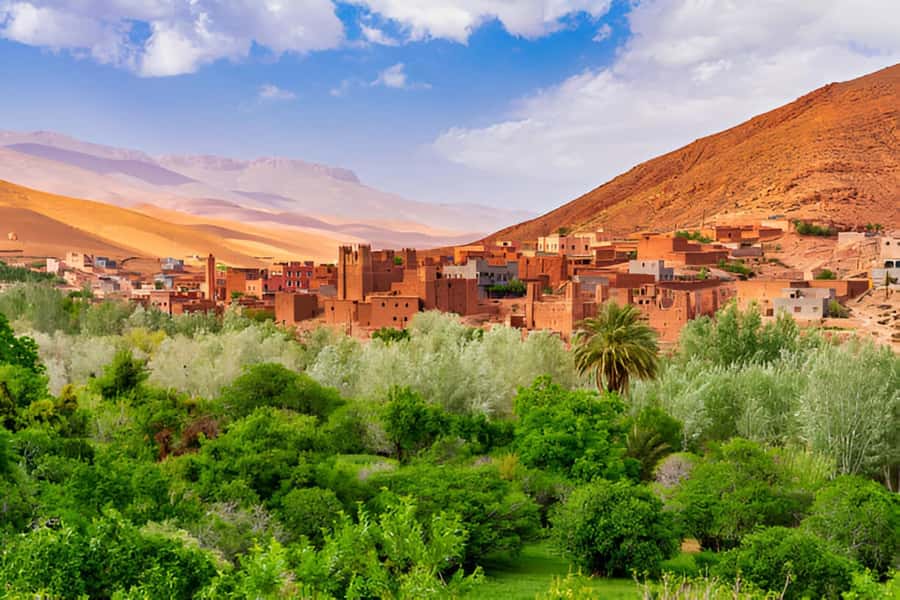
The day continues through the Rose Valley and onward to Skoura to see the Kasbah of Amerhidil, located by the Amerhidil River. You’ll finish Day 1 with an overnight in the Dades Valley.
Practical note: lunches are not included, so if you want control over costs, keep some money aside for meals you pick on the way.
Day 2: Dadès and Todra Gorges, mint tea stops, then Erg Chebbi at night
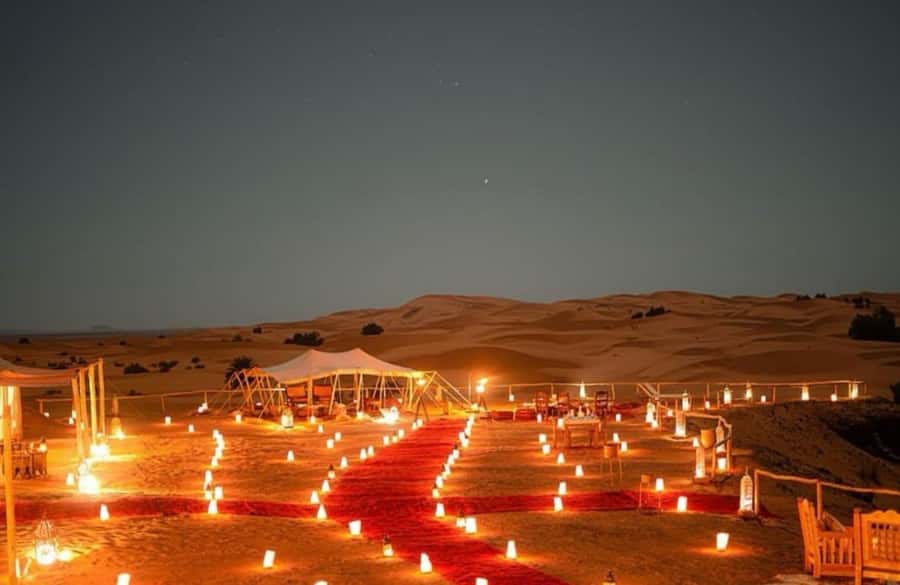
Day 2 is where the tour starts stacking up scenery in different “moods.” First: mountain gorges and valley views. Then: palms and red-rock sections. Finally: sand dunes.
You’ll head to the Dadès Gorges early, with stops built for photos and a mint tea break—often called Berber Whiskey. That tea stop is more than a refreshment pause. It’s the small reset that keeps long road days from feeling like a blur, and it’s a very Moroccan way to slow down.
From Dadès, you travel via Boulman Dadès to Tinghir, where you’ll see palm trees and greener stretches mixed with the surrounding rock. If you like contrast—dry hills, then sudden palm pockets—you’ll enjoy this part.
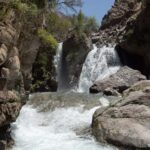
Next is the Todra Gorges, and the plan includes a leisurely lunch there. Todra is the kind of place where the canyon walls make you instinctively stand back and look up. Even without being a climber, it has that vertical scale feeling that pulls you in.
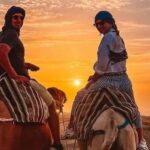
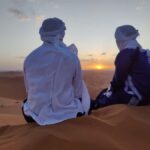
After lunch, you finally reach Merzouga and switch from road to desert travel. You’ll trek by camel across the wind-blown Erg Chebbi dunes, described as the classic Sahara-picture setting. You’re not just riding to say you did it. The timing matters: Day 2 is your first real sunset-and-night desert experience.
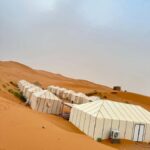
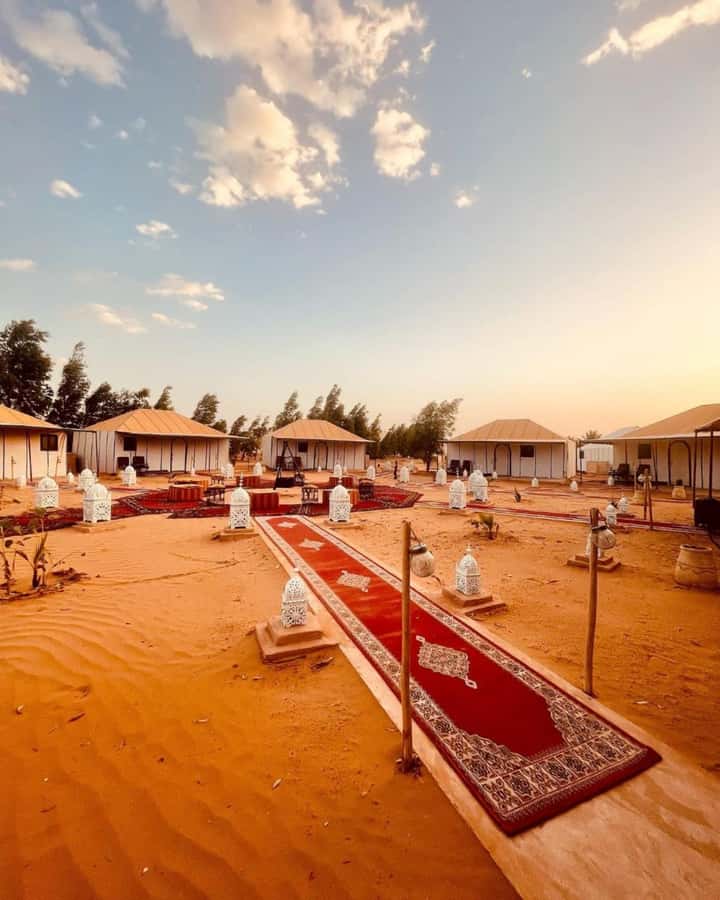
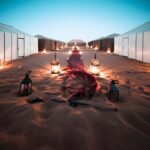
That night is in a bivouac camp with a typical Moroccan dinner, sleeping in a traditional camel-hair tent. This is one of the reasons to choose a private guided trip instead of trying to stitch together pieces yourself: someone else handles the camel logistics and the camp sequence, so you can focus on the moment.
Day 3: sunrise breakfast in the dunes, Rissani markets, and a Drâa Valley return night
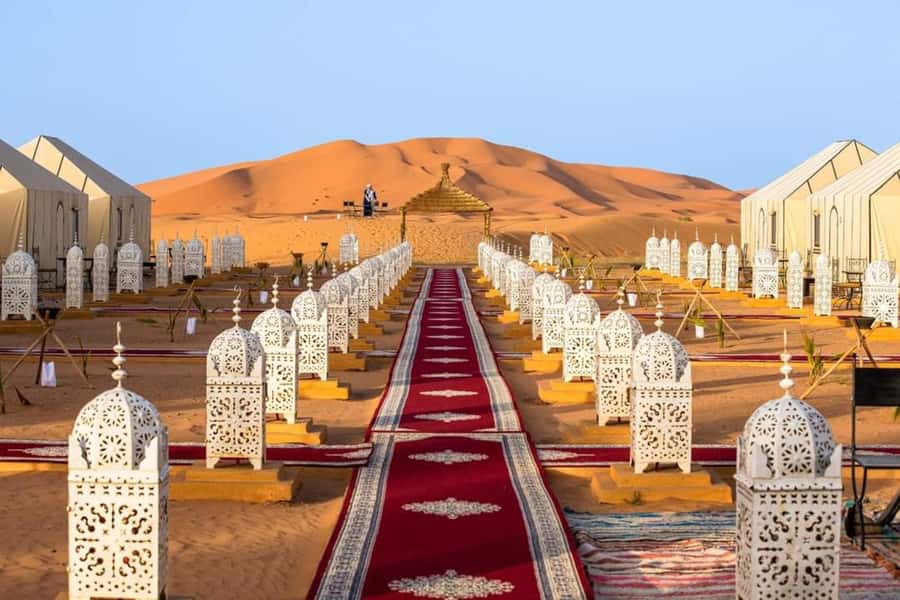
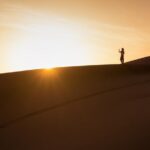
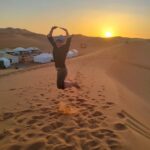
Day 3 starts with the desert in full morning mode. You wake up for a spectacular desert sunrise during breakfast, still in the camp rhythm. Then the bivouac trekkers return by camel, and you move on to Rissani.
Rissani is where the tour shifts from dunes to history and local life. You’ll visit the ksours and kasbahs of Tafilalt, and you stop at the Tafilalt Palm Grove en route. This is the part that helps you see the Sahara as something lived-in, not just photographed.
There’s also a religious and dynastic stop: the zaouia of Moulay Ali Sherif, described as the mausoleum of the dynasty’s founder. And if your timing matches the market day, you’ll go there on local market day. That’s a meaningful detail, because it turns a sightseeing stop into a people-and-tradition scene.
After Rissani, you head back toward Ouarzazate via Alnfe, Tazarine, Drâa Valley, and Agdz, with a visit to Tamnougalt Kasbah along the way. The last overnight is in a Kasbah Riad, and you even get an opportunity to visit the Kasbah of Tourirt again.
This works well if you like texture and repetition. You see Tourirt in a meal setting on Day 1, then you circle back into a more reflective setting on Day 3.
Day 4: back over Tizi n’Tichka and one last look at Morocco’s mountain scale
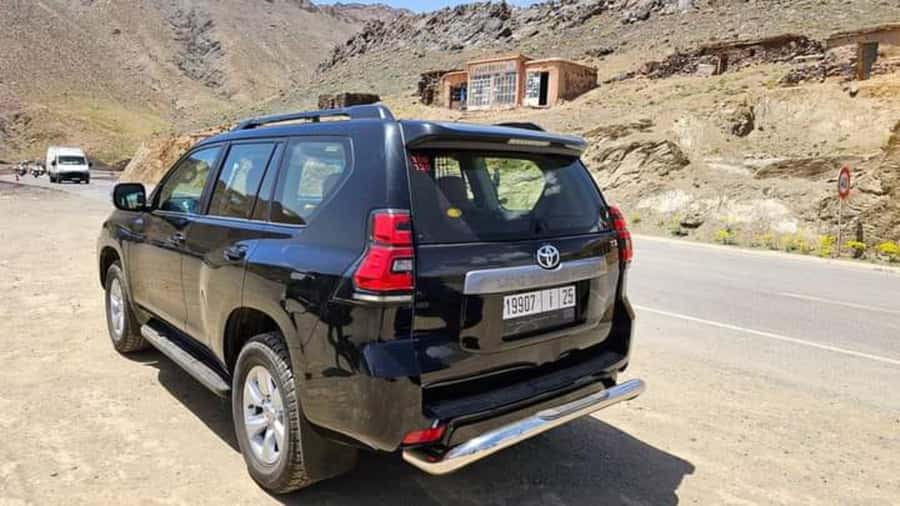
Day 4 is your return loop. You have breakfast, then head back to Marrakech via Tizi n’Tichka Pass across the High Atlas Mountains.
There’s a lunch stop en route. The good news is that Day 4 is not another “new world” day—it’s a finishing day. You’ll still see impressive mountain scenery, but the trip is winding down, which makes the drive feel more relaxing than Day 2 or Day 3.
A few more Marrakesh tours and experiences worth a look
Guides make the difference: what the private format really gives you
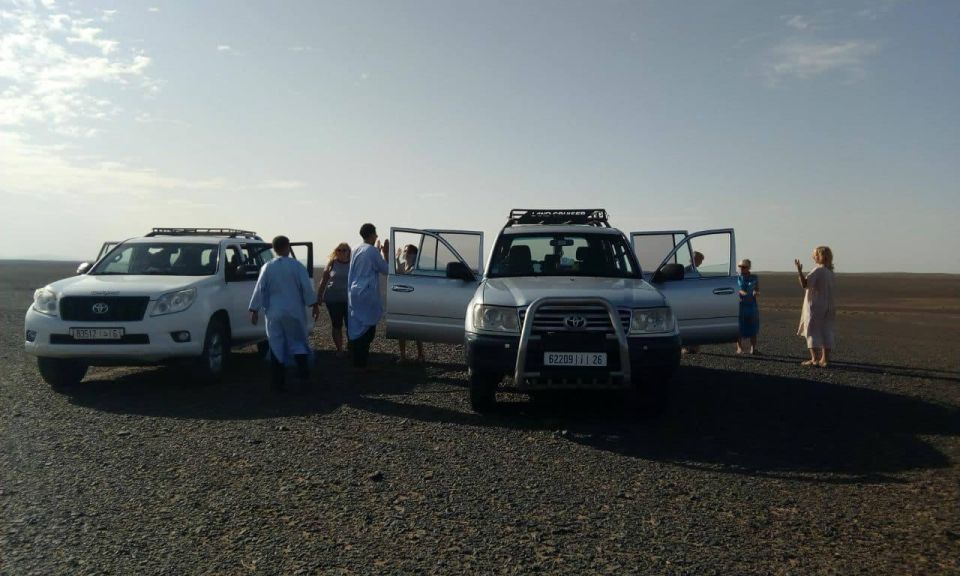
In a trip like this, the guide is the product, not just the vehicle. The best private guides help you connect dots while you’re in motion.
I like how this tour runs with a private English-speaking guide (and also French, Spanish, or Arabic language support). That matters when you want answers while standing in a souk, or when you’re asking why a kasbah sits where it does. Guides like Hassan are described as local-knowledge heavy and patient with questions, while Khalid and Mohamed are described as friendly drivers who explain culture and what you’re seeing on the road.
One small but real benefit: you can often ask for short stops when you spot a viewpoint or a roadside scene that looks worth it. In one case, a guide helped make lunch arrangements, which is useful when lunches are not included and you want something local rather than a random tourist menu.
Comfort and food: what is included, what you should budget
The tour includes a lot of the big-ticket basics:
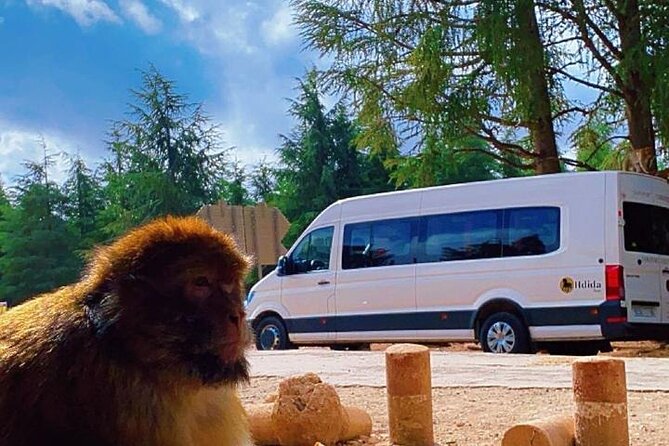
- Transportation by air-conditioned vehicles
- Fuel
- All breakfasts and dinners
- Accommodation
- Camel safari
What is not included:
- Lunches
- Entrance fees to monuments
- Alcoholic beverages
This is the value logic. You’re paying for the long-distance logistics, the guide time, your sleeping arrangements, and the desert camel experience. Lunch is extra by design, which lets you choose how you want to eat when you’re in the bigger stops like Ouarzazate, Tinghir, Todra, or en route.
Accommodation varies by day:
- You’ll sleep in the Dades Valley area on Day 1
- You’ll sleep in a desert bivouac camel-hair tent on Day 2
- You’ll stay in a Kasbah Riad on Day 3
A couple of reviews also mention strong cleanliness and a high standard of food, plus one note about a hotel in Ouarzazate being a bit noisy on a busy street. That’s the kind of trade-off that happens with popular towns: not every property can be quiet and central.
Desert reality check: sunrise is magic, but the Sahara is not a movie set
Here’s the honest bit. The night and sunrise rides can be spectacular, and they’re a huge reason people book this itinerary. But you should calibrate your expectations about isolation.
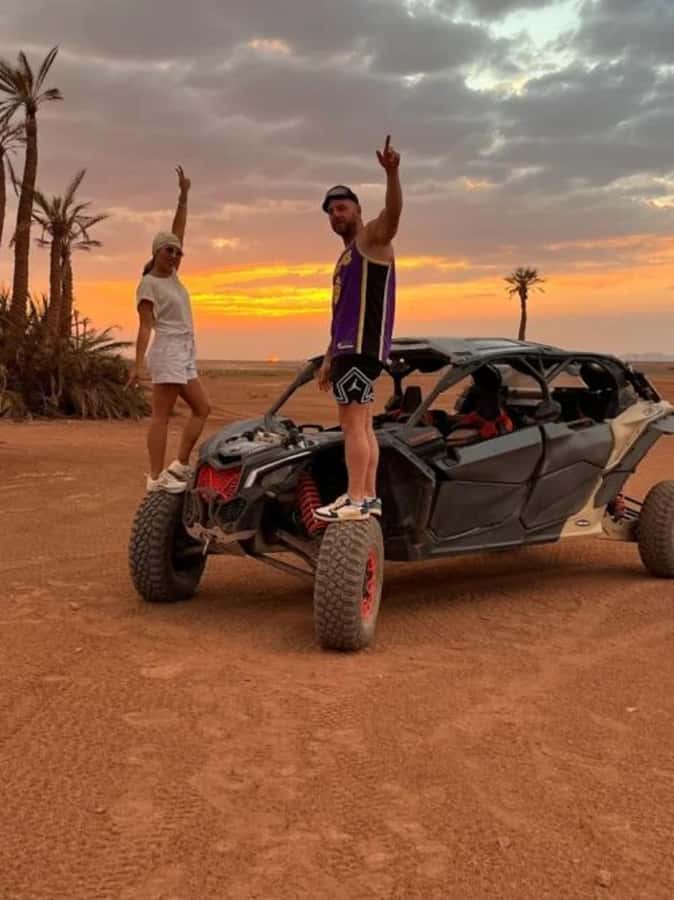
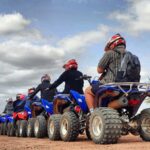
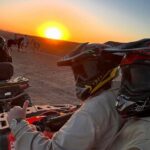
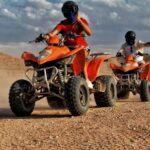
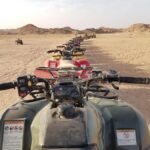
One review mentioned that there were other groups on camels and quad bikes operating in the dunes, and that the camp was based near the edge of the dunes with multiple camps/hotels nearby. That means the modern world leaks in a little around the edges.
Still, you can get the best version of the experience by leaning into timing and mood:
- Plan to enjoy the sunrise breakfast moment for what it is: calm, early light, and a desert start
- Take your photos quickly, then put the camera away and let the sound of the dunes do its job
If your top priority is absolute silence and total solitude, you’ll need to manage that expectation or look for a different kind of desert setup. If you want authentic Saharan moments without the stress of planning everything yourself, this tour fits well.
Who this tour is best for
This itinerary is a strong match if you want:
- Private pacing (your guide can adjust to your questions and interests)
- A balanced mix of kasbahs, valleys, and dunes, not just one highlight
- A guided route that helps you move across long distances without getting lost in transit decisions
It also fits couples and small families. One review mentioned a family of four finding suitable hotels and comfort across the route, and another mentioned the driver managing timing so there are short leg-stretch breaks without wasting the day.
If you hate long drives, this might feel like too much. But if you like Morocco’s variety—mountains, palms, canyon walls, markets, then sand—this route keeps you busy in the best way.
What to bring so nothing slows you down
The basic packing list is simple and practical:
- Passport or ID card
- Comfortable shoes
- Sunglasses
- Sun hat
- Sunscreen
Also, the tour does not allow pets, so plan accordingly.
Before you go: your details and pickup essentials
Pickup is included from hotels in Marrakech, and you’ll need to provide:
- Your hotel/accommodation details
- The full names of everyone in your group
That step matters because it smooths out the first day. With a private tour, the first handoff sets the tone for the whole trip.
Should you book this private 4-day Sahara discovery tour?
I’d book it if you want a well-paced desert route that pairs Erg Chebbi with kasbah culture, gorge scenery, and High Atlas driving—without having to assemble the itinerary yourself. At $440 per person, the price looks reasonable for a private format when you factor in the guide, air-conditioned transport, camel safari, accommodation, and the included breakfasts and dinners.
I’d think twice if you are chasing total quiet in the dunes or you’re sensitive to occasional noise in popular towns. This route aims for authenticity, but it still moves through a region where other groups exist.
If you decide to go, one smart move is to set expectations: treat the Sahara camp as an unforgettable experience, not a secluded fantasy. Then enjoy the parts you can control—sunrise timing, your camera habits, and lots of questions for your guide.
FAQ
Is camel safari included on this tour?
Yes. The tour includes a camel safari as part of the Erg Chebbi desert experience.
What meals are included, and what should I pay for myself?
All breakfasts and dinners are included. Lunches are not included, so you’ll budget for lunch on driving days.
Do I need to pay monument entrance fees?
Entrance fees to monuments are not included, so you may need to pay them depending on the stops.
What languages can the guide speak?
The guide can be English, French, Spanish, or Arabic, depending on availability.
Is pickup included from Marrakech?
Yes. Pickup is included from hotels in Marrakech, and you’ll provide your hotel details when booking.
What should I bring for the desert?
Bring a passport or ID card, comfortable shoes, sunglasses, a sun hat, and sunscreen.