REVIEW · MARRAKESH
From Marrakech: 3-Day Desert Tour to Merzouga Erg Chebbi
Book on GetYourGuide →Operated by IBN BATOUTTA TRAIL · Bookable on GetYourGuide
A desert trip that starts with mountain air. This 3-day route from Marrakech threads the Atlas Mountains to UNESCO Ait Ben Haddou, then drops you into Erg Chebbi for sunset camel rides and a night at a Berber camp. It’s the kind of trip where the days feel long, but the payoff comes fast once you reach the dunes.
I really like the mix of big sights and real hands-on moments, especially the guided stops at Tinghir and the Todra area, plus time to stretch your legs before the desert day. I also love that the desert portion includes both the camel trek at Erg Chebbi and sandboarding, so you’re not just watching from a distance.
One thing to consider: you’re spending serious time in a minibus, and the comfort level can vary with the season and the vehicle. Add that to possible cold desert nights (even when the days are mild), and it’s smart to pack for temperature swings.
In This Review
- Key things I’d circle before you go
- Marrakech to Tinghir: the long road that sets the tone
- Tizi Ntichka pass views, and why they’re worth your attention
- Ait Ben Haddou and Ouarzazate: mud-brick UNESCO and cinema dust
- Don’t assume the kasbah cost is included
- Ouarzazate stop: a useful breather plus real variety
- Tinghir and Todra Gorge: oasis life and cliff drama
- A lunch break that’s more valuable than it sounds
- Toward Merzouga: Erfoud dates and the shift into real desert terrain
- Erg Chebbi camel trek: sunset ride and what sandboarding adds
- Why sandboarding is worth it
- Sahara camp night: under stars, Berber music, and real comfort expectations
- Pack for cold, even when you think it won’t be cold
- Toilets and showers: know what you’re signing up for
- The return day: sunrise back, then Atlas back to Marrakech
- Price and value: where your $128 actually goes
- Who gets the best value from this tour?
- Small but important realism checks before you book
- Should you book this Marrakech to Merzouga desert tour?
- FAQ
- FAQ
- How long is the Marrakech to Merzouga tour?
- Where does the tour take place?
- How much does the tour cost?
- What’s included in the price?
- Do you sleep in a desert camp?
- What are the bathroom and shower arrangements at the desert camp?
- Is the camel ride part of the included experience?
- Are entrance fees included for Ait Ben Haddou?
- What languages are available for the tour guide?
- What’s the cancellation policy?
Key things I’d circle before you go
- Atlas-to-dunes timing: big travel days, but they’re broken by major stops, not nonstop driving.
- Ait Ben Haddou focus: UNESCO clay-and-stone architecture, plus you’ll see why it’s famous in film.
- Tinghir + Todra cliffs: a guided look at oasis life and dramatic canyon walls.
- Sunset camel ride + sunrise: two signature desert moments, not just one.
- Berber camp night: dinner under the stars with Berber music and drum beats.
- Practical desert setup: toilets are outside and showers are in the lodge, so pack accordingly.
Marrakech to Tinghir: the long road that sets the tone
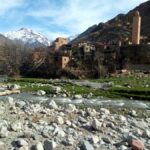
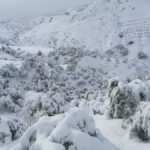
Your day starts early from Marrakech, and you’ll spend a lot of the morning climbing out toward the high Atlas. That first phase matters. You’re not just traveling to “reach” the desert; you’re earning the change in scenery as altitude and arid views take over. Expect plenty of photo stops along the way, plus the chance to see how everyday life and architecture shift as the road climbs.
The best part of this setup is the pace: the drive includes breaks, so you’re not stuck in a straight line of window-staring. You also get a real sense of the region’s geography before the first major cultural stop.
A few more Marrakesh tours and experiences worth a look
Tizi Ntichka pass views, and why they’re worth your attention
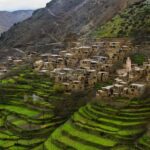
Even if you’ve seen photos of the Atlas, the pass tends to surprise people in person. From higher points, the views feel layered—valleys below, ridges stretching out, and villages tucked into slopes. It’s also the moment where you start to understand why so many routes funnel through the same mountain corridors.
If you’re prone to motion sickness, this is the day to be prepared. The road is winding, and you’ll likely be sitting there for a good chunk of time before lunch.
Ait Ben Haddou and Ouarzazate: mud-brick UNESCO and cinema dust
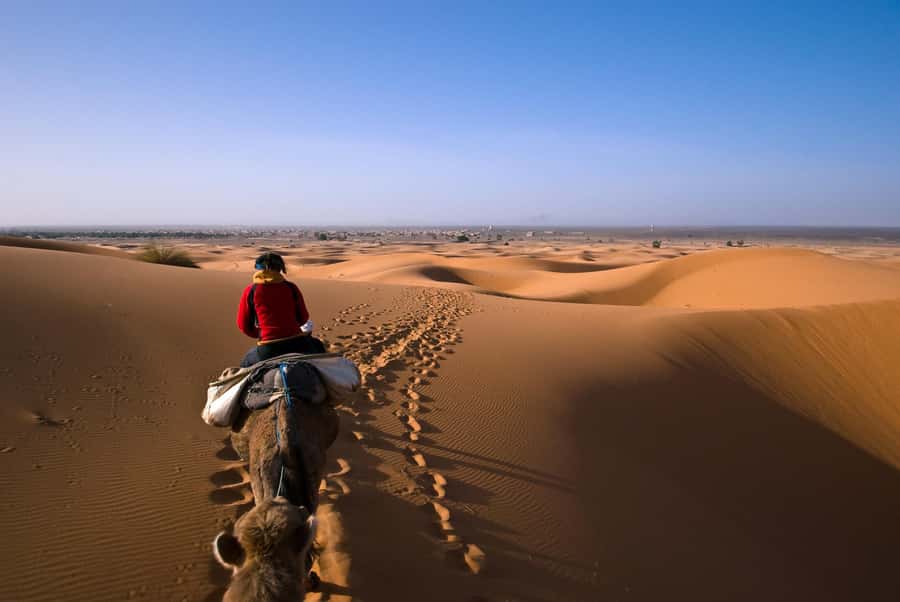
By the time you reach Ait Ben Haddou, the long drive starts to pay off. This is one of Morocco’s most famous fortified earthen kasbahs, and for a good reason: the architecture looks like it grew out of the land. The colors shift in the light, and the mud-brick textures create a 3D effect that photos sometimes flatten.
You’ll also see the film connection. Ait Ben Haddou has served as a backdrop for major Hollywood productions, and that detail isn’t just trivia—it helps explain why the site stays so visually dramatic. The arrangement of spaces and passageways feels built for storytelling, even if you’re simply walking around as yourself.
Don’t assume the kasbah cost is included
A key practical point: entrance to Ait Ben Haddou kasbah costs extra, and the guide fee inside the kasbah is also not included. You’ll want cash and a little patience, even if you use the skip-the-ticket-line perk. Think of it like budgeting for one important ticket rather than an optional add-on.
Ouarzazate stop: a useful breather plus real variety
After Ait Ben Haddou, the route continues toward Ouarzazate. You’ll have time for Kasbah Taourirte and also some free time to visit the studios of cinema. I like this section because it gives you options—either you follow the planned stops or you use the free time to wander and reset.
Tinghir and Todra Gorge: oasis life and cliff drama
Day two begins in Tinghir after breakfast, and the morning shifts from “high Atlas monuments” to “people and water.” Tinghir’s oasis setting is a different kind of Morocco moment. You’re in a zone where greenery appears because a river system allows it, and that contrast is part of why the area feels alive.
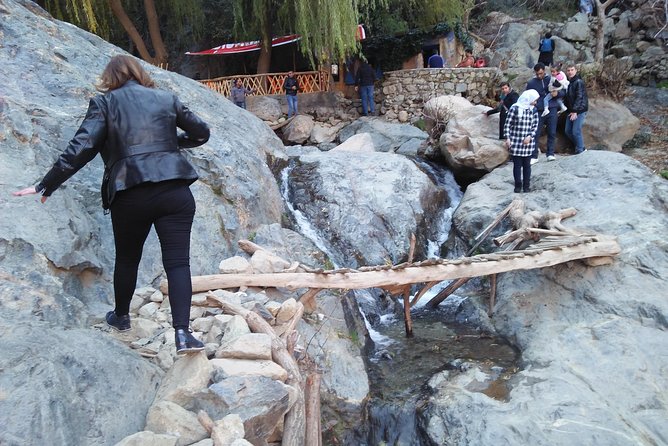
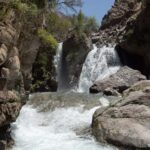
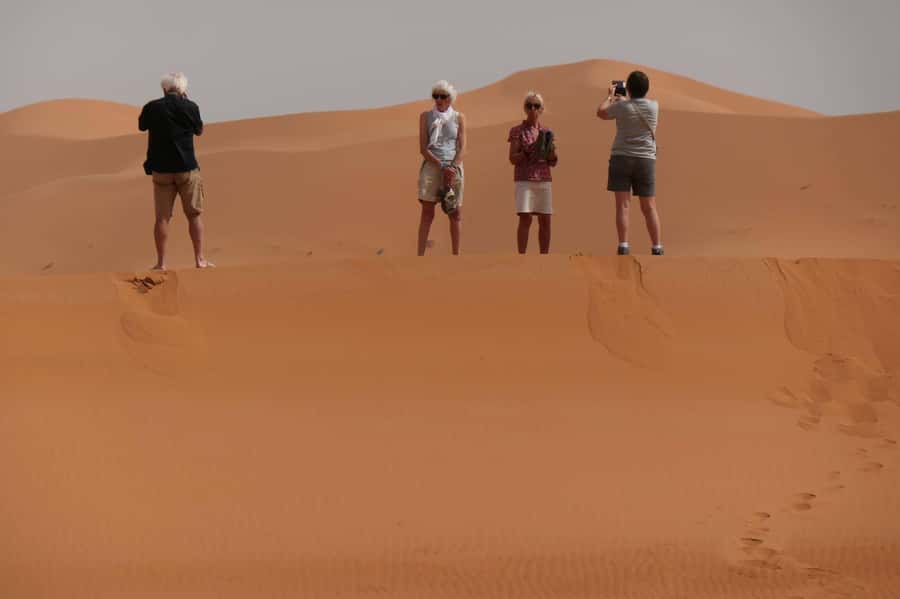
Then you get Todra Gorge. The canyon walls rise in a way that makes your brain go quiet for a second. You don’t need special hiking gear to appreciate it; even a short guided stop and time to look around gives you the scale.
A lunch break that’s more valuable than it sounds
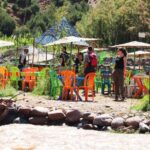
You’ll have time for leisure around this area, including a lunch stop at a local café. This isn’t a throwaway point. It’s your chance to slow down, sit in shade if it’s hot, and regroup before the drive toward Erfoud and Merzouga.
If you’re doing this in summer, plan around heat. The canyon can still feel hot, and you’ll be continuing later to the desert.
Toward Merzouga: Erfoud dates and the shift into real desert terrain
After Tinghir and Todra, the route moves toward Erfoud. This is a famous date market area and also a starting point tied to older caravan routes across the Sahara. You won’t live the caravan era on a coach schedule, but you will feel the change in terrain as the road trends toward rockier desert edges.
This part of the day is where expectations help. The scenery starts to look “emptier,” and that can feel anticlimactic if you think the desert only begins after you reach your camp. The truth is that Morocco’s desert approach has its own beauty—sun highlights on stone, long shadows, and that dry smell you only notice once you stop talking and just look out the window.
Erg Chebbi camel trek: sunset ride and what sandboarding adds
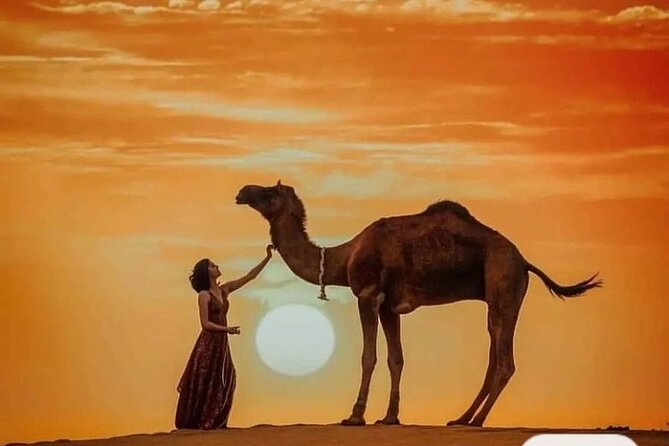
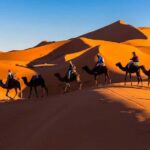
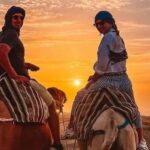
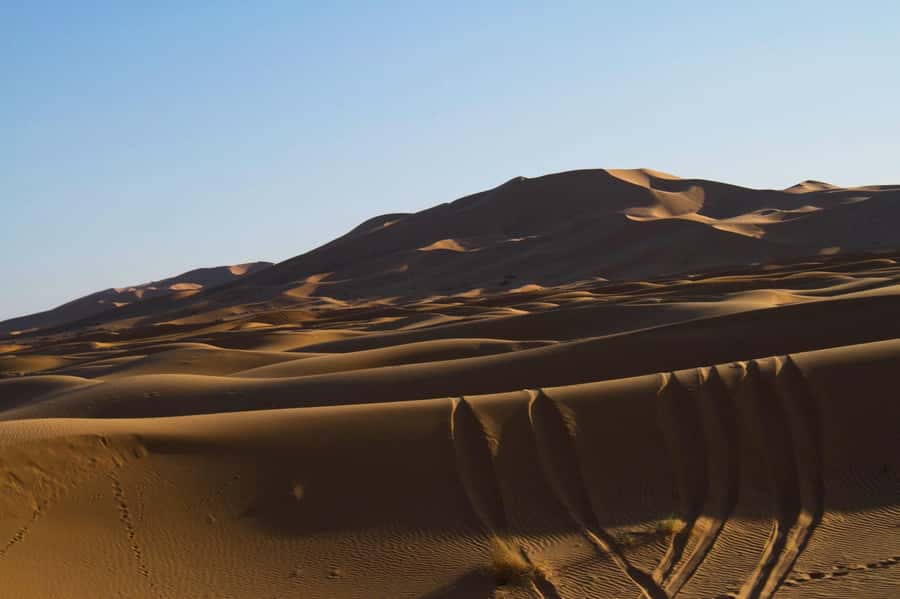
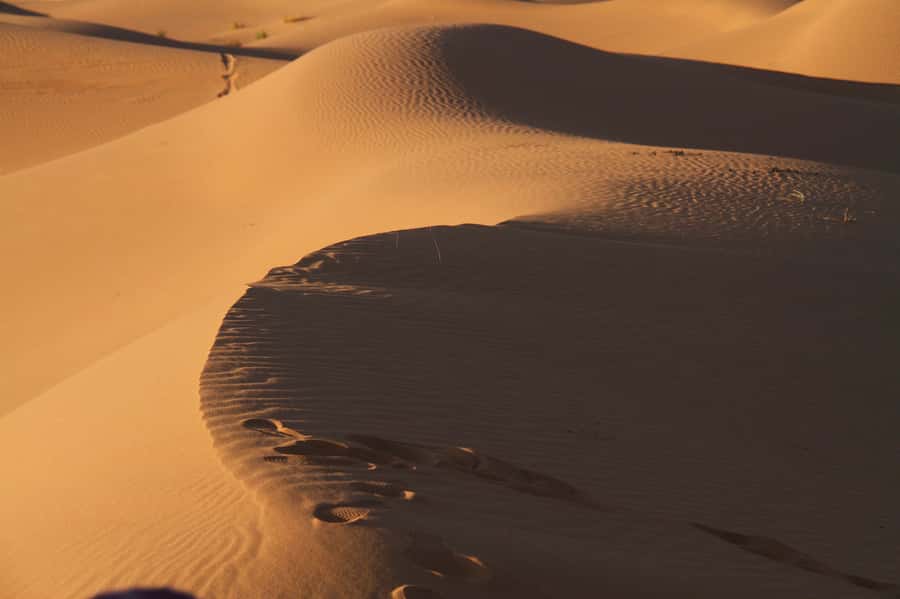
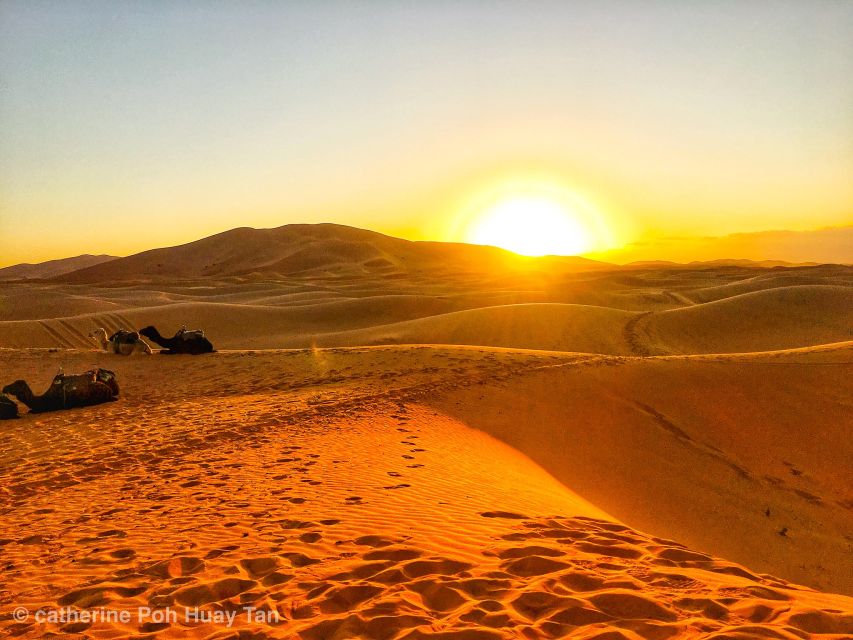
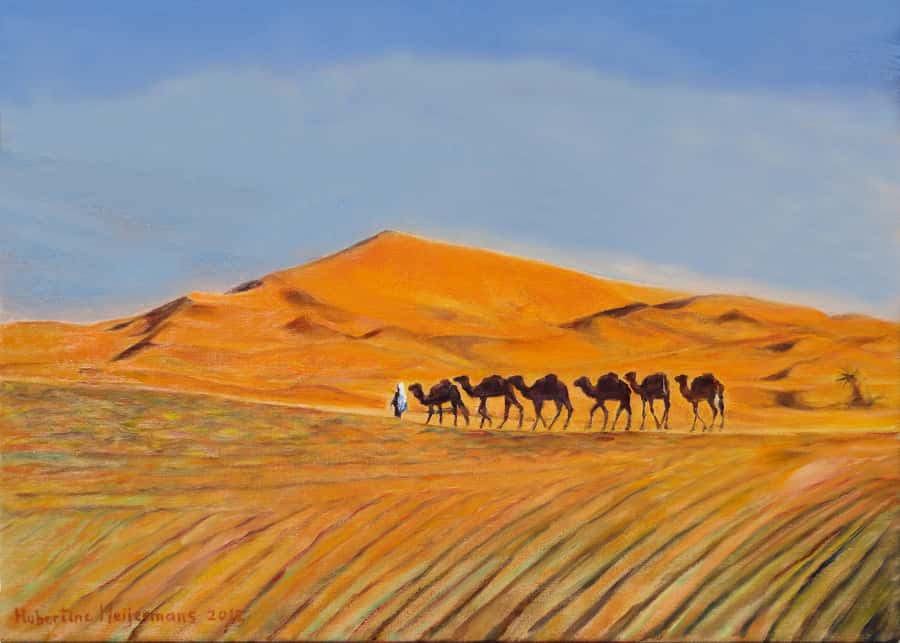
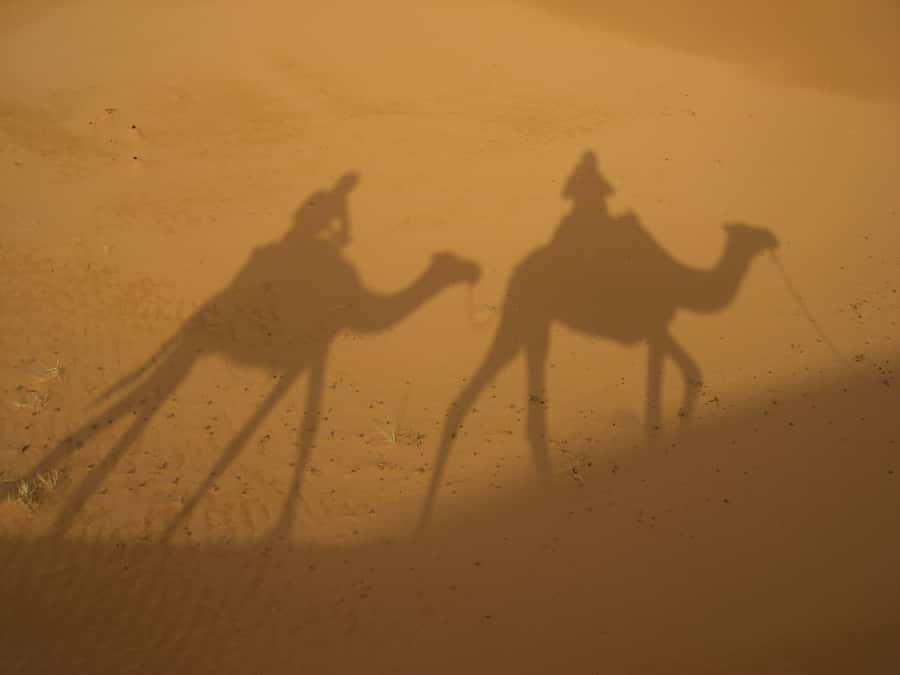
Then comes the moment you came for: arrival at the edge of Erg Chebbi dunes, meeting your camel caravan, and heading into the dunes with sunset on the horizon. This is one of those experiences that sounds simple until you’re actually doing it. Camels move steadily, and you feel the slope change under you as the dunes rise.
Two big wins here:
- The sunset ride gives you color shift as the light fades.
- The dunes aren’t just a backdrop; they’re the event.
Why sandboarding is worth it
Sandboarding is included, and for many people it’s the “I didn’t expect to do that” memory. It also helps you break the quiet of the ride and gets you more physically involved with the dunes. Even if you’re not sporty, the first slide teaches you how sand behaves differently than snow.
The practical side: you’ll want to wear what you’re comfortable getting covered in grit.
Sahara camp night: under stars, Berber music, and real comfort expectations
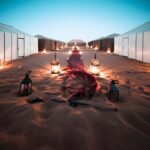
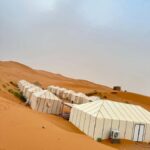
Your overnight is at a desert camp in Erg Chebbi. You’ll reach camp near darkness, which is exactly the right time for an experience like this. The sky changes quickly once the big light sources disappear, and camp life becomes social.
Dinner is served next to a campfire under the stars, and late at night you’ll hear Berber music with local hosts playing drums. That combination—food, firelight, sound—makes the dunes feel like a place with culture, not just scenery.
Pack for cold, even when you think it won’t be cold
A couple of reviews flagged cold temperatures at night, both in the transit hotel and in the desert. Even if you plan for warm days, bring layers for evenings. You’ll be outside or near open air for part of the night.
Toilets and showers: know what you’re signing up for
The camp setup is practical rather than fancy. Toilets are outside, and showers are available in the lodge. If you need a hot shower feel, adjust expectations—bring quick-drying basics and keep your evening routine simple.
Also, vegetarian dinner is available, which is a helpful inclusion if you eat that way.
The return day: sunrise back, then Atlas back to Marrakech
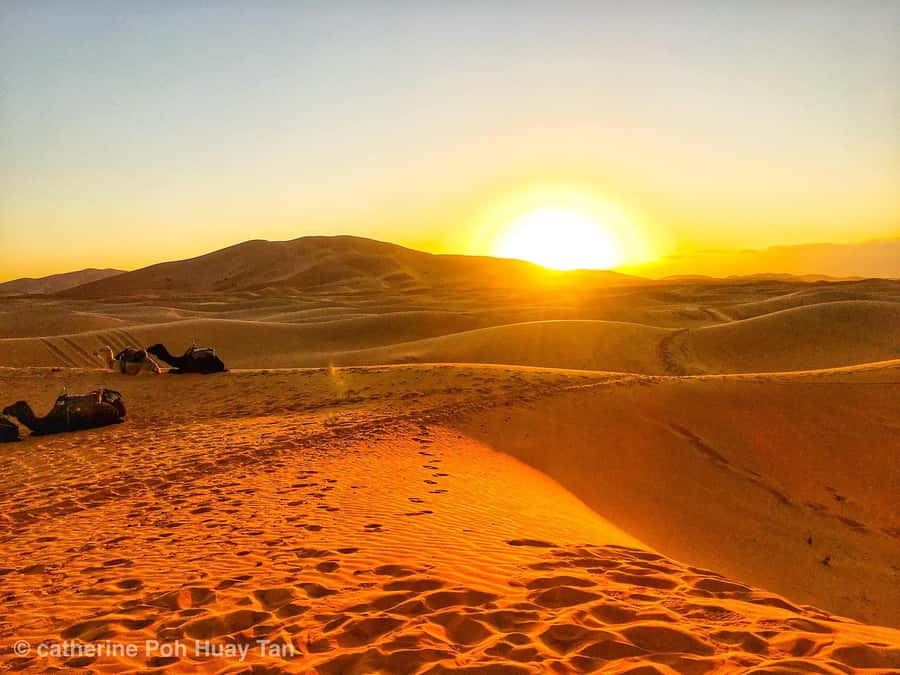
On day three you’ll do an early breakfast and then a camel ride back to the main road. This early timing is important because it avoids the midday heat and sets you up for a smoother drive.
As you head back, you’ll pass through the Valley of Roses for lunch. It’s a nice way to transition from “desert stillness” into “green-coded memories.” After that, you’ll continue through the high Atlas and return to Marrakech around 8 PM.
By the time you arrive, you’ll likely feel the schedule in your body—this tour is built for sights, not slow living. Still, that’s also why it works: you get the major highlights in a tight 3-day package.
Price and value: where your $128 actually goes
At about $128 per person for 3 days, the value is strongest if you want a single, organized plan that covers the core trio:
1) Mountain and UNESCO stop coverage (including Ait Ben Haddou),
2) Canyon and oasis region guiding (Tinghir and Todra),
3) Erg Chebbi desert sleep with camel trek and sandboarding.
Your included basics cover the expensive parts most independent travelers have to piece together: pickup and drop-off, transportation in an air-conditioned minibus with luggage storage, a guide, a private room at a 4-star transit hotel (Hotel Bougafer or similar), plus the camel trek and desert camp overnight with dinner and breakfast.
What’s not included is also clear: Ait Ben Haddou entrance and the guide fee at the kasbah. Budget those extras and you won’t feel surprised.
Who gets the best value from this tour?
You’ll likely feel you got your money’s worth if you:
- want a structured route with minimal planning,
- care about seeing Ait Ben Haddou plus Erg Chebbi within a short window,
- enjoy guided stops but also like a bit of free time (like Ouarzazate and cinema studios).
If you’re the type who hates long rides, this may feel like too much time in transit for three days. In very hot weather, comfort can also be inconsistent depending on vehicle cooling.
Small but important realism checks before you book
Here’s the honest checklist I’d use:
- Language consistency: the tour lists English/French/Spanish, but it’s smart to confirm how explanations will be handled in your specific language, especially for stops where a local guide might take over.
- Hotel comfort and temperature: some reports mention cold nights. Pack for it even if daytime weather looks mild.
- Meals: dinner and breakfast are included, with a vegetarian option. Still, food can vary in quality from stop to stop, so don’t assume every meal will feel like a top restaurant.
- Long day in transit: you’ll be on the road a lot. It’s a big factor for kids and anyone sensitive to hours on buses.
- Season matters: if you go in summer, heat makes everything harder—days, rides, even the cabin experience. Dress and plan for it.
Should you book this Marrakech to Merzouga desert tour?
If your dream is Marrakech-to-desert in three days with Ait Ben Haddou, Tinghir/Todra, and an actual Erg Chebbi night—including camel sunset, sunrise timing, and sandboarding—this tour format makes sense. It’s also a good fit if you prefer a live guide and smooth logistics rather than building the trip yourself.
I wouldn’t book it if you’re very sensitive to long travel hours, or if you need high comfort every minute of the ride. Also, if you’re picky about meal quality or language support, do a quick check of your expectations before you commit.
FAQ
FAQ
How long is the Marrakech to Merzouga tour?
It’s a 3-day tour, running from Marrakech to Merzouga and returning to Marrakech on day three.
Where does the tour take place?
The tour covers the Drâa-Tafilalet region, including Erg Chebbi dunes and stops such as Ait Ben Haddou and Tinghir.
How much does the tour cost?
The price is listed as $128 per person.
What’s included in the price?
Included items are hotel pickup and drop-off, air-conditioned transportation with luggage storage, a guide, a private room at Hotel Bougafer (or a similar 4-star hotel), the camel trek in Erg Chebbi, one overnight in a desert camp, dinner and breakfast (vegetarian option available), and sandboarding.
Do you sleep in a desert camp?
Yes. You’ll spend one night in a desert camp in Erg Chebbi.
What are the bathroom and shower arrangements at the desert camp?
Toilets are outside, and showers are available in the lodge.
Is the camel ride part of the included experience?
Yes. You’ll ride camels as part of the desert experience, including a sunset camel ride and another camel ride back near the start of day three.
Are entrance fees included for Ait Ben Haddou?
No. Entrance to Ait Ben Haddou kasbah costs extra, and the guide fee at the kasbah is also not included.
What languages are available for the tour guide?
The live tour guide is listed as English, French, and Spanish.
What’s the cancellation policy?
Free cancellation is offered up to 24 hours in advance for a full refund.