REVIEW · FEZ
Fes to Marrakech 3 Days Desert Tour
Book on Viator →Operated by Berber Camp Merzouga · Bookable on Viator
Three days through Morocco can feel like changing countries. You go from cool Ifrane cedar forests to the big-sky silence of Erg Chebbi, then end at Marrakech via Todra Gorge and UNESCO Ait Ben Haddou. Along the way, you also pass through palm groves, climb mountain passes, and get a taste of local trading towns.
I love the Erg Chebbi camel trek timed for sunset and sunrise, plus the way it turns a long drive into a real desert night. I also love the desert camp set-up: dinner, breakfast, starry skies, and Berber drums around the fire. One drawback to plan for: lunches and drinks are not included, so bring cash for midday meals and budget for tips.
In This Review
- Key things to know before you go
- Why this Fes-to-Marrakech route works so well
- Day 1: Ifrane cool air, Azrou macaques, then Merzouga dunes at golden hour
- Quick stop in Ifrane: Morocco’s Alpine-style pause
- Azrou cedar forest: where Barbary macaques feel like neighbors
- Through the Atlas and toward the Ziz route
- Merzouga arrival: switch to camels and meet Erg Chebbi properly
- Day 2: Desert sunrise, Rissani souk, and Todra Gorges’ red cliffs
- Rissani Market: trading town energy
- Erfoud fossilized marble stop
- Todra Gorges: a canyon that invites simple wandering
- Dades Valley and monkey fingers rock formation
- Day 3: Rose Valley timing, Ouarzazate studios, and UNESCO Ait Ben Haddou
- Kalaa Magouna and Rose Valley: season matters
- Skoura palm groves and Ouarzazate: the gate of the desert
- Ait Ben Haddou: UNESCO kasbah that actually held scenes
- Camels, the luxury camp, and what your night is likely to feel like
- Price and logistics: is $580.73 a good deal?
- Tips to make the trip feel smooth instead of exhausting
- Should you book this Fes to Marrakech 3-day Sahara tour?
- FAQ
- How long is the Fes to Marrakech 3 days desert tour?
- What is the price per person?
- Where does the tour start in Fes and where does it end in Marrakech?
- What time does the tour start?
- Is pickup offered from my accommodation or the airport?
- Is this a private tour?
- Are camel rides included?
- Is sandboarding included?
- What meals are included, and what is not?
- What happens if the tour can’t run due to weather?
- Can I cancel for a full refund?
Key things to know before you go
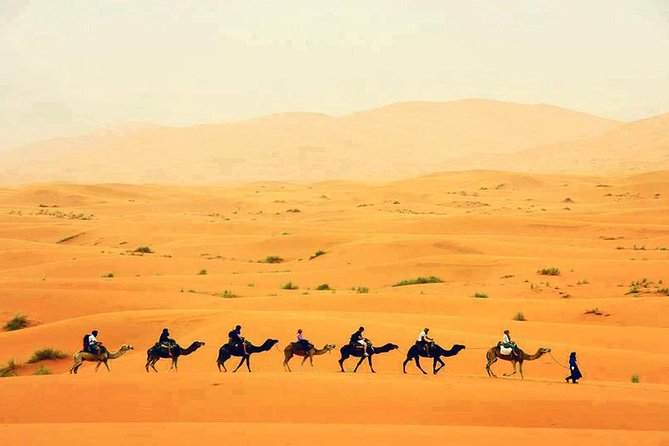
- Erg Chebbi camel time is the heart of the trip: camel crossing plus sunset and sunrise on the dunes.
- Meals are partly covered: you get 2 breakfasts and 2 dinners, but lunches and drinks are not included.
- You stop for wild Morocco variety: Ifrane, Azrou cedar forest (Barbary macaques), Ziz river route, Todra Gorges, and Ait Ben Haddou.
- Guides seem to matter a lot: names like Hassan, Youssef, and Assou show up often, with praise for safe driving and flexibility.
- Private tour, not a cattle-car vibe: it’s for just your group, with an air-conditioned vehicle.
- Optional sandboarding on the dunes adds a fun extra if you want it.
Why this Fes-to-Marrakech route works so well
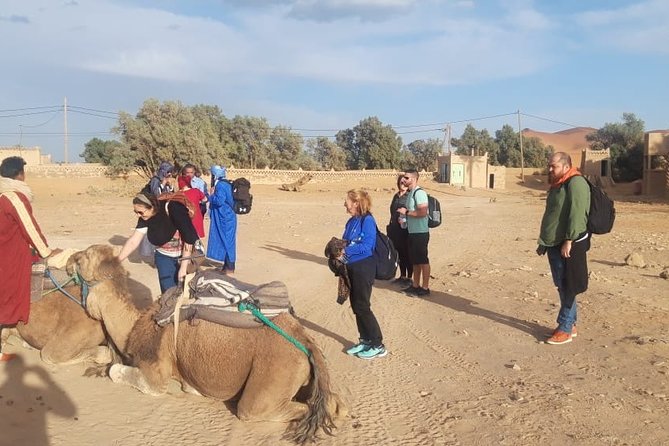
This isn’t just a Sahara tour that happens to include driving. It’s a cross-country route that changes your “world” every day. Day 1 starts in a cooler pocket of Morocco (Ifrane), then heads into cedar forest life around Azrou, and finally lands in Merzouga where Erg Chebbi dunes swallow the horizon. Day 2 breaks up the travel with real mountain stops like Todra Gorges, and Day 3 finishes with Ait Ben Haddou, plus Ouarzazate film studios and the Rose Valley.
For you, that means you don’t end up spending the whole trip in a bus seat staring at the same view. You get a mix of culture (souks and kasbahs), animals (Barbary macaques), and iconic geography (Atlas passes, Todra canyon, and desert dunes). Even the long driving days feel purposeful because each leg has a clear “why we’re stopping here.”
Value-wise, it’s also smart that the core desert experience is built into the package: camel transfers to and from camp and a night in the desert are part of the deal, not something you scramble to arrange separately.
A few more Fez tours and experiences worth a look
Day 1: Ifrane cool air, Azrou macaques, then Merzouga dunes at golden hour
Your day begins with an early pickup in Fes, either from your accommodation or from the airport if you’re flying in. The tour starts at 8:00 am, and you’re moved south in an air-conditioned vehicle. That matters on this route because you’ll spend real hours on the road.
Quick stop in Ifrane: Morocco’s Alpine-style pause
Ifrane is known for cold weather, snow, and Swiss-like architecture. The stop is short, about 20 minutes, and the admission ticket is listed as free. Think of it as a reset: you step into a cooler mood before heading into warmer desert zones.
Practical tip: if you’re visiting in shoulder season, Ifrane can feel noticeably cooler. Bring at least a light layer so you’re not cold when everyone else is in T-shirts.
Azrou cedar forest: where Barbary macaques feel like neighbors
Next comes the cedar forest near Azrou, with Barbary macaques. The stop is around 30 minutes, and the admission is included. The tour suggests you can feed the macaques while you wander.
This is one of those moments where the “tour” part melts into “street life,” because the animals are simply there and the forest feels lived-in, not staged.
Consideration: feeding animals is fun, but keep it respectful. Don’t make sudden moves, don’t overdo it, and follow your driver’s lead so you stay safe and keep a good vibe with the locals.
Through the Atlas and toward the Ziz route
From there you continue via Midelt for lunch, then head toward the desert through mountain passes like Tizi-n-Tilghmt, following the Ziz River along the way. It’s a long transition day, but it’s paced with breaks so you’re not only “watching road.”

Merzouga arrival: switch to camels and meet Erg Chebbi properly
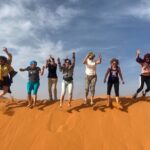
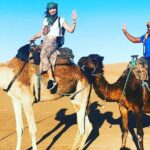
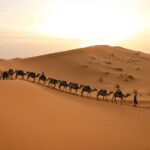
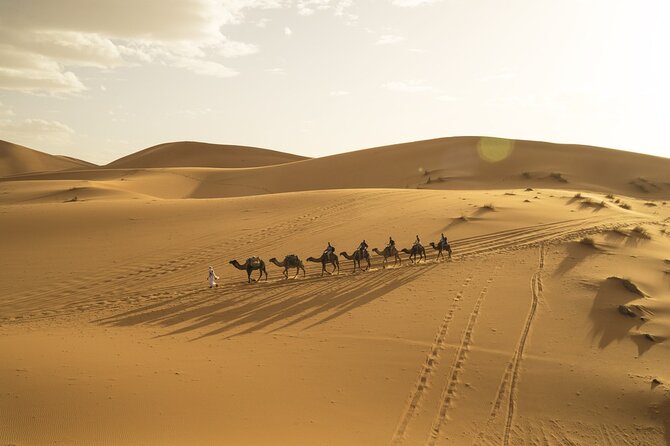
Once you reach Merzouga, you switch from vehicle to camels for the sand crossing. The tour includes camel transport (1 camel each) to and from the camp. You’ll ride across the dunes of Erg Chebbi and stop for sunset on top of a high dune.
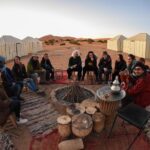
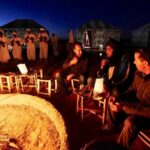
Then the mood changes fast. You continue to the desert camp for dinner and overnight, with Berber drums music and dancing around the campfire. The next morning, you get early timing for sunrise in the dunes—one of the most memorable rhythm changes of the whole trip.
What you’re really buying on Day 1 is that contrast: warm desert air after cool mountains, plus the shift from road noise to silence.
Day 2: Desert sunrise, Rissani souk, and Todra Gorges’ red cliffs
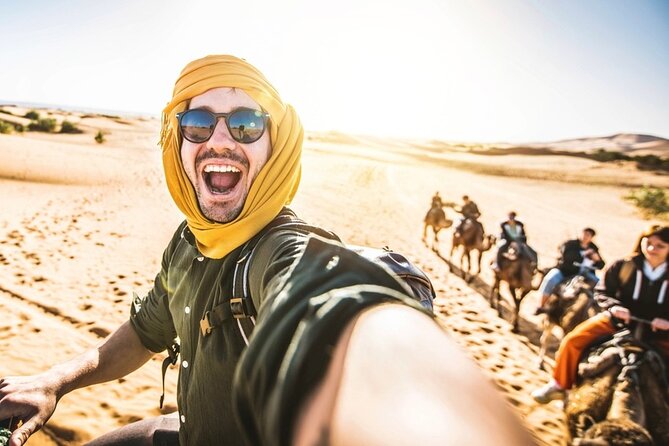
Day 2 starts with an early wake-up so you can watch the sunrise in the desert. After that you have time for breakfast, then you return by camel to Merzouga while your driver waits.
Then the itinerary moves away from “pure dunes” into towns and canyons. This is where the trip stops feeling like one long photo stop and starts feeling like a real journey.
Rissani Market: trading town energy
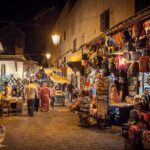
You visit Rissani, described as an ancient capital of Tafilalet and still an important trading hub. The souk timing is noted for Tuesdays, Thursdays, and Sundays. If your date lines up with those days, you’ll likely get more energy in the market scene.
Even if your day doesn’t match souk day, Rissani is still worth it for the local feel and the sense that you’ve left the tourist “bubble.”
Erfoud fossilized marble stop
Before Todra Gorges, there’s a stop in Erfoud to visit a workshop connected to fossilized marble. It’s a good break from driving, and it also gives you something tangible to look at beyond scenery: materials, craft, and how locals make use of what’s found in the region.
Todra Gorges: a canyon that invites simple wandering
Then comes Todra Gorges, with the Todra River carving out a dramatic canyon. The cliffs are described as high and red. If you like walking at your own pace, this is a great free-time moment: wander around, look for rock-climbing views (the area is mentioned as a climbing spot), and take in how narrow the gorge feels compared to the open desert sky.
Lunch is listed as free time in a restaurant, so you’ll need to budget for it.
Dades Valley and monkey fingers rock formation
After Todra, you continue toward the Dades Valley via Boumalne Dades. You stop at the “monkey fingers” rock formation, plus a viewpoint above the valley. Day 2 ends with dinner and overnight in a hotel.
This part of the route gives you another big contrast: desert silence gives way to mountain valleys and warm evening drives.
Day 3: Rose Valley timing, Ouarzazate studios, and UNESCO Ait Ben Haddou
Day 3 begins with breakfast and then shifts into southern Morocco culture and history. You’ll drive through several scenic zones, with stops tied to agriculture and film culture.
Kalaa Magouna and Rose Valley: season matters
You head to Kalaa Magouna for the Rose Valley. The rose festival is noted as taking place annually in May, with locals selling rose products like perfumes, rose water, and oil, plus cosmetic items.
If you’re not traveling in May, you might miss festival crowds, but you still get the sense that roses are a real local industry, not just a marketing idea.
Skoura palm groves and Ouarzazate: the gate of the desert
Then you pass through the palm groves of Skoura and reach Ouarzazate, described as the gate of the desert. You’ll also visit studios where famous movies were shot. That adds a pop-culture connection without feeling out of place, because the region’s geography has shaped how filmmakers see Morocco.
Ait Ben Haddou: UNESCO kasbah that actually held scenes
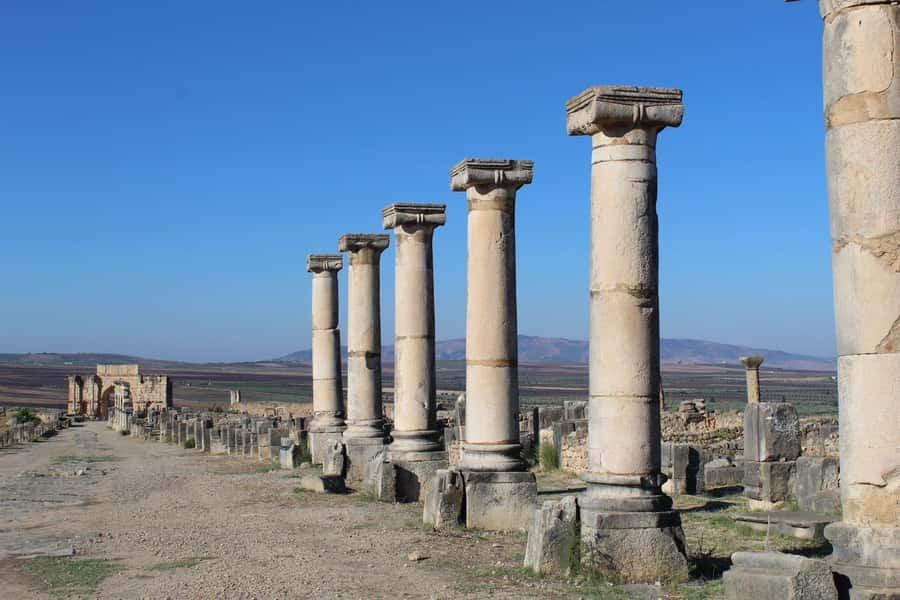
Finally, you visit the Kasbah of Ait Ben Haddou, a fortified village recognized as a UNESCO World Heritage Site. It’s also listed as appearing in movies such as Gladiator, Alexander, and The Mummy, plus TV series including Game of Thrones.
This is the finish line for the road trip feel. After two days of mountains and desert, you get a concentrated hit of architecture and time-capsule atmosphere.
You end in Marrakech, dropped off at the closest car-accessible point near Jemaa el-Fna.
Camels, the luxury camp, and what your night is likely to feel like
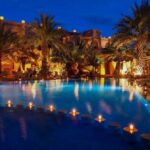
This tour leans hard into one experience: an overnight in the desert. And it’s not just “sleep somewhere sandy.” The package includes dinner and breakfast, plus the camp atmosphere with Berber drums around the fire.
In practical terms, you’re trading the “comfortable routine” of hotels for something more elemental. You’ll be outside, under open sky, and the silence is the point. It’s also why this itinerary works for photos without turning into pure photo-chasing. You don’t just look at the dunes—you live a night that matches their scale.
A couple planning notes for you:
- Pack layers: even when days are warm, desert nights can feel chilly.
- Bring a small light (phone flashlight is fine) so you can move around the camp comfortably.
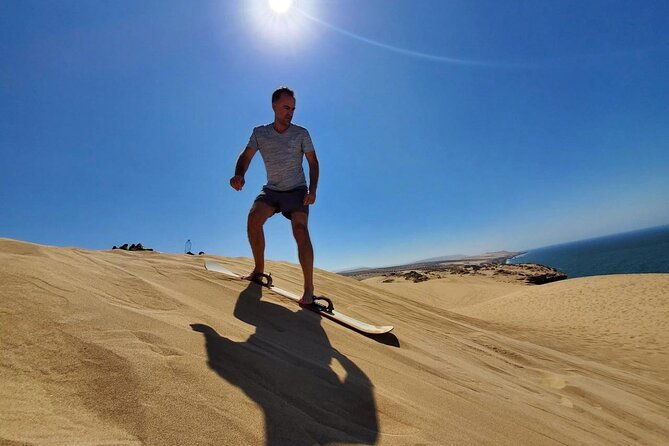
- If you want sandboarding, it’s listed as optional, so you can skip if you’re not into it.
Price and logistics: is $580.73 a good deal?
At $580.73 per person, you’re paying for a route that includes a lot of driving plus the expensive bits that many travelers end up paying for separately. Here’s what’s included:
- Air-conditioned vehicle
- Camel transfers to/from the camp (1 camel each)
- Dinner (2) and breakfast (2)
- Sandboarding in sand dunes (optional)
- Mobile ticket
- Pickup and drop at the start/end points in Fes and near Marrakech
What’s not included:
- Lunches
- Drinks
- Tips
So the value comes from the package nature. You don’t have to coordinate camel logistics, timing for sunset/sunrise, or the desert camp overnight on your own. That’s a big deal on this kind of route.
Is it “cheap”? No. But for what you get—private touring, desert night with meals, and multiple major stops across the Atlas—there’s solid reason many people rate it highly. The consistent praise around guide service and camp experience also suggests the money goes toward running the trip well, not just selling a route.
Tips to make the trip feel smooth instead of exhausting
This is a 3-day desert crossing, so your body needs to be a little flexible.
- Expect long driving blocks. Day 1 and Day 2 involve lots of road, and they’re spaced with stops (like Ifrane, Azrou, Todra, and viewpoints).
- Plan for lunch spending. Since lunches and drinks aren’t included, decide you’ll enjoy one good meal instead of trying to micromanage every stop.
- Ask about what you can actually control. The trip is private for your group, and guides like Hassan and Youssef are frequently noted for being flexible in how you experience stops. That means you’re not locked into a rigid script.
- Bring cash for small purchases. Souks and workshop visits often turn into impulse buys, and you’ll be doing it on the fly.
Also note: the tour requires good weather. If it can’t run due to poor conditions, you’re offered a different date or a full refund. That’s important for any desert plan because dunes are weather-sensitive.
Should you book this Fes to Marrakech 3-day Sahara tour?
Book it if you want a real Sahara overnight paired with the best “in-between” stops Morocco has to offer: cedar forest macaques, red-rock Todra, palm groves, film-studio Ouarzazate, and UNESCO Ait Ben Haddou. This is also a strong choice if you’d rather have someone manage the route and timing than piece it together yourself.
Skip it if you hate early mornings, don’t like long travel days, or you’re trying to keep costs ultra-low. Lunches, drinks, and tips add up, and you’ll spend a lot of hours in transit across mountain passes.
If you want the shortest path to the classic Morocco desert feeling—camels, dunes, camp dinner, then a historic finish in Marrakech—this itinerary is built for that.
FAQ
How long is the Fes to Marrakech 3 days desert tour?
The tour runs for approximately 3 days.
What is the price per person?
The listed price is $580.73 per person.
Where does the tour start in Fes and where does it end in Marrakech?
It starts at Hotel Batha, Ave de La Liberte, Fes 30000, Morocco, and ends near Jemaa el-Fna in Marrakech.
What time does the tour start?
The start time is 8:00 am.
Is pickup offered from my accommodation or the airport?
Yes. Pickup is offered from the airport or your accommodation in Fes.
Is this a private tour?
Yes. It’s a private tour/activity, and only your group participates.
Are camel rides included?
Yes. Camels to/from the camp are included, with 1 camel each.
Is sandboarding included?
Sandboarding in the sand dunes is optional.
What meals are included, and what is not?
Dinner is included for 2 nights, and breakfast is included for 2 mornings. Lunches and drinks are not included.
What happens if the tour can’t run due to weather?
This experience requires good weather. If it’s canceled due to poor weather, you’ll be offered a different date or a full refund.
Can I cancel for a full refund?
Yes. Free cancellation is available, and you can cancel up to 24 hours in advance for a full refund.