Fez can feel like a maze in daylight. This private guided loop ties together the main Fez el-Bali sights, with pickup and an easy rhythm so you’re not stuck figuring out routes all day.
I really like that the day is built around big, recognizable stops: the Royal Palace area with its famous doors, plus the Jewish Quarter of Al Mallah and the craft-heavy medina lanes.
One thing to plan for: lunch isn’t included, and entrance fees for most sites are not included either. So you’ll want a bit of cash ready for tickets while the car-and-driver part stays handled.
In This Review
- Key Things to Know Before You Go
- Fez el-Bali Works Best When Someone Sets the Order
- Door-to-Door Pickup and an 8-Hour Medina Rhythm
- Fes el-Bali: 3 Hours That Helps You Get Your Bearings
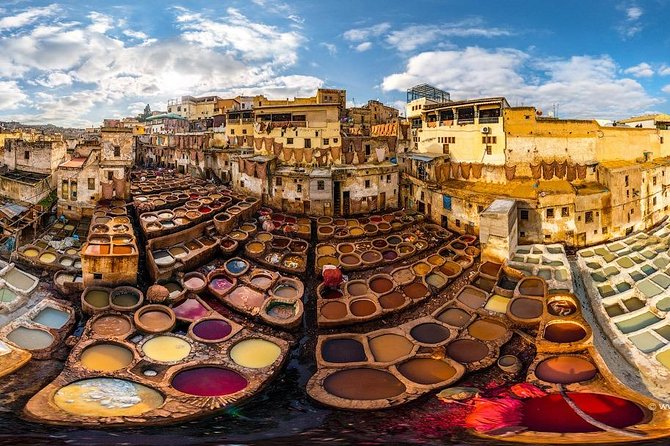
- Tanneries and Craft Alleys: Attarrin, Nejjarrin, Seffarrin Areas
- Royal Palace Area and the Famous Copper-Mosaic Doors
- Al Mallah Jewish Quarter: Seeing Layers, Not Just One Era
- Nejjarine Fountain and the Medersas Around It
- Attarrin, Nejjarrin, Seffarrin: Why the Names Matter While You Walk
- Batha Palace and Al Batha Museum: Arts and Moroccan Traditions
- Arm Museum Stop: A Quick Reality Check on Culture
- Price and Value: Is $46.16 Worth It?
- Private Tour Comfort: Who This Fits Best
- How to Make This Tour Feel Smooth (Not Rushed)
- Should You Book Fes Morocco Tours’ Fez Guided Tour?
- FAQ
- What’s the duration of the Fez guided tour?
- How much does it cost per person?
- Is pickup and drop-off included?
- Is lunch included?
- Are entrance fees included?
- What language will the driver use?
- What are your cancellation terms?
Key Things to Know Before You Go
- Private tour for your group means less waiting around and more flexibility with photos and pacing.
- Door-to-door pickup in an air-conditioned vehicle turns a long medina day into something manageable.
- Driver-guided focus in English/French helps you actually understand what you’re seeing as you walk.
- Core medina anchors are included (like the Fez el-Bali medina time, plus key monuments and museums on the route).
- Most site tickets and lunch are on you, so your final cost depends on what you choose to pay for.
Fez el-Bali Works Best When Someone Sets the Order
Fez el-Bali is one of those places where your brain can start to melt if you go in cold. This tour helps because it gives you a clear order for walking: you’re not just wandering alleys hoping you hit the right doors, gates, and courtyards by chance.
What I like is how the route balances “big wow” spots with the day-to-day Fez you’ll feel under your feet. You get the imperial feel near the Royal Palace, then you shift toward the working side of the city (tanneries and craft areas) and the cultural side (medersas and museum time).
The best part for most people: you don’t need to hire extra context on your own. You’ll be guided by a professional English-French speaking driver, and that matters in Fez because names and locations can be confusing even when you have maps.
You can also read our reviews of more guided tours in Fez
Door-to-Door Pickup and an 8-Hour Medina Rhythm
The tour runs about 8 hours, with hotel/riad pickup and drop-off. That’s a huge deal here. Fez is compact but still spread enough that one wrong turn can eat an hour. Starting with pickup lets you skip the logistical stress and focus on the walking part.
The car is air-conditioned, and you’ll also get bottled water. Those small comforts matter when you’re in and out of sun, stepping from steep streets into courtyards, then back out again.
As for pacing: the itinerary is structured around longer sightseeing blocks plus specific monuments. You can expect a full day where you’ll walk through key sights rather than just “passing by.” Also, since it’s a private tour/activity, you’re not squeezed into a rigid group flow.
Fes el-Bali: 3 Hours That Helps You Get Your Bearings
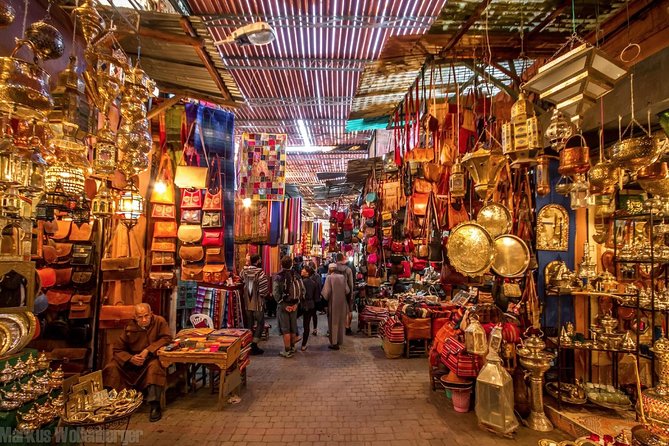
You’ll spend about 3 hours at Fes el-Bali with an admission ticket included. This is the foundation stop because it’s where you orient yourself to what Fez looks like “on the ground”: the tight lanes, the sightlines toward larger buildings, and the way the medina’s power and culture show up in daily movement.
In practical terms, this timing helps you later in the day. Once you’ve walked part of the medina with context, the next stops—tanneries, fountains, religious schools—start making more sense. Names stop sounding like random words and start pointing to real places.
If you like photo time, you’ll also enjoy this block because it’s where you’ll see the medina’s character up close. The drawback: medina walking can be uneven. Comfortable shoes aren’t optional.
Tanneries and Craft Alleys: Attarrin, Nejjarrin, Seffarrin Areas
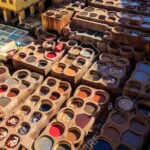
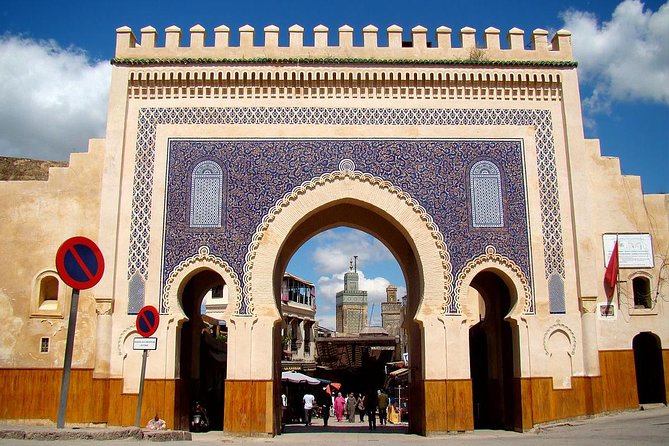
The tour includes Fez Tannery and names of major craft-related areas: Attarrin, Nejjarrin, and Seffarrin. Even when you don’t go inside every workshop (and site access can vary), you’ll still get the point of it: these places aren’t museum props. They’re tied to work that has shaped Fez for centuries.
I think this stop is valuable because it gives you a real contrast. After seeing grand doors and palace symbolism, you shift to Fez as a living city—where artisans keep doing what they do, and where the medina’s layout exists for work as much as for beauty.
What to keep in mind: tanneries and similar areas can be visually intense. If strong smells or close-up working areas bother you, go slowly and use the guidance of your driver to choose where to pause and how close to get.
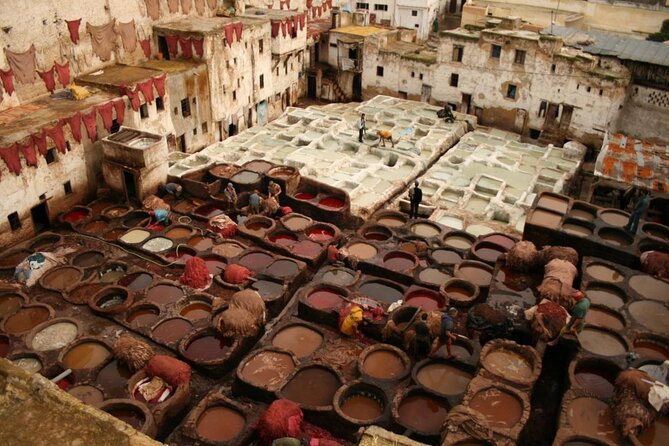
Royal Palace Area and the Famous Copper-Mosaic Doors
One of the headline moments is the imperial-level stop tied to the Royal Palace. The description you’ll hear is specific: giant doors made of copper, marble, and small pieces of tiles and mosaic.
Even if you can’t see every interior detail (many palace areas have limited viewing), the value is in understanding what you’re looking at. Doors in Fez aren’t just decoration; they’re status and craftsmanship made visible. The mix of materials and the scale are the story.
This is also the best place to ask questions. A good driver can translate what these materials mean and how Fez’s elite power historically expressed itself in architecture. Guides with names like Mohammed, Abdullah, and Abdelah show up in the feedback for a reason: people remember the clarity and the effort to make the day feel easy and fun.



Al Mallah Jewish Quarter: Seeing Layers, Not Just One Era
You’ll visit Al Mallah, the Jewish Quarter, described as dating back to the 17th century. The value here is perspective. Fez isn’t one uniform story; it’s a city with multiple communities and cultural marks left behind in streets, squares, and buildings.
What you’ll likely notice is how Al Mallah fits into the medina’s logic—tight neighborhood streets connected to larger public spaces. Even without going deep into every building, the tour helps you place it on your mental map.
My advice: don’t rush this part. When you slow down and look for patterns—street openings, walls with detail, how people move—you’ll get more from the walk than just checking off a name.
Nejjarine Fountain and the Medersas Around It
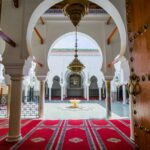
The itinerary includes fountains, including the Nejjarine Fountain, and medersas founded as early as the 13th century. This pairing works because fountains and schools show different sides of the same city: water and learning.
Fountains matter because they’re a meeting point and a design statement, not just a stop for a quick photo. The Nejjarine Fountain in particular is famous for how it carries art into everyday urban life.
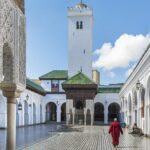
Medersas add another layer. Even if you’re not studying architecture formally, you’ll learn to look for the cues: shape, ornament, courtyard layout, and the way these buildings function as community institutions. This tour doesn’t just list the names—it uses them as signposts so your walk feels guided instead of chaotic.
Attarrin, Nejjarrin, Seffarrin: Why the Names Matter While You Walk
Seeing Attarrin, Nejjarrin, and Seffarrin in one day is smart, because you get repetition. Repetition helps your brain lock onto details. When you see one madrasa area, then another nearby, you start noticing differences in style and emphasis instead of getting overwhelmed by every single facade.
It’s also a good strategy for understanding Fez’s “neighborhood by function” feel. These names aren’t random labels. They represent places tied to craft, learning, and religious life.
If you want to make the most of these stops, give yourself one moment of focus at each: look at the entrance area, then the courtyard shape (if visible), then any decorative patterns that catch the light. Your driver can explain what you’re seeing so you’re not left guessing.
Batha Palace and Al Batha Museum: Arts and Moroccan Traditions
The tour includes Al Batha Museum, set in the Batha Palace, described as a museum of arts and Moroccan traditions. This is a great “mind reset” block in the middle of a medina-heavy day.
After hours of outdoor walking, a museum stop lets you process what you’ve already seen. You can connect architecture, ornament, and cultural life to objects and displays in a calmer environment.
It’s also a useful time for anyone who wants context without constant street noise. If you’re the type who likes to understand why something looks the way it does, this museum block adds that missing explanation—especially when paired with the medersas, fountains, and craft areas you saw earlier.
Arm Museum Stop: A Quick Reality Check on Culture
The itinerary also mentions the Arm Museum. While the specific focus of the collection isn’t spelled out in the information you have, the practical value of this stop is balance. It shifts you from decorative arts and architecture into historical tools and defense-related objects.
In a place like Fez, that kind of change helps you feel the city as a whole—creative, academic, and also shaped by conflict and protection across time. It’s the same reason people sometimes like including a weapons museum in a day trip: it stops you from only seeing what looks pretty on postcards.
Drawback to consider: if you’re not interested in weaponry or military history, this stop may feel less compelling than fountains or medersas. It won’t ruin the day, but it’s the one part you might choose to spend less time on if it’s not your thing.
Price and Value: Is $46.16 Worth It?
At $46.16 per person, this tour is priced in the “reasonable day rate” category for Fez. And it includes the big cost reducers: pickup and drop-off, air-conditioned transport, a professional English-French speaking driver, bottled water, and fuel.
The part that can change your final value is what isn’t included. You’ll need to budget for entrance fees to historical sites (with the note that admission for Fes el-Bali is included) and lunch. If you pay several site tickets and you add lunch, your total can rise.
So here’s my practical take: this is a good deal if you want a structured medina day without negotiating multiple details on your own. It’s not as strong value if you only want one or two stops and plan to skip most paid entries. Private routing costs less than piecing together separate guides, but it only pays off if you actually use the full day.
Private Tour Comfort: Who This Fits Best
Because it’s a private tour/activity for your group, this works well for:
- Couples who want pace control and photo time without group crowd pressure
- Families with kids who need a guided path (several names in the feedback included families)
- Solo travelers who want context and a driver who can answer questions on the move
- Anyone who finds Fez medina confusing and prefers a set plan
A small note from the experience details: most travelers can participate and service animals are allowed. Also, it’s described as near public transportation, which can help if you’re staying in a different area than the typical pickup zone.
How to Make This Tour Feel Smooth (Not Rushed)
Fez gets busy, and the medina is not designed for sprinting. To keep the day enjoyable, come ready for walking on uneven streets and keep your expectations realistic about what you can see in a single day.
A few things that help:
- Bring a small amount of cash for entrances where tickets apply
- Eat before the tour starts or plan to find lunch after, since lunch isn’t included
- Wear shoes that handle stairs and uneven ground
- If you’re sensitive to strong workshop smells, be honest with your driver and choose your distance
Also, the best feedback repeatedly points to drivers who keep things safe and relaxed, not overly salesy. In particular, names like Merouane and Mahdi show up with the same theme: clear explanations, a light humor when it helps, and no pressure for compulsory spending.
Should You Book Fes Morocco Tours’ Fez Guided Tour?
Book it if you want a structured Fez Medina guided day with door-to-door pickup, an air-conditioned vehicle, and a driver who handles route logic plus explanations in English or French. The key sights—Royal Palace doors, Al Mallah, tanneries, Nejjarine Fountain, and Al Batha Museum—are exactly the kind of anchors that help Fez click.
Skip or shop around if your budget is tight and you hate paying extra for entrance tickets, or if you’re only interested in one themed angle (like only crafts or only museums). In that case, you may prefer a shorter plan with fewer paid stops.
If you want Fez to feel doable, not stressful, this is a strong choice.
FAQ
What’s the duration of the Fez guided tour?
The tour is about 8 hours.
How much does it cost per person?
The price is $46.16 per person.
Is pickup and drop-off included?
Yes. Pickup from your hotel or riad and drop-off are included.
Is lunch included?
No. Lunch is not included.
Are entrance fees included?
Entrance fees to historical sites are not included, though admission for Fes el-Bali is included.
What language will the driver use?
The driver is described as a professional English-French speaking driver.
What are your cancellation terms?
Free cancellation is available. You can cancel up to 24 hours in advance for a full refund; if you cancel less than 24 hours before, the amount paid is not refunded.