REVIEW · MARRAKESH
Fes: Bou Inania Madrasa, Museum, Tannery, Souk & Medina Tour
Book on GetYourGuide →Operated by Moments in Morocco - Tour Agency · Bookable on GetYourGuide
Fes can feel like a living maze. This tour gives you a guided path through the UNESCO-listed Medina, with real stops like Bou Inania Madrasa, Al-Karaouine’s famed learning center, and the Chouara tannery. I like that it balances big monuments with hands-on craft sights, and I especially like the way the guide keeps things calm and unhurried; I’ve seen guides like Mouanis and Houssine praised for exactly that pace. One thing to plan for: two major entrances cost extra on the day (Bou Inania Madrasa and Dar Batha Museum).
You also get a street-smart tour experience, not just photos. With a guide born in the Medina or long-time local, you’ll cover more ground than you would solo, and you’ll usually know where to look in the souks for pottery, textiles, silver work, and leather—without feeling like you’re getting hustled every 30 seconds.
For a short trip, this is a strong value. Still, you should be ready for the Medina’s walking realities—comfortable shoes matter, and if you have mobility concerns, you’ll want to double-check suitability with the operator before you go.
In This Review
- Key highlights worth your attention
- Getting Oriented in the Fes Medina Without Getting Lost
- A quick reality check on tickets and extras
- Bab Boujloud to Dar Batha: Art Meets Daily Life
- Bou Inania Madrasa: Cedar, Zellige, and a Marble Courtyard
- Al-Karaouine University Exterior: Why Learning Was a Big Deal
- Chouara Tannery: Watching Leather-Dye Tradition from a Terrace
- Souks Sabaghine and El Attarine, plus Hammam Seffarine Sounds
- Souk Sabaghine: textiles and artisan streets
- Souk El Attarine: spices, perfumes, and herbal remedies
- Hammam Seffarine: coppersmith hammering
- Shopping with a guide: how to get the win
- Pottery and Zellige Workshop: Where the Tile Patterns Come From
- Price and Pace: What You’re Really Paying For
- What to bring so the tour feels easy
- Who This Tour Suits Best
- Should You Book This Fes Medina Tour?
- FAQ
- Which attractions have entrance fees that aren’t included?
- How long is the tour?
- What languages is the guide available in?
- Where do we meet for the tour?
- Is pickup offered?
- What should I bring with me?
Key highlights worth your attention
- Bab Boujloud orientation: Start at the famous Blue Gate and get your bearings fast inside the Medina.
- Bou Inania Madrasa details: Cedar wood carving, zellige tilework, and a marble courtyard in one guided visit.
- Al-Karaouine University (exterior): See one of the world’s oldest universities and learn why it matters.
- Chouara Tannery in action: Leather-dye traditions done with natural pigments, viewed from a terrace.
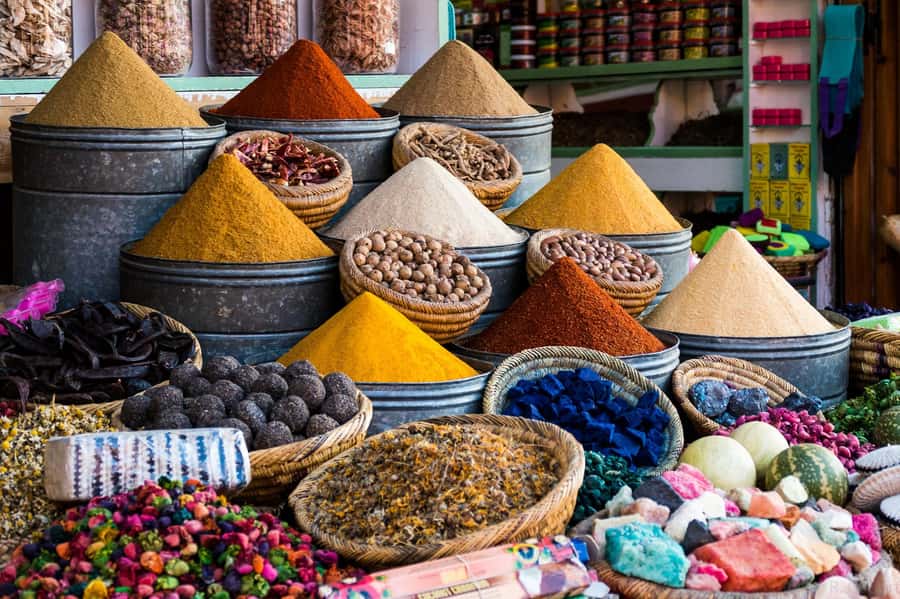
- Souks with a purpose: Sabaghine textiles and El Attarine spices/perfume/medicinal herbs, plus coppersmith noise at Hammam Seffarine.
- Craft workshop stop: Pottery and zellige tile work—how ceramics and mosaics get made.
Getting Oriented in the Fes Medina Without Getting Lost
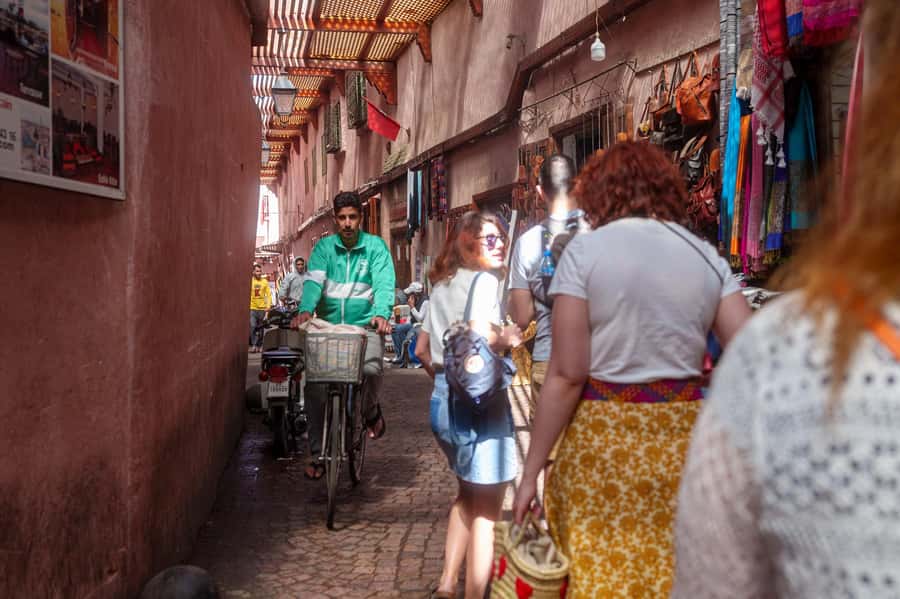
I like Fes, but I also respect how quickly it can turn into a maze of lanes. A big reason this tour works is simple: you start at Bab Boujloud, the Blue Gate, then you walk with a local who can translate what you’re seeing while you’re moving. In practice, that means you spend less time guessing and more time paying attention to the important buildings, craft areas, and souk streets.
The pacing is part of the value. Guides on this experience have been praised for being friendly and not rushing, which matters because the Medina is best when you slow down just enough to look up at doors, tiles, and archways. If you want photos, you’ll usually get time to stop rather than being pulled along like you’re in a hurry.
Duration is about 210 minutes (around 4 hours). That’s long enough to feel like you made progress, but short enough to keep the day from feeling like nonstop trudging. It’s also a good fit if you’re doing other things later—like a museum visit, a restaurant meal, or just wandering on your own with better direction.
You can also read our reviews of more museum experiences in Marrakesh


A quick reality check on tickets and extras
The tour price is listed as $12 per person, but two key sights have entrance fees you pay separately: Bou Inania Madrasa (20 MAD per adult) and Dar Batha Museum of Islamic Arts (20 MAD per adult). That doesn’t make the deal bad—it just means you should budget for those two entries when you plan your total cost.
Bab Boujloud to Dar Batha: Art Meets Daily Life
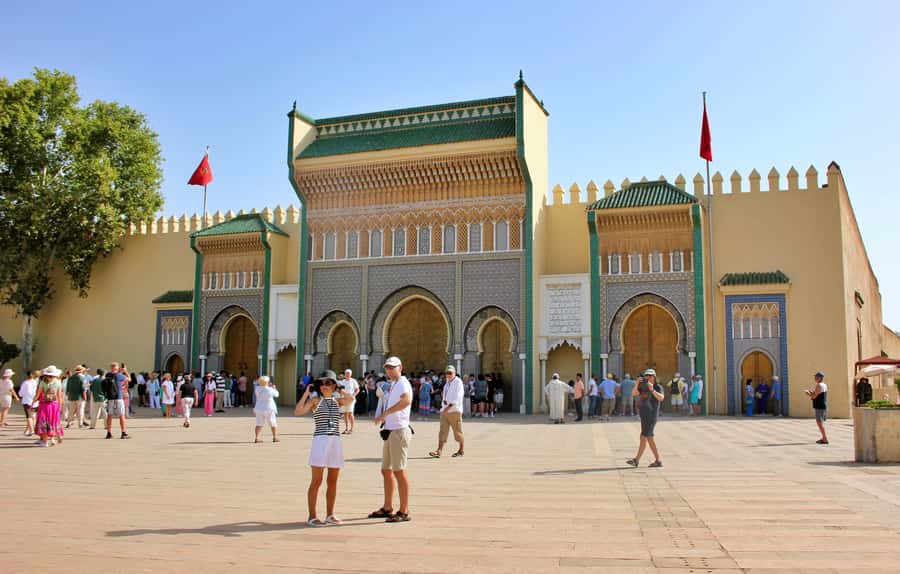
You begin at Bab Boujloud, which is more than a pretty landmark. It’s your first mental anchor in the Medina, and it sets the rhythm: narrow streets, busy movement, and constant workshop activity in the background. Even the first short walk helps you understand how Fes organizes itself—what’s ceremonial, what’s commercial, and where you’ll want to slow down.
Next comes Dar Batha—often called the Museum of Islamic Arts—set in a former palace. What I like about this stop is that it offers context. The courtyard space and palace setting help you see craft and design as something connected to daily life and courtly taste, not just decorative stuff you pass on a street corner.
In Dar Batha, you’ll get guided time to understand the objects and craftsmanship on display, plus free time to wander at your own pace. If you’re the type who likes to linger—reading labels, noticing woodwork patterns, tracing design motifs—this museum break is a good match.
Possible drawback to expect: museums can be slower than streets, especially if you’re moving with children or you prefer street-only sightseeing. The tour does include free time at each major stop, which helps. Still, if you’re mainly there for souks and crafts, you may want to decide in advance how much museum time you’ll actually take.
Bou Inania Madrasa: Cedar, Zellige, and a Marble Courtyard
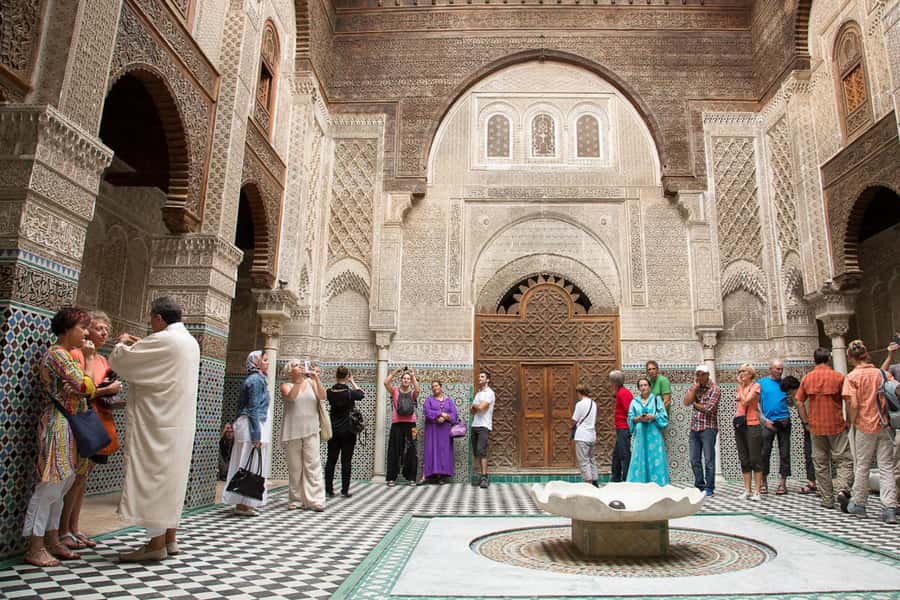
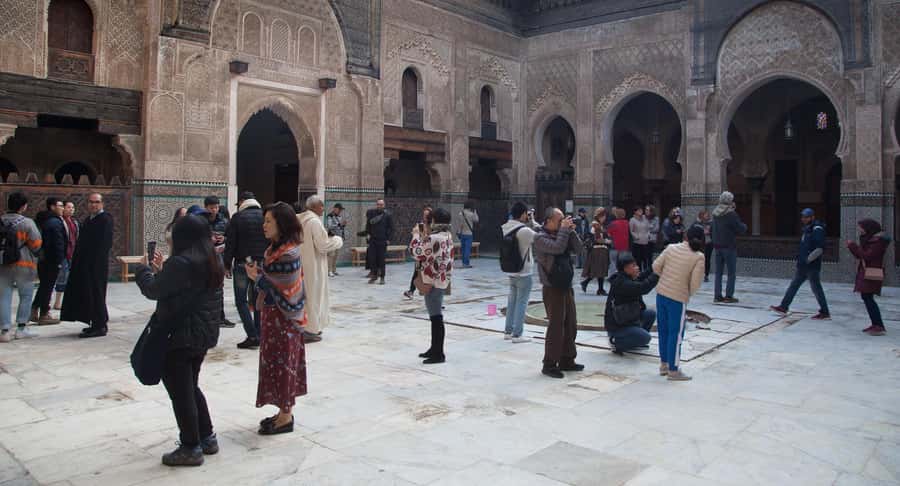
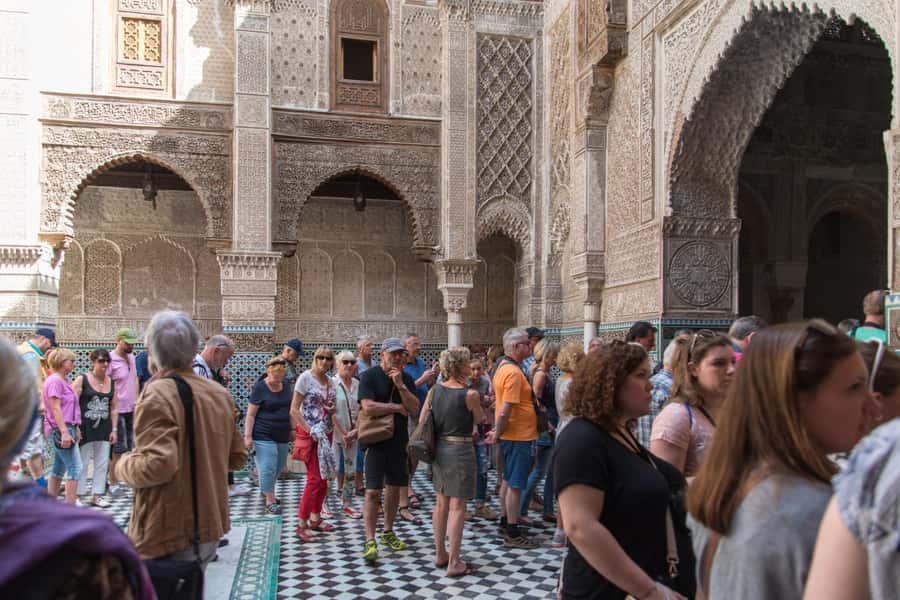
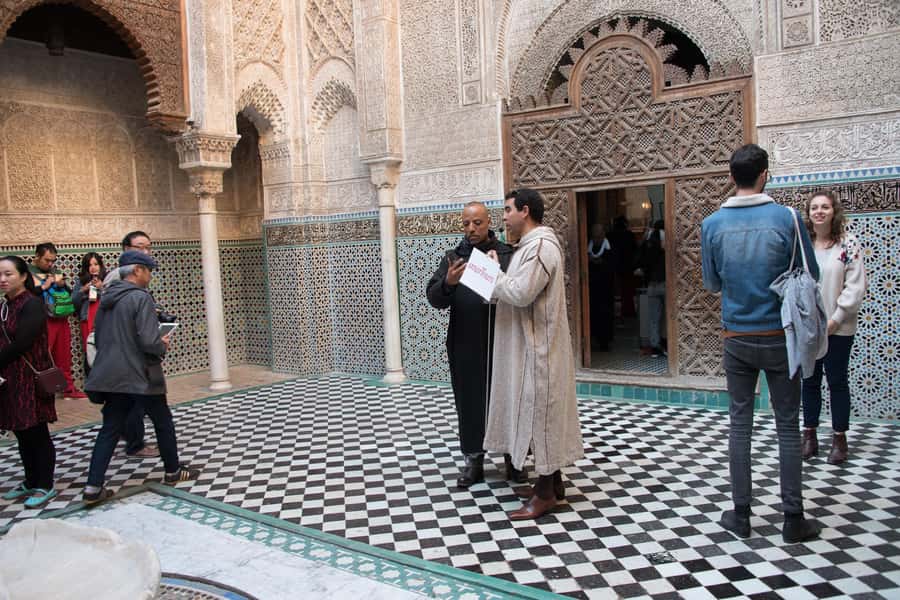
Bou Inania Madrasa is the kind of place that makes you pay attention to details fast. This 14th-century Marinid masterpiece is known for carved cedar wood, intricate zellige tilework, and that classic calm you only get in a sacred courtyard space. Even if you’ve seen older religious buildings before, this one is usually memorable because the surfaces feel built for close viewing.
A few practical points help here:
- Your guide explains what you’re looking at, so you’re not stuck guessing which pattern or material is the point.
- The tour includes skip-the-line access for selected monuments, which can save time in a busy Medina day.
- You get time on your own, so you can step back, look again, and take photos without feeling rushed.
Another good thing: this madrasa isn’t just architecture. It’s tied to scholarly and spiritual life. The experience notes that Bou Inania served as both a madrasa and a mosque, so you’ll get a clearer sense of why it was designed the way it was—its layout and features weren’t random.
If you’re short on time in Fes, Bou Inania is one of those stops you’re happy you didn’t skip. It anchors the rest of your day, because once you’ve seen its design language, you start noticing similar tile work and craftsmanship themes in other places.
Al-Karaouine University Exterior: Why Learning Was a Big Deal
Next, you’ll see the Mosque and University of Al-Karaouine from the outside. This is not just a quick photo moment. Al-Karaouine is described as one of the world’s oldest universities, and your guide helps connect that claim to the city’s identity—Fes as a place where scholarship and faith shaped the streets around it.
Why the exterior visit still works: you’re learning the historical weight of the complex, while keeping your day moving. From the outside, you can also better sense the surrounding Medina fabric—how the monumental site sits inside everyday life.
A solid guide makes this kind of stop feel like a story, not a stop sign. And based on how guides have been praised here (friendly, patient, lots of questions welcomed), you’re likely to get explanations that match your curiosity—whether you care most about the education angle, the religious aspect, or the architecture.




Chouara Tannery: Watching Leather-Dye Tradition from a Terrace
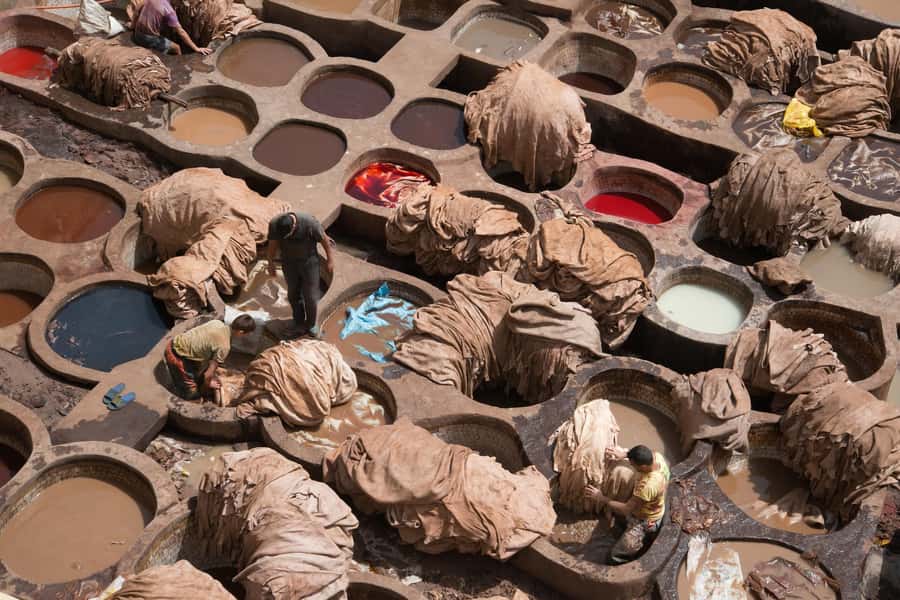
If you’re picturing the tannery as a chaotic spectacle, adjust that expectation a bit. In this tour, you view Chouara Tannery from a panoramic terrace, where artisans hand-dye leather in colorful pits using natural dyes such as saffron and indigo. The key point is continuity: the tradition is described as unchanged since the 11th century.
What’s valuable here is the combination of:
- a direct look at the process
- plus guided context about how and why it’s been done for generations
In other words, you’re not just seeing leather. You’re seeing a system—materials, craft steps, and knowledge passed down in a place that’s still active.
There can be a temptation to turn the tannery into purely a photo stop, but this is one of those places where a short guided explanation makes your viewing smarter. You’ll likely understand what to look for as the artisans work, rather than just staring at the most visually striking colors.
Also, because the tour includes souks afterward, the tannery acts like a pivot point: you go from industrial-style craft process to the marketplace where finished goods end up.
Souks Sabaghine and El Attarine, plus Hammam Seffarine Sounds
After the tannery, you’ll move deeper into the Medina’s commercial soul—two iconic souks plus the soundscape of metalwork nearby.
Souk Sabaghine: textiles and artisan streets
Souk Sabaghine is noted for handwoven textiles. This is where you’ll start seeing how the Medina’s crafts are organized around both trade and tradition. If you like shopping, a guided walk helps you notice what’s actually worth your attention.
Souk El Attarine: spices, perfumes, and herbal remedies
Next, Souk El Attarine is where the focus shifts to aroma and color: spices, perfumes, and herbal remedies. You’ll get the feeling that these products aren’t just souvenirs; they’re part of a living supply chain serving daily kitchens, homes, and rituals.
Hammam Seffarine: coppersmith hammering
Nearby, you’ll hear the rhythmic hammering of coppersmiths at Hammam Seffarine. That detail matters. It’s one of those sensory reminders that the Medina is not only about old buildings—it’s about work happening right now.
Shopping with a guide: how to get the win
One of the best reasons people praise this tour is shopping guidance that doesn’t turn aggressive. Some guides have been praised for taking visitors to craft shops where salespeople weren’t pushy, and for helping people avoid low-quality items you often see in tourist-heavy stalls.
So here’s my practical advice: come with a small budget you actually want to spend, and treat the guide as your quality filter. If you want textiles, pottery, or leather items, ask for guidance on what to look at, not just what to buy.
Pottery and Zellige Workshop: Where the Tile Patterns Come From
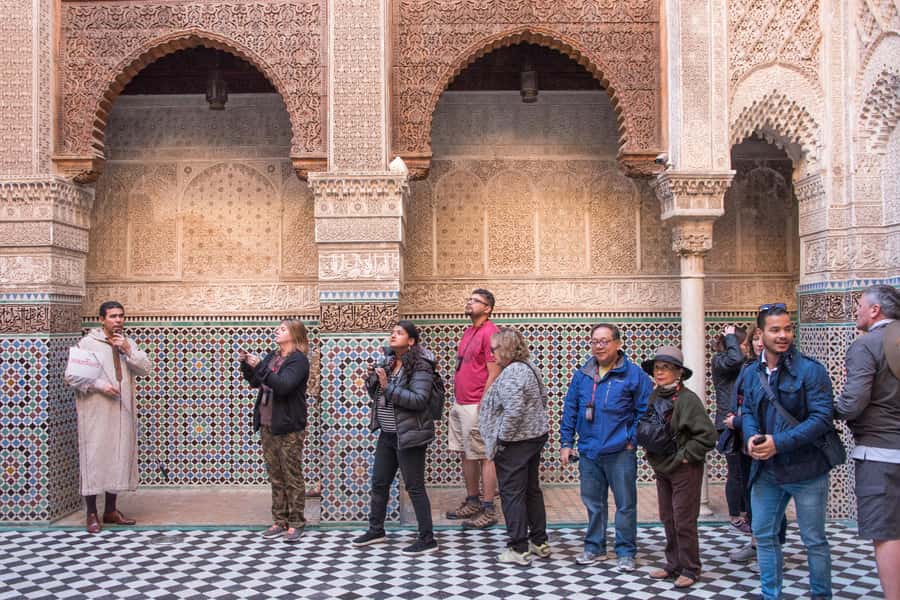
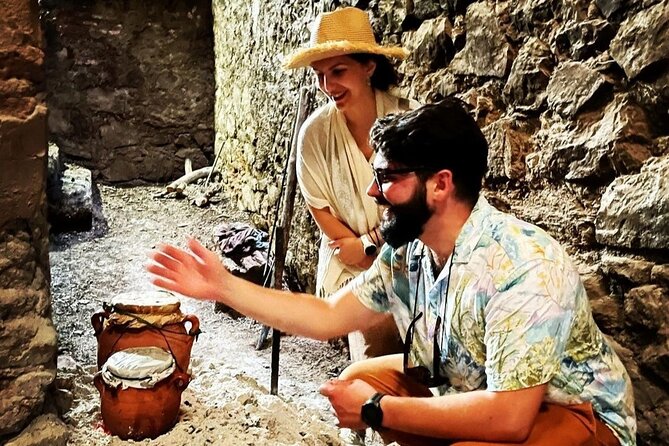
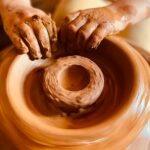
The tour ends with a pottery and zellige tile workshop. This stop is smart because it closes the loop: earlier you saw zellige in the madrasa, and now you get to see how tiles are made and cut into mosaic designs.
In the workshop, you’ll see artisans:
- mold clay
- hand-paint ceramics
- cut delicate tiles for mosaic patterns
This matters for understanding. Without a workshop stop, zellige can feel like a visual trick. With it, you start thinking like a craftsperson. You recognize the time, precision, and repeatable skill behind the beauty.
Even if you don’t plan to buy anything, this is one of the most useful parts of the day because it turns “pretty decoration” into “human process.” It also gives you a final place to slow down before you head out—often with fewer crowds than the main souk lanes.
Price and Pace: What You’re Really Paying For
Let’s talk value like adults do.
At $12 per person, the base price is low compared to how many major stops you get in about four hours. But because Bou Inania Madrasa and Dar Batha entrances cost extra (20 MAD each), your real total depends on you.
What you’re paying for, beyond access, is the guide’s job:
- sorting out what’s worth your attention
- keeping you moving in the right order
- saving time with skip-the-line entry for selected monuments
- helping you navigate and understand the craft and market logic
The guide factor is the big one. Many people on this experience have praised guides like Mouanis, Houssine, Jamal, Driss, Reda, and Oujdi for being patient, friendly, and willing to answer questions. That means you don’t just walk from site to site—you learn the why behind the what.
What to bring so the tour feels easy
Bring:
- comfortable shoes
- water
- cash (for tickets and shopping)
- sunglasses and sunscreen
That’s not just general travel advice. In the Medina, heat and walking add up fast, and cash helps you avoid awkward moments.
Who This Tour Suits Best
This is a great match if you:
- want a short, high-impact introduction to Fes el Bali
- care about architecture and craft details (not just quick sightseeing)
- want help navigating souks and buying with confidence
- prefer a calm pace with time for photos and questions
It may be less ideal if you:
- hate walking in crowded lanes
- need step-free routes consistently (the data says wheelchair accessible, but also notes it’s not suitable for people with mobility impairments—so you should confirm directly)
Should You Book This Fes Medina Tour?
Yes, if your goal is to see the major Fes highlights and still understand how the city works. The combination of Bou Inania, Al-Karaouine’s educational legacy, Dar Batha’s palace setting, the Chouara tannery process, and two iconic souks is exactly the kind of “best of” mix that normally takes multiple half-days on your own.
Book it if:
- you want a local guide’s help navigating the Medina maze
- you want a craft-focused lens, not just building photos
- you’re interested in buying thoughtfully (and avoiding the overly pushy end of the market)
Skip or switch plans if:
- you want only the souks and none of the museum/madrasa stops
- you’re extremely sensitive to walking crowds
- you can’t fit the extra entrance fees into your budget
If you do book, show up ready to walk, bring cash, and treat the guide as your translator of craft and tradition. That’s where this tour earns its keep.
FAQ
Which attractions have entrance fees that aren’t included?
Bou Inania Madrasa entrance tickets cost 20 MAD per adult, and Dar Batha Museum of Islamic Arts tickets cost 20 MAD per adult. The tour price doesn’t include these entrances.
How long is the tour?
The duration is listed as 210 minutes, about 4 hours.
What languages is the guide available in?
The live tour guide is available in French and English.
Where do we meet for the tour?
The meeting point is in front of Hotel Batha, Ave de La Liberte, Fes. Your guide will be waiting there.
Is pickup offered?
Pickup is optional. If you’re staying inside the Medina and choose the private option, your guide can pick you up from your riad reception. If you’re outside the Medina, you meet at Hotel Batha.
What should I bring with me?
Wear comfortable shoes and bring water. The tour also recommends sunglasses, sunscreen, and cash.