REVIEW · FEZ
Express from Fez to Marrakech through the Merzouga Desert
Book on Viator →Operated by Marruecos Xtreme Tours · Bookable on Viator
A Fez-to-Marrakech desert route needs planning. This one strings together Merzouga dunes, Ziz palms, gorges, kasbah roads, and a high Atlas crossing in just 3 days. I like the private setup, because you get smoother pacing than trying to stitch buses together on your own, and that matters when you’re chasing long-distance views. One thing to consider: it’s a road-heavy trip, so if you hate hours in a car, you’ll feel it.
What I also like here is the blend of big scenery with human-scale stops. You’ll pass through cedar forests and craft towns, then swap to desert quiet with dromedaries and a camp night, before finishing with cinema-and-kasbah stops around Ouarzazate. The one possible drawback? The desert and gorges days can be physically tiring, and you’ll want to be comfortable walking and sitting through transfers.
In This Review
- Key highlights you should care about
- From cedar passes to Erg Chebbi dunes: the feel of this route
- Day 1: Fez-area mountains, Midelt lunch, and the long slide into Merzouga
- Day 2: Khatarat wells, Tinerhir oasis walks, and Todra-to-Dades kasbah roads
- Day 3: Roses, Kasbah Amridil, Ouarzazate cinema stops, and the Tichka climb into Marrakech
- Price and value: what $595.63 buys you in real life
- The practical side: transport time, comfort, and what to pack
- Who this tour fits best
- Should you book this Fez to Marrakech desert express?
- FAQ
- How long is the trip?
- Where do you start and where do you end?
- Is pickup offered in Fez?
- Is this a private tour?
- Are admission tickets included?
- How does confirmation work after booking?
Key highlights you should care about
- Private group travel: only your group moves together, not a mixed crowd.
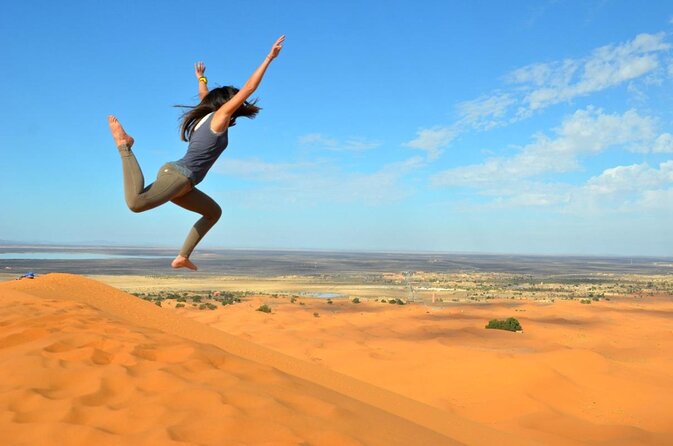
- Merzouga Erg Chebbi + dromedaries: you’re not just driving past dunes.
- Ziz Valley palms and oasis irrigation: you’ll see how water shapes the south.
- Todra Gorges access from Tinerhir: classic rock scenery with a leafy stop first.
- Kasbah stops tied to real places: Amridil and Ouarzazate are the kind you recognize from films.
- Atlas Tichka crossing into Marrakech: a clear ending with big mountain views.
From cedar passes to Erg Chebbi dunes: the feel of this route
If you’re traveling from Fez and want to reach Marrakech in a way that feels like Morocco instead of a train timetable, this route does the job. You start in the north’s cooler, forested hills. Then you gradually slide south: mountains, cedar work towns, palm-lined valleys, and finally a wall of sand at Erg Chebbi.
The driving is long, yes. But the trick is that you’re not stuck on the highway with nothing to look at. The stops are spaced so the scenery changes often enough to keep your brain interested. One day you’re looking at palm groves and irrigation lines. Another day you’re standing in a gorge. The final day you’re climbing into the High Atlas and dropping into Marrakech.
You also get a practical advantage: pickup and routing are handled. You can be picked up at your riad (or a pickup point) in Fez, then transported with the group. That reduces the usual stress of Morocco long-distance travel, where the hardest part isn’t the distance—it’s figuring out the means.
You can also read our reviews of more tours and experiences in Fez.

Day 1: Fez-area mountains, Midelt lunch, and the long slide into Merzouga
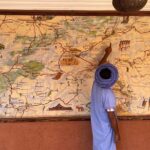
Your day starts with pickup from wherever you’re staying in Fez. From there, you head through the Middle Atlas: mountains, cedar forests, and small stops that add texture to the journey. I like these “in-between” moments because they prevent the drive from feeling like a transfer. It’s more like a slow reveal.
You pass through Ifrane, often described as a ski resort town, which makes sense once you see how different it feels compared with the south. Then comes Azrou, known for cedar woodworking. That’s a good reminder that the Atlas isn’t only scenery; it’s also livelihoods and crafts.
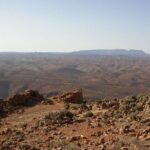
At the Zad pass (2178m), you’re high enough to feel the shift in air and views. After that climb, you descend toward Midelt for lunch. Midelt is useful as a reset point: eat, stretch, and switch gears from mountain to desert-bound.
In the afternoon, the route drops through the Ziz Valley. This is one of the most visually rewarding stretches on the whole trip. The valley is lined with palms, and you can see why people build life around water here. From there you continue toward Erfoud and Errachidia, then angle toward the sand dunes of Erg Chebbi.
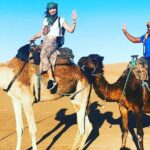
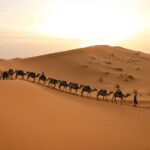
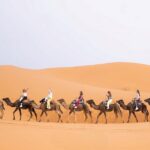
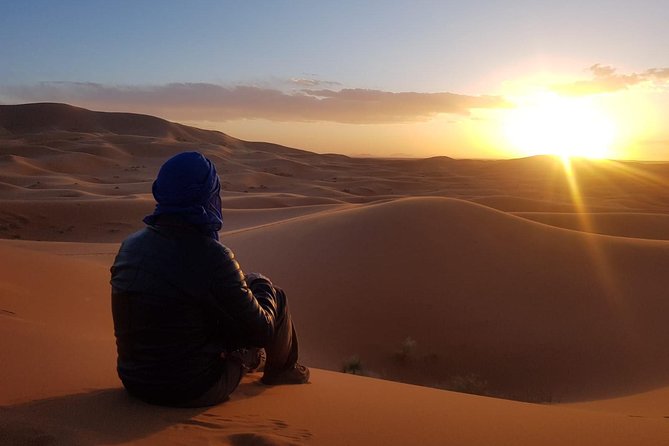
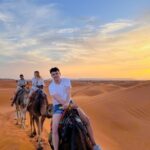
The main event comes at the dunes: dromedaries waiting for you to go into the desert. This is where the trip stops being a sightseeing itinerary and turns into a different kind of experience. Sitting on the sand, looking out over that sea of dunes, you feel the scale quickly. It’s not just pretty. It’s humbling, and the quiet hits harder when you’re away from traffic and city sound.
Possible consideration for this day: it’s a lot of driving before you reach the dunes. If you’re the type who needs frequent breaks, you’ll want to stay hydrated and be ready for a long first day. The payoff is the desert segment, but the setup is still travel-first.
Day 2: Khatarat wells, Tinerhir oasis walks, and Todra-to-Dades kasbah roads
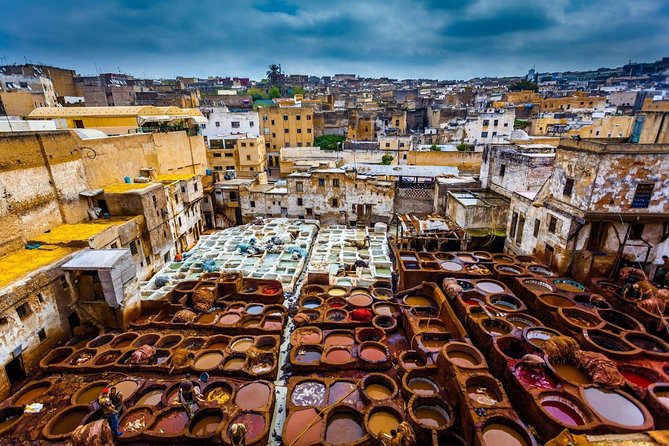
Day 2 starts in camp with breakfast, then you move toward the Dades Valley. But you don’t jump straight there. You stop first at the Khatarat, an old network of wells that used to supply water to the Ziz palm grove. This stop is small in time but big in meaning. It gives you context for what you saw on Day 1: water isn’t just scenery here; it’s engineering and survival.
Then you head toward Tinerhir, described as the most leafy oasis in the south. That word leafy matters. In the middle of arid surroundings, the oasis looks like a whole different world. You’ll have time to walk and observe crops and irrigation systems. Even if you’re not a gardener, you’ll understand the logic quickly: channels, shade, timing, and the way plants line up where water moves.
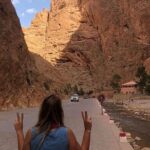
From Tinerhir you access Todra Gorges. This is classic Morocco—tight rock walls, a canyon feel, and that “how is this place real” sensation when the scale hits you. There’s also mention of traveling part of the gorges on an unequaled path, which suggests you won’t just be standing at the viewpoint. You’ll move through the area enough to feel like you’re inside it.
After the gorges, the route turns toward the interior Kasbahs road and into the Dades Valley. Along the way, you reach Skoura, known for kasbahs and a rich mix of old structures and palm-lined areas. Kasbahs are one of those things where the first time you see them, you think photo. The second time, you start thinking history and community life: how families built, defended, stored goods, and managed daily work.
This day’s balance is good. You get nature (gorges and oasis), plus culture (water systems and kasbahs). If you’re only chasing dunes and Marrakech rooftops, this is the day that reminds you Morocco is also about how people live.
One consideration: the gorges and oasis walking can add up. If you’re sensitive to uneven ground or long periods on your feet, wear comfortable shoes and don’t plan extra sightseeing that evening besides resting.
Day 3: Roses, Kasbah Amridil, Ouarzazate cinema stops, and the Tichka climb into Marrakech
Day 3 is your “southern to Marrakech” transition day. After breakfast, you drive toward Marrakech with stops that feel like they belong together: roses, kasbahs, film locations, and the Atlas pass that ties it all off.
First stop is the Valley of the Roses. The key detail here is the damask rose, used for many cosmetic products. Even if you’re visiting outside peak bloom season, the stop still makes sense because it connects agriculture to scent and industry. It’s a reminder that Morocco’s economy isn’t only tourism and crafts.
Next you reach Kasbah Amridil. This kasbah is known for being a filming location, but what’s more interesting is the note that it’s a kasbah for the people. That’s the kind of distinction that helps you look past “scenery” and see living space and community identity.
Then it’s Ouarzazate, often called the mecca of cinema in Morocco. The mention of Atlas Studios is the practical clue that this isn’t just a claim on a brochure. You’ll also see Kasbah Taourit, associated with Pacha Glaoui. Whether you care about film or not, these stops are about how Morocco’s architecture and light have attracted world attention.
From Ouarzazate, the route climbs into the Atlas Mountains, reaching the Tichka pass, described as the highest hill separating the south of the north. This is a satisfying way to end the trip: a real mountain crossing that signals you’re leaving the desert-and-sand region behind.
Finally, you arrive in Marrakech, with the drop-off aimed for Plaza de Yamaa el Fna or a riad depending on how easy it is to reach by vehicle. Practical tip for this part: if you’re booking riads with narrow lanes or stairs, ask about access. Vehicles can reach some areas and not others, and you’ll want the drop-off to match your actual location.
Price and value: what $595.63 buys you in real life
At $595.63 per person for about 3 days, this isn’t a budget-only deal. But it also isn’t priced like an airline. The value comes from the amount of ground you cover plus the fact that key pieces are included: pickup, private group transport, and admission tickets are indicated in the experience timing.
Here’s what you’re likely paying for, in plain terms:
- Fewer headaches than cobbling together cars and guides yourself.
- A camp-night desert experience that would be harder to organize smoothly.
- Multiple guided or supported stops rather than only drive-bys.
- Comfort factors: private movement and organized meals/schedule rhythm.
The big question is whether you want a “guided route” experience or a “freestyle” one. If you like structure, and you’d rather spend effort on enjoying stops than on logistics, the price starts looking reasonable. If you’re comfortable planning long-distance travel day by day and you enjoy lots of independent routing, you might find cheaper options. But then you’re trading ease for control.
Also note: the trip is described as private, meaning only your group participates. That can be a big value boost for couples, friends, or small groups, where shared costs spread out.


The practical side: transport time, comfort, and what to pack
This tour is inherently road-heavy. That’s not a criticism; it’s just the geography. Fez to Marrakech through the desert is not a quick hop. The good news is that your schedule builds in “reason to be in the car.” You’re passing through notable towns, valleys, passes, and gorge country.
What helps you enjoy it:
- Comfortable clothing for both mountain cool spots and warm desert afternoons.
- Shoes you can walk in for oasis and gorge time.
- Patience for transitions. Morocco road days are a rhythm: drive, stop, eat, see, then drive again.
From the service side, the strongest praise in the feedback is about attention and comfort. People talk about hospitality in the riads and camp facilities, and they highlight delicious food. Names show up too, like Susanna for organizing and supporting, plus drivers such as Mbarek and Salem, and a guide named Moha. When you see repeated mentions of the same people, it usually means you’re not just getting a vehicle rental—you’re getting real human coordination.
Also worth noting: there are mentions of close support via WhatsApp-style check-ins. If you like knowing your plans without chasing answers, that kind of communication can make the ride feel smoother.
Who this tour fits best
This is a strong match if:
- You’re moving between Fez and Marrakech and want the desert connection without complex planning.
- You want classic Morocco variety in 3 days: cedar mountains, oasis walks, gorges, kasbahs, and desert dunes.
- You’re okay with a tiring-but-doable schedule and you want comfort from organized transport.
It may be less ideal if:
- You strongly dislike long hours on the road.
- You’re not comfortable with walking in gorges or uneven paths.
- You want the trip to feel more like unstructured exploring than a guided route.
Should you book this Fez to Marrakech desert express?
I’d book it if you want a straightforward “big Morocco” route that doesn’t leave you guessing. The best parts here are the combination: Erg Chebbi dunes with dromedaries, then the water-and-oasis reality of the south, and finally the Atlas climb into Marrakech. It’s the kind of trip where your photos come with context, and your days feel like they have a point.
I’d pause before booking if you’re worried about energy levels. This is not a lazy itinerary. It’s designed for people who can handle road time and want a packed, curated route that still includes real-world stops like Khatarat wells and functioning oasis irrigation systems.
If your goal is to reach Marrakech from Fez with the desert in between—and you’d rather pay for help than fight with schedules—this one makes sense.
FAQ
How long is the trip?
It’s listed as approximately 3 days.
Where do you start and where do you end?
It starts in Fez, Morocco, and ends in Marrakech, Morocco, either around Plaza de Yamaa el Fna or at a riad depending on vehicle access.
Is pickup offered in Fez?
Yes. Pickup is offered from your riad where possible, or from a pickup point.
Is this a private tour?
Yes. Only your group participates.
Are admission tickets included?
Admission tickets are included as indicated for the days/activities in the schedule.
How does confirmation work after booking?
Confirmation is received within 48 hours of booking, subject to availability.