REVIEW · MARRAKECH
Best of Marrakech: Guided Bahia Palace & Ben Youssef Medrasa Tour
Book on Viator →Operated by Marrakech Lifestyle · Bookable on Viator
Marrakech can feel like a maze at first. This guided route helps you place the city fast, from the Koutoubia Mosque area to the medina’s key historic sites. You get a structured walk through neighborhoods you’d otherwise only partially understand.
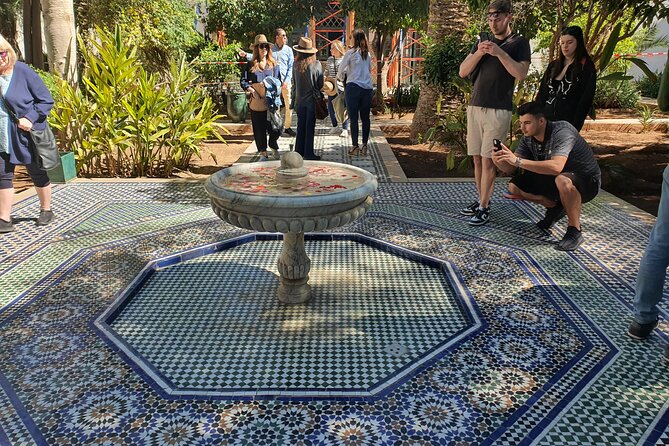
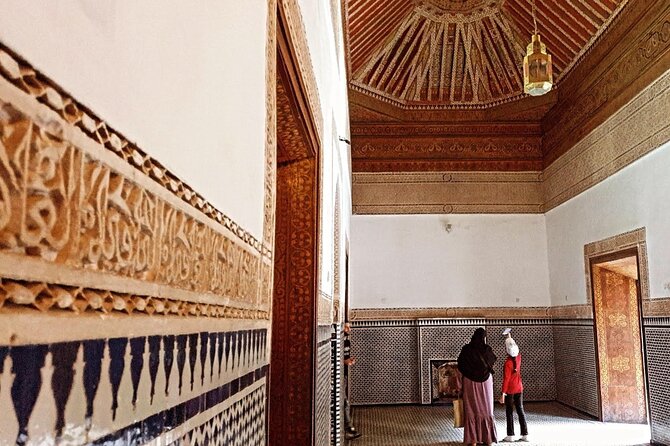
I really like two things about this tour. First, Bahia Palace is handled like it matters: you tour the real palace spaces open to visitors, with time to notice cedar doors, zellij tilework, stucco arabesques, and carved detail. Second, Ben Youssef Medersa is a rare stop where architecture and daily practice connect, from the arabo-Islamic patio to the prayer hall and ablutions rooms.
The only drawback to plan for is pace and crowds. You move through the medina in a tight time window (about 3–4 hours), and places like the souks and Jemaa el-Fna can get crowded fast—so keep expectations realistic and wear shoes that can handle nonstop walking.
In This Review
- Key highlights you should care about
- From Koutoubia to the Mellah: getting your bearings fast
- Bahia Palace: cedar gates, zellij, and the grand vizier’s world
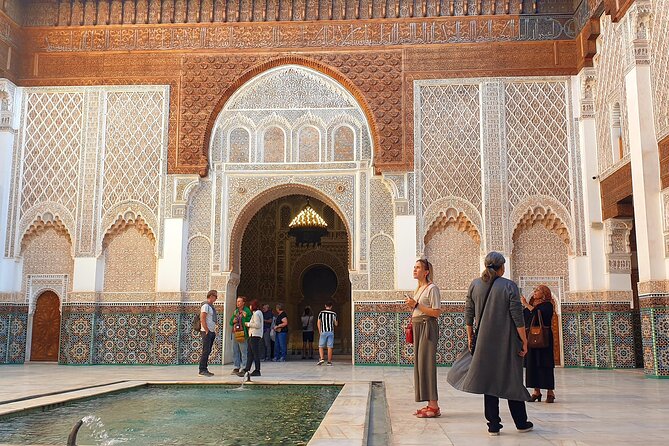
- Ben Youssef Medersa: the 16th-century school you can still feel
- The route through souks: Semmarine craft stop and old-city wandering
- Place des Épices and Jemaa el-Fna: photos, smells, and street culture
- Timing, walking, and what to bring
- Price and value: what $58.86 buys you in Marrakech
- The guide factor: why Yousseff-style pacing helps
- Should you book this Bahia Palace and Ben Youssef Medersa tour?
- FAQ
- How long is the Bahia Palace and Ben Youssef Medersa guided tour?
- Where does the tour start and where does it end?
- What’s included in the price?
- What sights do we visit besides Bahia Palace and Ben Youssef Medersa?
- What tickets or admissions are free during the tour?
- Is the tour limited in group size?
Key highlights you should care about
- Skip-the-line access for Bahia Palace and Ben Youssef Medersa, so you spend time inside instead of standing outside.
- Koutoubia Mosque orientation: you learn Marrakech’s layout from nearby foundations and a 12th-century landmark (visit is outside only/limited access).
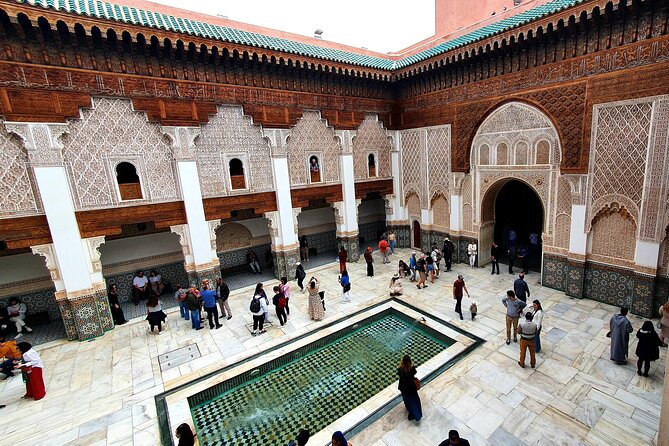
- Ben Youssef Medersa’s scale: you see how this former school once hosted up to 900 students, with spaces built for study and ritual.
- Souk Semmarine craft focus: you watch skilled artisans and hear about materials and techniques, not just random shopping stops.
- Place des Épices viewpoint: you get photos plus a terrace view over the old-city labyrinth.
From Koutoubia to the Mellah: getting your bearings fast
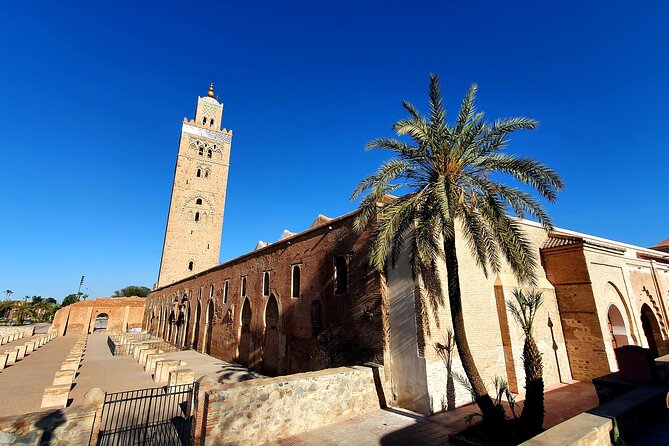
The day starts near the Koutoubia Mosque area at Kubba Fatima Zohra. Your guide sets context right away. Koutoubia is a Moorish wonder from the 12th century, and the tour also points out the earlier sacred footprint: the site connects to foundations dating back to the 11th century, including references to Marrakech’s first road and a defensive gate. Even though your visit is outside only/limited access, the location matters because it frames how the city grew.
You then head toward the Jewish Mellah, Marrakech’s historic Jewish quarter. Here, the tour keeps things practical: you walk through the area, learn about Morocco’s Jewish heritage, and you pass through colorful spice market energy along the way. This is a good moment to slow down. If you want photos, this is where you’ll find texture—signs, shop fronts, and market streets—without the full crush you get later.
A good guide makes the difference in how you “read” the medina. You’re not just moving from point A to point B. You’re learning what these zones represent and why people lived and traded where they did.
You can also read our reviews of more guided tours in Marrakech
Bahia Palace: cedar gates, zellij, and the grand vizier’s world
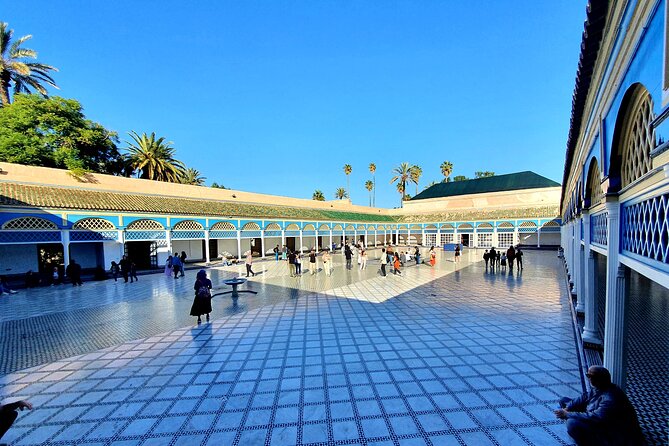
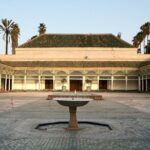
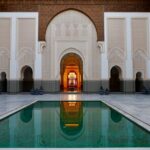
Bahia Palace is the tour’s heavyweight. The experience includes a complete guided visit of the only real palace open to visitors, so you spend your one-hour slot where it counts. The palace design tells a story about power and private life. Bahia Palace was once home to the kingdom’s grand vizier and his harem, and your guide connects the spaces you walk through to that history.
Inside, keep your eyes on the details the tour is built around. You’ll move through residential riads and official function areas, noticing ornate fountains, zellij mosaics, stucco arabesques, and carved cedar gates and ceilings. That sounds like a lot of art terms, but it’s actually useful. When you know what to look for, the place stops being just pretty walls and becomes a map of taste, status, and craft.
One practical note: this is not a “touch everything” kind of stop. You’re touring real architectural spaces, so it’s more about looking closely than rushing. If your attention span is short, use the guide’s cues. They’ll point you toward what to notice first.
Ben Youssef Medersa: the 16th-century school you can still feel
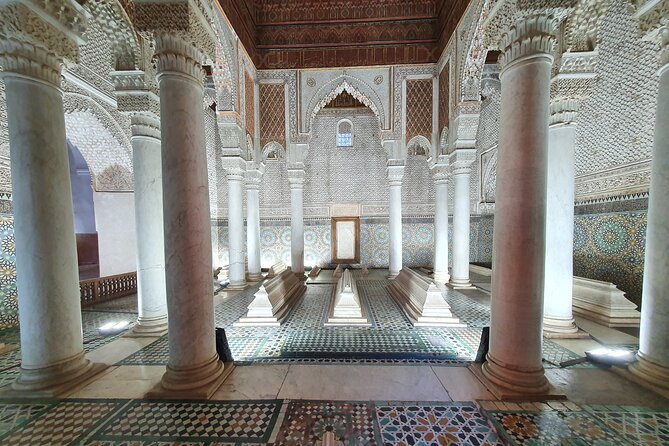
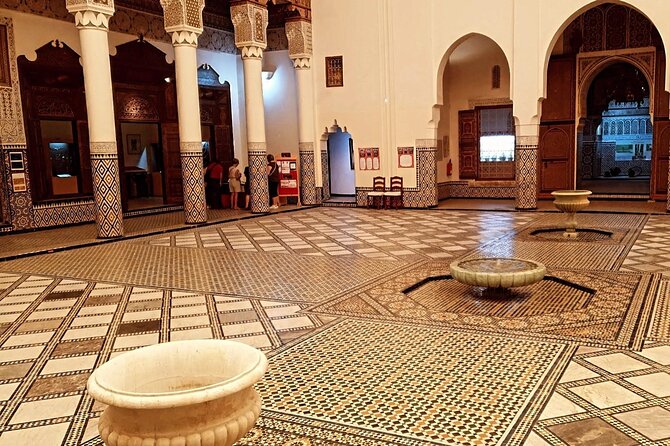
Next comes Ben Youssef Medersa, Marrakech’s Arabo-Islamic masterpiece of learning. The tour visits this 16th-century religious school (medersa/madrasa) and focuses on the spaces you can relate to daily life: the majestic patio, student rooms, the prayer hall, and the ablutions room.
This stop is also timed well. You get about 45 minutes, which is long enough to understand the building layout without turning it into a lecture marathon. The design is built for routine: light and air around the patio, movement between study and worship spaces, and ritual prep in the ablutions area. The guide also shares the idea that this place once held up to 900 students, which instantly changes how you picture it. Suddenly, the medersa is not a quiet museum room. It’s a functioning school model.
I also like that you get some cultural context along the way. The tour includes discussion about local Muslim practice and the traditional education system, which helps you connect what you see to why it’s arranged that way. You do not need to be religious to appreciate the logic of the spaces.
If you’re the kind of visitor who likes architecture but gets impatient with slow pacing, this stop is a good compromise. It’s structured, but it still leaves room for you to look up at ceilings and scan how the patio brings light into the interior.
The route through souks: Semmarine craft stop and old-city wandering
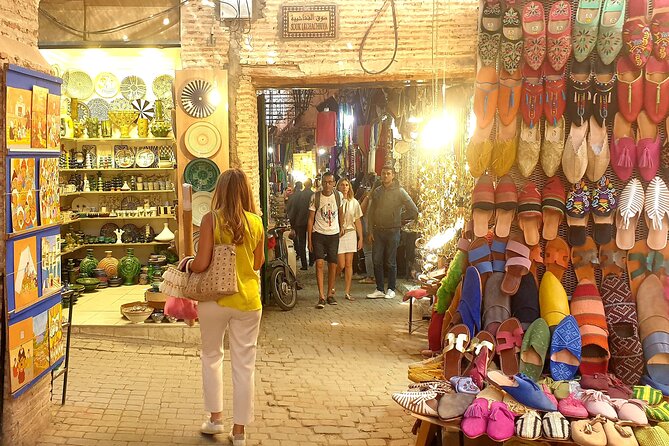
After the medersa, the tour shifts gears from major monuments to everyday craft and commerce. You pass through authentic souks and neighborhoods of the old city. One of the key structured stops is Souk Semmarine.
Souk Semmarine is described as the medina’s most prestigious souk and a major temptation zone. The good part here is that the tour doesn’t treat this as a random shopping break. You’re guided through the kinds of artisans and craftsmanship the souk is known for, and you learn about materials and techniques. It’s the difference between buying something and understanding what you’re buying.
You might spot where international artists and designers have been coming for decades to get inspiration. Even if you don’t shop, that detail is helpful. It explains why some products and styles show up again and again in Marrakech: this is a place where creative work and craft overlap.
The wandering time matters too. Marrakech’s medina can confuse you fast. Having a guide helps you move past the tourist traps without turning every alley into a gamble. You’ll still see plenty of storefront energy, but it feels less random.
Place des Épices and Jemaa el-Fna: photos, smells, and street culture
Toward the end, you hit the spice scene again, but in a more photo-friendly way. You stop at Place des Épices, a colorful square in the souks. You’ll also have a chance to climb to a private terrace for views over the old city labyrinth. That terrace time is valuable because it gives your brain a picture of the maze you’ve been walking.
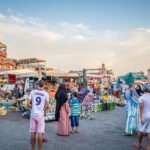
Then you finish at Jemaa el-Fna, Marrakech’s UNESCO World Heritage site tied to oral and immaterial culture. The idea here is not a quiet stroll. It’s street performance and storytelling—street artists, storytellers, folk troops, and other public arts expressions. The tour keeps this portion shorter (about 15 minutes), which makes sense. Jemaa el-Fna is huge. A quick arrival helps you get your bearings, and you can linger on your own after.
If you’re sensitive to noise, plan to soften your senses. If you love street performance, arrive ready with your camera and an open mind. Either way, this ending works because it lets you transition from “guided learning” to “freestyle Marrakech.”




Timing, walking, and what to bring
The whole experience runs about 3 to 4 hours. That’s a sweet spot for people who want the big Marrakech hits without committing to a full day.
It also means you’ll walk a lot in that window. You should plan for uneven stone and crowd bottlenecks. Comfortable walking shoes are non-negotiable. Bring water (you get bottled water on the tour: two small bottles or one larger one per person). And if you’re using a phone, you’ll be fine—this tour uses a mobile ticket.
Group size is limited to a maximum of 12 travelers. That helps with crowd control and timing around indoor sites like Bahia Palace and Ben Youssef Medersa. Smaller groups also mean your guide can notice if someone’s moving slowly.
The starting area is near public transportation, which is handy if you’re juggling other parts of your trip. You’ll also want to keep in mind that Koutoubia is outside/limited access for visitors on this route, so don’t expect a full mosque interior visit.
Price and value: what $58.86 buys you in Marrakech
The price is $58.86 per person, and it’s commonly booked about 26 days in advance. For many visitors, the value is not just the sites. It’s the structure: skip-the-line tickets plus a guided route that stacks the most important old-city stops into a time-efficient loop.
Here’s where the money goes:
- Bahia Palace and Ben Youssef Medersa include guided tour and skip-the-line tickets
- A licensed English/French speaking guide is included
- Bottled water is included
- You get a curated “medina reading” route: Koutoubia and the Mellah for context, then monument interiors, then souks, then Jemaa el-Fna
Tips and gratuities aren’t included, so you’ll want to budget for that if you feel the guide earned it. The operator’s model also assumes a group visit, which is why a maximum of 12 travelers matters. You’re not just paying to move around—you’re paying to have someone explain what you’re seeing before it evaporates into generic photos.
If you’re the type who wants to wander the medina alone, you can do it. But you’ll spend more time figuring out routes and guessing what’s worth your attention. This tour cuts that guesswork down.
The guide factor: why Yousseff-style pacing helps
The standout detail from the supplied experiences is the guide’s impact. Yousseff is mentioned as fantastic: informed, professional, and attentive to group needs. In at least one instance, he adapted to a mobility concern in the group and stayed flexible.
That matters because Marrakech is not always “easy walking.” Your route includes indoor spaces, narrow streets, and crowd-prone squares. When a guide is good at pacing and watching the group, the experience feels smoother—even if you still walk plenty.
If you book, you’ll get an English/French speaking licensed guide, and that language support is part of the value. Arabic-and-geometry architecture is easier to appreciate when you understand what you’re looking at and why the spaces are arranged like they are.
Should you book this Bahia Palace and Ben Youssef Medersa tour?
I’d book it if you want a focused, high-impact medina overview. It hits the big architectural landmarks—Bahia Palace and Ben Youssef Medersa—and pairs them with context stops like Koutoubia and the Mellah. Then it ends where Marrakech is most alive, at Jemaa el-Fna, with enough time to keep wandering after.
I’d skip (or pair it differently) if your ideal Marrakech day is slow and open-ended. This tour is timed, structured, and built for efficient seeing. If you want long unplanned alley time or you hate crowds, the souks and Jemaa el-Fna portion may feel like a fast squeeze at the end.
If you’re traveling with limited time—half a day to get the essentials—this is one of the smarter ways to spend it.
Cancellation is free up to 24 hours in advance, so you can make the decision with less stress. Just keep an eye on your schedule once you book.
FAQ
How long is the Bahia Palace and Ben Youssef Medersa guided tour?
It runs about 3 to 4 hours.
Where does the tour start and where does it end?
It starts at Kubba Fatima Zohra (meeting point near Koutoubia) and ends at Jemaa el-Fna.
What’s included in the price?
The tour includes skip-the-line tickets and guided tours of Bahia Palace and Ben Youssef Medersa, a licensed English/French speaking guide, and bottled water (two small bottles or one larger one per person).
What sights do we visit besides Bahia Palace and Ben Youssef Medersa?
You’ll also visit Koutoubia Mosque (outside/limited access), the Mellah, Souk Semmarine, Place des Épices (with a terrace view), and you end at Jemaa el-Fna.
What tickets or admissions are free during the tour?
The tour lists admission ticket free for Koutoubia Mosque (outside only), the Mellah, Souk Semmarine, Jemaa el-Fna, and Place des Épices.
Is the tour limited in group size?
Yes. It has a maximum of 12 travelers.