REVIEW · MARRAKECH
Berber villages trek Day trip
Book on Viator →Operated by Great Travel Morocco · Bookable on Viator
A day out of Marrakech that actually feels like Morocco. This Berber villages trek route mixes local villages with High Atlas scenery, plus a real human guide who helps make logistics painless. I especially like how the plan builds in meeting points and travel time so you are not guessing where to go next.
Two big wins for me: you get private transportation with a chauffeur, and you also get local guidance designed for interaction with Berber families during the day. One thing to keep in mind is lunch: the overview says a local lunch is part of it, but the package details also list lunch as not included, so I suggest you confirm before you go.
In This Review
- Key things to know before you go
- Morning Pickup and the Ride Into the Atlas
- Lalla Takerkoust: A Calm Lake Stop Before You Hike
- Plateau du Kik and Berber Village Crossings
- Asni Market Time and Village Views
- Sidi Farès Valley: A Quieter Stretch South of Marrakech
- Ourika Valley: Cooler Air and River-Side Time
- Berber Home Visit and Optional Camel Ride
- Guides, Drivers, and What Your Money Actually Buys
- Price and Logistics: A Fair Deal, With One Thing to Confirm
- Timing, Packing, and Fitness for an 8–9 Hour Day
- Should You Book This Berber Villages Trek Day Trip?
- FAQ
- How long is the Berber villages trek day trip?
- Do you get pickup from Marrakech hotels or riads?
- Is this tour private or shared?
- Are admission tickets included for the stops?
- Is lunch included?
- Is there an optional camel ride?
- When is the Asni market open?
- What fitness level do I need?
- What happens if the weather is bad?
- Can I cancel for a full refund?
Key things to know before you go
- Private group tour: only your group participates, so the pace can be adjusted.
- Pickup in Marrakech: you choose the departure time and get picked up from your hotel or riad area.
- Asni on Saturdays: the market runs Saturdays, which changes the feel of the stop.
- Ourika Valley break: about 2 hours in a cooler valley along the river.
- Optional camel ride: it is there if you want it, not forced.
- Good weather matters: the experience requires good weather, and the operator offers a different date or a refund if canceled.
Morning Pickup and the Ride Into the Atlas
Your day starts with a straightforward hotel pickup. At your chosen departure time, a driver comes to your place in Marrakech, and the handoff is quick: plan on roughly 15 minutes from pickup to getting rolling. The tour runs about 8 to 9 hours total, so this is a real day trip, not a half-day scroll through a couple of viewpoints.
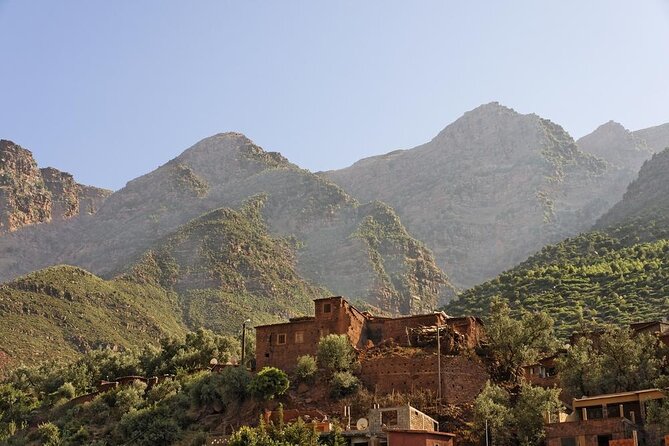
Once you are on the road, the vibe shifts fast. Marrakech traffic fades, then you start climbing toward the High Atlas region, which is where the air often feels different. You are not stuck with a distant view either. The route is built around stops where you step out, walk a bit, and see village life up close.
One of the nicest touches is that your local team handles the moving pieces. You are not trying to figure out where people live, where to park, or how to move from one area to the next. You also have the chance to personalize the day with your guide, and that matters a lot when a route includes both light trekking and village visits.
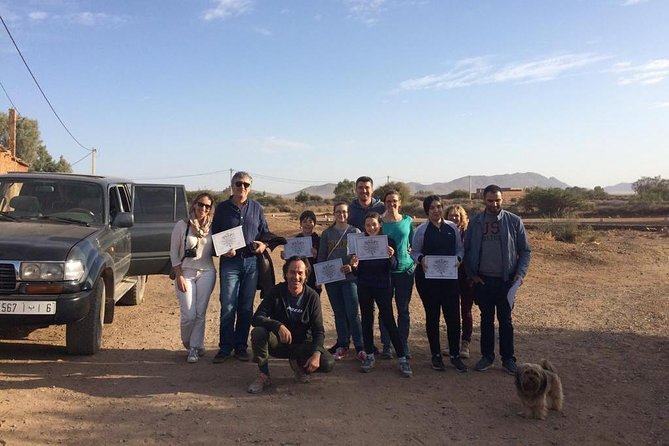
If you are lucky with your crew, you may run with drivers like Esmaïl or Mustafa, who are repeatedly described as helpful and comfortable on the drive. Guides like Abdul and Mohammed show up in past day-trip experiences, with people liking how they adapt to what the group wants. You should not count on specific names, but the pattern is clear: the best days happen when you have a guide who is willing to adjust the flow.
You can also read our reviews of more hiking tours in Marrakech
Lalla Takerkoust: A Calm Lake Stop Before You Hike
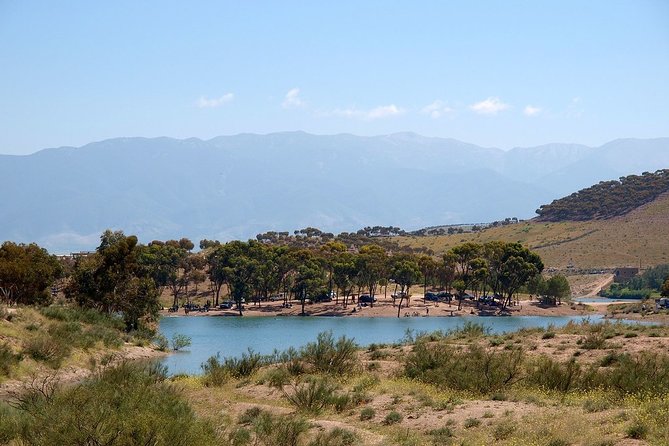
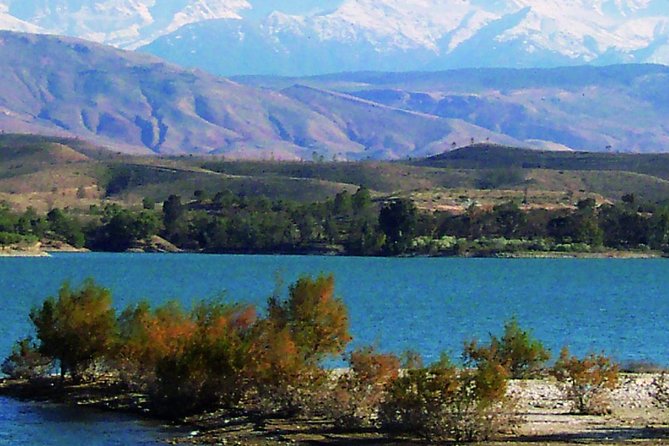
The first real stop is Lalla Takerkoust, a lake area just off the Marrakech circuit. This is a short stop, around 10 minutes, and the ticket is free. Think of it as a reset. You get to stretch your legs, take a few photos, and get your bearings before the day turns into walking and valley time.
It also helps that the stop is simple. There is no long lecture. No pressure to rush. You are just transitioning from city energy to countryside calm.
A small practical note: because the stop is brief, arrive ready. If you want extra photos, take them early. If you want water or a quick snack, grab it before the trek parts begin.
Plateau du Kik and Berber Village Crossings
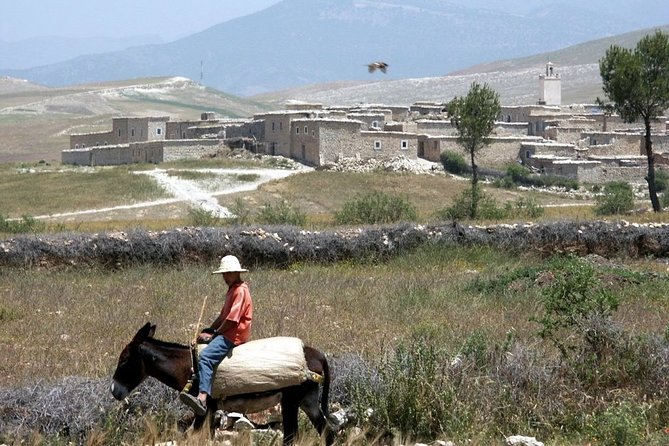
The day then moves onto the Plateau du Kik. Here, you are not just looking at scenery. You are traveling through cereal crop areas and crossing routes that bring you past several Berber villages. The High Atlas rises around you, including peaks above 4000 meters, so even when you do not climb high yourself, the scale hits.
The itinerary notes that the ticket is free at this stop. More importantly, the plateau crossing is where the trek starts to feel like a journey. Instead of big tourist stops, you get a patchwork view: fields, paths, and village areas in between.
One reality check: the word trek is doing some work here. You do not need mountain-climbing fitness, but you do need moderate physical fitness. That means you should be comfortable with uneven ground, a few stretches of walking, and being on the move for most of the day.
Also, altitude and weather can affect how you feel. Even if the plateau is not a summit climb, cool air and sun exposure both matter. Wear layers you can manage without making the day a sweat-fest.
Asni Market Time and Village Views
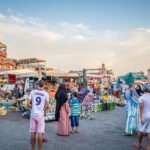
Asni is one of the stops built around how the day fits local rhythms. The market at Asni is noted as operating on Saturdays, and it is worth planning around if you can. You get a real slice of commerce: you might see everything from vegetables and livestock to second-hand jewelry and even plumbing-style items. It is the kind of place where everyday life is the main attraction.
This is also a “slow down” area. The itinerary gives you about 30 minutes here. Use it well: walk the market lanes, look at small stalls, and keep your questions respectful. If you have a guide, ask what you are seeing. Simple questions often turn into the best answers.
After the market area, the route connects you to more valley time. In other words, you are not doing one commercial stop and then disappearing. You step from market energy into quiet valley scenery.
One drawback to consider here is expectation. If you want a perfectly curated museum-style experience, a village market day can feel less controlled and more messy. That is part of the point. If you like real daily life, this is a strong match.
Sidi Farès Valley: A Quieter Stretch South of Marrakech
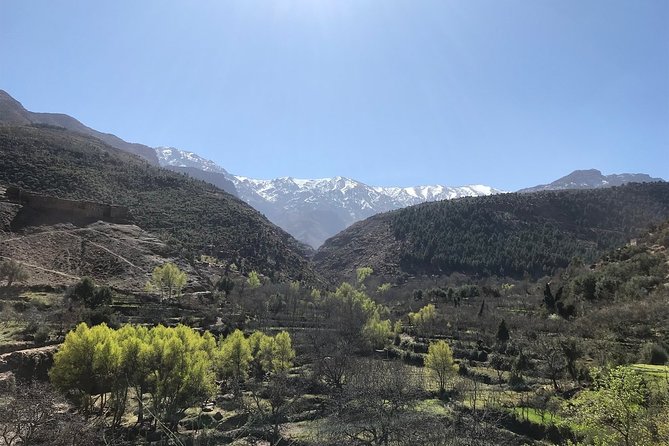
The next segment points to the Sidi Farès valley, described as a very beautiful valley that is not known by mass tourism. It is about 70 km south of Marrakech. You get about 20 minutes in this area, so it is not a long hike, but it is enough time to appreciate the contrast.
This stop is valuable for two reasons. First, it provides a change of scenery between market and river time. Second, it helps the day feel more geographically varied. You are not just repeating the same type of view.
Also, the way these stops are arranged suggests the operator is trying to balance walking with driving. You get short “step-out” moments often, which can be easier on your legs than a single long trek.
If you are the type of traveler who gets restless in a car, this part helps. It is a break that feels like you earned it by being on the road all morning.
A few more Marrakech tours and experiences worth a look
Ourika Valley: Cooler Air and River-Side Time
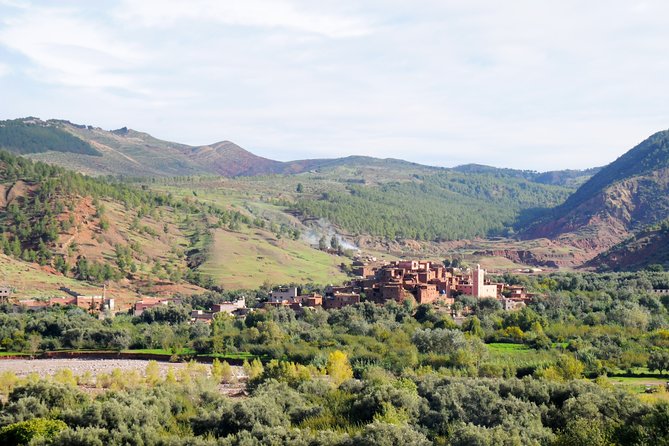
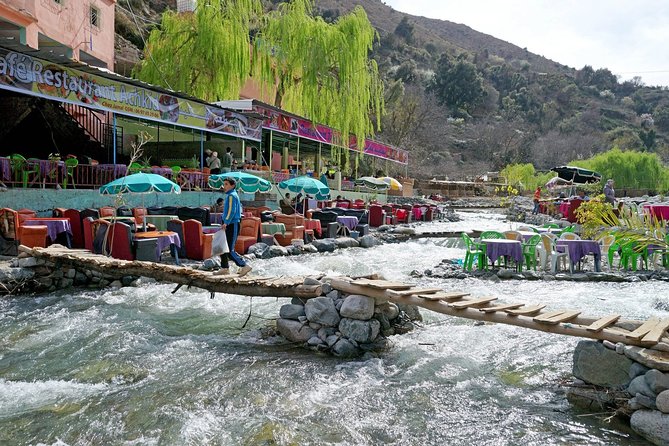
Ourika Valley is the big nature break, and it is one of the most popular excursions from Marrakech. The itinerary notes it is about 50 km south and that temperatures are cooler thanks to the High Atlas peaks and their snowcapped influence. Even if you visit outside the cold months, you can still feel the drop once you move away from the city heat.
You get around 2 hours here, and the ticket is included for this part. The route follows the Ourika river, which makes it feel more like a gentle outing than a strenuous trek.
Season matters. The notes say almond and cherry orchards bloom intensely from February to April, and wildflowers run riot. If you travel during those months, you should expect more colorful ground-level scenery along the river approach.
If you are traveling in hot season, Ourika is also practical. The valley is described as Marrakech’s escape from soaring summer heat, and that idea checks out in real life: plan for a cooler microclimate once you reach the valley.
One small consideration: Ourika is popular, so it can be busier than the village stops. Still, you have a guide, and you are there for a fixed block of time that fits the rest of your route.
Berber Home Visit and Optional Camel Ride
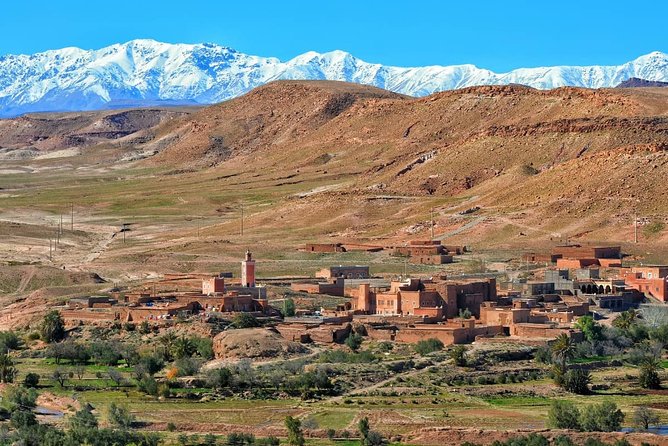
The experience is designed to go beyond viewpoints. A Berber home visit and the chance to interact are built into the day, and the tour also includes an optional camel ride.
This is where the day can feel most meaningful. You are not just watching life from far away. You are being guided through it with someone who can translate context and help you understand what you are seeing. That is a big reason why these tours work better with a local guide than with a DIY itinerary.
Some past participants also described seeing women who make argan products, as well as visiting Berber houses. You cannot assume you will get the exact same angle every day, but it is a common theme in these culture-focused segments. If your guide is good, they will steer you toward the experiences that make sense for that specific village and day.
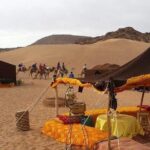
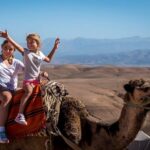
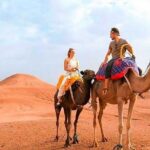
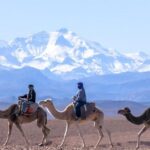
As for the camel ride: it is optional. That is ideal for families or travelers who want the culture without committing to riding. If you do ride, expect the time to be short and the pace to be gentle. Past day-trip accounts mention around 20 minutes, but confirm timing with your guide on the day.
Guides, Drivers, and What Your Money Actually Buys
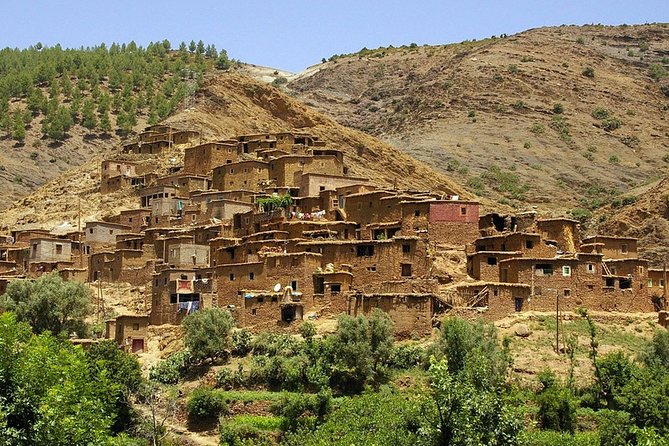
Let us talk value, because $110.51 per person sounds simple until you unpack what is included.
For that price, you get private transportation in an air-conditioned vehicle, plus a chauffeur and local guides. You are also given a mobile ticket, and the tour includes pickup and drop-back to the meeting point area. On top of that, some stops list admission tickets as free, and Ourika is ticketed as included.
In real terms, you are paying for three things:
- Reliable door-to-door timing in Marrakech.
- A local guide who helps you move between village areas without awkward guesswork.
- Structure for a full day, with stops that fit together instead of feeling random.
The day trip also benefits from pacing. The itinerary uses lots of short stops (10 to 30 minutes) and one longer nature block (about 2 hours in Ourika). That is often a smarter setup than packing too many long walks into one day.
People often highlight the driver and guide as the difference-maker. Names like Mariem have come up as an especially warm, organized guide. Esmaïl, Ismaël, Mustafa, and Abdel appear as drivers or local leaders tied to comfortable logistics. Abdul and Mohammed show up as friendly guides who explain the region and adapt.
You should not assume your team will match those exact names. But the takeaway is real: when this day runs well, it is because the guide is good at reading the group.
Price and Logistics: A Fair Deal, With One Thing to Confirm
This tour is priced as a private day trip with guides and a chauffeur, so it sits above the cost of renting a car and wandering solo. You are also paying for cultural access and guided navigation, which is hard to DIY without local contacts.
Two practical points help you get the value you paid for:
- Confirm whether your local meal is included in your exact booking. The overview says local lunch is included, while the package details list lunch as not included. Either way, you should plan for lunch spending or at least bring small cash in case you need to cover it.
- Bring a little patience for a day that includes driving plus short walks. At 8 to 9 hours, you are going to be on the move. That is normal and part of the deal.
Also check the weather note. The experience requires good weather. If conditions are rough, you should expect a reschedule or refund. This matters most for trekking comfort and safety.
Timing, Packing, and Fitness for an 8–9 Hour Day
This is a full-day format. Even if the walking segments are not long, you are out for 8 to 9 hours, and the route includes plateau crossing and valley time. The tour requests moderate physical fitness. That usually means:
- You should be comfortable with uneven paths.
- You should be okay walking for stretches without needing constant breaks.
- You should manage sun or shade as the route shifts.
Packing for this kind of day trip from Marrakech is straightforward:
- Water (bring more than you think you need).
- Sun protection and a hat.
- Comfortable shoes with grip.
- A light layer for cooler valley air in Ourika.
If you travel in colder months, the Ourika Valley can be cooler because of the High Atlas peaks. If you travel in peak heat, the valley stops help you cool off, but sun exposure still matters once you step out near plateaus and fields.
If you are considering the optional camel ride, wear shoes that feel secure. Also, keep your phone handy but not loose. You do not want to spend the ride thinking about gear.
Should You Book This Berber Villages Trek Day Trip?
Book it if you want a day that feels connected to people and place, not just a checklist of scenic stops. The mix of Berber village crossings, a Berber home visit, and time in Ourika Valley makes the trip more complete than many Marrakech excursions.
Pass or at least reconsider if you dislike long drive days, or if you need a very low-footprint itinerary. Also confirm the lunch situation before you go, since the details are not fully consistent.
If you like flexible private tours, this fits. You get local guidance, a chauffeur-driven schedule, and the kind of pacing that lets you see a lot without turning the whole day into a single exhausting hike. For many people, that balance is exactly why they give the experience a perfect score.
FAQ
How long is the Berber villages trek day trip?
It runs about 8 to 9 hours.
Do you get pickup from Marrakech hotels or riads?
Yes. Pickup is offered from your residence such as hotels, riads, or apartments, and it takes about 15 minutes.
Is this tour private or shared?
This is a private tour/activity. Only your group will participate.
Are admission tickets included for the stops?
Some stops list admission tickets as free. Ourika Valley has an admission ticket included.
Is lunch included?
The overview says local lunch is included, but the package details list lunch as not included. Check your booking confirmation so you know what you should budget for.
Is there an optional camel ride?
Yes. The camel ride is optional.
When is the Asni market open?
The Asni market operates on Saturdays.
What fitness level do I need?
You should have a moderate physical fitness level.
What happens if the weather is bad?
The experience requires good weather. If it is canceled due to poor weather, you will be offered a different date or a full refund.
Can I cancel for a full refund?
Yes. You can cancel up to 24 hours in advance for a full refund. If you cancel less than 24 hours before the start time, the amount paid is not refunded.