REVIEW · MARRAKESH
3D Deluxe Experience: Marrakech to Merzouga w/ Quad Option
Book on GetYourGuide →Operated by Discover Sahara Tours LLC · Bookable on GetYourGuide
Camel rides and desert stars win fast. This 3-day route links UNESCO Ait Ben Haddou, big Atlas viewpoints, and the Erg Chebbi dunes in a way that feels efficient and not rushed.
What I like most is the core experience: a camel ride at sunset and sunrise with time to watch desert light change in real time. The camel-and-sand setup is also easy to fit into the schedule without turning the trip into a daylong slog.
One consideration: depending on which desert camp option you choose, the camp can be lively and basic. In shared camp setups, toilets and showers can feel chaotic, and tents may not have AC, so plan for warm nights and simple facilities.
In This Review
- Key highlights worth circling
- Marrakech to Merzouga in 3 days: how this trip stays focused
- High Atlas roads and Ait Ben Haddou: the UNESCO stop that people film for a reason
- Skoura Palms and Rose Valley timing: nice breaks between mountain drives
- Dades Valley and Todra Gorge: the walking day that adds texture
- Erfoud fossils: a quick stop with a different kind of Morocco fact
- Erg Chebbi at sunset: the camel ride part you’ll talk about later
- Desert camp life in Merzouga: comfort choices and what to expect
- Quad option in the dunes: worth it for thrill seekers, optional for everyone else
- Food and timing: what’s included, what you’ll pay for
- Price and value: is $125 a fair deal for this route?
- Guides and group energy: why names matter here
- Who this tour fits best (and who should think twice)
- Should you book this Marrakech to Merzouga desert trip?
- FAQ
- What’s included in the tour price?
- Are lunches included?
- How does the quad option work, and how much is it?
- What kind of accommodation do you get in Marrakech and in the desert?
- Is there a camel ride both at sunset and sunrise?
- What should I bring for the trip?
Key highlights worth circling
- Erg Chebbi camel ride at sunset and sunrise with classic dune views
- Ait Ben Haddou UNESCO Kasbah on the High Atlas route
- Todra Gorge walk and canyon scenery plus small cultural stops (including carpet-making)
- Erfoud fossil town stop for a different side of the region
- Berber music show, henna, and traditional clothing in the camp setting
- Quad option in the dunes if you want faster thrill vs slow camel time
Marrakech to Merzouga in 3 days: how this trip stays focused
A lot of Morocco desert trips try to do everything. This one stays anchored to a clear story: Atlas Mountains → UNESCO kasbah → canyon scenery (Dades and Todra) → Merzouga dunes at night → sunrise return.
That focus matters because the drive days are long. When the itinerary is built around a few “you’ll remember this later” moments, the travel time feels justified instead of like a long bus commute with scenery pasted on.
You also get a structured rhythm: you sleep twice (first in an air-conditioned room with private bath, then in a desert camp), and you’re fed with included breakfasts and dinners. Lunch is the one meal type you need to budget for.
You can also read our reviews of more tours and experiences in Marrakesh.
High Atlas roads and Ait Ben Haddou: the UNESCO stop that people film for a reason
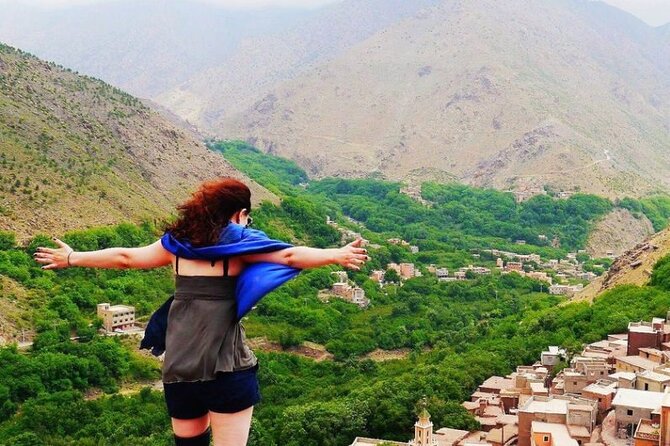
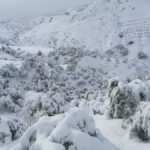
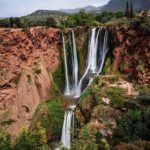
The route starts with the High Atlas climb, including a drive over Tizi n Tichka Pass. Even if you only care about the desert, this section is worth paying attention to because the mountains change the whole tone of the trip.
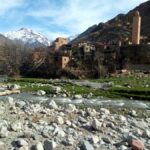
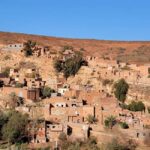
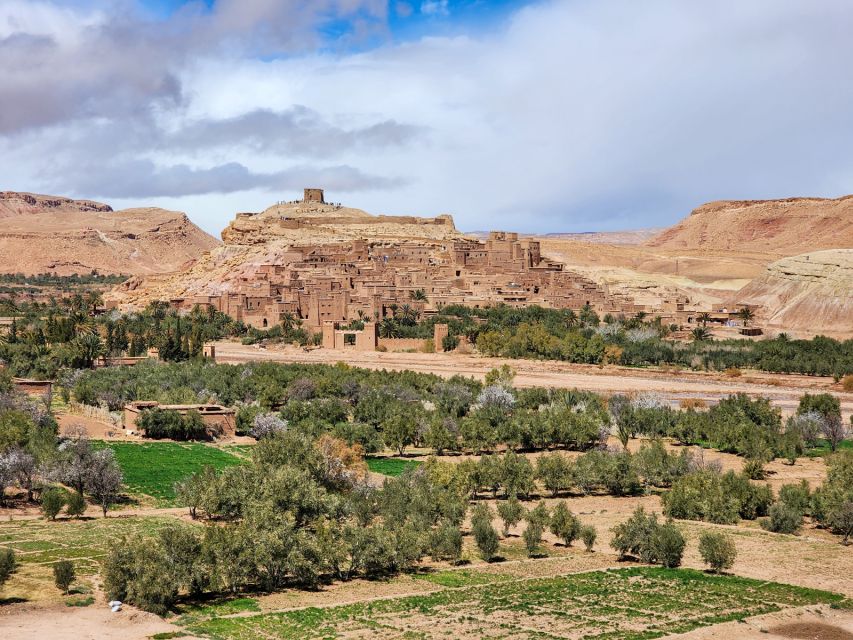
Then you reach Kasbah Ait Ben Haddou, a UNESCO World Heritage Site that shows up in movies for a reason. The place is not just photogenic—it’s a living example of how these earthen buildings were designed for harsh weather and heat. If you like architecture or you simply enjoy places that feel like time travel, you’ll get it right away.
One small practical note: the package may include guidance, but the local guide in Ait Ben Haddou can be extra (listed at 2€ per person). If you care about details—how the kasbah works, why it looks the way it does—this is the kind of add-on that can make your visit click.
Skoura Palms and Rose Valley timing: nice breaks between mountain drives
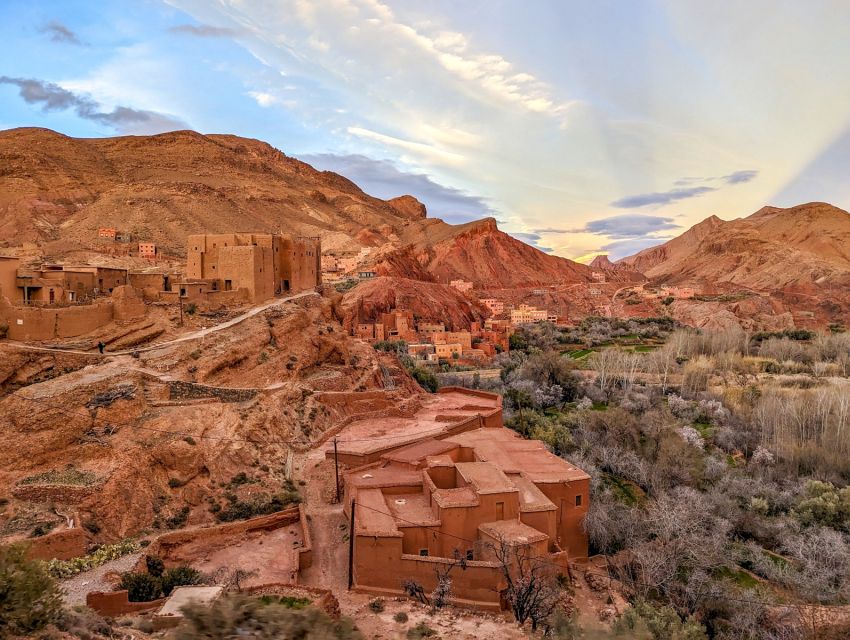
Between the major landmarks, you get breathing-room scenery. On this route you pass through Skoura Palm grove, then up toward the Rose Valley area where roses can be in bloom mid spring.
These are the moments that help the trip feel less like a checklist. You’re not just staring out the window. You’re seeing how agriculture, palms, and kasbahs sit together—how people live with the land instead of treating it like scenery.
You’ll also want to keep an eye on your timing because this is still a road trip. The good news: the overall plan is designed so you don’t lose the day to endless stops.
Dades Valley and Todra Gorge: the walking day that adds texture
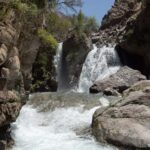
The Dades and Todra stretch is where the trip gets more dramatic. You’ll move into canyon country and have a walking experience in and around Todra Valley, including views of the gorge and stops tied to everyday craft and culture.
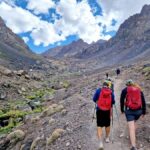
A highlight here is that walking time isn’t just window dressing. You get out, move at a comfortable pace, and see the canyon scale from closer range—exactly what you want on a desert trip. The canyon gives you contrast: smooth dunes later, steep rock now.
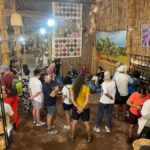
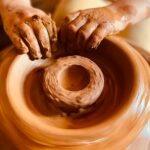
You may also see small cultural stops, including traditional handmade carpets associated with the walk. This can be a fun chance to ask questions and watch how local products are made, not just take a photo and run.
Erfoud fossils: a quick stop with a different kind of Morocco fact
Before you hit the dunes, you pass through Erfoud, a town known for its fossils. It’s not a massive museum moment on this kind of itinerary, but it’s a smart pivot away from only “kasbah and gorge” scenery.
Why it’s valuable: the desert area is often explained only through sand and silence. Erfoud gives you a reminder that the geology under your feet has a whole backstory, and that the region’s history isn’t only human.
If you like learning one solid fact per stop, this is the kind of brief stop that makes the whole drive feel less repetitive.

Erg Chebbi at sunset: the camel ride part you’ll talk about later
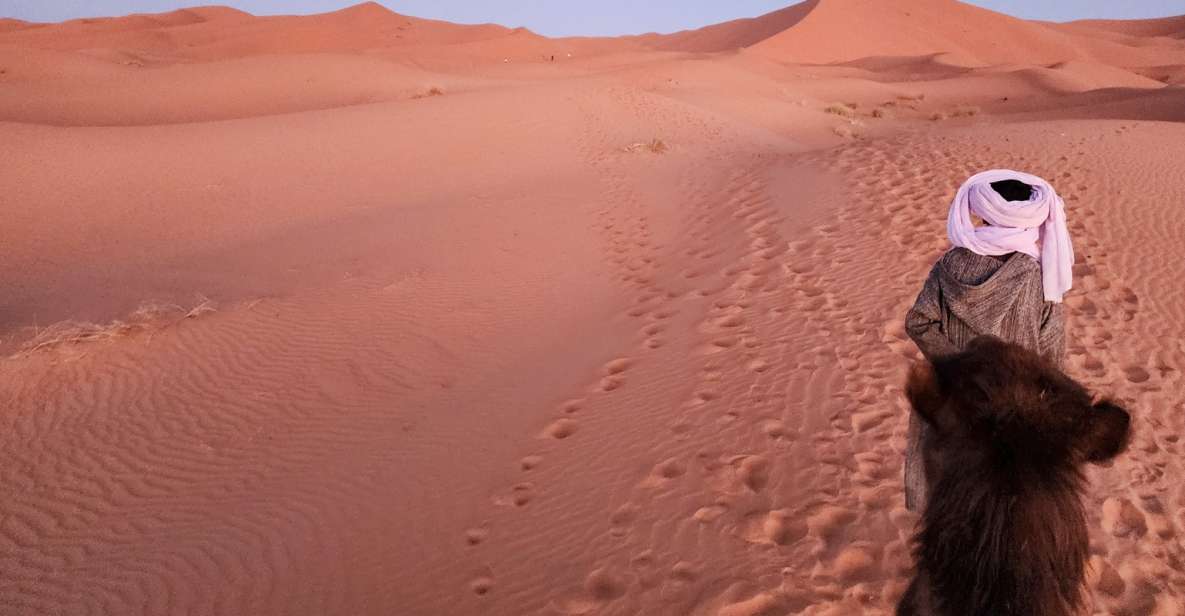
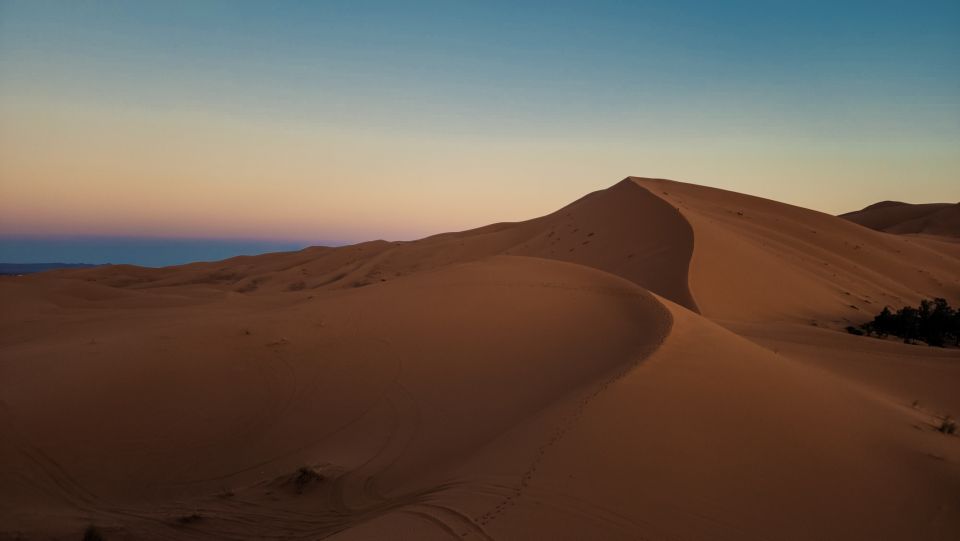
Erg Chebbi is the star. The dunes aren’t just pretty; they’re immersive in the way they swallow distance and turn the sky into the main event.
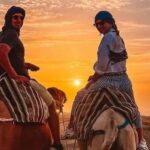
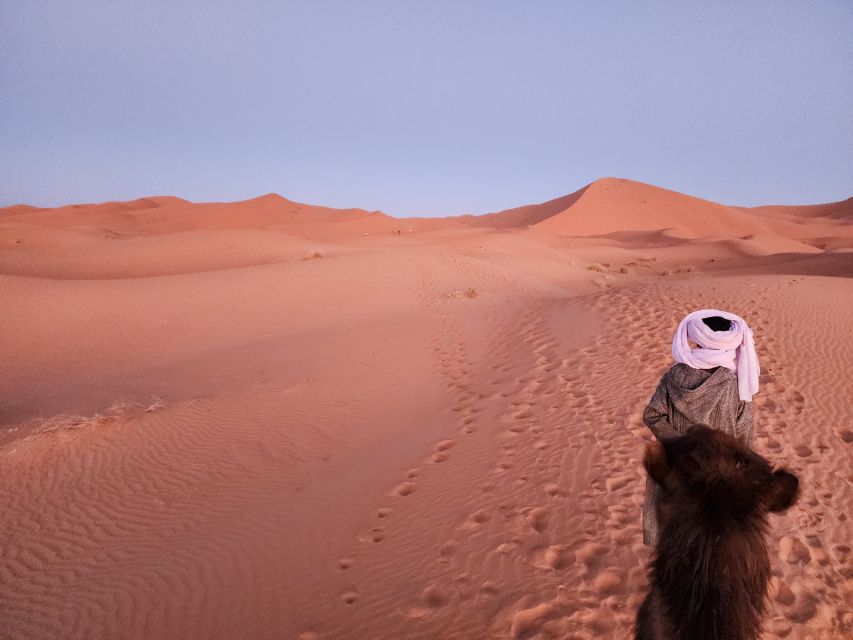
You arrive in time for the classic desert rhythm: sunset views, then an overnight camp. The included camel ride at sunset is built to get you out over the dunes without turning it into an all-day ordeal.
Then you get the bonus move: you ride again at sunrise after breakfast. That second ride is where the desert really changes. Sunrise in the Sahara can look like a different world compared with the sunset version—same dunes, different mood.
You’ll also have sandboarding time. If you’re going to try one active thing, this is the easiest sell. It’s short, fun, and you’re still mostly watching the horizon.
Desert camp life in Merzouga: comfort choices and what to expect
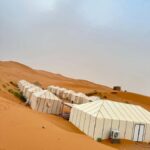
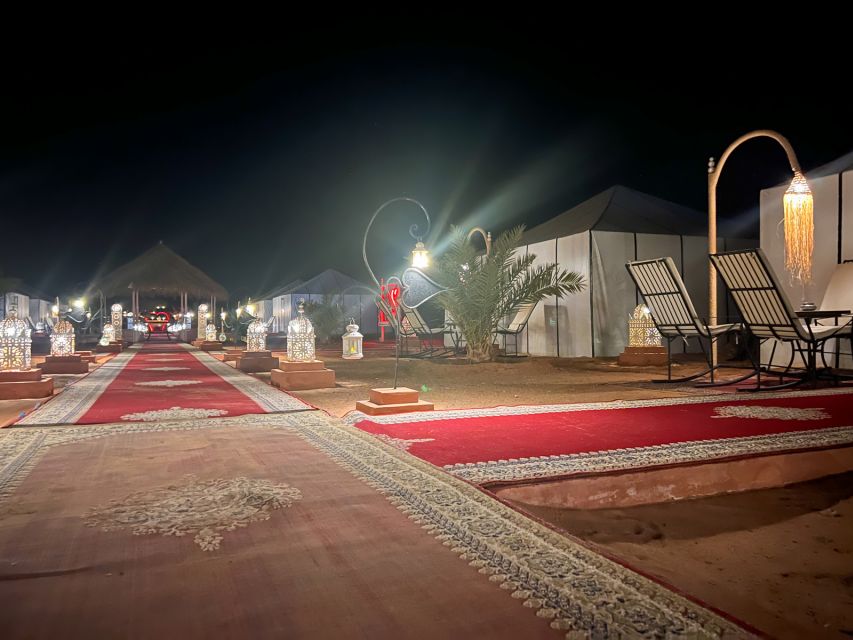
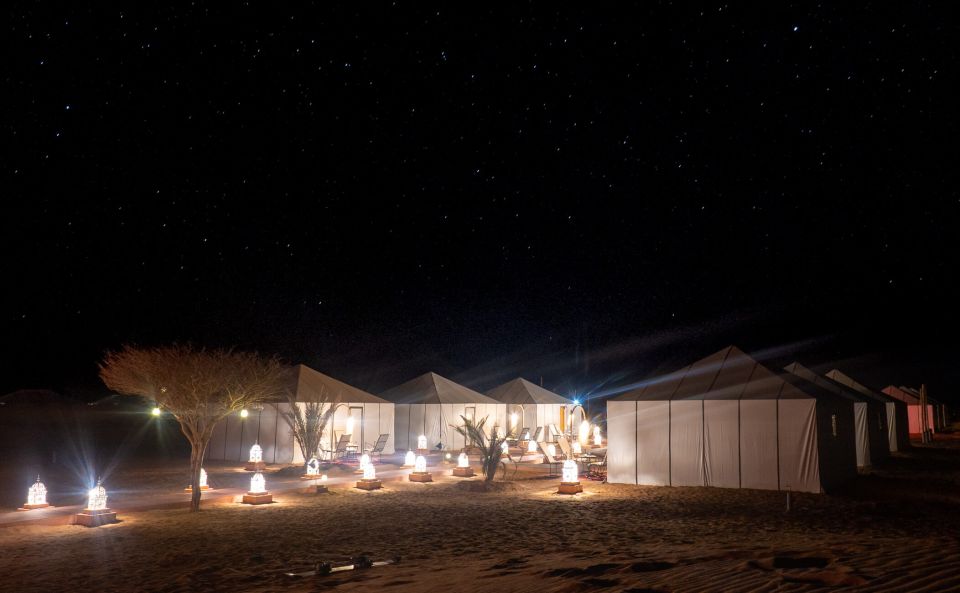
You sleep in an authentic Berber desert camp in Merzouga, with options listed as Global Desert Camp (standard) or Luxury Desert Camp depending on what you booked.
Here’s what matters in real life:
- You’ll get dinner and a Berber music show at night. This is one of the most social parts of the trip, especially if you’re traveling with a group.
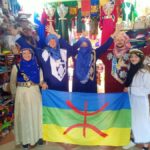
- You get chances for henna and to try on traditional Berber clothing. It’s not just photo time; it’s a friendly cultural touch.
- Camp facilities can vary. In shared camp setups, shared toilets and showers can feel hectic, and tents may not have AC, which is normal for the setting but still worth planning for.
If you’re the type who needs quiet bathrooms and lots of privacy, the standard shared camp setup may not feel ideal. If you can handle basic facilities for the sake of the dunes, you’ll probably love it.
Quad option in the dunes: worth it for thrill seekers, optional for everyone else
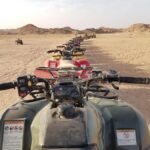
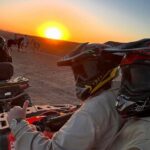
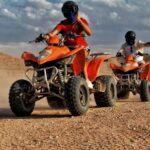
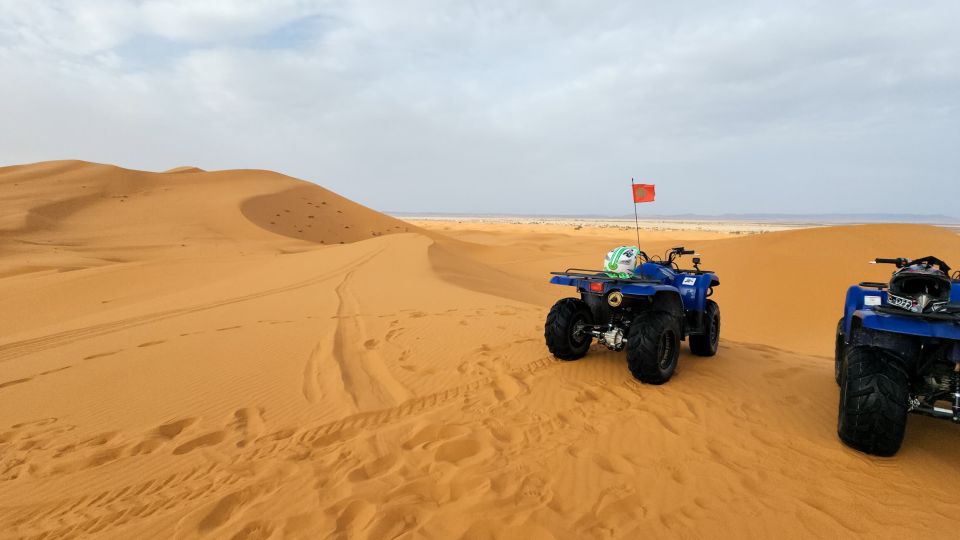
This is where you can choose your speed. The tour includes camel time and sandboarding. If you want more motion, you can rent an ATV quad at the camp.
The listed option is 50€ for a single rider or 60€ for a double for one hour. There’s also mention that you can do an ATV return option the next morning for extra cost.
My take: if you’ve never ridden in sand, an hour can be a blast. If you’re happy with slow desert time and you already have a camel ride planned at sunrise and sunset, the camel experience is the main event you shouldn’t skip.
It’s not that the quad is better—it’s that it’s a different kind of fun. Choose based on whether you’re after a workout and a rush, or quiet dunes and sky watching.
Food and timing: what’s included, what you’ll pay for
Meals are mostly covered, with 2 dinners and 2 breakfasts included. That’s a big deal on a 3-day desert trip because you don’t have to hunt for meals in small towns.
Lunch is the main extra you should budget. Lunches are described as not included, and one common approach is set lunch spots where buffet pricing can run around 120 MAD per person. If you want to save money, you might find nearby places, but that’s only easy if you’re comfortable with a bit of flexibility day-to-day.
Also note that drinks aren’t included. Bring water and plan to buy the rest as needed.
Price and value: is $125 a fair deal for this route?
At $125 per person, the value is strong if you want the classic highlights: Atlas scenery, a UNESCO kasbah, canyon walking, and a desert night with camel rides plus sandboarding.
What you’re paying for isn’t just the “desert part.” You’re also paying for:
- air-conditioned transportation and a driver-guide,
- pickup and drop-off in Marrakech,
- overnight stays (first night with private bathroom, second night at a desert camp),
- included meals (mostly dinners and breakfasts),
- camel rides and a day of structured sightseeing.
Extra costs are real, but they’re also predictable: lunch, drinks, and optional items like the quad. If you add a local guide at Ait Ben Haddou (listed at 2€), and if you rent a quad, your total will climb—but you’re still building your own mix of culture and adventure.
Guides and group energy: why names matter here
This kind of trip lives or dies by the people behind the wheel and the explanations at the stops. The guide names that show up often include Omar, Addi, Said, Salah, Hicham, Ayoub, Younes, and Ismail—and that pattern usually means you’re more likely to get a lively, organized day rather than a tired ride with no context.
I’d pay attention to how you’ll be helped when something runs on Moroccan time, because road trips here aren’t always clockwork. The better guides make the pace feel fair, not random.
If your Spanish, English, or French is comfortable, you should feel in good hands since these languages are listed for the tour.
Who this tour fits best (and who should think twice)
This experience is a great fit if you:
- want a 3-day sampler of Morocco’s most famous regions (Atlas, kasbahs, gorges, dunes),
- like guided structure but still want time for photos and walking,
- want a camp night where the day ends with music, henna, and shared moments.
It may be less ideal if you:
- need lots of privacy and top-tier bathroom comfort,
- can’t handle warm tent nights (especially in standard camp options),
- hate long drives and would rather do a slower, more local stay.
If you’re a first-time visitor to the desert, this is the kind of itinerary that helps you get your bearings fast.
Should you book this Marrakech to Merzouga desert trip?
Yes, if your priority is the big Morocco beats in a short time: Erg Chebbi sunset and sunrise camel rides, UNESCO Ait Ben Haddou, Todra canyon time, and an authentic desert camp night. The $125 price makes sense when you compare what’s bundled—transport, guides, accommodations, and activities.
Maybe skip or upgrade if shared camp comfort matters more than the dunes. If you can budget for lunch and optional quad time, you’ll feel in control instead of nickel-and-dimed.
If you do book, send your Marrakech hotel name and a working WhatsApp number so pickup runs clean. It’s one of the small steps that prevents big day-one stress.
FAQ
What’s included in the tour price?
The tour includes hotel or riad pickup and drop-off, air-conditioned transportation, a driver-guide, WiFi, 1 night in an air-conditioned room with a private bathroom, and 1 night at your selected desert camp. It also includes 2 breakfasts and 2 dinners, a pool, camel rides to and from the camp at sunrise, sandboarding, luggage service by 4×4, Berber music show, and opportunities for henna and traditional clothing.
Are lunches included?
No. Lunches are listed as not included, and you’ll need to budget separately.
How does the quad option work, and how much is it?
A quad/ATV is available for renting at the camp for 50€ for a single rider or 60€ for a double rider, for one hour. You can also see an option to return by ATV next morning for extra cost.
What kind of accommodation do you get in Marrakech and in the desert?
In Marrakech, you get 1 night in an air-conditioned room or suite with a private bathroom. In Merzouga, you stay at an Erg Chebbi desert camp, with standard and luxury camp options listed.
Is there a camel ride both at sunset and sunrise?
Yes. Camel rides are listed at sunrise and sunrise, meaning you ride to the camp and then ride back in the morning.
What should I bring for the trip?
Bring comfortable shoes, sunscreen, and comfortable clothes. Since evenings in the desert can get cooler, dressing in layers can also help, but the listed items are the must-haves.