REVIEW · MARRAKECH
3 Days 2 nights Desert Tour from and back to Marrakech
Book on Viator →Operated by Moroccan Nature Trail · Bookable on Viator
Dunes start with a 7 a.m. pickup. This 3-day desert route mixes classic Morocco stops with a real desert moment: camel ride at sunset and a smooth A/C van journey between sights. You also get an organized day-to-day plan that keeps things moving, even when the distances stretch.
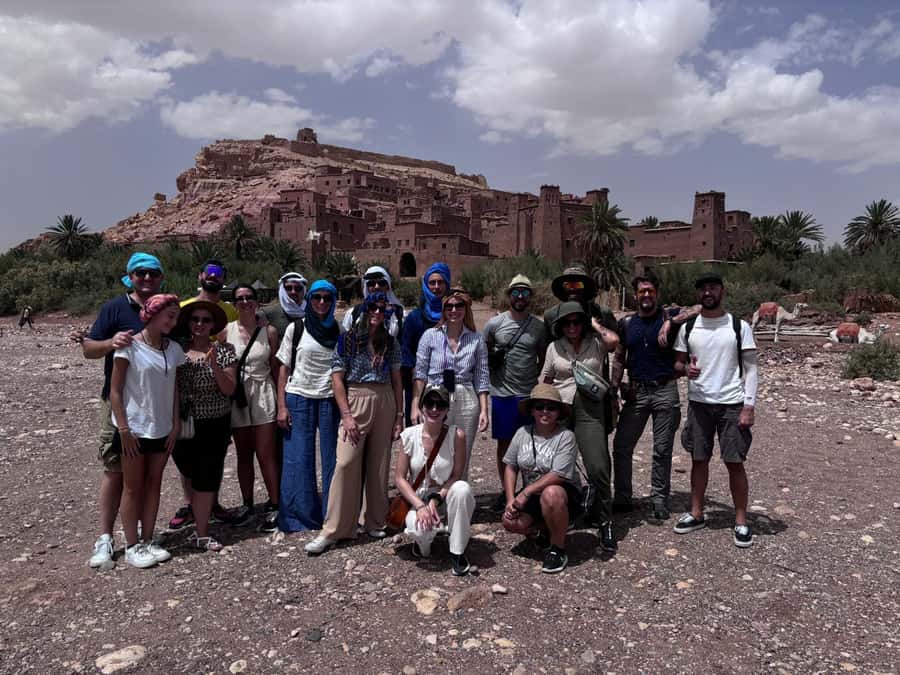
I love how the trip pairs major landmarks with the kind of roadside Morocco you actually remember. UNESCO Aït Benhaddou feels like stepping into earthen clay time, and the English-speaking guide helps connect the dots while you’re on the road. It’s a good format if you want more than just the dunes.
The main thing to watch is the pace. You’ll spend a lot of time in the car, and lunches not included means you’ll want cash on hand for daytime meals during long drives, especially on travel-heavy days.
In This Review
- Key points I’d plan around before you go
- Day 1: Aït Benhaddou and Ouarzazate before the Dadès Gorges grind
- Dadès and Todgha Gorges: the canyon day that actually changes the mood
- Merzouga: camel sunset in the dunes, plus your luxury camp tent night
- Day 3: Rissani stop and the long drive back to Marrakech
- Price and value: why $185.83 can make sense here
- Logistics that matter: meeting point, timing, and group size
- Who should book this desert tour—and who should tweak the plan
- Should you book this 3-day desert tour from Marrakech?
- FAQ
- What is the duration of the 3-day desert tour from Marrakech?
- Where is the meeting point in Marrakech, and what time does it start?
- What’s included in the price?
- Are hotel pickup and drop-off available for everyone?
- Are meals like lunch included?
- Which entrance fees are included?
- How does cancellation work if my plans change?
Key points I’d plan around before you go
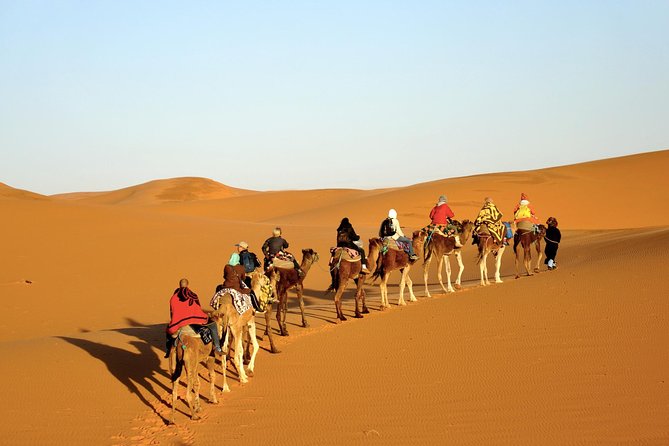
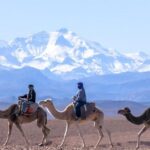
- Camel sunset in Merzouga (Erg Chebbi area): you get the iconic ride before settling in for the night
- Aït Benhaddou UNESCO stop: 2 hours inside the fortified ksar on the caravan route
- Gorges days (Dadès and Todgha): dramatic canyon scenery and river-carved views
- Comfort upgrades that matter: hotel night plus luxury camp tent on the second night
- Small group limit (max 15): easier to hear your guide and stay organized in transfers
Day 1: Aït Benhaddou and Ouarzazate before the Dadès Gorges grind
Your day starts in Marrakech with hotel pickup (for selected hotels) and a meeting point at Carré Eden on Av. Mohammed V at 7:00 am. The early start matters here: the tour is built around reaching the Atlas-to-desert transition with time left for stops that are actually worth your attention.
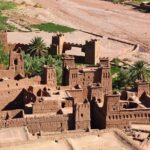
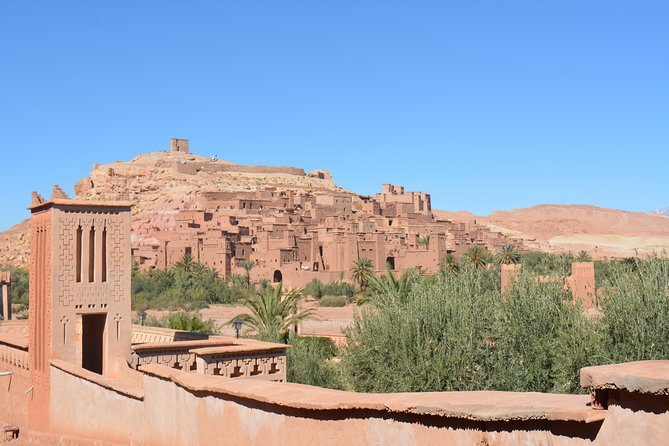
First up is Aït Benhaddou, a fortified village on the old caravan route between the Sahara and Marrakech. Inside the ksar, you’ll see the merchants’ house style of earthen clay architecture—half a dozen kasbah structures within the walls. It’s the kind of place where walking slowly makes a difference because the walls, lanes, and building textures tell you how people adapted to heat, wind, and security needs. This is also the site tied to famous film productions, so if you recognize angles from movies, you’ll quickly understand why filmmakers loved this setting.
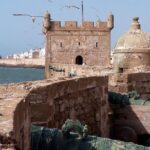
Next you’ll head toward Ouarzazate, a town that grew from a trade stop into an administrative and garrison center during the French period. A key highlight here is the kasbah of Taourirt—once home to T’hami El Glaoui. Even if you only have about an hour, you’ll feel the “power base” vibe from the old walls and the story the place carries. Outside the kasbah, you can also spot a Krupp field gun that once helped secure Glaoui’s influence.
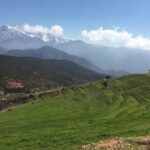
From there, you move into the Atlas Mountains corridor. The tour doesn’t just treat this like “drive time.” The mountains form a long chain across Morocco and beyond, acting as a divider between Atlantic/Mediterranean climates and the Sahara side of the country. For many people, this is the first moment where you feel you’re leaving Marrakech’s feel behind and heading into something drier and more open.
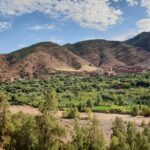
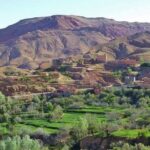
Then you reach Dadès Gorges, carved by the Dadès River. This is rugged wadi-gorge country—less “storybook” than Aït Benhaddou, more dramatic in a wild, rocky way. The experience here isn’t about one single photo spot. It’s about the sense that you’re walking through river-shaped geology at the edge of the desert route. Your time is long on Day 1 (the Dadès stop runs about 8 hours on the schedule), so think of it as a sightseeing day with multiple viewpoints rather than a quick hit.
What to bring for Day 1: sun protection and water. Even if the van has A/C, the gorges and ksar stops mean you’ll be outside for long stretches. If you’re the type who needs long breaks, plan for them mentally—you may not get full “free time” the way you would on a self-guided trip.
A few more Marrakech tours and experiences worth a look

Dadès and Todgha Gorges: the canyon day that actually changes the mood
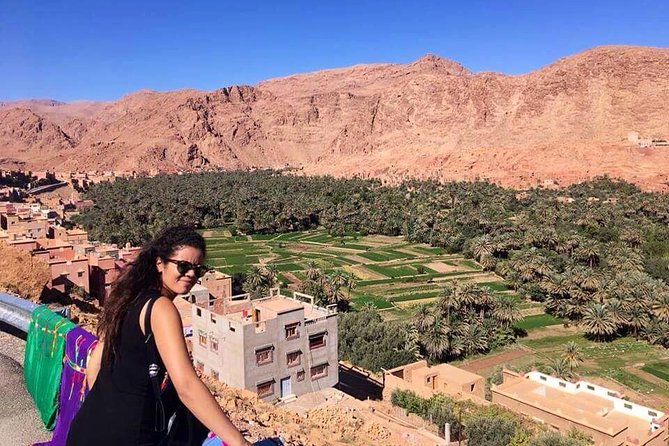
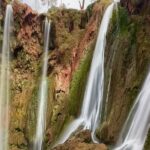
Day 2 starts with Todgha Gorges near Tinghir. Todgha and the neighboring Dadès Rivers carve deep limestone canyons through the High Atlas. When you’re standing near the cliff sides, you get a clear sense of how water and time shaped these walls—especially because the canyon here is sharp and vertical, not rounded like some river scenery.
Todgha’s strength is the texture. Limestone cliffs reflect light differently as the day shifts, so the canyon can look almost different across a short period. Even if the scheduled Todgha stop is about 2 hours, you’ll have enough time to see the main canyon feel and take a few angles without rushing.
After Todgha, the route continues toward the Sahara corridor. You’ll pass through Erfoud, known as an oasis town in the Drâa-Tafilalet region. The town is organized into several districts (Hay Salam, Hay Jdid, Hay Ziz, Hay el Bathaa, Hay Annahda, and Hay el Hamri). Even if you don’t spend long here, it helps explain why towns like this exist at the edge of desert travel routes: they’re built around water availability and trade.
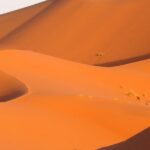
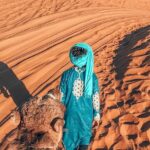
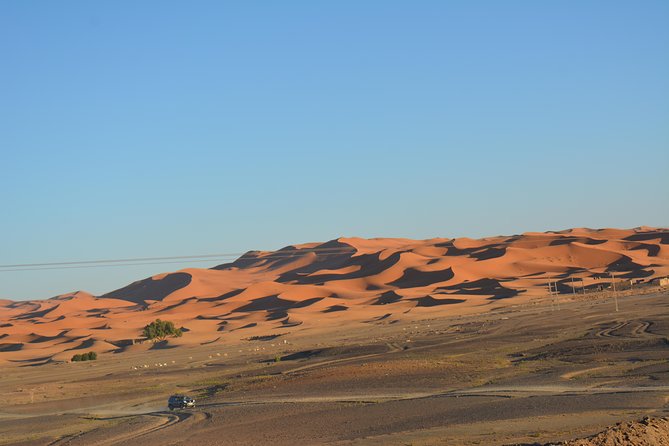
Then you reach Merzouga, the gateway area for Erg Chebbi dunes. Merzouga is close to the Algerian border, and it’s positioned for a classic desert experience. Erg Chebbi is the big-sand expanse people come for in this part of Morocco, with towering dunes that change color as the sun moves. When the day gets quiet and the air feels drier, you’ll feel the contrast right away.
Merzouga: camel sunset in the dunes, plus your luxury camp tent night
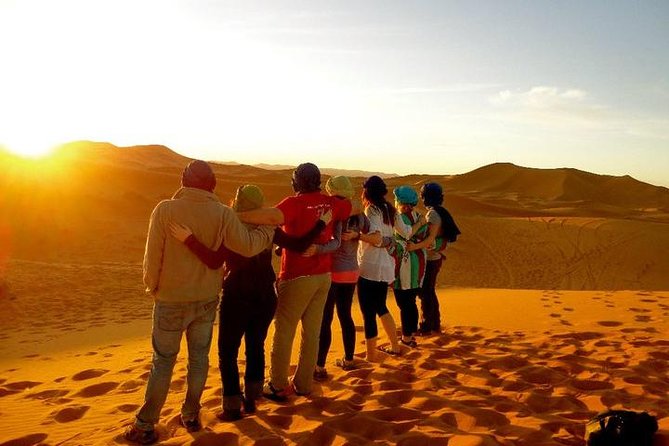
This is the emotional core of the tour.
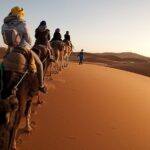
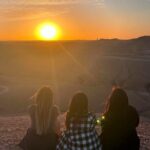
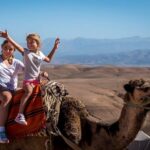
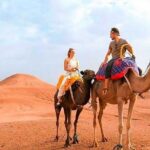
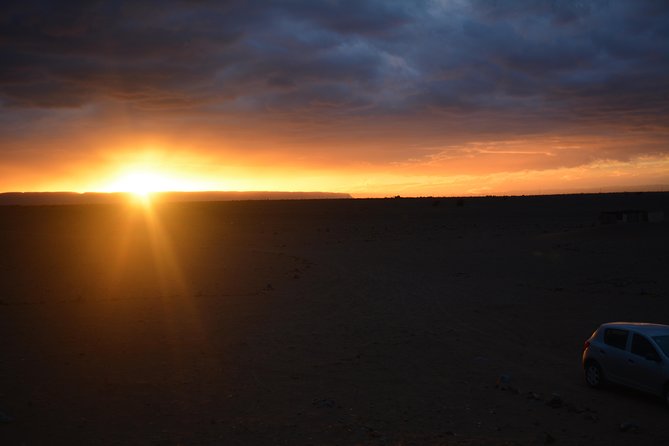
In Merzouga Desert, you catch sunset as part of the camel ride. This is exactly the kind of moment that feels simple on paper but becomes memorable when you’re out there: the light gets soft, the dunes look longer than you expected, and the whole world narrows to movement across sand. The best practical tip here is to dress for temperature swings. Desert nights can cool fast.
After the ride, you sleep at a luxury camp with tents (the second night of the tour). Your schedule includes dinner and breakfast, so you’re not scrambling for food after a long day. The “nomadic campsite” wording can make some people imagine a bare-bones setup, but you still get a camp structure designed for guests—comfortable enough to recover from the drive and the camel time without turning the night into a survival test.
One key detail to remember: the tour includes dinners (2) and breakfasts (2), but lunches are not included. That means your appetite planning matters on Day 2 too. If you want a steady energy level for the sunset ride, buy or pack what you need for midday before the evening plan starts.
Photo tip without overdoing it: sunset shots look best when you give yourself a few minutes to let your camera settings adjust (and to wait for the light to settle). Don’t burn all your time fighting with gear when the dunes are doing the real magic.
Day 3: Rissani stop and the long drive back to Marrakech
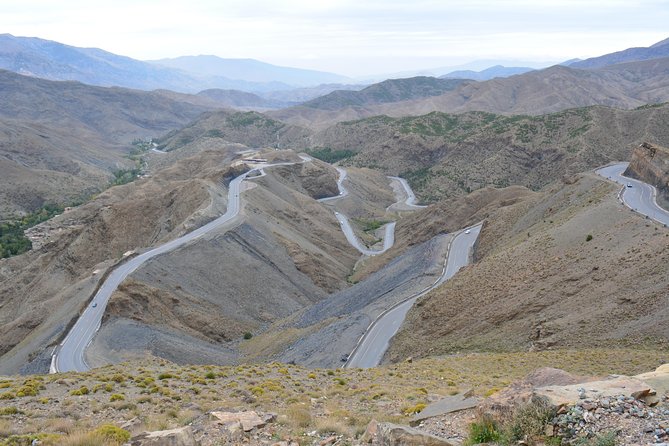
Day 3 is about turning the page from dunes back to cities. The route includes Rissani, a town near Erfoud and close to Erg Chebbi. It’s described as the closest town of significant size to the dunes, which means it works as a logical pivot point: you’re transitioning from desert travel into roads that actually keep you moving efficiently toward Marrakech.
After that stop, you take the extended drive back. The tour description flags Day 3 as the longer return day, and that’s what you should expect. This isn’t a relaxed “stay in the desert longer” day. It’s a travel-and-arrival day.
The good news: the tour is structured so you’re not navigating the transfers yourself. The downside is the same theme as always—time in a vehicle. If you tend to get antsy during long drives, bring your own comfort items (a light layer, earplugs, maybe a snack you can carry). You’ll feel better walking around at the end of the day instead of arriving tired.
Price and value: why $185.83 can make sense here
The price listed is $185.83 per person, with an average booking time around 20 days in advance. For Morocco desert tours from Marrakech, the value usually depends on what you actually get for your money: transport, guided stops, and the experience that’s hardest to DIY.
Here’s what you’re paying for, in practical terms:
- Hotel pickup/drop-off (selected hotels) so you don’t waste time figuring out logistics
- A/C van and an English-speaking tour guide
- First night hotel accommodation (so you’re not sleeping in the desert both nights)
- One night in a luxury camp tent
- Camel ride plus breakfasts (2) and dinners (2)
Where you’ll spend extra:
- Lunches and drinks aren’t included, so budget for at least a couple of daytime meals.
- Tickets are partially included depending on the stop. Aït Benhaddou admission is included, while Ouarzazate’s stop is listed as free.
If you compare this to piecing together a desert trip yourself, you’re paying for the “transfer chain” to work smoothly: Marrakech → gorges/ksar stops → Merzouga → camp night → return. That’s the part most people underestimate, because it’s not just the destination. It’s the driving, timing, and keeping a group together.
At a small-group size (max 15), the structure also tends to feel less chaotic than huge bus trips—especially when you need to hear instructions and know when to be ready.
Logistics that matter: meeting point, timing, and group size
This tour is designed for a set schedule:
- Start time: 7:00 am
- Start area: Carré Eden, Av. Mohammed V
- Duration: about 3 days
- Ends back in Marrakech after the return day drive
- Format: guided with mobile ticket
The small group limit of 15 matters more than it sounds. In desert-country transfers, fewer people means smoother pickup coordination and less waiting. You’re also more likely to hear the guide’s explanations without leaning into conversations.
Also note: the tour may be operated by a multi-lingual guide. Even if your key language is English, you may see some switching, especially with mixed groups.
One more practical point from real-world expectations: if you’re the type who wants a super detailed description of each stop with exact walking time and “how long do we truly have at the viewpoint,” this kind of tour can feel a bit more structured than you expected. That doesn’t mean it’s bad—it just means you’ll be happier if you see it as a guided route where the big moments are the destination.
Who should book this desert tour—and who should tweak the plan
This tour is a strong match if you want:
- A guided 3-day route from Marrakech without arranging multiple transfers
- Classic Morocco highlights like Aït Benhaddou and the Dadès/Todgha gorges
- A genuine desert experience with sunset camel ride and a camp night
It may be less ideal if you:
- Want lots of free time and wandering without a schedule
- Hate long car days and struggle with travel fatigue
- Prefer all meals and drinks included (because lunches and drinks aren’t included)
If you’re traveling with kids, the tour says children must be accompanied by an adult. It also states that most travelers can participate, so it’s broadly accessible from a participation standpoint, but you should still consider the long driving hours.
Should you book this 3-day desert tour from Marrakech?
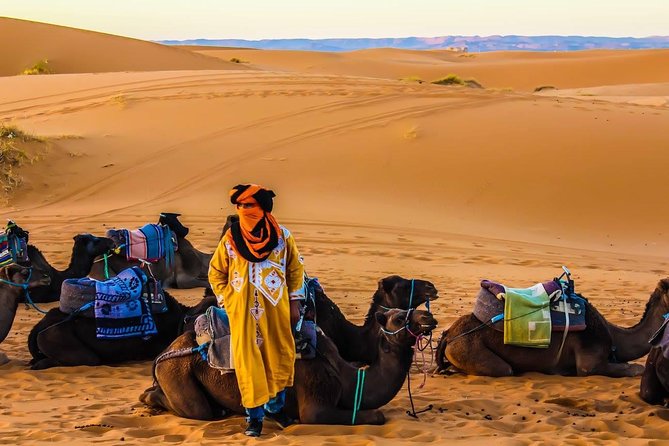
I’d book it if you’re excited by the combo of gorges + kasbah architecture + Merzouga dunes—and you like the comfort of having the route handled for you. The mix of included meals, hotel night, camp night, and camel ride at sunset makes it feel like more than a “drive-by” desert stop.
But book with open eyes. This is not a slow, flexible desert retreat. It’s a packed route with early starts and significant driving, and you’ll need to manage lunch and drinks on your own. If you’re okay with that trade-off, this is one of the more straightforward ways to do Morocco’s desert circuit from Marrakech without getting lost in logistics.
FAQ
What is the duration of the 3-day desert tour from Marrakech?
It runs for about 3 days and 2 nights.
Where is the meeting point in Marrakech, and what time does it start?
The meeting point is Carré Eden on Av. Mohammed V, Marrakech 40000, and the start time is 7:00 am.
What’s included in the price?
The tour includes an A/C van, an English-speaking tour guide, first-night hotel accommodation, one night in a tent at a luxury camp, camel ride, and hotel pickup and drop-off for selected hotels. It also includes 2 breakfasts and 2 dinners.
Are hotel pickup and drop-off available for everyone?
Pickup and drop-off are provided for selected hotels only.
Are meals like lunch included?
No. Lunches and drinks are not included.
Which entrance fees are included?
Admission tickets are included for Aït Benhaddou. Ouarzazate’s stop is listed as admission free.
How does cancellation work if my plans change?
You can cancel for a full refund up to 24 hours in advance of the experience start time. If you cancel less than 24 hours before, the amount paid won’t be refunded.