Dunes, kasbahs, and canyon mornings in four days. I love how the drive over the Tichka Pass sets the tone, and I really love the Erg Chebbi sunset setup with mint tea, dinner, and an overnight bivouac under the stars. One catch: lunches, drinks, and many visit fees are not included, so budget extra.
This is a private tour with pickup offered and a start time of 8:00 am, which makes the trip feel smooth and personal. The trade-off is that you’ll be in the car a lot, since Morocco’s Atlas and desert sights are spread out over long distances.
In This Review
- Key highlights at a glance
- A Marrakech-to-Merzouga route you can actually pace
- Over the Atlas: Tichka Pass and Ait ben Haddou day one
- Skoura palm groves and Amridil Kasbah: the “slow beauty” stop
- Dades Gorges at the end of the day: canyon views with human scale
- Day 2: Todra/Tinghir walk, then the track into Merzouga
- Camel ride to Erg Chebbi bivouac: sunset is the main event
- Day 3: Draa Valley’s kasbah corridor and Ouarzazate culture
- Day 4: back to Marrakech via Tizi-n-Tichka and a final kasbah-town loop
- Price and logistics: what $297.45 buys you (and what it doesn’t)
- Who this desert circuit fits best
- Should you book this Marrakech to Merzouga desert stay?
- FAQ
- How long is the tour from Marrakech to Merzouga?
- Where does the route go during the circuit?
- Is pickup available from Marrakech?
- What time does the experience start?
- Is this a private tour?
- What meals are included?
- Are lunch and drinks included?
- Does the itinerary include a camel ride in the desert?
- What happens if the weather is bad?
- Is there a mobile ticket?
Key highlights at a glance
- Tichka Pass timing on Day 1 makes the Atlas experience feel cinematic from the start
- Ait ben Haddou + Amridil Kasbah gives you two very different, very photogenic styles of kasbah life
- Dades Gorges and Tinghir valley walk are the breaks from driving, with time on foot
- Erg Chebbi camel ride plus mint tea at sunset sets up the desert evening right
- Ouarzazate stops include Taourirt Kasbah and Cinema Studios
- Lunches and visit fees not included means your spending plan needs a little buffer
A Marrakech-to-Merzouga route you can actually pace
This four-day circuit is built for people who want more than a quick desert day trip. You get the full “Atlas to desert” arc: mountain roads through Berber villages, kasbah culture around Ait ben Haddou and Skoura, canyon time in the Dades area, then the big reward in Merzouga.
What I like most is that the itinerary mixes car time with real pauses. You don’t just stare out the window. There’s a kasbah visit on Day 1, a canyon-gorge experience in the Dades region, an hour walk tied to the Todra/Tinghir area on Day 2, and then a camel ride and an evening in the dunes.
The tour also looks practical for groups who want a calm plan. You’ll have private transportation in an air-conditioned vehicle, plus dinners and breakfasts are included for three days. That matters on a route like this, because it reduces the number of meals where you have to negotiate prices or search for places at the last minute.
You can also read our reviews of more tours and experiences in Marrakech.
Over the Atlas: Tichka Pass and Ait ben Haddou day one
Day 1 starts with the drive out of Marrakech through the Tichka Pass at 2260m. That elevation matters because it changes the air and the scenery as you climb, and it gives you a dramatic transition from city rhythms to mountain roads.
Then you hit the classic kasbah stop: Ait ben Haddou. It’s not just a quick photo stop, either—you’ll visit the kasbah and then have lunch on site. If you’ve ever wondered what makes Moroccan kasbah towns feel so instantly recognizable, this is the moment. You’ll see how the fortified architecture and the layered street layout work as a full settlement, not just as a single building.
From there, the day keeps rolling. You’ll move toward the Skoura region and the palm grove area via Ouarzazate, crossing Berber villages along the way. The route is part sightseeing, part travel, and it’s paced so you’re not only sitting in transit.
Skoura palm groves and Amridil Kasbah: the “slow beauty” stop
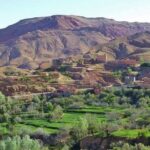
Skoura is one of those places that hits a different mood than the high passes and canyon roads. Instead of rugged stone and elevation, you get palms and the long, quiet feel of a valley.
The itinerary includes a visit to the Kasbah of Amridil, which I consider one of the best “middle day” choices on this route. It’s a strong contrast to Ait ben Haddou: both are kasbahs, but they don’t give you the same vibe. You start to understand the regional differences—how agriculture, settlement patterns, and protection shaped what was built and where.
You also get the sense that Morocco’s south isn’t just one big desert photo. It’s a chain of places with their own logic and scenery, connected by roads that cut through lived-in villages.
Dades Gorges at the end of the day: canyon views with human scale
On Day 1 you’ll continue toward the Dades Gorges and eventually pass through Boumalne. The plan includes visiting the gorges, plus time to experience the meeting of nomads and their herds of goats.
That last detail is important. The Dades area can look like pure scenery if you only focus on cliffs and angles. But you’re being guided toward the everyday human connection—people, livestock, and movement in a landscape shaped by farming and grazing routes.
The practical value here: Day 1 ends with an overnight in the Dades Gorges hotel zone, so Day 2 doesn’t start with an immediate scramble. You wake up closer to the next leg toward Todra/Tinghir and then Merzouga.
For anyone planning this route, I’d treat Day 1 as your acclimation day. You’ll learn what kind of driving your group can handle, and you’ll be well-positioned to enjoy the more intense desert elements later.
Day 2: Todra/Tinghir walk, then the track into Merzouga
Day 2 begins after breakfast with a move toward Todra gorges, including about an hour walk in the Tinghir valley.
This is the kind of stop that makes the whole desert segment feel earned. One hour on foot breaks up the longer drives, and it gives you a chance to feel the canyon air and the valley rhythm before you trade it for dunes.
After that, the route goes on through Tinjdad, Erfoud, and Rissani. You’ll also pass by Erfoud’s famous fossilized marbles. Even if you don’t buy anything, it’s a good reminder that this region has deep geological stories, not just desert postcards.
Then comes the key switch: you head by the track toward Merzouga, arriving at the foot of the dunes of Erg Chebbi.
It’s at this point that you’ll feel how the trip changes gears. Up to now, you’ve been moving through villages, kasbahs, and valleys. Now the world opens into wind, sand, and big distances.
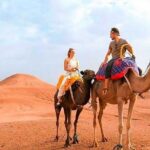
Camel ride to Erg Chebbi bivouac: sunset is the main event
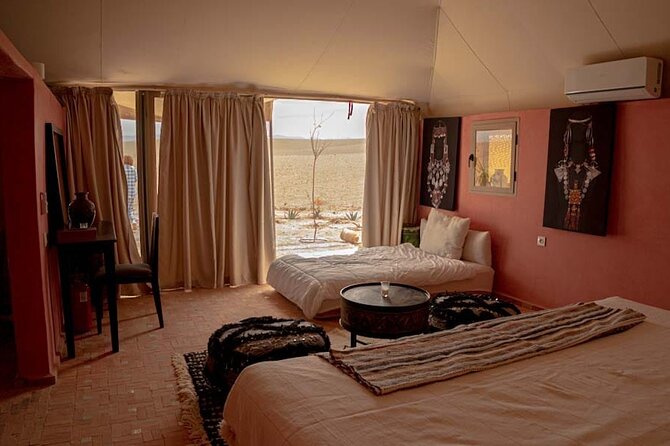
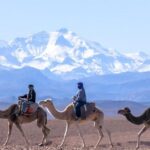
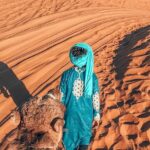
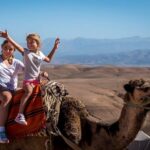
Once you reach the dunes, the itinerary includes a camel ride to a bivouac located in the middle of Erg Chebbi.
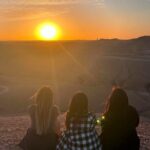
Then you’re set up for one of the most memorable parts of the program: sunset time with mint tea, dinner, and a lively evening—followed by a night under a tent or under the stars (the program description leaves it flexible).
This is where value shows up in the structure. A lot of desert tours do the “camel ride, quick photos, leave.” Here, the plan keeps you in the desert for the evening and night, so your experience isn’t only about getting to a viewpoint.
If you want to enjoy this day fully, give the desert your attention. Put your phone away for stretches, and plan to spend time just watching the light change. Erg Chebbi is famous for how fast the colors shift when the sun drops. The mint tea moment is a small ritual, but it’s also a timing tool: it anchors the whole evening so you’re not sitting around waiting for it to get dark.
Day 3: Draa Valley’s kasbah corridor and Ouarzazate culture
Day 3 shifts away from the dunes and back toward Morocco’s kasbah corridor. You’ll depart in the morning in a 4×4 via Rissani, described as the cradle of the Alaouite dynasty, then cross the immense Bougafer mountain.
You’ll stop for lunch at N’kob, described as the first village of the Draa. That matters because the Draa Valley isn’t only famous for what you see from the road—it’s also about the sense of a living route that’s been used for a long time.
Then the plan includes the Route des Miles Kasbahs, reached by track to see the most beautiful part of the Draa Valley, and then you arrive in Ouarzazate for dinner and overnight.
In Ouarzazate, the itinerary focuses on two big cultural anchors:
- Kasbah of Taourirt
- Cinema Studios
The Taourirt Kasbah gives you that same fortified feel from earlier days, but with Ouarzazate’s own character. And Cinema Studios adds something different: a look at how Moroccan scenery and built sets have shaped film production. It’s not just sightseeing; it helps explain why this region is so recognizable in pop culture.
Day 4: back to Marrakech via Tizi-n-Tichka and a final kasbah-town loop
After breakfast, you visit more of Ouarzazate’s highlights—Kasbah of Taourirt and Cinema Studios are part of the Day 4 flow in the description—then you take the road through village areas including Merzgane and Ighrem.
Lunch is planned at Tadarte, and then you head back to Marrakech via the Tizi-n-Tichka pass. This last drive is your final “big road” moment, and it’s where you’ll feel the arc of the whole trip. You go from desert night to mountain pass daylight to Marrakech reality.
Keep expectations realistic on Day 4. It’s a travel day with sightseeing. If you treat it like that, you’ll enjoy it instead of feeling like the trip is rushing at the end.
Price and logistics: what $297.45 buys you (and what it doesn’t)
The price is $297.45 per person for an approximately four-day circuit, and it’s designed like a packaged route rather than a DIY itinerary.
Here’s what’s included based on the tour details:
- Private transportation in an air-conditioned vehicle
- Dinner (3)
- Breakfast (3)
- Admission tickets included on Day 1 and Day 2 (Day 3 and Day 4 admissions are listed as free)
- Pickup offered, and a mobile ticket
What’s not included:
- Lunches plus visit fees and drinks
So is it good value? For me, it looks strongest if you want two things at once: comfort on long stretches and fewer decisions during the trip. Private transport + air-conditioning matters on this kind of distance. Dinner and breakfast included reduce your daily planning. And the admission coverage on the first two days can take some cost pressure off.
Where you’ll want to plan ahead is exactly where the tour is clear it won’t cover everything: lunch, drinks, and extra site costs. Bring a spending buffer so you’re not stuck negotiating at the end of a long drive.
Also note that the experience requires good weather. If weather goes wrong, the plan says you’ll be offered a different date or a full refund. That’s the right kind of safety net for a desert-focused itinerary.
Who this desert circuit fits best
I’d steer you toward this tour if you:
- Want a real desert night at Erg Chebbi, not just an hour-and-out photo stop
- Like having a driver handle the route while you focus on sites and short walks
- Prefer private transport for comfort over joining random-group shuttles
- Enjoy kasbah culture and gorge scenery as a sequence, not as a single highlight
It might be less ideal if you:
- Hate long days in the vehicle
- Want every single meal and admission fully covered in the base price
- Need highly flexible timing day-by-day (the route runs on a plan with fixed sightseeing blocks)
If you’re traveling with kids, couples, friends, or mixed ages, private format can be a big win because the pace can feel more manageable—especially when the itinerary includes both driving and short “on foot” segments.
Should you book this Marrakech to Merzouga desert stay?
If your goal is to connect Marrakech’s Atlas side to Merzouga’s dunes in one smooth, structured trip, this is a strong choice. The biggest selling point is the way the program actually stays in the desert long enough to matter—camel ride, sunset mint tea, dinner, and an overnight bivouac in Erg Chebbi. That’s the moment you’ll remember when the rest of the days blur together.
I’d book it if you’re comfortable budgeting extra for lunch and drinks and if you’re okay with full days of transit. It’s also a good pick if you value private comfort and included meals, since those reduce decision fatigue on a long route.
Before you go, do one simple thing: confirm what you’ll need cash for (lunches, drinks, and extra visit fees). Once you do that, the rest of the plan is clear and rewarding.
FAQ
How long is the tour from Marrakech to Merzouga?
It runs for approximately 4 days.
Where does the route go during the circuit?
The route connects Marrakech with Ait ben Haddou, Dades Gorges, Erfoud and Merzouga (Erg Chebbi), the Draa Valley, Ouarzazate, and then returns to Marrakech.
Is pickup available from Marrakech?
Yes. Pickup is offered, and the tour uses a private vehicle.
What time does the experience start?
The start time is 8:00 am.
Is this a private tour?
Yes. It’s a private tour/activity, so only your group participates.
What meals are included?
Dinner is included for 3 days and breakfast is included for 3 days.
Are lunch and drinks included?
No. Lunch, visit fees, and drinks are listed as not included.
Does the itinerary include a camel ride in the desert?
Yes. After arriving at the foot of the Erg Chebbi dunes, the program includes a camel ride to the bivouac.
What happens if the weather is bad?
The experience requires good weather. If it’s canceled due to poor weather, you’ll be offered a different date or a full refund.
Is there a mobile ticket?
Yes. The tour uses a mobile ticket.