REVIEW · ESSAOUIRA
Traditional Moroccan and Berber cooking classes
Book on Viator →Operated by Essaouira Cooking Class · Bookable on Viator
The smell of warm spices hits fast. This 3-hour Moroccan and Berber cooking class in Essaouira pairs hands-on cooking with a clear, friendly teaching style, and the best part is you eat what you make at a Moroccan table. I love that the menus use fresh, quality local produce and that the class takes hygiene seriously; one thing to consider is the class depends on good weather.
You’ll start with mint tea and a look at the day’s plan, then move through recipes, spices, and cooking techniques like tagine simmering, couscous steaming, and pastilla crisping. Your host speaks French, English, Arabic, and Berber, so it’s easier to ask questions and actually understand what you’re doing. If you want a quick photo-and-leave experience, this isn’t that. It’s a sit-down, cook-together style of evening-or-afternoon.
In This Review
- Key Highlights You’ll Actually Care About
- Why Essaouira’s Berber and Moroccan Cooking Class Feels Like Real Life
- Meeting Point on Av. Princesse Lalla Amina: Easy Start, No Detours
- Welcome Routine: Moroccan Cakes, Mint Tea, and the Day’s Plan
- Spice Skills: Ras El Hanout, Preserved Lemon, Saffron, and More
- Main Course Cooking: Tagine, Couscous, or Pastilla Techniques
- Tagine: Simmering for Flavor
- Couscous: Steamed Technique and Timing
- Pastilla: Crispy Building Blocks
- Moroccan Salads: Chermoula, Zaalouk, and Taktouka
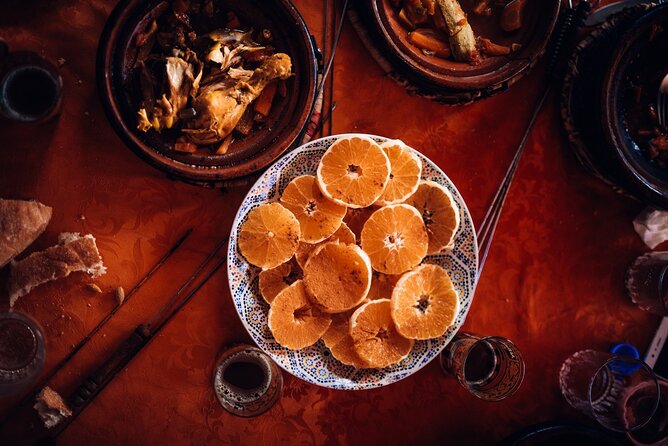
- Dishes to the Table: Eating What You Made, Together
- Your Host, the Teaching Style, and Cultural Sharing That Doesn’t Feel Forced
- Price and Value: What $58.31 Gets You in Essaouira
- Quick Tips to Get the Most from Your 3 Hours
- Who Should Book This Class, and Who Might Skip It
- Should You Book This Essaouira Cooking Class?
- FAQ
- How long is the Moroccan and Berber cooking class in Essaouira?
- How much does it cost per person?
- What does the cooking class include?
- Is transportation included?
- Is this tour private or shared?
- What if the weather is bad or I need to cancel?
Key Highlights You’ll Actually Care About
- Mint tea welcome + Moroccan cakes set the tone before you touch a cutting board.
- Real spice explanations for staples like ras el hanout, saffron, cinnamon, cumin, and preserved lemon.
- Hands-on stages where you cut, prep, season, and learn technique—not just watch.
- Big Moroccan dishes, taught clearly including tagine, couscous, and pastilla plus classic salads.
- You eat together at the end and leave with recipe cards for the dishes you made.
Why Essaouira’s Berber and Moroccan Cooking Class Feels Like Real Life
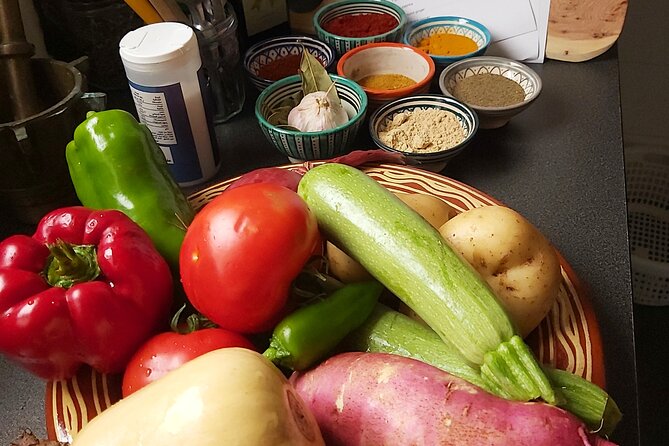
In Essaouira, food isn’t a performance. It’s a daily skill—slow enough to learn, practical enough to use again at home. This class keeps that spirit front and center, with a mix of Moroccan staples and Berber-informed tradition, taught by a host who loves talking and sharing culture.
What makes it work for you is the balance: you get instruction, but you also get to do the work. You’re not stuck at the sidelines. And since the host cares about cleanliness and hygiene throughout, you don’t have to wonder whether the kitchen is on top of things.
One more detail I really like: the approach uses fresh, quality produce, mainly local, with a stated goal of reducing the carbon footprint. Even if you don’t think about emissions while you cook, it tends to show up in the flavors—less “mystery ingredient,” more recognizable ingredients treated with care.
You can also read our reviews of more cooking classes in Essaouira
Meeting Point on Av. Princesse Lalla Amina: Easy Start, No Detours
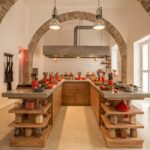
You’ll meet at 21 Av. Princesse Lalla Amina in Essaouira, and the class ends back at the same place. That matters, because you avoid the time-wasting problem of wandering across town to find a start point.
The tour is near public transportation, so you’re not stuck relying on private transport. Just know that private transportation isn’t included, so if you’re coming from farther out, plan your route before you go.
The experience is also private in the sense that it’s only your group. That’s great if you want more time for questions, and it usually means the pace can fit your group better. For a 3-hour session, that attention-to-you feeling is a big part of the value.
Welcome Routine: Moroccan Cakes, Mint Tea, and the Day’s Plan
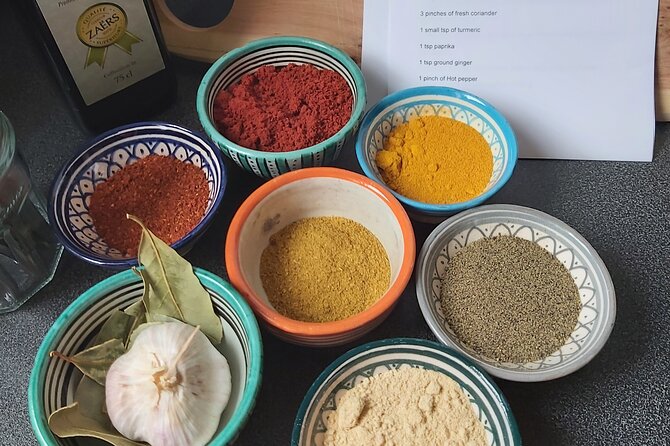
The class opens in a Moroccan setting where you’re welcomed and then guided into Moroccan tradition and culture. Expect a warm start with mint tea and Moroccan cakes, and then a clear rundown of what you’ll do that day.
The host presents the programme over the cakes and tea, then shares the secrets behind the mint tea preparation. This isn’t just a cute intro. It gives you a working sense of Moroccan flavors and hospitality—how sweetness, mint, and strong tea balance out.
You’ll also get an introduction to recipes and spices early on. That timing is smart: you learn what ingredients do before you’re asked to season food. It helps you cook with confidence later, instead of copying steps you don’t understand.
Spice Skills: Ras El Hanout, Preserved Lemon, Saffron, and More
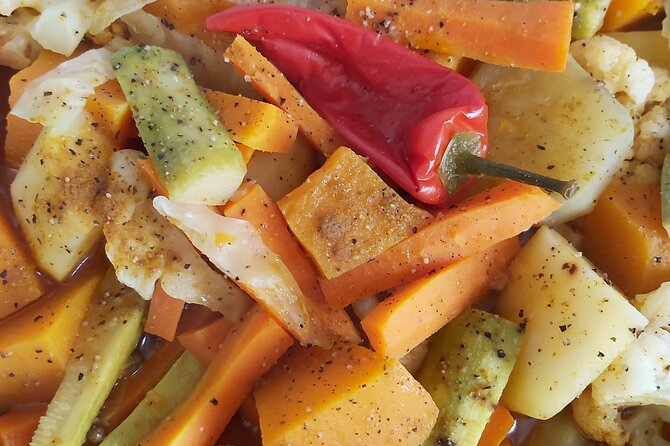
A big chunk of the learning comes from how spices and condiments function in Moroccan cuisine. You’ll be shown traditional spices and explained roles like ras el hanout, cumin, saffron, cinnamon, preserved lemon, and olives.
Here’s why this part matters for you: Moroccan cooking can feel intimidating because recipes list spices, but don’t always explain why. When you understand the purpose—warmth, aroma, brightness, depth—you can adjust at home without turning the dish into a guess.
You’ll also learn about condiments beyond “spice dust.” Preserved lemon, olives, and other staples aren’t just flavor extras. They’re structure for the taste profile, especially in tagines, salads, and stuffing-style dishes like pastilla.
The teaching style is practical and conversational since the host works across French, English, Arabic, and Berber. If you want to ask what a spice is doing, or how much to use, you’ll likely get a direct answer.
Main Course Cooking: Tagine, Couscous, or Pastilla Techniques
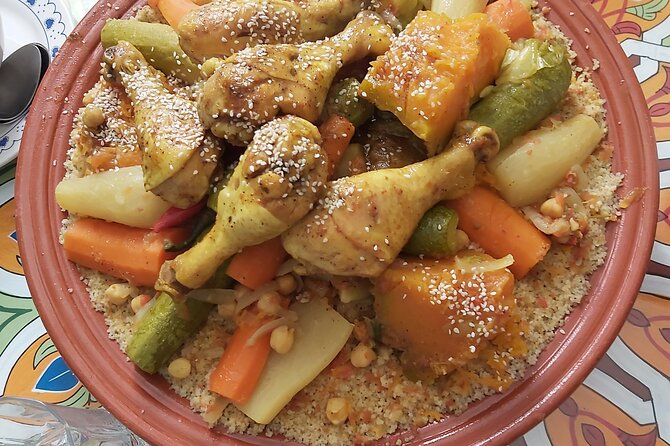
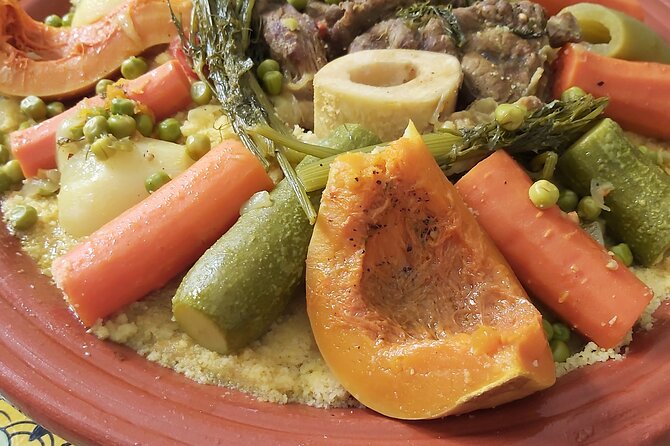
This class is designed around your group’s chosen recipes, and that usually means one or more of these core dishes: tagine, couscous, or pastilla. The exact menu can vary, but the structure stays consistent—prep, technique, and seasoning with you actively involved.
A few more Essaouira tours and experiences worth a look





Tagine: Simmering for Flavor
If your main is a tagine, you’ll learn simmered cooking technique—how to build slow flavor, then let ingredients become tender in the sauce. Tagines are a Moroccan classic for a reason: they’re flexible, forgiving, and they reward patience.
In the hands-on stage, you’ll cut up ingredients and help with seasoning. You’re not just tasting while someone else cooks. You’re practicing the steps you’ll later want to repeat.
Couscous: Steamed Technique and Timing
For couscous, you’ll focus on steamed couscous technique. Couscous is where timing and texture matter. You’ll learn how the process works so the result isn’t clumpy or flat.
You’ll take part in every stage—from ingredient prep to seasoning—so you understand what changes flavor and what changes texture. That’s the key to cooking couscous with confidence after the class ends.
Pastilla: Crispy Building Blocks
If you make pastilla, you’ll work on a crisping-focused technique. Pastilla is famous for the contrast: crisp outside, flavorful interior, and sweet-savory balance.
You’ll learn how the dish is assembled, with attention to cooking method so you get the right crunch rather than a softened crust. Since the class includes a clear technique focus, pastilla becomes less of a mystery and more of a repeatable process.
Moroccan Salads: Chermoula, Zaalouk, and Taktouka
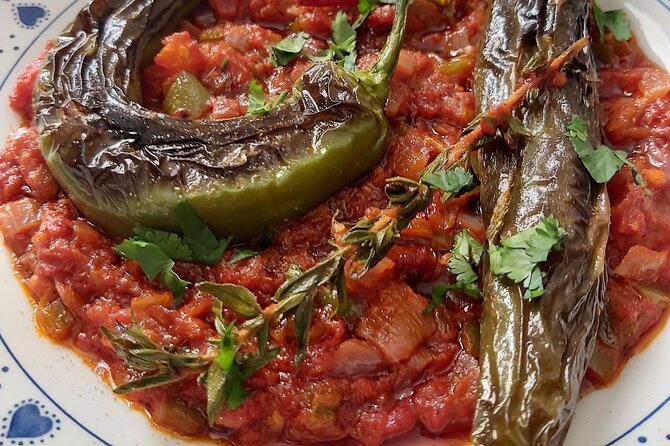
A strong Moroccan meal isn’t only the main dish. The class also teaches Moroccan salads, and this part can be a surprise highlight because it teaches quick, useful flavor patterns.
You can expect classics such as:
- carrot salad with chermoula
- aubergine zaalouk
- taktouka
These are great for you if you want to learn dishes that work as sides at home without requiring the full “main course” time commitment. Also, salads are often where preserved lemon, olives, cumin, and other spices show up in fresh, bright ways.
The salad portion isn’t just tasting. You’ll take part in the preparation, so you practice mixing, seasoning, and building flavor the Moroccan way. If you like the idea of taking a few “go-to” recipes back with you, these salads tend to be the most repeatable.
Dishes to the Table: Eating What You Made, Together
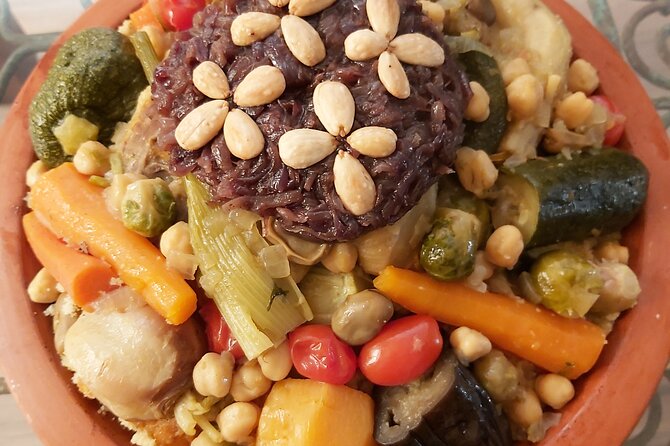
After cooking comes the best practical part: you sit down together to enjoy the dish you helped prepare. This is more than a payoff. It’s how you learn—taste while the food is still fresh, then connect flavors to the steps you took.
You’ll enjoy the menu in a typically Moroccan atmosphere, and the shared table format is part of why people return to this kind of class. It also helps with questions in the moment. If something tastes stronger or milder than expected, you can ask why and how to adjust next time.
At the end, you’ll receive recipe cards. That’s a real value add for anyone who wants to cook later instead of just collecting memories. Plus, there’s a final discussion, so you can clarify what you found easiest, what you’d change, and what ingredients you should prioritize at a market.
Your Host, the Teaching Style, and Cultural Sharing That Doesn’t Feel Forced
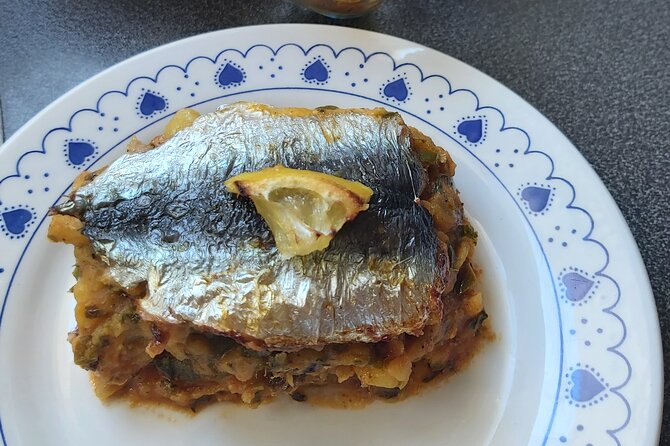
This isn’t only a cooking lesson—it’s communication and respect, built into the experience. The host loves passing on Moroccan culture through sharing, and the language skills matter here: French, English, Arabic, and Berber means you can actually connect with the story behind ingredients.
If you’ve ever had cooking classes where you feel like you’re watching a script, this likely feels different. The teaching is structured, but it’s not cold. It’s warm and practical, with emphasis on understanding spices, techniques, and hygiene.
One more thing: the class prioritizes cleanliness and hygiene throughout. That’s not just reassuring—it also makes learning easier. You can focus on technique and flavors instead of worrying about what’s happening behind the scenes.
And yes, food preferences can be taken into account, which is a big deal if you don’t want to feel locked into one rigid menu.
Price and Value: What $58.31 Gets You in Essaouira
At about $58.31 per person for roughly 3 hours, you’re paying for more than ingredients. You’re paying for:
- instruction across spice use and cooking technique
- hands-on prep and participation
- a Moroccan tea-and-cakes welcome
- coffee and/or tea, bottled water, and small Moroccan cakes
- snacks plus the full meal you prepared
- recipe cards to take home
That’s solid value because the class includes both the learning and the eating. If you tried to replicate this on your own, you’d quickly spend money on ingredients, the right spices, and a lot of trial-and-error.
Also, the fact that it’s a private group format can justify the price. You’re less likely to be rushed, and it tends to feel more personal inside a short 3-hour window.
Quick Tips to Get the Most from Your 3 Hours
Plan your timing so you’re not rushed right before class. Since this is a cooking-focused session, you’ll want to arrive with a calm mindset.
Dress for practical kitchen work. You’ll be doing prep stages like cutting ingredients and seasoning, so wear comfortable clothes you don’t mind getting a little kitchen-used.
If you have food wishes—preferences or what you want to avoid—tell the host. The experience is set up to consider people’s food requests, and that makes the final menu feel better for you.
And don’t skip the tea-and-spice explanations. If you show up only for the food part, you’ll miss the most useful knowledge for cooking later.
Who Should Book This Class, and Who Might Skip It
You’ll love this class if you want a hands-on Moroccan cooking experience in Essaouira that focuses on real technique and real ingredients. It’s also ideal if you enjoy cultural exchange and you like asking questions, since the host communicates in multiple languages.
It’s a good choice for couples, friends, or small groups who want something more personal than a crowded show. And because it’s a private activity, the pacing stays more flexible for your group.
You might want a different option if you’re only interested in a quick look at Moroccan food without cooking. This course is built around participation, not passive viewing.
Also keep in mind the experience requires good weather. If conditions are poor, you may be offered a different date or a refund.
Should You Book This Essaouira Cooking Class?
If you want a practical Moroccan and Berber cooking experience where you actually cook, taste, and take home recipes, this one is an easy yes. The strongest reasons to book are the hands-on structure (from prep to seasoning), the spice lessons that explain roles, and the meal you enjoy right after cooking.
It’s also the kind of class that works even if you’re not a confident cook yet, because you learn the technique and the logic behind flavors. And with recipe cards at the end, you’re not just buying memories—you’re buying a way to recreate the taste later.
FAQ
How long is the Moroccan and Berber cooking class in Essaouira?
The class is about 3 hours.
How much does it cost per person?
The price is $58.31 per person.
What does the cooking class include?
It includes coffee and/or tea, a tasting of mint tea or spiced coffee, bottled water, and snacks (including small Moroccan cakes), plus the food you prepare and eat during the class.
Is transportation included?
No. Private transportation is not included, but the meeting point is near public transportation.
Is this tour private or shared?
This is a private tour/activity, so only your group will participate.
What if the weather is bad or I need to cancel?
The experience requires good weather. If it’s canceled due to poor weather, you’ll be offered a different date or a full refund. You can cancel up to 24 hours in advance for a full refund. If you cancel less than 24 hours before the start time, the amount you paid won’t be refunded.