REVIEW · MARRAKECH
The Seven Patron Saints and Islamic Scholars
Book on Viator →Operated by Az-eddine Ben jouhra · Bookable on Viator
The Seven Patron Saints route turns street corners into stories. You’ll follow the thread of Moroccan Sufism through seven revered Awlya and learn why people keep returning to their graves. I like that the tour is practical—each stop is timed (about 30 minutes) and the admission tickets are free, so you’re not stuck buying extras.
I also like the “names and lineage” approach: you get specific identities, where each figure is from, who they studied with, and how they’re connected to Marrakech. One consideration: access can vary, especially for mosque spaces and relic areas—if you’re not Muslim, you might not be able to enter some parts, and on at least one occasion not all seven stops were available.
In This Review
- Key takeaways
- Why Marrakech’s seven saints still draw people in
- How the 4-hour walking tour actually works (start time, meeting point, pace)
- Stop-by-stop: seven graves, seven identities you’ll remember
- Stop 1: Mosquee Sidi-bel-Abbes (Abou el Abbas Ahmed ben Jaafar el Khazraji)
- Stop 2: Sidi Abdelaziz Tebbaâ (Abou Fares Abdelaziz) near Ben Youssef Mosque area
- Stop 3: Sidi Ben Slimane El Jazouli (Dala’il al-Khayrat author)
- Stop 4: Sidi Abdellah El Ghazouani (Moul El Ksour) and the politics of reputation
- Stop 5: Imam Souheili, a scholar with Spanish connections
- Stop 6: Cadi Ayyad ben Moussa, praised for love of the Prophet
- Stop 7: Sidi Youssef Ben Ali, faith shaped by illness
- Mosque access and what to expect if you’re not Muslim
- Price and value: $29.22 for a focused medina experience
- Guide quality: what to watch for, and how to choose a good experience
- Walking comfort: shoes matter more than you think
- When weather and timing can affect your day
- Should you book this tour?
- FAQ
- How long is the Seven Patron Saints and Islamic Scholars tour?
- Where does the tour start and end?
- What does the tour cost?
- Is the ticket mobile, and are admissions included?
- Can I enter mosques and relic areas if I’m not Muslim?
- What if I need to cancel?
Key takeaways
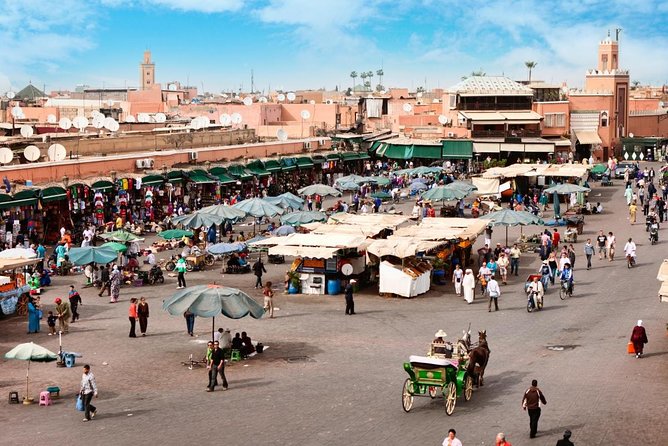
- Seven Awlya, one focused route: A straightforward walk tied to Moroccan Sufism and local devotion
- Free entry at each stop: Each listed site comes with free admission for ticketed access
- Small group feel: A maximum of 18 travelers helps keep it from turning into a mad stampede
- Expect walking: This is a do-able half-day, but comfortable shoes matter
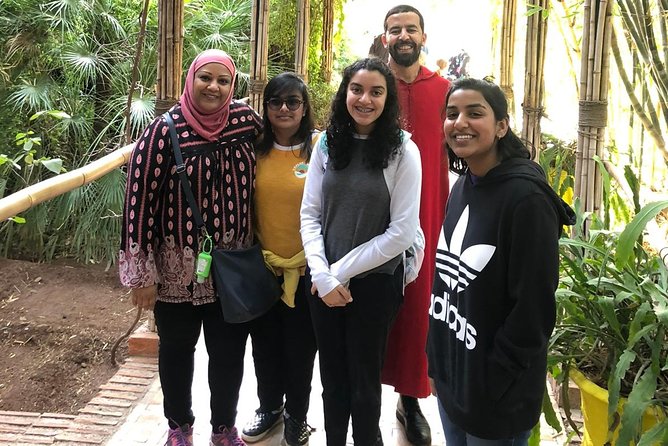
- Guide impact matters: The guide named Az-eddine Ben jouhra is praised for clarity, with a rare complaint about the experience
Why Marrakech’s seven saints still draw people in
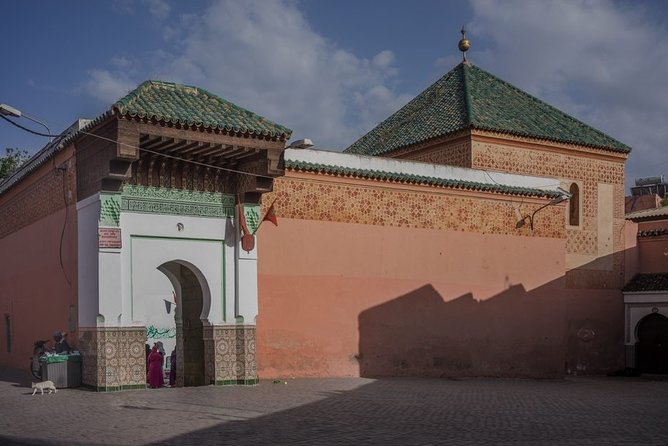
In Marrakech, these seven men are called Awlya (plural of Wali). The idea is simple, yet powerful: these are people believed to have been blessed with a special rank, and their graves are places where visitors come to ask Allah for help. Since at least the 17th century, Moroccans from many walks of life have made time to pray at these tombs—people associate the visits with healing, fulfilling wishes, and finding peace inside themselves.
What makes this tour interesting is that it’s not just “stop, take a photo, move on.” You’re given real details about each saint and scholar. That means you understand why they matter before you stand where people have been standing for generations. If you like religion as lived culture—how belief shows up in neighborhoods, routines, and respect—this route fits.
You can also read our reviews of more tours and experiences in Marrakech.


How the 4-hour walking tour actually works (start time, meeting point, pace)
The tour starts at 9:00am at Café Koutoubia (J2G4+2WQ). It loops back to the same meeting point at the end. Expect about 4 hours total for the seven stops, with roughly 30 minutes at each.
A small group limit (up to 18) is a genuine quality factor here. The medina can be tight, and tomb and mosque areas require calm. A bigger group can feel pushy fast. This format keeps the experience more human—more questions, more listening, less shoulder-checking.
Two more practical notes:
- You’ll get a mobile ticket, so bring your phone battery.
- The tour includes masks for protection against COV19, which is listed as part of the package.
The itinerary is built around the medina’s walking rhythm. You’ll be outside for stretches, and sites are spread so you can’t treat this like a sit-down museum day.
Stop-by-stop: seven graves, seven identities you’ll remember
Here’s what you’ll see, and why each place has its own flavor.
Stop 1: Mosquee Sidi-bel-Abbes (Abou el Abbas Ahmed ben Jaafar el Khazraji)
You begin at Mosquee Sidi-bel-Abbes, also known as Abou el Abbas Ahmed ben Jaafar el Khazraji. The details you’re given matter: he was originally from Sebta, studied under the disciple line connected to Cadi Ayyad, and spent 40 years in a cave on a hill in Guéliz without entering the city. The biography emphasizes his life as someone who cared for and defended the weak and the blind.
In a tour like this, I like opening with a figure whose story explains the tone. This one sets that tone: patience, devotion, and service—not just legend.
Stop 2: Sidi Abdelaziz Tebbaâ (Abou Fares Abdelaziz) near Ben Youssef Mosque area
Next is Sidi Abdelaziz Tebbaâ, also called Abou Fares Abdelaziz. He’s described as a silk merchant from Fez, and his education is tied to Sidi Ben Slimane. One particular sign you hear is that he spread Sufi ethics through the craftsmen’s corporations.
This stop is a reminder that scholars weren’t always only teachers in quiet rooms. Some of the influence in Marrakech traveled through trade groups and everyday guild life. It’s a nice angle if you’re trying to understand Islam as something practiced socially.


Stop 3: Sidi Ben Slimane El Jazouli (Dala’il al-Khayrat author)
Then you reach Sidi Ben Slimane El Jazouli (also listed as Sidi Mohammed ben Slimane ben Said al Jazouli). He’s originally from Souss and studied in Fez at the Essaffarin Medersa, where he excelled in hadith. The special signs are clear: he’s described as the founder of Moroccan Sufism tied to mobilization against the Iberian invasion, and he authored the famous prayers collection Dala’il al-Khayrat. The account also says he died praying.
If you care about how prayer traditions took form in Morocco, this is the stop where it clicks. You’re not only hearing about a person; you’re hearing about a text and a practice.
Stop 4: Sidi Abdellah El Ghazouani (Moul El Ksour) and the politics of reputation
Stop four is Sidi Abdellah El Ghazouani, also called Moul El Ksour. He’s from the Gazouane tribe and continued studies in Fez and Granada before coming to Marrakech to complete training with Sidi Abdelaziz Tabaa.
Here’s the human complication: the account says Sultan Sidi Mohamed Cheikh imprisoned him in Marrakech out of jealousy over his good reputation, then released him a few years later. This isn’t just spiritual biography; it’s also about how influence can cause friction.
I like this because it prevents the tour from becoming only soft-focus sanctity. It’s faith, yes—but faith lived in a real world of power and personality.
Stop 5: Imam Souheili, a scholar with Spanish connections
Next comes Imam Souheili, also known as Abou el kassim and a long list of names that include Abou Amer ben Abi al Hassan Asbagh ben Houssine ben Saadoun ben Redouane ben Fattouh Souhaili. He’s said to be originally from Souhail, near Malaga, and he was brought back from Spain by Yacoub El Mansour.
His special sign is Sufi poetry and open-mindedness. He’s listed as dead in 1186 (582 AH) and buried near Bab Robb.
If you like the idea of cultural routes—Al-Andalus connections moving into Morocco—this is one of the most direct stops.
Stop 6: Cadi Ayyad ben Moussa, praised for love of the Prophet
Stop six is Cadi Ayyad Ben Moussa, also known as Abou Al Fadl Ayyad ben Amer Ben Moussa… and the note Cadi de Grenade. He’s described as Yemeni, originally from Sebta, and trained under a chain of scholars including Abou Abdellah ben Issa and others listed in the route details.
The standout theme here is his love for the Prophet expressed in his work Al-Chifaa. He died in 1149 (544 Hegira) and is buried near Bab Aïlen.
This stop is a strong fit if you want to see how scholarship and devotion blend. It also helps explain why visitors treat these places as more than landmarks.
Stop 7: Sidi Youssef Ben Ali, faith shaped by illness
Your final stop is Sidi Youssef Ben Ali (also Abou Yaakoub Youssef ben Ali). He’s listed as Yemeni, from Marrakech, and described as a brilliant student of Sheikh Abou Asfour. The special sign is dramatic and deeply human: he was affected by leprosy, and the account says he kept immense faith in God until his death.
He died in 1196 (593 AH) and is buried at Bab Ghmat.
This ending matters because it puts the emphasis on endurance and faith rather than perfection. It’s a quiet, respectful closer to a route built around people remembered for their relationship to God.
Mosque access and what to expect if you’re not Muslim
One practical reality to flag: you may not be able to enter every mosque interior or see every relic space if you are not Muslim. That limitation is specifically called out in the experience feedback connected to this route.
So what can you do?
- Bring patience and keep expectations flexible.
- You can still learn a lot from what’s visible from the outside and from the guide’s explanations.
- Dress modestly and act with calm. Even where entry is limited, the atmosphere will reflect that these are active sacred spaces for prayer.
Think of this tour less like a sightseeing checklist and more like a guided introduction to how people show devotion in Marrakech.
Price and value: $29.22 for a focused medina experience
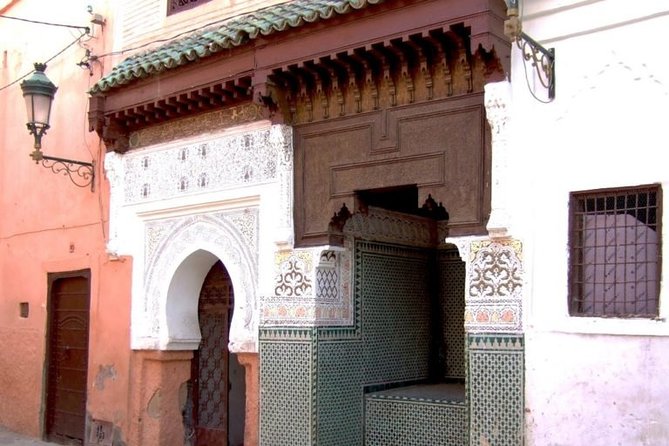
At $29.22 per person, this tour isn’t trying to compete with the cheapest walking tours. Instead, it sells a more structured experience: seven major graves tied to faith and scholarship, handled in a set 4-hour window.
The value check is the included and practical parts:
- Free admission tickets at each listed stop
- Small group limit (max 18)
- A guide who explains identity, origins, education, and key themes for each figure
- A mobile ticket (less friction once you’re in motion)
The included mask items are minor by today’s standards, but they show the operator is thinking about day-to-day visitor needs. What you’re really paying for is the guidance and the time saved by having a route that hits the right names without you guessing your way through the medina.
Guide quality: what to watch for, and how to choose a good experience
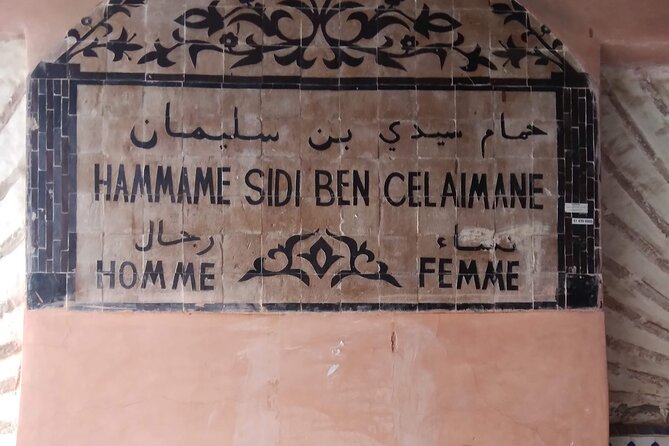
This is where experiences can vary. The guide associated with the tour is Az-eddine Ben jouhra. There are positive notes highlighting that he was very informative and a helpful, clear guide. On the other hand, there is also one negative report describing a problematic guide behavior where the group missed their booked tour timing.
I can’t predict how your day will go, but you can reduce risk:
- Arrive a bit early at Café Koutoubia and make sure you’re with the correct group.
- Start the tour with a quick check-in: confirm the timeline for stops and ask if any site is likely to be closed.
- If something feels off, communicate early instead of waiting until the schedule falls behind.
Most importantly, keep your own expectations grounded. If one of the sites turns out to be closed, you’ll still get a lot—this route is built around seven identities, not just seven photos.
Walking comfort: shoes matter more than you think
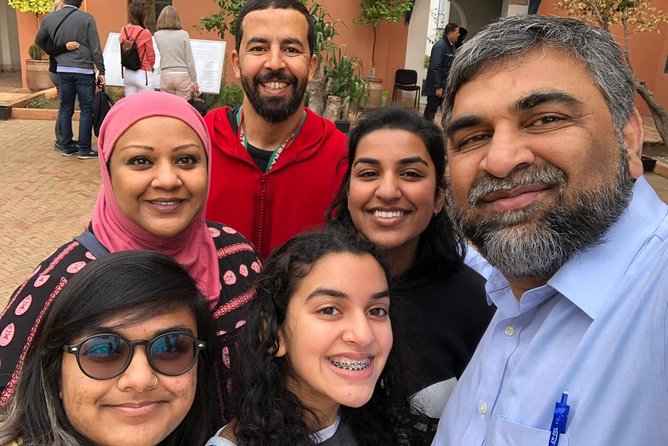
One theme that comes up with this kind of medina route is simple: there’s a lot of walking. This isn’t a sit-between-sites kind of tour. You’ll move between locations and spend around 30 minutes at each stop.
So pack accordingly:
- Wear comfortable walking shoes with grip.
- Bring water if you get thirsty quickly (the tour duration is about four hours).
- Keep your phone handy, but don’t stare at it while walking.
You’ll get more out of the explanations if your feet aren’t screaming.
When weather and timing can affect your day
The tour notes that it requires good weather. If conditions are poor, you should expect a different date or a full refund.
Timing also matters in the medina. A 9:00am start is usually smart because the morning tends to be calmer. If you show up late, you risk losing momentum for the whole group, which is when small issues turn into big ones.
Should you book this tour?
I think you should book if you want:
- a guided walk that connects Marrakech to Sufism and scholarly figures, not just architecture
- specific names and dates so the city feels less like random streets
- a half-day plan with a small group pace and free admission at each stop
I’d think twice if:
- you need guaranteed access inside mosque spaces or relic areas as a non-Muslim (entry can be limited)
- you’re uncomfortable with walking or tight time windows
- you hate anything that involves schedules that can shift if a site is closed
If you go with respect, flexible expectations, and good shoes, this is one of those Marrakech experiences that gives you a map for understanding what you’re seeing.
FAQ
How long is the Seven Patron Saints and Islamic Scholars tour?
It’s about 4 hours.
Where does the tour start and end?
It starts at Café Koutoubia in Marrakech and ends back at the same meeting point.
What does the tour cost?
The price is $29.22 per person.
Is the ticket mobile, and are admissions included?
Yes, it uses a mobile ticket, and admission tickets are free for the listed stops.
Can I enter mosques and relic areas if I’m not Muslim?
Entry to mosque spaces where relics are located may be limited for non-Muslims, so you might not be able to enter those areas.
What if I need to cancel?
You can cancel for a full refund if you cancel up to 24 hours in advance of the experience start time.