REVIEW · FEZ
Shared Group Desert Tour Fes To Marrakech Via Merzouga 3 Days
Book on Viator →Operated by Fez City Tour · Bookable on Viator
Three days, one desert dream. This Fez to Marrakech route via Merzouga strings together mountain towns, kasbah stops, and then finishes with camel treks and dinner under the stars.
I like the calm pace of a shared-group drive, especially with A/C and a professional English-French speaking driver who keeps things moving. I also love that you get both sunrise and sunset camel rides, plus breakfast and a shower setup in Merzouga.
One drawback to plan for: it’s an early start and a long road rhythm, and lunch stops are not included.
In This Review
- Key Highlights You Should Care About
- From Fez to Merzouga: the Long Road With Smart Stops
- Ifrane, Midelt, and the Ziz Valley: Why This Part Is More Than Filler
- Merzouga at Sunrise: Camel Trek Energy That Feels Worth the Early Morning
- Desert Camp Night: Dinner Under the Sky and a Berber Fire Pit Show
- Rissani Morning and Moulay Ali Sherif: Getting Context Beyond the Sand
- Todra Gorges and Lunch in the Valley: A Dramatic Stop You’ll Remember
- Kelaat Mgouna: Berber Rose Country and a Different Morocco Season
- High Atlas to Marrakech: Ait Ben Haddou and the Scenic Tichka Pass
- Price and Logistics: What $313.59 Actually Buys You
- Practical Tips: Make the Desert Comfortable, Not Just Memorable
- Who This Tour Fits Best (and Who Might Want Something Else)
- Should You Book This Fez to Marrakech Desert Tour?
- FAQ
- What is the duration of the tour from Fez to Marrakech via Merzouga?
- What time is pickup in Fez?
- Is transportation included, and is it comfortable?
- Does the price include camel rides?
- Is a desert camp night included?
- Are breakfast and dinner included?
- Are lunches included?
- How much does it cost per person?
- What is the cancellation policy?
- Is there a mobile ticket?
Key Highlights You Should Care About
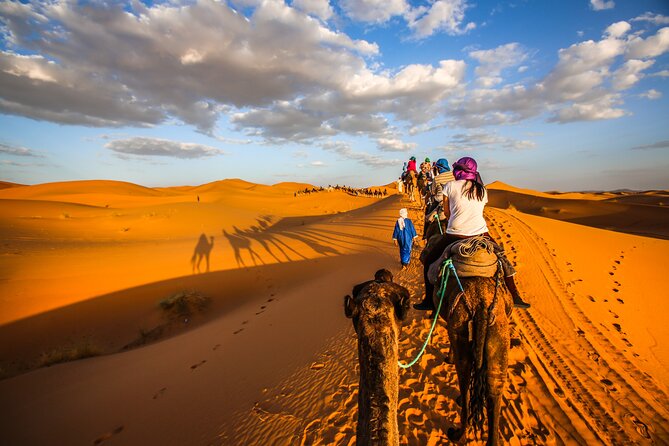
- Two camel rides (sunrise and sunset) so you see the dunes change color twice
- Desert camp dinner + Berber fire pit show for night energy beyond just sleeping outside
- Todra Gorges stop to break up the drive with a dramatic valley setting
- Rissani and Moulay Ali Sherif for context about local sites beyond the sand
- Ait Ben Haddou UNESCO on the way to Marrakech plus High Atlas photo stops
- Max group size of 14 keeps it social without feeling chaotic
From Fez to Merzouga: the Long Road With Smart Stops
The best thing about this trip is that you don’t just “ride a bus to the desert.” You’re on a scenic corridor first—Middle Atlas, then greener valleys, then the desert edge—so the scenery keeps changing and you stay engaged.
You’ll depart around 7:30 a.m. from your hotel/riad, heading from Fez toward Merzouga. The drive includes a set of purposeful stops: Ifrane, Midelt, the Ziz Valley, and Erfoud, before you finally reach the dunes area.
Ifrane is the kind of place that feels like a palate cleanser. It’s known for an alpine-style town vibe, with cedar forests and ski slopes in season. Even if you’re not skiing, you’ll feel the temperature and atmosphere shift compared to the desert. Midelt is your lunch break moment—use it for a real sit-down meal (and to mentally reset), because the next stretches of road can feel like they run back-to-back.
Then comes the Ziz Valley drive, described as lush and green compared to what’s coming. This is a nice reminder that Morocco isn’t one single “look.” Erfoud is your desert-adjacent stop before you push into Merzouga, so by the time you arrive, the dunes feel like the natural next step.
A few more Fez tours and experiences worth a look
Ifrane, Midelt, and the Ziz Valley: Why This Part Is More Than Filler
A lot of desert tours treat the drive like a necessary evil. Here, the stops help you arrive in the desert already in the right mood—calmer and more awake.
In Ifrane, you get a different Morocco aesthetic—cooler air, cedar trees, and that alpine feel. It’s also a chance to stretch your legs and shake off the “morning travel” grogginess. Then Midelt breaks up the ride with food, which matters because desert days often look simple on paper but can feel physically demanding.
The Ziz Valley section is a visual reward. You get an in-between world: still Morocco’s north-and-central identity, with greenery and a valley feel before the landscape turns drier. That makes Merzouga’s sand look even more dramatic once it arrives.
Merzouga at Sunrise: Camel Trek Energy That Feels Worth the Early Morning
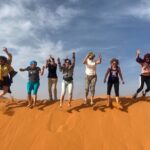
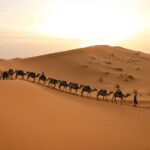
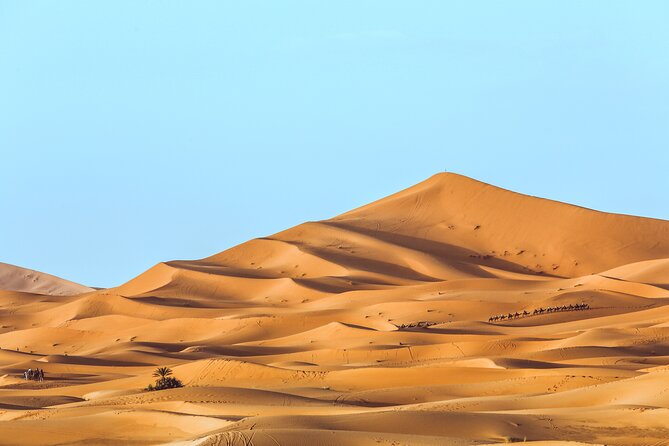
The desert starts with timing. You’ll begin with sunrise over the dunes—one of the most effective ways to understand why people get obsessed with this place. Morning light is softer, the sand looks textured instead of flat, and you usually feel a bit less heat-pressure than later in the day.
After the sunrise camel trek, you’ll have breakfast and shower time at the hotel/riad in Merzouga. That shower matters more than you’d think. After camel time and sun exposure, a clean reset helps you actually enjoy the afternoon stops rather than just endure them.
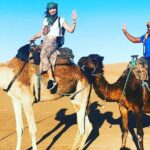
The tour also includes a second camel ride later (sunset is the other anchor moment). Getting both is the difference between a quick desert photo stop and a real experience. You’ll notice how the dunes hold color—morning feels pale and airy, while late day shifts warmer and sharper.
Desert Camp Night: Dinner Under the Sky and a Berber Fire Pit Show
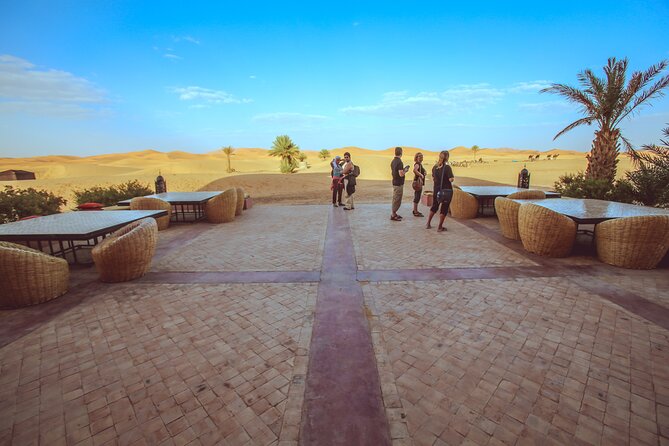
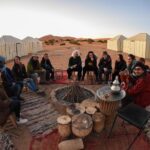
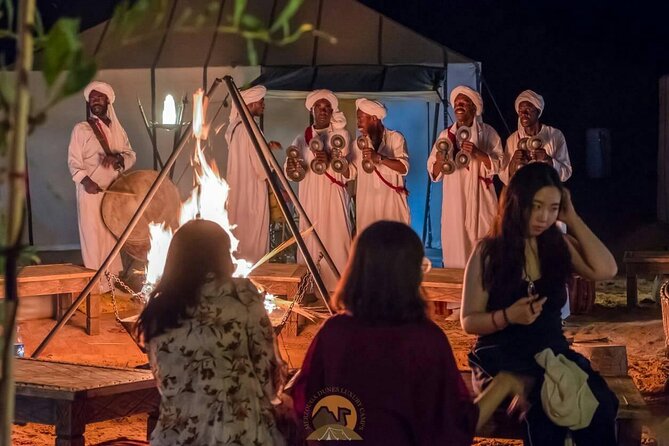
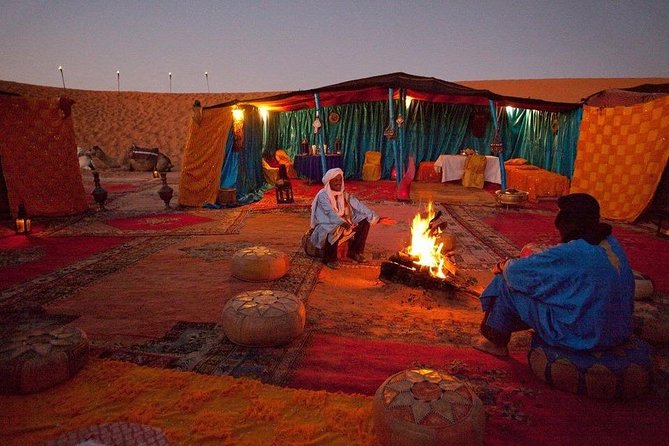
Once night hits in the desert, the atmosphere becomes the main event. You’ll spend one night in a standard desert camp, with dinner included and time to enjoy the night air. The description calls out the sweet and cool desert air, so plan on it feeling colder than you expect—especially once the sun drops.
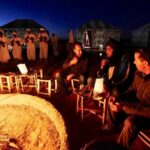
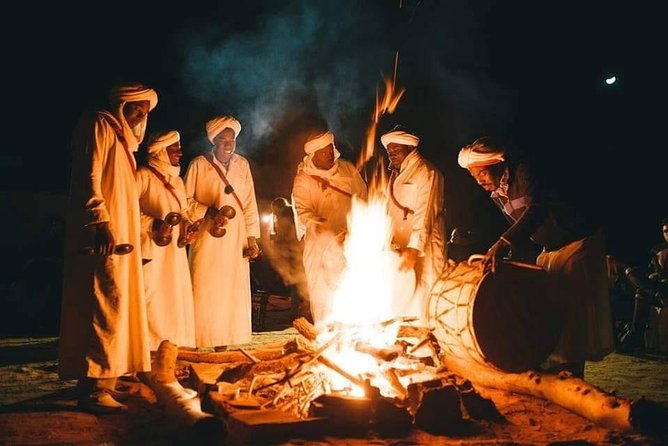
A big highlight here is the evening entertainment: a Berber show around the fire pit. This isn’t just a random add-on. It gives the night structure, so you can relax without wondering what to do once dinner ends. Sitting near the fire while you watch performers is one of those old-school travel comforts—simple, social, and easy to participate in.
One detail that stood out in quality is how the camp setup can feel surprisingly comfortable. The overall experience tends to go beyond bare-bones sleeping, with meals and the setting doing a lot of the heavy lifting. If your guide is someone like Soufiane, it also helps—his explanations and calm handling of the day make the experience feel smoother and more meaningful.
Rissani Morning and Moulay Ali Sherif: Getting Context Beyond the Sand
The next day shifts from “pure desert” to “real local Morocco.” You’ll leave Merzouga for Rissani, with an excursion that includes kasbah views, old palaces, and a visit to the Tomb Moulay Ali Sherif.
This is where the tour earns its keep. When you only see sand, the trip can feel like a postcard. When you add Rissani and a religious site like Moulay Ali Sherif, it becomes easier to understand that this region isn’t just scenery—it’s lived-in.
You’ll also get the kind of cultural framing that helps you spot the details on your own later. The tour points out how tribal leadership works day-to-day, including how a tribal chief or sheik manages life at the tribe. Even if you don’t learn everything in one afternoon, you come away with a clearer mental map of what’s going on around you.


Todra Gorges and Lunch in the Valley: A Dramatic Stop You’ll Remember
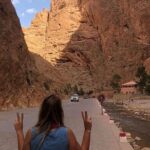
After Rissani, the drive moves toward Todra Gorges. This is one of those places where the visuals do the talking—steep rock walls, narrow valley feel, and a stronger sense of “place” than many roadside stops.
The tour includes time to discover the area together and to learn about local history, culture, traditions, and daily life. Then there’s lunch in the Todra valley, which breaks up the day and gives you a chance to slow down before the next stretch of travel.
Why this stop works for value: it prevents the second day from being only driving plus another desert moment. Todra Gorges gives you a different kind of beauty—more vertical, more grounded, and very photogenic without requiring special planning.
Kelaat Mgouna: Berber Rose Country and a Different Morocco Season
Next comes Kelaat Mgouna, known as a Berber city that celebrates a yearly festival of roses in May. Even if you’re not traveling during May, the reputation matters. It tells you the area has an identity beyond tourism, tied to seasons and local traditions.
The tour notes that you’ll meet locals with your driver and see rose-related impressions in the region. That’s useful because rose-country isn’t the same as “desert life.” It’s another layer of what Morocco can be when you stop thinking of it as only one theme.
This is also a practical rhythm stop. When your day includes valleys, gorges, and seasonal identity, you don’t feel like you’re repeating the same kind of scenery every hour.
High Atlas to Marrakech: Ait Ben Haddou and the Scenic Tichka Pass
On your final day, the desert adventure starts winding down and the focus turns to big sights and mountain views on the way into Marrakech.
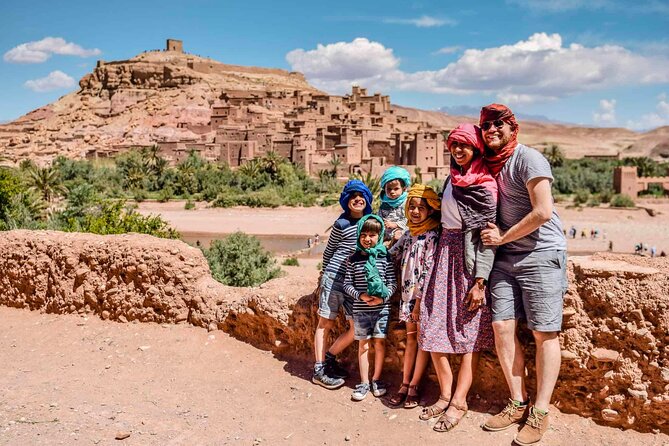
You’ll make your way to Marrakech with stops that include Ouarzazate area sights and then Ait Ben Haddou Kasbah, listed as UNESCO. The tour also connects the kasbah with famous filming references—things like Lawrence of Arabia, Babel, The Mummy, and Jesus of Nazareth. Even if you’re not a film buff, it helps explain why Ait Ben Haddou is such a magnet for cameras. The architecture has a cinematic look, and the setting makes the story feel believable.
Then you’ll cross the High Atlas Mountains, with short stops for photos and views of Berber villages. A major highlight is the Tizin’Tichka pass route, where the views do real work—wide angles, changing elevations, and that feeling of being high enough to see the road curve away.
There’s a lunch break at Tichka, and then you’ll continue into Marrakech. Once you arrive, you’ll transfer to your hotel/riad, and the Fez to Marrakech desert adventure ends.
Price and Logistics: What $313.59 Actually Buys You
At $313.59 per person for about three days, the value here isn’t that it’s the cheapest option. It’s that it bundles the expensive-feeling parts: transportation, desert rides, meals, and at least one proper night in the dune region.
Here’s what’s included that you’d otherwise pay for separately:
- Comfortable A/C transportation
- A professional English-French speaking driver
- Camel ride experience at sunset and sunrise
- Night in a standard desert camp
- 2 breakfasts and 2 dinners
- Shower time in Merzouga
- All application taxes
What’s not included:
- Lunches
- Personal items
- A local guide
So your biggest extra cost is lunch. Since lunches aren’t included, you’ll want some flexibility with cash or card where possible. On a road trip like this, lunch timing can make or break your day’s energy, so having money ready prevents stress.
Also, the group size matters. With a maximum of 14 travelers, you get a shared-tour experience without feeling like you’re in a bus full of strangers for hours on end.
Practical Tips: Make the Desert Comfortable, Not Just Memorable
This route is rewarding, but you’ll enjoy it more if you plan smart.
First, pack for temperature swings. The desert air is described as cool, and even if days are warm, nights and early mornings can feel chilly. A light warm layer for evenings is a good idea, plus something for your camel ride comfort.
Second, bring small cash for meals. Lunches aren’t included, and you’ll also want snacks or water if you get hungry between stops.
Third, wear shoes you can trust. You’ll have walking time at kasbah areas, valley viewpoints, and gorge areas, plus you’ll want stable footing during transfers. Camel rides are part of the fun, but your comfort starts with your footwear.
Finally, if you can, keep your camera or phone battery strategy simple. You’ll be stopping often—sunrise, sunset, mountain passes, and kasbah sights—so you don’t want to fight with a dead device halfway through the best light.
Who This Tour Fits Best (and Who Might Want Something Else)
This is a strong choice if you want a classic Sahara experience with structure. You’ll like it most if you:
- Want camel rides at both sunrise and sunset
- Don’t want to plan transport and timing across multiple regions
- Enjoy scenic road trips with meaningful cultural stops
- Prefer a group size that’s social but not huge (max 14)
It might feel like too much if you hate early mornings or long driving days. It’s built as a “see a lot in three days” route, so expect the road to take up a lot of your attention.
Should You Book This Fez to Marrakech Desert Tour?
I think you should book it if your goal is a real Sahara-feeling trip without complicated planning. The mix of Merzouga dune moments, a desert camp night with dinner and a Berber fire pit show, plus cultural stops like Rissani, Todra Gorges, and Ait Ben Haddou makes the route feel complete instead of repetitive.
If you’re the type who needs lots of free time or expects a totally relaxing pace, consider a slower itinerary. But if you want a high-impact three days that hits desert, culture, and mountain-to-Marrakech views, this one earns its place.
FAQ
What is the duration of the tour from Fez to Marrakech via Merzouga?
The tour is listed as 3 days (about 2 nights).
What time is pickup in Fez?
Pickup is scheduled for 7:30 a.m.
Is transportation included, and is it comfortable?
Yes. The tour includes comfortable transportation with A/C and a professional English-French speaking driver.
Does the price include camel rides?
Yes. Camel ride experiences are included for sunrise and sunset.
Is a desert camp night included?
Yes. You spend one night in a standard desert camp.
Are breakfast and dinner included?
Yes. The tour includes 2 breakfasts and 2 dinners, and shower time is included in Merzouga.
Are lunches included?
No. Lunches are not included.
How much does it cost per person?
The price is $313.59 per person.
What is the cancellation policy?
Cancellation is free up to 24 hours before the experience start time for a full refund.
Is there a mobile ticket?
Yes. The tour lists a mobile ticket feature.