REVIEW · FEZ
Private Half-Day Walking Tour of Fez Medina
Book on Viator →Operated by Ayoub Fizazi · Bookable on Viator
Four hours can change how you see Fez. This private walk through the UNESCO medina feels far less random with a dedicated guide, and I love how you get straight to artisan workshops instead of just “look-and-go.” One thing to plan for: a few sights charge extra (20 DH), and non-Muslims can’t enter certain religious interiors.
You’ll also like the simple logistics. A guide picks you up and drops you back at your hotel or riad, so you spend less time figuring out turns and more time learning what you’re seeing.
Finally, read the small print in your head. Some stops include viewing from outside only, and three locations have an admission fee not included in the tour price (all 20 DH per person).
In This Review
- Key highlights at a glance
- Why Fez makes you glad you booked a guide
- Price and time: what $22 buys in real terms
- Starting at Bab Boujloud, then stepping into the Mellah
- Al-Attarine Madrasa: a calm stop with an extra 20 DH
- Kairaouine Mosque: outside viewing that still teaches you a lot
- Zaouia of Moulay Idriss II: where access is limited
- Fontaine Nejjarine at Funduq al-Najjarin: woodworking you can actually see
- Medina of Fez workshops: the part I think you’ll remember
- Cherratin Medersa: education in 1670, still visible today
- Chouara Tannery: watching a process that stayed the same
- Place Seffarine and Place R’cif: where metalwork meets street life
- Pacing and practical tips for four hours in the medina
- Who this tour is best for
- Should you book this private walking tour of Fez Medina?
- FAQ
- How long is the private half-day walking tour?
- How much does the tour cost?
- Is pickup and drop-off included?
- What is included in the tour price?
- Is lunch included?
- Are admission tickets included for every stop?
- Can non-Muslims enter Kairaouine Mosque or the Zaouia?
- Is this tour private?
- What is the cancellation policy?
Key highlights at a glance
- UNESCO medina in a private format: you get a guide to pace the walk and answer questions as you go
- Bab Boujloud gate to the Mellah: start with famous blue-green tiles, then head into Fez’s Jewish quarter
- Madrasas + mosque context: architecture and education in Fez, with respectful limits on entry
- Craft workshops with working artisans: tiles, textiles, pottery, and metalwork explained as you watch
- Chouara tannery + artisan squares: traditional leather-making and the brass-and-copper craft hub
Why Fez makes you glad you booked a guide
Fez is the kind of place where every turn looks the same. That is charming for about ten minutes. After that, it can feel like you are walking in circles unless you have local context.
That’s where this tour shines. You’re not just moving from landmark to landmark. You’re learning how the medina is organized—what areas mean, what buildings were for, and why certain streets are packed with particular trades. With a private guide, you can also adjust your pace. Want more time at a workshop? Ask. Want to shop smarter instead of getting pulled into the first shop you pass? Ask again.
Also, I like the human factor here. One guide name comes up: Adil. People specifically praise him for making the medina feel navigable and turning the walk into something you remember, not just something you check off.
You can also read our reviews of more walking tours in Fez

Price and time: what $22 buys in real terms
The price is $22 per person for about 4 hours. For Fez, that’s a solid deal when you compare it to what you’d pay for a guide for just an hour or two.
What you get that improves value:
- A professional local guide
- Pickup and drop-off at your hotel or riad
- Coffee and/or tea
- Most stops have admission ticket costs that are free
What costs extra:
- Three stops list 20 DH per person for entry (not included in the tour price): Al-Attarine Madrasa, Fontaine Nejjarine (at Funduq al-Najjarin), and Cherratin Medersa.
So you should budget a little beyond the base price if you want to go inside those sites. If you’re the kind of person who hates surprises, keep that in mind.
One more practical detail: the experience uses a mobile ticket and is labeled as private, so only your group participates. That matters in the medina, where crowds can make shared tours feel stressful.
Starting at Bab Boujloud, then stepping into the Mellah
Your morning (or afternoon) begins at Bab Boujloud, the famous gate decorated with green and blue ceramics. It’s the kind of first stop that instantly tells you you’re in the right place. From the gate, you move into the areas tied to Fez’s older identity.
A big highlight here is the Mellah, Fez’s historic Jewish quarter. You also visit the Ibn Danan synagogue area (noted as 17th-century). This isn’t just a quick glance; the guide helps you place it in the story of Fez.
From there, you continue through notable royal and architectural viewpoints and then pause at a local ceramic factory to see craftsmanship in motion. Even when you’re not buying anything, watching production teaches you how the designs and materials connect.
Practical notes for this first stretch:
- The stop includes free admission ticket time here.
- Expect the usual medina walking pace: lots of turns, lots of stopping, not a lot of “straight line” movement.
- If you want souvenirs, this is a good point to set ground rules with your guide. You’ll be able to compare what you’re seeing later.
Al-Attarine Madrasa: a calm stop with an extra 20 DH
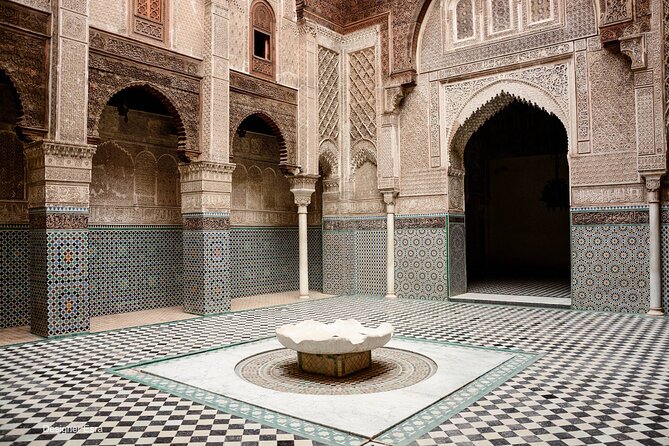
Next up is the Al-Attarine Madrasa, built in 1325 by Abu Said Uthman II. It sits near a souk known for perfumes and spices, so you get the education-and-trade mix that Fez does so well.
This stop is short—about 20 minutes—but it gives you a chance to appreciate the building itself rather than only street life.
One key thing: admission is not included. The fee is 20 DH per person. The good news is that it’s clearly marked, so you can decide in advance whether you want to pay for entry or focus on what you can see from the walkway.
Kairaouine Mosque: outside viewing that still teaches you a lot
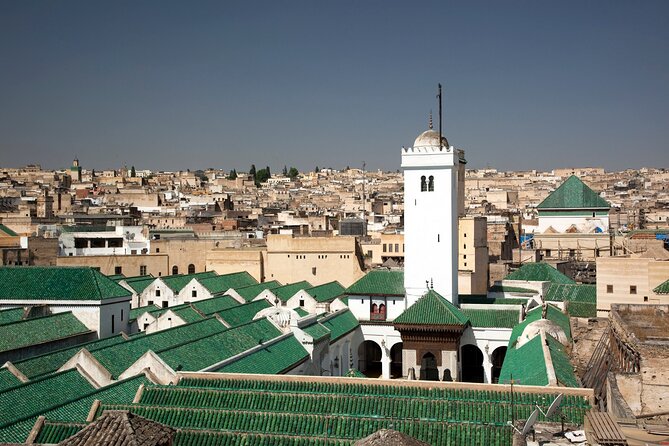
Then comes Kairaouine Mosque, linked to one of the world’s oldest university traditions. It’s described as one of the oldest universities in the world, founded in 859 by Fatima el Fihri.
Here’s the respectful constraint: non-Muslims are not permitted entry. You can still appreciate historical significance from the outside, and your guide can explain what you’re looking at so it doesn’t become “I saw a wall.”
This stop is about 15 minutes, so it doesn’t drag. It also works well for photos from the outside and for learning how Fez’s education system grew around religious institutions.
You can also read our reviews of more private tours in Fez

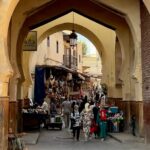
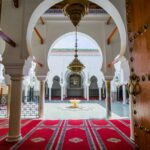
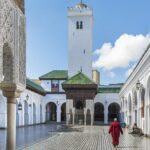

Zaouia of Moulay Idriss II: where access is limited
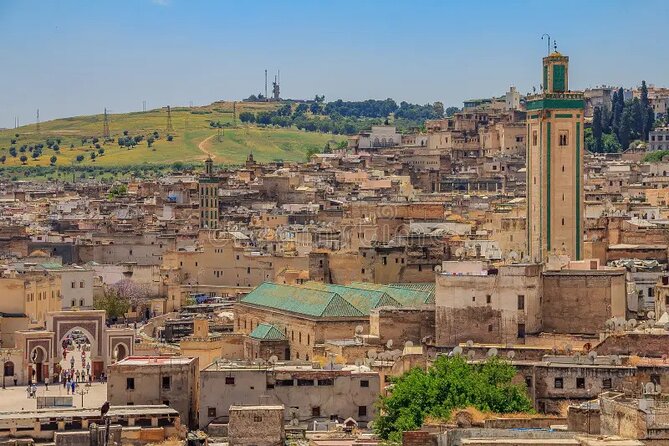
In the heart of Fez el-Bali sits the Zaouia of Moulay Idriss II, tied to the tomb of the city’s founder. This is another stop where entry is restricted: entry is limited to Muslims.
What you do get is context. Your guide explains why the site matters and how it connects to Fez’s founding story. The visit itself is about 15 minutes, and the main value is understanding the role the site played in shaping the city’s identity.
Again: viewing limits are normal here. The tour is built around teaching you how to experience these places appropriately.
Fontaine Nejjarine at Funduq al-Najjarin: woodworking you can actually see
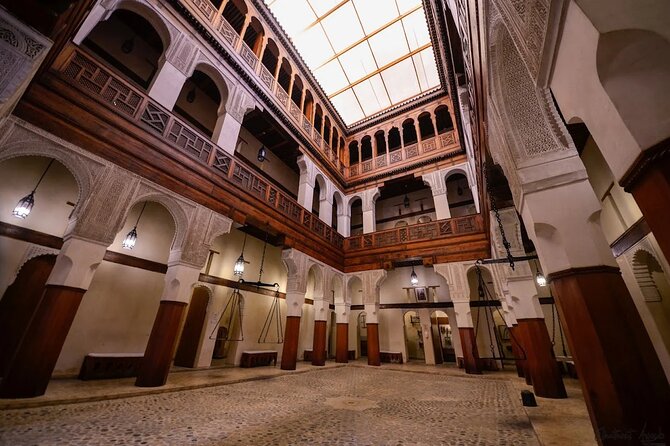
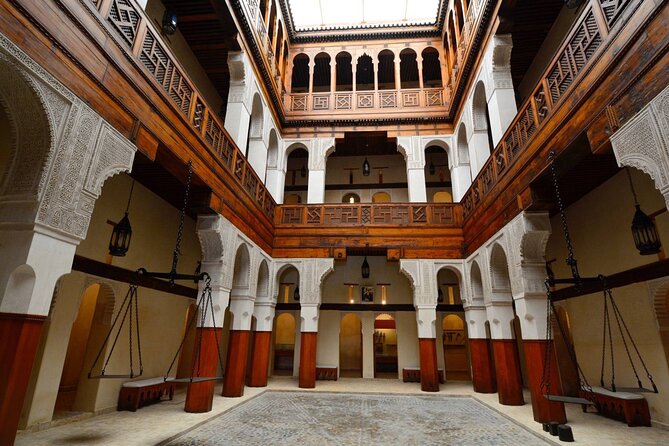
Next is Fontaine Nejjarine, located in the Funduq al-Najjarin. This is described as a beautifully restored riad that houses a private museum showcasing traditional woodworking and Moroccan craftsmanship.
The experience here is about 20 minutes, and it’s one of the better stops for people who prefer crafts with a slower rhythm. You’re not only looking at items for sale. You’re seeing craft traditions presented in a museum setting, inside an architectural space that feels like it belongs to the medina’s older life.
Admission is not included here either: 20 DH per person.
If you’re deciding whether to pay extra for interior time, this is one of the stops I’d consider first, because woodworking is easier to understand just by observation. You don’t need a deep background to appreciate the tools, the joinery, and the finish.
Medina of Fez workshops: the part I think you’ll remember
A major chunk of this tour focuses on handicraft workshops inside the medina. This is where I think the experience becomes more than sightseeing.
You’ll spend about 1 hour in areas featuring artisans working on:
- mosaic tiles
- textiles
- pottery
- brass and copper engraving
This is not theoretical. It’s the daily work of people who inherited skills and keep them going. Even if you don’t buy anything, you’ll learn what materials are being used and why certain designs are tied to the craft.
This is also the best moment in the tour to ask practical questions:
- How is this made, step by step?
- What’s worth paying for if I want a souvenir?
- What is the difference between an item that is decorative and an item that is functional?
A good guide will help you shop without feeling pressured.
Cherratin Medersa: education in 1670, still visible today
Another architectural stop follows: Cherratin Medersa, built in 1670 under Sultan Al-Rashid. This Islamic school was important in its time, and you can explore its preserved beauty.
It’s a shorter visit—about 20 minutes—but it helps connect the dots from earlier education sites like Kairaouine and Al-Attarine.
Admission is not included: another 20 DH per person applies.
If you already know you want to minimize extra fees, you could choose to focus your paying time elsewhere. But if you enjoy learning how Fez’s institutions shaped everyday life, this stop adds context.
Chouara Tannery: watching a process that stayed the same
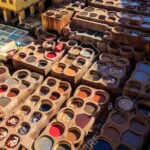
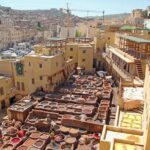
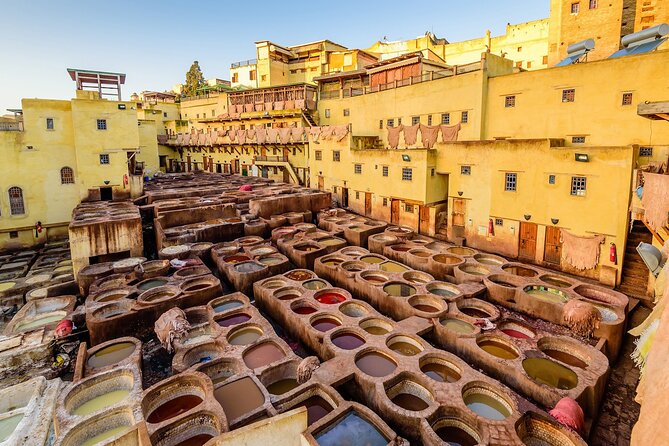
One of Fez’s signature sights is the Chouara Tannery. You’ll get about 20 minutes here and see one of the city’s oldest and most famous tanning areas.
What makes this stop meaningful in the context of the rest of the tour: it ties craft, labor, and tradition into one place. The description emphasizes traditional leather-making that has remained unchanged for centuries, and you’ll experience the process through the sight, sounds, and colors of working life.
A quick consideration: tanneries are active working zones. Even if you only stay for a short viewing period, expect a different energy than a museum or a mosque courtyard.
Place Seffarine and Place R’cif: where metalwork meets street life
The tour ends with two squares that give you a final dose of Fez’s craft culture.
First is Place Seffarine, known for brass and copper artisans. You watch craftsmen at work making traditional wares that have made Fez famous for centuries. This stop is about 15 minutes and is ideal for people who want a last look at metalwork before heading back.
Then you finish at Place R’cif, a lively central square where locals and merchants mix in street life. It acts like a gateway—useful if you want to keep exploring on your own afterward.
Both are free stops with free admission tickets, so this ending phase is low-stress.
Pacing and practical tips for four hours in the medina
This tour is designed as a half-day walk, so your comfort matters.
Here’s how I’d prepare:
- Wear comfortable shoes. The medina isn’t built for long, smooth strolls.
- Think about the three extra 20 DH entries. If you want all interior access, plan for that.
- Remember: Kairaouine Mosque and Zaouia access are restricted for non-Muslims. You can still learn a lot from outside viewing, but your expectations should match the rules.
- Use the guide for shopping. If you want souvenirs, ask your guide to steer you toward fair-quality items instead of just the most convenient shops.
Also, the tour includes coffee and/or tea. That’s not just a comfort perk. It’s a simple pause that helps you keep energy up for the last stretch near the artisan squares.
Who this tour is best for
This is a great choice if:
- You want a private guide to keep the medina from feeling like a maze with no map.
- You enjoy crafts and want to see working artisans, not only displays.
- You’re seeing Fez for the first time and want the major educational and craft landmarks in a single half-day.
It’s also a good fit if you prefer flexibility. The tour is described as tailored to your preferences. That usually means you can ask for more time where your curiosity is strongest.
Should you book this private walking tour of Fez Medina?
I’d book it if your goal is to understand Fez, not just collect photos. The value is strong because you get a real guide, pickup and drop-off, and a thoughtful mix of places: a famous gate, the Mellah and synagogue site, education-focused madrasas and mosque context, plus the craft heart of the medina.
I’d think twice if:
- You want to enter every religious site. Non-Muslims can’t enter Kairaouine Mosque, and entry to the Zaouia is restricted to Muslims.
- You dislike paying extra. Three stops list 20 DH admissions not included.
- You need lunch included. Lunch is not part of this experience, so plan your next meal after the tour.
If you match those expectations, this is one of the more practical ways to do a half-day in Fez: focused, guided, and built around the places that explain the city’s work and beliefs.
FAQ
How long is the private half-day walking tour?
It runs for about 4 hours.
How much does the tour cost?
The price is $22.00 per person.
Is pickup and drop-off included?
Yes. Pickup and drop-off are included at your hotel or riad.
What is included in the tour price?
Included items are a professional local guide, coffee and/or tea, and pickup and drop-off.
Is lunch included?
No, lunch is not included.
Are admission tickets included for every stop?
No. Some stops are listed as free, but Al-Attarine Madrasa, Fontaine Nejjarine (at Funduq al-Najjarin), and Cherratin Medersa each have a 20 DH admission fee not included in the tour.
Can non-Muslims enter Kairaouine Mosque or the Zaouia?
Non-Muslims are not permitted entry at Kairaouine Mosque, and entry to the Zaouia of Moulay Idriss II is restricted to Muslims. You can appreciate significance from outside, with explanations from the guide.
Is this tour private?
Yes. It is private, so only your group participates.
What is the cancellation policy?
Free cancellation is available up to 24 hours in advance for a full refund.