REVIEW · FEZ
Private Fes Medina Walking Tour
Book on Viator →Operated by Fes Guide Tours · Bookable on Viator
Fez can feel like a maze, until it makes sense. I love how the tour begins with medina ramparts for quick orientation, and how it links schools, crafts, and city landmarks so you understand why Fez looks the way it does. The one drawback to plan around is that some entry tickets are not included and lunch isn’t part of the price.
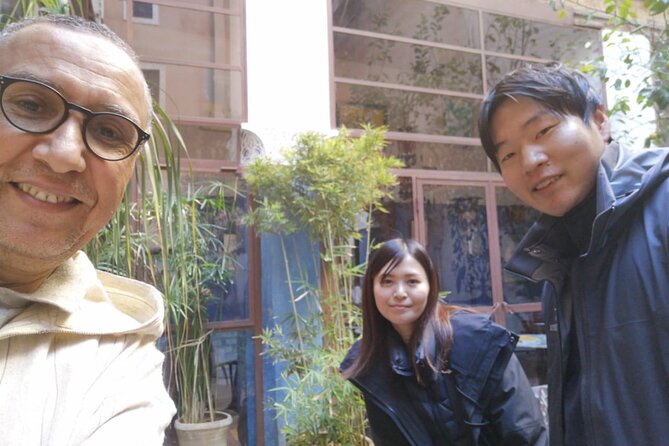
This is a private morning tour with hotel/Riad pickup and drop-off, so you’re not fighting the medina crowd before you even start. When the guide is a pro like Noureddine, you get clear explanations and steady pacing even when you’re covering a lot.
In This Review
- Key highlights
- Fez in Four Hours: Why This Walking Route Works
- Morning Pickup and the Best Way to Start Inside Fez
- Ramparts to Fes El Jadid: Getting the City’s Timeline
- Mellah, Royal Gates, and a City That’s More Than One Story
- Bab Boujloud: The Blue Gate Moment (and What to Do With It)
- Bou Inania Medersa and Fez El Bali’s Learning Spirit
- Zaouia of Moulay Idriss II: A Holy Stop That Grounds the Tour
- Nejjarine Museum and the Craft of Wood
- Seffarine Square: Where Metal Work Takes Over
- Chouara Tannery: Leather Work and a Caution on Comfort
- Al-Qarawiyyin University: The Oldest University Feeling
- Price and Logistics: What $26.71 Buys You (and What It Doesn’t)
- Who This Tour Fits Best (and Who Should Think Twice)
- Should You Book This Private Fes Medina Walking Tour?
- FAQ
- What time does the tour start?
- How long is the tour?
- Is this a private tour?
- What’s included in the price?
- Are entrance fees included?
- Is lunch included?
- Can I cancel for free?
Key highlights
- Ramparts first for fast orientation before you step into the maze of lanes
- Fes El Jadid plus Mellah sights to see how different parts of the city connect
- Craft stops tied to real working zones for pottery, metalwork, and leather
- Medersas and al-Qarawiyyin to understand Fez as a learning city, not just a souvenir stop
- Practical pacing that works for families and mixed needs when you move with the group
Fez in Four Hours: Why This Walking Route Works
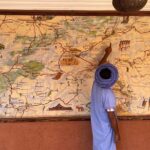
If you’ve ever walked Fez on your own, you know the feeling: you turn one corner and suddenly you’re not sure if you’re going forward or sideways. This tour is built to reduce that stress. You start with an overview of the ramparts, so the medina isn’t just a labyrinth of doors. It becomes a map you can mentally hold.
What you get is a strong mix of big-picture landmarks and smaller working neighborhoods. You’re not only taking photos of gates and courtyards; you’re also seeing how people make things and learn things. That connection is what makes Fez click.
Also, the timing matters. At roughly four hours and twenty minutes, the route is long enough to feel like a real day in the medina, but not so long that you’re crushed by fatigue by early afternoon.
You can also read our reviews of more walking tours in Fez

Morning Pickup and the Best Way to Start Inside Fez
The day starts at 9:30 AM with pickup from your hotel or Riad in Fez (or another agreed spot). For most people, this is worth it. The medina is dense, and finding the correct entrance point can be harder than it sounds—especially if you’re arriving in the morning while everything is still waking up.
Pickup and drop-off also change your mindset. Instead of spending your first hour negotiating streets, you can step into the tour with your guide already managing the movement. You’ll be guided from there, then returned to your hotel/Riad area at the end of the experience.
One practical tip: wear shoes that handle uneven stone and worn paths. The tour is listed as a walking experience, and the medina ground is part of the deal.
Ramparts to Fes El Jadid: Getting the City’s Timeline
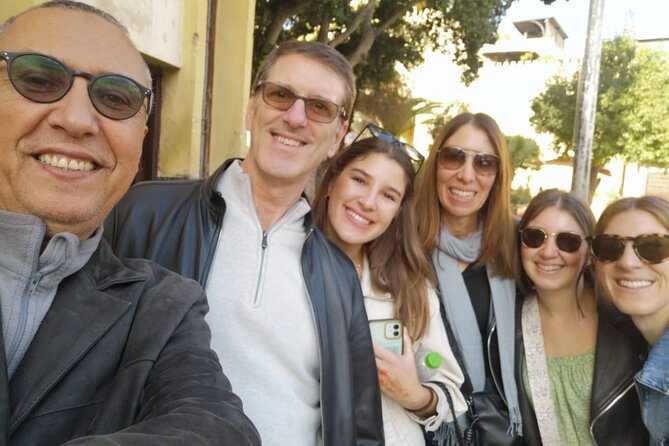
The first big block is about two hours focused around the medina ramparts and then into Fes El Jadid, the 14th-century section. This is where the tour earns its keep as an orientation tool.
Why? Because Fez didn’t grow in one straight line. Different eras shaped different districts. When you see the royal gates and the city layout that connects them, you start understanding how the medina is organized. You’re not just collecting sights—you’re building a timeline in your head.
In Fes El Jadid, you also see the Mellah (the Jewish quarter), plus references to a synagogue or cemetery area, and the gates associated with the royal palace. Even if you only catch fragments of what’s happening in each place, your guide can stitch it together into a meaningful route.
A small consideration: the time in each stop is limited. That’s normal for a walking tour that covers a lot, but if you love long museum-style visits, you may want to plan a second half-day later on your own.
Mellah, Royal Gates, and a City That’s More Than One Story
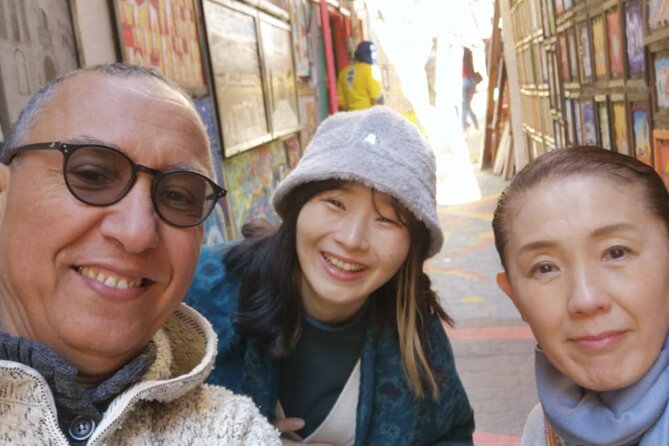
Part of what makes Fez special is that it’s not just one culture or one era. The Mellah section gives you that reality check. You’re not standing in a theme park. You’re walking through a district shaped by communities and centuries.
Then you move toward viewpoints like Borj Nord for a panorama. Getting above the streets does something important: it stops the medina from feeling random. From a high vantage, lanes align into patterns, and you can better imagine where you’ll end up later.
You’ll also spend time in the pottery area. This is one of the more tactile parts of the route because you can watch artisans working in real life conditions—making mosaics and tiles. These aren’t only “pretty crafts.” In Fez, tilework and pattern-making are part of how buildings and sacred spaces keep their identity.
If you’re someone who loves seeing how products are made, this section will give you more than photos. It gives you context.
Bab Boujloud: The Blue Gate Moment (and What to Do With It)
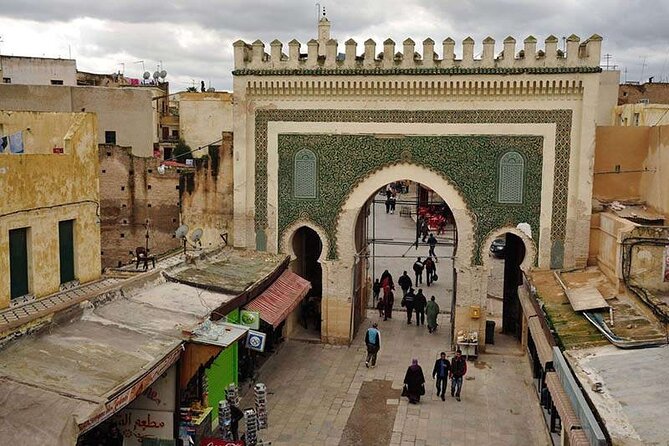
A standout photo stop is Bab Boujloud, the famous gate with blue-and-green colors restored in 1912. It’s listed as having an admission ticket included, so it fits nicely into the tour without extra hassle.
But the gate isn’t just a landmark to check off. It’s a visual boundary that helps you feel where you are in the medina’s structure. For many people, it’s the moment you realize you’re officially inside Fez’s older city style of street life.
Practical advice: keep an eye on your time here. Because the tour runs on a set schedule, you don’t want to get stuck too long on one spot. Take your photos, look around, then keep moving while your guide is still shaping the story.
You can also read our reviews of more private tours in Fez


Bou Inania Medersa and Fez El Bali’s Learning Spirit
After the Fes El Jadid portion, the tour transitions to Fes El Bali, the older core often described as dating back to the 9th century. This is where the learning institutions really take focus.
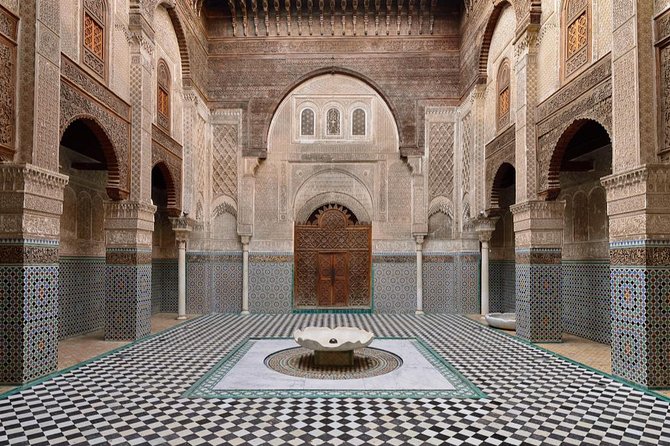
A key stop is the Bou Inania Medersa, a 14th-century theological school. It’s described as the most visited medersa in Fez by tourists. That matters because you’ll likely see plenty of visitors in the same areas, but the guide’s job is to help you see what you’re looking at: the purpose of the building, and how Fez’s education culture shaped the city.
From there, the tour links to other sacred sites later—so this section works as a foundation. You start seeing Fez not just as a place to shop, but as a place where knowledge and teaching have long been part of the urban identity.
Zaouia of Moulay Idriss II: A Holy Stop That Grounds the Tour
One of the most meaningful moments is the visit to the Zaouia of Moulay Idriss II, including the tomb area. The founder of Fez and the Idrisside dynasty are tied directly to this site, and the tour lists this stop as free.
This kind of stop changes the tone of the walk. Even if you’re not deeply focused on religion, you’ll feel the respect that people bring here. It’s also a good reminder that the medina isn’t only streets and workshops. It has spiritual anchors too, and those anchors affect how people move through the city.
What to expect: you’ll spend time in a quieter, more reflective zone compared with the commerce-heavy areas. Dress and behavior matter at holy sites—so keep shoulders and legs covered if you can, and talk softly.
Nejjarine Museum and the Craft of Wood
Next up is the Nejjarine Museum, described as a museum of art and wood craft trade. This stop adds a useful “bridge.” You’ve likely been walking by workshops, fountains, and craft areas. The museum helps you understand how woodwork and trade culture connect to the bigger story of Fez’s artisanship.
The museum visit is around 30 minutes in the schedule, with admission not included in the tour price (as with most entries under the stated ticket limit). That means you’ll want to treat it as optional value-add depending on your interests—but for many people, it’s a satisfying way to slow down for a bit in the middle of walking.
Even if you don’t care about every artifact, the bigger takeaway is practical: you start recognizing craftsmanship patterns and styles in the surrounding souks later.
Seffarine Square: Where Metal Work Takes Over
Then you shift to Place Seffarine, described as the largest square in the medina known for copper work. This stop is timed for about 30 minutes, and it’s a great place to pause and watch.
Why it’s worth your time: metalwork in Fez isn’t only about a finished product. It’s about technique—hand labor, repeated motions, and the steady rhythm of making. If you want to see how a city’s identity gets built through work, this is one of the places where it becomes obvious.
You may also hear about “hand done” metal work as you stand here. Even if you only notice the final shine of objects, your guide can explain the process and where similar items end up in local life.
Chouara Tannery: Leather Work and a Caution on Comfort
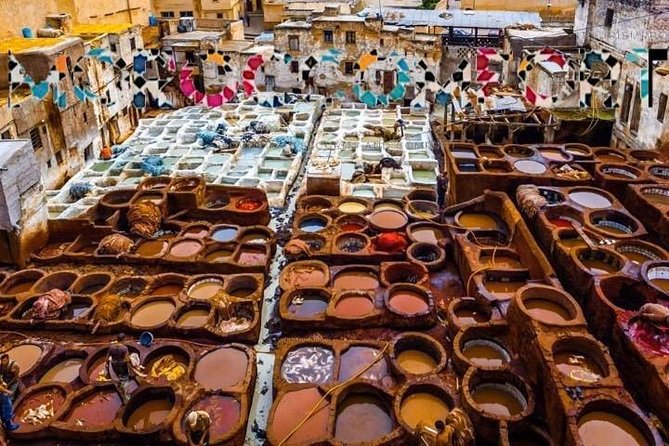
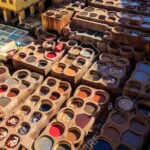
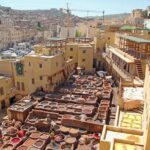
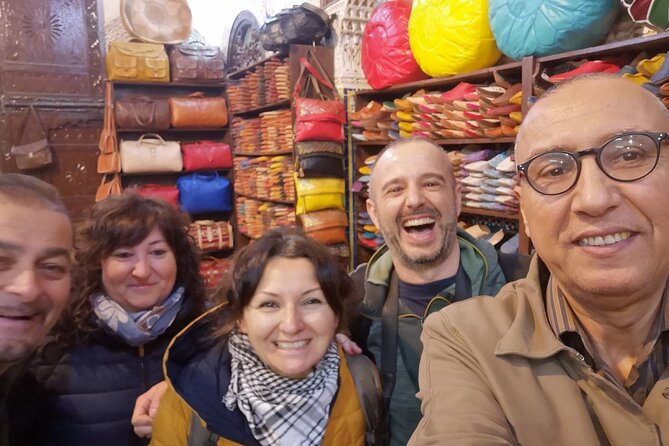
One of the most spectacular stops is the Chouara Tannery (often spelled Chowara). The tour gives you about 30 minutes here, and this is another area where the value comes from seeing the system at work.
But here’s the honest consideration: tannery visits can be intense. You’re dealing with strong smells and busy working conditions. The tour doesn’t list any entrance ticket included, so you’ll likely be walking into a working neighborhood rather than a controlled museum environment.
What I suggest: come prepared to tolerate sights and odors, bring water, and keep your time focused. Look, listen, ask your guide what you’re seeing, and don’t stress if you only capture the most important angles. The tannery is more meaningful when you treat it like a living workplace.
Al-Qarawiyyin University: The Oldest University Feeling
The final major academic anchor is the Mosque and University of al-Qarawiyyin. The tour describes it as the oldest university in the world, founded in the 9th century, and notes that about 500 students follow different courses like theology and Islamic law.
This is a big claim—and the tour’s payoff is that you don’t treat it like trivia. You understand it as part of Fez’s long-term identity. Education here isn’t separate from everyday city life; it’s physically and culturally built into the medina.
You get about 30 minutes here, with admission listed as not included. So if you’re hoping to spend extra time inside specific areas, build flexibility into your plans after the tour. If you mainly want the sense of place, this scheduled stop is probably a good match.
Price and Logistics: What $26.71 Buys You (and What It Doesn’t)
At $26.71 per person, the value is mainly in three things: a guide, pickup/drop-off, and a structured route that stitches together many parts of Fez’s medinas.
That low base price is why it’s important to read what isn’t included. Lunch is not included. And entrance fees are not included except where specifically indicated (for example, Bab Boujloud includes an admission ticket; the Moulay Idriss II tomb stop is free). There’s also a general note that entrance fees under a certain amount aren’t included, so you’ll want a little cash or a card buffer for optional entry costs.
Is it cheap? In the world of guided tours in complex medinas, yes, it’s priced low—especially with pickup and drop-off included. But it’s also not “everything included.” Budget a modest amount for entries you choose to take, and plan to eat after the tour.
Who This Tour Fits Best (and Who Should Think Twice)
This private walk fits best if you want two things at the same time: structure and context. If the medina feels overwhelming, the ramparts-first approach helps you get your bearings fast. If you like crafts, the route moves you through pottery, copperwork, and leather work without random wandering.
It also seems to work for families. One family noted that pacing felt good even while walking with kids and when someone had a disability. That said, the medina has uneven steps and tight spaces. If you have mobility needs, I’d contact the provider in advance and ask what parts of the route might be tougher for your situation.
Think twice if you want a slower, deeper museum style day. The tour covers a lot of ground, and each stop is timed. You’ll get strong highlights, not extended sitting time.
Should You Book This Private Fes Medina Walking Tour?
I think it’s a strong choice if it matches your goal: a first-time or second-time overview of Fez that ties landmarks to trades and learning. You get a route that makes the city feel legible, not just photogenic.
Book it if:
- You want pickup and drop-off so the day starts smoothly
- You like crafts and want to see how they connect to city life
- You’re okay with entry tickets that may cost extra and with a solid walking pace
I’d pass or plan your expectations differently if:
- You hate walking on uneven ground
- You need a long lunch break built into the schedule
- You want every site handled like a standalone deep visit
If you’re aiming for an efficient, meaningful introduction to Fez’s medina world, this is the kind of tour that saves you time and makes your photos feel smarter afterward.
FAQ
What time does the tour start?
It starts at 9:30 AM.
How long is the tour?
It runs about 4 hours 20 minutes (approx.).
Is this a private tour?
Yes. Only your group participates.
What’s included in the price?
A tour guide, plus pickup and drop-off from your Riad/hotel.
Are entrance fees included?
Some are included or free at specific stops (Bab Boujloud has admission ticket included, and the Moulay Idriss II tomb stop is free). Other entrance fees are not included.
Is lunch included?
No, lunch isn’t included.
Can I cancel for free?
Yes, you can cancel for a full refund up to 24 hours in advance of the experience start time.