REVIEW · MARRAKECH
Morocco Vineyard Visit and Gourmet Tours
Book on Viator →Operated by GT TRAVEL · Bookable on Viator
Moroccan food starts with a map. This 12-day private route ties together market shopping, hands-on cooking, Roman mosaics, and a desert night with camel sunset views. You’ll also get a vineyard lunch in the Atlantic air—plus enough walking through medinas and souks to make the flavors stick.
I love how the itinerary explains the why behind the bites. In Fez and Marrakech, you’re not just eating—you’re learning the rhythms of daily life, from Mellah life and historic craftsmanship to the way cooks build tajines and sauces from scratch.
One thing to weigh: the price is high and accommodation isn’t included, plus you’re riding a lot of roads between regions. If you hate long driving days, this route may feel like a marathon.
In This Review
- Highlights and What Makes This Tour Different
- Price and Logistics: What $2,200 Really Buys
- From Rabat to Meknes and Volubilis: Gate Scaffolding and Roman Mosaics
- Fez Full-Day: Royal Palace Views, Mellah Stories, and Medersa Bouanania
- Fez Gourmet Workshop Day: Souks First, Then Lunch You Made
- Through Ifrane and Midelt to Merzouga: Desert Time Without the Hassle
- Rissani, Todra Gorge, Skoura: Kasbah Ruins, Rose Water, and Valley Stopovers
- Marrakech via Ouarzazate and Ait Ben Haddou: Atlas Pass Views and Movie-Set History
- Marrakech Souk Walking: Doughnuts, Olives, Mesho ui, and Real Shop Energy
- Marrakech Riad Cooking Class: Moroccan Tanjia, Mint Tea, and a Small Souk Run
- Essaouira Day Trip with an Argan Cooperative and Rhone-Valley Grape Lunch
- Essaouira Port and Medina: Artisans, Cannons, and Narrow Lanes
- Essaouira Cooking Workshop: Fish Tajine and Spice Technique
- Last Day Back to Rabat: One More Drive, Then Done
- Should You Book GT TRAVEL’s Morocco Vineyard and Gourmet Tour?
- FAQ
- How long is the tour?
- What cities does the tour connect?
- Is this a private tour?
- What transportation is used?
- Do I get pickup and drop-off?
- Are entrance fees included?
- Are meals included?
- Are alcoholic drinks included?
- Is accommodation included in the price?
- What is the cancellation policy?
Highlights and What Makes This Tour Different
- Private 4WD Toyota Land Cruiser with door-to-door pickup keeps logistics simple across long distances.
- Hands-on cooking in Fez, Marrakech, and Essaouira, where lunch is part of the lesson.
- Fez medina day with classic sights plus time in markets and historic neighborhoods.
- Merzouga desert night in a luxurious tent with camel ride and music at dinner.
- Argan cooperative stop that focuses on real-world work and processing of the nut.
- A Rhone Valley grape-focused vineyard lunch near Essaouira, started by a France-trained winemaker.
Price and Logistics: What $2,200 Really Buys
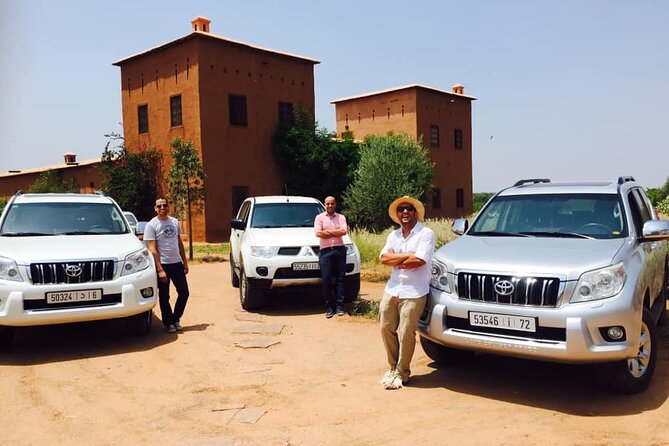
At $2,200 per person for about 12 days, this tour isn’t designed for penny-pinchers. It is designed for people who want a smooth ride through Morocco without playing transport Tetris every day. You get a private vehicle (4WD Toyota Land Cruiser) plus fuel, a licensed guide, and guided entrance fees. You also get airport transfers and pickup/drop-off at your accommodation, which matters a lot once you’re bouncing between cities and medinas.
You’ll also notice the tour is built around meals that aren’t just included—they’re part of the learning. There’s dinner included, and the itinerary repeatedly includes lunch tied to the day’s food focus (including dishes you prepare in cooking classes). On the flip side, alcohol isn’t included, and soft drinks aren’t listed as included either. Any other meals outside those specified stops are on you.
Big practical note: accommodation and porterage aren’t included. That means you’ll need to budget for Riads/hotels yourself, and you may want to pack light. If you’re fine with that, the price starts to make more sense as a package: driver + guide + sites + lessons + key meals.
You can also read our reviews of more tours and experiences in Marrakech.

From Rabat to Meknes and Volubilis: Gate Scaffolding and Roman Mosaics
Day 1 starts with an early push from Rabat and a brief look at Meknes, Morocco’s former imperial capital under Sultan Moulay Ismail. Much of the city is under renovation, including the Bab El Mansour gate (you’ll see it with scaffolding) and parts of the old Medina. I actually like this, because it feels honest: you’re seeing a living city, not a museum set. The trade-off is that not everything is “fully photo-ready.”
Then you head toward Volubilis via Moulay Idriss, with lunch at a hillside restaurant built across five levels, perched above the area with views toward Moulay Idriss’ mausoleum and the Roman ruins. This kind of setting helps you understand why food and travel are linked in Morocco—views come with the meal, and the meal comes with context.
After lunch, you move to Volubilis, Morocco’s best-preserved Roman archaeological site and a UNESCO World Heritage site. The center of gravity here is the mosaics—many still beautifully intact—and the sense that this land has been feeding travelers and traders for centuries.
What to consider: it’s a long day of moving, and it’s not a deep “hang in one place” sightseeing day. If you like fast, scenic transitions, you’ll be happy.
Fez Full-Day: Royal Palace Views, Mellah Stories, and Medersa Bouanania
Fez is where the tour earns its title as a food-and-culture route. The full-day sightseeing day is anchored in the city’s status as a spiritual and cultural center, and the itinerary hits the highlights that also help you understand the city’s food world.
You’ll cover the Royal Palace area, the Mellah (Jewish district), and the ancient medina (UNESCO), including Fes El-Bali. Then you move into the places that show how daily life is built: the tanner’s quarters, stops around the little museums, and the water clock. Expect souk time too—Souk el-Attarine and Fondouk el-Nejjarine—and a visit to Medersa Bouanania, which is an elegant example of Islamic architecture.
One of the best practical parts is the option to learn about traditional Moroccan art—crafts like embroidery and weaving—because it connects to spices, textiles, and the handwork you’ll see while eating. It also helps if you’re the type who likes to buy souvenirs you’ll actually use, not just magnets.
Fez Gourmet Workshop Day: Souks First, Then Lunch You Made
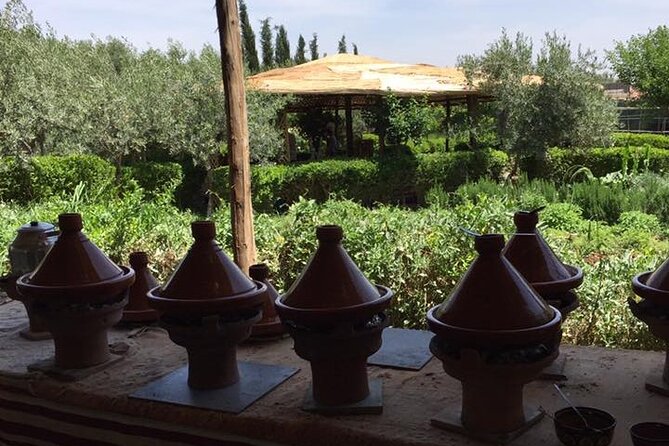
On the gourmet day in Fez, you get a very “real Morocco” approach: you start with a shopping run in neighborhood souks to buy the supplies for your class. That means you’re learning what cooks look for before the cooking begins—ingredients, staples, and how the markets are organized.
Then you move into a hands-on workshop led by chefs who teach methods they learned from family cooks. I like this format because it turns food from something you order into something you can repeat later.
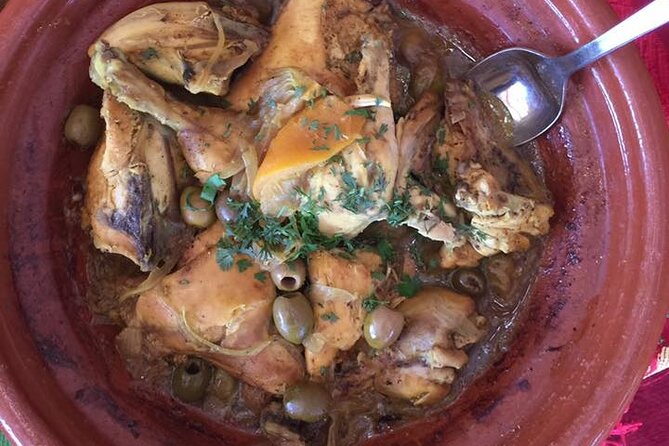
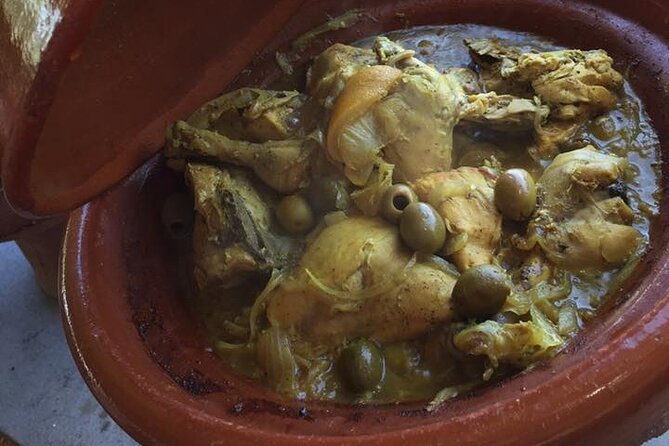
You’ll eat what you make: chicken tajine with preserved lemon and olives, prepared during the class. The rest of the day is yours, which is a smart give-back after the structured morning and lunch.
Practical tip: wear comfortable shoes. Even when the stops are focused, Fez medina walking has a way of adding up.
Through Ifrane and Midelt to Merzouga: Desert Time Without the Hassle
Leaving Fez, you travel through Ifrane and Midelt on the way to Merzouga. Ifrane is described as a haven of tranquility with lakes and fountains—an emotional reset before desert scenery takes over. Midelt is where the trip turns more traditional, and lunch is served as a local meal.
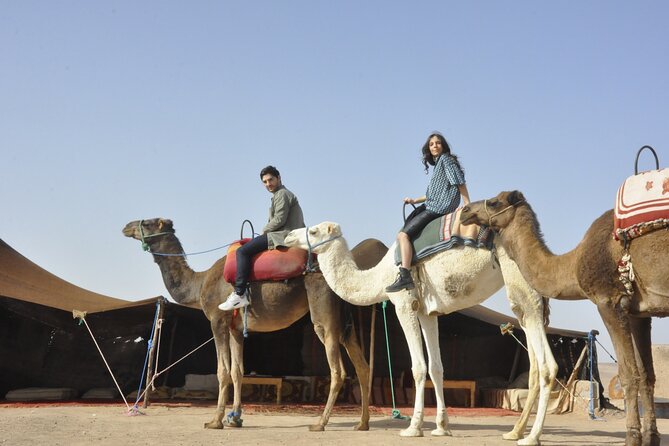
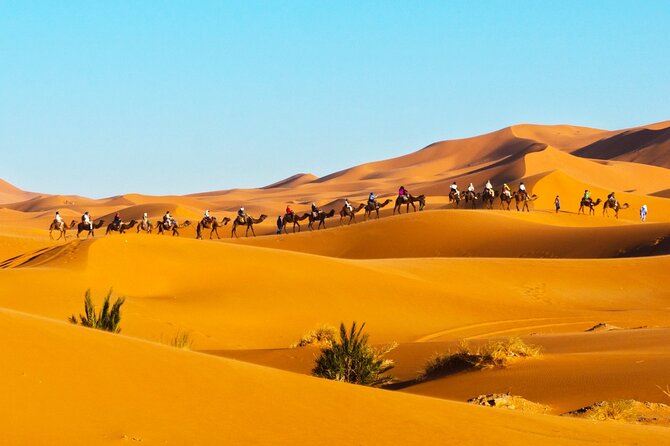
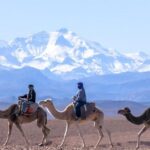
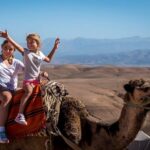
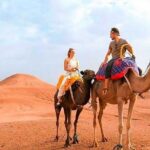
Then you arrive in Merzouga, and the experience pivots to something memorable: a luxurious tent in a bivouac camp, plus a camel ride timed for dusk over the sand. Dinner is a traditional Berber meal with folklore musicians, so the evening isn’t only about views—it’s also about atmosphere.
Possible drawback: camel rides and desert evenings aren’t for everyone. If you have mobility issues or you’re very heat-sensitive, plan carefully and be honest with your comfort needs.
Rissani, Todra Gorge, Skoura: Kasbah Ruins, Rose Water, and Valley Stopovers
Day 5 moves you from desert edges to fortified village country. After breakfast, you drive to Rissani, where you explore a small market town. This is the kind of stop that helps you understand Morocco beyond the headline cities.
Next comes the drive through the Valley of 1000 Kasbahs toward Tinghir and the Todra Gorge area. The route passes villages clustered around ruined kasbahs and ksar (fortified houses and watchtowers). If you like ruins, this day gives you plenty of “slow down and look” moments.
Then you reach Kalaat M’Gouna in the Valley of Roses. In spring, terraced fields can bloom pink, and the region hosts a rose festival. Even outside spring, the focus on rose water and rose-based perfumes/cosmetics is a good reminder: this is agriculture, craft, and hospitality all tied together.
You end the day in Skoura, checking into your accommodation. It’s a sensible landing point before the longer push into Marrakech.
Marrakech via Ouarzazate and Ait Ben Haddou: Atlas Pass Views and Movie-Set History
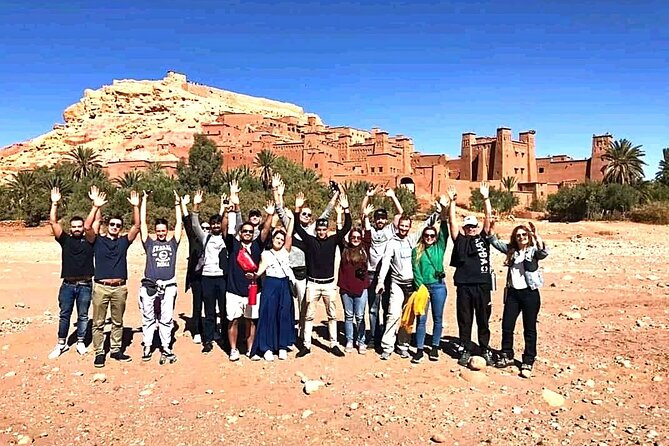
Marrakech isn’t reached by a straight line. You break the ride with Ouarzazate, often called the Hollywood of Morocco. You’ll visit Kasbah Ait Ben Haddou, a UNESCO heritage site used as a film location (the itinerary mentions titles like Gladiator and The Mummy). Lunch is included here, giving you a chance to slow down amid the strong visuals.
Then it’s over the High Atlas Mountains via the Tizi N’Tichka pass at 2260 meters. This is one of the practical highlights of the whole trip: when the road climbs, it changes how you experience everything else. You arrive feeling like you’ve crossed into a different Morocco.
Marrakech Souk Walking: Doughnuts, Olives, Mesho ui, and Real Shop Energy
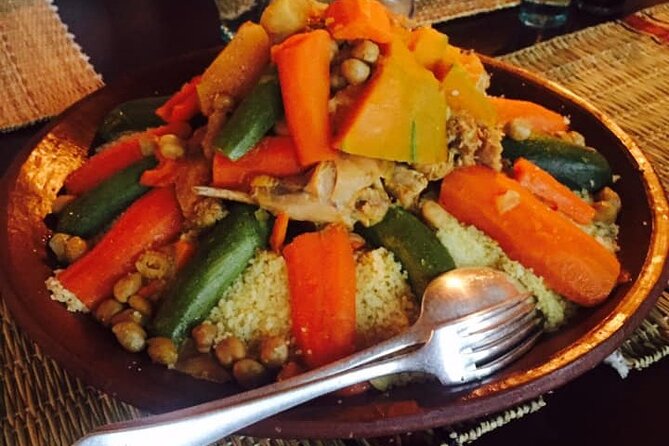
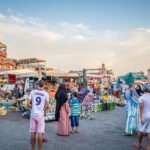
A dedicated walking gastronomic tour in Marrakech is one of those days that feels like someone handed you a local food map and then walked you through it. Your guide meets you at your accommodation, and you hit multiple food counters in the souks.
Expect stops that read like a greatest-hits list of Moroccan flavors: a bakery stop for the doughnut-like treat often sold by the doughnut man, a market stop for the ingredients tied to tangia, fruits and vegetables, an olive market, and a meshoui tasting. You’ll also see craft and trade along the way—spices, brass/copper work, woodwork, and kaftans from simple cotton to heavier embroidery. Even if you don’t buy anything, it helps you understand why Moroccan food tastes the way it does: the spices and tools have names, and the people selling them have pride.
Food samples are part of the day, so you’re not stuck only looking and listening.
Marrakech Riad Cooking Class: Moroccan Tanjia, Mint Tea, and a Small Souk Run
This cooking class is designed to feel “homely,” with a traditional Riad as the setting. You start with welcome mint tea, then you go together to a small local souk to pick ingredients before cooking. That’s practical: it keeps the ingredients fresh and helps you understand what “fresh” means in Morocco.
Then you cook, guided step-by-step through traditional techniques and recipes. Lunch is Moroccan Tanjia, which you prepare yourself.
I like that this isn’t just a demo. The structure helps you avoid the classic travel mistake: leaving Morocco able to describe flavors but not reproduce them.
Essaouira Day Trip with an Argan Cooperative and Rhone-Valley Grape Lunch
The route to Essaouira leaves Marrakech after about 2.5 hours of driving, with an important stop en route: an argan oil cooperative that supports divorced and widowed women by providing work. You’ll learn about processing the argan nut and how it’s used for argon oil in cooking and cosmetics.
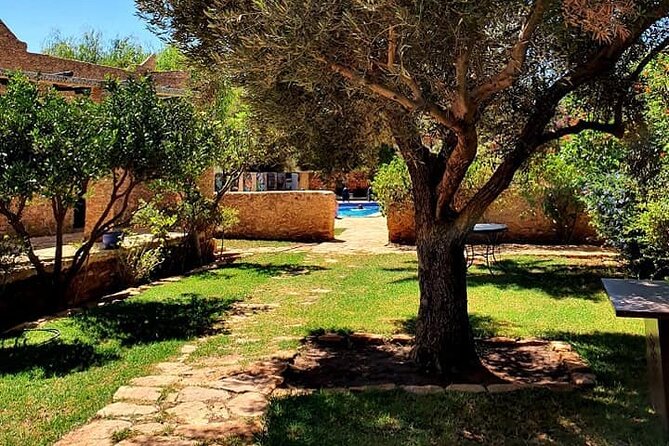
Then comes a special lunch stop: a traditional meal under trees at a Moroccan vineyard dedicated to Rhone Valley grape varieties. The winery story adds credibility—it began in 1994 by a winemaker trained in France in Châteauneuf-du-Pape. Even if you don’t consider yourself a wine person, this is a smart pause. It turns the trip from “moving between sights” into “taste a local product with a clear origin story.”
After lunch, you arrive in Essaouira, an Atlantic fishing port with a slower pace than the inland cities. That contrast is one reason the itinerary works.
Essaouira Port and Medina: Artisans, Cannons, and Narrow Lanes
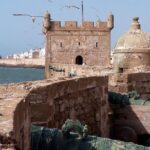
Essaouira gets a guided tour day focused on the port and medina. You’ll see local artisan workshops and the historic layout that gives the town its distinctive vibe. Portuguese history is included—abandoned in 1541—and later the Alaouite Sultan Sidi Mohammad Ibn Abdullah transformed Mogador into a fortified city in 1765.
Ramparts weren’t enough to stop marauders, but now the old fort feeling comes back in a calmer form: you get old port views and cannons overlooking the fishing fleet, plus time to wander narrow medina alleys. If you like watching craft in motion, this is a good day to slow your pace.
You’ll also see artisans at work making wood-related products (the description cuts off mid-word, but the focus is clearly on workshop craft).
Essaouira Cooking Workshop: Fish Tajine and Spice Technique
Another cooking day brings you to a selected workshop for a morning class. It’s described as hands-on and intimate, led by a traditional cook figure. You’ll learn “secret spices and techniques” used in Moroccan cooking, and then you eat what you prepare: a fish-based tajine.
This day matters because it shows how the cuisine shifts with the coast. In a landlocked city you can assume certain flavors and availability; here, the sea changes what gets celebrated.
Practical note: if you’re using fish tajine as a comparison for your earlier chicken tajine lesson, you’ll understand the logic behind seasoning and cooking time faster.
Last Day Back to Rabat: One More Drive, Then Done
The final day is a straight return drive. You get picked up by your driver to go back to Rabat, with about 7 hours on the road. This is the day to plan for: download offline maps, bring a snack you enjoy, and accept that Morocco’s distances are part of the experience, not an inconvenience.
Should You Book GT TRAVEL’s Morocco Vineyard and Gourmet Tour?
I’d book this tour if you want structure and food-forward travel: market shopping, cooking classes with lunches you made, and days designed around flavors plus context. It’s also a strong choice if you prefer not to figure out connections between Fez, Merzouga, Marrakech, and Essaouira on your own.
I’d hesitate if you:
- don’t like long drives between regions,
- need accommodation included in the price,
- or you want alcohol included with meals (it’s not listed as included).
If your priority is a smooth, private route with a guide and vehicle handling the heavy lifting—while you focus on tasting, cooking, and learning—this is a solid fit.
FAQ
How long is the tour?
It runs for about 12 days.
What cities does the tour connect?
The route includes stops in Meknes, Volubilis, Fez, Ifrane, Midelt, Merzouga, Rissani, the Todra Gorge area, Skoura, Marrakech, Ouarzazate and Ait Ben Haddou, Essaouira, and then returns to Rabat.
Is this a private tour?
Yes. It’s a private tour/activity, and only your group participates.
What transportation is used?
A private 4WD Toyota Land Cruiser is provided, including fuel.
Do I get pickup and drop-off?
Yes. Pickup and drop-off at your accommodation are included, along with airport transfers to and from your hotel/riad.
Are entrance fees included?
Yes, entrance fees to sites visited with the guides are included.
Are meals included?
Dinner is included, and lunches are included as specified throughout the itinerary (including meals prepared in cooking classes). Meals other than those specified are not included.
Are alcoholic drinks included?
No. Alcoholic drinks and soft drinks are not included.
Is accommodation included in the price?
No. Accommodation is not included.
What is the cancellation policy?
You can cancel for a full refund if you cancel at least 24 hours before the experience starts. If you cancel less than 24 hours before, the amount paid is not refunded.