REVIEW · MARRAKECH
Merzouga Overnight Stay in Berber Tent and Camel Ride
Book on Viator →Operated by Merzouga desert experience · Bookable on Viator
Moroccan desert mornings hit hard in the best way. This overnight trip to the Erg Chebbi dunes is built to feel simple: 4WD transport, a camel ride at sunset, one night in a Berber-inspired tented camp, and then sunrise again—without you having to organize the hard parts. You’ll be based in the dune area near Merzouga, with the timing shaped around the sky.
What I like most is the full rhythm of desert life in one package: you’ll sleep close to the sand, eat dinner with campfire atmosphere and Saharan drum music, and then wake up for sunrise while the dunes are still cool. I also like the small-group setup (up to 15 people), plus the fact that pickup and key transport are handled from Merzouga, Rissani, or Erfoud.
One thing to consider: you’re trading comfort for experience. The itinerary includes a camel ride and sleeping in a tent out in the dunes, so if you’re not into basic desert conditions (cold at night, insects, dust), you’ll want to prepare mentally and pack smart.
In This Review
- Key things to know before you go
- Erg Chebbi in two days: why this format works
- Getting there by 4WD from Merzouga, Rissani, or Erfoud
- Mint tea, minty calm, then the camel ride into the dunes
- What to wear for the ride
- The Berber tent camp: dinner by the fire and drum-night music
- About food (and vegetarian needs)
- Sleeping in the desert: tents, stars, and the real temperature swing
- What you should bring (small list, big payoff)
- Day 2: sunrise behind the Algeria border and a calmer return
- Returning to Merzouga, Rissani, or Erfoud
- Price and value: what $69.69 really buys in the desert
- How good guides shape the whole day
- Who should book this overnight Merzouga camel-and-tent trip
- Should you book this tour?
- FAQ
- Where are the pickup points for this overnight desert experience?
- How long is the trip?
- What’s included in the price?
- Are drinks or lunch included?
- Do I get a camel ride?
- What kind of camp will I sleep in?
- Is there an option for vegetarian meals?
- How big is the group?
- Can I cancel for free?
- Is the experience suitable for children?
Key things to know before you go
- Sunset camel ride to camp: you don’t just visit the dunes—you travel through them at the right light.
- Campfire dinner with drum-night energy: dinner comes with music and a social vibe that fits the setting.
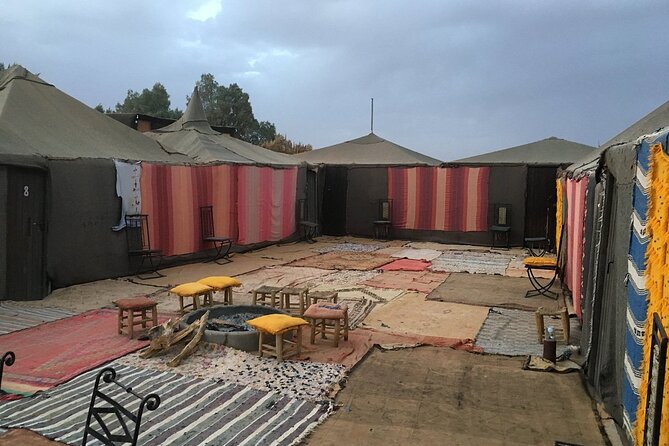
- Real Berber-style tent night: sleeping outdoors in the desert is the main event, not a side activity.
- Early sunrise near the Algeria border: the morning walk/ride payoff is scheduled for when the dunes glow.
- Included transfers from Merzouga, Rissani, or Erfoud: less juggling means more time focused on the desert.
- Up to 15 people: small enough to keep it human, big enough to feel lively.
Erg Chebbi in two days: why this format works
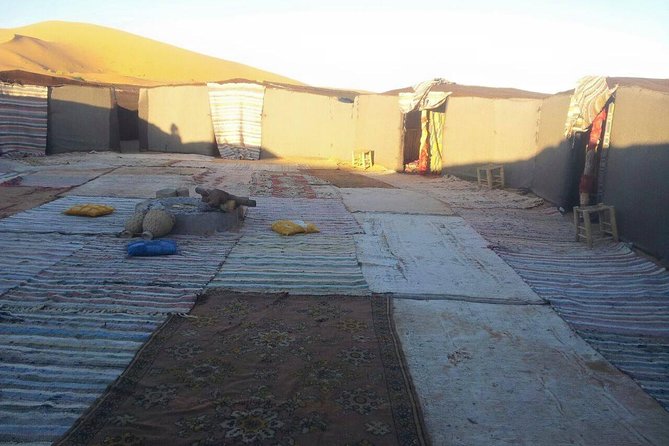
If you only have a short window in Morocco, this is one of the more practical ways to get to Erg Chebbi without turning your trip into logistics homework. You get the core desert hits: dunes at sunset, a night at a tented camp, and sunrise over the dunes.
The best part is that the day structure keeps the big moments spaced out instead of stacking them back-to-back. Day 1 is about arrival energy and settling into the desert tempo. Day 2 flips it: early morning for sunrise, then a more comfortable return with breakfast after.
It’s also a value-driven setup. For $69.69 per person, you’re not just paying for a view. You’re paying for transport, a camel guide, lodging at the camp, and included meals.
You can also read our reviews of more tours and experiences in Marrakech.
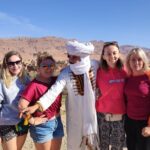
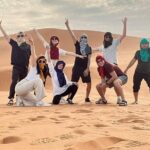
Getting there by 4WD from Merzouga, Rissani, or Erfoud
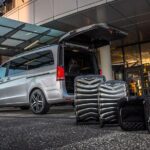
The trip starts with a 4WD vehicle ride from Merzouga, Rissani, or Erfoud. That matters more than it sounds. Once you’re close to Erg Chebbi, the dunes area is not the kind of place you can casually taxi into. The 4WD helps you get positioned so the camel ride can do its job: moving you across the sand in the right place and at the right time.
You’ll arrive at a traditional Kasbah area at the base of the dunes. From there, you get a quick break with mint tea. It’s not just a polite touch—it helps you reset before mounting camels. If you’ve been traveling all day, that pause is a genuine mood-saver.
Practical note: the ride to the desert area can be long depending on where you start from. If you’re sensitive to bumpy roads, bring motion-sickness basics and keep your expectations realistic. This trip is built around the desert, not smooth freeway driving.
Mint tea, minty calm, then the camel ride into the dunes
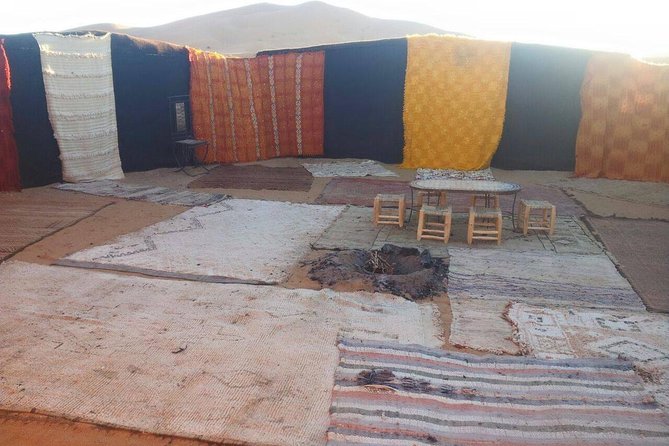
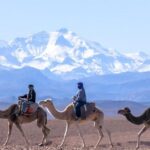
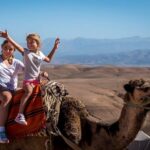
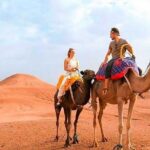
The camel ride is the heart of the experience, and it’s handled with a local camel guide, not a random drop-off situation. You’ll ride away from the Kasbah area and go into the dune world as the sunset paints the horizon.
The pace is slow. That’s a feature. You’re not sprinting across sand for a photo op. You’re moving through it. The big change on a camel is that your sense of distance shifts—dunes look close until you’re actually crossing them. This is where a guide makes a difference because they keep the ride feeling steady instead of chaotic.
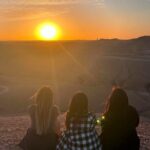
When the light turns golden, you’ll feel the desert go quiet around you. It’s one of those moments where the world gets simple: sand, sky, and the sound of camel steps. You’ll likely share the ride with your group (up to 15 total), which adds a friendly, communal vibe without feeling crowded.
What to wear for the ride
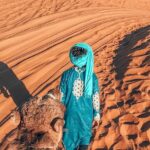
You’ll thank yourself for covering up. Desert sun in late day can feel strong, but it drops fast after sunset.
- Light layers for the ride
- Something to protect your head (scarf or cap)
- Closed-toe shoes you can tolerate on uneven ground
The Berber tent camp: dinner by the fire and drum-night music
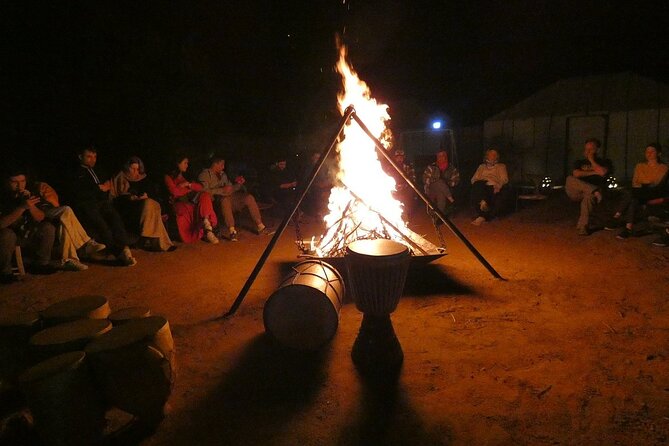
After the sunset ride, you arrive at a tented camp where dinner is the next act. The trip includes dinner plus a campfire atmosphere with Saharan drum music. That part is a big deal because it turns the night into an event, not just a stop where you eat and crawl into bed.
The vibe is usually social, and it feels tied to the people and traditions of southern Morocco. You’ll often hear songs and see instruments part of the evening. In the guides’ stories, names like Said Erfoud and Zaki show up again and again for being engaging and helping you see the best views and moments along the way. You can’t guarantee the exact guide you’ll get, but you can expect the experience to lean into culture rather than treating the camp as a hotel dump spot.
About food (and vegetarian needs)
Dinner is included, and there’s also a vegetarian option available if you tell the provider when you book. That’s important because some desert camp setups can be heavy on meat by default. If you need vegetarian, don’t assume it will be handled—request it up front.
Drinks and lunch aren’t included, so budget for water and any extras you want during the ride days. On camel rides and in desert heat, it’s better to pay for water than to ration yourself into feeling miserable.
Sleeping in the desert: tents, stars, and the real temperature swing
This is a one-night experience, and the whole point is sleeping in a tent close to the dunes. That means you get the stars and the quiet. It also means you should plan for temperature changes.
Even if the day is warm, desert nights can feel chilly. You may also deal with insects. One theme that came through clearly is that camps can be clean and comfortable, but insects are simply part of being outdoors. So treat it like camping: bring what you need, stay practical, and you’ll be fine.
A useful detail from the experience: you can sometimes find that showers are available—at least one traveler noted a shower inside the tent. Even if your setup differs, the itinerary clearly includes a refreshing shower on Day 2 when you return for breakfast. Either way, you should plan for basic wash options rather than a full spa bathroom.
What you should bring (small list, big payoff)
- A warm layer for night
- A head covering and sunscreen for daytime
- Basic insect protection if you use it
- Earplugs if you’re a light sleeper (camp nights can be lively)
Day 2: sunrise behind the Algeria border and a calmer return
Day 2 starts early for a reason: sunrise. The itinerary calls out sunrise behind the Algerian border, which gives you that extra emotional charge you get from standing on the edge of a big world you can’t fully see. When the dunes change color in the morning light, you stop thinking like a tourist and start thinking like a human watching weather happen.
After sunrise, you won’t just admire the dunes from a distance. You’ll journey back on your camel to the hotel area. That return ride is shorter than the first camel segment is meant to be, but it still gives you time to take in how the sand feels at morning light—less dramatic, more grounded.
Once you’re back, you get a refreshing shower and then breakfast. That’s key. Overnight desert trips can be tiring. Breakfast isn’t a small detail here; it’s the moment you recover enough to actually enjoy the rest of your day.
Returning to Merzouga, Rissani, or Erfoud
After breakfast, the tour ends with a drive back to your bus station or hotel in Rissani or Merzouga. In other words, the trip doesn’t just leave you stranded in the desert with a “good luck” shrug.
That matters for your peace of mind. You know when you’ll be back in town and you don’t have to negotiate transport after camel fatigue.
Price and value: what $69.69 really buys in the desert
Let’s talk value honestly. $69.69 per person sounds low for “overnight desert + camel ride + meals + lodging.” The secret is that desert camps keep costs focused on the experience: simple lodging, included meals, and shared transport.
Here’s what’s included:
- Accommodation for the night at the camp
- Dinner and breakfast
- Hotel pickup / bus station transfers in the Merzouga/Rissani/Erfoud area
- Local camel guide
- Dinner & breakfast (listed twice, but it confirms it’s core)
What’s not included:
- Drinks and lunch
So you’re paying for a package that removes the biggest friction points:
- Getting to the dunes area
- Getting you on camels to and from the camp
- Feeding you without searching for restaurants in the middle of nowhere
- Keeping group size reasonable (max 15)
If you’ve ever tried to arrange a desert overnight independently, you know how quickly the effort turns into a headache. This one is designed to be a straightforward “show up, get taken care of, enjoy” kind of plan.
How good guides shape the whole day
One of the most consistently praised elements in the experience is how the guides and drivers affect your comfort and your memories. Names that come up include Said Erfoud, Hassan, Ibrahim, Abdul el Aziz, Radwan, Mohamed (as a driver/host in multiple accounts), Zaki, and Driss. Again, you don’t control which person you’ll get, but you can take comfort in the pattern: the people running the trip are often described as punctual, helpful, and tuned into the best views and stops.
What that means for you:
- You’re more likely to have a calmer schedule (less rushing).
- You’re more likely to get thoughtful guidance during the long drive.
- You might get extra cultural context, not just directions.
If you’re the type who appreciates a bit of human warmth, this trip is built for you. It’s not just “movement.” It’s hospitality.
Who should book this overnight Merzouga camel-and-tent trip
This is a great match if you:
- Want a classic Erg Chebbi overnight without extra planning
- Like the sunrise moment as much as the sunset moment
- Are okay with desert sleeping and basic conditions
- Prefer small-group travel (up to 15)
It may not be ideal if you:
- Need a very controlled, hotel-like environment
- Hate camel rides or struggle with uneven walking
- Are traveling with very young kids and don’t have adult support for them (children must be accompanied by an adult)
Still, the good news is that the experience notes that most travelers can participate, so it’s generally not an extreme challenge if you’re in normal health and prepared for the ride.
Should you book this tour?
I’d book it if your goal is a real overnight desert experience that stays organized from start to finish. The package value is strong because it includes the camp night, meals, and the camel ride time—those are the expensive, hard-to-arrange pieces. And the schedule hits both the light shifts that make Erg Chebbi famous.
If you’re cautious about tent comfort, plan for a warm layer and insect basics. If you go in expecting camping-level reality, you’ll get the payoff: sunrise glow, sunset dunes, and an evening with drums and campfire energy.
FAQ
Where are the pickup points for this overnight desert experience?
Pickup is offered from Merzouga, Rissani, or Erfoud. The tour also mentions return transport back to your hotel or the bus station in the area.
How long is the trip?
It’s scheduled for 2 days (about two days total).
What’s included in the price?
The experience includes accommodation, dinner, breakfast, hotel pickup / bus station transfers, a local camel guide, and dinner & breakfast.
Are drinks or lunch included?
No. Drinks and lunch are not included.
Do I get a camel ride?
Yes. You ride a camel to the camp at sunset on Day 1 and then ride back on Day 2.
What kind of camp will I sleep in?
You’ll sleep in a Berber-inspired tented camp in the desert area after your camel ride.
Is there an option for vegetarian meals?
Yes. A vegetarian option is available—you need to advise the provider when booking.
How big is the group?
The tour has a maximum of 15 travelers.
Can I cancel for free?
Yes. Free cancellation is available up to 24 hours in advance of the experience start time for a full refund.
Is the experience suitable for children?
Children must be accompanied by an adult. A child rate applies only when sharing with two paying adults.