REVIEW · MARRAKECH
Marrakech Jewish Quarter & Bahia Palace: Private Half-day Guided Tour
Book on Viator →Operated by Atlas Excursion · Bookable on Viator
Marrakech has a way of surprising you at every turn. This private half-day route threads together Bahia Palace and the Mellah (the old Jewish quarter), then finishes in the souks and Jemaa el-Fnaa. I love how the pacing gives you real time at the big monuments, not just quick photos. I also like that you see the Jewish sites in context, then cool down with the calm of Le Jardin Secret. One thing to consider: the headline price is low, but major entrances and small donations add up.
You’ll ride in a private air-conditioned van with hotel pickup and drop-off, then walk through parts of the medina with a local guide. Guides are often noted for being flexible—some even adjust the route pace for slower walkers, like parents using walking sticks—so you’re not stuck sprinting through Morocco’s maze of lanes. Still, expect some walking on uneven ground, so wear good shoes and bring water.
In This Review
- Key things to love before you book
- Bahia Palace: Moorish brilliance to start your Marrakech day
- The Mellah Jewish Quarter: walking into Marrakech’s older center of life
- Slat al-Azama Synagogue: blue-and-white, and one of the oldest local links
- Miaara Jewish Cemetery: a preserved place with real emotional weight
- Le Jardin Secret: the calm reset you’ll be glad you planned
- Jemaa el-Fnaa and the souks: ending in the street theater
- Price and value: what $29 really buys you
- Guides and the feel of the day: why names matter
- Timing, pacing, and what to wear in the medina
- Who should book this Marrakech Jewish Quarter and Bahia Palace tour?
- Should you book it? My straight advice
- FAQ
- How long is the Marrakech Jewish Quarter and Bahia Palace private tour?
- Is hotel pickup and drop-off included?
- What does the tour price include?
- Are entrance fees included for Bahia Palace and Le Jardin Secret?
- Is the Slat al-Azama Synagogue stop free?
- Is the Mellah quarter or Jemaa el-Fnaa included for free?
- Can I cancel and get a full refund?
Key things to love before you book
- Bahia Palace first, so you start with Marrakech’s most jaw-dropping Moorish interior details
- Mellah alleyways that help you understand where Jewish life and trades took place
- Slat al-Azama’s blue-and-white look plus the stop’s symbolic weight as one of the city’s oldest synagogues
- Miaara Jewish Cemetery, carefully preserved and moving, with many respected Tsadikkims buried there
- Le Jardin Secret for a garden reset in Arab-Andalusian style
- Jemaa el-Fnaa finale, where the medina energy lands right at street level
Bahia Palace: Moorish brilliance to start your Marrakech day
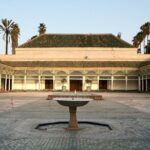
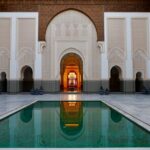
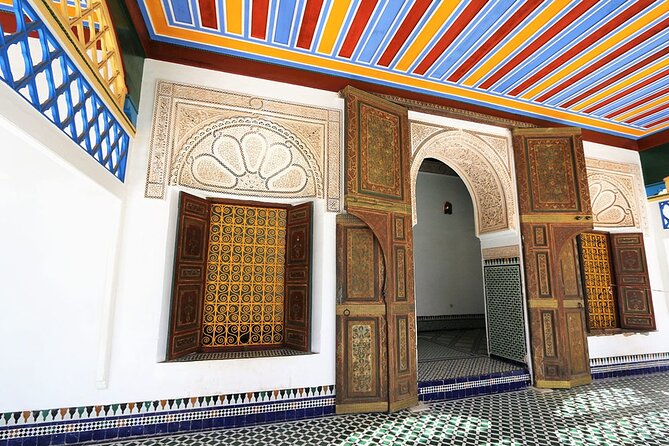
If you only have half a day, I like starting with Bahia Palace. It’s not subtle. Built over six years (1894–1900), it was meant to be Marrakech’s great palace—its name literally means brilliance. Even if you’ve seen other Moroccan palaces, Bahia’s layout and ornamentation tend to hit harder because of the combination of scale and craftsmanship you can actually spot up close.
Plan on about 45 minutes inside, and that’s usually the sweet spot for taking in courtyards, rooms, and the palace’s decorative rhythm without feeling like you’re rushing. The key practical detail: the entrance fee to Bahia Palace is not included. Budget $10 per person on top of the tour price.
One more value tip: because Bahia is the first stop, you won’t have to do the heavy walking while you’re still adjusting to the medina. You get the “wow” moment early, then your day gets easier.
You can also read our reviews of more guided tours in Marrakech
The Mellah Jewish Quarter: walking into Marrakech’s older center of life
After Bahia, you shift from royal grandeur to neighborhood streets. The Mellah is Marrakech’s historic Jewish quarter—distinct from the rest of the medina—and it’s where Jewish families settled and practiced trades and crafts. Walking here isn’t about checking off buildings. It’s about watching the medina’s structure do its job: narrow lanes, local rhythms, and the sense that everyday life once clustered around community institutions.
You’ll typically spend about 30 minutes here. That includes time for guide-led orientation, plus a little room to wander and absorb. The nice part: the Mellah area itself is free to enter, so you’re not paying to simply see the neighborhood streets.
What I like most about this stop is how it sets up the next two. When you later visit places tied to Jewish religious life, the route doesn’t feel random—it feels earned.
Slat al-Azama Synagogue: blue-and-white, and one of the oldest local links
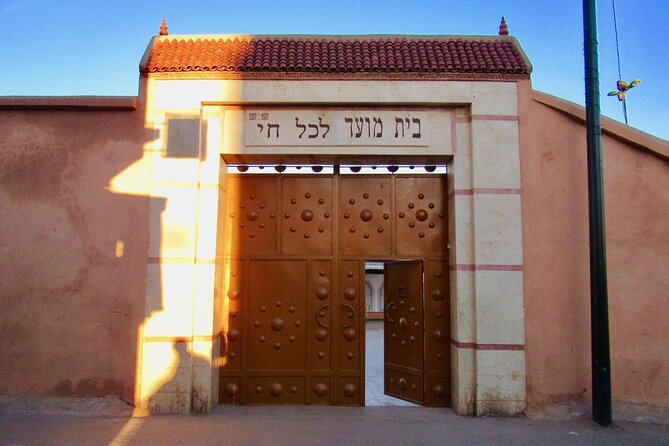
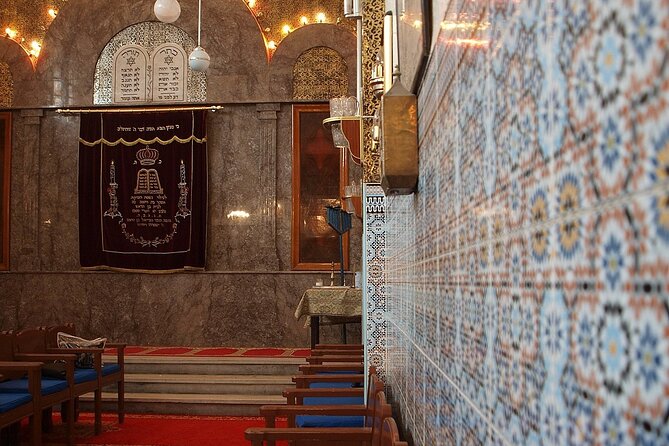
Next comes Slat al-Azama Synagogue, the main synagogue remaining in the Mellah quarter. The standout detail is visual: striking blue-and-white coloring that makes it one of the prettiest religious buildings you’ll see in the medina. It also has real historical weight. It was originally built in 1492 AD, which is why it’s considered one of the oldest synagogues still associated with Marrakech.
Expect about 30 minutes at this stop. The practical note here is important: the Slat al-Azama entrance isn’t included, so plan for a $2 per person donation.
I’d treat this as more than a photo stop. The guide’s job is to connect architecture and symbolism to the broader story of Jewish life in Morocco—something you’ll feel when you see how the building fits into its lane and surroundings. If you’re the type who likes context, this is where the tour starts paying dividends.
Miaara Jewish Cemetery: a preserved place with real emotional weight
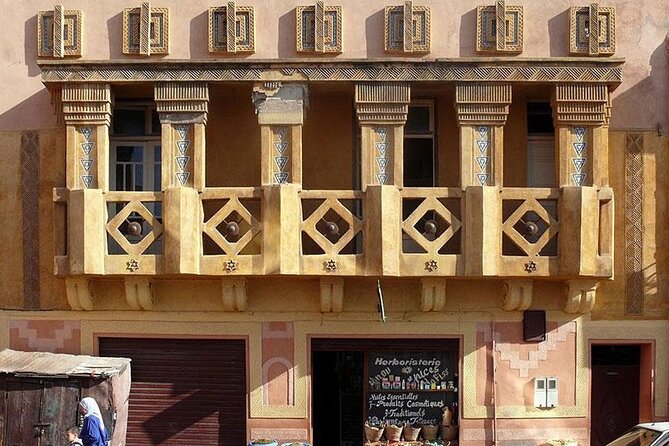
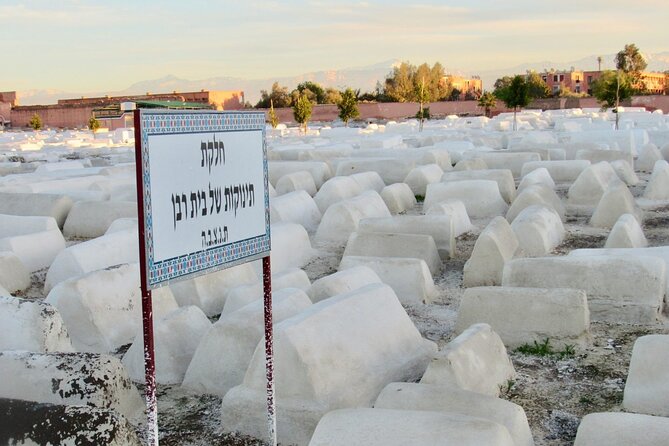
From synagogue to cemetery can feel like a sharp emotional turn, but it makes sense. Miaara Jewish Cemetery is among the most significant remaining Jewish burial grounds in Morocco, described as the largest in the country. It’s also noted for being incredibly well preserved, and many respected Tsadikkims are buried there.
You’ll spend about 30 minutes here, and the stop includes time for reflection and quiet viewing. The practical cost again: there’s a $2 per person donation, and the cemetery entrance isn’t included.
What I like about this stop, when guided well, is how it changes the mood of the day without turning it into a lecture. You come back out into the medina streets with a deeper sense of what you’ve been seeing.
Le Jardin Secret: the calm reset you’ll be glad you planned
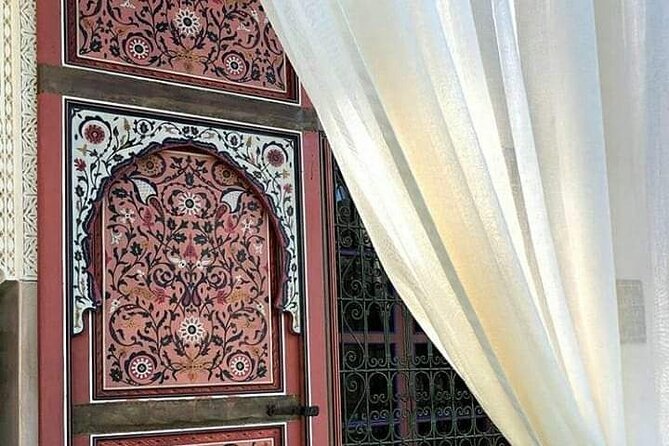
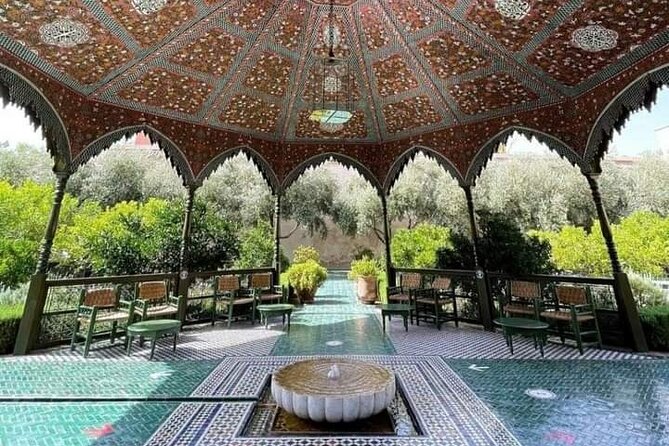
After walking through alleys and ceremonial spaces, you’ll appreciate the change of pace at Le Jardin Secret. This is a garden-palace space dating back to the Saadian Dynasty, more than four hundred years ago. It’s known as an outstanding example of Arab-Andalusian art and architecture—so you’re still in Morocco, just in a different mood.
You’ll have about 45 minutes here. This is a useful chunk of time because gardens are visual puzzles: paths, light, water elements, and the way walls frame sky views. It also helps you cool down and slow your heart rate before the market crush later in the day.
The price punchline: Le Jardin Secret entrance is not included and is $10 per person. Still, I see this as part of the tour’s value. Without the garden, the day can feel like back-to-back hard history stops. With it, you get balance.
You can also read our reviews of more private tours in Marrakech



Jemaa el-Fnaa and the souks: ending in the street theater
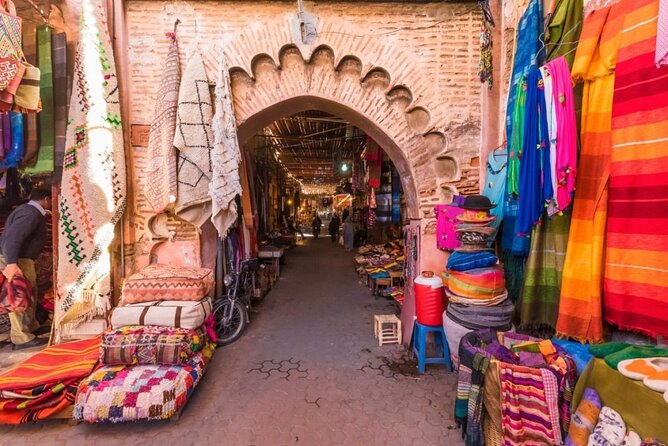
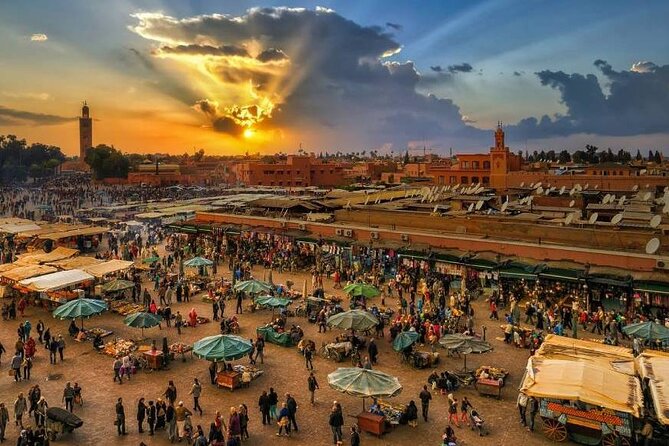
The finale is the medina at full volume: the souks and Jemaa el-Fnaa. This square is often described as an open-air theater, with musicians, snake charmers, and market stalls. Even if you’ve seen night markets elsewhere, Jemaa el-Fnaa feels like it has its own operating system.
You’ll usually spend about 1 hour here. It’s also free to enter.
Here’s how I’d use the time:
- Catch the energy first, before deciding what you want to watch longer
- If a crowd or performance gets too intense, you can step sideways into the souks and come back
- If you’re tired, it’s not a failure to shorten this moment—this stop is about atmosphere, not must-see monuments
Several guide reports note flexibility: if people were worn out, the guide still made the day feel complete. That matters because Jemaa el-Fnaa is fun, but it’s not a place to drag your feet in slow motion.
Price and value: what $29 really buys you
The advertised price is $29, and it covers the big trip components: hotel pickup and drop-off, private transportation in a new air-conditioned minivan, a multilingual professional driver, and an expert certified local guide. That’s the heart of a private experience—someone else handles routing, timing, and interpretation.
But you need to budget extras. Based on the included pricing notes:
- Bahia Palace entrance: $10 per person
- Le Jardin Secret entrance: $10 per person
- Slat al-Azama donation: $2 per person
- Miaara Jewish Cemetery donation: $2 per person
Total on top of the tour price is $24 per person, bringing the practical total to about $53 per person (before any personal shopping). For a route that includes two major paid monuments plus two donation sites, I’d call that fair—especially because you’re getting structured time at each stop instead of wandering blindly.
Guides and the feel of the day: why names matter
Private tours can vary wildly depending on the guide. With this one, you’ll see strong consistency in how guides deliver context, manage pacing, and help you take photos without turning each stop into a race.
A few guide names that came up in feedback:
- Hassan: praised for being friendly and offering tourist advice, but there’s also one note about being less engaged and not as deep on knowledge as expected
- Abelfatah: noted for punctual arrival and providing history with time for pictures at each site
- Aziz: highlighted for sharing info about Jewish history in Marrakech and how the Mellah changed over time
- Ahmed: praised for thoughtful pacing, including adjusting for parents using walking sticks, and for not rushing
- Hamza and Abdellah: both mentioned for being friendly and easy to understand, with Hamza also credited with “hidden gems” style additions
The takeaway for you: this tour is at its best when you actually talk to your guide. Ask what you should notice at each stop, not just what you should see. If you get a more low-key guide, you can still win by asking direct questions.
Timing, pacing, and what to wear in the medina
The whole experience runs about 5 hours. The stop times add up to roughly 4.5 hours, and the rest is travel and buffer. That makes it a true half-day plan, but it’s still long enough that comfortable clothing matters.
A few practical notes based on how medina walking works:
- Wear shoes with grip; medina lanes can be uneven
- Bring a light layer if you’re visiting in cooler months
- Keep water handy, especially before Jemaa el-Fnaa
- Have small cash for any donations if you prefer to pay that way on-site
If you want a relaxed day, pick this tour early. Bahia and the Mellah are easier before you’ve accumulated fatigue.
Who should book this Marrakech Jewish Quarter and Bahia Palace tour?
This is a strong match if you want:
- A focused route that connects major monuments with the Mellah’s Jewish heritage
- A guide-led explanation that makes the architecture and sites feel connected
- A mix of serious stops (synagogue, cemetery) and a breather (Le Jardin Secret)
It’s also ideal for your first visit to Marrakech Old City, because the day ends in Jemaa el-Fnaa, which helps you place everything you’ll see later.
If you dislike walking or need limited mobility, consider choosing a day when you can move slowly. One guide was specifically noted for adjusting pacing for walking sticks, but the tour does involve medina lanes, so plan accordingly.
Should you book it? My straight advice
Book this tour if you like structure and context. You’re paying for a guide to connect Bahia Palace, the Mellah, Slat al-Azama, Miaara Cemetery, Le Jardin Secret, and Jemaa el-Fnaa into one coherent story. The extra fees are real, but the price still looks reasonable for the number of significant sites you cover.
Skip it or reconsider if:
- You want a purely self-guided day with no paid entrances
- You’re avoiding religious or cemetery sites for personal reasons
- You’re counting hard on the low $29 figure only—because the practical total is closer to $53
If you do book, do one thing that makes the day better: ask your guide to point out what to look for at Bahia Palace and what details matter most at Slat al-Azama. That’s where the tour stops feel like more than sightseeing.
FAQ
How long is the Marrakech Jewish Quarter and Bahia Palace private tour?
It runs for about 5 hours.
Is hotel pickup and drop-off included?
Yes. Hotel pickup and drop-off are included.
What does the tour price include?
The price includes private air-conditioned transportation, a multilingual professional driver, an expert certified local guide, and the private guided itinerary elements (entrance fees are separate).
Are entrance fees included for Bahia Palace and Le Jardin Secret?
No. Bahia Palace and Le Jardin Secret both have entrance fees of $10 per person each, not included.
Is the Slat al-Azama Synagogue stop free?
No. A donation of $2 per person is not included.
Is the Mellah quarter or Jemaa el-Fnaa included for free?
Yes. Admission for the Mellah quarter is free, and Jemaa el-Fnaa is free to enter.
Can I cancel and get a full refund?
Yes, free cancellation is available. You can cancel up to 24 hours in advance for a full refund. If you cancel less than 24 hours before the start time, the amount paid is not refunded.