REVIEW · MARRAKECH
Marrakech: A Gastronomic Night Street Tour With Dinner
Book on Viator →Operated by Marrakech Top Sights Tours · Bookable on Viator
Night in Marrakech comes with food lessons.
This guided evening starts at Djemaa el Fna and turns the chaos of the medina into something you can actually follow. I especially like the small group (up to 12) feel, and the way the tour mixes quick tastings with practical food knowledge so you’re not just eating, you’re learning what Morocco tastes like.
You’ll also get a real guide moment with Omar, who was described as helpful and genuinely into the flavors and stops. One thing to keep in mind: if you’re going during Ramadan, food tastings may not match what you see on other nights.
In This Review
- Key highlights worth planning for
- Meeting at Djemaa el Fna at 6:00 pm: what your evening setup really means
- The souk-to-market walk: olives, snack stops, and haggling basics
- The spice market lesson: saffron, cardamom, turmeric, and the bread you’ll remember
- The unusual bites list: cow’s hoof, sheep’s head, ghoulal soup, and snail
- Dinner at Djemaa el Fna: snake charmers, entertainers, and a full meal
- Price and value: is $77.46 for dinner and tastings a fair deal?
- What to bring and how to handle the medina at night
- Who this Marrakech night food tour fits best
- Should you book this tour?
- FAQ
- Where does the tour start?
- What time does the tour begin?
- How long is the tour?
- How many people are in the group?
- Is dinner included?
- What tastings are part of the tour?
- Is transportation included?
- What’s the price per person?
- Can I cancel for a full refund?
- What’s the best way to plan if you dislike unusual foods?
Key highlights worth planning for
- Up to 12 people, so you can hear your guide and ask real questions
- Olives, nuts, and snack tastings before you even reach the main markets
- Spice market training with the big players: saffron, cardamom, and turmeric
- Bread and street-food tasting including beghrir and thin paper-style breads
- A full dinner at Djemaa el Fna, timed to the square’s nighttime energy
- Unusual bites on the list, like cow’s hoof, sheep’s head, ghoulal soup, and snail
Meeting at Djemaa el Fna at 6:00 pm: what your evening setup really means
This tour is built for the moment the square starts to feel like it’s running on sound, smell, and motion. You meet at Hôtel Restaurant Café de France, on Rue des Banques, right by Djemaa el Fna, at 6:00 pm. That timing matters because the medina at night is not just pretty lights. It’s when vendors, burners, sellers, and entertainers are all doing their jobs at full volume.
The route is also a walking plan, and there’s no private or local transportation included. That’s good value, but it means you should treat the night like an active city stroll: wear grippy shoes and plan for uneven surfaces. In a place like Marrakech, the walking is part of the point. You get from market to market without losing time to transit, and you can follow what your guide points out while everything is happening around you.
One more practical note: this is listed as a private activity where only your group participates. In real life, that often shows up as a calmer experience than big group bus-tour chaos. Still, you’ll be in a crowded historic area, so keep your phone secure and your pace steady.
A few more Marrakech tours and experiences worth a look


The souk-to-market walk: olives, snack stops, and haggling basics
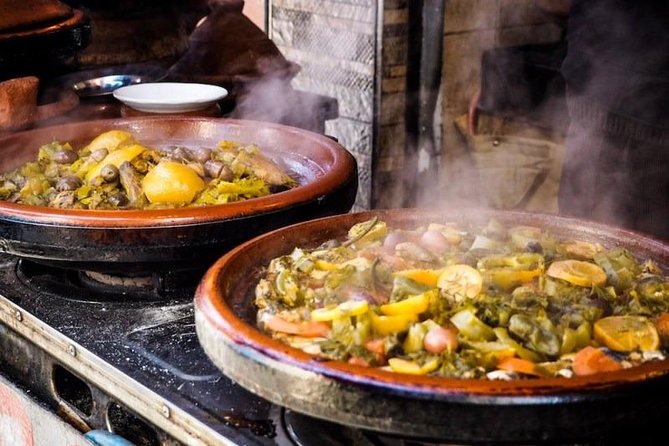
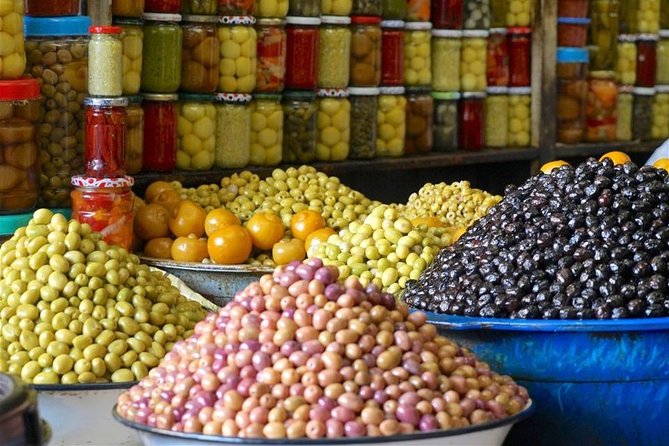
Before you even step fully into the market rhythm, you start with easy, snack-level tastings. Expect samples like olives and nuts and other small bites that give you a baseline. I like this approach because it prevents that first-scoop shock. You get familiar with salty, crunchy, and aromatic flavors before the tour throws heavier dishes into the mix later.
Then you move through the souk atmosphere toward the area connected with the poultry and beef markets. The goal here isn’t to make you a livestock expert. It’s to show you how a Moroccan market works: how goods are displayed, how sellers talk, and how you can read a place that looks like noise if you don’t have a guide.
The tastings are paired with something many food tours skip: basic Moroccan haggling lessons. You won’t come out negotiating like a pro, but you will learn the mindset. Your guide’s role is to explain what’s negotiable, what’s usually fixed, and how friendly back-and-forth keeps things respectful. This is especially useful if you’re planning to shop later, because bargaining is easier when you know what the conversation is doing.
A drawback to note: the market can feel intense—lots of eyes, motion, and quick sales pitches. If you’d rather observe than interact, go in with that intention and let your guide handle most of the talking. You still benefit from the information even if you buy nothing.
The spice market lesson: saffron, cardamom, turmeric, and the bread you’ll remember
After the earlier snack stops, the tour follows the scent trail toward the spice market. This is where the whole thing clicks for a lot of people because spices stop being abstract and start being tangible. You learn the essential ingredients of Moroccan cooking and how they show up in real food. The big names on your path are saffron, cardamom, and turmeric—three flavors that can make a simple dish feel like Morocco.
From there, you’ll spend time in the open-air souk where breads and street foods are part of the show. You can expect traditional breads, including beghrir (those recognizable spongy pancakes) and thin, paper-like breads. The point of these stops isn’t just to tick off items. Bread is how Moroccan meals move between savory dips, sauces, and main dishes. When you taste it here, you start to understand why bread matters at dinner.
Some tours throw flavors at you without context. This one tries to explain ingredients first, then lets you taste what those ingredients actually do. That makes the later dinner feel less like a standalone meal and more like the final exam.
One consideration: if you have spice sensitivity, tell yourself this tour is about Moroccan flavor identity. Even if you don’t fall in love with every scent, you’ll leave knowing what to look for when you’re ordering later.
The unusual bites list: cow’s hoof, sheep’s head, ghoulal soup, and snail
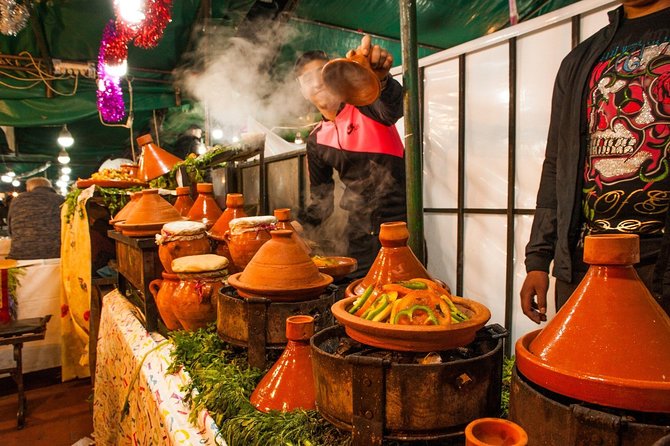
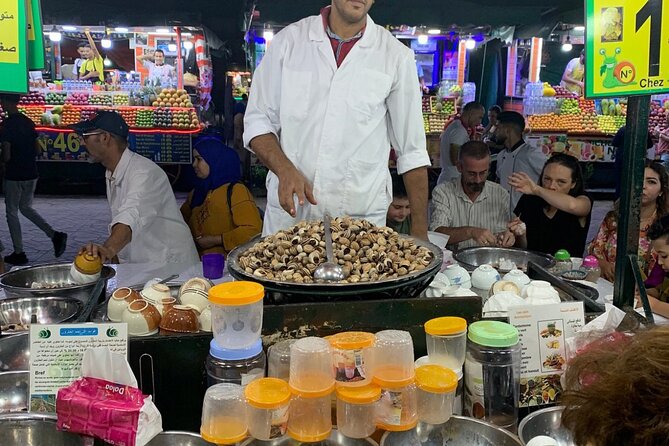
A big part of why this tour is famous is that it doesn’t shy away from street-food oddities. You may taste unusual items such as cow’s hoof, sheep’s head, ghoulal soup, and snail. I’m not saying you must like them. I am saying this is a tour for people who want the full spectrum of what Moroccan markets offer, not just the safest “foodie highlights.”
Here’s how to get the most value out of these tastings: treat them like a culture lesson, not a personal challenge. Your guide will help connect what you’re seeing to how Moroccan cooking uses every part of the ingredient list and how tradition shapes what ends up on the plate.
If you’re the type who hates surprises, set expectations early. Look at the list and decide if those items sound interesting or if you’d rather focus on the more familiar bites (olives, nuts, breads, and spices). The tour is structured so you’ll still get plenty of flavor education even if certain dishes aren’t your thing.
Also, the market tasting style is quick. You might taste small portions at several stops, so you won’t be stuck eating one heavy item for a long time. That pacing can make the unusual parts feel manageable.
Dinner at Djemaa el Fna: snake charmers, entertainers, and a full meal
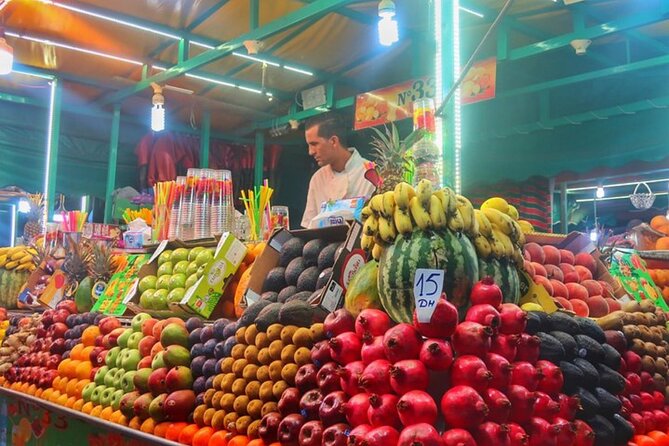
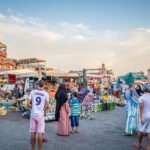
By dinner time, you’re right back in the heart of Djemaa el Fna, joining the crowds watching snake charmers and other entertainers. This matters because the square is not only where you eat. It’s where you see why people come here night after night.
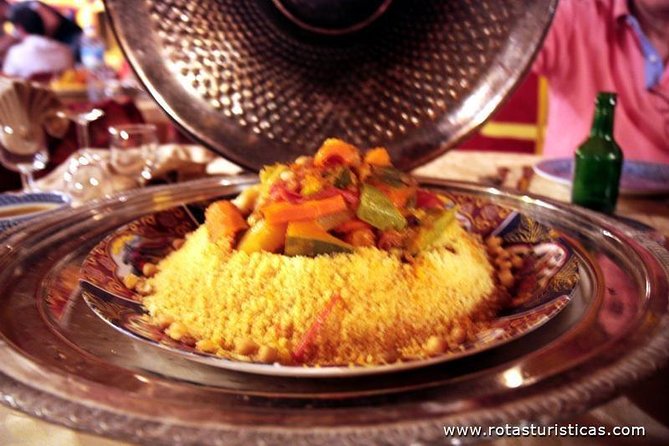
The dinner itself is included, and the tour is set up so the meal feels like the finale to the tastings you’ve just done. If earlier you tasted olives, nuts, breads, and spices, you’ll likely recognize flavors more clearly once dinner lands—especially if the meal includes Moroccan staples that use the same ingredient ideas your guide pointed out.
Even if you’re not there for the performances, it’s still a strong value element. The dinner is part of the overall experience, not a separate add-on you have to hunt for on your own. And eating in the square—surrounded by music and spectacle—gives you that very “this is Marrakech” feeling that stays with you after you leave.
If you prefer a quiet meal, this setting won’t match your vibe. Think energy, noise, and people-watching. But if you like being in the action, dinner here is one of the reasons this tour is booked.
A few more Marrakech tours and experiences worth a look



Price and value: is $77.46 for dinner and tastings a fair deal?
At $77.46 per person, you’re paying for a guided evening that runs about 3 hours, includes dinner, and builds in tastings across multiple stops. You’re also getting a guide who teaches how spices, breads, and ingredients connect, plus a bit of negotiation basics for the market culture.
Let’s translate that into what you actually get:
- A planned route through markets and spice stalls
- Multiple food tastings (snacks and breads, plus some unusual items)
- A guided explanation of Moroccan ingredients
- Dinner at the square rather than a random restaurant pick
In Marrakech, if you try to recreate this yourself, the biggest hidden cost is time—and time is what you don’t get back. You’d need to find the right market spots, figure out what to order or ask for, and handle the chaos without a translator. This tour packages that effort into a single evening with a maximum group size of 12 and a private-activity setup.
Is it overpriced for some people? If your main goal is a calm, sit-down meal with zero market walking, then yes, it may feel like a lot. But if you want a guided food education with dinner built in, the price is in the “worth it” range.
What to bring and how to handle the medina at night
A night street food tour is only as enjoyable as your comfort. Bring a few basics:
- Comfortable shoes for walking on uneven surfaces
- A light layer, because evenings can feel cool even when daytime is hot
- Small cash in case stalls want direct purchases (your guide will guide the process for tastings)
- A phone but keep it secured; the square is crowded
If you’re traveling with kids or strollers, it can still work. One review specifically mentioned help with a stroller, which tells me the guide can be flexible when the group needs it. That said, you’ll still be moving through market lanes, so decide based on your comfort level.
Also, keep your expectations human. This is Morocco at street level: smells, sounds, and quick movement. The tour’s job is to help you understand what you’re seeing, not to make it quiet.
Who this Marrakech night food tour fits best
This is a great match if you want:
- A first-time Marrakech evening with structure
- Real food stops across markets and then dinner at Djemaa el Fna
- Ingredient learning tied to tastings (spices and breads)
- A guide-led approach to navigating market culture, including haggling basics
It’s less ideal if:
- You dislike strong crowds and constant street activity
- You’re turned off by unusual tasting items like cow’s hoof or sheep’s head
- You want a slow, quiet dinner away from entertainers
Should you book this tour?
I think you should book it if you want your first Marrakech night to feel guided and meaningful. The combination of souk tastings, spice-market ingredient education, and a dinner in Djemaa el Fna is the kind of package that’s hard to replicate on your own without spending extra time.
Before you go, check your personal comfort with unusual foods and note that if your dates fall during Ramadan, the tasting experience may differ from other nights. If that’s not a deal-breaker, this tour is a smart way to turn an evening in the medina into a food-focused lesson you’ll remember.
FAQ
Where does the tour start?
It starts at Hôtel Restaurant Café de France on Rue des Banques near Djemaa el-Fna, Marrakech.
What time does the tour begin?
The start time is 6:00 pm.
How long is the tour?
The duration is about 3 hours.
How many people are in the group?
The group is limited to a maximum of 12 people. Your booking is also described as a private activity where only your group participates.
Is dinner included?
Yes. Dinner is included.
What tastings are part of the tour?
The tour includes tastings such as olives and nuts, breads (including beghrir), and unusual dishes such as cow’s hoof, sheep’s head, ghoulal soup, and snail, along with snack and tea stops.
Is transportation included?
No private transportation is included, and it’s a walking tour with no local transport in town included.
What’s the price per person?
The price is $77.46 per person.
Can I cancel for a full refund?
Yes. Free cancellation is available up to 24 hours before the experience’s start time for a full refund.
What’s the best way to plan if you dislike unusual foods?
Look at the list of unusual dishes included in the tasting (like cow’s hoof, sheep’s head, ghoulal soup, and snail) and decide if you’re comfortable with them before booking.